Tag: Onida

  • Mindshare veteran Sonal Jadhav moves to lead Havas Media’s western operations

    Mindshare veteran Sonal Jadhav moves to lead Havas Media’s western operations

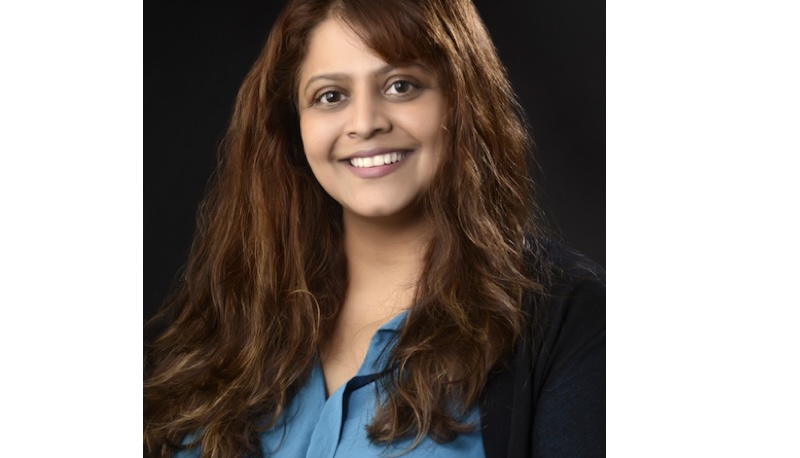
    MUMBAI: Sonal Jadhav has traded her corner office at Mindshare for the top job at Havas Media Network India, where she will serve as managing partner and west lead. The appointment marks a significant coup for Havas, which has poached one of the industry’s most seasoned media hands.

    Jadhav spent three years and seven months as principal partner at Mindshare, the GroupM-owned agency, before making the switch this month. Her departure represents a notable loss for Mindshare, where she had deep roots stretching back over a decade.

    The Mumbai-based executive brings formidable credentials to her new role. She cut her teeth during a marathon 10-year stint at Mindshare, rising through the ranks from client lead to senior cluster lead. In her most recent role there, she managed a portfolio of blue-chip accounts including Kellogg’s, ICICI, Rio Tinto and Onida, with full profit-and-loss responsibility.

    Her earlier Mindshare tenure was particularly notable for her stewardship of the Hindustan Unilever skincare portfolio, where she crafted media strategies for the conglomerate’s beauty brands from 2006 to 2013. The assignment cemented her reputation as a strategic thinker with a knack for marrying brand-building with performance metrics.

    Between her two Mindshare chapters, adhav spent four years as general manager at Wavemaker, another GroupM stable-mate, focusing on FMCG clients and honing her expertise across traditional and digital media channels.

    Her career began in print advertising, with early roles at Hindustan Times and Indian Express, where she learned the fundamentals of media sales and revenue optimisation.

    The appointment signals Havas Media’s ambitions to strengthen its presence in India’s fiercely competitive media landscape, where agencies are battling for a larger share of the country’s advertising spend. Ms Jadhav’s deep FMCG experience and client relationships make her a natural fit for a market where consumer goods companies remain among the biggest advertisers.

    At 15-plus years in the business, she represents the kind of seasoned leadership that agencies increasingly prize as they navigate the complexities of digital transformation and attribution-based media buying.

  • Marketing in 2018: Led by revenues, ditched creativity

    Marketing in 2018: Led by revenues, ditched creativity

    MUMBAI: Long gone are the times when advertising and marketing industry in India was a small-scale business with just a few creative heads scratching their brains and churning out a minuscule number of campaigns. With the growing disposable income and aspiration to own premium goods and experience quality services, customers in India are willing to explore more, thus prompting sellers to market their products better.

    2018 was, in many ways, a cornerstone year for brands and agencies alike as they tried to peg more and more consumers to their base. The impact of demonetisation and GST gradually faded, thus allowing the brands to spend more than the previous year on marketing their products. As revealed by Zenith’s Advertising Expenditure Forecasts, the ad spends for India in the year 2018 are expected to close at Rs 62,699 crore. This number is around 10-12 per cent higher than what 2017 saw. And 2019 looks even better. The same Zenith forecast reveals that total adex for India will see an increase of 15 per cent and climb up to Rs 72,169 crore in 2019.

    As per Ethinos Digital Marketing MD Sidharth Hegde, most brands tend to spend between 7-15 per cent of their total revenue on marketing and advertising. “This percentage of spends is likely to continue, however, large brands are looking to insource a lot of the marketing and advertising that will help them save large amounts of funds that would now be going to external agencies,” he says.

    Hegde also gives a breakdown of the expenses, “In 2018, the average firm was expected to allocate 42 per cent of their marketing budget to online, and this rate is expected to grow to 45 per cent by 2020. Social media advertising investments will continue to grow, with a 17 per cent compound annual growth rate from 2016 to 2021, and is expected to represent 25 per cent of total online spending in 2018. Investment in paid search, display advertising, social media advertising, online video advertising, and email marketing is predicted to account for 46 per cent of all advertising by 2021.”

    It is clear from his predictions and is obvious otherwise as well, that digital is, in fact, seeing massive growth in India. Dentsu Aegis Network chairman and CEO – south Asia Ashish Bhasin seconds this thought and describes 2018 as the year that will be remembered as “when digital became an integral part of the marketing mix”.

    Bhasin notes, “I think this (2018) was the year in which digital came to the forefront. From being a nice-to-have part of strategy it became an integral part of the marketing mix. This was partly helped by the JIO effect as it brought down the prices of data and increased the bandwidth available. Also, the falling prices of smartphones made it happen.”

    He further adds, “And I take that by 2020, one-fourth of the advertising market will be digital. In 2022, the number of Indians reached by internet will nearly be the same as those reached by television.”

    Mirc Electronics Limited (Onida) head of marketing Pratyush Chinmoy says, “One clearly visible trend (in 2018) was companies increasing their digital pie in the overall marketing spends, in recognition of shifting consumer touchpoints. Many industry leaders also saw impressive growth in video marketing, OTT media, with the consumer from all walks of life, consuming data at a much faster pace than ever before helped by telecom price decreases.”

    But does that mean digital will overpower the other ‘traditional modes’ of advertising? Ashish Bhasin doesn’t think so. He quips, “When the tides are rising, all the boats rise along. In India, we are currently in a position where all the media are growing; be it print, TV, or digital, and it will remain so for the next 5-10 years. So, it is not digital vs print or print vs TV, or TV vs digital, it is digital and TV, and print, and OOH for India.”

    An IBEF report also supports this claim of Bhasin. According to its September 2018 report on Media and Entertainment, in FY 2018, TV advertising was the largest contributor to the country’s advertising revenue, generating Rs 223.5 billion closely followed by print that generated revenue of Rs 210.6 billion. Digital advertising generated revenues worth Rs 116.3 billion.

    Chinmoy also shares a similar brief based on some internal data, “In a period of Jan ’18 to Oct ’18, leading brands have spent around Rs 270 crore. Television has continued to gather a major pie, with print coming in second. In 2019, the spends are expected to slightly increase by a factor of 10-15 per cent.”

    He also adds, “While OTT caters to a subset of the television audience with a different offering altogether in terms of content, it has still a long way to go to catch up with television spends.”

    JHS Svendgaard Laboratories MD Nikhil Nanda adds an interesting insight, “As far as marketing trends are concerned, digital is growing fast but television and print still remain as traditional and dominant mediums. Content has been ruling the market and OTT. Disruptive marketing and radio are picking up faster than digital.”

    N Chandramouli, CEO of TRA Research has the same input. He notes, “There is no TV or OTT for the consumer. They only know the screen. None of the advertisements in such platforms are getting consumed and only the skip button catches their attention. Smart brands are focusing on consumer basis for transactions and what urges it fulfils in them, rather than present product benefits. Brands must see it as an integrated consumer experience, not as how it is delivered.”

    But Hegde differs slightly as he mentions that according to TDG Research, ad spend on OTT is projected to hit $40 billion by 2020, which is nearly half of the $85 billion in forecasted total TV ad revenue. “Also, with the influx of cheap and easily available internet, more and more users are bound to ditch the traditional TV for OTT services,” he says.

    2018 was a grand year for many agencies as many national and international honours fell upon them, the grandest being creative and impactful campaigns that were churned out in the past year; the most impressive being Piyush and Prasoon Pandey getting the prestigious Lion of St. Marks honour at the Cannes. Yet the industry feels 2018 was not a very impressive year when it comes to creativity in marketing campaigns.

    Chandramouli says, “2018 has not been an impressive year in brand creation. In the wake of a slow sales year, most of it has been attempts at selling. This, unfortunately, was based on a wrong premise because the consumer is dramatically changing.  If you sell, they don't want to buy.”

    Ashish Bhasin shows more or less the same emotion, “I think it has overall been a good year but not a great year in terms of creativity on TV because there haven’t really been any breakthrough campaigns that stood out at the national level.”

    He adds, “I think this is because the creativity in digital has significantly improved and for digital creative films from India have been getting digital identification. I think the first example that is a big name is the ‘Powerless Queen’, which was done by WatConsult, which internationally won some 15-20 awards, which we really hadn’t seen earlier for a digital campaign. We have seen print campaigns win, TV campaigns win but I guess it is a sign of coming times more creative efforts will be put in digital and we will see more of that in 2019.”

    Nikhil Nanda, however, differs in his observation. He notes, “Creatively, storytelling took the driving seat and advertisements showing the brand or products were more subtle. Whether it was an ad meant for digital/social channels or OTT alone, the more impressive the story, the better it was for the brands. Also, social causes and emotions took centre stage. Case in point: Colgate strong teeth campaign with Deepika Padukone and her mother. Campaigns in 2019 will be strongly inclined toward emotional and adopting better health habits storytelling.”  

    While 2018 was a pretty impressive year with its highs and lows, marketing agencies are now looking up to 2019 with a twinkle in their eyes. Big events like general elections and cricket world cup will be ruling the year and thus there will be a great influx of money as well.

    Bhasin believes that 2019 will see around 12 per cent growth in ad revenues. He believes that India is all set to reach the $10 billion mark in advertising in the coming year. This sentiment comes after taking into consideration some facts. Bhasin notes, “Advertising is very susceptible to sentiments. If a stable government, which is considered pro-business, is in power then the sentiments of the brands and marketers improve. They tend to spend more. Otherwise, advertising is the easiest expenditure to cut. I am hopeful that we will show good economic growth and will have a good monsoon, so we have a good performance.”

    While Bhasin is hopeful, Chandramouli sees 2019 as a difficult year for brands and marketers. He says, “2019 is a slippery year ahead, with brands not investing in new things.  So, the way to go for brands is to understand the consumer basis for trust and their innate sense of desire. Other than a few who will stand out using consumer insights and buying propensity understanding, many brands will continue to waste their money on campaigns irrelevant to the consumer. Brands that only try to sell will not get bought. Those that help the consumer buy, will be loved.”

    Another trend that might rule the advertising and marketing industry in 2019 will be of consolidations. Bhasin notes, “I think there is a process of consolidation that has started in advertising globally. We saw one of the oldest agencies JWT being merged into Wunderman this year. Even in India, there are six groups that control about 85-90 per cent of the advertising market. I see that this process of consolidation will only go bigger.”

    He further adds, “The legacy agencies will come under pressure now. The groups that have been formed in the new age and are more digital-savvy, who have more proportion of the business coming from the digital will do well. Big names that have been in the market for 100 years will suddenly now start feeling the pressure and start feeling the heat. We saw the beginning of that in 2018, we will see more of that in 2019.”

    All in all, 2019 looks like a great year for the brands and marketing agencies as it comes with its own shares of challenges and opportunities. The industry is very positive about the revenues but a little work on the creativity side is required to make 2019 a year better than the gone by.

  • Onida’s new print campaign for ACs

    Onida’s new print campaign for ACs

    MUMBAI: Onida , an Indian consumer durable manufacturer, is gearing up to release a new print campaign for its air conditioners with the slogan “Torture Tested Onida Inverter ACs” with its iconic devil personality.

    Mirc Electronics MD Vijay Mansukhani said, “This is a strategic move to create dealer confidence of being the first mover in the AC space and to generate customer interest pre-season. We are confident that this preseason offer will bring maximum benefits to our channel and consumers. We deeply understand the Indian family and their preferences and place them at the forefront of our innovations and offerings.”

    Onida has close to 50 types of air conditioners. At the core of the new AC ad are six products: Coral as principal, others being Wave, Regalio, Iris, Indium and Onyx. These are Internet-of-Things (IoT) and Wi-Fi enabled ACs with strong 4-way swing delivering an anti-fungal environment and using green eco-friendly refrigerant and 100 per cent copper coil.

    The brand is focussing on print ad-campaign across leading TOI and other regional dailies in tier 2 and 3 cities like Ahmedabad, Baroda, Rajkot, Surat, Kolkata, Guwahati, Patna, Hyderabad, Vizag, Mangalore, Mysore, and Raipur. Besides very strong BTL activities have been planned with all the MBOs across India, to deliver the essence of the brand and enhance visibility.     

  • Onida launches ‘Maximum Impact – Maximum Sound campaign

    Onida launches ‘Maximum Impact – Maximum Sound campaign

    MUMBAI: Indian consumer durable manufacturer Onida, has launched new print ad campaign “Maximum Impact –Maximum Sound” for its newly launched KY Super thunder smart TV.

    The ad-campaign reflects the positioning of the brand as a category-defying sound that will blow away the connoisseur of sound. The campaign is to tap the today’s generation who are smart and connected well with the technology.  The brand continues to focus on “owner’s pride”.

    The entire advertisement strategy has been conceptualised and driven by Taproot Dentsu.

    The brand is focussing on print ad-campaign across national and other regional dailies spread across India. Besides that, very strong BTL activities have been planned with all the MBOs across India, to deliver the essence of the brand and enhance visibility.

    Mirc Electronics MD Vijay Mansukhani says, “Television technology has changed by leaps and bounds over the last ten years. The KY Super Thunder has a great sound, 4k picture quality and much required smartness in the TV. We are the only company which has been working on both sound and picture quality, whereas others have been focussing only on quality of the picture. As promised in the past, Devil is back and now represents entire brand Onida as a brand.”

    The Onida KY SUPER THUNDER with KY HORNS technology comes with the Smart feature as well. These SMART TV will run on an Android 7.0 operating system, enhancing the viewing experience. This will also allow users to have access to the Google Play store and a suite of other services, as added value. It has an Air Mouse Remote with Point & Click technology and QWERTY keyboard behind.  When other leading brands offer a high-end big-screen 4K UHD TV at a price point of 1 lakh upwards, Onida offers true value in much lesser cost with distinct product features and benefits revolving around Big Picture, Big Sound.


  • Onida’s resurrection ahead of festive season

    Onida’s resurrection ahead of festive season

    MUMBAI: Onida, a brand that was once seen in every Indian household, seems to have lost its sheen in today’s competitive market. This was primarily due to the entry of new players. With liberalisation in 1991, Samsung, LG and other multinational consumer goods companies launched in India with much fanfare and Indians were hooked on to them. Soon, Indian homegrown companies started seeing a dip in sales and most of them exited the business sooner or later.

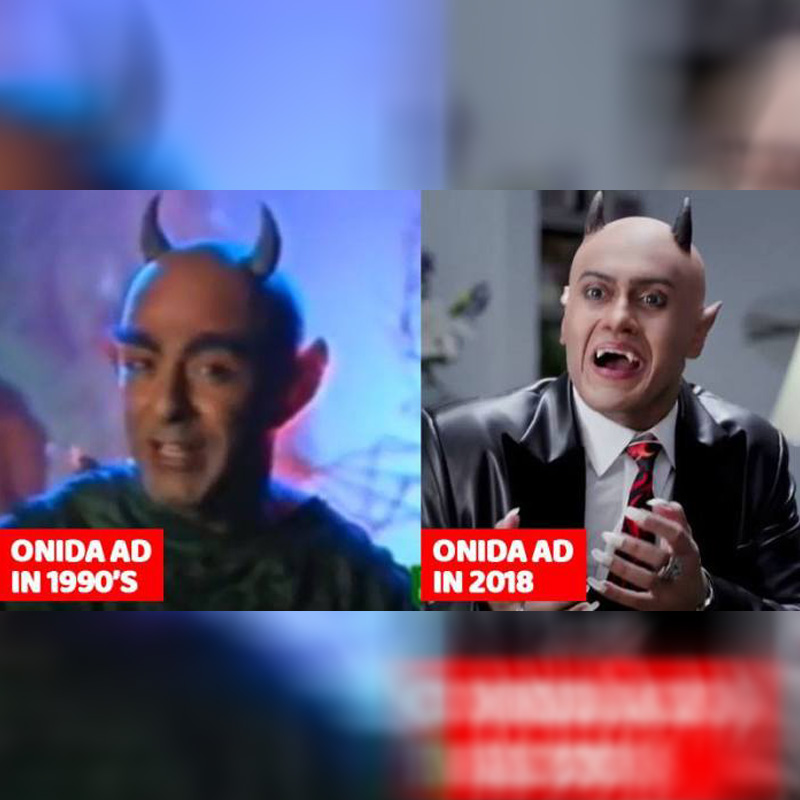
    Just when Onida was on the brink of getting hazed out from consumer’s mind, the company decided to relaunch in June 2018. The brand made a comeback with its much loved/hated devil. Though Onida spent a magnanimous budget of Rs 20-30 crore on advertising across television, print, outdoor and digital, it failed to convert those audiences into customers.

    Earlier this month, Onida appointed Pratyush Chinmoy as head of marketing with key responsibilities intended towards planning and execution of marketing strategies, brand and category management, marketing communication and working on building a strong brand presence.

    Chinmoy has been appointed while the business is trying to rebuild itself after having lost a fair share of customers over the years. In order to tap in new customers and allure them with products and offers, Chinmoy’s immediate focus will be the upcoming festive season, a time when people loosen their purse strings.

    In order to start afresh in the eyes of the consumer, Chinmoy has appointed new faces in the marketing department, has new ideas about product lineups and a new media mix to connect with Gen Z.

    Before joining Onida, Chinmoy has been a part of bigger brands like Asian Paints and Reliance Industries. While he has experienced being a big fish in a small tank, in his second innings, he is a small fish in a much larger tank. The task to resurrect Onida will be challenging for him as he has to push these products to new consumers.

    Speaking about the challenges of scale and capital, he says, “The challenge for me will be to connect with Gen Z who haven’t seen our (Onida’s) previous ads. Another challenge will be to communicate with this generation with the limited budget that we have as we can’t spend on every media out there and only have to do select targeting.”

    India has over 330 million middle class consumers who can only afford mid range products and this is the perfect target audience for the brand.

    Old ad:

    New ad:

    All these years, the company resorted to print media for better ROI at low investment. But with the advent of digital and social media, Chinmoy doesn’t want the company to be left out. In its second innings, the company will use a mix of media to segment its reach. While Chinmoy now wants to use digital to target youth, he says that going forward it will be a mix of all media channels so that the exposure is on all income ranges. Traditional media like print, radio and TV will help the brand in reaching a mass audience.

    The consumer durables market in India was valued at $14 billion in 2017 whereas the TV industry was valued at $9.2 billion. For the company, TV will be its focus area as the growth trajectory in the TV segment is around 15-18 per cent.

    Onida holds a mere 8-9 per cent of the total market share in air conditioner space and the penetration for air conditions in India is as low as 5 per cent which comes majorly from urban areas and metros. The segment contributes to 45 per cent of the company’s turnover, i.e., Rs 370 crore. Mirc Electronics MD Vijay Mansukhani expects it to double this year at Rs 700 crore and reach Rs 1500 crore by 2020

    It’s a test for Indian brands to show their worth in this foreign cluttered market. Chinmoy said, “Personally, I believe that it’s a general perception that international companies have better products, which is not true. Indian brands have great R&D spends and they understand the nuances of Indian audiences and their needs. Patanjali crossed Rs 5000 crore mark and soon after, Hindustan Unilever Ltd launched Ayush. However, the good news is that the consumer mind is changing and shifting towards homegrown brands.”

    It was only last month when Onida launched India’s first TV certified by Google that competes with international brands including Samsung and TCL in the same category. Onida launched its first Google Android 4K UHD Smart TV exclusively on Flipkart with a starting price of Rs 52,000. This was the first time that the brand launched a product exclusively online and the results, according to the company were overwhelming.

    Now with a new face and a new team, it will be interesting to see whether Onida will be able to recreate its old magic.

  • Onida appoints Pratyush Chinmoy as Asst GM for marketing

    Onida appoints Pratyush Chinmoy as Asst GM for marketing

    MUMBAI: Electronics brand Onida has appointed Pratyush Chinmoy as the assistant GM for marketing. He will report to Onida chief executive officer G Sundar.

    Chinmoy joined the company on 9 August and will be based out of Mumbai and operate from the Onida House. 

    Chinmoy will head the marketing department with key responsibilities intended towards planning and execution of marketing strategies, brand and category management, marketing communication and working on building a strong brand presence.

    Speaking on his new role, Chinmoy said to Indiantelevision.com,  “At Onida I will lead the team to manage the ATL and BTL activities along with digital spends. We will create personalised campaign stories and generate more sales and revenue. My primary objective here will be to focus more on digital marketing and we are actually ahead of Samsung and other competition in terms of social presence.”

    Onida was started by GL Mirchandani and Vijay Mansukhani in 1981 and has its own legacy. Excited on joining a brand like Onida, he mentioned, “Onida brand has its own legacy in India. I feel humbled to join a brand like this. The brand has grown in retail presence and we are focusing on tier II and tier III areas more. That is one of the gaps that we have identified and want to focus on.”

    Pratyush is a B Tech (Chemical Engineering) from NIT Rourkela and holds an MBA in Marketing and Supply Chain from XLRI, Jamshedpur. 

    A quality-driven professional, he has 8+ years of experience in category marketing strategy, brand management, new product launches, market research, digital marketing, people management and customer acquisition. 

    He previously led teams in Asian Paints Ltd in brand management and Reliance Industries in marketing for product management.

  • The comeback of iconic brands

    The comeback of iconic brands

    MUMBAI: In today’s metamorphic world, it is a constant struggle for brands to retain their identity and ensure that they are constantly in the minds of people. There have been iconic brands of the past which one fine day decided to vanish into thin air. Though still present, they dropped advertising and years later felt the urge to bounce back with a bang.

    Be it the mango flavoured drink Frooti, or Appy Fizz, Crompton products, deodorant Old Spice, mobile handset Nokia or television champion Onida with its iconic devil, all these brands were superheroes of their own time and in their respective categories but disappeared from television screens with digitisation and modernisation kicking in.

    After being away from television screens for sometime, Parle Agro’s Frooti hit the screens with a new brand ambassador Shahrukh Khan which helped in boosting sales. 

    Old Spice, which was known for its masculine and metrosexual male-dominated ad, came back with its new brand ambassador, Milind Soman in 2013, a man who women believe resonates with the company’s name and is an old spice himself. The ad helped Procter & Gamble (P&G) to target the metrosexual youth of today with India’s own ‘Iron Man’, doubling its revenue.

    The question for any comeback is whether to create a new product or reaffirm the brand legacy. Tonic Worldwide chief strategy officer Unmisha Bhatt believes that it is a bit of both since as long as the brands are broadly loyal to the category, the legacy is maintained. But in some cases, the brand and product may be obsolete. 

    She also notes that legacy can also backfire with millennials considering that the brand could be perceived as fuddy-duddy and outdated as the new age consumer is looking for ‘cooler’ brands and not heritage brands.

    Mediacom India managing partner Niti Kumar notes that once the brand has re-established itself it can move into line extensions and newer audiences and product line to stay relevant. 

    Today, we spend over 70 per cent of our waking hours on digital, especially mobile, with the rise of smartphone usage and data consumption in the broader strata of society. Hence, Bhatt thinks that while using a healthy media mix, brands need to embrace modern technologies so that their strategy is relevant not only for today but is also future-proof.

    While traditional media including television, hoardings, pamphlets among others would have been a great way to communicate and get the message across 20-30 years ago, they are no longer relevant. Today, regardless of the product, digital is the key to every brand’s communication and, hence, brands that want to come back should leverage it.

    One of the most important qualities that a brand needs to possess in this digital age is vigilance as today’s consumer needs answers and assistance at the drop of a hat and if a brand fails to deliver, there is a greater possibility of it snowing in Mumbai than of them giving you a second chance.

    Brands need to stay true to their legacy as it is after all their greatest asset, according to White Rivers Media CEO and co-founder Shrenik Gandhi. He also suggests brands to never underestimate the power of a beautiful story as stories make sales pitches palatable and no one likes to be sold to.

    Brands should play to their strength but they should not overestimate what their heritage brings to the table. Kumar thinks that sometimes, brands tend to think that because they’ve had a history and legacy in the past, it will still be relevant today, but that is not true and brands need to realise it because the consumer and market are evolving.

    For Gandhi, Maggi’s comeback after battling the shattering of trust and the rise of an unprecedented new competitor was something that kept all marketers hooked and was a historic example. To find a place back in the hearts, minds and plates of customers is tough, and Maggi did it effectively, albeit in a lot more than two minutes.

    While for Kumar Old Spice ad stood out among the rest, Bhatt thinks that Onida campaign was a fine example of a comeback and the recent television commercials during IPL matches are an example of that. They have evoked a great response, touching the nostalgic chord of the older generations and the contemporary ‘devil’ appealing to the younger masses also. However, it would have been exciting to see Onida also take a digital leap and connect with the millennials more smartly with engagement driven campaigns, new formats, tech interventions at retail outlets, e-commerce-based innovations and contextual weather-based innovative search campaigns, reviews and tech influencers.

    Communication is a bridge between the old generation and the new, and it helps in reaching smaller pockets of the nation. Any brand that communicates well with its audience is sure to succeed in the long run. This also means, changing the communication and its medium as and when required to keep up with changing times. Here’s to more brands that have resurrected or want to resurrect from the dead to capture the ever-fragmented market!

    Also Read :

    Indian TVCs that rapped with consumers

    Guest column: Ads that didn’t work!

    Mirza and the art of brand endorsement

    New Era up for hard graft in India

  • Onida revives iconic devil for IPL campaign

    Onida revives iconic devil for IPL campaign

    MUMBAI: Homegrown electronics brand Onida, a part of Mirc Electronics, was one of India’s most recognised and acclaimed brands in the early 90s and 2000s. Its CRT TVs helped popularise the brand along with an unforgettable brand ambassador-a devil, replete with horns and a tail, who was later replaced by a married couple in 2010.

    Though its advertising furore died down in the last decade, we are going to see a revival of the iconic devil. As summer rolls in, Onida is gearing up to release a new campaign for its air conditioners, which is timed with the Indian Premier League (IPL), wherein the company is also a presenting sponsor. Rs 20-30 crore has been earmarked for advertising across all formats with Rs 20 crore exclusively to be spent on the IPL with a focus on television.

    Mirc Electronics MD Vijay Mansukhani believes that today the IPL is the hot property in India to invest and the money will be well spent. The campaign consists of 10-second and 30-second ads that will run across television and digital between April and May.

    The brand has roped in Taproot Dentsu to conceptualise the summer campaign which will be followed by seasonal campaigns around the year. Onida will launch a washing machine campaign during monsoon and for microwave ovens during Diwali.

    Since Onida’s devil has been one of the most memorable icons of Indian advertising, Taproot Dentsu Mumbai creative director Neeraj Kanitkar says that they just had to bring him back. The devil has been resurrected in a new avatar as a die-hard fan of Onida inverter ACs. The challenge for Onida will be to engage the generations Y and Z who may wonder ‘what’s the big deal behind a two-horned man’.

    Earlier, the advertising budget was restricted to one to two per cent but has been hiked to three to four per cent today. The company is also reorienting its outlook to suit the digital age as Mansukhani believes that it is the way forward and the revenue from this medium is increasing.

    Mansukhani is aware that the AC segment today is cluttered with the general perception that foreign brands such as Daikin, Carrier or O General are far superior and better and Onida wants to change that.

    Budget constraints and the government’s state taxes and policies had forced Onida to cut back on its advertising and marketing for the past several years. “We had to set up 40 factories and hence the budget cuts. But now with GST, everything has come to a level playing field and Onida has bounced back with profits,” he adds.

    Onida holds a mere eight to nine per cent of the total market share in the air conditioner space and the penetration for air conditions in India is as low as five per cent which comes majorly from urban areas and metros. The segment contributes 45 per cent to the company’s annual turnover of Rs 370 crore. Mansukhani expects it to double this year to Rs 700 crore and reach Rs 1500 crore by 2020. Onida will now focus on the rural market and is betting big on IPL to create awareness about the company during the league.

    He sniffs at the idea of exclusively partnering with particular e-commerce sites, as is the norm today, stating that people should be given the freedom to buy from where they liked.

    Onida is also a major exporter to Gulf countries, which contribute almost 65 per cent to the company’s export revenue while shipments to the fast-growing East African market (Uganda, Tanzania, Kenya and Ethiopia) and the SAARC countries account for 16 per cent of its export revenue. In addition to Gulf countries, Onida has presence in Russia, Ukraine and the neighbouring CIS countries.

    With temperatures expected to soar in the coming days, Onida’s timing to relaunch alongside the IPL is apt. Can the company bring back its lost fortune with the aid of its trusty devil while competing against celebrity-backed rival brands? As they say, ‘the devil lies in the details’!

    Also Read :

    Has advertising finally begun to embrace AI?

    FabIndia sets aside 40% on digital advertising

    Competing with consumer activities not brands: Kingfisher’s Sheikhawat

    Surrogate liquor advertising: Time for change?

  • Rediffusion Y&R India names Rahul Jauhari as chief creative officer

    Rediffusion Y&R India names Rahul Jauhari as chief creative officer

    MUMBAI: Rediffusion Y&R has appointed Rahul Jauhari as chief creative officer. The group will relocate Komal Bedi Sohal to Y&R Singapore as chief creative officer. 


    Jauhari is no stranger to the Rediffusion YR Group. His team created memorable work for the Tata Group on brands likes Tata ACE and Magic. His work was responsible for the successful repositioning of Kaya (Marico) and Onida, to name a few. Prior to Everest, in a seven-year-long stint at Rediffusion Delhi & Mumbai, Jauhari led the creative work on the agency’s biggest account – Airtel.


    Rediffusion Y&R president India Dhunji Wadia said, “Rahul has done a stellar job within the group. What I admire most is his passion and collaborative style of functioning and unending quest for creative excellence. Komal remains an ally within the network and we will continue to take full advantage of that and I wish her the very best in her new role.”


    Jauhari added, “Rediffusion YR Group is home to me. And I’ve enjoyed a great partnership with Dhunji over the last few years. Both Dhunji and I believe creativity is the pursuit of the entire agency and not just a department. For now, we’d like to put our heads down and focus on just that. The work comes first. Everything else will follow.”


    On the other hand, Sohal has spent the last two years as CCO at Rediffusion Y&R India, during which time the agency has undergone a resurgence, with a run of 16 new business wins and a return to The Economic Times’ list of India’s top 10 advertising agencies. 


    Commenting on her new role, Sohal said, “In the past two years Rediffusion has emerged as the top ten agency, won new business, awards and recognition. I am extremely thankful to our clients who have supported the creative and the teams who have tirelessly executed it. After two decades in India and Middle East, I am now ready to explore the exciting and emerging markets of South East Asia. I look forward to taking on new challenges at Y&R Singapore. I’m confident it will be equally thrilling and fulfilling.”


    Y&R Singapore managing director Melvin Kuek said, “Komal’s track record of both new business and awards success make her an ideal creative partner at the helm of Y&R Singapore. Having also ramped up the agency’s strategic planning team we’re very optimistic for 2015.”


    Over the past four years, Everest Brand Solutions under Jauhari’s leadership added accounts like SAB TV (Sony Entertainment), CNN IBN, Kotak Mutual Funds, India First General Insurance, Onida, Catch Spices (DS Group), Aditya Birla Retail & more. In addition to this, the agency added multiple brands from its largest account Parle Products. 


    Jauhari and his team helped building SAB TV from scratch to a powerful brand in the Indian GEC space. ‘Asli Mazaa Sab Ke Saath Aataa hai’ a line coined by Jauhari, was a campaign that has stood the test of time. Under his watch, Everest has rolled out significant work for Parle. From a most unusual set of five second TVCs for Parle G titled ‘Pehle Wali Baat’, to visible campaigns for Londonderry, Parle Marie and recently launched Parle Simply Good.

  • Lowe Lintas and Partners sign on over 100 new businesses in 15 months

    Lowe Lintas and Partners sign on over 100 new businesses in 15 months

    MUMBAI: In a year that was relatively sluggish for the industry, Lowe Lintas and Partners announced today that they registeredover 100 business wins in the past 15 months. These wins have come across its 7 divisions and 9 offices in India.


    Joseph George (Joe), Chief Executive Officer – Lowe Lintas and Partners says, “2013was the culmination of an aggressive 3 year New Business plan that was put in place in early 2011; resulting in us, signing up upward of 300 new businesses in this period.Fantastic work leading to in-market success of our existing brandshas played a disproportionate role in helping us earn the confidence of new clients.I have always believed that doing well on Existing business is the best strategyto acquire New business”


    Some of the clients acquired in this period include Hero Motocorp, myntra.com, STAR TV, OLX, Heinz, Bharat Matrimony, Onida, Expedia, bookmyshow, Milma, Coir Board, Bharat Benz, Max Bupa, Finolex, Gyproc, Apollo Hospitals, Wockhardt, Bharat Forge, MCX, Heinz, Rajasthan Tourism, Nutricia, Mahanagar Gas, Dr. Reddy’s Labs among many others…


    Lowe Lintas and Partners, IPG’s largest operation in India,partnersabout 250 clients. Some of whom, amongst India’s most successful and marketing savvy companies–Aditya Birla Group, Arvind Brands, Axis, Britannia, Croma, Dabur, DLF, Essar, Future Group, Godrej, Havell’s, Hindustan Unilever, ICICI, ITC, Johnson & Johnson, Maruti, Micromax, MRF, Nestle, Croma, Tata Tea, Tanishq, Times Group, Videocon to name a few.


    OpineAmer Jaleel and Arun Iyer, National Creative Directors at Lowe Lintas – “The agency has put out the best body of work in the industry; now for 2 years in a row. So while 100 or 300 is a statistic that we are certainly very happy about, what is even more gratifying,is that the infectious energy ofthese wins are spurring on all of us to deliver even better work”


    Lowe Lintas and Partnershas traditionally been a strong player in advertising; but in recent times, its divisions outside of advertising have been significant contributors to business growth. A reasonable chunk of the over 100 wins have been accounted for, by LinOpinion-Golin Harris (Public Relations), LinEngage (Activation), dCell ( Design ), LinTeractive-Interactive Avenues and LinHealth-ICC (Healthcare Marketing)


    Some of the clients acquired in this period by the “non-advertising” divisions include Shapoorji Group, Brylcreem, Bru Coffee, Haldiram’s, Abbot India, Piramal, Mattel Toys, Tata Asset Management, Supermax, Wadhawa Group, NEC India, Herbalife, INOX, G.M. Pens, VST Industries, Govt of Netherlands, Onida, Sony Max, Bangalore Literature Festival among many others..


    Vikas Mehta, Chief Marketing Officer – Lowe Lintas and Partners said, “For the past year or so, we’ve gone about client acquisition as a group in a lot more orchestrated manner. It’s heartening to see our divisions like PR, Activation, Digital and Healthcare firing too.The investments we made through partnerships like Interactive Avenues and Golin Harris have shown results and we would like to make further and faster strides in that direction.”


    Joseph George concludes “An often used metric byclients to evaluate apotential agency partner is the consistency with which itkeeps putting out work that impactsbonding, buzz and business results. And most new prospects find us doing rather well on that count…”