Tag: OneWeb

  • Eutelsat confirms ground infra sale deal with EQT Infrastructure

    Eutelsat confirms ground infra sale deal with EQT Infrastructure

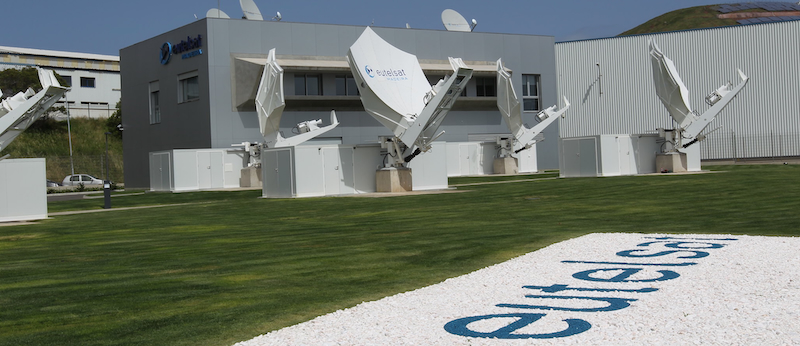
    MUMBAI: Communications satellite firm  Eutelsat group has exercised the put option signed with EQT Infrastructure VI fund (“EQT”) on 9 August 2024 regarding a majority stake in a newly created entity that will hold Eutelsat’s passive ground infrastructure assets. This decision follows the completion of the consultation processes with relevant employee representative bodies of Eutelsat. 

    The exercise of the put option led to the signing of a binding share purchase agreement (SPA) between Eutelsat and EQT. 

    As announced on 9 August 2024 upon signing of the put option agreement, the transaction consists in the carve-out of the Eutelsat’s passive ground infrastructure assets (land, buildings, support infrastructure, antennas and connectivity circuits for the combined portfolio of teleports and SNPs) to form a new company to be incorporated as a standalone legal entity.

    Eutelsat has around 1,400 antennas across more than 100 locations globally, allowing satellite communications for Eutelsat group, OneWeb and third party clients.

    Under the terms of the agreement, EQT will acquire an 80 per cent stake in this new entity, while Eutelsat group will remain committed as long-term shareholder, anchor tenant and partner of the new company with a 20 per cent holding alongside EQT. 

    The transaction values the new entity at an enterprise value of €790m. It remains subject to customary conditions precedent, and closing of the deal is expected in the first quarter of calendar year 2026.

  • Satellite remains an essential element of video distribution: AVIA

    Satellite remains an essential element of video distribution: AVIA

    Mumbai: The Asia Video Industry Association (AVIA) hosted its annual satellite industry forum on 18 November as a virtual conference.

    The forum opened with a look at satellite trends and forecasts post-Covid with Quilty Analytics senior analyst Caleb Henry. The traditional satcom industry continues to be in a state of rapid change, and still in a state of turmoil. While the industry is currently dominated by a handful of major players, this could also change dramatically over the next five years as new technologies and standards reset the competitive landscape. And despite the impact of Covid-19, there has been no let-up of interest in investment into the space industry with $5.5 billion in collective proceeds from all 13 space SPACs.

    AVIA was also privileged to host Stephen Spengler for his final keynote before he steps down as CEO of Intelsat. Spengler had spoken at the satellite industry forum for his first keynote as CEO in 2015, hence it was fitting the forum was his final address as well.

    While the industry continues to innovate and push the boundaries of what is possible, it has yet to reach its full potential in fulfilling its essential role in the global telecommunications landscape. With digital video making up 70 per cent of internet traffic, satellite remains the essential and enabling technology, with the ubiquity, reach, and economics to serve the networks.

    Spengler’s outlook on industry trends for Asia remains positive, with linear and pay-TV distribution still a driving application for the Asia Pacific region, with a growth rate of 2.5 per cent per year. Spengler was also excited about 5G being a huge enabler and game-changer. With satellite fully integrated into the 5G world, it will make solutions and services more seamless, interconnected, and economical.

    Wrapping up his keynote address, Spengler shared Intelsat’s mission to unify the global telecoms ecosystem of the future. The vision requires all satellite and terrestrial technologies, networks and providers, and solutions and services to be unified as one global ecosystem. “If we focus on our customers, the people who benefit from a more connected world, that is success for the next year and beyond,” said Spengler.

    Asia Pacific’s leading satellite operators also shared similar positive sentiments despite the move from broadcast to streaming. MEASAT COO Yau Chyong believes that satellite will still be the main platform to deliver video services nationwide in Malaysia, and it is the platforms themselves who are transforming their services to include streaming. Hence broadcast and streaming will complement each other, with linear still having a role to play, and streaming alongside it. Similarly in Australia, despite a plethora of streaming services available, Optus head of satellite and space systems Nick Leake still sees the same requirements for satellite to go out for at least another ten years. The greatest issue for Asia Pacific remains one of scale, in order to provide reliable networks to serve the customers, added AsiaSat CEO Roger Tong. Tong believes that moving forward, creating more partnerships between competing satellite operators is important, especially when regulatory restrictions on consolidation remains a key challenge in the region.

    Bharti Enterprises founder and chairman and OneWeb executive chairman Sunil Bharti Mittal also joined the forum this year for a keynote conversation on the space business in India. With the holy grail of low latency, high speed, and sufficient capacity resolved by NGSOs, it has become a solution that works for the new world and into the future. 5G, too, is seen as a game-changing technology for Mittal, with its extremely low latency a boom for industry applications. However, Mittal also noted that while NGSOs will have an important role to play in the 5G ecosystem, it will only be at the periphery of supporting 5G ambitions. Mittal also shared OneWeb’s vision to connect all areas of the world, from oceans to aviation. “In 5 years’ time. . . there should not be anybody in the world that is not connected,” said Mittal.

    The satellite industry forum is generously sponsored by AsiaSat, Eutelsat, Hughes, Intelsat, Marsh and Maxar.

  • Govt satellite launches, including from India, to dominate future space market: Euroconsult

    Govt satellite launches, including from India, to dominate future space market: Euroconsult

    NEW DELHI: A major portion of satellites slated to be launched from 2016-2015 with launch mass over 50kg will be dominated by government satellites from countries like the US, Russia, India, China and Japan, according to Euroconsult.

    The 1,450 satellites over 50kg to be launched over 2016-2025 should represent a market of $250 billion for the space industry to build and launch.

    If satellites smaller than 50kg and the two mega constellations of OneWeb and SpaceX are also included in the number of launches, the total for the decade would grow precipitously to 9,000 units (vs. 1,480 launched in the past ten years), states extracts from the Euroconsult’s 19th edition of the report, `*Satellites to be Built & Launched over the next 10 Years’*, due to be published later in September.

    A price decrease is visible in this core market of the industry, driven by 11 commercial constellations using 370 small satellites to be deployed into low or medium Earth orbits for communication or Earth observation, the report says.

    “Huge growth in satellite count does not automatically translate to a large market,” Rachel Villain, Principal Advisor at Euroconsult and editor of the report, was quoted in a statement put on Euroconsult’s website.

    According to Villain, “As the price of the 7,550 future additional satellites is intrinsically low, the very reason for their existence, their market significance is small; they should represent no more than 8 per cent of the $270 billion to be spent building and launching the total of 9,000 satellites.”

    Euroconsult is a leading global consulting firm specializing in space markets. As a privately-owned, fully independent firm, it provides strategic consulting, develops comprehensive research and organizes executive-level annual summits and training programs for the satellite industry.

    Interestingly, over three quarters of the market remains with government satellites. The 880 satellites to be launched for civilian and military agencies in 60 countries represent a market of $193 billion.

    Governments dominate the space industry as established space countries replace and expand their in-orbit satellite systems and more countries acquire their first operational satellite systems, usually for communications or for Earth observation and imagery intelligence, Euroconsult statement says.

    “About 85 per cent of the government market will remain concentrated in the ten countries with an established space industry (U.S., Russia, China, Japan, India and five European countries). Other 50 countries engaged in space activities will launch twice the number of satellites that they did in the past ten years, that is almost 200 satellites. About half of these satellites will be procured from foreign manufacturers as domestic industry capabilities develop in these countries,” the Euroconsult statement asserts.

    In India, satellite launches are done by the state-controlled Indian Space & Research Organisation (ISRO) with some smaller satellites being built by rare private companies, but with dollops of help from ISRO, which has also launched foreign satellites in recent times, including American.

    In the commercial space sector, Euroconsult anticipates a total of 560 satellites to be launched over the decade by 40 companies. Most of these satellites will be for the replacement of the communications capacity currently in orbit. Over two-thirds of the commercial space market remains concentrated in geostationary orbit, the destination of almost 300 satellites operated by 30 companies for communications and broadcasting services.

    The 11 commercial constellations to be launched into non-geostationary orbits for communications services and Earth observation imagery should represent a market of $1.6 billion per year on average over the decade.
  • Govt satellite launches, including from India, to dominate future space market: Euroconsult

    Govt satellite launches, including from India, to dominate future space market: Euroconsult

    NEW DELHI: A major portion of satellites slated to be launched from 2016-2015 with launch mass over 50kg will be dominated by government satellites from countries like the US, Russia, India, China and Japan, according to Euroconsult.

    The 1,450 satellites over 50kg to be launched over 2016-2025 should represent a market of $250 billion for the space industry to build and launch.

    If satellites smaller than 50kg and the two mega constellations of OneWeb and SpaceX are also included in the number of launches, the total for the decade would grow precipitously to 9,000 units (vs. 1,480 launched in the past ten years), states extracts from the Euroconsult’s 19th edition of the report, `*Satellites to be Built & Launched over the next 10 Years’*, due to be published later in September.

    A price decrease is visible in this core market of the industry, driven by 11 commercial constellations using 370 small satellites to be deployed into low or medium Earth orbits for communication or Earth observation, the report says.

    “Huge growth in satellite count does not automatically translate to a large market,” Rachel Villain, Principal Advisor at Euroconsult and editor of the report, was quoted in a statement put on Euroconsult’s website.

    According to Villain, “As the price of the 7,550 future additional satellites is intrinsically low, the very reason for their existence, their market significance is small; they should represent no more than 8 per cent of the $270 billion to be spent building and launching the total of 9,000 satellites.”

    Euroconsult is a leading global consulting firm specializing in space markets. As a privately-owned, fully independent firm, it provides strategic consulting, develops comprehensive research and organizes executive-level annual summits and training programs for the satellite industry.

    Interestingly, over three quarters of the market remains with government satellites. The 880 satellites to be launched for civilian and military agencies in 60 countries represent a market of $193 billion.

    Governments dominate the space industry as established space countries replace and expand their in-orbit satellite systems and more countries acquire their first operational satellite systems, usually for communications or for Earth observation and imagery intelligence, Euroconsult statement says.

    “About 85 per cent of the government market will remain concentrated in the ten countries with an established space industry (U.S., Russia, China, Japan, India and five European countries). Other 50 countries engaged in space activities will launch twice the number of satellites that they did in the past ten years, that is almost 200 satellites. About half of these satellites will be procured from foreign manufacturers as domestic industry capabilities develop in these countries,” the Euroconsult statement asserts.

    In India, satellite launches are done by the state-controlled Indian Space & Research Organisation (ISRO) with some smaller satellites being built by rare private companies, but with dollops of help from ISRO, which has also launched foreign satellites in recent times, including American.

    In the commercial space sector, Euroconsult anticipates a total of 560 satellites to be launched over the decade by 40 companies. Most of these satellites will be for the replacement of the communications capacity currently in orbit. Over two-thirds of the commercial space market remains concentrated in geostationary orbit, the destination of almost 300 satellites operated by 30 companies for communications and broadcasting services.

    The 11 commercial constellations to be launched into non-geostationary orbits for communications services and Earth observation imagery should represent a market of $1.6 billion per year on average over the decade.