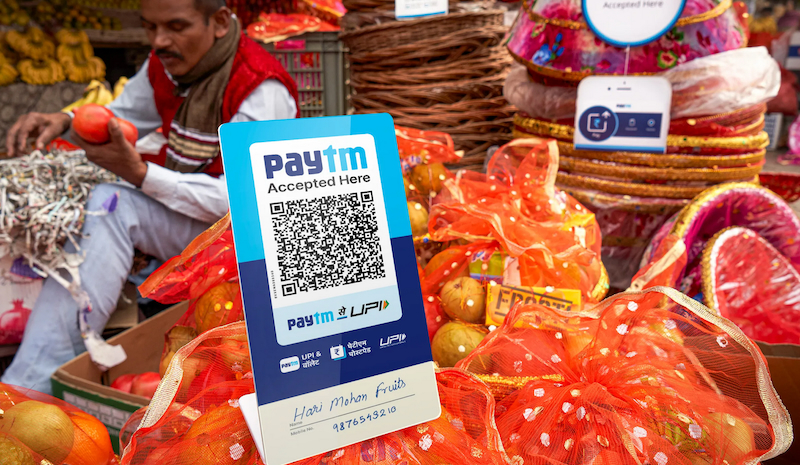
MUMBAI: Digital payments powerhouse, Paytm, has rolled out its Q3 FY25 financial report, revealing both triumphs and trials. But before we get into the nitty-gritty, let’s rewind a bit.
Founded by Vijay Shekhar Sharma, a man whose billion-dollar smile once symbolised the fintech boom, Paytm’s journey has been nothing short of a Nolan blockbuster—full of twists, drama, and cliffhangers.
Valued at a staggering $16 billion during its 2021 IPO, Paytm was riding high on the wave of digital transformation. Fast forward to today, and that valuation has taken a reality check. Then there’s the infamous Paytm Payments Bank fiasco—a debacle where the Reserve Bank of India (RBI) froze new customer onboarding in 2022, leaving users stranded like passengers at a cancelled train station. Trust took a nosedive, and so did Paytm’s goodwill.
Add to this the rising competition in a thriving fintech ecosystem, and you’ve got yourself a classic ‘hero vs. villains’ plot. But here’s the big question: can Paytm channel its inner phoenix and rise from these ashes, or are these missteps just the beginning of a longer slide? Let’s dive into the numbers—and the drama—to decode where Paytm truly stands today.
Consolidated Results
Paytm’s consolidated revenue from operations for Q3 FY25 stood at Rs 18,278 million, which, while a 10 per cent rise from the previous quarter, still missed the dazzling Rs 21,379 million achieved in the same period last year. Add Rs 1,887 million in other income, and the total income stood at Rs 20,165 million—a decent climb, but far from scaling Everest.
Payment processing charges surged to Rs 9,910 million over nine months—a stark reminder that in the fintech world, expansion doesn’t come cheap. Meanwhile, employee benefit expenses slimmed down to Rs 21,186 million from last year’s Rs 30,640 million, showing that cost-cutting is very much in fashion at Paytm HQ. Despite this, profitability remains more elusive than your favourite radio station’s caller contest jackpot.
Now, let’s talk about profits… or their absence. Paytm posted a net loss of Rs 2,035 million for Q3, contributing to a cumulative nine-month consolidated loss of Rs 14,486 million. While the EBITDA margin did show some improvement, suggesting baby steps towards sustainability, one can’t help but ask: Is Paytm attempting to juggle too many flaming fintech ambitions at once? Will it ever strike the perfect balance, or is this the fintech equivalent of chasing unicorns?
Standalone Results
In standalone terms, Paytm reported Rs 14,916 million in revenue from operations for Q3, marking a steep drop from Rs 21,379 million a year ago. Total income for the quarter stood at Rs 16,603 million, supported by Rs 1,687 million in other income—a much-needed silver lining in an otherwise cloudy quarter.
On the cost front, payment processing charges reached a hefty Rs 9,910 million over nine months. Meanwhile, marketing and promotional expenses in Q3 hit Rs 1,383 million. These figures tell us one thing loud and clear: Paytm is playing hard to stay visible in a crowded market. But here’s the catch: at what cost? The standalone net loss for Q3 stood at Rs 2,053 million, bringing the nine-month tally to Rs 2,085 million. Ouch!
The EBITDA, meant to showcase operational efficiency, seemed to be waving a white flag, coming in at Rs (14,666 million) for the nine months. However, the loss per share for the same period narrowed to Rs 3.28 from a jaw-dropping Rs 14.35 last year. Could this be a sign of recovery, or just a smaller storm brewing? Either way, Paytm’s ambitious growth strategy will need more than just cost-cutting to turn this ship around.
Despite financial headwinds, Paytm’s focus on strengthening its core offerings is clear.
Key operational highlights include:
. International expansion: Subsidiary Paytm Cloud Technologies plans to establish entities in the UAE, Saudi Arabia, and Singapore. Is Paytm gearing up to become the global leader in digital payments?
. GIFT City initiatives: A move to incorporate subsidiaries in Gujarat signals a deeper commitment to domestic fintech innovation.
. Default Loss Guarantee: The DLG limit for merchant lending has been raised from Rs 225 crore to Rs 350 crore, enhancing support for SME growth.
Yet, regulatory uncertainties loom. The Reserve Bank of India’s restrictions on Paytm Payments Bank remain unresolved, and the company’s investments in its associate have been impaired by Rs 2,096 million.
Paytm’s financials reflect a company in transition, balancing the costs of aggressive growth with the harsh realities of an unforgiving market. It’s the classic tale of ambition meeting its archnemesis: practicality. As the digital payments sector surges ahead, Paytm is busy laying tracks to new horizons—geographies, services, and market opportunities. But is this the innovation express, or a high-speed derailment waiting to happen?
Let’s not forget the backdrop: a thriving fintech economy, where competitors are sprinting ahead while Paytm retools its strategy. Investments in new geographies, like its UAE and Singapore expansions, could be the ticket to redemption. Or will these plans go the way of the once-famous “Paytm ka ATM” campaign—promising, but ultimately short-lived?
Here’s the kicker: Will these grand strategic pivots deliver the profitability Paytm desperately needs, or will the costs of expansion continue to weigh like a proverbial albatross? For now, stakeholders can do little but watch this financial drama unfold.
Key Financial Highlights
. Consolidated Revenue: Rs 18,278 million for Q3; Rs 49,889 million for nine months.
. Standalone Revenue: Rs 14,916 million for Q3; Rs 39,055 million for nine months.
. Net Loss: Rs 2,035 million for Q3 consolidated; Rs 14,486 million for nine months consolidated.
. EBITDA Margin: Improved due to cost controls.
. DLG Expansion: Raised to Rs 350 crore for merchant lending.