Tag: Omnicom Media

  • Omnicom Media enlists Varuni Vij as vice-president

    Omnicom Media enlists Varuni Vij as vice-president

    MUMBAI: Omnicom Media group has signed up Varuni Vij as vice-president from this month. Vij has  a large part of her 16 years of working in media agencies, moving onto the client’s side in 2020 when she started  working with Reckitt.

    Vij has had stints with Zenith, Madison World, Carat, Mindshare and Initiative over her career. Her last job was with the Good Glamm Group, where she says she “started as a media lead. But  I significantly enhanced our brand’s visibility and engagement, leveraging my media expertise and passion for beauty and personal care I was promoted to Brand side for notable Beauty & Personal care brands – Organic Harvest, Manish Malhotra Beauty and POPxo makeup.”

    Her going back to the agency side will be a homecoming of sorts. 

  • Will non-fiction shows witness growth post IPL?

    Will non-fiction shows witness growth post IPL?

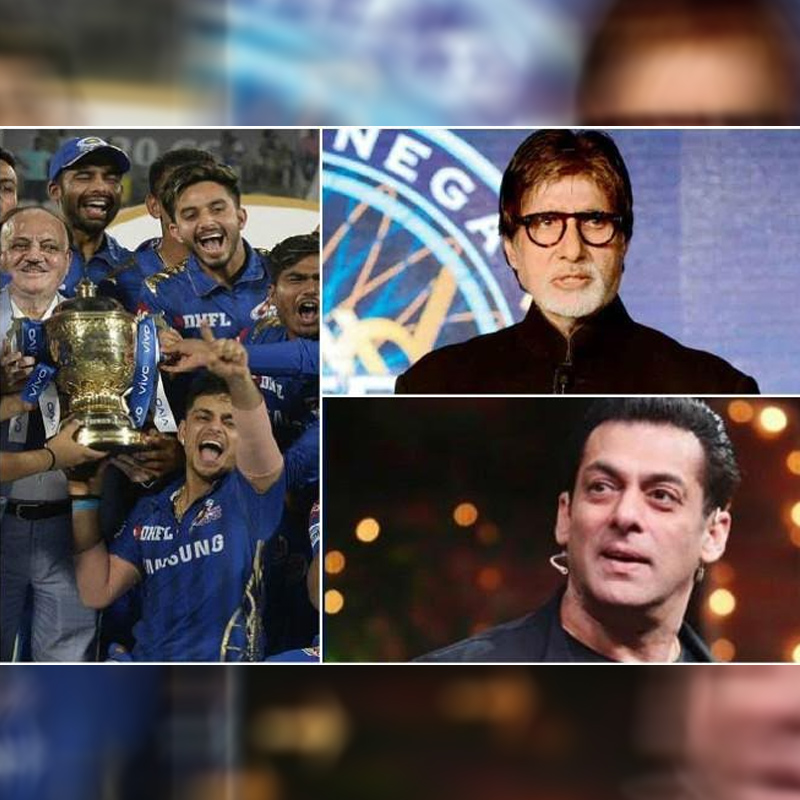
    MUMBAI: IPL 2020 was the first major live sporting event since the lockdown began. Despite a delayed start owing to the pandemic, it proved to be a respite for Indian audiences who were wilting on a diet of TV news and reruns. Not to mention that it gave a new lease on life to advertisers to once again build a connect with consumers and attain the pre-Covid reach levels. BARC reported that the 13th edition of the league, which has an estimated brand value of $6.8 billion drew record television and digital viewership. The IPL opener was viewed by 200 million plus audiences and a staggering 31.57 million watched the tournament, clocking a 23 per cent rise in eyeballs.

    This year, marquee non-fiction properties Kaun Banega Crorepati (KBC) season 12, Bigg Boss season 14, Fear Factor-Khatron Ke Khiladi, India’s Best Dancer, The Kapil Sharma Sharma, Super Dancer were launched while the IPL was underway. Indian Idol season 12 started after IPL ended. The upcoming non-fiction shows are Taare Zameen Par and Dance Deewane 3. While the league may have gone relatively unscathed in terms of sponsors and revenue (BCCI being cagey about financials notwithstanding), several media experts had pointed out that the overlap of the tournament with the festive season and audience shift to OTT platforms would impact the revenues of television networks.

    By the by, both shows managed to rope in a sizeable number of sponsors and partners (KBC – 10, Bigg Boss – 15). But they failed to make a splash in their opening week – BARC data reflects that none of them broke into the top five shows in the Hindi GEC category. However, the report also stated that Bigg Boss clocked 3.9 billion minutes in the same period, the highest in the last three seasons.

    BARC is yet to release data on how these shows have performed since they premiered this season.

    But the question remains that with IPL over, viewers of the non-fiction genre need the next big thing for their daily dose of entertainment. Will this quest for serotonin give a boost to the genre and viewership? 

    The industry is divided, where some believe that now the IPL is over, things will get better for non-fiction shows in terms of ratings and revenue. Others think that overall market sentiment is low with the festive season behind us. Revival will come, but not before January 2021.

    The Media Ant CEO and founder Samir Chaudhary said, “Both KBC and Bigg Boss have not performed as compared to last year. IPL definitely has a role to play, given that both shows launched during the tournament, which is an unusual scenario. Diwali was the peak season for all advertisers, but now overall ad volumes have gone down. The volume was driven a lot by automobile and e-commerce companies, and both have now come out of their peaks. We are expecting the volumes to come back by mid-December when the second round of sale comes up."

    He further qualified this by saying that since the IPL is over, the shows may see traction and gain a new set of advertisers by mid-December, but that remains to be seen.

    Wavemaker India managing partner Mansi Datta echoed the sentiment and added, “Post IPL (data for four days post IPL), these programs have seen an increase in viewership across different cohorts by 5-15 per cent. This indicates that the audience viewership movement is to be further expected across both genders/age groups. This would also hold the case as momentum for these episodes gain, the viewership will climb.”

    Traditionally, Dussehra-Diwali is the reaping period for TV networks as they launch big-ticket fiction and non-fiction properties, helping them attract advertisers. Estimates are that marketers signed checks to the tune of Rs 24,000 crore during the festival period last year. The pandemic and the lockdowns over the past six months have resulted in Indian advertising expenditure shrinking by as much as 39 per cent since. Soothsayers predict that 2019’s festive season ad-ex will not be breached this year.

    Elara Capital vice president Karan Taurani observed that both ratings and ad volumes of non-fiction shows have gone up but the issue is pricing. Viewership ratings have increased by 10 to 15 per cent but compared to last year the rates are still low. “From October to November, the TV advertising segment grew by 10 to 12 per cent. But post festivities, the entire media plan was put on hold based on how the market functions in terms of consumption pattern. The growth was not sustainable.”

    Taurani projects December to be slightly down in terms of advertising. “But hopefully, January and February will see some relief and the market will bounce back,” he added.

    In terms of ad volumes, both properties have brought in a lot of advertisers, in fact the difference in the total number of advertisers onboard with the IPL and Bigg Boss was just 10 per cent. Others emphasise that these programmes got new sponsors, even those that stayed away from IPL, and the inventory level is almost full.

    Havas Media buying national head R Venkatasubramanian pointed out that now advertisers have the option to choose between HD and SD platforms separately. Hence, the number of advertisers are more in both properties, a win-win for brands and channels.

    During the pandemic, the lines have blurred between primetime and non-primetime. Content consumption patterns have also changed. In an average household, while women and family audiences have been glued to fiction serials, young viewers have taken either to the IPL or to online content that is slowly attracting Hindi-speaking viewers.

    Omnicom Media Group chief investment officer Mamatha Morvankar shared that initial trends post the closure of IPL 2020 are certainly encouraging. Both KBC and Bigg Boss, Sa Re Ga Ma Pa, have shown an uptick in TVRs. In the case of Bigg Boss, the increase was largely attributed to time spent by viewers, whereas for KBC the surge was both with regards to reach and time spent. KBC had its one crore winners in the weeks following IPL and that aspect would have had a positive impact on ratings.

    A media professional, on the condition of anonymity, mentioned that Bigg Boss – which is already on the verge of completing two months – is introducing new formats and twists to lure viewers. And while advertisers are coming on board, they’re doing so on discounted rates.

    But despite challenges, reality shows are slowly but steadily gaining the power to create an impact in the wake of IPL. Morvankar explained, “This is also showing in terms of the ad volumes. Both these reality programs are signing on new sponsors post the IPL 2020 season and going full-on their inventory. KBC has even gotten an extension of four weeks, now stretching to end in January, which should also extend the ratings momentum. These early signs are promising enough for us to anticipate that impact reality shows such as these are set to take the coming quarter by storm.”

    If reports are to be believed, the IPL has already eaten up a Rs 2,500-crore slice of the ad-ex pie. But some experts still hold that non-fiction shows are on a growth trajectory. It will be interesting to see if the genre will hit it out of the park in the coming months or if it’s samay samaapt for it.

  • Motorola hands social & digital mandate to Omnicom

    Motorola hands social & digital mandate to Omnicom

    MUMBAI: Motorola Mobility India has awarded its social media and digital creative mandate to Omnicom Media Group post a multi-agency pitch.

    Omnicom partnered with 21N78E Creative labs for the pitch and the business will be managed out of Gurgaon.

    Motorola head of marketing Rachna Lather says, “Our brand and products are uniquely placed in the consumers’ mindset. An iconic brand with a youthful energy, our brand resonates well with our audiences. We have a good line-up of launches this year, starting with the launch of moto g6 and moto e5 families. We were looking for potential partners who could help push the envelope, think strategically and conceptualise campaigns that can break the category code.”

    Omnicom Media Group managing director Sudhir Nair adds, “I remember my Motorola handsets from the past, because of the brand’s strong marketing campaigns and positioning. The brand is indexed heavily on the fan following it enjoys, as well as the USPs and features that make it a great product. Needless to say, this win reinforces Omnicom Media Group’s credentials as a full-service media network.”

    21N78E COO Nikhil Shahane mentions, “As an agency that was setup to bridge the ever-increasing gap between businesses and today’s consumers, Motorola is the perfect brand for us to partner with. We’re excited to leverage our creative-tech capabilities as we collaborate on how best to do disruptive work to match the devices that make this a youth brand.”

  • Omnicom elevates Jyoti Bansal, Shavon Barua

    Omnicom elevates Jyoti Bansal, Shavon Barua

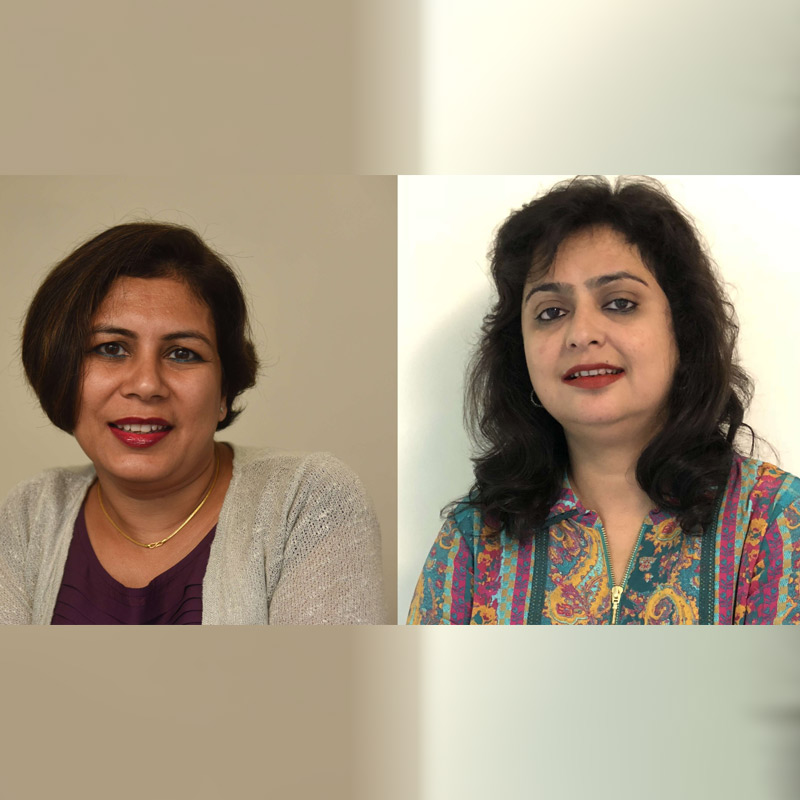
    MUMBAI: Omnicom Media Group has strengthened the leadership of its media agency, PHD India, having promoted Jyoti Bansal to the role of CEO and Shavon Barua to chief client officer.

    The promotions follow the exceptional growth and performance of the agency over the past few years under these leaders’ tenures.

    An engineering and MBA graduate, Bansal joined Omnicom Media Group in 2009 to lead its new business initiatives and when PHD India was established, she was appointed to lead the new agency. Under her leadership, the agency has continued to climb from strength to strength, winning global, regional and local accolades for its innovative approach to communications planning. As CEO, Bansal will focus on expanding PHD’s footprint in India through continued digital transformation and innovation in the media space.

    Barua joined PHD in 2015 as managing partner to work on the Hindustan Unilever business from the agency’s Mumbai office. Over the past three years, she has played an instrumental role in growing the business, gaining invaluable experience that she will now leverage in her new role. As CCO, Barua will now work closely with Bansal to further develop PHD’s market-leading and award-winning client offering.

    Speaking on the promotions, Omnicom Media Group India CEO Harish Shriyan said, “With a unique leadership mix of Jyoti’s media prowess and Shavon’s creative background, PHD India has soared to incredible heights over the past few years, becoming one of India’s most acclaimed media agencies. These well-deserved promotions will ensure PHD India continues to scale new heights, as they continue to find a better way for their team, clients and partners.”

    “Over the years, we have built a highly differentiated offering in the market, rooted in a culture of smart strategic thinking and creative innovation,” said Bansal. “From a young challenger brand in the market to winning Media Agency of the Year, the last five years have been an exhilarating journey. I look forward to continuing forging a future-ready agency, helping clients’ future-proof their businesses and working with the team to produce more industry-leading work.”

    Barua added: “At PHD, our mission has always been about ‘finding a better way’ to produce innovative communications solutions work for our clients. In my new capacity, I look forward to combining gamification techniques with hard-core strategic principles to spark further innovation and deliver stronger business results for our clients.’’

    The promotions are effective immediately.

  • OMD China unveils data smart television measurement tool

    OMD China unveils data smart television measurement tool

    MUMBAI: OMD China has launched Predictor 2.0 – a tool, which is designed to help marketers evaluate the real value of existing TV programs.


    Predictor 2.0 also predicts future TV ratings by taking into account various factors which influence it.


    Brands continue to pay record prices for TV show sponsorships, yet the effectiveness of their investments remains open for deliberation and measurement. Predictor 2.0 quantifies the real value of TV programming through a combination of TV ratings and social buzz created.


    “It’s a breakthrough in television measurement. Previously TV had been measured by a one dimensional indicator – “ratings.” We created Predictor 2.0 in response to a staggering amount of evidence related to social interactions emanating from TV programs. Hence, Predictor 2.0 combines a very important factor ‘social influence’ on TV ratings and also the reverse influence of TV in the social space. Together, these two effects can push a program to its peak popularity or drive the ratings down,” said Omnicom Media Group Asia head of brand science Saurav Bhowmik.


    Additionally, Predictor 2.0 has algorithms and machine learning capabilities to forecast the future of a program to help marketers by understanding the audience around a TV show even before it premieres as well as breaking down the elements of branded content which potentially creates the biggest ratings impact.


    Currently, there are other program evaluation systems, which provide a “forecast” function, but they have a qualitative approach rooted in an expert based scoring system. These systems provide “recommendation scores” instead of directly predicting the ratings. Predictor 2.0 has a more quantitative approach, which links program information to social media attention indexes and hence evaluates and recommends content opportunities.Predictor 2.0 identifies 12 key topics through social big data (at least 10M social posts) and with modeling, links the TV rating to quantify the real value of the program. In addition to social buzz, other factors considered in the prediction model include: the TV channel, celebrities/producers, on-air time-slot, and competition with other key programs. Because of this, it is also feasible to do forecasting for new TV programs as well.


    OMD China CEO Arlene Ang said, “OMD is committed to developing data smart media solutions, and we are continuing to set the industry standard by developing the first program assessing tool. Innovation is key to our success and Predictor 2.0 is an example of how we are committed to being at the forefront of game changing thought leadership.”

  • Omnicom Media Group APAC launches mobile unit Airwave

    MUMBAI: Omnicom Media Group – Asia Pacific has launched a new mobile unit, Airwave.

    Airwave is a specialist business unit which brings together the strategic and activation capabilities of OMD and PHD in the mobile space.

    The new organisation aims to drive market-leading data, targeting and experiential capabilities across the dynamic media and devices segments in the region.

    Platforms Asia Pacific CEO Lee Smith said, “Mobile is the least brandished weapon in the arsenal of connected media platforms in this region. Our relentless drive to empower all media with the connectivity and accountability of digital platforms is coming to life via mobile. We‘re very excited to position our fantastic talent inside a powerful nucleus like Airwave.”

    Omnicom Media Group APAC CEO Barry Cupples added, “Devices have become ubiquitous now, making the mobile revolution in Asia Pacific an opportunity that marketers cannot afford to ignore. As the fastest growing mobile market in the world, the Asia Pacific region is poised to be a dominant player in the global mobile marketplace. Airwave has the best experts within the mobile industry that will supercharge our capabilities in this space, enhancing our value-proposition in the industry.”