Tag: Om Puri

  • ‘If you can’t take people to theatre, take theatre to people:’ Shailja Kejriwal

    ‘If you can’t take people to theatre, take theatre to people:’ Shailja Kejriwal

    A pioneer in the Indian media and broadcast industry, Zee Entertainment Enterprises Ltd chairman and Essel Group promoter Dr Subhash Chandra has been a major force to reckon with for more than two decades now. With his exemplary vision and forward thinking, he has always been a step ahead in the game.


    While over the years, he has consistently demonstrated his ability to identify new businesses and lead them on the path to success; this time round too, Chandra has deftly raised the curtains on something that no one else has done before in India. In a bid to restore theatre’s glory and culture in India and give it its due, Chandra has launched a new vertical called Zee Theatre, which will not only boost the art form in the country but will also make it available across platforms.


    It wouldn’t be incorrect to say that television, films, video, satellite and digital’s gain has been theatre’s loss in more ways than one. It was also the lack of facilities, infrastructure, less revenue and diminishing audience, which led to theatres being converted into movie cinema halls. And therein rose theatre artists like Nasseruddin Shah, Om Puri, Shah Rukh Khan, Nawazuddin Siddiqui, Shabana Azmi and their ilk, who then stepped into the film world.


    In conversation with Indiantelevision.com, Zeel chief creative – special projects Shailja Kejriwal speaks about the new vertical and the company’s plans ahead.


    Excerpts:


    Was the idea behind this initiative? Why Zee is showing interest in theatre? 


    Zee as a broadcaster has been known for doing new things in cable satellite television. We are constantly trying to create something new for the audience in terms of content. These days the entertainment industry is trying to outsource content from overseas and remake it. We want to change that and look in our own country for content, which has not yet been used and is ignored.


    Firstly, we want to invert the cycle of importing content. Our aim is to show the world the rich traditional culture of India. Secondly, while earlier people had to travel to see and enjoy theatre, now they can watch it on the internet, mobile, DTH, television, in-flight as well as at screenings in multiplexes. If they want to watch it live, they have also the option of watching the live shows that we will be doing.


    Our idea is to take theatre to the maximum number of people so that everybody can enjoy the content.


    What kind of content will Zee Theatre focus on?


    We will be starting with India first. We have a very rich culture in theatre with plays in multiple languages like Marathi, Gujarati, Bengali etc. With over 5000 year old traditions of Natya Shashtra, India has numerous plays right from Kalidasa to absolutely modern plays. 


    Our focus will be on Indian plays first and then of course later we will open up to the rest of the world. In the beginning, we want to offer all kind of theatre content to our audiences and later we will be looking at some plays, which we can adapt in Hindi. We have classic plays like Hamida Bai Ki Kothi and Sandhya Chhaya, as well as musicals like Piya Behrupiya to modern ones like 30 Days of September.


    Will plays be adapted from other languages?


    Yes, absolutely! We are doing the production from the ground. We are going to take the script and translate it to Hindi, then we will cast for it, rehearse, do the whole production and then we will film it. That is the reason why we are ready to do live theatre as well as film theatre. We’ve started to make plays in Hindi first and then they can be subtitled and dubbed in all parts of the world.


    How is the response from founder sponsors and advertisers?


    Everybody is very positive and quite excited about the initiative. It is a new kind of content. We need to see more content, which is based in India. It boils down to the question of how long the audience will see the same kind of song and dance, chat shows and stand-up comedy. It has to change. It’s about time that the audience got something new apart from film and television. 


    Theatre has new genre of content; it has new kinds of stories, which have not been told before on films and television. Plays have relevant social messages and genres include comedy, news, musicals, tragedy, psychological thriller, fillers and more. So, advertisers are showing good interest for this project. We will be rolling out in early 2016 and will collaborate with sponsors then but as of now, brands that we have spoken to, have evinced interest.


    So far, Indian theatre has been under indexed and under pushed. Are you going to raise the bar for theatre production in India?


    Yes, that is exactly the reason why we ventured into this area. With our investment in theatre, we want to make grand sets and beautiful costumes. The biggest names in theatre are working with us and guiding us on how theatre works.


    For each play, we have two directors – a filming director and a theatre director. We are following the process involved in a film production so we will have a casting director, costume designer, set designer and every aspect to make it grand and raise the production quality. I believe audience will be happy to see a marked change in visual production quality.


    Is Zee Theatre looking at starting any festival of theatre plays?


    Yes, we are planning to start festivals for plays. We will be doing these on-ground and on-air too. Gradually we will be doing live theatre festivals as well as on cinema screens. Right now, we just want to make our intention in the space known and in 2016 we want to release it out on digital, cinemas, live and broadcast and take it forward.


    International theatre companies provide world class production quality. What are the new innovations you will be investing in for bringing in advanced technology and better quality production?


    We have a very skilled set of people who will be ideating on how to raise the bar for theatre in India. We have our crew from the movie business comprising sound recorders, set designers and fashion designers. On the other hand, most of our casting directors and actors have theatre as well as film background.


    Names like Uttara Baokar, who will be seen on television after 20 years is associated with us. We have theatre doyennesses like Mahasweta Devi, Dr Vijaya Mehta and Ranjeet Kapoor on board with us. Dr Mehta is a noted Indian film and theatre director, who will be directing a play after 1993.


    We sit with these stalwarts along with designers, light designers and everyone else involved while producing the plays. It has been very challenging because it is a new thing that we are trying to do.


    How will the production logistics work? Will you be working with other production houses?


    For now we are co-producing all the plays. We have people who will produce with us but as producers, we will take it forward.


    We are working with people who are from theatre and those who produce theatre, along with a set of expertise from television, for example people like Mukud Upadhayay and Romanchak Arora.


    A motley bunch of creative talent from television, theatre and films like cinematographers, editors and music directors have come together to make it possible.


    Who will own the play and script rights that are produced under Zee Theatre?


    We are going to take scripts from the biggest names in theatre from all parts of India and translate them it in Hindi for the production. We have acquired play rights from the likes of Vijay Tendulkar, Jaywant Dalvi, and Mahasweta Devi amongst others.


    Disney recently brought Broadway to India with superior quality production. Are there any plans to bring production from abroad?


    We want to take our culture abroad. Personally I don’t understand why we have to constantly look abroad to bring content here. Why can’t we take our content overseas? Our prime focus is on how we can take our content abroad. We do have a huge audience for theatre abroad, so why shouldn’t we take classics like Abhigyan Shakuntalam abroad? Our culture and theatre should go abroad rather than getting their content here.


    Are there any deals in place with any of the platforms – online, flights, cable etc?


    The advantage for us is that we are available across all the platforms in any case. That’s the advantage of being a multi-media broadcaster. So whether it’s cinema, online or broadcast, we can do it on our own platform.


    Additionally, to syndicate and distribute the content, we have offices around the world. The plays will be subtitled, dubbed and then showcased.


    As of now we have not struck any deals because we have just announced our intention. The process will start soon and by next year, we will have a list.


    Zee Theatre plans to have 100 productions over a span of three years. How will the releases span out? When we see the first production going live?


    We will be rolling it out next year. Since our intention is to make the plays available across all platforms namely digital, cinema, television and theatre, we are looking at early 2016. 


    We have stories on varied topics like internet romance, old parent left alone by their children and girl child abuse. These are very relevant plays that are about subjects in society, which is not usually discussed in cinema or on television. These subjects need to be discussed in an entertaining way and with good story telling. We want to have social relevance through entertainment.


    Will you also be looking at promoting street plays and outdoor plays with Zee Theatre? Will it include college theatre? 


    We have 15 plays right now, which are under various stages of production. We are very proud that we were able to manage 15 productions; it’s like having 15 films with two hour content each. Working with such scale is quite challenging. Our plan is to do 100 productions over three years and we will be experimenting all sorts of things but one after the other. Then we will focus on the outdoors. Yes, we are planning to take it to schools and colleges too; the youth needs to see it. We are tying up with schools and universities to keep screenings for them.


    Will there be programming on theatre plays? For example; talk shows and behind the scenes programs.


    We want to make people see the process in terms of what happens behind the scenes. We have interviewed directors, actors, set designers and will do programs capturing the process. We have also shot the rehearsals, where directors are talking about the play and how it works in the theatre production. The material is being prepared, which will definitely  be shared with the audience through programs.


    What kind of audience are you targeting in India? Will you be looking at the South market too?


    The content we have created is for everyone as the issues are very social and people can relate to them. We have selected topics, which are universal in nature. I believe this will be new form of entertainment; people are a bit tired of seeing the same kind of shows on all channels. As there is less variety in terms of content, it will give them a choice.


    I think people will welcome this change and it will give entertainment an alternative. Theatre needs to become a viable option. It should come out as refreshing change like we did with Zindagi. People are ready to accept fresh content and that too which is from their own country. While it won’t be very easy for the audience to accept it but theatre will grow on them and the audience will become habitual to it as they did to daily soaps and comedy shows.


    Is Zee Theatre a cultural move or a commercial move? Are you planning to monetise it aggressively?


    These cannot be separated from each other. There’s no cost for revising our tradition and culture. We have to take it to our future generation. We invested in whatever was required.


    Firstly, we want to create good content for our viewers, but then great content can get commercialised. The audience should enjoy the content first. We are trying to reach out to more people. We are not in a hurry. Our aim is to let the culture flourish and it will become great archival material sometime in the near future.


    There are limited quality theatre halls in Mumbai like NCPA and Prithvi. Will Zee be investing in building infrastructure for theatre halls and auditoriums too?


    Bombay still has infrastructure for theatre but to do live theatre, it needs certain amount of investment for good quality. For more investment, people need to get the investment back to make more plays. Because of the legacy of theatre in Maharashtra, we have theatres in Pune also. But as cinema came in, all the theatres were converted into movie theatres.


    The vision and aim behind starting this initiative was that if we can’t take people to the theatre, then let’s take theatre to people. We will give people an option of watching quality plays from the comfort of their homes as well as theatres. 


    We do plan to invest in the infrastructure but that will depend on the reaction and reach this initiative gets.


    Mumbai’s Prithvi Theatre has a legacy like no other and is one of the most recognized players in the space. Are there any plans to collaborate?


    We are ready to collaborate with anyone who is ready to collaborate with us. We want to reach to the audience in all parts of the country. Our main focus was to finish the productions first. After that, we will get out in the market and collaborate with whoever is interested.

  • ‘Bajrangi Bhaijaan’: Sober Salman, excellent Nawazuddin steal the show

    ‘Bajrangi Bhaijaan’: Sober Salman, excellent Nawazuddin steal the show

    MUMBAI: Salman Khan turns producer with Bajrangi Bhaijaan and, at the same time, ventures into a different genre away from his usual action films. Salman has been doing action films on a regular basis since Wanted and it has generally worked for him. But, now, especially with a bunch of new generation actors, all with chiselled muscular bodies doing the same, it’s probably time for Salman to take a much needed detour. After all, how much can one differ in every action film? Instead of countering the law of diminishing returns, this film is meant to touch hearts.


    Salman is a diehard Lord Hanuman devotee, is clean hearted and swears by Hanumanji that he would never do anything wrong or illegal and would never lie. So much so that people call him Bajrangi, a name he loves. Following the myth, he even bows every time he sees a monkey. His introduction scene comes through a group dance he is performing in the praise of Hanumanji at a local temple in his native town.As he sits down for a glass of water, he sees a six year old girl. Salman offers her water and she gulps it down to the last drop. Realising she could be hungry as well, he orders a paratha for her but she signals for two.


    The doll-like girl, Harshaali Malhotra, is speech impaired and,at an elder’s suggestion, is on a visit to the dargah of Nizamuddin Chishti in Delhi from her native town in Pakistan occupied Kashmir. Her mother is told that whatever one wishes for at the dargah comes true. Having paid their visit to the dargah, mother and daughter are on their way back to Pakistan on the Samjhauta Express. The train is still on Indian territory and has taken a long halt because of a technical problem. While all others are sleeping, Harshaali spots a lamb near the train, the kind she loved to play with in her native village. She can’t resist the urge to go cuddle it and gets down from the train.


    While Harshaali is playing with the lamb, the train starts moving, leaving her behind. Distraught, the girl sees a goods train come to a stop there. She boards it and ends up in Salman’s town. After being fed parathas, she tags on to Salman not willing to leave him. Salman tries various ways to pass the responsibility but fails. He has to return to Delhi where he has shifted after his father passed away and where he lives with his father’s friend, Sharat Saxena. He has no alternative but to take her to Delhi with him.


    Sharat has a pretty daughter, Kareena Kapoor. Soon, Kareena falls for Salman’s simple ways. This romance, subtle though, and gradually finding out about where Harshaali hails from takes almost all of first half of the film. It is slow, feels like it is not going anywhere and makes one restless. Since Harshaali can’t speak, Salman reels off names of all the towns in the vicinity. After all, kids get lost in crowded places like a fair or a pilgrimage. Harshaali can’t relate with any city from the names.


    Salman, himself a guest in Sharat’s house, is under pressure to find Harshaali’s folks. Salman convinces him that she sould be a Brahmin like both of them looking at how fair she is. When he watches her craving for non-veg food, he assumes she is a Kshatriya.It is during an India-Pakistan one day match the family is watching on TV that they realise Harshalli is from Pakistan.


    Failing to find a way to send her to Pakistan on her own, through the embassy or through an agent, he decides to take her home on his own. That is when the film takes a direction and has some better moments. Nawazuddin Siddqui’s entry soon after adds some distraction and interest in the proceedings. A small-time stringer trying to sell his footage to TV channels, almost always unsuccessfully, he picks up the story that a spy, Salman, has crossed over illegally into Pakistan. He shoots Salman as he is escaping from a police station. He also starts following him and listens to Salman’s story as he narrates it to the co-travellers on the bus.


    Nawazuddin has had a change of heart realising that Salman is not a spy and has entered the country with noble intentions. He now becomes Salman’s escort helping him along as the police is hot on their trail.When no news channels is willing to accept Nawazuddin’s footage or version of the story, he finally takes recourse to the net, splashing the true story with videos online.


    India and Pakistan are uneven enemies but both share similar sentiments and the writer and director use it to come up with an emotional climax. Nawazuddin’s posts on the net spread Salman’s message: ‘Being Human’ giving the film its best moments.


    Direction is apt living up to standard set by Kabir Khan with his last couple of films; climax wins the battle for him. The music is not much to hum about. Editing needed to be crisper. Dialogue is claptrap atplaces. Cinematography is good.


    Salman Khan brings to the fore his sober side and convinces the viewers with his portrayal of a simple, honest man. Kareena Kapoor does not have a meaty role, yet manages to make her presence felt. Nawazuddin excels. The central character, Harshaali is the casting coup and she manages to deliver as expected. The supporting cast is okay.


    Bajrangi Bhaijaan appeals mainly to the gentry and a Salman film being inevitable for masses, also to single screen audience. Releasing worldwide on the Eid weekend with an open two week run, there is no stopping this film at the box office.


    Producers: Salman Khan, Kabir Khan, Sunil Lulla

    Director: Kabir Khan

    Cast: Salman Khan, Kareena Kapoor,Harshaali Malhotra, Nawazuddin Sidiqui, Sharat Saxena, Om Puri (guest artiste), Adnan Sami (cameo)

  • ‘Miss Tanakpur Haazir Ho’…Gayee bhens paani mei!

    ‘Miss Tanakpur Haazir Ho’…Gayee bhens paani mei!

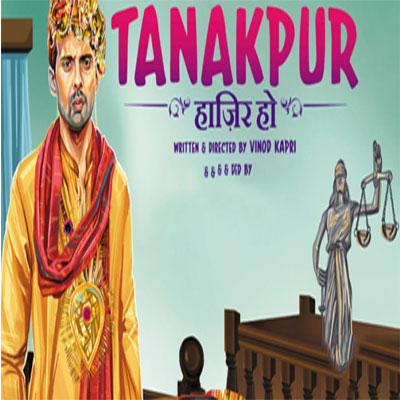
    MUMBAI: The genres for film stories have become limited after television took over some of them, such as family dramas, mythological and to some extent, horror.  In a quest to find newer themes away from regular genres, filmmakers have been trying to experiment. While a few of them do find interesting themes that result in films like Dirty Picture, Queen, Vicky Donor and Piku, most come out as a poor spectacle resulting in the ‘No Audience, No Show’ genre. Miss Tanakpur Haazir Ho falls into an entirely new genre called ‘Bizarre.’


    Tanakpur, a small town in UP, has this annual best bhains (buffalo) contest. And the winner is… Annu Kapoor’s bhains, who has come to him as part of dowry from the family of Hrishita Bhatt, his wife. She is crowned Miss Tanakpur. Kapoor is the town head with a sidekick in Ravi Kissen. Kapoor has problems related to sex life and tries various remedies prescribed by a quack he finds at a local fair.


    Kapoor is much older to Hrishita and suspects his wife of having an affair with someone younger. For all such problems and others, the town has a kind of black magic man in Sanjay Mishra who is reputed to have turned a perfectly virile man into a eunuch and vice versa, among other such miracles. Kapoor seeks his help to find who his wife is having an affair with.


    Mishra is a full blown fraud tantric who mumbles some mumbo jumbo and asks his patron to perform weird and filthy rituals. (That’s the maker’s idea of comedy besides being obsessed with human faeces and animal dung. The film is generously peppered with reference to these substances.)


    Finally, Kapoor catches Hrishita’s sympathiser, Rahul Bagga, red-handed with her in his bedroom. Kapoor and his goons beat him to a pulp, with a crowd gathering to witness the scene. But now Kapoor and his men are not sure how to explain this beating of Bagga. Telling everyone that Kapoor’s wife was having an affair with him would ruin Kapoor’s reputation. After all, he was the town head and aspiring for an MLA ticket.


    Kapoor finds a way out. Bagga is accused of raping Kapoor’s bhains. The story gets weirder. With Om Puri as the local cop who is easy to bribe and a vet who is too weak to protest, reports of rape are generated and a case filed. The court case begins with finally the magistrate wanting to interrogate the ‘victim’. In the process, some more poorly conceived comic scenes are force-fitted in the film.


    There is an institution called Khap, active in parts of North India, whose help Kapoor seeks. Khap considers itself above the law. The Khap sits on a judgements on Bagga and issues a diktat that he marry the bhains for his misdeed. The marriage is being solemnised, when the bhains plays the role of a runaway bride, taking to the highway as fast as she could. Having run out of corny ideas, the makers call it quits. There is no climax as such. You are just told that the wrongdoers, Puri, Kapoor, Kissen and Sharma are booked and punished by the law. Bagga and Hrishita live happily ever after.


    With a poor conception, poorer scripting and amateur handling, this purported satire turns into an inane farce. The film has some good capable artistes in Puri, Kapoor, Sharma and Kissen but all are at sea here. Hrishita is in a few scenes and all of them seem to have been taken in one go even before she could change her expressions. Bagga wears a lost look through the film and one can’t blame him for that.


    Miracles don’t happen at the box office and none expected for Miss Tanakpur Haazir Ho.


    Producers: Crossword Films Production, Fox Star Studios’

    Director: Vinod Kapri.

    Cast: Om Puri, Annu Kapoor, Ravi Kissen, Hrishita Bhatt, Rahul Bagga. 

  • Box office sees ho-hum collections this week

    Box office sees ho-hum collections this week

    MUMBAI: Almost all movies failed to get the cash registers ringing at the box office this week.


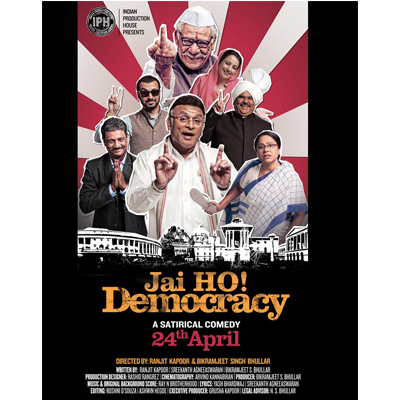
    Renowned artistes like Om Puri, Annu Kapoor, Seema Biswas and Satish Kaushik and the co-writer of Jaane Bhi Do Yaaron, Ranjit Kapoor, couldn’t help salvage Jai Ho! Democracy. People in India don’t need to be reminded about the shortcomings of the polity.


    The other release of the week, Kaagaz Ke Fools, fared even worse. No footfalls worth noting.


    There was also another release, better than the other two, but with no face value. Hence it failed to bring in the audience.


    Much was expected from Nanak Shah Fakir but the film has not worked. The film barely managed to put together a figure of Rs 90 lakh for its first week.


    Mr X, a forced 3-D, falls flat and adds one more disaster to the names of Vikram Bhatt and Emraan Hashmi. The film, which managed a weekend of Rs 12.45 crore, barely manages to add another Rs 6.1 crore over the next four days to end its first week with Rs 18.55 crore.


    Margarita With A Straw, released at limited screens, fared okay at multiplexes in metros to end its first week with a collection figure of Rs 3.15 crore.


    Ek Paheli Leela collected Rs 2.15 crore in its second week to take its two-week tally to Rs 20.85 crore.


    Dharam Sankat Mein collected Rs 1.15 crore in its second week. With this, the film’s two week total stands at Rs 8.75 crore.


    Detective Byomkesh Bakshyi takes its three week total to Rs 26.68 after three weeks.

  • ‘Jai Ho! Democracy’: Freedom misused

    ‘Jai Ho! Democracy’: Freedom misused

    MUMBAI: Jai Ho! Democracy raises some hope because of a few names in its cast and credits. The film is written by Ranjit Kapoor, the co-writer of the all-time classic comedy, Jaane Bhi Do Yaaro (1983), and also has some talented actors in Om Puri, Annu Kapoor, Satish Kaushik and Seema Biswas.

    However, as the film unwinds, rather than entertain, it goes on to belie your expectations.

    There is an incident at the border. A hen lands up in no man’s land and an Indian army cook is asked to go retrieve it. Once in no man’s land, the Pakistani soldiers start firing at him. The Indian troops contemplate whether to retaliate. The media gets wind of the situation and turns it into a ‘on the verge of war’ story.

    Concerned with the media outcry, a committee is set up to look into the matter. The representatives come from various parties and states. The idea is to create comedy through the conflict of communicating due to language barriers. The committee goes by the rule book and instead of discussing the situation, gets entwined into technicalities.


    A contradiction to the committee’s communication problem is displayed in no man’s land where an Indian and a Pakistani soldier come face to face. They have no problem communicating as both speak Punjabi. They start in Punjabi for which no subtitles are deemed necessary. Both soon embark on a nostalgia trip about the pains of partition and crave for an undivided country.

    The film is only 96 minutes long and yet feels like 36 minutes too long. The script is a total let down and its attempts to create humour fall flat. Of the star cast, which turns into caricatures, only Annu Kapoor does the Tamilian politician act well. Rest fill the bill.

    Direction goes the same way as the script: nowhere.

    Jai Ho! Democracy is a let-down and waste of talent.

    Producer: Bikramjeet Singh Bhullar

    Director: Ranjit Kapoor

    Cast: Om Puri, Annu Kapor, Satish Kaushik, Seema Biswas, Adil Hussain, Aamir Bashir, Grusha Kapoor, Benjamin Gilani


    ‘Kaagaz Ke Fools’: Yawn Some

    Kaagaz Ke Fools is a film about a husband-wife relationship, which is always sour. Strangely both love each other but it never shows.

    Vinay Pathak aspires to be a writer but being the honest and principled man that he is, he won’t write anything cheap or filthy. He works for a small advertising agency, writing copy for lingerie and other such products. He is not ambitious while his wife, Mugdha Godse, nurses all the ambitions.

    Producers: Faisal Kapadia

    Director: Anil Kumar Chaudhary

    Cast: Vinay Pathak, Mugdha Godse, Saurabh Shukla, Raima Sen

    Vinay is supposed to be a talented writer but since he won’t break his rules about clean writing, no publisher is willing to publish his work. As a result he is still sitting on the very first book he has penned. Mugdha is a full time nag and the amount of nagging she does to egg him on in his writing would have made any man commit suicide. He loves his wife immensely and tries to placate her every time she starts off.

    There is a gathering at Vinay’s friend’s house where one his friends provokes Mugdha asking about Vinay’s book and how his own book has sold about 1.75 lakh copies. To bring luck, Mugdha even asks a Feng Shui specialist to rearrange her house. Vinay is against all these things and again an argument starts. Vinay is not the suicide type so instead he leaves home trying to find alcohol and shelter in his friend’s house.

    There again he comes across the same friend whose book has sold 1.75 lakh copies. An argument ensues and is about to become violent when Vinay is asked to leave.

    Vinay meets a friendly rickshaw guy who takes him to an illegal bar cum whorehouse cum casino. Here, he is asked to try his luck at game of cards egged on by Raima Sen, a prostitute who hooks her customers from this place. Vinay wins some real money. Seeing a prospective client in him, Raima takes him to a friend’s house to seduce him. Vinay is totally sozzled by then and keeps uttering Mugdha’s name while keeping Raima at bay.

    After some forced sequences which are meant to be comic, Vinay’s book is published, the title having been changed from ‘Ek Thehrisi Zindagi’ to ‘Ek Tharkisi Zindagi’ and, predictably, it becomes a bestseller.

    The problem with the film is that the script is totally contrived. Characters are supposed to be Punjabi and actors trying to use Punjabi slang is hardly funny. Direction is poor with unnecessary cutting and shifting of scenes. Music seems inspired from old time Asha Bhosle repertoire. Cinematography is average. Editing is non-existent.

    Vinay Pathak does what he does in all his films, playing an honest simpleton which, for him, does not take much effort. Saurabh Shukla’s playing of a pucca Punjabi is jarring. Mugdha’s nagging is overdone. Raima makes faces, which cannot be passed off as acting.

    Kaagaz Ke Fools is a poor fare with no hope at the box office.

  • Om Puri begins shooting for ‘Ghayal Once Again’

    Om Puri begins shooting for ‘Ghayal Once Again’

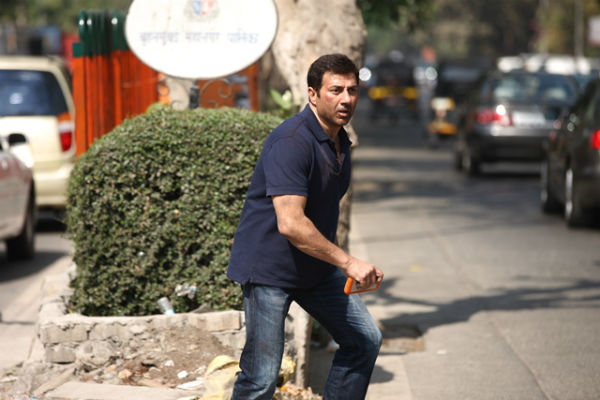
    MUMBAI: Veteran actor Om Puri, who was an integral part of 1990’s super hit film Ghayal starring Sunny Deol, will also be part of its sequel Gayal Once Again.

     
    Recently the actor began shooting for the film in Bandra along with Deol. A source close to the unit says,”Om Puri sir is playing a pivotal role in the film. He has started shooting for the film already. Sunny and Om Puri were seen having intense discussion during the shoot. Om Puri Sir hasn’t read the script and all he we reveal is that the police officer has retired now but still shares a warm relationship with Sunny’s character.”

     
    Ghayal Once Again is being directed and produced by Deol under the banner Sunny Sounds Pvt Ltd

  • “Cinema has evolved with technology as a more democratic medium”: Govind Nihalani

    “Cinema has evolved with technology as a more democratic medium”: Govind Nihalani

    KOLKATA: Indian film director, cinematographer, screenwriter and producer Govind Nihalani, who has proved the power of his cinema through his television series ‘Tamas’, vehemently believes that cinema has evolved with technology as a more democratic medium.


    “Cinema is a very powerful medium. It acts as a dialogue between the filmmaker and his viewers. It can convince you to pick up a gun and kill someone,” Nihalani said, on the sidelines of the ongoing 20th Kolkata International Film Festival.


    ‘Tamas’ is not a daily soap. It deals with the issue of national importance. The emphasis is on the characters and evoking of the period when the partition took place, makes it different from other soaps. “I think it will have a small relevance even today. These programmes are not even being made today,” he said.


    “In these times of hope and convictions, cinema will never die because it has tremendous possibility of creating magic, poetry and change,” he further added.


    On the context of shifting from his usual “serious” content to an animated movie, he mentioned that one should always keep expanding one’s horizon. With reference to digital technology taking over celluloid and the advantages it provides he said, “Technology is all that you want and it will get better with time.” He appreciated Japanese animation as an ingenious art form, but added that it will be sometime before India embraces such content in animation.


    Nihalani has been the recipient of six national film awards (India). His first directorial venture was Aakrosh starring Om Puri, Naseeruddin Shah, the late Smita Patil and the late Amrish Puri. The film is scripted by Marathi playwright Vijay Tendulkar. The film shared the Golden Peacock for best film at the International Film Festival of India held in New Delhi in 1981. He then directed Ardh Satya, based on a story by S. D. Panwalkar. The film has received critical reception for depicting the police-politician-criminal nexus. In 1997, he adapted Bengali novelist, Mahasweta Devi’s acclaimed novel by the same name to Hazaar Chaurasi Ki Maa.


    While interacting with movie lovers, Nihalani flashed upon his memories of a chat session with Sandeeep Ray (son of famous film-maker Satyajit Ray) on Mahasweta Devi’s novel.


    “On a moment like this, I delve into my past when I first met Mr. Ray, two decades later I dared to call him Manik da,” he said.


    Nihalani put forth his initial days with the master and expressed his gratitude when Ray narrated Pikoo’s Diary to him from the very first shot to the last. “It’s very important for a filmmaker to remain relevant to his times and be connected to his reality, his harsh reality,” he concluded by echoing Ray’s words.

  • Aaj Tak brings back ‘Vande Mataram’ with Shatrughan Sinha

    Aaj Tak brings back ‘Vande Mataram’ with Shatrughan Sinha

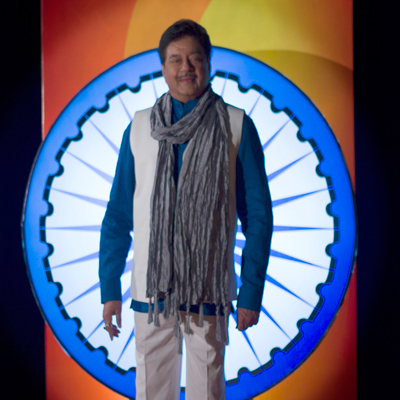
    MUMBAI: India’s premier Hindi news channel Aaj Tak is all set to launch the second season of its successful show Vande Mataram which will be hosted by veteran Bollywood actor and parliamentarian Shatrugan Sinha. Eminent actor Om Puri will be seen lending his voice to the show.


    Through the 12 episodes, the channel plans to enlighten viewers about untold tales of bravery and valour of India’s freedom fighters. For example, the channel says little do people know that Amar Shaheed Bhagat Singh was an avid reader and by the young age of 24 years he had read all the books of over 34 eminent authors.


    The saga will feature never seen before footage and stories of freedom fighters right like Subhash Chandra Bose, Chandra Shekhar Azad, Bhagat Singh and many more. It will be telecast on the channel every Saturday and Sunday at 10 pm and will commence from 23 August


    Aaj Tak managing editor Supriya Prasad says, “The first season of Vande Mataram set benchmarks in news programming showing India’s wars after independence. Season two will feature stories of India’s war for independence and each episode will cover the struggle and the story of a revolutionary.” Season one was anchored  by Kabir Bedi in 2013.


    Prasad praised Sinha’s oratory skills and exemplary command over Urdu Shayari and Hindi poetry. “His screen image of a patriotic star, his aggressive image and deep baritone voice added to his choice as preferred face for the show,” he adds.


    Meanwhile speaking to indiantelevision.com, the actor says he wanted to do the show because he found it energetic, youthful and uncompromisingly patriotic.  He also carefully explains his previous stints on the small screen. “I did the Shotgun Show. Then I also hosted the Bhojpuri version of KBC. But this show defines me and I feel it is absolutely necessary for every Indian to watch it, to know our history.”


    The channel is going all out to promote the show extensively with a special emphasis on northern India.TV promos are being telecast on all the channels networks to woo audiences. Radio jingles are being aired across seven radio stations and ads have been placed in the newspaper Mail Today. Plans are afoot to place hoardings across Delhi in 30 to 40 major outdoor locations. Hoardings too will be put up in Mumbai the coming week. A source from the channel pegs the marketing cost to be between Rs 90 lakhs to Rs one crore.

     
    Prasad also says that the shows on patriotism have helped the channel build a strong bond with the viewers and the first season of Vande Mataram won critical acclaim by winning awards in three categories for best show, best producer and best editing.

  • MOMI honours Om Puri

    MOMI honours Om Puri

    NEW DELHI: Veteran actor Om Puri, has been feted by Museum of the Moving Image (MOMI) in the US for his contribution to the Indian cinema. The honour was given to the 63-year old actor on the eve of release of his next international release, The Hundred Foot Journey co-starring Helen Mirren, which is opening on 8 August.


    The actor, who has made a name for himself in Indian and international cinema, discussed his long journey to stardom at a conversation moderated by actress Madhur Jaffrey. This was followed by a screening of his latest film.


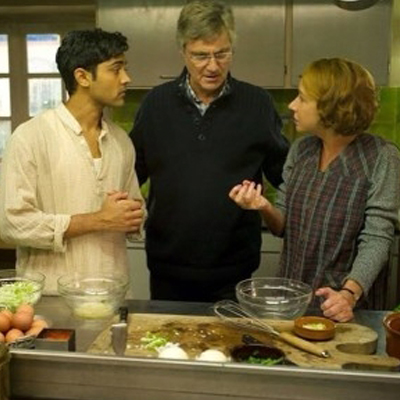
    Based on the book by Richard C Morais and directed by Lasse Hallström, The Hundred-Foot Journey is about the cultural war that ensues the opening of an Indian restaurant in the south of France next to a famous Michelin-starred eatery. Puri plays the role of a patriarch of a family displaced from their native India. The movie also stars Manish Dayal, Charlotte Le Bon and Bollywood actress Juhi Chawla. It is produced by Steven Spielberg, Oprah Winfrey, and Juliet Blake.


    During the conversation with Jaffrey, Puri revealed that when he first came to Delhi nearly four decades ago with only Rs 120 in his pockets to try his luck in theatre, he could not anticipate the success that lay ahead of him. A versatile theater and film actor, Puri, has made a name for himself in Hollywood as well. The actor also added that he and Naseeruddin Shah were the ‘two idiots’ who joined the Film and Television Institute of India in Pune.


    Puri made his debut with the Marathi film Ghasiram Kotwal based on a Marathi play of the same name by Vijay Tendulkar. The film was directed by K Hariharan and Mani Kaul in cooperation with 16 graduates of the FTII.


    Jaffrey also discussed Puri’s big break in Bollywood – Ardh Satya portraying Puri as a policeman struggling to deal with the evils around and inside him. “This was my lottery in the Hindi film industry. Everybody sort of sat back and noticed me,” Puri said. He also received the National Film Award for Best Actor for the film.


    Puri considers himself to be introverted, but he believes acting gave him a voice to convey his emotions. “I had a lot feelings looking at the world around me, particularly, the disparities in society used to disturb me,” he said.

  • ‘The Hundred-Foot Journey’ to be released on 8 August

    ‘The Hundred-Foot Journey’ to be released on 8 August

    NEW DELHI: The Hundred-Foot Journey directed by Lasse Halstrom, a film about the adventures across the world of a young Muslim who flees Mumbai along with his family after a riot, is set for release in Hollywood on 8 August.


    Co-produced by Steven Spielberg and Oprah Winfrey is based on the 2010 book of the same name authored by Richard C. Morais. The film has Manish Dayal in his debut role as a lead actor. The film also stars Helen Mirren, Om Puri and Juhi Chawla.


    Dayal plays Hassan Haji, whose family ends up in southern France after a stint in England. Haji is a chef cooking at his family-run, Indian eatery ‘Maison Mumbai,’ an establishment his father, played by Puri, opens a hundred feet away and across from a Michelin-starred French restaurant helmed by the snooty Madame Mallory, played by Mirren.


    A grand culinary battle ensues until Haji’s young cooking ingénue shows her the possibilities for weaving their two culinary traditions together. Haji, a gifted cook who’s fascinated with French culinary tradition, falls for Marguerite, played by Charlotte Le Bon, Madame’s sous chef.


    Dayal was born in Orangeburg, South Carolina, as Manish Sudhir Patel. He attended George Washington University and after graduation, studied acting at The New York Conservatory for Dramatic Arts (formerly The School for Film and Television) in New York City.


    The 31-year-old actor now shuttles between New York and Los Angeles.


    Speaking to the United Kingdom’s The Gaurdian, Dayal who has a southern accent said he had to first deliver his lines for the film in an Indian accent, transitioning to an Indian learning to speak French, and finally to that of a long-time French resident.


    He also took French cooking lessons to prepare for his role. But the actor is no stranger to cooking, as he says it was an important part of growing up in his Gujarati family.


    “I think that more movies about South Asian diaspora are going to result from this partnership,” he told the paper. Dayal says he was not a huge fan of Bollywood while growing up, but is open to Indian cinema minus the song and dance. He is best-known for playing the role of Raj Kher in the hit television series 90210, and also appeared in films like The Sorcerer’s Apprentice (2010), Walkaway (2010) and Breaking the Girls (2013).


    Prior to actual filming, Dayal and Le Bon also spent a considerable amount of time going to restaurants and observing and learning in kitchens. To sign off on the food featured in the film, producer Juliet Blake consulted an Indian-born chef Floyd Cardoz who has made a name for himself in the culinary world with fusion cuisine.


    The film produced by DreamWorks in which India’s Reliance Entertainment is an investor, is the latest among Hollywood films in recent years that have told Indian stories including ‘The Namesake’, ‘Slumdog Millionaire’, ‘Life of Pi’, ‘Best Exotic Marigold Hotel’ and the latest ‘Million Dollar Arm.’


    Variety magazine, in its review of the film says “The Hundred-Foot Journey is a “genteel, overlong adaptation of Richard C. Morais’ 2010 novel about two rival restaurants operating in a sleepy French village,” accentuated by “a high-energy score by A.R. Rahman, exquisite gastro-porn shot by Linus Sandgren, the winningly barbed chemistry of Mirren and Puri.


    “With the formidable backing of producers Steven Spielberg and Oprah Winfrey, the DreamWorks concoction should cater to a broad array of art-house appetites, particularly among those viewers who embraced the similar East-meets-West fusion cuisine of “The Best Exotic Marigold Hotel,” the magazine says.


    Calling the film “chicken tikka masala for the soul,” The Hollywood Reporter in its review, says “The Hundred-Foot Journey” is a movie designed to comfort. “Stimulating taste buds and little else, Lasse Hallstrom’s latest film picks up where his 2000 hit ‘Chocolat’ left off, in terms of the affectionate shaming of provincial Gallic villagers,” the review says. “Top lining Helen Mirren and Om Puri as rival restaurateurs in the Midi-Pyrénées region of France, the film tracks a tension-free lesson in cultural exchange that culminates, predictably, in romance,” it adds.


    “But the main course is the dance between Madame Mallory and Papa, however transparent the clash between her carefully composed plates and his bold flavors. Whether they’re filing ridiculous complaints about each other to the unflappable mayor (Michel Blanc), arguing over the proper presentation of ingredients or sharing a cafe table, Mirren and Puri bring an effortless command to their roles.”