Tag: Om Puri

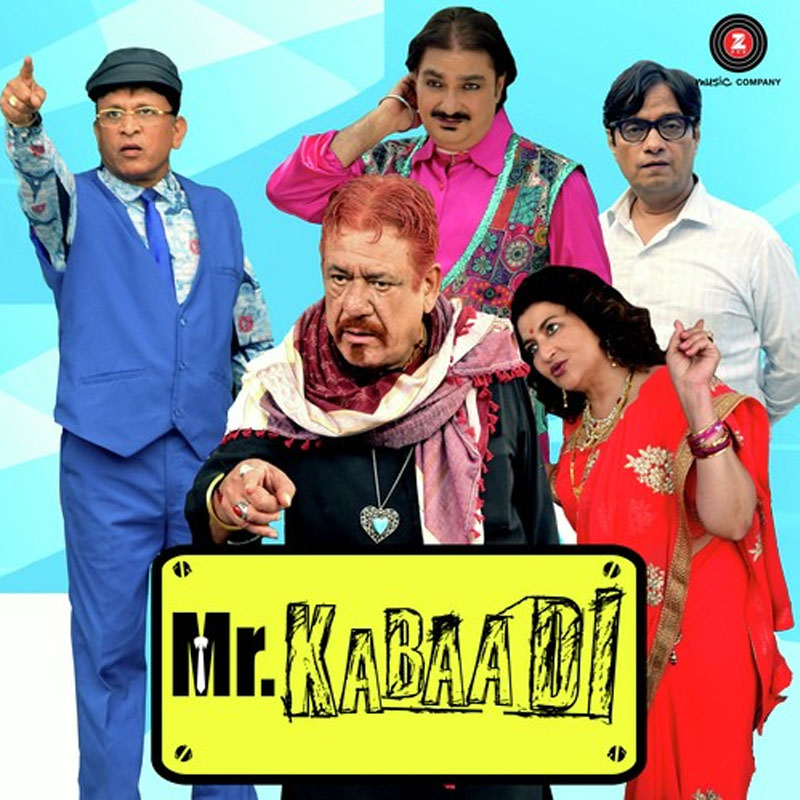
  • Mr Kabaadi…is where the film belongs

    Mr Kabaadi…is where the film belongs

    A number of not-so-regular filmmakers try their luck at film production. Their intention may be honest but lack of knowledge about how the film industry works as well as what works with moviegoers usually drowns them.

    Since these newcomers don’t have access to big stars nor would the big stars agree to work with them, they end up making films with whoever is ready to work for money. Such films go unnoticed and the new entrepreneur ends up losing money.

    What is grossly disheartening about Mr Kabaadi is that, it is not only a waste of money but also of a huge talent bank of actors like Om Puri, Annu Kapoor, Vinay Pathak and Brijendra Kala.

    The film has no purpose, no head or tail and depicts total bankruptcy of ideas.

    The role played by Annu Kapoor is that of a ‘kabaadiwala,’ a scrap dealer who suddenly inherits millions. From his shabby basti and his equally poor friends, he shifts to a bungalow with three balconies and two wading pools. He has married his kabaadi days love, Sarika, and now has a son and a daughter. Now that he is rich, Annu hates the word kabaadi and does not want anybody to remind him of his past.

    While his daughter is shown to be fairly educated and can converse in English, his son is a fifth standard dropout who has excelled in the business of running a chain of public toilets! (This is the kind of comedy it is, believe it.)

    Annu wants to get his son married but no family would tie the knot with a boy who has a business of toilets. The girl is a rebel and won’t agree to the match her parents find.

    The boy and the girl separately fall in love and this senseless ‘tamasha’ goes on.

    There is no sense talking about performances in this film because, as mentioned earlier. Less said about writing, direction and other aspects of the film, the better.

    Producer: Anup Jalota.

    Director: Seema Kapoor.

    Cast: Om Puri, Annu Kapoor, Sarika, Vinay Pathak and Brijendra Kala.

  • Tubelight…. Betrays fans’ faith

    Tubelight is a slang used generally to refer to a person who is a slow-starter, takes time in grasping matters like jokes or a simple statement. In the film, Tubelight, Salman Khan’s character, is described as such by one and all because nothing seems to get into his head. But, as the story unfolds, it belies its own title because, Salman is not just a slow-starter: he is a non-starter. Nothing gets into his mind.

    Based on the Hollywood film, Little Boy (2015), it is a period film in that the story takes place during World War II. A young boy of eight and his father share an amazing love for each other. The father has to join the troops to fight the war in place of his older son. The boy, attached to his father, will do anything, go to any length so that the war comes to an end so that his father can come back.

    Tubelight has followed Little Boy almost scene to scene and in the setting but takes the liberty to change the characters and relationships. In place of the father-son, Tubelight is about the bond between brothers. These liberties prove hard to live up to as the film proceeds.

    Salman Khan, living in Kumaon in Uttarakhand in north India, is a halfwit who is slow to react to things. He is lonely and the butt of jokes of the whole town. That is till his mother delivers a son, and Salman now has a younger brother. Sohail Khan, though younger, protects Salman from all the bullies. The brothers become inseparable and complement each other.

    The peaceful town suddenly comes alive as trouble is brewing on the north-east frontier and war with China looks inevitable. The army visits the town to appeal for recruits. A patriotic fervour takes over and a lot of young boys volunteer. Salman, for his slow take on everything, is rejected while Sohail makes the cut.

    The film takes about 30 minutes from the start till now, which is when the real story is set to begin; that of Salman pining for his brother and looking for the ways to end the war so that Sohail can be brought back. This time taken to depict the undying bond between the brothers has not quite worked on the viewer.

    While he was a child, Mahatma Gandhi had visited Kumaon and given a mantra to Salman, that if you have faith in yourself, you can make mountains move. This mantra is put to test when a magician, played by Shah Rukh Khan, visits the town. He needs a volunteer from the audience for a magic trick. Salman is the chosen volunteer and he has to use his self-belief to move a soda bottle put on a table. The feat only adds to Salman’s belief in what Gandhiji had said.

    Then, there is also Om Puri, who gives tenets of Gandhiji to Salman to follow if he wants to be successful in bringing his brother back.

    While Salman’s self-belief is being honed, a Chinese family of two, a young widow, Zhu Zhu, and her little son, Matin Rey Tangu, move into Kumaon. Having arrived from Calcutta, they settle in a distant cottage. Sceptical at first that the Chinese had invaded Kumaon, Salman decides to follow Gandhiji’s advice and makes friends with Matin and later with Zhu Zhu. No matter that the whole town hates these two Chinese just for being Chinese.

    If all this sounds mundane and not like a story, that is because that is how it is. There is no movement, the film is at a standstill as Salman goes around proving his self-belief, spending time with the Chinese, inquiring about his brother with the army man, played by Yashpal Sharma, time and again, and getting ridiculed by the townsfolk.

    Even while concluding the film, the director chooses to stretch things by adding unnecessary melodrama.

    Tubelight starts with a wrong film as inspiration. The idea of superimposing Salman in place of an innocent young boy of eight in the WW II era braving all tests so that his father could return from the war backfires. Just making him an imbecile to fit into an eight year old’s character is not a sane idea.

    The direction is poor with glitches galore. Borrowing an American film is fine, but also following the same sets is not. Kumaon town of 50s and 60s with English signboards on shops, bakery, Softy vending machine, direct dialling telephones is taking things for granted. War scenes are not convincing. While the war is being fought across Ladakh, half the army seems to be stationed in Kumaon, busy giggling!

    Musically, the film has two decent numbers in Naachmerijaan….and Radio song. Dialogue is mundane. Set designing is patchy ad editing is poor. Cinematography complements the scenic location.

    Salman Khan tries his best but this just is not his film, he disappoints his fans. Sohail Khan is still a non-actor. Sharma and Isha Talwar are okay. Zeeshan Ayub is the villain without a cause.

    Zhu Zhu is good. Om Puri and Matin Rey are the only bright spots.

    Tubelight offers none of the regular Salman feature like action, songs, comic situations, the things that make his films work. This film counts only on emotions which, sadly, are forced and fail to touch the viewer. Unreasonably high priced, Tubelight has little going for it despite Eid week.

    Producers: Salma Khan, Salman Khan.

    Director: Kabir Khan.

    Cast: Salman Khan, Matin Rey Tangu, Om Puri, Sohail Khan, Yashpal Sharma, IshaTalwar, Mohammed ZeeshanAyub, Zhu Zhu, Brijendra Kala, Shah Rukh Khan (Sp. Appearance).

  • Veteran film and TV actor Om Puri passes away

    Veteran film and TV actor Om Puri passes away

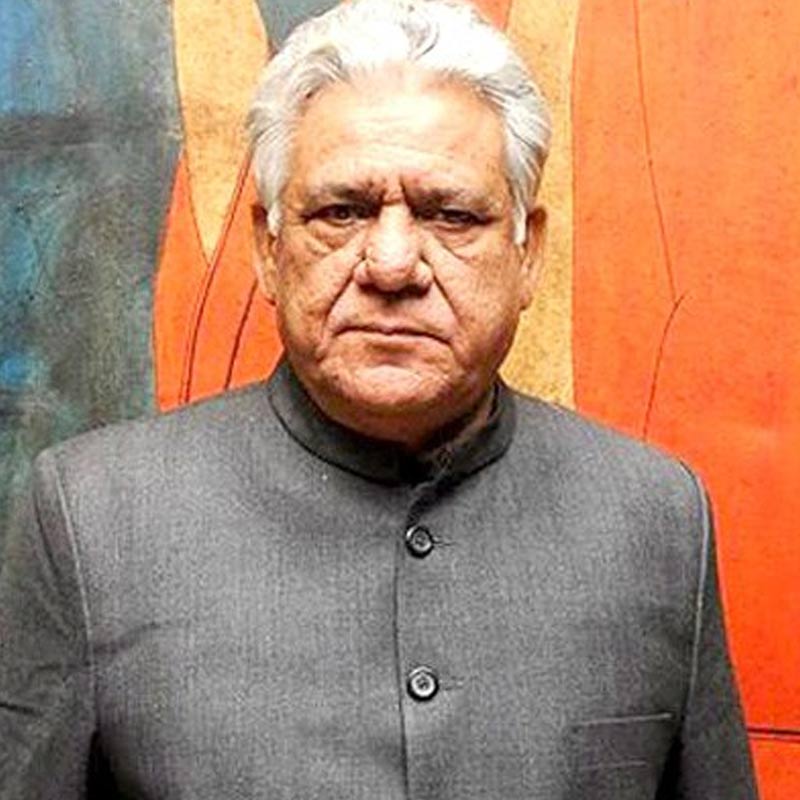
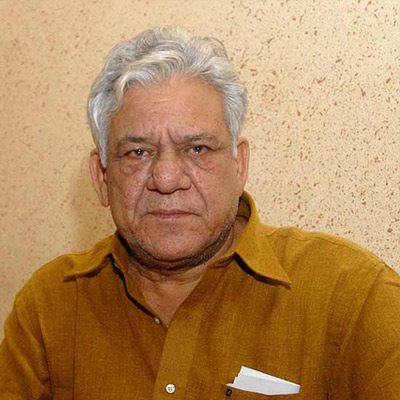
    NEW DELHI: Veteran actor Om Puri, who gave countless memorable performances in movies of diverse genres and also on television shows, died at his residence in Mumbai this morning after a massive heart attack. He was 66.

    ‘Puri passed away this morning due to a heart attack at his residence in suburban Andheri. It’s shocking,’ a family source was quoted by PTI as saying.

    From Bollywood to Hollywood, from independent to art films to television, the noted actor, known for his versatility, gave several acclaimed performances. Puri featured in several Indian, Pakistani, British and Hollywood mainstream commercial films. However, as many of his fans said Puri would be remembered more for his stellar roles in TV serial ‘Tamas’ and film ‘Ardh Satya’. He was awarded the Padma Shri, the country’s fourth highest civilian award, in 1990.

    Prime Minister Narendra Modi condoled Puri’s demise and recalled his long career in theatre and films. Minister for information and broadcasting M. Venkaiah Naidu too condoled Puri’s death and remembered his contribution to the Indian film and TV industry. Bollywood celebrities, including Akshay Kumar, Karan Johar, Anupam Kher, Javed Akhtar and Mahesh Bhatt, expressed grief over Puri’s demise, calling it a huge loss to Indian cinema.

    Born in Ambala, Haryana, in a Punjabi family, Puri graduated from the Film and Television Institute of India, Pune. He was also an alumnus of the 1973 class of National School of Drama, where Naseeruddin Shah was a batch mate. He made his film debut in the 1976 Marathi film ‘Ghashiram Kotwal’.

    Some of his notable films include ‘Bhavni Bhavai’, ‘Sadgati, ‘Ardh Satya’, ‘Mirch Masala’, ‘Dharavi’, ‘Aakrosh’, ‘Maachis’, ‘Gupt’, ‘Dhoop’ and ‘Yuva’. He earned international fame in many British films, such as ‘My Son the Fanatic’, ‘East Is East’ and ‘The Parole Officer’. He also appeared in Hollywood films like ‘City of Joy’, ‘Wolf’, ‘The Ghost and the Darkness’, among others.

  • Veteran film and TV actor Om Puri passes away

    Veteran film and TV actor Om Puri passes away

    NEW DELHI: Veteran actor Om Puri, who gave countless memorable performances in movies of diverse genres and also on television shows, died at his residence in Mumbai this morning after a massive heart attack. He was 66.

    ‘Puri passed away this morning due to a heart attack at his residence in suburban Andheri. It’s shocking,’ a family source was quoted by PTI as saying.

    From Bollywood to Hollywood, from independent to art films to television, the noted actor, known for his versatility, gave several acclaimed performances. Puri featured in several Indian, Pakistani, British and Hollywood mainstream commercial films. However, as many of his fans said Puri would be remembered more for his stellar roles in TV serial ‘Tamas’ and film ‘Ardh Satya’. He was awarded the Padma Shri, the country’s fourth highest civilian award, in 1990.

    Prime Minister Narendra Modi condoled Puri’s demise and recalled his long career in theatre and films. Minister for information and broadcasting M. Venkaiah Naidu too condoled Puri’s death and remembered his contribution to the Indian film and TV industry. Bollywood celebrities, including Akshay Kumar, Karan Johar, Anupam Kher, Javed Akhtar and Mahesh Bhatt, expressed grief over Puri’s demise, calling it a huge loss to Indian cinema.

    Born in Ambala, Haryana, in a Punjabi family, Puri graduated from the Film and Television Institute of India, Pune. He was also an alumnus of the 1973 class of National School of Drama, where Naseeruddin Shah was a batch mate. He made his film debut in the 1976 Marathi film ‘Ghashiram Kotwal’.

    Some of his notable films include ‘Bhavni Bhavai’, ‘Sadgati, ‘Ardh Satya’, ‘Mirch Masala’, ‘Dharavi’, ‘Aakrosh’, ‘Maachis’, ‘Gupt’, ‘Dhoop’ and ‘Yuva’. He earned international fame in many British films, such as ‘My Son the Fanatic’, ‘East Is East’ and ‘The Parole Officer’. He also appeared in Hollywood films like ‘City of Joy’, ‘Wolf’, ‘The Ghost and the Darkness’, among others.

  • Mirzya…Dud with a thud!

    Mirzya…Dud with a thud!

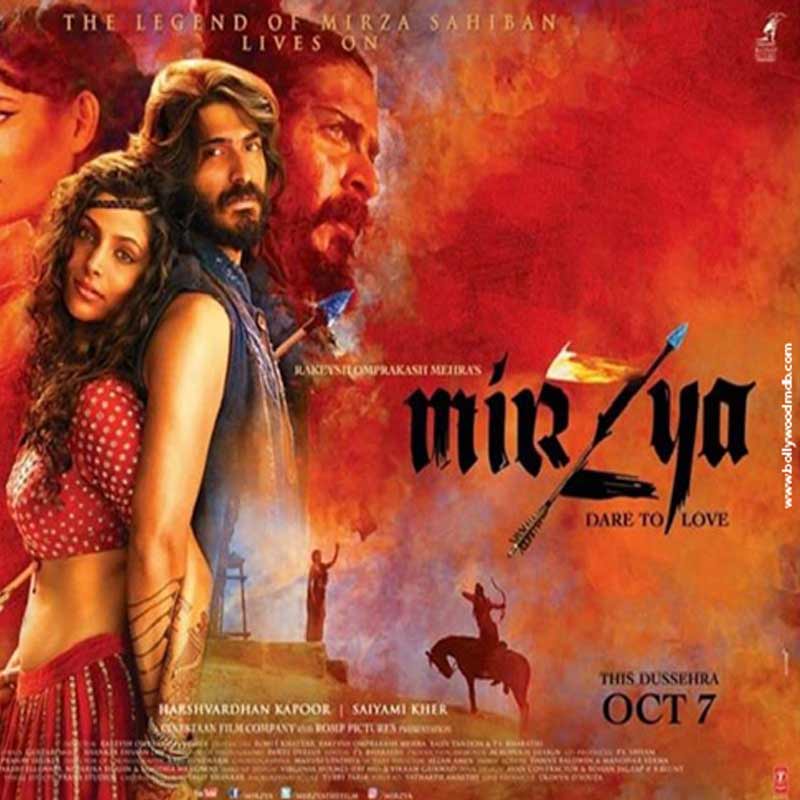
    MUMBAI: Mirzya is a fantasy, romantic, thriller as the tagline describes it. The inspiration is claimed to be the folk story of Mirza Sahiban which is one of the four Punjabi love stories popular to date in local folk.  As with others, the love story of Mirza Sahiban made it to folklore mainly on the strength of its tragic ingredients.

    To start with its descriptions, Mirzya is neither a fantasy nor a thriller and, when it comes to love, it backfires on just about every count — be it depth or chemistry. As an inspiration from Mirza Sahiban, it does injustice to the folklore. The film runs on two tracks, that of the folklore and the other being the maker, Rakeysh Omprakash Mehra’s contemporary version. To what avail a viewer is at loss to know.

    In a small town in Rajashthan, Harshvardhan Kapoor’s character goes to the same school as Saiyami Kher’s, the daughter of a policeman played by  Art Malik. The two are inseparable and share a bond. Once the teacher asks Kapoor to submit his homework which he does but the teacher can make out that it is copied from Saiyami’s notes. When he wants to compare the two, just to save Kapoor from teacher’s lashes, she lies and says she has not done her homework. The lashes are for her now as is the school’s tradition.  At every lash that Saiyami bears, her winces make Kapoor lose his mind. He steals Malik’s pistol and shoots the teacher.

    Consigned to a children’s home, he does not plan to stay there for long. He has to go back to Saiyami. He breaks out but, as it happens in films, Saiyami has left the town with her father not to come face to face with Kapoor any time soon.

    Time has elapsed and Saiyami is returning from wherever she was all these years. She is engaged to the local prince, Anuj Chaudhry. Her father is now the commissioner of police and fit enough for a family bonding with royalty headed by K K Raina. Rajasthan may be old-fashioned when it comes to traditions but Saiyami makes the palace her home where she is being trained in to the royal ways. Her first lessons are in horse riding and, guess who the stable head is? Kapoor, of course.

    Soon, as if on cue, Saiyami starts rattling to Kapoor the story of her childhood and the boy she knew who cared very much for her. The love is rekindled. Saiyami, who just a few scenes back was coochie-cooing with her fiancé, Anuj, is now in love with Kapoor.

    The romance of Kapoor and Saiyami blossoms with no holds barred as they romp around town, its forts and the countryside. There are no prying eyes, no gossip. So what if Saiyami is the royalty’s bahu to be? That is till the time the duo plans to elope. Eloping is always reserved for the wedding day and, in keeping with the tradition, Saiyami has escaped while her groom, Anuj, waits for the rituals to start.

    Mirzya starts off with a deceptive title; the name has nothing to do with any character in the film. It is just an attempt to give the film a pretentious air. The love story of star-crossed lovers offers no novelty even if branded after Mirza Sahiban. Scripting is poor. The direction borders on mediocre. Dialogue lacks the required feel (Raina even mouths his dialogue in Punjabi!). Lyrics writing is uninspiring which reflects on soulless songs. The one positive in the film is its cinematography.

    As for performances, a newcomers’ love story hinges majorly on the chemistry between the lead pair which is totally lacking in this film. Kapoor and Saiyami both lack screen presence and, as far as acting talent goes, they have a long way to go. Anuj is the one who does a sincere job. Rest fill the bill. MIrzya is one of the poorest films to hit the screen in recent times.
    Producers: Rohit Khattar, Rakeysh Omprakash Mehra, P.S. Bharathi, Rajiv Tandon.

    Director: Rakeysh Omprakash Mehra.

    Cast: Harshvardhan Kapoor, Saiyami Kher, Anuj Choudhry, Anjali Patil, Om Puri, Art Malik, K. K. Raina.

    Tutak Tutak Tutiya…Nothing to sing and dance about!

    Tutak Tutak Tutiya (also made in Tamil as Devi and Telugu as Abhinetri) is a comedy film with a touch of horror to its story. As such, the film features actors whose faces are well recognized by the southern India audience. It has a blend of south and Hindi film actors with the Hindi actors being ones who have done a number of films in southern languages.

    The character of Prabhu Deva (used to be Dheva for a while) has settled in Mumbai to make a living and made progress from a dispatch boy to a decent post. He is recalled to his native place in Kerala because his grandmother is on her deathbed.

    Once in his village, the grandmother now wants to see him married to a nice girl. After seeing a dozen or so girls, the grandmother approves of Tamannaah. Deva is a habitual proposal maker. He approaches every single but English-speaking girl in sight and always carries his CV printout.

    Coming back as a married man, Deva keeps pretending he is still single for this is not the kind of girl he had in mind for marriage. After all, she is a village girl and can’t speak English!
    Deva shifts into a rented house with his new bride. Tamannaah surprises him on many counts as against his expectations, she can speak fluent Hindi and also cook the dishes he desires. But, the biggest surprise she springs on him is when he takes her along for a film awards function where he suddenly sees her on stage in trendy short dress dancing like a star and later also joins Sonu Sood, the award function’s best actor award winner, over drinks. She even speaks English now!

    Deva can’t figure out what got into his wife because next morning she does not remember a thing from the night before. To add to Deva’s troubles, Sonu is besotted by Tamannaah and wants her to do a film with him. Deva is trapped because he does not want anybody to know he is married to Tamannaah.

    Tamannaah not only keeps alternating between a simple village girl to a modern-day city girl who also agrees to do a film with Sonu. When she is his village-bred wife, she is comely, homely and caring while, otherwise, she is aggressive, bent on acting and there is no way can Deva stop her.

    That is when the touch of supernatural comes in. The house they have shifted into was earlier occupied by a girl called Ruby, an aspiring actor who was signed for a film against Sonu but dropped at the last moment leading her to suicide. Her ghost gets into Tamannaah to fulfill her desire to act.

    Tutak Tutak Tutiya had a good idea going for it but somewhere on the writing table, it has not been expanded on sincerely. The comedy lacks in this comic film. The direction is average. Music does not meet the requirements of a film counting on dances; the songs lacking in popular appeal.

    Dialogue is good at places but too subtle. Editing-wise, the second half needs some trimming. Deva looks fresher but disappoints his fans as he has few dancing moments in the film. Sood dancing in his stead is no consolation and shows it is not his forte. Tamannaah does very well. Murli Sharma shines.

    Tutak Tutak Tutiya has no drawing power and will make the list of also rans.

    Producers: SonuSood.

    Director: Vijay.

    Cast: Prabhu Deva, SonuSood, Tamannaah, Murali Sharma, Amy Jackson, Esha Gupta and Farah Khan in guest appearance.

  • Mirzya…Dud with a thud!

    Mirzya…Dud with a thud!

    MUMBAI: Mirzya is a fantasy, romantic, thriller as the tagline describes it. The inspiration is claimed to be the folk story of Mirza Sahiban which is one of the four Punjabi love stories popular to date in local folk.  As with others, the love story of Mirza Sahiban made it to folklore mainly on the strength of its tragic ingredients.

    To start with its descriptions, Mirzya is neither a fantasy nor a thriller and, when it comes to love, it backfires on just about every count — be it depth or chemistry. As an inspiration from Mirza Sahiban, it does injustice to the folklore. The film runs on two tracks, that of the folklore and the other being the maker, Rakeysh Omprakash Mehra’s contemporary version. To what avail a viewer is at loss to know.

    In a small town in Rajashthan, Harshvardhan Kapoor’s character goes to the same school as Saiyami Kher’s, the daughter of a policeman played by  Art Malik. The two are inseparable and share a bond. Once the teacher asks Kapoor to submit his homework which he does but the teacher can make out that it is copied from Saiyami’s notes. When he wants to compare the two, just to save Kapoor from teacher’s lashes, she lies and says she has not done her homework. The lashes are for her now as is the school’s tradition.  At every lash that Saiyami bears, her winces make Kapoor lose his mind. He steals Malik’s pistol and shoots the teacher.

    Consigned to a children’s home, he does not plan to stay there for long. He has to go back to Saiyami. He breaks out but, as it happens in films, Saiyami has left the town with her father not to come face to face with Kapoor any time soon.

    Time has elapsed and Saiyami is returning from wherever she was all these years. She is engaged to the local prince, Anuj Chaudhry. Her father is now the commissioner of police and fit enough for a family bonding with royalty headed by K K Raina. Rajasthan may be old-fashioned when it comes to traditions but Saiyami makes the palace her home where she is being trained in to the royal ways. Her first lessons are in horse riding and, guess who the stable head is? Kapoor, of course.

    Soon, as if on cue, Saiyami starts rattling to Kapoor the story of her childhood and the boy she knew who cared very much for her. The love is rekindled. Saiyami, who just a few scenes back was coochie-cooing with her fiancé, Anuj, is now in love with Kapoor.

    The romance of Kapoor and Saiyami blossoms with no holds barred as they romp around town, its forts and the countryside. There are no prying eyes, no gossip. So what if Saiyami is the royalty’s bahu to be? That is till the time the duo plans to elope. Eloping is always reserved for the wedding day and, in keeping with the tradition, Saiyami has escaped while her groom, Anuj, waits for the rituals to start.

    Mirzya starts off with a deceptive title; the name has nothing to do with any character in the film. It is just an attempt to give the film a pretentious air. The love story of star-crossed lovers offers no novelty even if branded after Mirza Sahiban. Scripting is poor. The direction borders on mediocre. Dialogue lacks the required feel (Raina even mouths his dialogue in Punjabi!). Lyrics writing is uninspiring which reflects on soulless songs. The one positive in the film is its cinematography.

    As for performances, a newcomers’ love story hinges majorly on the chemistry between the lead pair which is totally lacking in this film. Kapoor and Saiyami both lack screen presence and, as far as acting talent goes, they have a long way to go. Anuj is the one who does a sincere job. Rest fill the bill. MIrzya is one of the poorest films to hit the screen in recent times.
    Producers: Rohit Khattar, Rakeysh Omprakash Mehra, P.S. Bharathi, Rajiv Tandon.

    Director: Rakeysh Omprakash Mehra.

    Cast: Harshvardhan Kapoor, Saiyami Kher, Anuj Choudhry, Anjali Patil, Om Puri, Art Malik, K. K. Raina.

    Tutak Tutak Tutiya…Nothing to sing and dance about!

    Tutak Tutak Tutiya (also made in Tamil as Devi and Telugu as Abhinetri) is a comedy film with a touch of horror to its story. As such, the film features actors whose faces are well recognized by the southern India audience. It has a blend of south and Hindi film actors with the Hindi actors being ones who have done a number of films in southern languages.

    The character of Prabhu Deva (used to be Dheva for a while) has settled in Mumbai to make a living and made progress from a dispatch boy to a decent post. He is recalled to his native place in Kerala because his grandmother is on her deathbed.

    Once in his village, the grandmother now wants to see him married to a nice girl. After seeing a dozen or so girls, the grandmother approves of Tamannaah. Deva is a habitual proposal maker. He approaches every single but English-speaking girl in sight and always carries his CV printout.

    Coming back as a married man, Deva keeps pretending he is still single for this is not the kind of girl he had in mind for marriage. After all, she is a village girl and can’t speak English!
    Deva shifts into a rented house with his new bride. Tamannaah surprises him on many counts as against his expectations, she can speak fluent Hindi and also cook the dishes he desires. But, the biggest surprise she springs on him is when he takes her along for a film awards function where he suddenly sees her on stage in trendy short dress dancing like a star and later also joins Sonu Sood, the award function’s best actor award winner, over drinks. She even speaks English now!

    Deva can’t figure out what got into his wife because next morning she does not remember a thing from the night before. To add to Deva’s troubles, Sonu is besotted by Tamannaah and wants her to do a film with him. Deva is trapped because he does not want anybody to know he is married to Tamannaah.

    Tamannaah not only keeps alternating between a simple village girl to a modern-day city girl who also agrees to do a film with Sonu. When she is his village-bred wife, she is comely, homely and caring while, otherwise, she is aggressive, bent on acting and there is no way can Deva stop her.

    That is when the touch of supernatural comes in. The house they have shifted into was earlier occupied by a girl called Ruby, an aspiring actor who was signed for a film against Sonu but dropped at the last moment leading her to suicide. Her ghost gets into Tamannaah to fulfill her desire to act.

    Tutak Tutak Tutiya had a good idea going for it but somewhere on the writing table, it has not been expanded on sincerely. The comedy lacks in this comic film. The direction is average. Music does not meet the requirements of a film counting on dances; the songs lacking in popular appeal.

    Dialogue is good at places but too subtle. Editing-wise, the second half needs some trimming. Deva looks fresher but disappoints his fans as he has few dancing moments in the film. Sood dancing in his stead is no consolation and shows it is not his forte. Tamannaah does very well. Murli Sharma shines.

    Tutak Tutak Tutiya has no drawing power and will make the list of also rans.

    Producers: SonuSood.

    Director: Vijay.

    Cast: Prabhu Deva, SonuSood, Tamannaah, Murali Sharma, Amy Jackson, Esha Gupta and Farah Khan in guest appearance.

  • Five regional centres of India’s premier drama school to open in other parts of country

    Five regional centres of India’s premier drama school to open in other parts of country

    NEW DELHI: The Delhi-based National School of Drama, which has formed the training ground for some of the best television and film personalities, is to get five regional centres in different parts of the country, Parliament has been told.

    This follows the recommendations made by the Broad Based Committee for opening up of five regional centres across the country.

    The NSD Society proposes to establish one regional centre each at Kolkata, Mumbai/Goa, Jammu and Kashmir, and the North-East besides upgrading the existing Regional Resource Centre (RRC) at Bengaluru to become a full-fledged regional centre.

    Culture Minister Mahesh Sharma said these regional centres are to be established in consultation with the concerned State Governments who were required to provide accommodation for the purpose.

    So far, only Karnataka has allotted land for the purpose at Bengaluru. NSD has started one year teaching training programme in the Bengaluru Chapter commencing from academic session 2014-15.

    In addition, under consolidation of Out-reach Programme in the North-East Region, NSD has opened its Centres in Sikkim and Tripura. 

    Several actors like Om Puri, Naseeruddin Shah, Shabana Azmi, Nadira Babbar, Kulbhushan Kharbanda and others and filmmakers like M S Sathyu have made major contributions to the NSD, many of them beginning their careers here.

  • Five regional centres of India’s premier drama school to open in other parts of country

    Five regional centres of India’s premier drama school to open in other parts of country

    NEW DELHI: The Delhi-based National School of Drama, which has formed the training ground for some of the best television and film personalities, is to get five regional centres in different parts of the country, Parliament has been told.

    This follows the recommendations made by the Broad Based Committee for opening up of five regional centres across the country.

    The NSD Society proposes to establish one regional centre each at Kolkata, Mumbai/Goa, Jammu and Kashmir, and the North-East besides upgrading the existing Regional Resource Centre (RRC) at Bengaluru to become a full-fledged regional centre.

    Culture Minister Mahesh Sharma said these regional centres are to be established in consultation with the concerned State Governments who were required to provide accommodation for the purpose.

    So far, only Karnataka has allotted land for the purpose at Bengaluru. NSD has started one year teaching training programme in the Bengaluru Chapter commencing from academic session 2014-15.

    In addition, under consolidation of Out-reach Programme in the North-East Region, NSD has opened its Centres in Sikkim and Tripura. 

    Several actors like Om Puri, Naseeruddin Shah, Shabana Azmi, Nadira Babbar, Kulbhushan Kharbanda and others and filmmakers like M S Sathyu have made major contributions to the NSD, many of them beginning their careers here.

  • ‘Ghayal Once Again:’ Much mellowed

    ‘Ghayal Once Again:’ Much mellowed

    Ghayal Once Again can be termed as a true sequel as the film connects with Sunny Deol starrer Ghayalreleased in 1990. In that era, a suppressed common man’s outburst against a mighty criminal (Amrish Puri inGhayal) who has the politicians and the system at his command was palatable.

    Sunny is back after serving 14 years in prison. He gets flashbacks of past which Soha Ali Khan, a doctor keeps in control with instant medication. Sunny has now turned a vigilante, runs a newspaper called Satyakam, which publishes real news sans sensationalism. He has a loyal team around him, which shares his spirit and purpose. Sunny is now a much admired person with a great following among youth.

    Om Puri is now a retired cop who has become an RTI activist. Puri has come across some material, which can virtually destroy the tycoon, Narendra Jha, who accumulates wealth through illegal means. Jha has the local home minister and, through him, the entire police force in his pocket. Puri is called for a meeting where an argument ensues and Jha’s drug addict and violent son, Abhilash Kumar, shoots down Puri. This is made to look like a road accident. 

    Unknown to Jha and company the whole shooting incident has been shot on a cell phone of a bunch of students out to take pictures and videos of some rare birds. But, the guardians of the kids know how powerful Jha is and handover the video to him.

    However, one of the girls from this group of four, thought it prudent to make a copy of the video, which they plan to handover to Sunny. But, it seems Jha has the entire city under video surveillance as well as the phones taped of anybody who can harm him. As Sunny and the students decide to meet up, Jha lets loose his foreign mercenaries, no less, on the kids. There is a long chase through the city roads in cars and later through a shopping mall. All beamed live in Jha’s room. But, Sunny reaches in time and saves kid. 

    A lot follows, the students are now kidnapped and kept under vigil at Jha’s fortress like mansion surrounded by Jha’s own army as well as the entire police force of the city. Now it is for Sunny to get them out. And, as Sunny is wont to do, he becomes a one man army, as usual, preferring hand to hand fight against multiple guns.

    The problem with Ghayal Once Again is that it follows the same theme that worked in 1990 when a lot of anti-establish feelings prevailed. Also, Sunny was the leading action hero around as his contemporaries, Anil Kapoor and Jackie Shroff, did varied roles. Now, just about everybody does action films thanks to technology. The story is old-fashioned about one powerful man calling shots in a major metropolis like Mumbai; it does not convince anymore. 

    From the moment film begins till the chase sequence the film holds only to become predictable thereafter. The action scenes become repetitive. Cinematography by veteran Ravi Yadav is competent. Editing wise, the film needed some sharp trimming. Music, having no scope, does not quite work. Performance wise, the Sunny – Soha pair is odd despite their love being silent. Sunny is his usual self doing Ghayal again while Soha has little scope. While the students all do well, Ramesh Deo, Manoj Joshi, Tisca Chopra, and Sachin Khedekar are okay. The villain duo, Jha and Abhilash, is effective. 

    Ghayal Once Again hasn’t had an encouraging opening. It caters to single screen masses mainly of which not many are left.

    Producer: Dharmendra
    Director: Sunny Deol
    Cast: Sunny Deol, Soha Ali Khan, Om Puri, narednra Jha, Manoj Joshi, Tisca Chopra, Sachin Khedekar, Nadira Babbar, Abhilash Kumar

    ‘Sanam Teri Kasam:’ Of unseen villain

    An early cancer as a part of a love story was Dil Ek Mandir, a Meena Kumari, Rajendra Kumar, Rajkumar film. There it was a love triangle. However, the Hollywood hit, Love Story (1970), based on Erich Segal’s novel of the same name, set a trend for star-crossed romances where one of the protagonists is afflicted by cancer. Immediately thereafter in 1971, there followed a film with cancer as the main theme in Hrishikesh Mukherjee’sAnand, though this was not a love story or a triangle. Love Story finally inspired Rajshri’s musical hit, Ankhiyon Ke Jharokhon Se in 1978.

    Hrishikesh Mukherjee’s other foray in this theme, Mili, failed despite a memorable musical score and the reigning stars of the day, Amitabh Bachchan and Jaya Bachchan, in the cast. There may have been a few more films on the theme but none made a mark. 

    In Sanam Teri Kasam, Harshwardhan Rane inherits a flat from one Julie aunty in a building society occupied by creatures from era gone by. No explanation is offered for the deceased aunt’s largesse. Rane is projected as some sort of a stud for he has a new woman in his bed each night and they are Page 3 girls. How, why? 

    Rane is like a 1950s romantic hero. He is never seen making a living. All he does is guzzle alcohol, chase romance and is busy suppressing his past tragedies. He has spent eight years in jail for being accused of a murder at the age of 14. Cinematic liberty allows you to consign a 14 year old to eight years in prison. 

    Luckily for him, there lives a Tamil-Brahmin family in his society, the head of which also lives in 1950 or probably before that. The family has two daughters of which the older one, Mawra Hocane (Mawra Hussain originally) looks like what we call a geek today. She is bespectacled, with a figure like a walking stick, and her father adds to the unpalatable look by rubbing incense stick ash on her forehead. She works as a librarian. 

    To cut a story short, Mawra’s younger sister can’t marry till Mawra does, but there are no takers for her. She promises her sister that she will clear her way and visits Rane at 4 am in the morning to seek his help to get her a makeover from one of his girls who figures as a top rated makeover artist. What follows is a scandal. Mawra is branded for being in a debauch’s house at an unearthly hour. She is disowned by her family! 

    Rane now becomes her caretaker.

    The rest of the film is like a silent movie since none of the characters say what they want to say but say everything else. It is hackneyed to say the list. Mawra is supposed to be a very intelligent girl, well read, but can’t read Rane’s feelings for her. Rane has been with numerous girls but can’t express his love for Hocane. He even works on getting her married to an IIT-IIM guy because that was what her family wanted! 

    Finally, when they realize they are in love, cancer plays the villain. Mawra has limited time to live. Hence, in what has become traditional now, Rane marries her before she dies.

    The script of the film is like a remix thing as is done with music albums. It borrows from a number of films from the past. This is not limited to just the script; direction also follows the beaten path, hugely clichéd. For this film with newcomers with little of known supporting cast, its 155 minute run is not justified and, what is more, makes it feel like never-ending. Dialogue is mundane except on two occasions. With limited locations, the cinematography is average. The one positive with the film is the musical score by Himesh Reshammiya if it can help at all. Editing is non-existent. 

    While Mawra is a perpetual wronged crybaby in the film, Rane refuses to either cry or laugh; he prefers to carry one single expression throughout. Rest in the cast are incidental.

    Sanam Teri Kasam is an insipid movie with scant appeal.

    Producer: Deepak Mukut
    Directors: Radhika Rao, Vinay Sapru
    Cast: Harshvardhan Rane, Mawra Hocane, Murli Sharma, Vijay Raaz, Sudesh Berry

  • ‘Ghayal Once Again:’ Much mellowed

    ‘Ghayal Once Again:’ Much mellowed

    Ghayal Once Again can be termed as a true sequel as the film connects with Sunny Deol starrer Ghayalreleased in 1990. In that era, a suppressed common man’s outburst against a mighty criminal (Amrish Puri inGhayal) who has the politicians and the system at his command was palatable.

    Sunny is back after serving 14 years in prison. He gets flashbacks of past which Soha Ali Khan, a doctor keeps in control with instant medication. Sunny has now turned a vigilante, runs a newspaper called Satyakam, which publishes real news sans sensationalism. He has a loyal team around him, which shares his spirit and purpose. Sunny is now a much admired person with a great following among youth.

    Om Puri is now a retired cop who has become an RTI activist. Puri has come across some material, which can virtually destroy the tycoon, Narendra Jha, who accumulates wealth through illegal means. Jha has the local home minister and, through him, the entire police force in his pocket. Puri is called for a meeting where an argument ensues and Jha’s drug addict and violent son, Abhilash Kumar, shoots down Puri. This is made to look like a road accident. 

    Unknown to Jha and company the whole shooting incident has been shot on a cell phone of a bunch of students out to take pictures and videos of some rare birds. But, the guardians of the kids know how powerful Jha is and handover the video to him.

    However, one of the girls from this group of four, thought it prudent to make a copy of the video, which they plan to handover to Sunny. But, it seems Jha has the entire city under video surveillance as well as the phones taped of anybody who can harm him. As Sunny and the students decide to meet up, Jha lets loose his foreign mercenaries, no less, on the kids. There is a long chase through the city roads in cars and later through a shopping mall. All beamed live in Jha’s room. But, Sunny reaches in time and saves kid. 

    A lot follows, the students are now kidnapped and kept under vigil at Jha’s fortress like mansion surrounded by Jha’s own army as well as the entire police force of the city. Now it is for Sunny to get them out. And, as Sunny is wont to do, he becomes a one man army, as usual, preferring hand to hand fight against multiple guns.

    The problem with Ghayal Once Again is that it follows the same theme that worked in 1990 when a lot of anti-establish feelings prevailed. Also, Sunny was the leading action hero around as his contemporaries, Anil Kapoor and Jackie Shroff, did varied roles. Now, just about everybody does action films thanks to technology. The story is old-fashioned about one powerful man calling shots in a major metropolis like Mumbai; it does not convince anymore. 

    From the moment film begins till the chase sequence the film holds only to become predictable thereafter. The action scenes become repetitive. Cinematography by veteran Ravi Yadav is competent. Editing wise, the film needed some sharp trimming. Music, having no scope, does not quite work. Performance wise, the Sunny – Soha pair is odd despite their love being silent. Sunny is his usual self doing Ghayal again while Soha has little scope. While the students all do well, Ramesh Deo, Manoj Joshi, Tisca Chopra, and Sachin Khedekar are okay. The villain duo, Jha and Abhilash, is effective. 

    Ghayal Once Again hasn’t had an encouraging opening. It caters to single screen masses mainly of which not many are left.

    Producer: Dharmendra
    Director: Sunny Deol
    Cast: Sunny Deol, Soha Ali Khan, Om Puri, narednra Jha, Manoj Joshi, Tisca Chopra, Sachin Khedekar, Nadira Babbar, Abhilash Kumar

    ‘Sanam Teri Kasam:’ Of unseen villain

    An early cancer as a part of a love story was Dil Ek Mandir, a Meena Kumari, Rajendra Kumar, Rajkumar film. There it was a love triangle. However, the Hollywood hit, Love Story (1970), based on Erich Segal’s novel of the same name, set a trend for star-crossed romances where one of the protagonists is afflicted by cancer. Immediately thereafter in 1971, there followed a film with cancer as the main theme in Hrishikesh Mukherjee’sAnand, though this was not a love story or a triangle. Love Story finally inspired Rajshri’s musical hit, Ankhiyon Ke Jharokhon Se in 1978.

    Hrishikesh Mukherjee’s other foray in this theme, Mili, failed despite a memorable musical score and the reigning stars of the day, Amitabh Bachchan and Jaya Bachchan, in the cast. There may have been a few more films on the theme but none made a mark. 

    In Sanam Teri Kasam, Harshwardhan Rane inherits a flat from one Julie aunty in a building society occupied by creatures from era gone by. No explanation is offered for the deceased aunt’s largesse. Rane is projected as some sort of a stud for he has a new woman in his bed each night and they are Page 3 girls. How, why? 

    Rane is like a 1950s romantic hero. He is never seen making a living. All he does is guzzle alcohol, chase romance and is busy suppressing his past tragedies. He has spent eight years in jail for being accused of a murder at the age of 14. Cinematic liberty allows you to consign a 14 year old to eight years in prison. 

    Luckily for him, there lives a Tamil-Brahmin family in his society, the head of which also lives in 1950 or probably before that. The family has two daughters of which the older one, Mawra Hocane (Mawra Hussain originally) looks like what we call a geek today. She is bespectacled, with a figure like a walking stick, and her father adds to the unpalatable look by rubbing incense stick ash on her forehead. She works as a librarian. 

    To cut a story short, Mawra’s younger sister can’t marry till Mawra does, but there are no takers for her. She promises her sister that she will clear her way and visits Rane at 4 am in the morning to seek his help to get her a makeover from one of his girls who figures as a top rated makeover artist. What follows is a scandal. Mawra is branded for being in a debauch’s house at an unearthly hour. She is disowned by her family! 

    Rane now becomes her caretaker.

    The rest of the film is like a silent movie since none of the characters say what they want to say but say everything else. It is hackneyed to say the list. Mawra is supposed to be a very intelligent girl, well read, but can’t read Rane’s feelings for her. Rane has been with numerous girls but can’t express his love for Hocane. He even works on getting her married to an IIT-IIM guy because that was what her family wanted! 

    Finally, when they realize they are in love, cancer plays the villain. Mawra has limited time to live. Hence, in what has become traditional now, Rane marries her before she dies.

    The script of the film is like a remix thing as is done with music albums. It borrows from a number of films from the past. This is not limited to just the script; direction also follows the beaten path, hugely clichéd. For this film with newcomers with little of known supporting cast, its 155 minute run is not justified and, what is more, makes it feel like never-ending. Dialogue is mundane except on two occasions. With limited locations, the cinematography is average. The one positive with the film is the musical score by Himesh Reshammiya if it can help at all. Editing is non-existent. 

    While Mawra is a perpetual wronged crybaby in the film, Rane refuses to either cry or laugh; he prefers to carry one single expression throughout. Rest in the cast are incidental.

    Sanam Teri Kasam is an insipid movie with scant appeal.

    Producer: Deepak Mukut
    Directors: Radhika Rao, Vinay Sapru
    Cast: Harshvardhan Rane, Mawra Hocane, Murli Sharma, Vijay Raaz, Sudesh Berry