Tag: Olympics

  • Dheeraj Sinha provides insights into Indian consumers mind and wallet

    Dheeraj Sinha provides insights into Indian consumers mind and wallet

    MUMABI: Today’s India is seeing things it has never seen before – medals in Olympics, cheerleaders in cricket, kissing scenes on national television, fairness creams for men, agricultural tips on SMS and marriages arranged on the Internet. There is a cultural shift that is happening with time, said Bates Asia chief strategy officer Dheeraj Sinha who spoke at Shopper and Consumer Insights Forum here.

    Sinha is author of the book ‘Consumer India-Inside the Mind and Wallet’. At the forum, he talked about changing India. He pointed out some cultural shifts happening in the society. According to him, there is a change in morality which is happening through the Bollywood eye. What is shown in Bollywood or advertisements is what is happening in and shaping real life. Earlier when people were bothered about society more, the movies showed those values; today when people are more concerned about what they want in life without bothering about society, films and advertisements are showing that.

    He felt that the mindset of the consumer is changing. He is living more of Kshatriya kind of life. Indians are living out with a warrior kind of feeling, of getting what they want.

    “The fact that Big Bazzar and other retailers are successful is because in India shopping is like an event. In a context where everything is changing, all brands in India should remember that staying attached to the foundation would help them. Dabur has a huge market and has products like Chyawanprash. This shows that brands should stand for tradition and package themselves in that way because there is a space in the market. Reiterate the value that India has given us,” he said.

    According to him, the country is young but there are no youth brands. Being young is an easy way for brands to succeed. Virgin Mobile ads during IPL last year were learnings for the industry. “TV legitimates many things. Earlier when there was a kissing scene shown in movies, it used to be a big issue. But now even television shows that and people have accepted it. Also, abuses in beep form are used on Indian television today. They are considered to be cool,” he added.

    Sinha noted that Indian consumers buy into a ‘proven success’ rather than ‘niche experiments’. People have the tendency to follow what others do. Whenever anything big happens, it goes viral because people want to have the same experience and don’t want to be left out.

    When Docomo launched in India, it came out with a tariff that wasn’t being provided by any other network. They played with the leadership values and changed the paradigm. So, it’s essential for brands to scale up and do something that the competitors are not doing.

    Youth is not the only market. There are other people in India too. But people like Ratan Tata, Vijay Mallya, Shobha De, Javed Akhtar have found their way of change.

    Also, today the ‘bottom of the Pyramid’ wants to be ‘top in statuses’. People hesitate in buying Nano because that will show others that they can’t afford it and will question their status.

    Sinha concluded by saying that Indians have progressed more than India has. China’s growth is policy-led but India’s growth is people-led.

  • India to protest Dow’s sponsorship of Olympics

    India to protest Dow’s sponsorship of Olympics

    MUMBAI: With the Dow Chemicals sponsorship of next year‘s London Olympics causing anger among Bhopal Gas tragedy victims, the Sports Ministry has asked the Indian Olympic Association (IOA) to raise the issue with the International Olympic Committee (IOC).

    In a letter addressed to IOA acting president Vijay Kumar Malhotra, the Ministry has expressed concern about the company as an official worldwide Olympic partner.

    Media reports also state that Madhya Pradesh CM Shivraj Singh Chauhan is urging the Government to boycott the event.
     
    Meanwhile academic Noam Chomsky is one of several people that include British MPs and former Olympians, who have written to London Organising Committee of the Olympic Games (Locog) chairman Lord Sebastian Coe. They have asked him to drop Dow as a sponsor of the Olympics.

    Dow has done a ?7 million deal to sponsor a fabric wrap that will surround the Olympic stadium in East London.

  • P&G to support UK athletes during 2012 Olympics

    P&G to support UK athletes during 2012 Olympics

    MUMBAI: P&G, the company behind brands such as Fairy, Gillette, Pampers and Pantene has announced that it will be supporting a number of the UK‘s athletes in the build-up to and during the London 2012 Olympic and Paralympic Games.

    In addition to supporting the Mums of Team GB through its ‘Thank You Mum‘ campaign, the company will also be sponsoring 11 leading UK athletes who will serve as ambassadors for P&G‘s individual brands through 2012.

    P&G UK VP, MD Irwin Lee said, “We‘re very excited to welcome to the P&G family an impressive line-up of athletes who will help us celebrate the London 2012 Games and the role that Mums and families play in raising great kids and great champions. We are delighted to be part of the Olympic movement and to support Team GB and their families here in the UK.”
     
    The athletes, who will be supported by leading P&G brands are Mark Cavendish (Road Cycling), Jessica Ennis (Athletics), Sir Chris Hoy(Track Cycling), Jeanette Kwakye (Athletics), Keri-Anne Payne (Swimming), Victoria Pendleton (Track Cycling),Paula Radcliffe (Athletics), Jenna Randall (Synchronised Swimming), Ben Rushgrove (Paralympic Athletics), Liam Tancock (Swimming), and Sophia Warner (Paralympic Athletics).

    Lee added, “Each of these athletes is leading the way in their individual fields and embody the values of leadership, integrity and passion for winning that we set for ourselves and our brands at P&G.”

    Earlier this year, P&G UK launched its ‘Thank You Mum‘ campaign to celebrate and recognise the contributions of all mums. This was followed in October 2011, with the announcement of its ‘nearest and dearest‘ partnership with the BOA and BPA to support the friends and families of athletes leading up to and during the Games.
     
    P&G will also ensure every Team GB athlete‘s mum gets to see their son or daughter compete by providing free tickets to their first appearance at the London 2012 Olympic or Paralympic Games.

    P&G‘s sponsorship and marketing activity for London 2012 is an important step in a decade-long, global partnership with the IOC spanning the next 10 years until 2020.

    The partnership begins with London 2012 and continues with the subsequent four Olympic Games: Sochi 2014, Rio 2016, Pyeongchang 2018 and the 2020 Games. The newly unveiled GB athletes will feature in a variety of sponsorship, marketing and advertising campaigns for P&G‘s individual brands in the run-up to and during London 2012.

  • Rugby WC to drive $1.67 bn into global sports economy: MasterCard

    Rugby WC to drive $1.67 bn into global sports economy: MasterCard

    MUMBAI: The on-going Rugby World Cup 2011 could generate $1.67 billion for the global sports economy with overseas visitors to New Zealand generating $654 million, according to new research commissioned by MasterCard Worldwide.

    MasterCard‘s research – the Economic Impact on Global Rugby Part IV: Rugby World Cup 2011- finds that sport associated economic activity may be worth up to $11.7 billion to the New Zealand economy by the end of the decade.

    The research is the fourth installment in a series commissioned by MasterCard Worldwide and undertaken by the Centre for the International Business of Sport (CIBS) at Coventry University, following economic impact reports on the 2010 Six Nations and Tri Nations Rugby Tournaments and a report on Rugby‘s Emerging Markets in April.

    The latest installment examines the value of RWC 2011 by looking at the short-term commerce flow through international fans spending in bars, clubs, shops, hotels, bookmakers and inside host stadia, along with spending by sponsors and organisations on marketing in the cities around matches. It also examines the longer-term economic impacts on New Zealand‘s economy and the legacy of the Tournament as a whole.

    CIBS researcher Dave Arthur said that the tournament would stand out from its predecessors. “This Tournament will be like no other: it will attract stronger than ever interest across the world, which will in turn boost commercial interest in and activity around the event,” he said.

    The report finds that by the end of the decade, consumer expenditure in the New Zealand sports economy may be worth up to $1 billion. Increased tourism, civic sponsorship and business development resulting from the Tournament is estimated to be $1.21 billion, while the number of people working in sport-related occupations could rise to between 52,000 and 58,000 by the end of the decade, according to the report.

    Other factors likely to enhance short-term and long-term economic activity include the later time scheduling for RWC 2011 matches and the ongoing development of Rugby in emerging market countries such as Romania, which has seen a 222 per cent increase of Rugby participation since Rugby World Cup 2003, and Russia, who will be competing in their first Rugby World Cup.

    Rugby World Cup‘s enhanced brand value: The tournament will attract stronger than ever interest across the world due to the increased strength of the Rugby World Cup brand and the significance of it returning to its spiritual home-Rugby World Cup 2011 will be the first time the Tournament has returned to the same host nation and the same Final venue since 1987.

    Based on advanced ticket sales more than 95,000 international fans will be visiting New Zealand for RWC 2011, which kicked off on Friday night (September 9th). Total ticket sales, which (including domestic sales) are expected to reach 1.35 million, will generate revenue of $224.5 million for tournament organisers.

    CIBS director at Coventry University Professor Simon Chadwick said, “For the Tournament to be contested in the sport‘s spiritual home with the host nation ranked as number one in the world and among the strongest sport brands in the world, further enhances brand equity and the appeal of Rugby World Cup.

    “Rugby World Cup is one of the top global sports events in the world behind the Olympics and the FIFA World Cup. Not only will New Zealand be benefiting from its impact and legacy for years to come, but the broader global sports economy will welcome the boost that this Tournament delivers.”

    The report says the late scheduling will also offer a boost to broadcasters with a global audience of around 4 billion people expected to tune in to watch the tournament.

  • Olympics third least viewed in India

    While the Olympics recorded strong viewership in a lot of countries, India remained among the bottom three markets in terms of television viewership for the Olympics. New Zealand tops the list in viewing the biggest sport extravaganza of the year.

    According to Lintas Media Group report on the viewership patterns of the Olympics 2008 on TV across the globe received this week, the top 10 Olympics events in India together delivered a 1 TVR while the top viewing market New Zealand garnered a TVR as high as 22.6 for the top 10 events.

    Source : Lintas Media Group report

    The report has been compiled based on information and analysis of Olympic games TV viewing across 42 markets around the world. These markets include the US, UK, India, France, China, Russia, South Africa, New Zealand, Netherlands among others.

    The report states that the opening and closing ceremonies attracted 87 and 73.2 million of people in 35 countries respectively. Traditionally, the opening and closing ceremonies are among most watched Olympic events.

    Lintas Media Group chairman and CEO Lynn de Souza says, “India is not yet an Olympic nation. We make heroes of those who do manage a medal, but the medals are so few and far between, and most of the events do not have fan following among the masses. It‘s not surprising that viewership was low.”

    Source : Lintas Media Group report

    Tam data meanwhile shows that 74 million Indians tuned into the biggest sporting event of the year the Olympics which aired on DD Sports last month from 9-24 August. Tam data also shows that while the opening ceremony drew 28 million viewers, the Closing Ceremony only had 15 million. In the metros where the event fared the best it managed a total of 89.9 GRPs from 9-24 August.

    The highest GRPs recorded were 8.2 on 20 August driven by athletics. On 16 August, the GRPs were 7.7, driven no doubt by a surge in interest following Abhinav Bindra‘s Gold in shooting.

    The GRPs managed on the last day were five. The GRPs on the opening day were not far behind at 4.6 which is impressive given that there was only the opening ceremony. On the other hand, on the last day besides the closing ceremony you also had the finals of some boxing events as well as the men‘s basketball final among other things.

    Boxing, athletics and swimming were some of the sports that drove viewership. In the non-metros, the event managed to garner 60.2 GRPs. At an all-India level the figure is 70.4 showing that sport is more a metro-viewing phenomenon. The fact that sport is a male dominated viewing activity is borne out by the fact that 65 per cent of the audience was men. Sec and Sec B took a little over half of the viewership.

    In 2004, 67 million viewers tuned in to the extravaganza. Then also the Opening Ceremony did better with 8 mn viewers than the Closing Ceremony with five million viewers. Of course one has to keep in mind the fact that the Tam panel was expanded in 2006.

    Source : Lintas Media Group report

    Athletics, boxing, basketball, gymnastics and swimming were the most popular sports in the Olympics 2008. The top 10 Olympics events put together garnered an average of 8.4 TVR across the markets.

    Apart from New Zealand, Netherlands, Denmark, Lithuania and Thailand watched the Olympics the most. This is despite the fact that they are not leading countries in getting medals apart from the Netherlands which got 16 medals. China watched the Olympics on an average global level while Russia was much below the average global TVR.

    Apart from India, the other markets that watched the Olympics the least were Lebanon, Indonesia, Ukraine and Philippines.

    NBC hits the jackpot

    All these figures though pale in comparison with what US broadcaster NBC achieved. The broadcaster managed to get 214 million viewers across the event. NBC had pushed the Olympics across different properties. For example, the Today show benefitted as did Nightly News. The cable networks airing Olympics coverage also benefitted, drawing a total of 88 million viewers. CNBC, MSNBC, USA and Oxygen all delivered audience increases across key demos. Online at NBCOlympics.com, meanwhile, there were 75.5 million video streams, 51.9 million unique users, 1.24 billion page videos and a total of 9.9 million hours of video consumed.

    The Global Scene

    Nielsen Media Research estimated that 4.7 billion viewers watched some part of the Olympics. About 70 per cent of Earth‘s population was engaged making the Beijing Games the most-viewed event in TV history. The figure surpassed the 3.9 billion who watched some part of the Athens Games in 2004. Four years earlier, the Sydney Games garnered some 3.6 billion. 94 per cent of China‘s TV homes watched some part of the games.

    South Korea matched China‘s 94 per cent share, albeit gauged against a smaller population base, while 93 per cent of Mexican residents saw some part of the Games.

    The Ad scenario

    While Doordarshan had failed to get big sponsors this year for Beijing Olympics it looks like it‘s the news channels that have raked in the actual moolah.

    Doordarshan deputy DG sports Ashok Jailkhani says, “At the time of the Athens Olympics, DD had earned Rs 50 million of revenue and this time we have been able garner around Rs 80 million of revenue.” DD is believed to have spent around Rs. 170 million on the games.

    However, this year the absence of major advertisers were felt. The list of advertisers for this year‘s Olympics included Samsung, BSNL, LIC and the ministry of rural development apart from Maruti, ITC, Amul, Lenovo and some government departments.

    Says Prasar Bharati CEO B S Lali, “Last time, during Athens Olympics, DD had big sponsors like IOC who had invested Rs 20 million and Hero Honda had invested Rs 10 million. This time, that kind of large sponsors were missing yet the number of advertisers that had come to DD was much more as compared to the last time.”

    Mindshare‘s Amin Lakhani notes that news channels created hype around the event especially when India won three medals. “There was a lot of analysis. Each day one could catch highlights. This meant that viewers tuned in to them to catch the action. Advertisers naturally followed suit and many of them preferred news channels to DD. Also DD did not do any marketing but that was to be expected. When does DD ever market an event?”

    NBC made over a billion dollars from the Olympics. Hot day parts included swimming and gymnastics particularly with Michael Phelps breaking Mark Spitz‘s record for most gold medals in a single Olympics. Oxygen‘s gymnastics coverage gained interest from advertisers who were looking for female demos, and CNBC‘s coverage of boxing got money from advertisers looking for heavily male-skewed demographics.

    Need for Introspection

    DD had despatched teams of 11 cameras with crew to cover the event but DD‘s coverage of the event drew flake and the public broadcaster was forced to remodel its programming after an emergency meeting.

    Lali concedes that there is always scope of improvement. “In case of the Beijing Olympics, the DD crew reached the venue quite late. And, yes, the overage was criticised however an instant action was taken by the DD crew to provide better coverage at their end.”

    While the Beijing Olympics have ended for now, the public broadcaster will be holding a review meeting where it will take a close look at what went wrong so that it prepares itself for the Commonwealth Games in 2010.

    “We will hold a review meeting and draw a list of lessons that we have learnt from this year‘s Olympics. There have been some issues like the packaging of programmes, selection of commentators, the style of covering the event, etc; which requires thought,” noted Lali.

    News channels made hay as India shone with single Gold

    As the medal tally of India shone with a single Gold and two Bronze, news channels made hay. In the 17-days sports extravaganza news channel both Hindi and English diverted the spotlight to Olympics coverage.

    As per Tam data, HSM, 15+ , C & S, Hindi news channels devoted 5036 minutes (8 to 24 Aug) from a marginal 382 minutes (22 July to 7 Aug) in covering sports.

    The English news channels increased its coverage of sports exponentially. From 1705 minutes (All India, 15+, C &S), coverage of sports by English news channels surged to 7060 minutes during the 17-days of Olympics.

    Sports coverage by Hindi news channels increased to 3 per cent, while it has expanded to 4 per cent from 1 per cent in the English news channel space.

    Naturally, the sports genre in Hindi news channels increased to 4 per cent (8 to 24 Aug) from 0.8 per cent (22 Jul to 7 Aug). During the period, in the English news channels space the genre expanded to 7.5 per cent (All India) from 1.8 per cent.

    As per the Centre for Media Studies (CMS), NDTV 24X7 did 112 stories, 13 special shows and as a whole devoted 738 minutes on Olympics coverage. On the contrast, DD News had 1133 minutes of Olympics stories of which 24 were special stories. CNN-IBN devoted 914 minutes (24 special stories) of Olympics coverage, NDTV 24X7 738 minutes (13 stories), Aaj Tak 627 minutes (24 special stories), Zee News 607 minutes (17 special stories), while Star News had only 507 minutes (14 special stories).


    Conclusion

    Doordarshan would have done far better had there been more planning. To say that the airing was ad hoc and haphazard was to put it mildly. Take, for instance, the swimming. Michael Phelps going for eight Gold medals and successfully doing it is something that might not be repeated for quite a while. Broadcasters including NBC in the US used this as their tentpole event everyday while the swimming was on. That created huge appointment viewing. Not DD though. Sometimes he was shown, sometimes he wasn‘t.

    Sometimes instead of this marquee event, a preliminary hockey match was shown. On another occasion, a gripping and close men‘s tennis semi-final match between Nadal and DJokovic was cut short as the broadcaster felt it fit to showcase India‘s performance at Beijing for that day. Surely this could have waited or aired on DD National.

    What was also infuriating was the inane discussions that went on in the studio while medals were being decided upon. In fact ESS who has the rights for the 2012 London Olympics should study what DD did as a lesson on how not to cover the event.

    Expecting any other sports event other than cricket to find more TV viewership loyalty is a futile exercise. However, still hoping for a bite in the ad and viewership pie of the Commonwealth Youth Games and Commonwealth games, Prasar Bharati and the Press Information Bureau are investing Rs 4.63 billion for its coverage.

    The Youth Games are commencing in Pune on 12 October and will continue till 18 October while the XIX Commonwealth Games are to be held at New Delhi from 3 to 14 October 2010.

    Prasar Bharati through Doordarshan and All India Radio is the host broadcaster of both the Games.

    Meanwhile, the Union Cabinet has approved the release of additional funds of Rs 435 million to the Organising Committee for the conduct of the Commonwealth Youth Games, thus raising the total to Rs 1.10 billion. This is in addition to the funds made available by Government of India for City and Sports infrastructure to the funds given by the Maharashtra Government for Pune for the Commonwealth Youth Games.

    The Government had earlier approved an expenditure budget of Rs 7.67 billion as a loan to the Committee of Commonwealth Games for conduct of Commonwealth Games 2010 and Commonwealth Youth Games, out of which a budget of Rs 665 million was for the conduct of Commonwealth Youth Games.
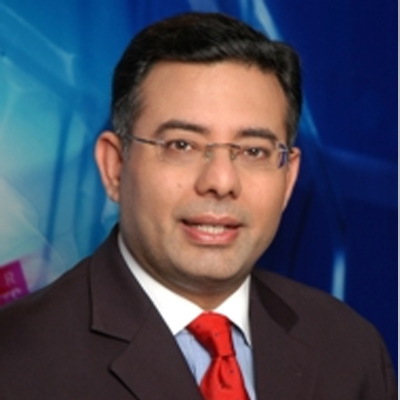
  • ‘We are the biggest investor in the game of cricket’ : Manu Sawhney – ESPN Star Sports managing director

    ‘We are the biggest investor in the game of cricket’ : Manu Sawhney – ESPN Star Sports managing director

     ESPN Star Sports has pumped in a whopping $2.25 billion to acquire the rights for ICC including the two World Cups, the Champions League T20, Cricket Australia and England and Wales Cricket board. The mix includes cricket across the three formats of T20, ODIs and Test matches.


    The mark of aggression has spread to other sports including the Fifa World Cup soccer rights and the Olympics.


    For over a year, Manu Sawhney has been shepherding this drive to crush competition and establish leadership position as a sports broadcaster by acquiring driver content rights over a longer period of time.


    “This is the best in cricket that could be there in the market and places us in the position of matchless leadership not only in Asia but on a global scale,” he says.


    In an exclusive interview with Indiantelevision.com’s Sibabrata Das, ESS managing director Sawhney elaborates on how the ESPN-Star joint venture company is gearing up to be not just a TV brand but also dominate in the digital new media space with its comprehensive content across sports, platforms and markets.


    Excerpts:


    The Indian Premier League was touted as the biggest prime time reality show on Indian television. Why didn’t ESPN Star Sports buy into that hype?
    We wanted to first evaluate how the T20 format of the game would evolve as a product cycle. Remember, we were the first to recognise the power of this new format at the international level when we acquired the ICC rights which include the two World Cups.


    With the IPL doing well, we have now bagged the Champions League T20. It will involve the best of the best where the top teams from various domestic leagues including the IPL, Australia, South Africa, England and others compete to win the title of Champions of Champions. The IPL also becomes a feeder league for this global tournament.


    We recognise that various formats continue to get developed and broaden the appeal of the game across new markets and demographics, providing increasing number of platforms for leverage and exploitation.

    Was the IPL miss a reason why ESS paid higher ($975 million) for the Champions League T20 when it could have got it at a much lower price with DIC’s $751.3 million bid being the second in race?
    When we are in a bidding environment, we do not punt but go ahead with an amount which we believe adds value to our business. We thought $612 million for the BCCI rights was too high for us, but somebody else thought it made business sense. We make a bid thinking what value the property can bring to us, how prepared we are today to leverage it, and how well placed are we for the future to fully realise the potential.


    Our investment in content follows this strategy and allows us to present a sound proposition to our partners. The acquisition of Champions League T20 has been done with this focused, planned and future oriented approach backed by a solid business plan, ensuring our profitability and long term growth.


    As a property, CL T20 has all the necessary ingredients of a blockbuster property, not only on the national level but on a global scale.


    After the inaugural edition this year in December, the tournament is to be scheduled right before the festive period featuring more top quality international teams and increased number of matches spread over a longer duration. This amplifies the opportunities around the property.

    But aren’t you also risking on the most expensive cricket property (calculated on a per game basis)?
    Tell me one property today which is available across the globe with all commercial rights – and that, too, for a period of 10 years! CL T20 is the only such property. This allows us multitude of opportunities to build, develop, customise, and fully realise immense value around the property. And it makes CL T20 most unique and premium as compared to any other domestic or international property currently around from the business perspective.


    Even if we were to compare it with a property like IPL, we have tremendous advantages. The rights around IPL do not include title sponsorship, umpire sponsorship, stadium advertising, official sponsor, ticketing and licensing. These rights amount to sizeable contribution and are expected to grow manifold over the next 10 years as the CL T20 further develops as the most premium tournament.


    The domestic nature of the tournament also limits IPL’s appeal internationally. This affects international syndication and other related rights. On the other hand, we have had significant success with the ICC on the international syndication front and today are better placed than anybody else to fully realise the value of this premium property in the global market.


    Unlike others, we are not just a broadcast brand but today the most comprehensive sports content provider in the region and the biggest cricket content provider in the world. With our three strong TV brands (ESPN, Star Sports and Star Cricket), two robust mobile brands (mobileESPN and Star Sports Mobile) and the most comprehensive online offering in form of www.espnstar.com, we are better placed than anyone else to fully leverage and exploit multiple opportunities across platforms for building our business on the back of CL T20 across the region and globally.

    Even in the ICC bid, ESS’s winning punt was $1.1 billion while the second highest bidder with $900 million was way behind. Are we seeing a more aggressive ESS?
    We are today the biggest investor in the game of cricket in the world with the ICC, Cricket Australia, England and Wales Cricket board rights and the newly acquired CL T 20. This not only provides us with a good mix of all forms of cricket – the new age blistering Twenty20 format, the popular ODIs and the ever-green Test matches, but along with the ICC it also gives us a very strong lineup of top quality cricket with a World Cup every year for the next 10 years. This is the best that could be there in the market and places us in the position of matchless leadership not only in Asia but on a global scale.


    While IPL has been a successful property, in ICC we have the pinnacle of international cricket while CL T20 gives us the very best of the international domestic competition. With the acquisition of CL T20, we have enhanced our driver content portfolio for cricket and our leadership position as a sports broadcaster not just for few years but a longer period of time.

    Do you see the high rise in cost for cricket properties a function of competition or is it based on a realistic projection of business growth?
    The escalation in the rights cost is because of competition as well as growth in the market that you are able to reach. The T20 format, for instance, has expanded the demographic profile from a male skew to young and female audiences. The emergence of new platforms is also playing a part in defining the value in the marketplace.

    India is no longer a low-cost media economy. As the market matures, there will be consolidation. There is, after all, a limited amount of driver content that is available

    ESS enjoyed high revenues from DTH operators as it was carried on the basic tier. But this year Tata Sky and the new DTH operators like Reliance ADAG’s Big TV are not willing to put the three channels on that package. With MSOs (multi-system operators) also consolidating, do you see growth on subscription revenues being hit?
    There is a huge opportunity for sports broadcasters like us and platform providers to work together in building the subscriber base. In global markets, digital subscribers grow on the back of HD, interactivity and video-on-demand; the driver content is live sports. In India, the market is still in infancy. New technologies like DTH, IPTV and mobile are bringing in paradigm shifts. With the power that we have on content across sports, we see tremendous scope to increase our revenues.

    With the ICC Champions Trophy, which was scheduled to be held in Pakistan in September, being deferred, will you be re-negotiating the bid amount with ICC?
    The ICC Champions Trophy is a showcase of game’s best elite players from the world’s top national cricketing sides. It was, therefore, important to ensure full and committed participation of the best teams from all qualified nations for ICC Champions Trophy to retain its premium status. Unfortunately, too much ambiguity existed for many months about the realistic possibility of the event being staged in Pakistan, which led to the current situation where the options available were very limited.


    As the global broadcast and production partner of the ICC, ESS was fully committed to producing and broadcasting the ICC Champions Trophy in a truly engaging and entertaining manner for fans across the globe. Accordingly, all necessary broadcast arrangements were made by ESPN Star Sports as per plans agreed with ICC for covering the event in Pakistan.


    The late decision to defer the tournament did come with its own set of difficulties for various organisations involved in the tournament, and this affected ESS’s business commercially too. Various questions have arisen as a result of this postponement, particularly issues relating to ensuring teams’ participation in the tournament when it is eventually played as well as the knock-on impact of the rescheduling on the overall cricket calendar.


    It is expected from the ICC to decide on these critical matters in the near future. We will only be able to assess the overall impact on our business based upon the way in which these issues are resolved and after we are able to study the short and long term implications of ICC’s actions for ourselves. We reiterate our commitment to working with the ICC in evolving a mutually satisfying solution.

    Isn’t ESS’s aggression spreading to other properties as well including the Fifa World Cup where ESS is said to have bid $40.5 million (up from around $8 million)?
    We have been aggressively mopping up content. In football, we have the exclusive television rights to broadcast Fifa’s stellar lineup of international football events including the 2010 World Cup for the Indian sub-continent. We have the exclusive rights to show over 275 international football games including the Fifa Confederations Cup. We have a multi-year exclusive agreement with The Football Association (The FA), for broadcast rights to The FA Cup, England Internationals and The FA Community Shield on multimedia platforms for the 2008/9 – 2011/12 seasons for 20 countries across the region. This, coupled with the existing partnership with Premier League with which ESS holds BPL rights for 22 countries in Asia through 2010 and rights of UEFA Champions League in key markets, places us as the single largest football content provider in the region.


    In motorracing, we have renewed partnership with FIA for another 5 years across the region and for the first time, secured rights across various platforms and in many key markets acquired terrestrial rights as well. This flagship racing property along with other leading properties like A1, MotoGP and WRC, sets ESS apart from any other network or broadcaster in the region.


    We have also renewed our partnership with Tennis Australia for another seven years, acquired French Open for India, and continue partnership with NBA and key Golf majors including Augusta Masters, The US Open and The Open, among others.


    We have acquired the Olympic rights. The partnership with the International Olympic Committee will allow us to show the Vancouver 2010 and London 2012 Olympic Games for 22 countries across the Indian subcontinent and South East Asia.

    This is the first time that IOC has awarded the rights to one single pay-TV platform across the region.

    Have your programming hours also gone up?
    In addition to the acquired content that we have the rights for, we produce over 3650 hours of original programming per year, which is probably the largest quantum of original programming around these sports.


    To give you an idea, we produce over 1500 hours of original football content and over 1000 hours of cricket content. In addition, our flagship studio show, SportsCenter, offers the best round-up of sporting action around the globe with five localised editions in Asia on ESPN. And along with our entertainment-focused sports bulletin show Score Tonight on Star Sports, we produce over 1000 hours of original sports news programming every year. This lineup of content makes us the prime choice of over 310 million passionate sports fans and business partners and associates across Asia.

    Our content strategy is to build a sustainable and scalable biz across sports, platforms and markets

    How important is the Indian market for ESS?
    It is a very important market for us and continues to contribute to the overall growth of our business in Asia. The media industry in India itself has seen rapid growth in the last few years. There is appetite for quality content and so are the opportunities to leverage and further build the business.


    While cricket has been, for many years, the most popular sport in India, it still continues to grow. This popularity is growing beyond India playing cricket to other international cricket as well as growth of strong female TG for cricket. The dedicated 24×7 cricket channel, Star Cricket, quickly reached penetration levels of 90-95 per cent after its launch last year.

    India is also steadily developing into a multi-sports market. Other sports like soccer, motor sports, tennis, hockey and golf are increasingly becoming more popular and gaining viewership as well. With that in mind, and considering the huge viewership base, India will continue to be a key market for ESS.

    India offers a lot of potential in terms of ESS’s new media initiatives. ESS has invested in a focused manner in the Indian market. With our multi-platform capabilities on the back of some of the most premium content in the form of ICC, CL T20, Fifa and F1, ESS is better placed than ever today to fully exploit the opportunities from the emerging media scenario in India.

    Do you see consolidation in the sports broadcasting space in India?
    India is no longer a low-cost media economy. As the market matures, there will be consolidation. There is, after all, a limited amount of driver content that is available. We hope to leverage our leadership position as and when such opportunities throw up. We are not just TV dependent but have grown our presence in the new digital media space. And we are not just an India product.

    What have been your focus areas since you took charge as managing director of ESS one year back?
    My focus has been on four key areas. The content strategy is to build a sustainable and scalable business across sports, platforms and markets.


    Besides continuing to acquire and develop the strongest, most comprehensive and relevant content, we have enhanced our multi-platform presence.


    While television is the biggest format in which consumers want to watch sports, new media platforms are growing in importance. Growing ESS’s presence in the digital space is a key thrust area for the company and we have invested huge resources to provide a new improved platform.


    We have launched the sharp new version of www.espnstar.com and are offering advertisers an expansive range of customised and creative advertising opportunities. The new Star Sports Mobile complements the mobileESPN offering through entertaining and engaging content with exclusive video highlights from Arsenal and Liverpool FC and Star Sports’ original programmes.


    Skyhawk is a new business management system that has been successfully integrated between internal systems across functions to provide competitive advantage and smoother operations.


    We have also made significant investments in improving our business and operational processes through adoption of new technology over the last one year with an aim to scale up our operations more efficiently for future expansion. Our focus has also been on human resource development and I have worked towards creating project teams within the organisation spanning across departments and markets entrusted with an objective to scout for new ideas to help grow our business.

    How has the last one year been for ESS?
    We have seen growth in bottomline and topline across the region. Our task is to take ESS to the next level in scalable business across sports and markets.
  • London 2012 CEO Sebastian Coe to talk ‘Olympics’ on CNN

    London 2012 CEO Sebastian Coe to talk ‘Olympics’ on CNN

    MUMBAI: With the 2008 Olympics now well underway, the head of London 2012 is in Beijing to find out first hand what it takes to host the Games. Former Olympics champion Sebastian Coe joins Anjali Rao on this weekend’s Talk Asia to discuss Beijing’s experience as a host city, how China has handled controversial issues, and the blueprint for the London Olympics. The special airs on 16 August at 8:30 pm and on 17 August at 6:30 pm.

    Since being awarded the Olympics, Beijing has faced its share of criticism and controversy over human rights and political issues. Lord Coe believes international sports have enormous impact: “It’s a powerful vehicle for bringing communities together in a way that sometimes politicians don’t manage to do.” He adds however that it should not replace political dialogue: “We must never forget the power and the impact that international sport has had often in transformation, in helping with the process of change…but it is not the first line of foreign policy.”

    The former British politician does not shy away from criticism of London hosting the next Olympics. “You are never going to win the hearts and minds of everybody. Our regular polling shows that well over 70 percent of people in the UK are solidly behind this project,” he says. Indeed, he believes that hosting the Olympics in one’s own backyard can “inspire young people to do things that perhaps they hadn’t thought about.”

    The sporting legend is looking forward to the August 24 closing ceremony when London will be handed the Olympic mantle. This moment is of extra significance to Coe as this is the opportunity for London to showcase to the world what the city will expect to deliver in 2012: “We will have a very global moment in Beijing and that is the eight minutes that London will have in the closing ceremony.”

  • DD News to air special 30-minute show on Olympics

    DD News to air special 30-minute show on Olympics

    NEW DELHI: DD News will telecast daily a 30-minute special sports programme titled Beijing 2008 – Quest for Glory, from 7-25 August at 7 pm.

    The programme will have inputs from the live coverage of the events that will be telecast from the games venue and the discussions on the day’s round up at the Olympic Games.

    While India’s participation in the Olympics in Beijing will be telecast live on the national network of Doordarshan DD 1, the entire games will be telecast live/deferred live on the pubcaster’s sports channel DD Sports.

    In addition, DD 1 and DD Sports will telecast live the opening and closing ceremonies on 8 August and 24 August respectively

    On the first day, the live anchoring/discussion will commence from 5:30 pm followed by the Opening Ceremony which is expected to go on till around 9:05 pm.

    The Closing Ceremony of the Olympics will be telecast live from 5:30 pm to 8:30 pm or till the end. DD Sports will telecast live all India participating events with customized commentary.

  • BBC World News to air special shows on Olympics

    BBC World News to air special shows on Olympics

    MUMBAI: BBC World News is set to screen its special programmes, which are weaved around Beijing Olympics 2008.

    My Games, the new BBC World News programme based on the Olympics, will be broadcast live from 8 August at 6:15pm.

    Presented by BBC’s Adnan Nawaz, the show will feature people from all around the globe talking live on TV, using webcams and will air four times in a weak.

    Nawaz says,“My Games is a great platform to look at the Olympics from every possible angle. It’s an opportunity for me to capture some of the colour and excitement surrounding the Games and share it with the audience, who in turn can communicate their thoughts with BBC World News’ 78 million weekly viewers.”

    Adnan will also report live for BBC World News’ Sport Today and Mishal Husain will be in the Chinese capital from 6 August to present a special daily edition of World News Today.

    Extratime will run a week of special Olympic-related sport interviews and travel programme fast:track will aim at looking at what “non-sport fans can enjoy in the country”.

    In addition, BBC World News will also feature programmes looking at Life in China, which will explore personal stories and social issues.

    The Culture Show, presented by Miranda Sawyer and Tom Dyckhoff, will look at Beijing’s lcontemporary art, design, fashion and music scene.

    China Reporting China, a series of four documentaries investigating different aspects of rural life in the country will also be aired.

  • BBC to conduct marketing campaign around the Olympics

    BBC to conduct marketing campaign around the Olympics

    MUMBAI: BBC has announced that BBC Sport’s marketing campaign for the forthcoming Olympic Games in China will be based upon the traditional Chinese folklore Journey To The West.

    The campaign, which will air in late July, will include animations and music especially produced by Jamie Hewlett and Damon Albarn.

    BBC Sport Executive Producer, Jonathan Bramley, and the Head of Marketing and Communications, Louisa Fyans, decided to produce an integrated titles and marketing campaign based on the folklore Journey To The West for the Beijing Olympics.

    BBC Sport executive producer Jonathan Bramley said, “This has been a really exciting collaboration – to work with such renowned artists as Jamie and Damon is a real plus for BBC Sport. Their treatment of the trail and titles will kick start our Olympic coverage in a really different, energetic way.”

    Hewlett and Albarn worked alongside the BBC to adapt Journey To The West, an epic quest for enlightenment, into the Olympic trail and titles. The London-based pair developed the animation and music especially for the BBC.

    The campaign will feature the characters of Monkey, Pigsy and Sandy using Olympic sports on their journey to Beijing and the Bird’s Nest stadium. The sports represented include gymnastics, hammer, sprinting and diving.

    Artist/designer Jamie Hewlett said, “The idea is that you tell the entire story of Journey To The West in a two-minute opening sequence, which is basically them on their way to the Olympic stadium, the Birds’ Nest stadium.”

    The Beijing Olympics marketing campaign will feature promotional activity across TV, radio, online, mobile and interactive. It will also play throughout the Beijing Olympics programming via title sequences, in programme graphics and set design.

    A two-minute sequence is being created that will be played out in full as well as 60, 50, 30, 20 and 10 second versions, which will be used for trails and titles.

    BBC Sport Marketing worked with retained agency RKCR to develop the strategic direction and creative realisation of the idea. Red Bee Media produced the trails and title sequence with Zombie Flesheaters and Passion Pictures.

    The aim is to target younger audiences through high profile websites such as Facebook, Bebo, MSN and social networking sites as well as mobile activity.

    The folklore is based on characters taken from the story of Monkey King, one of the four classic novels written by Wu Chen-en during the Ming Dynasty (1500–1584).

    The story has many layers of meaning and may be read on many different levels such as a quest, fantasy, personal search for self-cultivation, or a political/social satire.

    The story is an account of a monk, Xuan Zang (602-664), who went to India in the 7th Century to seek Buddhist scriptures to bring back to China.