Tag: Ola

  • NDTV presents its first ever Unicorn start-up awards 2016

    NDTV presents its first ever Unicorn start-up awards 2016

    MUMBAI: The world of start-ups is bursting at the seams and India is becoming the start-up capital of the world. NDTV’s series Unicorn — Chasing the start-up dream has been leading the charge in discovering the next big idea from India’s belly which can be the next billion-dollar valued start-up.

    Carrying forward this anticipation NDTV presents the first ever Unicorn Start-up Awards in association with Vestige and Indigo Nation to honour those who have astonished the market with simple ideas and some great execution. The awards will witness some of the biggest mentors and venture capitalists from the start up space in attendance, including Deep Kalra, Founder and CEO, MakeMyTrip, and Sandeep Aggarwal, Founder, Shopclues & Droom.

    The awards will recognise the most credible dream-chasers who are going to change the way India does business with a stellar jury panel including R Chandrashekhar, President, NASSCOM, Suchi Mukherjee, Founder and CEO, Limeroad, and Raman Roy, a seasoned investor, to name a few.

    Start-ups like Grofers, Oyo Rooms, Ola, FlipKart and Shopclues will compete for coveted titles. NDTV has tied up with NASSCOM 10,000 Startups, as knowledge partner for the awards, and with Tracxn, a start-up intelligence and market research platform, as research partner.

    The exciting evening will be hosted by the glamorous Mandira Bedi, tech guru Rajiv Makhni and Vikram Chandra, Group CEO, NDTV.

    Vikram Chandra, Group CEO, NDTV is all geared up for the first innings of these awards. “We have entered a new business era of start-ups, and it could transform India. NDTV too has expanded its wings in the e-commerce arena and we are growing rapidly. The Unicorn Start-Up Awards is our attempt to honour the unique ideas which have made a mark. From here on, we expect the awards to get bigger and better, and to be the benchmark for entrepreneur recognition.”

    Rajiv Makhni, MD Technology, who is the brainchild behind these awards said, “From nascent ideas cooked up in a warehouse to booming ventures that are eating up market share and attracting consumers at breakneck speed, NDTV Unicorn Start-Up Awards will lift the iron curtain off them all. This is the highest form of recognition for those that have blazed a trail of their own. This is the start-ups’ moment to shine and occupy centre-stage on a prestigious platform like NDTV.”

    The awards will be presented and the webcast will be live on ground on July 29th at the Taj Palace, New Delhi, 7 pm onwards.

    Bootstrapped start-up of the year – this category will award start-ups that are bootstrapped all the way and have made notable progress without external funding or support and own nothing outside of their start-up.
    • New Kid on the Block– this category will award the start-up that has an exceptional idea and is now attempting to scale up into a business. It should be an original idea with the potential to disrupt the market.
    • Dream-chaser of the year– this category will award the start-up that has a concrete plan and is now scaling up through funding.
    • Woman Entrepreneur of the year– this category will recognise a start-up helmed by a woman entrepreneur which has disrupted the market.
    • Health start-up of the year– this category includes health start-ups across wellness and fitness and more that have made an impact.
    • Unicorn of the Year– this category will be awarded to the billion-dollar start-up, or Unicorns that has shown highest year-on-year growth in the financial year gone by.
    • Start-up of the future– this category will award the start-up that has the ability to be the next big thing and has a fantastic idea at its core and is looking at establishing itself in a developing market.
    •  Global Start-up of the Year– this category will award an international start-up that has revolutionised its segment and has shown remarkable growth in the last financial year.
    •  Start-up mentor of the year–  this category will recognise an investor, a big shark, an incubator, which has funded start-ups. This individual or venture capital firm will be awarded for great investment acumen and success rate.
    •  Good Samaritan of the year– this category will award start-ups that are making a social impact through their idea.
    •  People’s Start-up of the Year: this will be the only category thrown open to public voting through a microsite and will not be part of the jury’s decision-making process. This convenience start-up will be awarded for pleasing consumers through great service, marketing, and brand retention.
    •  Start-up Person of the Year– this category will award and recognise Indian personalities who have played an important role in shaping India’s start-up sector. He or she could be a government representative, a leading investor, a Unicorn founder.
      Brand Ambassador of the Year– this category will award the person who has upheld his/her responsibilities as a start- up brand ambassador and is a true start up evangelist!

     

  • Chaayos and its brand of tea fly high with Spice Jet

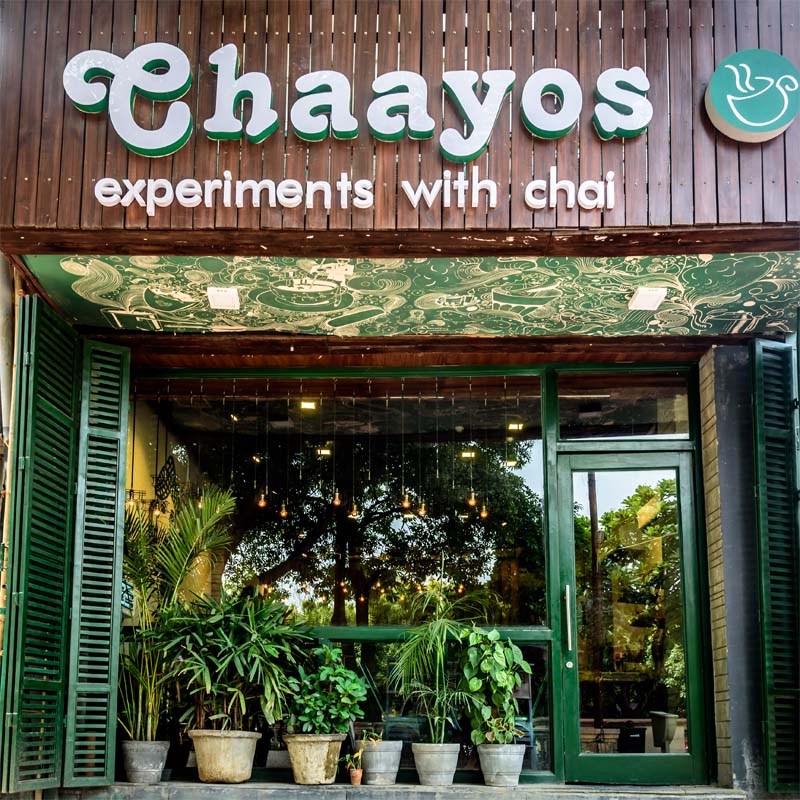
    Chaayos and its brand of tea fly high with Spice Jet

    MUMBAI: Brand integration and partnerships are key to the startup world and often lead to innovative co-ops. SpiceJet, for example, has joined hands with the hip and upscale tea shop franchise Chaayos to serve hot steaming cup of masala chai to its passengers on-board.

    For those who don’t know, Chaayos is a kiosk style tea startup that kick-started in Gurgaon and has gained popularity among the chai lovers in cities.

    “Spice Jet is a people’s brand and our sustained efforts are always towards nurturing the ‘experience’ that our customers have with us. Chaayos is an expert in customised tea and with this partnership, we look forward to our customers savouring the chai drinking experience with us even while being on-board.” said SpiceJet spokesperson Ajay Jasra.

    To highlight this partnership, Chaayos has launched a customized instant Masala Chai mix, exclusively for SpiceJet travellers and customers who can either pre-book or buy their favourite cup of chai on-board.

    While co-founder Nitin Saluja was always proud of the cup of chai he made, he never thought this subconscious demand for a great chai outlet would lead him to actually establish a chai kiosk with fellow IITian Raghav Verma in 2012. Right now, between, Gurgaon, Chaayos has 25 stores to the franchise’s name and has broken even with the initial investments, said Saluja.

    The sole purpose behind Chaayos, as Saluja puts it, was to give people their ‘meri wali chai’ that would go on to compete with the CCDs and the Starbucks of the world. Co-founder Raghav Verma feels the partnership with Spice Jet as a step forward in that direction.

    While reliving the street side chai shop memories from college or the home made tea blend that one enjoyed every morning is a great way to reminisce, how viable is setting up a tea shop as a business?

    Establishing ‘what coffee is to the west, Chai is to India’ Saluja emphasised “how coffee is embedded in the cultural fabric of the west, tea or chai is embedded in our cultural fabric.” Saluja also goes on to say that it would be wrong to assume that the coffee shops in India are running in profit, just because they are backed by big brands. “I don’t think there are many coffee companies in India which are making a reasonable amount of money. This is because people don’t walk in for coffee, but the nice ambience and the space they offer. Whereas, when it comes to tea, it’s the product which is the USP,” Saluja opined. Chaayos clearly aims at the natural demand for chai in India as opposed to coffee.

    While the blend remains a familiar, tried and tested one, Chaayos plans to experiment and come up with three to four new products each year.

    Unlike similar food and beverage start-ups, instead of marketing Chaayos is banking on its product strength, smart pricing and retail visibility. “I think more than marketing, being present on more and right locations is what will do the trick for a store like us. Currently we are focusing on being present on as many locations as we can, and giving the right experience to the customers inside the store. By design the overall proposition is such that the customer should come back,” Saluja explained.

    Great customised blends of tea isn’t the only weapon Chaayos uses for customer retention. “A regular cup of 200 ml chai costs Rs 59 at Chaayos. At face value that might sound more if compared to the roadside tapri, but a 60 ml tea at such a stall costs around Rs 10. So we aren’t charging a whole lot for the ambiance we offer along with the tea,” Saluja runs the numbers through. With a strong digital presence, Chaayos does a lot of social media and digital marketing to stay relevant to its customers.

    Apart from Spicejet, the brand has also partnered with digital brands like Ola and Uber, as well as American Express, which also serves the purpose of driving the right customer base at the outlets.

  • Chaayos and its brand of tea fly high with Spice Jet

    Chaayos and its brand of tea fly high with Spice Jet

    MUMBAI: Brand integration and partnerships are key to the startup world and often lead to innovative co-ops. SpiceJet, for example, has joined hands with the hip and upscale tea shop franchise Chaayos to serve hot steaming cup of masala chai to its passengers on-board.

    For those who don’t know, Chaayos is a kiosk style tea startup that kick-started in Gurgaon and has gained popularity among the chai lovers in cities.

    “Spice Jet is a people’s brand and our sustained efforts are always towards nurturing the ‘experience’ that our customers have with us. Chaayos is an expert in customised tea and with this partnership, we look forward to our customers savouring the chai drinking experience with us even while being on-board.” said SpiceJet spokesperson Ajay Jasra.

    To highlight this partnership, Chaayos has launched a customized instant Masala Chai mix, exclusively for SpiceJet travellers and customers who can either pre-book or buy their favourite cup of chai on-board.

    While co-founder Nitin Saluja was always proud of the cup of chai he made, he never thought this subconscious demand for a great chai outlet would lead him to actually establish a chai kiosk with fellow IITian Raghav Verma in 2012. Right now, between, Gurgaon, Chaayos has 25 stores to the franchise’s name and has broken even with the initial investments, said Saluja.

    The sole purpose behind Chaayos, as Saluja puts it, was to give people their ‘meri wali chai’ that would go on to compete with the CCDs and the Starbucks of the world. Co-founder Raghav Verma feels the partnership with Spice Jet as a step forward in that direction.

    While reliving the street side chai shop memories from college or the home made tea blend that one enjoyed every morning is a great way to reminisce, how viable is setting up a tea shop as a business?

    Establishing ‘what coffee is to the west, Chai is to India’ Saluja emphasised “how coffee is embedded in the cultural fabric of the west, tea or chai is embedded in our cultural fabric.” Saluja also goes on to say that it would be wrong to assume that the coffee shops in India are running in profit, just because they are backed by big brands. “I don’t think there are many coffee companies in India which are making a reasonable amount of money. This is because people don’t walk in for coffee, but the nice ambience and the space they offer. Whereas, when it comes to tea, it’s the product which is the USP,” Saluja opined. Chaayos clearly aims at the natural demand for chai in India as opposed to coffee.

    While the blend remains a familiar, tried and tested one, Chaayos plans to experiment and come up with three to four new products each year.

    Unlike similar food and beverage start-ups, instead of marketing Chaayos is banking on its product strength, smart pricing and retail visibility. “I think more than marketing, being present on more and right locations is what will do the trick for a store like us. Currently we are focusing on being present on as many locations as we can, and giving the right experience to the customers inside the store. By design the overall proposition is such that the customer should come back,” Saluja explained.

    Great customised blends of tea isn’t the only weapon Chaayos uses for customer retention. “A regular cup of 200 ml chai costs Rs 59 at Chaayos. At face value that might sound more if compared to the roadside tapri, but a 60 ml tea at such a stall costs around Rs 10. So we aren’t charging a whole lot for the ambiance we offer along with the tea,” Saluja runs the numbers through. With a strong digital presence, Chaayos does a lot of social media and digital marketing to stay relevant to its customers.

    Apart from Spicejet, the brand has also partnered with digital brands like Ola and Uber, as well as American Express, which also serves the purpose of driving the right customer base at the outlets.

  • Food brand Five Star Chicken revamps brand name to Five Star

    Food brand Five Star Chicken revamps brand name to Five Star

    MUMBAI: Five Star Chicken has announced the revamp of its brand name from Five Star Chicken to Five Star. The name change is a part of the strategic plan by the brand to introduce more vegetarian products to their portfolio. With this move, the brand name will also be synonymous to its international counterparts in other countries under Thai Multi-National Conglomerate, Charoen Pokphand Foods.

    With a growing network of stores and rapid consumer acceptance, Five Star is all set to introduce a wide and interesting range of vegetarian products to the market. 50% of Indian population are vegetarians and as a brand we do not want to miss out the opportunity to reach out to half the population. Though 40% of our product line is Veg offering people had a strong perception that we are only a chicken brand. Adapting to the local taste, flavor and developing products that appeals to masses has been one of the key strengths of the brand. The company has its own state of the art infrastructure for storage and distribution and exercise complete control over the quality from ‘Farm to Fork’ to ensure consistent quality and food safety.

    Five Star places significant importance on research and development to meet their customers and consumers’ needs as well as to improve production efficiency at every step of operations. The brand has a dedicated team of R&D and chefs who help in continuous innovation to deliver wide variety of products and great quality taste at an affordable price. Based on the brand’s R&D and customers research survey in Bangalore, burgers and hot dogs are massively the most preferred consumers choice of fast food product. Capitalizing on this trend, Five Star is all set to launch a whole new range of burger products by the end of this quarter, while Hot Dogs are already introduced.

    “While, we have a new name, we are still the same brand build upon the vision of offering great quality and delicious range of products at affordable prices to consumers. The name change is in line with the brand plans to capture the vegetarian segment of the market and give them a taste of our offerings. Moreover, we would also like to retain and reinforce our global brand name – Five Star, in the Indian market “, said CP Foods assistant VP Rijoy Prabhakar.

    “India is one of the top five priority markets for Five Star globally. We place significant importance on research and development to meet our customers and consumer’s needs as well as improve production efficiency at every step of operations which ultimately benefits our business partners”, further said CP Foods senior VP Sanjeev Pant.

    In India, Five Star launched its first outlet in November 2012 in Bangalore. With a production and processing facility at Budigere near Bengaluru and Chittoor in AP the brand has grown to 350+ outlets across Bengaluru, Chennai, Kochi, Goa, Hyderabad, Mumbai and Pune. The brand has tied up with IRCTC for Bangalore, Chennai and kerela markets and with key delivery website Swiggy, Zomato, Food Panda, Road Runners and Ola.

    Five Star offers a wide range of chicken and vegetarian products in spicy Indian flavors as well as other Asian and Thai flavors. The brand also undertakes catering for birthday, home parties and corporate events through Five Star catering. Five Star also plans to launch 150 stores by the end 2016 expanding through the franchisee route while entering tier-II and III towns and in the existing cities.

  • Food brand Five Star Chicken revamps brand name to Five Star

    Food brand Five Star Chicken revamps brand name to Five Star

    MUMBAI: Five Star Chicken has announced the revamp of its brand name from Five Star Chicken to Five Star. The name change is a part of the strategic plan by the brand to introduce more vegetarian products to their portfolio. With this move, the brand name will also be synonymous to its international counterparts in other countries under Thai Multi-National Conglomerate, Charoen Pokphand Foods.

    With a growing network of stores and rapid consumer acceptance, Five Star is all set to introduce a wide and interesting range of vegetarian products to the market. 50% of Indian population are vegetarians and as a brand we do not want to miss out the opportunity to reach out to half the population. Though 40% of our product line is Veg offering people had a strong perception that we are only a chicken brand. Adapting to the local taste, flavor and developing products that appeals to masses has been one of the key strengths of the brand. The company has its own state of the art infrastructure for storage and distribution and exercise complete control over the quality from ‘Farm to Fork’ to ensure consistent quality and food safety.

    Five Star places significant importance on research and development to meet their customers and consumers’ needs as well as to improve production efficiency at every step of operations. The brand has a dedicated team of R&D and chefs who help in continuous innovation to deliver wide variety of products and great quality taste at an affordable price. Based on the brand’s R&D and customers research survey in Bangalore, burgers and hot dogs are massively the most preferred consumers choice of fast food product. Capitalizing on this trend, Five Star is all set to launch a whole new range of burger products by the end of this quarter, while Hot Dogs are already introduced.

    “While, we have a new name, we are still the same brand build upon the vision of offering great quality and delicious range of products at affordable prices to consumers. The name change is in line with the brand plans to capture the vegetarian segment of the market and give them a taste of our offerings. Moreover, we would also like to retain and reinforce our global brand name – Five Star, in the Indian market “, said CP Foods assistant VP Rijoy Prabhakar.

    “India is one of the top five priority markets for Five Star globally. We place significant importance on research and development to meet our customers and consumer’s needs as well as improve production efficiency at every step of operations which ultimately benefits our business partners”, further said CP Foods senior VP Sanjeev Pant.

    In India, Five Star launched its first outlet in November 2012 in Bangalore. With a production and processing facility at Budigere near Bengaluru and Chittoor in AP the brand has grown to 350+ outlets across Bengaluru, Chennai, Kochi, Goa, Hyderabad, Mumbai and Pune. The brand has tied up with IRCTC for Bangalore, Chennai and kerela markets and with key delivery website Swiggy, Zomato, Food Panda, Road Runners and Ola.

    Five Star offers a wide range of chicken and vegetarian products in spicy Indian flavors as well as other Asian and Thai flavors. The brand also undertakes catering for birthday, home parties and corporate events through Five Star catering. Five Star also plans to launch 150 stores by the end 2016 expanding through the franchisee route while entering tier-II and III towns and in the existing cities.

  • People access Facebook 2.4 times more than Twitter and 2.0 times more than YouTube: Kirthiga Reddy

    People access Facebook 2.4 times more than Twitter and 2.0 times more than YouTube: Kirthiga Reddy

    MUMBAI: It’s very easy to overlook a fundamental fact about brands: people bring brands to life – not companies. Brands aren’t to be found in the factory or in the studio and much less in the balance sheets, but in the minds of consumers, employees, suppliers and other stakeholders. In a sense a brand is a public object – and the strongest brands are those whose consumers feel a real sense of ownership: ‘That’s My Brand’. In other words, a brand exists only in people’s mind. So today what is driving people’s mind? Who is moving people? Where is it they go before they make a decision?

    How often today do we hear in our day to day conversation that ‘On my Facebook account I read this.’ Is it really one’s Facebook account, does anybody really own it? It’s just a successful evolution of a brand that someone feels her or his Facebook account is her or his?

    People today are driven by a small screen which moves along, supplies content on demand and reacts as per the personality of its owner. A personalised interactive medium called ‘Mobile’. “The world is not going mobile, it has gone mobile” says Facebook India MD Kirthiga Reddy. She shares some verified data, “More than 142 million people access Facebook every month in India through any of the access points of which 133 million log in via mobile devices. More than 69 million people get on Facebook every day, 64 million of them through mobile.”

    So there is a humongous amount of interaction which happens daily and it happens all across India. “The diversity of Facebook is also an important factor. The data confirms that Facebook has a very strong pan India reach and this perception that Facebook is only an urban Smartphone product is not true. What we found is for every urban user there are two from other parts of India which shows a very strong distribution of people,” asserts Reddy.

    Facebook in association with IMRB has done a study which shows, “63 per cent people on Facebook use 3G connections and 37 per cent use a 2G connection to access Facebook. 70 per cent people on Facebook own a Smartphone; 88 per cent use a prepaid connection.” Despite having such high numbers which are real by nature and not sampled or extrapolated, the investment on mobile, social media and digital is far from premium. Digitally born entrepreneur The Viral Fever founder Arunabh Kumar paints the scenario in the best possible way. He says, “The ad spend on a digital video which reaches to at least 15 times more number of people when compared to TV actually is equal to one meal catering spend of a television commercial (TVC) shoot.”

    Kirthiga Reddy also echoes same sentiments, but she speaks in terms of time investment of brands. “There is a big delta when it comes to how much time brands are spending on mobile and how much time people are spending on mobile” she says. As a frontrunner of the digital wave, Facebook has taken on multiple responsibilities of educating the ecosystem and the study is one of them, “Our intention through this study is to educate people about what people are doing on Facebook, on mobile, and how this information can help them move the business fast and bridge the gap between how much time people are spending on mobile and how time the brands are investing on mobile. We invest heavily on education as this new platform needs some educating. Late last year we rolled out a multi module educating program Blueprint in association with our partners,” she further adds.

    Blueprint is a new education program that trains agencies, partners and marketers on how to use Facebook, so they can create better campaigns that drive business results. Combining online courses, in-person training and certification Blueprint offers training from campaign optimisation, how to use video on Facebook, to effective ad measurement solutions. The Blueprint program features 34 online courses under various categories such as Facebook pages, targeting, buying and managing your ads, campaign optimisation, insight and Instagram. “Since March 2015, more than 175,000 people have taken more than 500,000 course enrolments. India ranks as the second largest country signing onto Blueprint. The top five countries include the US, India, Egypt, Brazil and the UK,” informs the Facebook India team.

    Platforms such as Facebook are also used to target people in TV dark areas, informs Reddy. She cites a case study on Nestle Everyday Whitener. “Nestle wanted to target people from media (traditional media) dark areas of the northeast. One creative was created for smartphones and another one was created for feature phones. The creatives drove that brand association and emotion to the end consumer, which later translated to positive results. This is an example of brands leveraging benefits of Facebook’s pan India presence.”

    The brand interaction with this disrupting social media platform is also happening in India  feels Reddy, “Three years back,if we were having this conversation, I would have only spoken about global case studies. I did not have a single India example to share,” says she. “But today we have so many examples across all the verticals, so the explosion is already happening. In the past also we saw when TV came in and print was there, it took its time,” she informs further.

    As per the FICCI – KPMG 2016 report, TV witnessed ad spends of Rs 542.2 billion (Rs 54,220 crore) which means a 14.2 per cent growth from the previous year. Whereas the growth rate of digital advertising which witnessed a spend of Rs 60.1 billion (Rs 6,010 crore) is an overwhelming 38.2 per cent. The same report projects a 15.1 per cent growth of television despite all the digital disruption and OTT emergence. The projected spend is believed to reach Rs 617.0 billion (Rs 61,700 crore). Digital is set to see a Rs 20 billion (Rs 2,000 crore) more spends as the projected figure for 2016 is Rs 81.1 billion (Rs 8,110 crore) which means a 33.5 per cent growth.

    So is it TV versus mobile? “We say it’s TV plus mobile,” says the Facebook India MD. But, at the same time she believes mobile has an upper hand, “Mobile is a screen kept close to you while TV is kept far with many distractions in between. A study shows that mobile has 82 per cent higher retention rate and 79 per cent lower distraction rate than any other screen,” she asserts. On TV there is a fight amongst brands to buy a prime time slot which shoots the 10 second ad rate sky high. “People are on Facebook throughout the day which means the brands no longer need to wait for the evening prime time to connect with people they can connect throughout the day,” says Reddy. “There are definitely key advantages when it comes to mobile. Mobile is a medium of discovery, mobile is a medium of personalisation it is a one screen one person platform which allows you to target individually, send the right message to the right person. You are seeing the kind of businesses that you can get, it gives you many opportunities which TV doesn’t, be it a whole day phenomenon or targeting,” she further sheds light on the advantages of mobile.

    Facebook has a strong ethos when it comes to value for money or return on investment or ROI, “We believe whenever a client pays a rupee to Facebook, he could have paid the same for either a TV ad or print or any-other medium. So what we promise is that a one rupee spend on Facebook is the most effective rupee spent by the client, that is what we want to strive for,” informs Reddy.

    Facebook is currently working with more than 85 per cent of Kantar’s reported top 100 advertisers in India, which includes Unilever, P&G, PepsiCo, Coca-Cola, Amazon, Nestle, Reckitt Benckiser, Mondelez, and L’Oreal.  This also includes companies headquartered in India like Tata and ICICI Bank, India’s largest private bank, eCommerce companies like Snapdeal, Flipkart, Ola, and new companies like Craftsvilla.com. In 2014 Facebook established the Facebook Client Council to learn more and develop better ad solutions.

    The study had a few proud findings for Facebook and Reddy throws light on them, “People access Facebook 2.4 times more than Twitter and 2.0 times more than YouTube,” says she while sharing India statistics.

    Facebook is focusing on videos too, as there is no India data available when it comes to video consumption Reddy shares global figures, “Everyday there are more than 8 billion (800 crore) video views on Facebook, and more than 45 per cent of video viewing happens on mobile.”

    “We are seeing a trend, where communication is going visual and with that Facebook is evolving in terms of being a visual storytelling platform” she concludes.


  • People access Facebook 2.4 times more than Twitter and 2.0 times more than YouTube: Kirthiga Reddy

    People access Facebook 2.4 times more than Twitter and 2.0 times more than YouTube: Kirthiga Reddy

    MUMBAI: It’s very easy to overlook a fundamental fact about brands: people bring brands to life – not companies. Brands aren’t to be found in the factory or in the studio and much less in the balance sheets, but in the minds of consumers, employees, suppliers and other stakeholders. In a sense a brand is a public object – and the strongest brands are those whose consumers feel a real sense of ownership: ‘That’s My Brand’. In other words, a brand exists only in people’s mind. So today what is driving people’s mind? Who is moving people? Where is it they go before they make a decision?

    How often today do we hear in our day to day conversation that ‘On my Facebook account I read this.’ Is it really one’s Facebook account, does anybody really own it? It’s just a successful evolution of a brand that someone feels her or his Facebook account is her or his?

    People today are driven by a small screen which moves along, supplies content on demand and reacts as per the personality of its owner. A personalised interactive medium called ‘Mobile’. “The world is not going mobile, it has gone mobile” says Facebook India MD Kirthiga Reddy. She shares some verified data, “More than 142 million people access Facebook every month in India through any of the access points of which 133 million log in via mobile devices. More than 69 million people get on Facebook every day, 64 million of them through mobile.”

    So there is a humongous amount of interaction which happens daily and it happens all across India. “The diversity of Facebook is also an important factor. The data confirms that Facebook has a very strong pan India reach and this perception that Facebook is only an urban Smartphone product is not true. What we found is for every urban user there are two from other parts of India which shows a very strong distribution of people,” asserts Reddy.

    Facebook in association with IMRB has done a study which shows, “63 per cent people on Facebook use 3G connections and 37 per cent use a 2G connection to access Facebook. 70 per cent people on Facebook own a Smartphone; 88 per cent use a prepaid connection.” Despite having such high numbers which are real by nature and not sampled or extrapolated, the investment on mobile, social media and digital is far from premium. Digitally born entrepreneur The Viral Fever founder Arunabh Kumar paints the scenario in the best possible way. He says, “The ad spend on a digital video which reaches to at least 15 times more number of people when compared to TV actually is equal to one meal catering spend of a television commercial (TVC) shoot.”

    Kirthiga Reddy also echoes same sentiments, but she speaks in terms of time investment of brands. “There is a big delta when it comes to how much time brands are spending on mobile and how much time people are spending on mobile” she says. As a frontrunner of the digital wave, Facebook has taken on multiple responsibilities of educating the ecosystem and the study is one of them, “Our intention through this study is to educate people about what people are doing on Facebook, on mobile, and how this information can help them move the business fast and bridge the gap between how much time people are spending on mobile and how time the brands are investing on mobile. We invest heavily on education as this new platform needs some educating. Late last year we rolled out a multi module educating program Blueprint in association with our partners,” she further adds.

    Blueprint is a new education program that trains agencies, partners and marketers on how to use Facebook, so they can create better campaigns that drive business results. Combining online courses, in-person training and certification Blueprint offers training from campaign optimisation, how to use video on Facebook, to effective ad measurement solutions. The Blueprint program features 34 online courses under various categories such as Facebook pages, targeting, buying and managing your ads, campaign optimisation, insight and Instagram. “Since March 2015, more than 175,000 people have taken more than 500,000 course enrolments. India ranks as the second largest country signing onto Blueprint. The top five countries include the US, India, Egypt, Brazil and the UK,” informs the Facebook India team.

    Platforms such as Facebook are also used to target people in TV dark areas, informs Reddy. She cites a case study on Nestle Everyday Whitener. “Nestle wanted to target people from media (traditional media) dark areas of the northeast. One creative was created for smartphones and another one was created for feature phones. The creatives drove that brand association and emotion to the end consumer, which later translated to positive results. This is an example of brands leveraging benefits of Facebook’s pan India presence.”

    The brand interaction with this disrupting social media platform is also happening in India  feels Reddy, “Three years back,if we were having this conversation, I would have only spoken about global case studies. I did not have a single India example to share,” says she. “But today we have so many examples across all the verticals, so the explosion is already happening. In the past also we saw when TV came in and print was there, it took its time,” she informs further.

    As per the FICCI – KPMG 2016 report, TV witnessed ad spends of Rs 542.2 billion (Rs 54,220 crore) which means a 14.2 per cent growth from the previous year. Whereas the growth rate of digital advertising which witnessed a spend of Rs 60.1 billion (Rs 6,010 crore) is an overwhelming 38.2 per cent. The same report projects a 15.1 per cent growth of television despite all the digital disruption and OTT emergence. The projected spend is believed to reach Rs 617.0 billion (Rs 61,700 crore). Digital is set to see a Rs 20 billion (Rs 2,000 crore) more spends as the projected figure for 2016 is Rs 81.1 billion (Rs 8,110 crore) which means a 33.5 per cent growth.

    So is it TV versus mobile? “We say it’s TV plus mobile,” says the Facebook India MD. But, at the same time she believes mobile has an upper hand, “Mobile is a screen kept close to you while TV is kept far with many distractions in between. A study shows that mobile has 82 per cent higher retention rate and 79 per cent lower distraction rate than any other screen,” she asserts. On TV there is a fight amongst brands to buy a prime time slot which shoots the 10 second ad rate sky high. “People are on Facebook throughout the day which means the brands no longer need to wait for the evening prime time to connect with people they can connect throughout the day,” says Reddy. “There are definitely key advantages when it comes to mobile. Mobile is a medium of discovery, mobile is a medium of personalisation it is a one screen one person platform which allows you to target individually, send the right message to the right person. You are seeing the kind of businesses that you can get, it gives you many opportunities which TV doesn’t, be it a whole day phenomenon or targeting,” she further sheds light on the advantages of mobile.

    Facebook has a strong ethos when it comes to value for money or return on investment or ROI, “We believe whenever a client pays a rupee to Facebook, he could have paid the same for either a TV ad or print or any-other medium. So what we promise is that a one rupee spend on Facebook is the most effective rupee spent by the client, that is what we want to strive for,” informs Reddy.

    Facebook is currently working with more than 85 per cent of Kantar’s reported top 100 advertisers in India, which includes Unilever, P&G, PepsiCo, Coca-Cola, Amazon, Nestle, Reckitt Benckiser, Mondelez, and L’Oreal.  This also includes companies headquartered in India like Tata and ICICI Bank, India’s largest private bank, eCommerce companies like Snapdeal, Flipkart, Ola, and new companies like Craftsvilla.com. In 2014 Facebook established the Facebook Client Council to learn more and develop better ad solutions.

    The study had a few proud findings for Facebook and Reddy throws light on them, “People access Facebook 2.4 times more than Twitter and 2.0 times more than YouTube,” says she while sharing India statistics.

    Facebook is focusing on videos too, as there is no India data available when it comes to video consumption Reddy shares global figures, “Everyday there are more than 8 billion (800 crore) video views on Facebook, and more than 45 per cent of video viewing happens on mobile.”

    “We are seeing a trend, where communication is going visual and with that Facebook is evolving in terms of being a visual storytelling platform” she concludes.


  • ASCI upholds complaints against BBC, ET Now, Snapdeal, Ola, Airtel and Uber

    ASCI upholds complaints against BBC, ET Now, Snapdeal, Ola, Airtel and Uber

    MUMBAI: In December 2015, The Advertising Standards Council of India’s (ASCI) Consumer Complaints Council (CCC) upheld complaints against 42 out of 79 advertisements. Out of the  advertisements against which complaints were upheld, eight belonged to the Healthcare category, nine to the Education category, followed by seven in the E-commerce category, three in Telecommunications and broadband category and fifteen advertisements from other categories.

    Here below are a few of the ads against which complaints were upheld by the council:

    In the case of television the following complaints were upheld:
    British Broadcasting Corporation (BBC World News): The claim in the advertisement, ‘BARC says we are India’s No.1 English news brand’, violates the Guidelines of BARC under Measurement & Comparison and also contravenes the ASCI Code.

    Times Broadcasting Ltd (ET Now): The advertisement claims, ‘No.1 Now an Undisputed leader’ and ‘No 1 Week after Week’. ET Now has used weekly data to claim leadership position. This is in violation of BARC India Ratings – Principles of Fair and Permissible Usage, which state that ‘The period of comparison must cover at least four consecutive weeks of data’. Thus, the advertisement promo also contravened Chapter I.3 of the ASCI Code.

    In the ecommerce category, as per the council, the line ‘kahan se kharchega paise, baniye ka jo poot hai, aadhe khakhe diya dhaba jisme dry fruits hai’ used in an OLX India Pvt Ltd (OLX India) advertisement was deriding a certain caste of people (baniya). In another OLX India ad, the visual of ‘a police inspector riding a bike without a helmet’ as shown in its ‘Sell Scooter Buy bike’ advertisement promotes an unsafe practice.  On the other hand Snapdeal’s claim of ‘free delivery’ advertised in its commercials was not deemed sustainable by ASCI.

    Another ecommerce brand that failed to stay true to its advertisement claim was Uber India. The claim in the advertisement, ‘Switch to Uber @ Rs.9/-per km period’, was not substantiated and was also misleading by omission of any disclaimer that other additional charges are also being charged per minute/per trip.

    Koovs advertisement which was also its first brand campaign displaying global fashion titled ‘Step Into Koovs’, also came under the radar. The scenes in the advertisement – ‘a girl jumping from a top floor of a building to a shirt which is hanging in the air, a girl jumping from a balcony and falling down a few floors down across the staircase, a boy jumping down from the balcony straight into the outfit’, without justifiable reasons show and encourage dangerous practices, manifest a disregard for safety and encourage negligence. Regardless of the disclaimer, the advertisement contravened the ASCI Codes due to the objected visuals being shown, shared ASCI.

    In the telecommunications category, three complaints against Bharti Airtel were upheld.

    The advertisement by Airtel showcasing a girl urging users to internet on their phone in the night because they will get 50 per cent cash back the next day, regardless of the disclaimer, the word ‘Cash Back’ in the claim ‘50 per cent cash back on night interne’” was upheld as incorrect and misleading.

    Similarly, the Airtel advertisement that claimed ‘unlimited song downloads for free on Airtel’, is misleading by ambiguity as the data plan is required to be purchased and the ‘download activity’ for the unlimited music is also not free as there is an applicable data charge.

    Another ad was the one from Airtel that claimed ‘50 per cent data offer’ during night time from 12am to 6am. The language of the super in the advertisement was not in Hindi and the hold duration of the disclaimer in the TVC was less than 4 seconds. Thus, the TVC contravened the ASCI Guidelines on Supers.

    To see the full list of complaints upheld by ASCI in December 2015 click here.

  • ASCI upholds complaints against BBC, ET Now, Snapdeal, Ola, Airtel and Uber

    ASCI upholds complaints against BBC, ET Now, Snapdeal, Ola, Airtel and Uber

    MUMBAI: In December 2015, The Advertising Standards Council of India’s (ASCI) Consumer Complaints Council (CCC) upheld complaints against 42 out of 79 advertisements. Out of the  advertisements against which complaints were upheld, eight belonged to the Healthcare category, nine to the Education category, followed by seven in the E-commerce category, three in Telecommunications and broadband category and fifteen advertisements from other categories.

    Here below are a few of the ads against which complaints were upheld by the council:

    In the case of television the following complaints were upheld:
    British Broadcasting Corporation (BBC World News): The claim in the advertisement, ‘BARC says we are India’s No.1 English news brand’, violates the Guidelines of BARC under Measurement & Comparison and also contravenes the ASCI Code.

    Times Broadcasting Ltd (ET Now): The advertisement claims, ‘No.1 Now an Undisputed leader’ and ‘No 1 Week after Week’. ET Now has used weekly data to claim leadership position. This is in violation of BARC India Ratings – Principles of Fair and Permissible Usage, which state that ‘The period of comparison must cover at least four consecutive weeks of data’. Thus, the advertisement promo also contravened Chapter I.3 of the ASCI Code.

    In the ecommerce category, as per the council, the line ‘kahan se kharchega paise, baniye ka jo poot hai, aadhe khakhe diya dhaba jisme dry fruits hai’ used in an OLX India Pvt Ltd (OLX India) advertisement was deriding a certain caste of people (baniya). In another OLX India ad, the visual of ‘a police inspector riding a bike without a helmet’ as shown in its ‘Sell Scooter Buy bike’ advertisement promotes an unsafe practice.  On the other hand Snapdeal’s claim of ‘free delivery’ advertised in its commercials was not deemed sustainable by ASCI.

    Another ecommerce brand that failed to stay true to its advertisement claim was Uber India. The claim in the advertisement, ‘Switch to Uber @ Rs.9/-per km period’, was not substantiated and was also misleading by omission of any disclaimer that other additional charges are also being charged per minute/per trip.

    Koovs advertisement which was also its first brand campaign displaying global fashion titled ‘Step Into Koovs’, also came under the radar. The scenes in the advertisement – ‘a girl jumping from a top floor of a building to a shirt which is hanging in the air, a girl jumping from a balcony and falling down a few floors down across the staircase, a boy jumping down from the balcony straight into the outfit’, without justifiable reasons show and encourage dangerous practices, manifest a disregard for safety and encourage negligence. Regardless of the disclaimer, the advertisement contravened the ASCI Codes due to the objected visuals being shown, shared ASCI.

    In the telecommunications category, three complaints against Bharti Airtel were upheld.

    The advertisement by Airtel showcasing a girl urging users to internet on their phone in the night because they will get 50 per cent cash back the next day, regardless of the disclaimer, the word ‘Cash Back’ in the claim ‘50 per cent cash back on night interne’” was upheld as incorrect and misleading.

    Similarly, the Airtel advertisement that claimed ‘unlimited song downloads for free on Airtel’, is misleading by ambiguity as the data plan is required to be purchased and the ‘download activity’ for the unlimited music is also not free as there is an applicable data charge.

    Another ad was the one from Airtel that claimed ‘50 per cent data offer’ during night time from 12am to 6am. The language of the super in the advertisement was not in Hindi and the hold duration of the disclaimer in the TVC was less than 4 seconds. Thus, the TVC contravened the ASCI Guidelines on Supers.

    To see the full list of complaints upheld by ASCI in December 2015 click here.

  • Brands ride on Comic Con’s super powers

    Brands ride on Comic Con’s super powers

    MUMBAI: “Comic Con didn’t run profitably for us for the past four years, but with how things went this year, we are hoping to break even and touch profit very soon,” said Comic Con India founder Jatin Verma, as the curtains came down on the biggest comic  gala in Mumbai.


    With Mumbai Comic Con 2015 enjoying a footfall of over 30,000, Verma’s wish doesn’t seem far off, which is saying something in a country where the culture of Comic Conventions has a long way to catch up with its international counterparts. 


    This year even though approximately 5000 more people turned up at the event compared to last year, ticket sales isn’t  the only factor to the convention’s commercial success this year. Comic Con 2015 has been able to get several brands on board.


    “This is the first time we have actually brought in sponsors on board. For the last few years we didn’t really pitch ourselves to sponsors, because even internationally Comic Con is not presented and driven by any brand. That is because conventions in US market are not as rare. But knee jerk reaction to such an event in India is different. Therefore, we had to amend our business model and expand our sources of revenue by actively creating outright sponsorships. We created a special team within our advertising and sales department that actively sought out sponsors.”


    Bringing in Maruti Suzuki Alto K10 was the biggest turn round for this year’s Comic Con, says Verma. Maruti Suzuki as the main sponsor fit the bill as 60 per cent of the people attending fall under the automobile brand’s target consumer base.


    “There are quite a few brands on board with us this year but our biggest sponsor for this year is Maruti Suzuki. We have exhibitor tie up with Myntra. We have also tied up with Ola, where in return for our partnership, the cab providers offer free rides to anyone in Mumbai to attend Mumbai Comic Con 2015,” Verma adds.


    Additionally the event also saw attractive booths from AXN wherein the channel showcased its popular shows that enjoy cult following in an interactive way. The anticipation for the seventh installment in the epic franchise series, Star Wars: The Force Awakens could also be seen as several brands rode the Star Wars bandwagon throughout the event.


    What puts brands at an advantage with their association with the convention is the ability to reach out to their target consumers through Comic Con, is the niche crowd that comes to the events in great number. 


    By associating with Comic Con, brands get to make an impactful impression on consumers by presenting them an opportunity to connect with their favourite character, series or creator. Something that Comic Con calls, “Give your brand super power.”


    “We get close to 150,000 people coming to the conventions across the country in a year. The demography that visit Comic Con spend Rs 2000 – 3000 on an average whenever they attend. From the middle class to upper middle class and above, those who visit are mostly young college goers and professionals in their mid and late 20s. Moreover, on an average they spend 6 to 7 hours at the event. Therefore, in return for their association with Comic Con, they not only get over a lakh of eyeballs, they can bond with their consumers by riding on the fanfare the visitors have for their super hero,” says Verma, adding that what separates Comic Con from a general promotion at a mall is the consumer engagement.


    “Be it a start up or a well established brand, it is a great opportunity for them to connect with an audience that is focused and ready to engage. Especially going by return on investment (ROI) when you compare the cost of getting that engagement, Comic Con gives brands such eyeballs much cheaper,” he adds.


    While Verma doesn’t reveal exact figures of the convention’s sponsorship deals and other brand partnerships, he does give an estimate on the total revenue that is covered by sponsorship. 


    “The contribution of the sponsors towards the entire expenditure to setup Comic Con entirely depends on the brands on board. While in general it would be 15 per cent, but an associate sponsorship contributes around 30 per cent of the total cost,” he shares.


    The cost also includes marketing cost incurred by the organisers for the convention. In terms of promotions, Comic Con naturally went digital heavy, as the target group are active netizens. “We don’t have a huge budget for marketing, so we had to use the resources we had at our disposal. Luckily we have a good ecosystem in place that helps us get more visibility. We rely a lot on on-ground activations and word of mouth to reach out to our target group,” Verma says.


    However, having said that he shares that a considerable amount of the total budget was kept aside for marketing. “We keep about 20 to 30 per cent of our total spends on marketing, and sometimes even more depending on the city we are in,” he adds in parting.