Tag: Ola

  • Ola lights up homes with ‘Shakti’ energy storage system

    Ola lights up homes with ‘Shakti’ energy storage system

    MUMBAI: Ola has flipped the switch on a new kind of power. With Ola Shakti, the company is charging into the fast-growing Rs 1 lakh crore Battery Energy Storage System (BESS) market, bringing clean, home-grown energy straight to Indian households.

    Launched in Bengaluru, Ola Shakti marks Ola Electric’s first step beyond electric mobility into energy storage for homes, farms and small businesses. It uses the company’s indigenous 4680 bharat cells and is fully designed, engineered and manufactured in India.

    “India doesn’t face an energy shortage; it faces an energy storage opportunity,” said Ola Electric CMD Bhavish Aggarwal. “With Ola Shakti, we are turning that opportunity into energy independence.”

    Available in four configurations of 1.5 kwh, 3 kwh, 5.2 kwh and 9.1 kwh, Ola Shakti starts at an introductory Rs 29,999 for the first 10,000 units. Reservations are open at Rs 999, and deliveries will begin on Makar Sankranti 2026.

    Compact, stackable and built to last, Ola Shakti offers efficiency of up to 98 percent and zero maintenance costs. It promises instant power during outages, protection from voltage fluctuations and weatherproof reliability tested for monsoon conditions.

    The system can also think for itself. Through real-time insights, intelligent scheduling and remote updates, Ola Shakti helps users manage power smarter, reduce bills and make the switch to clean energy effortless.


  • Ola powers festive cheer with EVs from Rs 49,999 in ‘Muhurat Mahotsav’

    Ola powers festive cheer with EVs from Rs 49,999 in ‘Muhurat Mahotsav’

    MUMBAI: The EV giant has rolled out its ‘Ola celebrates India’ campaign, unveiling a special ‘Muhurat mahotsav’ with scooters and motorcycles now starting at just Rs 49,999 for nine days beginning 23 September.

    In true festive fashion, the deals are available in limited numbers each day on a first-come, first-served basis, with Muhurat time-slots announced fresh every morning across Ola’s social media handles.

    As part of the offer, the ‘S1 x 2kwh’ scooter and ‘Roadster x 2.5kw’ motorcycle will be priced at Rs 49,999, while the higher-powered ‘S1 pro+ 5.2kwh’ and ‘Roadster x+ 9.1kwh’: both featuring Ola’s advanced 4680 bharat cell battery packs will be available at Rs 99,999.

    “With Ola celebrates India, we’re combining progress, culture, and accessibility in a way that resonates with the festive spirit,” an Ola Electric spokesperson said. “This is not just about attractive prices, it’s about making world-class EVs accessible to every Indian household while celebrating our identity.”

    The campaign builds on Ola’s larger EV portfolio, which includes premium scooters like the S1 pro plus (5.2kwh, 4kwh) and mass-market models such as the S1 x plus (4kwh) and S1 x (2kwh–4kwh), priced from Rs 81,999 to Rs 1,69,999. The Roadster x motorcycle lineup, meanwhile, spans models from Rs 99,999 to Rs 1,27,499.

    The company also used its annual ‘Sankalp’ event to showcase its future roadmap, announcing deliveries of bharat cell-integrated scooters and motorcycles this Navratri, alongside its big leap into the sports scooter category with the new S1 pro sport, arriving in January 2026.

    With ‘Ola Celebrates India,’ the company isn’t just cutting prices, it’s revving up festive sentiment and recharging the nation’s journey towards electrified mobility.

  • Anuj Sahai exits Peak XV, sets sights on fresh ventures in AI and startups

    Anuj Sahai exits Peak XV, sets sights on fresh ventures in AI and startups

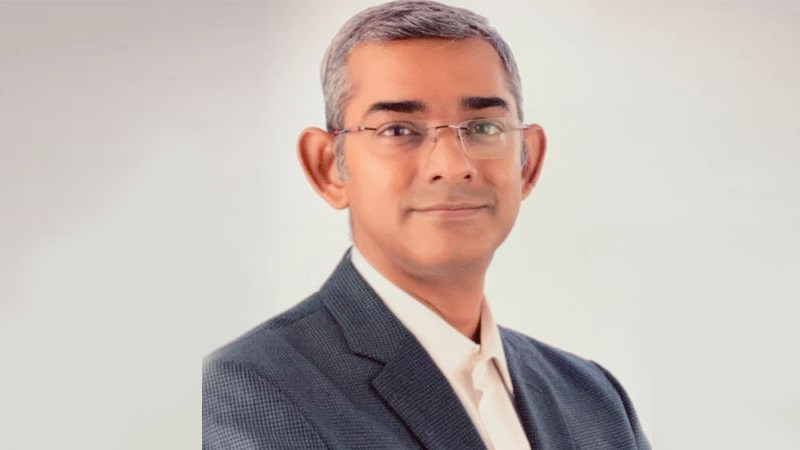
    BENGALURU: After a two-year stint as chief product officer at Peak XV Partners (formerly Sequoia India & SEA), Anuj Sahai is charting a new course. Sahai, who announced his exit this week, said the role offered him a ringside view of the startup ecosystem and hands-on experience with artificial intelligence.

    Sahai, who has held senior posts at Walmart Global Tech, Ola, Flipkart, Payback and Yahoo!, is now advising early-stage founders on tech stacks, workflows and agentic AI. “I’ll be recharging and reflecting over the next few months while exploring new opportunities,” he said, inviting connections from entrepreneurs and investors alike.

    Over a two-decade career, Sahai has built a track record of scaling digital businesses: he led Walmart’s US marketplace product team to a significant share of e-commerce revenues, launched Flipkart’s advertising platform into India’s No 2 ad business within 15 months, and forged landmark partnerships for Ola Play.

    For now, the industry will be watching which venture the product veteran picks as his next big play.

  • Arun Srinivas appointed as Meta India’s new country head and MD

    Arun Srinivas appointed as Meta India’s new country head and MD

    MUMBAI: From tea leaves to timelines, Arun Srinivas is now brewing strategy at Meta India. In a move that signals both continuity and elevation, Meta has announced the appointment of Arun Srinivas as its new Managing Director and Country Head for India. Already a key figure within the company, Srinivas will now oversee all business, innovation, and revenue priorities across the region cementing Meta’s long-term commitment to the Indian market.

    Srinivas joined Meta in 2020 and has since led its Global Business Group and Ads Business for India, steering strategic revenue levers like AI, Reels, and Messaging. In his expanded role, he will now unify Meta India’s core pillars to better serve the platform’s advertisers, partners, and users.

    With nearly three decades of experience under his belt, Srinivas has worked across marquee names like Hindustan Unilever, Reebok, Ola, and private equity firm Westbridge Capital. His past roles included launching Ola in London, leading Unilever’s food, skincare, and beverage verticals in South Asia, and investing in high-growth consumer brands during his stint at WestBridge.

    Meta’s leadership hopes the appointment marks a sharper, localised strategy in a market that remains one of its largest and most dynamic.

    “As we look ahead, we remain focused on building products that drive growth for our partners while driving innovation for the ecosystem,” the company stated.

    With Srinivas now leading Meta India’s charge, all eyes will be on how he blends deep-rooted brand-building wisdom with the platform’s global tech playbook and what that could mean for India’s digital future.
     

  • Viraj Chouhan hops onto RP-Sanjiv Goenka group in corporate affairs role

    Viraj Chouhan hops onto RP-Sanjiv Goenka group in corporate affairs role

    MUMBAI: In a splashy move that coincides with the festival of colours, corporate affairs  veteran Viraj Chouhan has jumped ship from PepsiCo to join the RP-Sanjiv Goenka Group as its group corporate affairs officer. The announcement, dripping with Holi metaphors, marks the end of Chouhan’s nearly six-year innings with the fizzy drinks giant.

    “Just as Holi symbolises renewal, this opportunity marks a vibrant new chapter,” gushed Chouhan in a LinkedIn post.

    The alumnus of Nagpur University brings hefty credentials to the table, having previously served as vice president corporate affairs for PepsiCo’s APAC region. His CV reads like a who’s who of corporate India, with stints as chief communications officer at Ola and executive director of corporate communications at MTS India.
    Chouhan cut his corporate affairs and communications teeth during a five-year spell at Coca-Cola before switching allegiance to arch-rival PepsiCo. 

    The RP-Sanjiv Goenka Group, which Chouhan now represents, boasts an asset base of US $7 billion (approximately Rs 58,000 crore) and revenue of US $4 billion (Rs 33,000 crore). The conglomerate has its fingers in numerous pies, from power and FMCG to retail and IT.

    Sports enthusiasts might recognise RPSG as the owner of IPL team Lucknow Super Giants and football club Mohun Bagan—giving Chouhan plenty of metaphorical playing fields for his corporate messaging.

  • Five start-up founders who leveraged tech to disrupt

    Five start-up founders who leveraged tech to disrupt

    Mumbai: Earlier this year, the Confederation of Indian Industry (CII) had highlighted in its report how Indian startups are likely to create 50 million new jobs and add $1 trillion to the economy by 2029-30 (FY30). The technological advancements witnessed in the last decade are proof of this projection, as they continue to help founders disrupt the industry with innovative solutions. From mobility to hospitality and even sectors such as media, gaming and entertainment, technological innovations have helped entrepreneurs claim new heights of success, from very early on.  

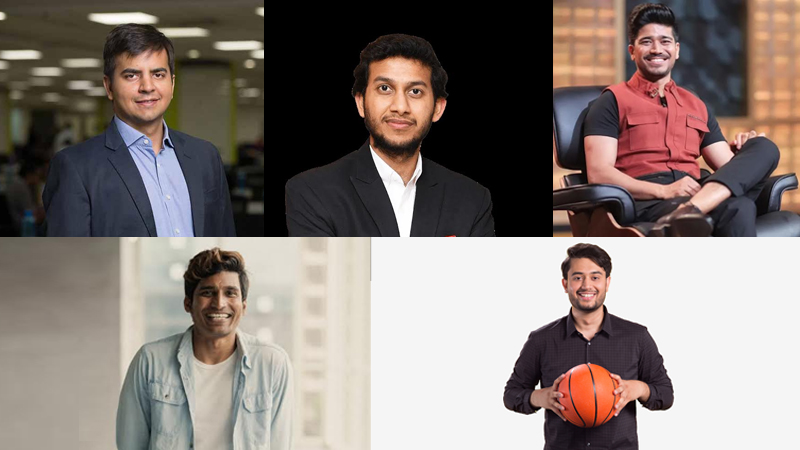
    Harnessing cutting-edge technologies, these young entrepreneurs have unlocked new benchmarks of success, building enterprises that deliver immense public value. We look at five such startup founders whose entrepreneurial passion has broken all barriers, and that too, early on in their lives.

    Ritesh Agarwal: Founded OYO Rooms in 2013 at the age of 19

    Ritesh’s extensive travel across India exposed a significant gap in the market—budget hotels that offered both affordability and quality service were hard to come by. This insight led to the creation of OYO in 2013. What began as a solution to a personal problem quickly evolved into one of the world’s largest hotel chains, now over 1.5 million rooms in more than 80 countries.

    By leveraging advanced technology, OYO has made booking affordable and quality accommodations effortless and accessible. Agarwal’s story is an inspiring example of turning a simple, idle observation into a global business. His other key achievements include being the youngest Shark on Shark Tank India Season 3 and getting featured in the Hurun Rich List with an estimated net worth of $1.1 billion, among others.

    Dilsher Malhi: Founded Zupee in 2018 at the age of 23

    Dilsher Malhi is the founder and CEO of Zupee, a skill-based gaming company, known for its flagship game Zupee Ludo. For Dilsher, the journey started in 2018, when after graduating with a B. Tech degree in Chemical Engineering from IIT Kanpur, he went on to pursue his passion with entrepreneurship and gaming. His technology-led innovation and gamification approach took him to create Zupee, which has become a leader in gaming innovation in the fiercely competitive online gaming industry. Dilsher and his team reinvented skill-based Ludo in an online avatar to empower users with learning and joy. In the process, Zupee did not only own a category, they actually established the category. Under his leadership, Zupee has 100 mn users associated with them. Featured on Forbes 30 under 30 Asia, 2021, the story of Dilsher goes on to prove that with passion and vision, everything is possible.

    Bhavish Aggarwal: Founded Ola in 2010 at the age of 25

    Bhavish Aggarwal is the co-founder and CEO of Ola, a ride-hailing platform. His journey began in 2010, when, after earning a B. Tech degree in Computer Science and Engineering from IIT Bombay, he decided to transform the transportation industry in India. Bhavish’s vision was to leverage technology to create a convenient and affordable solution to the country’s chaotic commuting challenges. What started as a small operation in Mumbai quickly expanded into a nationwide network, offering services in over 250 cities. Under his leadership, Ola has grown into a diversified mobility platform, branching into electric vehicles, food delivery, and financial services. Bhavish’s relentless pursuit of innovation has not only disrupted the traditional taxi industry but has also made Ola a household name across India

    Pavan Guntupalli (24), Aravind Sanka (25), and SR Rishikesh: Co-founded Rapido in 2015

    Within 9 years of its inception, Rapido undertook technology and business innovation to foray into all three verticals of ride hailing services, including Rapido Bike-taxis, Auto rickshaw, and cabs. Rigged with technology, the app connects commuters with bike taxis for an easy and pocket-friendly way of getting around cities quickly. Services are now available in more than 100 cities. Rapido is expanding its ride offerings in more cities, looking to further strengthen its position as a ride-hailing leader with its zero-commission model.

    Azhar Iqubal: Co-founded Inshorts in 2013 at the age of 22

    Azhar Iqubal is the Co-founder and CEO of Inshorts, a cutting-edge content discovery platform that has revolutionised how news is consumed in the digital age. At 22, Azhar recognised the need for a more efficient way to access information, especially in a world where attention spans are shrinking. Leveraging his technical expertise and an understanding of user behaviour, he co-founded Inshorts in 2013. The platform uses algorithms to curate and summarize news into 60-word snippets, delivering concise and relevant content to millions of users daily. Azhar’s tech-driven approach streamlined news consumption and also set a new standard in the media industry. Under his leadership, Inshorts has become a go-to source for quick, reliable news, proving that innovation in technology can fundamentally make a difference in how information is disseminated and consumed.

  • Why startups facing strong headwinds with massive layoffs

    Why startups facing strong headwinds with massive layoffs

    MUMBAI: Social commerce startup CityMall became the latest startup to announce mass lay-offs. In a LinkedIn post on 19 June, the firm said that it has laid off 191 employees alluding to the current funding environment and a change in its business model as reasons. In addition, SoftBank-backed Unacademy laid off another 150 employees last week, after letting go of around 600 employees or 10 percent of its workforce in the beginning of this year. Around the same time, Coinbase sacked about 8 percent of its India workforce, amid a crash in digital assets. While crypto companies have taken a hit in 2022 because of uncertainties revolving around their legal validity in India, they aren’t the only ones to feel the chills of a market meltdown.

    Several Indian startups seem to be on a lay-off spree currently, after the hiring augmented for a brief period, leading to thousands of workers staring at an uncertain future amid heightened inflation & economic downturn, thereby, adversely impacting startups in the recent months. Startups that issued pink slips this year included unicorns such as Vedantu (laid off 642 employees in May), Cars24 (laid off 600 in May), Ola (laid off 1,200 earlier this year), Meesho (laid off 150 in April), MPL (laid off 100 in May), Trell (laid off 300 in March) and Unacademy (laid off 750 over the last few months).

    So far, over 10,000 employees have been laid off by 24 startups, based on media reports. The new-age sectors which have witnessed the maximum layoffs are edtech and ecommerce. Just a year back, several of these new companies were hiring robustly, offering ambitious pay packages, having raised intense funding, and expanding vigorously.

    Furthermore, Indian startups were the largest spenders during the IPL season, even leaving the heavyweight FMCG brands far behind in its ad spends. It is noteworthy that all the official sponsors of IPL this season comprised only startups. These majorly included fintechs and edtechs, such as Unacademy, Upstox, RuPay, and CRED, apart from Swiggy Instamart & Dream11, with each official sponsor shelling out excessive moolah.

    Gaming platform Mobile Premier League (MPL) was the official kit sponsor for the Indian Cricket Team while edtech brand, Unacademy was the official partner of IPL 2022 and sponsor of Kolkata Knight Riders team. E-comm brand Meesho was the sponsor of IPL’s official broadcaster Star Sports and the Gujarat & Rajasthan teams.

    What kind of challenges the Great Indian Startup is facing? Is the party finally over for startups? What is the current market scenario? Will startups recover and increase hiring in future? We spoke to the experts to understand the current situation of the market and future growth?

    According to Talent acquisition marketplace, FlexC founder and CEO Girish Kukreja said that most of the startups witnessed a sharp surge in demand for their products and services, when Covid was at its peak. “The market trend then showed a very bright upward growth. It multiplied the demand for human power to cater to the needs of current users and attract more consumers to the business. But most of these employees were hired probably in haste, with little to no solid plans for managing the growth and succession planning of these employees within the organisation.”

    However, when things moved to the pre-pandemic world, so did consumer’s behaviour also changed in many aspects. It, therefore, resulted in a setback for these firms. Hence, the layoffs happened, Kukreja believes.

    After a funding blitzkrieg that lasted for nearly two years, venture capital investments globally have gone down as technology valuations have taken a hit in 2022 in the post-pandemic economic situation, coupled with inflation and international unrest. As the startup ecosystem braces for a funding winter and subsequent slowdown, it is increasingly becoming clear that most of the players in the space hired too many & too soon.

    Despite that, Kukreja does not believe that it’s all over for ‘the great Indian startup party’. “In terms of overall startup employment, the current layoff numbers reported are a minor percentage- possibly five to ten per cent,” he states, adding, “Making mistakes and learning along the way is a part of every startup’s journey. The only mistake these startups made at that point was to hire many permanent employees.”

    The startup culture in India is pretty resilient and it will adapt & get back on track in no time, he says, citing the example of an edtech startup called Physics Wala that entered the unicorn club amid the layoffs.

    Some of these online-first edtech startups, such as BYJU’S and Unacademy are also reinventing themselves by moving to a hybrid model, with plans to open offline coaching centres, blending their online and offline teaching models.

    Several others have also resorted to curtailing expansion plans by closing down non-core verticals, moderating marketing and advertising spends, while going on a hiring freeze to tide over the bleak phase.

    Grapes CEO & cofounder Shradha Agarwal attributes the “mass layoffs” phenomenon against the startups experiencing a funding peak in 2021 to “the unplanned hiring spree in the rush to onboard talents”.

    “To achieve immediate results, startups experiment with new approaches that often misguide the management to formulate inadequate growth analysis. As a result, they expand into new growth plans and venture into new verticals which fails due to an unrealistic approach,” she says. This puts a lot of pressure on the workforce, and companies resort to cutting down on human resources as the only viable solution owing to its easily controllable factor compared to the other fixed costs, which are beyond their hands, Agarwal adds.

    Despite the glitch in the framework, the startup culture is there to stay given its business nature, Agarwal believes. “The industry is versatile where it has the ability to change and mould its business models according to the market conditions.” The startups must focus on proper recruitment strategies with specific skills hiring for longer sustainability, rather than being concerned about short-term goals, she states.

    Staffing solutions provider, Gi Group Holding India country manager Sonal Arora  does not see the layoffs being witnessed in recent times as necessarily being a sign of troubled times ahead for the Indian start-ups ecosystem. “Some of these start-up companies across various industries are in a process of consolidating their workforce. It is a strategic step that every organisation aiming to expand adopts,” she states. “In some cases, they have matured in terms of their business model and decided which are the products/ services they want to focus on, which will eventually result in better or improved services.”

    Experts highlight that layoffs are not a new phenomenon and have always been a part of various industries, considering that the layoffs are happening at a large scale around the same time in several startups is what has garnered a lot of attention.

    According to Arora, India continues to be the centre of emerging technologies. “This means that in the future we will continue to attract various series of funding and interest from venture capitalists,” she concludes.

  • OLX Autos onboards Siddharth Agrawal as country head – marketing

    OLX Autos onboards Siddharth Agrawal as country head – marketing

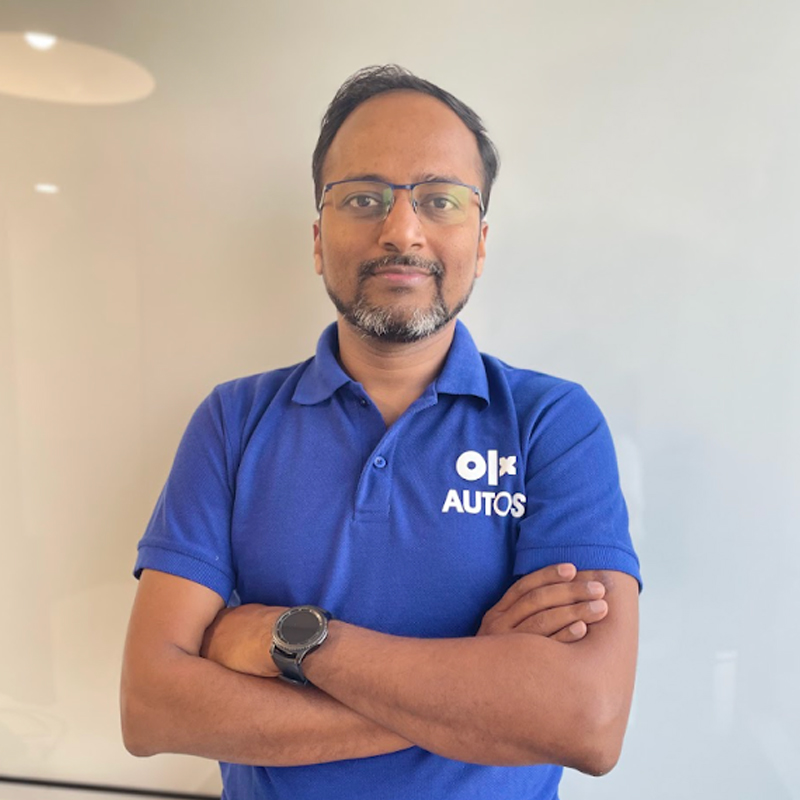
    Mumbai: OLX Autos has brought Siddharth Agrawal on board as its new country head – marketing. He will be reporting to the company’s CEO, Amit Kumar.    

    In his new role, Agrawal will lead OLX Autos’ marketing initiatives as the brand enters the next phase of growth across India’s rapidly expanding pre-owned automobile space, said the statement.

    An alumnus of NMIMS, Agrawal comes with experience spread across marketing, sales and operations in multiple leadership roles in FMCG and mobility sector, with organisations such as Unilever and Ola.

    Formerly, Agrawal served as senior director at Ola – spearheading its ‘First-Mile Last-Mile’ categories (Ola Autos and Ola Bikes). He was instrumental behind the successful launch and scale-up of Ola autos and bike categories in India, and led Ola’s global category development efforts.

    Prior to Ola, he served as global marketing director at Hindustan Unilever Ltd for over a decade across various sales and marketing roles. He was actively leading the marketing efforts for the launch of Pureit range of water purifiers in India, and its global expansion into SouthEast Asia and Africa. He was a key member behind the Pureit ‘Rs one crore safety challenge’ campaign which was based on the insight that consumers think that all purifiers are the same.

    On joining OLX Autos, Siddharth Agrawal said, “Having spent more than two decades in various leadership roles across industries from India to South-East Asia and Africa, I have witnessed how marketing initiatives are crucial in building new categories, and developing a differentiated brand identity to unlock growth. I am excited to embark on this journey along with an enthusiastic team that will support OLX Autos’s strategic vision.”

    OLX Autos India CEO Amit Kumar commented, “More Indian consumers are shifting their preferences to pre-owned vehicles and the trend has accelerated over the last few years especially in the wake of the pandemic. An evolving & competitive market brings new opportunities for us to communicate our brand proposition in a new avatar in line with changing consumer preferences. Siddharth’s extensive experience of scaling businesses across diverse portfolios in the auto sector is of immense value to us.”

  • Swiggy’s director of marketing Umesh Krishna moves on

    Swiggy’s director of marketing Umesh Krishna moves on

    Mumbai: Swiggy’s director of marketing Umesh Krishna has moved on from the company after a four-year stint. He made the announcement with a social media post.

    Krishna is a 360-degree marketer with expertise in digital strategy, performance marketing, brand management and media purchasing. Prior to Swiggy, he was associated with several companies like Ola and Bajaj Auto in senior marketing roles. In the past, he also worked with Bajaj Auto and Mahindra & Mahindra.

    At Swiggy, Krishna was driving multi-moment marketing bringing together data, creative and media fronts. His role required him to define the addressable audiences, marketing budgets, and define/own marketing metrics.

    Krishna has also helped Swiggy in developing brand architecture, brand assets, brand strategy, and creative strategy. He was part of the brand’s use of martech and adtech, along with media planning, and buying for television, print, radio, OOH and digital media. He also managed performance marketing for Swiggy’s private labels and cloud kitchens.

    “I had always imagined that a separation from Swiggy would be painful. However, I walk into my last day at work feeling happy and content,” Krishna said in his LinkedIn post.

    “Building teams and practices from scratch and making them work together at scale, was something I loved doing over the past few years. I loved it so much would like to go do this once again – different place and space, but once again,” he further said.

    His next move is not yet known.

  • BYJU’S appoints Puneet Bhirani as senior VP, operations

    BYJU’S appoints Puneet Bhirani as senior VP, operations

    Mumbai: Edtech company BYJU’S on Monday announced the appointment of Puneet Bhirani as senior vice president – operations.

    In his role, Bhirani will oversee the company’s overall operations strategy as well as build strong and innovative technological support to scale the business. He will strengthen internal capacity as per the strategic objectives, said the company in a statement.

    “Puneet brings in a wealth of experience coupled with a deep understanding of business operations. We believe his joining will be a great value addition to the team and look forward to supporting him along the way,” said BYJU’S chief people officer Pravin Prakash.

    Before joining BYJU’S, Bhirani was associated with Ola Fleet as CEO and group COO at Ola across mobility, foods, and Ola electric. A CXO with over 24 years of cross-cultural experience across India, the UK, and the US, he brings on board his expertise in business transformation, new business setup & expansion, business development & cost/resource optimisation across various domains.

    “I am extremely excited to be a part of the team that’s redefining the online learning space and making quality education accessible to all students,” said Bhirani. “BYJU’S has displayed disruptive growth over the past 1.5 years, and I am looking forward to becoming an integral part of the brand’s upheaval and introducing new practices to continue the seamless momentum of existing processes.”