Tag: Ogilvy and Mather

  • Vodafone launches #StrongerEveryHour campaign

    Vodafone launches #StrongerEveryHour campaign

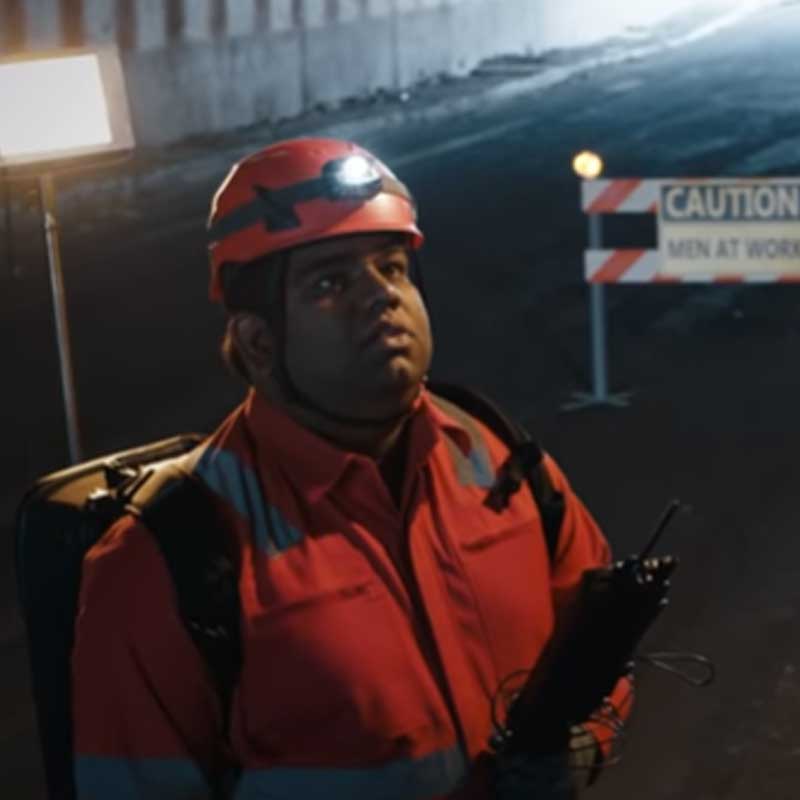
    MUMBAI: Vodafone Idea, the largest telecom network in the country, welcomes the New Year with the launch of #StrongerEveryHour campaign that aims to highlight the improved network of ‘Vodafone SuperNet 4G – India’s Data Strong Network’ especially in crowded zones, where a tower is being added every hour.

    Created by Ogilvy and Mather, the #StrongerEveryHour campaign is based on the insight that customers think of the service provider especially when they have a poor network experience. Vodafone has launched this campaign with reassured promise that customers will receive the strongest data connectivity on their phones even in crowded places.

    Ogilvy and Mather Advertising Pvt Ltd executive creative director Kiran Antony said, “When a network works perfectly fine, no one ever remembers the people who work behind the scenes to make it run seamlessly. This insight is what helped us humanise the network improvement efforts of Vodafone while staying focused on delivering the message – seamless network experience even in crowded places because we are adding a tower every hour. The campaign revolves around conversations between two network engineers while they are busy adding new towers.”

    Vodafone Idea Limited chief marketing officer Sashi Shankar said, “We are making significant investments in improving the network as the data uptake in India creates some global benchmarks. Vodafone SuperNet 4G – The Data Strong Network will be strengthened as towers get added every hour, especially at crowded places. For any telecom service provider, network engineers are the backbone for providing uninterrupted connectivity. Through this campaign, we are saluting these heroes for helping us deliver superior customer experience. Driven by digital, the #StrongerEveryHour campaign finely captures the essence of providing a seamless network experience across other mediums like TV, OOH, print, and radio.”

    The 360-degree high decibel campaign is going live on 15 January 2019. Presenting a wholesome marketing mix, the campaign will connect with customers across diverse mediums like OOH, radio, print and digital.

  • Big B jingalalas on Tata Sky

    Big B jingalalas on Tata Sky

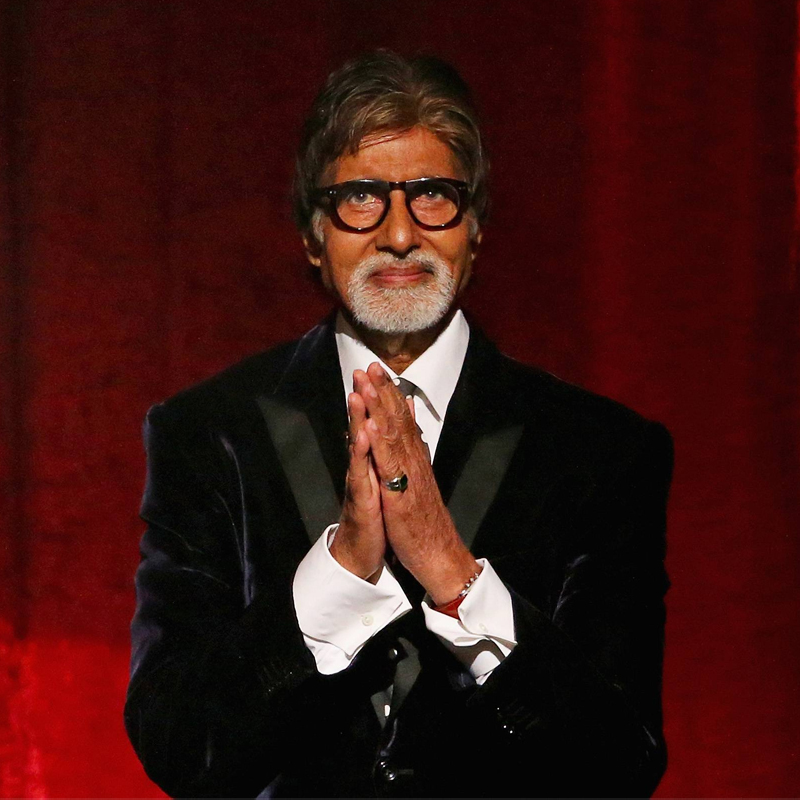
    MUMBAI: After a successful run of 10 years in India, Tata Sky has rolled out its latest Family Jingalala campaign with its brand ambassador Amitabh Bachchan. Rolling out on 24 September, the campaign features Big B in seven unique avatars. Conceptualized by Ogilvy and Mather and directed by Shoojit Sircar, the campaign intends to highlight Tata Sky’s two key elements — quality content and entertainment for all.

    The DTH player has also unveiled its new brand logo as it has tries to reach out to more subscribers outside metros.

    Produced by Rising Sun with Sukesh Kumar Nayak as the executive creative director, the campaign is the story of a regular family where each member has vastly different entertainment and content needs. Bachchan explains how these can be met through Tata Sky, highlighting the expansive breadth of the brand’s offerings and its significance in a family’s everyday life.

    The campaign sees Bachchan playing the role of a showman in an unconventional bohemian look, (himself) singing the story of a regular family. He reveals how all their needs can be met by subscribing to Tata Sky.

    With 85 per cent viewing from outside big towns and 90 per cent consuming general entertainment, the DTH player plans to attract both, urban and rural, markets with this campaign. “We will continue to take our business a notch higher and will continue to focus on the rural markets. Now is the right time for us. With the campaign, we are targeting cable, FTA as well as first time TV users.

    “Amitabh Bachchan is our common thread. He has a mass appeal from anyone in the metro to a home which does not have a TV or has not become a subscriber yet. There could have been nobody better than Bachchan to bring this vision to life,” said Tata Sky chief communications officer Malay Dikshit.

    Each puppet was worked upon extensively by a specialized team from the Czech Republic to make him or her look like Bachchan.

    “There is no other entertainer like Bachchan. And when there are seven of them in never-seen-before roles, telling you a very entertaining story, then it is very tough to miss the point that nothing entertains better than Tata Sky,” added Nayak.

    “People want good entertainment in their house. TV forms the most important source of entertainment for the entire family. But, they have got used to the stale and inferior entertainment on offer just because it is cheap or free. The idea is to show what a wide world of entertainment and good quality service awaits them if they subscribe to Tata Sky. O&M presented us with a heart-warming story of a family of seven puppets, each in love with their TV shows,” added Dikshit.

    The campaign will also be dubbed in five languages — Marathi, Bengali, Kannada, Telugu and Tamil — by 4 October. It will be
    extensively promoted on FTA channels followed by pay-TV channels. The TV campaign will be supported by an integrated marketing campaign including sketches on bus-backs, wall paintings, vernacular print, OOH and cinema halls

  • Big B jingalalas on Tata Sky

    Big B jingalalas on Tata Sky

    MUMBAI: After a successful run of 10 years in India, Tata Sky has rolled out its latest Family Jingalala campaign with its brand ambassador Amitabh Bachchan. Rolling out on 24 September, the campaign features Big B in seven unique avatars. Conceptualized by Ogilvy and Mather and directed by Shoojit Sircar, the campaign intends to highlight Tata Sky’s two key elements — quality content and entertainment for all.

    The DTH player has also unveiled its new brand logo as it has tries to reach out to more subscribers outside metros.

    Produced by Rising Sun with Sukesh Kumar Nayak as the executive creative director, the campaign is the story of a regular family where each member has vastly different entertainment and content needs. Bachchan explains how these can be met through Tata Sky, highlighting the expansive breadth of the brand’s offerings and its significance in a family’s everyday life.

    The campaign sees Bachchan playing the role of a showman in an unconventional bohemian look, (himself) singing the story of a regular family. He reveals how all their needs can be met by subscribing to Tata Sky.

    With 85 per cent viewing from outside big towns and 90 per cent consuming general entertainment, the DTH player plans to attract both, urban and rural, markets with this campaign. “We will continue to take our business a notch higher and will continue to focus on the rural markets. Now is the right time for us. With the campaign, we are targeting cable, FTA as well as first time TV users.

    “Amitabh Bachchan is our common thread. He has a mass appeal from anyone in the metro to a home which does not have a TV or has not become a subscriber yet. There could have been nobody better than Bachchan to bring this vision to life,” said Tata Sky chief communications officer Malay Dikshit.

    Each puppet was worked upon extensively by a specialized team from the Czech Republic to make him or her look like Bachchan.

    “There is no other entertainer like Bachchan. And when there are seven of them in never-seen-before roles, telling you a very entertaining story, then it is very tough to miss the point that nothing entertains better than Tata Sky,” added Nayak.

    “People want good entertainment in their house. TV forms the most important source of entertainment for the entire family. But, they have got used to the stale and inferior entertainment on offer just because it is cheap or free. The idea is to show what a wide world of entertainment and good quality service awaits them if they subscribe to Tata Sky. O&M presented us with a heart-warming story of a family of seven puppets, each in love with their TV shows,” added Dikshit.

    The campaign will also be dubbed in five languages — Marathi, Bengali, Kannada, Telugu and Tamil — by 4 October. It will be
    extensively promoted on FTA channels followed by pay-TV channels. The TV campaign will be supported by an integrated marketing campaign including sketches on bus-backs, wall paintings, vernacular print, OOH and cinema halls

  • Aritra Chaudhuri is Grey’s new senior creative head

    Aritra Chaudhuri is Grey’s new senior creative head

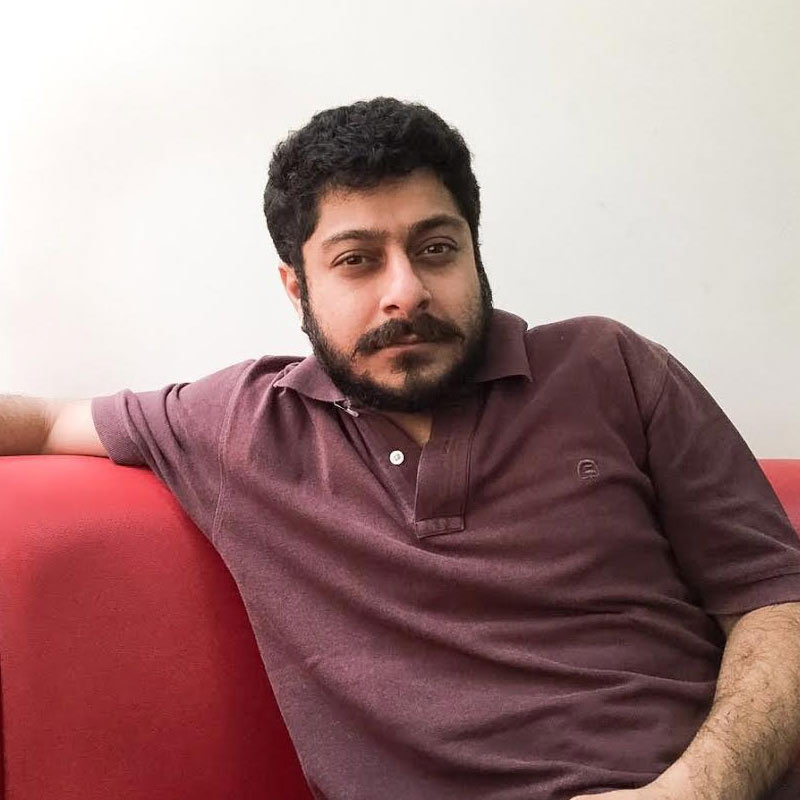
    MUMBAI: Grey group India has appointed Aritra Chaudhuri as new senior creative director in its Bangalore office. Chaudhuri will be responsible for driving the agency’s creative mandate for its impressive mix of clients based out of Bangalore.

    Grey group India chief creative officer Sandipan Bhattacharyya said, “While a lot is said about the need for experimental, medium-bending work in our industry, very few actually walk the talk. Aritra displays that rare knack for exploring the new and finding ways to create pop culture that makes brands famous”

    He joins with 10 years of extensive experience in various sectors including strategic planning, advertising, integrated campaign design, trans media storytelling, digital marketing, social media, art direction and graphic design.

    Before joining Grey, he has worked with Leo Burnett as the creative director, where he was responsible for creating a yardstick and setting up the creative team in Delhi. Brands he handled there includes Olx, Snapdeal, Bacardi and SBI Cards. Enormous, Commonwealth and Mccann Worldgroup, Ogilvy and Mather, JWT, TBWA are the other agencies he worked with. He has been creatively associated with various brands like SBI, Zaffran, Baskin n Robbins, Chevrolet, The Economist, Sony, Taco Bell, Tropicana, Mountain Dew, National Geographic, History Channel, Pedigree, Adidas, etc.

    Chaudhuri added, “Grey is changing, in terms of its people, systems and work culture. I look forward to the new challenges and do some intriguing work in a city that is intriguing in itself as far as business is concerned”

  • Aritra Chaudhuri is Grey’s new senior creative head

    Aritra Chaudhuri is Grey’s new senior creative head

    MUMBAI: Grey group India has appointed Aritra Chaudhuri as new senior creative director in its Bangalore office. Chaudhuri will be responsible for driving the agency’s creative mandate for its impressive mix of clients based out of Bangalore.

    Grey group India chief creative officer Sandipan Bhattacharyya said, “While a lot is said about the need for experimental, medium-bending work in our industry, very few actually walk the talk. Aritra displays that rare knack for exploring the new and finding ways to create pop culture that makes brands famous”

    He joins with 10 years of extensive experience in various sectors including strategic planning, advertising, integrated campaign design, trans media storytelling, digital marketing, social media, art direction and graphic design.

    Before joining Grey, he has worked with Leo Burnett as the creative director, where he was responsible for creating a yardstick and setting up the creative team in Delhi. Brands he handled there includes Olx, Snapdeal, Bacardi and SBI Cards. Enormous, Commonwealth and Mccann Worldgroup, Ogilvy and Mather, JWT, TBWA are the other agencies he worked with. He has been creatively associated with various brands like SBI, Zaffran, Baskin n Robbins, Chevrolet, The Economist, Sony, Taco Bell, Tropicana, Mountain Dew, National Geographic, History Channel, Pedigree, Adidas, etc.

    Chaudhuri added, “Grey is changing, in terms of its people, systems and work culture. I look forward to the new challenges and do some intriguing work in a city that is intriguing in itself as far as business is concerned”

  • Neo@Ogilvy appoints Flipkart’s Ankush Talwar

    Neo@Ogilvy appoints Flipkart’s Ankush Talwar

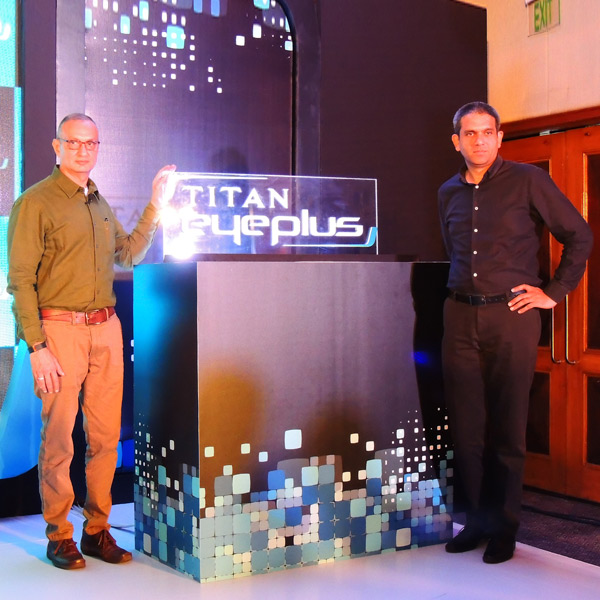
    MUMBAI:  Neo@Ogilvy India has announced the appointment of AnkushTalwar as Analytics & Insights head of Neo@Ogilvy. 

    With an experience of more than 12 years in data science, analytics & insights Talwar was an analytics leader with Flipkart before joining Neo@Ogilvy. At Neo, he will develop and scale the analytics capabilities for digital and performance media.

    Neo@Ogilvy India president and country head Rajesh Bhatia said, “The client expectation from their digital media partners is changing rapidly. With so much focus on data and analytics, brand owners are increasingly looking at digital, specifically media partners, to provide always on insights and intelligence. I am delighted to have someone like Ankush who will lead Neo@Ogilvy’sjourney into analytics.”

    Talwar has a legacy of incubating and building world class analytics and data science units. He has experience across multiple industry sectors spanning eCommerce, retail, bankingand utilities where he created the ability to grow on the path of data driven decision making and inturn saving precious marketing dollars.

    In his last role, Talwar was the head of Customer and Brand Strategy Analytics at Flipkart, where he was responsible for enabling companywide deep customer understanding based on vast amounts of transaction, visits and views data. He was instrumental in providing deep insights about Customer NPS (Net Promoter Score) and support moving it northwards for the largest e-commerce portal in India.

    During his stint at Payback, Talwar led the Insights and Analytics teams for the largest loyalty network in India. Rewarded multiple times for his contributions, he created a suite of predictive solutions to predict the Next Logical Customer Spend, thus enabling the Next Best Action from brands and clients. Here, along with his team, he delivered the first Digital Consumer Spend Bureau for India. He was also the brain behind delivering incremental Rs 500 crore revenue for India’s largest retail chain.

    Before that his experience includes working with some of the best Fortune 500 companies & Tech startups, including Accenture and American Express, where he started and scaled advanced analytics teams from just a handful of members to 50plus  data science and analytics professionals. He also created models for complicated consumer marketing problems like Lifetime Value and Spend Intent.

  • Neo@Ogilvy appoints Flipkart’s Ankush Talwar

    Neo@Ogilvy appoints Flipkart’s Ankush Talwar

    MUMBAI:  Neo@Ogilvy India has announced the appointment of AnkushTalwar as Analytics & Insights head of Neo@Ogilvy. 

    With an experience of more than 12 years in data science, analytics & insights Talwar was an analytics leader with Flipkart before joining Neo@Ogilvy. At Neo, he will develop and scale the analytics capabilities for digital and performance media.

    Neo@Ogilvy India president and country head Rajesh Bhatia said, “The client expectation from their digital media partners is changing rapidly. With so much focus on data and analytics, brand owners are increasingly looking at digital, specifically media partners, to provide always on insights and intelligence. I am delighted to have someone like Ankush who will lead Neo@Ogilvy’sjourney into analytics.”

    Talwar has a legacy of incubating and building world class analytics and data science units. He has experience across multiple industry sectors spanning eCommerce, retail, bankingand utilities where he created the ability to grow on the path of data driven decision making and inturn saving precious marketing dollars.

    In his last role, Talwar was the head of Customer and Brand Strategy Analytics at Flipkart, where he was responsible for enabling companywide deep customer understanding based on vast amounts of transaction, visits and views data. He was instrumental in providing deep insights about Customer NPS (Net Promoter Score) and support moving it northwards for the largest e-commerce portal in India.

    During his stint at Payback, Talwar led the Insights and Analytics teams for the largest loyalty network in India. Rewarded multiple times for his contributions, he created a suite of predictive solutions to predict the Next Logical Customer Spend, thus enabling the Next Best Action from brands and clients. Here, along with his team, he delivered the first Digital Consumer Spend Bureau for India. He was also the brain behind delivering incremental Rs 500 crore revenue for India’s largest retail chain.

    Before that his experience includes working with some of the best Fortune 500 companies & Tech startups, including Accenture and American Express, where he started and scaled advanced analytics teams from just a handful of members to 50plus  data science and analytics professionals. He also created models for complicated consumer marketing problems like Lifetime Value and Spend Intent.

  • Post Ola Micro and Amazon.in, industry opinions on social media backlash

    Post Ola Micro and Amazon.in, industry opinions on social media backlash

    MUMBAI:  The digital marketing era warrants brands, advertisers and creatives churn out advertisements that go viral. But they better toe the line very carefully in the process. The recently released campaign by Ola for its new super cheap Ola Micro service certainly had people talking online – but they weren’t talking about the things the company wanted to hear. Netizens by the thousands took to Twitter and Facebook to express how disgruntled they were with the TV spot which they found ‘sexist’. So much so, that the company had to take off the spot from TV.  A similar situation occurred in Kerala where a public hoarding by eCommerce giant Amazon.in spurred an angry agitation on the social networks.

    While it isn’t the first time that people have expressed their displeasure over an ad film, seldom has public reaction gotten such a quick and effective response from the brands. The question these incidents raise is how are brands, creative agencies and planners to handle this new breed of trigger happy consumers who are armed with social media?
    People have always discussed campaigns that leave a mark on them, while there were some that were praised, there were also a few that were criticised. With social media coming into the picture, the issue isn’t that people are expressing their view; more often these views are a knee jerk reaction rather than a well-considered opinion. “Everything has become like an instant poll if you ask me. An individual having an opinion over something can immediately share that, and several others with a similar voice can add to that. People have suddenly discovered that their voice too has power and they want to put it out in the public domain as much as they can. Sometimes it can be justified, but sometimes it is not,” opined Ogilvy and Mather creative director Sumanto Chattopadhyay. He however stressed the fact that brand communications have to be sensitive to consumers, “At the end of the day advertising exists to appeal a broad spectrum of people. So one has to take cognizance of that, especially now that people’s opinion is a part of the public domain almost instantaneously,” he expressed.

    When asked, as a creative what his reaction would be if one of his own works was pulled down, Chattopadhyay quipped. “As a creative person when I do a piece of work I obviously believe in it, I stand by it. There is no negative intent in it. But I have to also keep in mind that as an agency, we work for a brand, so sometimes we have to respect public opinion and go with the call the brand is taking so that the brand doesn’t suffer.”

    J. Walter Thompson Delhi managing partner and head Sanjeev Bhargava also advised creatives and agencies to tread carefully when it came to public opinion. “We are becoming a reasonably trigger happy nation when it comes to protesting now that we have the tools in our hand.  It started off with a political thing but now it’s transcending into the corporate world as well. At the same time, brands are getting increasingly sensitive about the chatter online as they have the measuring tools that gauge the impact of such negative comments online”.  

    While Bhargava suggested that brands, advertisers and agencies be extra careful so as not to ruffle any feathers he admitted that this would affect the creative process to a certain extent. “It is hard to be politically correct and have the freedom of expression in creating something. There is a fine line between meaning well based on consumer insights etc., and at the same time hurt sentiments. For example in the case of Amazon’s #WeIndians campaign, things might not have triggered this way had Amazon not been a foreign company. So it’s hard to say what will offend someone or not. In this increasingly wired world, industry needs to be careful till this frenzy wears off.”

    Bhargava cited an example of an old Naukri.com advertisement to add perspective, “Years back when Naukri’s Hari Sadu campaign came out, someone with the same name had filed a defamation case against the brand in court, saying his employees thought him to be a bad boss because of the ad. He lost the case. But in today’s day and age, that same person could make it go viral, as virality does not follow predictable metrics. He wouldn’t have needed a court of law.”

    Since public backlash is easy to create in today’s day and age, how does an industry body, tasked to self-regulate and monitor such offensive ads, react to such the public opinion? ASCI’s secretary general Shweta Purandare said, “I agree that social media is a very powerful tool. In fact, ASCI has consistently paid heed to it and followed the chatter by being active on social networks. If there is a negative chatter about brands or a particular campaign, many times, unaware that ASCI exists, they vent their feelings on social media. One is if an advertiser listens to that and takes action on its own, and another is that we guide such consumers to register a complaint and then take it up as per ASCI’s policies”.

    But there are also situations when a simple opinion may blow out of proportion and affect the brand. “Without taking any brand’s name, I would mention that there was a case when a brand came under fire on the social media, but when the complaint was taken up in ASCI, it was found that the advertisement was not against the ASCI code. Apart from taking voluntary calls to pull down ads, which the brands are free to do, if brands want a fair hearing of their argument they can approach ASCI for a proper analysis,” Purandare asserted.

    Whether it is right to target a brand over a cause or not, the fact remains that social media metrics matter to brands, and playing with public opinion is like playing with fire for them. And sometimes that means to bow down to public opinion and take off the ad at the cost of brand value.

    Not to mention the fact that creatives are also taking risks with edgier brand communication to draw more eyeballs to themselves.  “We are seeing a positive move from a mundane to more strategic insightful work in the creative industry.  In process they work around the delicate edge of safe versus edgy communication. Sometimes with such creative push things do go haywire. But these few instances must not hinder the positive moment in creativity.  So, brands have to do what was expected – self-censor and self-discipline.  It is their responsibility that the ad does not discriminate or offend any sensitivities,” explained Intradia world, brand and marketing advisor, Sanjeev Kotnala.

    “Brands always have two choices. If they feel they have really gone beyond the edge, they must withdraw. And they must do that gracefully with due apologies. If this is the strategic action, then it must be swift. The other option is they can stand by their communication and let the social media movement fizzle out,” he added.

    Kotnala also advised that while finding a fine balance between edgy and offensive content maybe like walking on a tightrope. Brands and creatives can be on the safer side if they do a concept research to determine if the ad is offending.  “Surprisingly and unfortunately many forget to do so. It may then be possible to shoot or create an alternative flow which can be integrated as a part of the campaign to kill a reaction without compromising on communication.”

    After all, brand value is created over time but it can be destroyed very fast. It can be protected with a swift response rather than silence, advises Kotnala in parting.

  • Post Ola Micro and Amazon.in, industry opinions on social media backlash

    Post Ola Micro and Amazon.in, industry opinions on social media backlash

    MUMBAI:  The digital marketing era warrants brands, advertisers and creatives churn out advertisements that go viral. But they better toe the line very carefully in the process. The recently released campaign by Ola for its new super cheap Ola Micro service certainly had people talking online – but they weren’t talking about the things the company wanted to hear. Netizens by the thousands took to Twitter and Facebook to express how disgruntled they were with the TV spot which they found ‘sexist’. So much so, that the company had to take off the spot from TV.  A similar situation occurred in Kerala where a public hoarding by eCommerce giant Amazon.in spurred an angry agitation on the social networks.

    While it isn’t the first time that people have expressed their displeasure over an ad film, seldom has public reaction gotten such a quick and effective response from the brands. The question these incidents raise is how are brands, creative agencies and planners to handle this new breed of trigger happy consumers who are armed with social media?
    People have always discussed campaigns that leave a mark on them, while there were some that were praised, there were also a few that were criticised. With social media coming into the picture, the issue isn’t that people are expressing their view; more often these views are a knee jerk reaction rather than a well-considered opinion. “Everything has become like an instant poll if you ask me. An individual having an opinion over something can immediately share that, and several others with a similar voice can add to that. People have suddenly discovered that their voice too has power and they want to put it out in the public domain as much as they can. Sometimes it can be justified, but sometimes it is not,” opined Ogilvy and Mather creative director Sumanto Chattopadhyay. He however stressed the fact that brand communications have to be sensitive to consumers, “At the end of the day advertising exists to appeal a broad spectrum of people. So one has to take cognizance of that, especially now that people’s opinion is a part of the public domain almost instantaneously,” he expressed.

    When asked, as a creative what his reaction would be if one of his own works was pulled down, Chattopadhyay quipped. “As a creative person when I do a piece of work I obviously believe in it, I stand by it. There is no negative intent in it. But I have to also keep in mind that as an agency, we work for a brand, so sometimes we have to respect public opinion and go with the call the brand is taking so that the brand doesn’t suffer.”

    J. Walter Thompson Delhi managing partner and head Sanjeev Bhargava also advised creatives and agencies to tread carefully when it came to public opinion. “We are becoming a reasonably trigger happy nation when it comes to protesting now that we have the tools in our hand.  It started off with a political thing but now it’s transcending into the corporate world as well. At the same time, brands are getting increasingly sensitive about the chatter online as they have the measuring tools that gauge the impact of such negative comments online”.  

    While Bhargava suggested that brands, advertisers and agencies be extra careful so as not to ruffle any feathers he admitted that this would affect the creative process to a certain extent. “It is hard to be politically correct and have the freedom of expression in creating something. There is a fine line between meaning well based on consumer insights etc., and at the same time hurt sentiments. For example in the case of Amazon’s #WeIndians campaign, things might not have triggered this way had Amazon not been a foreign company. So it’s hard to say what will offend someone or not. In this increasingly wired world, industry needs to be careful till this frenzy wears off.”

    Bhargava cited an example of an old Naukri.com advertisement to add perspective, “Years back when Naukri’s Hari Sadu campaign came out, someone with the same name had filed a defamation case against the brand in court, saying his employees thought him to be a bad boss because of the ad. He lost the case. But in today’s day and age, that same person could make it go viral, as virality does not follow predictable metrics. He wouldn’t have needed a court of law.”

    Since public backlash is easy to create in today’s day and age, how does an industry body, tasked to self-regulate and monitor such offensive ads, react to such the public opinion? ASCI’s secretary general Shweta Purandare said, “I agree that social media is a very powerful tool. In fact, ASCI has consistently paid heed to it and followed the chatter by being active on social networks. If there is a negative chatter about brands or a particular campaign, many times, unaware that ASCI exists, they vent their feelings on social media. One is if an advertiser listens to that and takes action on its own, and another is that we guide such consumers to register a complaint and then take it up as per ASCI’s policies”.

    But there are also situations when a simple opinion may blow out of proportion and affect the brand. “Without taking any brand’s name, I would mention that there was a case when a brand came under fire on the social media, but when the complaint was taken up in ASCI, it was found that the advertisement was not against the ASCI code. Apart from taking voluntary calls to pull down ads, which the brands are free to do, if brands want a fair hearing of their argument they can approach ASCI for a proper analysis,” Purandare asserted.

    Whether it is right to target a brand over a cause or not, the fact remains that social media metrics matter to brands, and playing with public opinion is like playing with fire for them. And sometimes that means to bow down to public opinion and take off the ad at the cost of brand value.

    Not to mention the fact that creatives are also taking risks with edgier brand communication to draw more eyeballs to themselves.  “We are seeing a positive move from a mundane to more strategic insightful work in the creative industry.  In process they work around the delicate edge of safe versus edgy communication. Sometimes with such creative push things do go haywire. But these few instances must not hinder the positive moment in creativity.  So, brands have to do what was expected – self-censor and self-discipline.  It is their responsibility that the ad does not discriminate or offend any sensitivities,” explained Intradia world, brand and marketing advisor, Sanjeev Kotnala.

    “Brands always have two choices. If they feel they have really gone beyond the edge, they must withdraw. And they must do that gracefully with due apologies. If this is the strategic action, then it must be swift. The other option is they can stand by their communication and let the social media movement fizzle out,” he added.

    Kotnala also advised that while finding a fine balance between edgy and offensive content maybe like walking on a tightrope. Brands and creatives can be on the safer side if they do a concept research to determine if the ad is offending.  “Surprisingly and unfortunately many forget to do so. It may then be possible to shoot or create an alternative flow which can be integrated as a part of the campaign to kill a reaction without compromising on communication.”

    After all, brand value is created over time but it can be destroyed very fast. It can be protected with a swift response rather than silence, advises Kotnala in parting.

  • This IPL season, O&M goes ‘Pyar Jingalala’ for Tata Sky

    This IPL season, O&M goes ‘Pyar Jingalala’ for Tata Sky

    MUMBAI Tata Sky has rolled out its latest campaign showcasing its multiple products and services. The integrated campaign was launched alongside the ninth edition of Indian Premier League (IPL) 2016.

    Titled ‘Pyar Jingalala’, the advertisements in the campaign bring to life beautiful moments of love Tata Sky can re kindle among couples in all walks of life and across towns. The plethora of services available to a Tata Sky subscriber are woven into small yet multiple stories of couples experiencing moments of love thanks to their Tata Sky connection.

    “The idea was to take brand love a step further by highlighting the role Tata Sky plays in the lives of people across the country. How its innovative services and offerings help couples connect with each other better as they sit in front of their Tata Sky box for their daily dose of entertainment,” says Tata Sky chief communications officer, Malay Dikshit.

    Ogilvy and Mather creative director Sukesh Nayak says, “The campaign is based on a powerful insight that every day, couples across the country tune in to watch their favourite programs together. We used this insight to come up with an campaign idea that celebrates the love that Tata Sky helps rekindle every single day. The challenge was to bring alive the magical moments of love, rekindled through Tata Sky, through minimal scripting, with expressions taking center stage in each story.”

    Tata Sky is also rolling out South Indian versions of the campaign soon in Tamil, Telugu, Kannada and Malayalam. The campaign brings brilliant actors, some known (Patralekha, Rahul Bagga, Manish Chaudhry) some forgotten faces (Suchitra Krishnamoorthy, Vishwa Badola) on screen. These being a series of ad films throughout the IPL, watch out for the next addition to this bouquet of love.