Tag: Ogilvy

  • Celebrating Piyush: Mumbai’s ad world gathers to remember the maestro who made advertising human

    Celebrating Piyush: Mumbai’s ad world gathers to remember the maestro who made advertising human

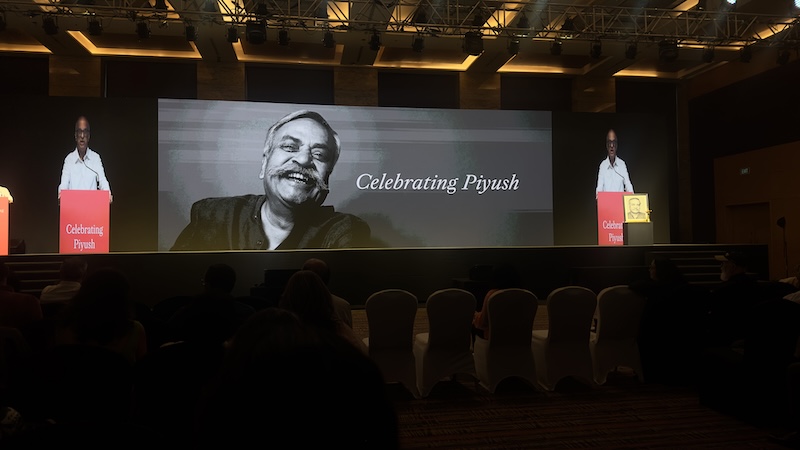
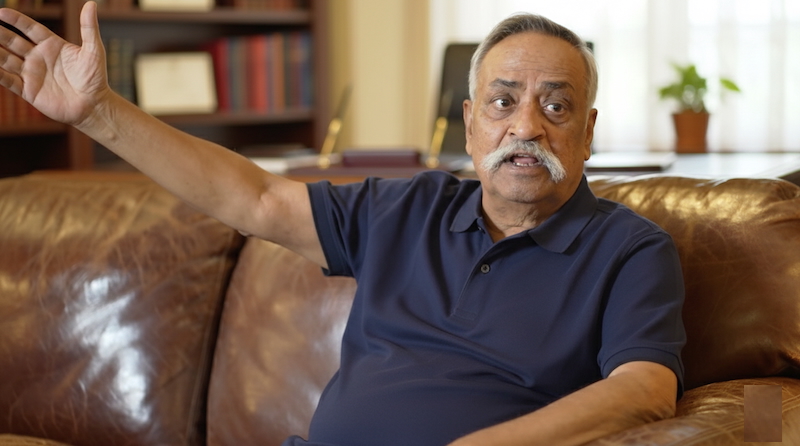
    MUMBAI: At 10am on a Sunday morning, 1,500 of India’s advertising elite crammed into Mumbai’s Grand Hyatt to do what the industry does best: tell stories. This time, though, the subject was one of their own. Piyush Pandey, the creative titan who died last week, got the send-off befitting a man who transformed Indian advertising from borrowed jingles and forced sophistication into raw, real-life observation. The numbers would have swelled far higher had Ogilvy thrown open the doors, but this was an invitation-only affair—a gathering of those who’d worked alongside, been mentored by, or simply marvelled at the man who made “front foot pe khelo” the rallying cry of an entire generation.

    The two-hour tribute played out like a masterclass in the man himself—equal parts emotion, irreverence and creative brilliance. Hepzibah Pathak, Ogilvy India’s executive chairperson, took the stage visibly shaken, setting the tone for what would become an outpouring of stories that captured Pandey’s essence better than any obituary could. She was followed by a caravan of speakers: WPP’s chief operating officer Devika Bulchandani, Ogilvy India group chief executive Rajesh VR, chief strategy officer Prem Narayan, chief creative officers Kainaz Karmakar and Harshad Rajadhyaksha, vice-chairman and director client relations Madhukar Sabnavis, the legendary R Balki, McCann Erickson’s Prasoon Joshi, Pidilite director Madhukar Parekh, marketing guru Suhel Seth, his nephew and agency boss Abhijit Avasthi, and Asian Paints chief executive and managing director Amit Syngle. Even commerce minister Piyush Goyal made time to pay tribute, underscoring the breadth of Pandey’s influence beyond advertising’s narrow confines.

    PIYUSH GOYALThe 6:30am phone calls became the event’s leitmotif. Most speakers wore them as badges of honour—those dawn raids when Pandey would ring, sometimes to share a creative idea that had struck him in the shower, other times to help them excavate their own. His Ogilvy team recalled in granular detail how he mentored them: kind words when they delivered good work, sharp rebukes when they didn’t push hard enough. “Front foot pe khelo,” he’d say, deploying his favourite cricket analogy to urge aggression over timidity. Karmakar captured the bittersweet mood: “Who will make those 6:30am calls now?” she asked, confessing she’d hated being woken but lived for those conversations. Others complained they’d been left out of the dawn club, wondering aloud why Pandey’s Rolodex of early-morning confidants hadn’t included them.

    His creative team peeled back the curtain on his teaching methods. At a Cannes Lions masterclass, he’d begun not with case studies or charts but with meditative breathing. Inhale deeply and slowly, he’d instructed global participants. That’s observation—riding trains, chatting with taxi drivers, watching life unfold in its messy, unscripted glory. Exhale. That’s the creative work that connects with real audiences, not the manufactured personas of focus groups. It was vintage Pandey: grounding the lofty business of advertising in the quotidian rituals of simply paying attention.

    Syngle, who worked with Pandey for 37 years across Cadbury, Pidilite and Asian Paints, painted a portrait of a man allergic to pretence. He recalled being dragged from formal dinners during overseas trips—the kind with white tablecloths and wine lists—to eat dal chawal and bhindi at hole-in-the-wall Nepalese joints. “That was Piyush,” Syngle said. “Authentic. You got what you saw.” When invited to join the Pidilite board, Pandey made clear he wouldn’t wear formal clothes to meetings. Not as rebellion, but as declaration: this is who I am. Take it or leave it.

    Friends and cricketers Amit Mathur and Arun Lal delivered the comic relief Pandey would have demanded. They shared his joke about why actress Sridevi wouldn’t marry Lal: “Because she wouldn’t want to be called Sridevi Lal”—a reference to politician Chaudhary Devi Lal that sent Pandey into his trademark loud guffaws. The joke was terrible. The memory was priceless.

    PRASOON PANDEYGoyal’s recollection offered a window into Pandey’s principles. In 2014, the minister spent six hours at Pandey’s Shivaji Park home trying to convince him to handle BJP’s election advertising. “Despite years of friendship, he was stubborn every time I approached him for days,” Goyal explained. “I thought I’d failed. Next morning, relief: he called saying he’d do it.” The result was “Ab ki baar, Modi Sarkar”—a slogan that became the soundtrack of that election. What persuaded him remains unclear, but the episode revealed a man who wouldn’t be rushed or arm-twisted, even by friends in high places.

    Balki and Joshi traded admiration for Pandey’s work, but Balki’s anecdote cut deeper. They’d once decided to quit smoking together after visiting a hypnotherapist. Pandey called daily to compare notes—until he didn’t. When Balki rang, Pandey admitted he’d started smoking again. Balki lasted longer, then folded too. But Balki struck a defiant, almost evangelical note: at a time when advertising has become dreary—all performance metrics and programmatic buying and jargon-stuffed decks—Pandey’s death has ironically handed the industry its biggest campaign. “To bring advertising back into focus,” he said. “No amount of jargon, no amount of people trying to distract us from the fact that we have to do great stuff will work now. People are looking and saying: this is advertising. We’ve got the best opportunity for great work.” It was a call to arms wrapped in a eulogy.

    Prasoon Pandey, Piyush’s younger brother and an accomplished film-maker, delivered perhaps the most wrenching tribute. After seeing the industry’s outpouring, he wondered if his own love had been enough. “He was my elder brother, my father, my hero,” he said. “We’d speak six or seven times a day—not about work, but jokes, vicious pranks he wanted to pull on family or friends.” On work, the dynamic was pure Piyush: he’d hand Prasoon the soul of an idea in three or four words and expect execution. “We were drinking beer on our balcony when he asked: how strong would eggs be from a hen that feeds from a Fevicol container?” Prasoon recalled. “I thought it brilliant. He told me to go do it.” The result was one of Indian advertising’s most memorable campaigns—born not in a conference room but over beers and brotherly banter.

    The event was interspersed with screenings of Pandey’s greatest ads—the Fevicol campaigns, the Cadbury work that made Indians fall in love with chocolate again, the Asian Paints spots that turned home décor into emotion. The audience responded with applause, oohs, ahs, and more than a few tears.

    Lunch followed the stories: a spread of his favourite Indian dishes, the kind he’d have sought out in that Nepalese eatery instead of rubber chicken at a five-star buffet. Attendees left smiling, bellies and hearts full, having spent two hours remembering a man who’d taught them that the best advertising doesn’t sell products—it celebrates life.

    Piyush would have approved: tears, laughter, great work on screen, and damn good food to finish. Front foot pe khelo, indeed.

  • Saksham Kohli hops over to FCB India as president of new venture

    Saksham Kohli hops over to FCB India as president of new venture

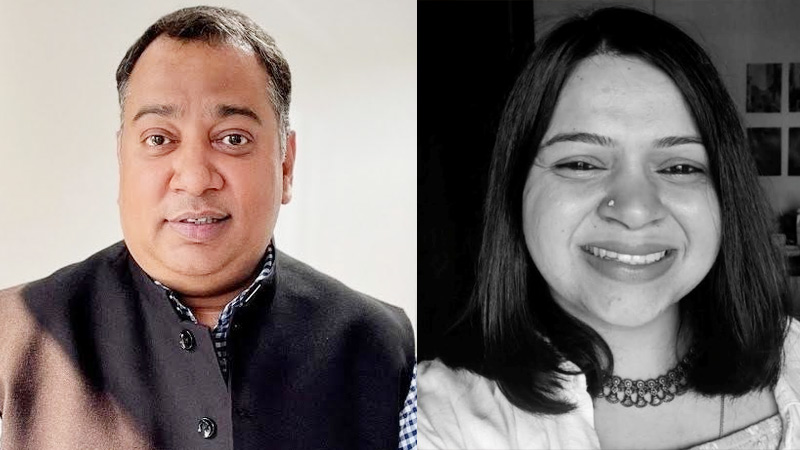
    GURGAON: Saksham Kohli has landed at FCB India as president of FCB NEO, marking the end of a nearly seven-year stint at Cheil Worldwide where he shepherded Samsung’s flagship mobile campaigns.

    The move, announced this month, sees Kohli swapping his associate vice-president perch at Cheil—where he orchestrated integrated campaigns for Samsung’s mobile portfolio and ecosystem products—for the top job at FCB’s new venture.

    At Cheil since 2019, Kohli climbed from director of client services to associate vice-president, spending his final months managing full-funnel marketing strategies that blended creative, digital and media. Before that, he put in three years at Ogilvy, steering brands including Perfetti Van Melle, Pernod Ricard India, BMW Mini and Dupont through 40-odd large-scale integrated campaigns.

    His advertising pedigree includes a two-and-a-half-year spell at FCB Global (2013-2016) handling Whirlpool’s India operations, plus stints at McCann on Aircel, Ogilvy & Mather on KFC India, Publicis on Beam Global Spirits & Wine, and BBDO India on Wrigley’s and Hewlett Packard.

    Kohli’s pitch: marketing that starts with understanding people and ends with measurable impact. Whether FCB Neo delivers on that promise remains to be seen—but with a Samsung-sized portfolio under his belt, he’s certainly had the practice.

  • Bingo! chips away at Its past with a bold new bite

    Bingo! chips away at Its past with a bold new bite

    MUMBAI: Now that’s how you take the chips on your shoulder and turn them into a punchline. Bingo! potato chips has flipped the script on its “Big No” phase with a hilariously self-aware new campaign that sees the brand roast itself before making a fiery comeback.

    Known for its trademark wit and quirky energy, Bingo! has never shied away from humour, and this time, it’s using it to reclaim its snack throne in north and west India. In the new campaign film, the brand cheekily admits it wasn’t quite everyone’s first pick before declaring, “Yes, we were a Big No. But not anymore!”

    The bold relaunch features a complete makeover, right from edgy, gothic-inspired pack designs to two flavour-packed innovations, butter garlic, the garlic-bread-in-a-chip experience, and Himalayan pink salt, a refined twist on a timeless classic. With six striking packs that blend art, attitude and appetite, Bingo! is betting on curiosity, confidence and serious crunch.

    “Humour has always been in Bingo!’s DNA,” said ITC Foods VP & head of marketing, snacks, noodles & pasta Suresh Chand. “This isn’t just a comeback, it’s a new energy, a new attitude, and a brand that’s owning its journey.”

    Echoing that sentiment, Ogilvy senior executive creative director Rohit Dubey added, “When mischief and marketing meet in the right spot, magic happens.”

    With this self-roasting, high-flavour reboot, Bingo! isn’t just back on the shelves, it’s back in the conversation. And this time, the answer to Bingo! is a loud, crunchy “YES.”

  • Piyush Pandey’s leaves behind a legacy the world will never forget

    Piyush Pandey’s leaves behind a legacy the world will never forget

    MUMBAI: Piyush Pandey the ad man – a lot has been written about his mastery in connecting through communication with the lay person on the street. Which is why most of the ads which he was involved in as a creative guide live with us till today. Fresh as the day they hot the screens. 
    His passing has left a deep impact on colleagues and industry folks the world over who have shared their grief and their admiration for the genius that he was and most of all for the great human that he was.  

    Liz Taylor, Global Chief Creative Officer, Ogilvy  
    “A quiet Friday morning brought news that shattered our hearts: the legend, Piyush Pandey, has left us. The void he leaves is immense—a silence where once his booming laughter, humble mentorship, and profound humanity resonated. 
    To the world, Piyush was an icon, a creative giant, an advertising hero. To Ogilvy, he was our coach, our champion, our spiritual guide, our heart and soul. His passing is a loss that words cannot capture. 
    Yet even as we grieve, a profound sense of gratitude and purpose fills us. For Piyush, creativity was about connection—about making something that lived in people’s hearts. And that’s exactly what he did, time and again. His ideas shaped brands and culture. His kindness shaped people. 
    He taught us that living with generosity and creating with enormity leaves a legacy beyond measure. We will honor him in all that we do—not just in advertising, but in the way we live, lead, and care—striving always to act in the light of his values and to make him proud in every part of our lives.”

    Joe Sciarrotta, Deputy Global Chief Creative Officer, Ogilvy  
    “It’s hard to know where to begin. Personally, he was a brother to me. We spoke often. I spent time with his family, and he with mine—my mom would often ask after him. His is a loss I cannot fathom. But I also know that I’m not alone in that.  
    Piyush was a legend of our industry, and a national treasure in India. I was once on a tour bus in Goa with him and someone asked where we were from. Ogilvy, we said. They respond ‘Oh! Piyush Pandey is from Ogilvy. He’s very famous.’ To which I said, ‘Well, Piyush Pandey is standing right next to you.’ The man nearly had a heart attack from his awe and excitement. What many people don’t realize is that Piyush gave India its voice back, after having been so Westernized for so long. There was nothing he was more proud of than his country and his people. His greatest gift was that he treated ordinary people extraordinary, and extraordinary people ordinary. He saw, and celebrated, the humanity in it all. And that’s the impact he’s had on the next generation of creatives, and that will ripple for generations to come.”

    Devika Bulchandani, Chief Operating Officer, WPP  
    “Piyush was not just the most important man in Indian advertising, he was the most important man in so, so, so many of our lives at Ogilvy. He may have left us but his work and his legacy will live forever.   
    I am personally heartbroken. I lost my biggest champion. Just last month when I got the WPP job he sent me a note, “Prouder than a peacock can be.” And I always told him, ‘You are my wings.’” 
     

    Shelly Lazarus, Chairman Emeritus, Ogilvy  
    “Piyush Pandey had a giant brain and a giant heart. It was an honor of my life to have been his partner and his friend. 
    Piyush built Ogilvy India into what it is today. He commanded the respect of everyone who worked with him and knew him. I loved walking down the street with Piyush and have people stop and ask him for his autograph. 
    There are some few people who are immortal. Piyush Pandey is one of them. 
    I will miss you, my friend.”

    Hephzibah Pathak, Executive Chairperson, Ogilvy India:  
    “It’s hard to capture the immense impact Piyush had on us all. He didn’t just change the game for our industry; he changed our lives. A giant of a leader, his fearless heart and unwavering goodness inspired us to see the world, and ourselves, differently.  
    His beautiful philosophy, ‘Kuch khaas hai hum sabhi mein’ was his very essence–always finding and celebrating the specialness in everyone. We are so privileged to have been raised and nurtured by him.  
    Godspeed, Piyush. Rest in eternal peace.”

    Harshad Rajadhyaksha, Kainaz Karmakar and Sukesh Nayak, Chief Creative Officers, Ogilvy India: 
    “”The most honest thing we can say is that we’re numb. SO many memories are flooding our hearts. His living room was our second office. From the day we joined Ogilvy, to this day, he was our Creative Director and we were his team. This is an honour we can’t forget or replace. Even if he can’t hear us present ideas anymore, every time we create something, we will be asking ourselves, ‘Will Piyush like this?’ What we can promise as our tribute to him is to carry on his belief in creativity, culture and bravery.”

    Reed Collins, Chief Creative Officer, Ogilvy APAC 
    “Our hearts are stilled, for a legend has departed. Piyush Pandey didn’t just shape culture; he shaped us. We mourn his absence, yet rise with fierce gratitude, committed to carrying his bat, forever building on the extraordinary innings he so brilliantly played. ?????? “

  • Piyush Pandey: India’s greatest adman never stopped watching, listening and loving life

    Piyush Pandey: India’s greatest adman never stopped watching, listening and loving life

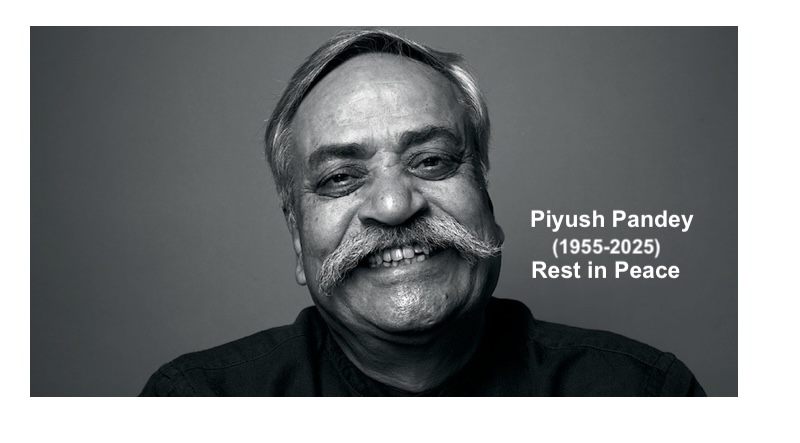
    MUMBAI: The lights went out on Indian advertising this Diwali. Piyush Pandey, the wordsmith who turned bus rides and roadside tea into unforgettable campaigns, died on Friday aged 70. Just four months earlier, at the Emvies awards in Mumbai, veterans had touched his feet for blessings while young hopefuls queued for selfies. He looked frail but smiled through every encounter. Humility was his signature; genius was his secret.

    Pandey never claimed special talent. His gift was simpler and rarer: he kept his eyes open. The famous Fevicol advertisement—a Jaisalmer bus groaning under passengers clinging to every inch—came from a real sighting. The magic was slapping a Fevicol poster on the back of the bus. “Keep your eyes open, keep your ears to the ground and have a heart willing to accept,” he told newcomers at Ogilvy. It wasn’t a slogan. It was scripture.
     

    Piyush Pandey

    He joined Ogilvy & Mather in 1982 at 27, after failing at cricket, tea tasting and construction. When Mani Iyer, who headed the agency, introduced him to me as creative director in the late 1980s, Pandey’s deep, soft voice belied a fierce passion for the craft. Like Roda Mehta, who ran media at Ogilvy, he was generous with his time,  patiently explaining the thought behind many a campaign to me. Those campaigns moved hundreds of thousands of crores worth of products off shelves over their lifespans.

    His method was observation turned into emotion. The Dum Laga Ke Haisha Fevicol spot was originally made for a smaller brand called Fevitite. The Parekhs, who owned Pidilite, told him the ad was too good to waste. Reshoot it for Fevicol, they urged. He did. That single decision spawned a series of award-winning campaigns and turned Fevicol into the category itself.

    His philosophy was disarmingly simple: love life. “Whether you are sipping tea from a roadside vendor or in a five-star hotel, whether you are travelling by second class or in a Mercedes-Benz,” he would say. Great ideas came from loving all of it—the chaos, the mundane, the sublime. “Be open to accepting ideas from the world. Be open to sharing ideas with the world. Learn to talk but most importantly also learn to listen.”

    Piyush PandeyPandey despised lazy advertising. Technology for its own sake was pointless; celebrities without ideas were  useless. “Many TVCs are pathetic these days when they use celebrities. They are made very lazily,” he once said. For him, the idea came first. Technology could enhance it; fame could amplify it. But without a core truth, it was just expensive noise.

    He believed consumers, not suits or pony-tailed creatives, made advertising great. “It’s when he or she accepts the product and emotionally bonds with it, the product becomes a brand,” he said. His advice to brand managers was blunt: stop being salesmen. Build brands, not just products.

    I lost touch with him for decades  as I went about building the indiantelevision.com group and all its ancillary services. Journalism and writing as I used to practice when I was younger was relegated to the background. It was during the pandemic that I reached out to him and requested him to spare some time for an online interview. To my surprise, he remembered me and he readily agreed. It was an interesting conversation about how Ogilvy was serving clients during the pandemic and how its creative edge was being maintained. We had agreed we would speak for 30 minutes, but the conversation went on for an hour. It was peppered with Pandey-isms. But that was the last time we spoke at length to each other, though we said hello to each other at advertising industry get-togethers which I rarely attended. Sadly, for me. 

    The man who taught India to watch, listen and love has gone silent. But his voice echoes still—in every vernacular tagline, every slice-of-life commercial, every campaign that dares to see India as it truly is. Pandey didn’t just sell products. He gave an entire nation permission to speak in its own accent, to find poetry in the everyday, to believe that the roadside and the boardroom could meet and make magic. 

    The lights dimmed this Diwali, but the spark he lit—built on observation, fuelled by empathy, sustained by love—will burn for generations. That’s not advertising. That’s immortality.

  • Piyush Pandey, the adman who gave Indian advertising its soul, passes away

    Piyush Pandey, the adman who gave Indian advertising its soul, passes away

    MUMBAI: Piyush Pandey, the creative colossus who spoke to India in its own voice passed on on Friday aged 70. The man behind Fevicol’s unbreakable bond, Cadbury’s Kuch khaas hai and Asian Paints’ promise to colour every joy had been suffering from an infection. His funeral will be held on Saturday at Shivaji Park Crematorium in Mumbai.

    For more than four decades at Ogilvy India, Pandey rewrote the rules of Indian advertising. He arrived in 1982 at 27, fresh from stints as a cricketer, tea taster and construction worker, and walked into a world dominated by English. His first assignment was a print ad for Sunlight Detergent. What followed was nothing short of a revolution.

    Pandey didn’t just change the language of Indian advertising—he changed its grammar. He brought Hindi, colloquial idioms and the rhythms of everyday India into the mainstream. His campaigns for Fevicol, Cadbury, Hutch and Asian Paints became cultural touchstones, teaching a generation that the truest ideas are often the simplest. “Har khushi mein rang laaye” wasn’t just a tagline. It was philosophy.

    Under his leadership, Ogilvy India held the top spot in Agency Reckoner, an independent survey by The Economic Times, for 12 years. In 2004, he became the first Asian jury president at the Cannes Lions International Festival of Creativity. In 2018, he and his brother, filmmaker Prasoon Pandey, became the first Asians to receive the Lion of St Mark, Cannes’ highest honour for lifetime achievement. In 2016, he was awarded the Padma Shri, the first Indian advertising professional to receive the honour.

    Despite the accolades, Pandey remained disarmingly modest. A cricket lover to the end, he compared himself to a player in a team sport. “A Brian Lara can’t win for the West Indies alone,” he once said. “Then who am I?”
    He had a simple credo: advertising must touch hearts before it wins awards. “No audience is going to see your work and say, ‘How did they do it?’” he said. “They will say, ‘I love it.’” He often warned young creatives against chasing technology at the expense of empathy, urging them to stay rooted in human experience.

    Born in Jaipur to a family of nine children, Pandey grew up surrounded by creativity. His siblings include Prasoon and folk singer-actor Ila Arun. He lent his voice to radio jingles as a child. He also co-wrote the screenplay for Bhopal Express and penned the lyrics for Mile Sur Mera Tumhara, the song that became shorthand for Indian unity. He even acted, appearing in the 2013 film Madras Cafe.

    His political work was equally memorable. In 2014, he crafted Ab ki baar, Modi sarkar, a slogan that helped sweep Narendra Modi to power. But his truest legacy lies not in politics, but in the stories and storytellers he nurtured.

    Tributes poured in from across India. Prime Minister Modi called him “admired for his creativity”. Finance minister Nirmala Sitharaman described him as “a titan and legend” who “transformed communication”. Uday Kotak, founder of Kotak Mahindra Bank, remembered Pandey launching his bank in 2003 with a campaign describing banking as “common sense”. Filmmaker Hansal Mehta captured the mood best: “Fevicol ka jod toot gaya. The ad world lost its glue today.”

    Pandey stepped down as executive chairman of Ogilvy India in 2023 to take on an advisory role. He is survived by his wife, Nita, his family and a creative community that continues to draw from his philosophy: that the best ideas are born not in boardrooms, but in the lives of ordinary people.

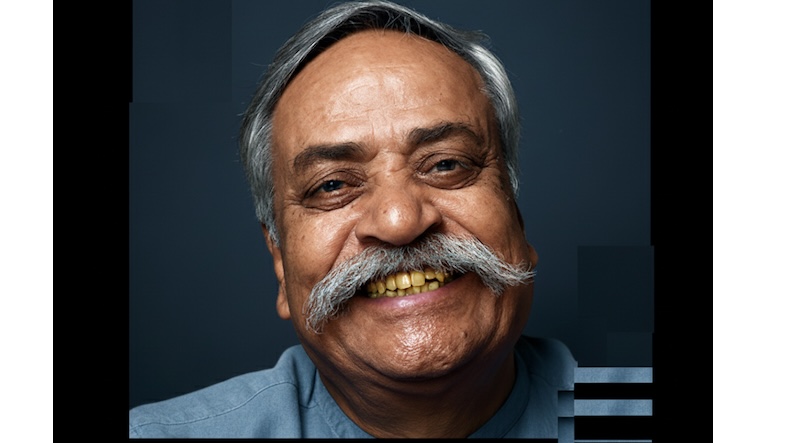
    The man who turned commercials into memories has left the building. But his booming laugh, his trademark moustache and his stories—rooted in the street, in life, in listening—remain. India’s advertising soul just got a little quieter.

  • Infectious Advertising appoints Smriti Tewari business head

    Infectious Advertising appoints Smriti Tewari business head

    MUMBAI: Infectious Advertising, one of India’s leading independent agencies, has named Smriti Tewari as business head, marking a strategic move to sharpen client focus and expand new business opportunities.

    With 13 years in advertising and marketing, Tewari has worked across categories including automobiles, FMCG, home paints, fashion, real estate and financial services, at agencies such as Ogilvy, FCB, The Minimalist and VML. She has partnered with brands like Honda Cars, BMW, KFC, Dulux Paints and Colgate Palmolive, managing integrated campaigns across ATL, BTL and social media.

    Managing partner & chief operating officer Siddhartha Singh said, “Smriti will play a pivotal role in strengthening client relationships and unlocking new opportunities. Her vast experience lays a strong foundation for driving work that is both effective and highly shareable.”

    On her appointment, Tewari said, “Stepping into this role is both an honour and a thrilling responsibility. Infectious has always believed in ideas that spark energy and drive meaningful change. I’m eager to elevate the agency through creativity, collaboration and client focus.”

    Infectious Advertising continues to focus on delivering bold, effective campaigns that connect with audiences across platforms.

  • Wise Move by Tata Play as AI Owl and Donkey Bring Smart Savings Home

    Wise Move by Tata Play as AI Owl and Donkey Bring Smart Savings Home

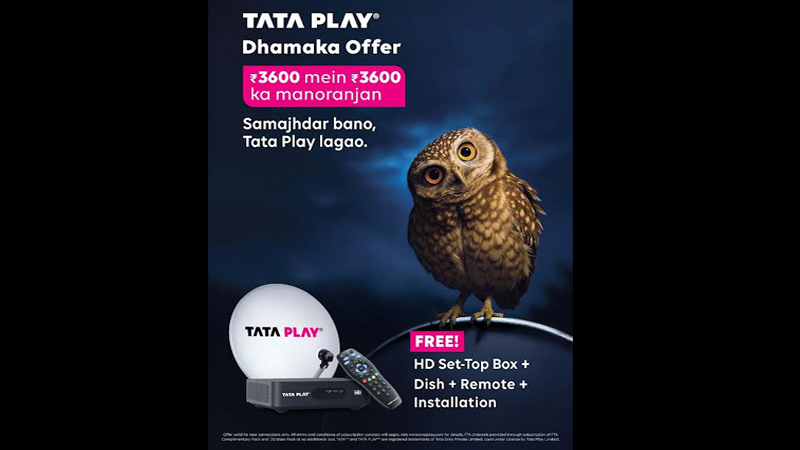
    MUMBAI: Looks like wisdom has feathers and sometimes, long ears. Tata Play’s latest campaign, Samajhdar Bano, Tata Play Lagao, brings a wise owl and a witty donkey to the screen, using humour and AI-powered storytelling to help viewers make smarter entertainment choices this festive season.

    India’s leading content distribution platform has once again flipped the script on conventional advertising, embracing generative AI to create two unforgettable characters who do what humans often fail to simplify DTH pricing with clarity and wit.

    The campaign focuses on Tata Play’s Dhamaka Offer, which ensures that every rupee of the subscriber’s Rs 3,600 upfront deposit goes entirely towards content consumption. In return, subscribers also receive an HD set-top box, dish antenna, remote, and free installation essentially transforming the deposit into full-value entertainment. The films also spotlight the ease of curating one’s own channel bouquet through the Tata Play Mobile App, giving users complete control over what they watch and pay for.

    Conceptualised and executed by Ogilvy, the brand films use the banter between the owl and the donkey to cut through the clutter of jargon and confusion that often surrounds DTH offers. In their quirky yet relatable exchange, they bust myths around hidden costs, driving home Tata Play’s promise of transparency and unbeatable value.

    Tata Play head of marketing communications Krishnendu Dasgupta said, “This campaign is anchored in a simple yet powerful insight when it comes to entertainment, people crave clarity over clutter. While choices are many, the confusion is even more. Through our witty owl and donkey duo, we’re making decision-making feel effortless and fun. The use of generative AI adds an innovative layer, enhancing the storytelling Tata Play is known for.”

    The nationwide ATL rollout spans key television genres and channels, with special focus on Hindi-speaking markets, Maharashtra, West Bengal, and all four southern states. The campaign also extends across digital and social platforms, ensuring it meets viewers wherever they watch, scroll, or stream.

    Ogilvy India chief creative officer Sukesh Nayak added, “It’s smart to choose Tata Play because it truly delivers the best value for money. Our wise owl and witty donkey serve as unlikely gurus of entertainment, showing that whether you’re brainy or braying, the smart choice is Tata Play.”

    With its smart storytelling, Gen-AI magic, and genuine value proposition, Samajhdar Bano, Tata Play Lagao isn’t just another festive campaign, it’s a reminder that in the age of endless options, clarity and a little humour go a long way.

    Viewers can avail of the offer via tataplay.com, the manage section of the Tata Play Mobile App, or their nearest dealer.

  • Asian Paints brings home the feels once again

    Asian Paints brings home the feels once again

    MUMBAI: Some stories never fade, they simply find new walls to speak from. Asian Paints has rekindled the magic of its iconic campaign Har ghar kuch kehta hai, returning with a fresh film that paints a touching portrait of the modern Indian home.

    Blending nostalgia with a contemporary lens, the new ad film explores how homes today are living, breathing reflections of the people who inhabit them. Each wall, colour and corner tells a tale of creativity, connection and comfort, whether it’s a young couple giving their walls personality, a food vlogger turning his kitchen into a studio, or a pet parent making room for a furry family member.

    Set to the familiar Har ghar poetry, the film gently reminds viewers that a home’s essence lies not in its structure, but in the lives it shelters, “har ghar chup-chaap se yeh kehta hai, ki andar isme kaun rehta hai.”

    Speaking on the campaign, Asian Paints MD & CEO Amit Syngle said, “Homes today are more dynamic, expressive and personal than ever before. With this new chapter, we celebrate how every corner carries meaning, through creativity, individuality or shared experiences.”

    Ogilvy India chief advisor Piyush Pandey added, “Homes have always spoken; what’s beautiful now is that they’re starting new conversations. This campaign captures today’s lives with honesty, humour and heart.”

    More than a revival, this film is a love letter to the spaces that shape us, proving that while styles evolve, the emotion behind every home remains timeless.

  • IndIAA  Awards 2025 spark a decade of creative brilliance

    IndIAA Awards 2025 spark a decade of creative brilliance

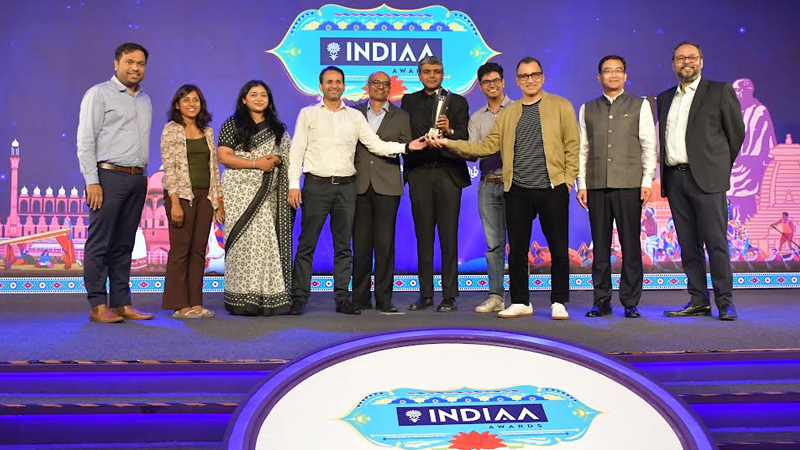
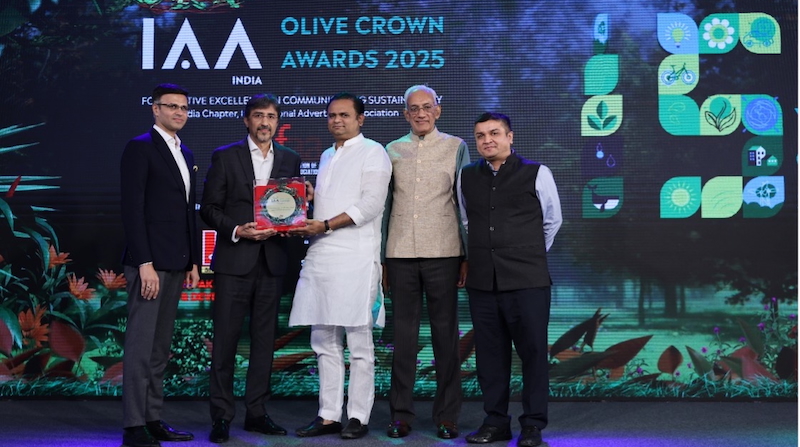
    MUMBAI: When creativity takes centre stage, India applauds, and the 10th edition of the IndIAA  Awards 2025 did just that. Presented by the India Chapter of the International Advertising Association (IAA), the gala honoured the country’s most innovative brands and agencies, celebrating a decade of excellence in storytelling, strategy, and societal impact.

    From bold campaigns to culturally resonant ideas, the evening spotlighted winners across 16 categories. Nestle India took the crown in food & beverage, while Gabit led the consumer electronics category. Creative agencies Ogilvy and Moonshot dominated, each securing four awards, proving that strategy and imagination make the perfect duo.

    Hero Motocorp, Swiggy, Asian Paints, Campus Activewear, Meta, and Urban Company were among the evening’s standout winners, demonstrating how brands continue to blend culture, emotion, and business impact through creativity. Shilpa Shetty was honoured as the “Most disruptive brand in the entertainment Industry,” adding star power to a night of recognition.

    This year also saw the celebration of the All-India winners of the AFAA’s Changemakers for Good Awards, recognising campaigns that drive real societal change rather than just sales. Highlights included R K Swamy’s Happy Breastfeeding Week – Himalaya Babycare for advertising and innovation, and Associated Advertising’s T-Safe awareness campaign for government initiatives.

    Meta India MD & country head and jury chairperson Arun Srinivas praised the calibre of entries, saying, “It truly is a testament to the creative excellence that our country is known for. This year, we also assessed digital storytelling, reflecting the changing landscape of how brands connect with audiences.”

    IAA India chapter president Abhishek Karnani added “The IndIAA Awards stand for creativity backed by insight and purpose. Tonight, we honour work that drives business and uses communication as a force for good.”

    The awards reaffirmed India’s status as a hub of ingenuity, collaboration, and impactful storytelling. From homegrown icons to new-age disruptors, the 2025 edition of IndIAA proved that great ideas don’t just win awards, they change the game.