Tag: OFC

  • Budget 2017: After DeMo, govt. announces sops for digital infra & economy

    Budget 2017: After DeMo, govt. announces sops for digital infra & economy

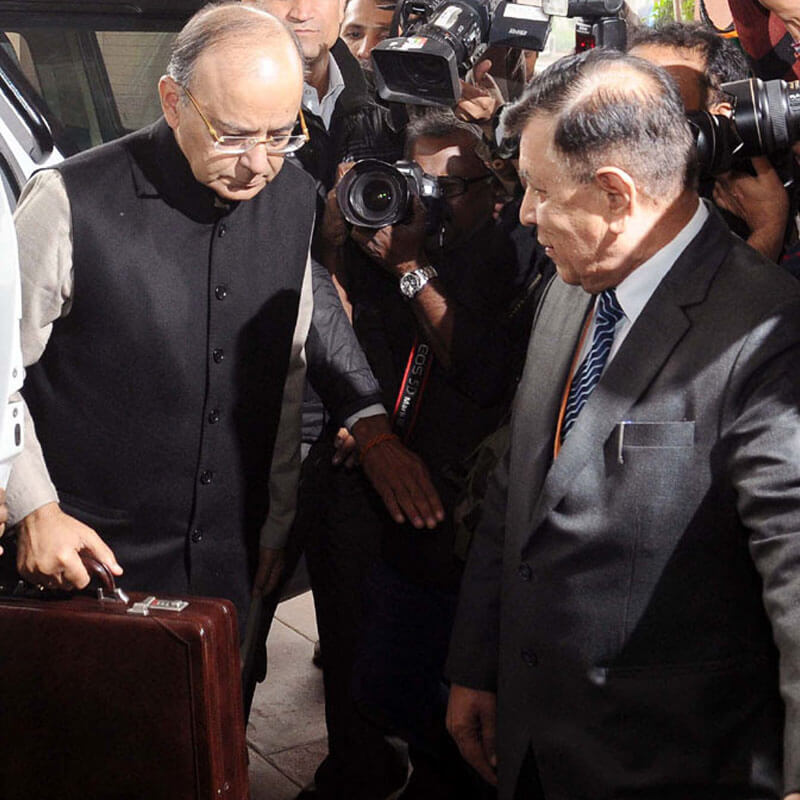
    NEW DELHI: Stating that the budget for 2017-18 was on the agenda to “Transform, Energise and Clean India” in a RAPID (Revenue, Accountability, Probity, Information and Digitisation) way, Finance Minister Arun Jaitley announced various concessions for pushing ahead digital economy, which indirectly may benefit some segments of the media and entertainment sector.

    Under the BharatNet Project, 1, 55,000 km optic fibre cable had been laid in the country. The allocation for BharatNet Project had been increased to Rs 10,000 crore in 2017-18. By the end of 2017-18, high speed broadband connectivity on optical fibre will be available in more than 1, 50,000 gram panchayats (village administrative offices), with wi-fi hot spots and access to digital services at low tariffs. A DigiGaon or digital village initiative will be launched to provide tele-medicine, education and skills through digital technology, Finance Minister Arun Jaitley said.

    The allocation for OFC-based network for defence services had also been increased from Rs 2710 crore in the last budget to Rs 3000 crore in 2017-18.

    Coupled with push towards digital payments for services, including in the broadcast and cable segments, investments in the internet infrastructure and telecom equipments will likely have cascading benefits for the media sector too, especially those offering video streaming services on phones and other hand-held devises.

    The finance minister said a shift to digital payments has huge benefits for the common man. The earlier initiative to promote financial inclusion and the JAM trinity were important precursors to government’s current push for digital transactions.

    In a budget, which for the first time since independence was presented on 1 February instead of the last day of the month, Jaitley said an eco-system was being created to make India a global hub for electronics manufacturing. Over 250 investment proposals for electronics manufacturing had been received in the last two years, totalling an investment of Rs 1.26 lakh crore. A number of global leaders and mobile manufacturers have set up production facilities in India. “I have therefore exponentially increased the allocation for incentive schemes like M-SIPS and EDF to Rs 745 crore in 2017-18. This is an all-time high,” he added.

    A major announcement by Jaitley was the abolition of the Foreign Investments Promotion Board (FIPB) and further liberalisation of FDI policy for which necessary announcements will be made in due course.

    Jaitley said: “Our government has already undertaken substantive reforms in FDI policy in the last two years. More than 90 per cent of the total FDI inflows are now through the automatic route. The FIPB has successfully implemented e-filing and online processing of FDI applications. We have now reached a stage where FIPB can be phased out”.

    He said the telecom sector was an important component of Indian infrastructure eco-system. He claimed the recent spectrum auctions have removed spectrum scarcity in the country and this will give a major fillip to mobile broadband and Digital India for the benefit of people living in rural and remote areas.

    In a boost to domestic industry, a special additional customs duty of 2 per cent is being levied on Populated Printed Circuit Boards (PCBs) for use in the manufacture of mobile phones, subject to actual user condition.

    Noting that India is on the cusp of a massive digital revolution, Jaitley said there was evidence of increased digital transactions. The BHIM (Bharat Interface for Money) app would unleash the power of mobile phones for digital payments and financial inclusion. A total 12.5 million people had adopted the BHIM app so far, Jaitley said, adding that the government will launch two new schemes to promote the usage of BHIM: referral bonus scheme for individuals and a cash back scheme for merchants.

    Aadhar Pay, a merchant version of Aadhar Enabled Payment System, was being launched shortly. This will be specifically beneficial for those who do not have debit cards, mobile wallets and mobile phones. A Mission will be set up with a target of 25,000 million crore digital transactions for 2017-18 through UPI, USSD, Aadhar Pay, IMPS and debit cards. Banks have targeted to introduce additional one million new PoS (point of sales) terminals by March 2017 and they will be encouraged to introduce two million Aadhar-based PoS by September 2017, the finance minister said.

    Jaitley said the Government will consider and work with various stakeholders for early implementation of the interim recommendations of the Committee of Chief Ministers on digital transactions. The Committee on Digital Payments, constituted by Department of Economic Affairs, had recommended structural reforms in the payment eco system, including amendments to the Payment and Settlement Systems Act 2007.

    In a boost for digitisation, the government has removed service tax on e-tickets booked through IRCTC (Indian Railways’ website).

    According to a PTI report, after a flat day time trading Sensex zoomed 485.68 pts to close at 28,141.64.

  • Budget 2017: After DeMo, govt. announces sops for digital infra & economy

    Budget 2017: After DeMo, govt. announces sops for digital infra & economy

    NEW DELHI: Stating that the budget for 2017-18 was on the agenda to “Transform, Energise and Clean India” in a RAPID (Revenue, Accountability, Probity, Information and Digitisation) way, Finance Minister Arun Jaitley announced various concessions for pushing ahead digital economy, which indirectly may benefit some segments of the media and entertainment sector.

    Under the BharatNet Project, 1, 55,000 km optic fibre cable had been laid in the country. The allocation for BharatNet Project had been increased to Rs 10,000 crore in 2017-18. By the end of 2017-18, high speed broadband connectivity on optical fibre will be available in more than 1, 50,000 gram panchayats (village administrative offices), with wi-fi hot spots and access to digital services at low tariffs. A DigiGaon or digital village initiative will be launched to provide tele-medicine, education and skills through digital technology, Finance Minister Arun Jaitley said.

    The allocation for OFC-based network for defence services had also been increased from Rs 2710 crore in the last budget to Rs 3000 crore in 2017-18.

    Coupled with push towards digital payments for services, including in the broadcast and cable segments, investments in the internet infrastructure and telecom equipments will likely have cascading benefits for the media sector too, especially those offering video streaming services on phones and other hand-held devises.

    The finance minister said a shift to digital payments has huge benefits for the common man. The earlier initiative to promote financial inclusion and the JAM trinity were important precursors to government’s current push for digital transactions.

    In a budget, which for the first time since independence was presented on 1 February instead of the last day of the month, Jaitley said an eco-system was being created to make India a global hub for electronics manufacturing. Over 250 investment proposals for electronics manufacturing had been received in the last two years, totalling an investment of Rs 1.26 lakh crore. A number of global leaders and mobile manufacturers have set up production facilities in India. “I have therefore exponentially increased the allocation for incentive schemes like M-SIPS and EDF to Rs 745 crore in 2017-18. This is an all-time high,” he added.

    A major announcement by Jaitley was the abolition of the Foreign Investments Promotion Board (FIPB) and further liberalisation of FDI policy for which necessary announcements will be made in due course.

    Jaitley said: “Our government has already undertaken substantive reforms in FDI policy in the last two years. More than 90 per cent of the total FDI inflows are now through the automatic route. The FIPB has successfully implemented e-filing and online processing of FDI applications. We have now reached a stage where FIPB can be phased out”.

    He said the telecom sector was an important component of Indian infrastructure eco-system. He claimed the recent spectrum auctions have removed spectrum scarcity in the country and this will give a major fillip to mobile broadband and Digital India for the benefit of people living in rural and remote areas.

    In a boost to domestic industry, a special additional customs duty of 2 per cent is being levied on Populated Printed Circuit Boards (PCBs) for use in the manufacture of mobile phones, subject to actual user condition.

    Noting that India is on the cusp of a massive digital revolution, Jaitley said there was evidence of increased digital transactions. The BHIM (Bharat Interface for Money) app would unleash the power of mobile phones for digital payments and financial inclusion. A total 12.5 million people had adopted the BHIM app so far, Jaitley said, adding that the government will launch two new schemes to promote the usage of BHIM: referral bonus scheme for individuals and a cash back scheme for merchants.

    Aadhar Pay, a merchant version of Aadhar Enabled Payment System, was being launched shortly. This will be specifically beneficial for those who do not have debit cards, mobile wallets and mobile phones. A Mission will be set up with a target of 25,000 million crore digital transactions for 2017-18 through UPI, USSD, Aadhar Pay, IMPS and debit cards. Banks have targeted to introduce additional one million new PoS (point of sales) terminals by March 2017 and they will be encouraged to introduce two million Aadhar-based PoS by September 2017, the finance minister said.

    Jaitley said the Government will consider and work with various stakeholders for early implementation of the interim recommendations of the Committee of Chief Ministers on digital transactions. The Committee on Digital Payments, constituted by Department of Economic Affairs, had recommended structural reforms in the payment eco system, including amendments to the Payment and Settlement Systems Act 2007.

    In a boost for digitisation, the government has removed service tax on e-tickets booked through IRCTC (Indian Railways’ website).

    According to a PTI report, after a flat day time trading Sensex zoomed 485.68 pts to close at 28,141.64.

  • No exclusive pacts with telcos: TRAI to building-owners; CTI mooted

    No exclusive pacts with telcos: TRAI to building-owners; CTI mooted

    MUMBAI: The Telecom Regulatory Authority of India (TRAI) has issued its recommendations on “In-Building Access by Telecom Service Providers”.

    An effective telecommunications infrastructure is an essential component of any building for its connectivity to the outside world. Telecommunications services such as voice, data and wideband multimedia services are indispensable in the modern society. In order to improve in-building coverage and to offer quality high data rate services, installation of in-building solutions (IBS) for wireless services and laying of cables such as copper cables, optical fibre cables (OFC),LANcables etc. is required.

    To lay  cables  or  install  telecom  infrastructure   inside  the  building, Telecom Service Providers (TSP) lnfrastructure Providers (lP-I) require permission of the owner of the building. However, it is seen that generally restrictive practices are adopted by building owners while giving access to the building due to commercial. interests. In many cases, these owners enter into exclusive agreement with one of the TSPs for providing telecom services to dwellers and deny access to other TSPs, thus creating an artificial entry barrier for other TSPs. Such practices not only limit competition, it also leaves no choice to consumers except to avail services from the TSP with whom the contract is done; taking away choice and flexibility from the consumers which they would have had in terms of quality of service (QoS), tariff, redundancy etc.

    In view of the above, a need was felt for policy intervention and to evolve a framework applicable to in-building facilities to enable the telecom operators to obtain efficient access on reasonable terms and conditions. Therefore, the Authority, suo-motu, decided to initiate a consultation process on the issue. Accordingly, a Consultation Paper on “In-Building Access by Telecom Service Providers” was released on 6 June 2016 seeking the comments of the stakeholders. An Open House Discussion (OHD) on the issue was also convened on 30 September 2016 at New Delhi.

    Based on the comments received and further analysis, draft recommendations on ‘In-Building Access by Telecom Service Providers’ have been issued and the same have also been placed on TRAI’s web site. Some of the main recommendations are:

    (i)    TSPs/IP-ls be mandated to share the in-building infrastructure (IBS, OFC and other cables, ducts etc) with other TSPs, in large public places, commercial complexes and residential complexes in transparent, fair and non-discriminatory manner.

    (ii)    Indulgence   into  exclusive  contract   prohibiting   access  to  other TSPs may be treated as violation of the license agreement / registration.

    (iii)    Suitable provisions for  the creation of  Common Telecom Infrastructure (CTI) inside the building should form part of the Model Building Bye-Laws.

    (iv)    The essential requirement for telecom installations and the associated cabling should be formed part of National Building Code of India (NBC), being amended by Bureau of Indian Standards (BIS).

    (v)    Completion certificate to a building to be granted only after ensuring that the CTI as per the prescribed standards is in place.

    (vi)    Access to building including CTI facilities be available to the TSPs on a fair, transparent and non-discriminatory manner and minimum three TSPs/IP-Is should have presence in the building.

    Also Read:

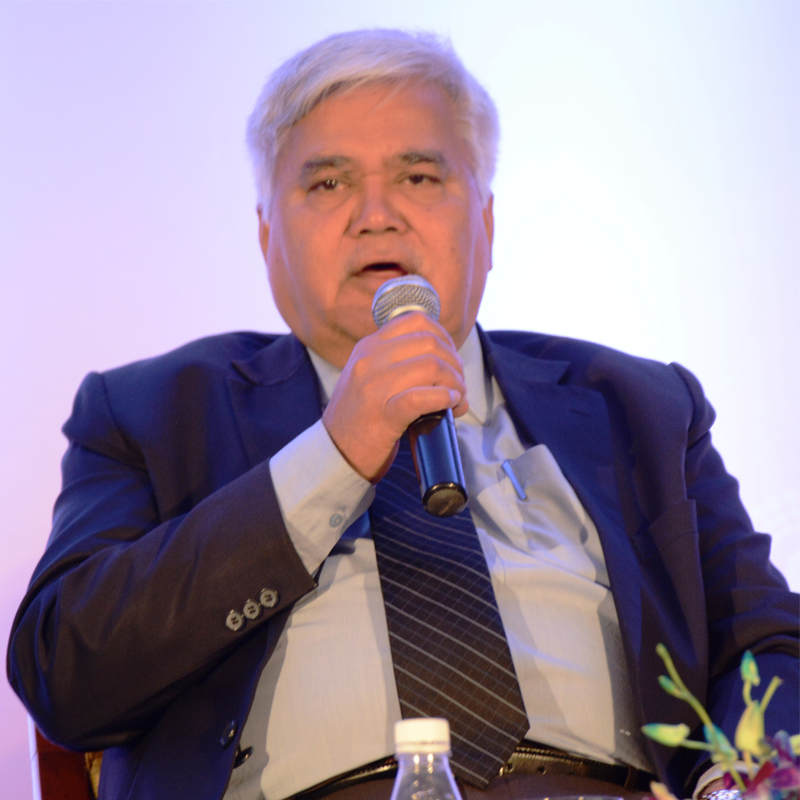
    “There would be a lot on TRAI’s plate in 2017” – RS Sharma

    Wi-fi proliferation, Net Telephony discussion in January


  • No exclusive pacts with telcos: TRAI to building-owners; CTI mooted

    No exclusive pacts with telcos: TRAI to building-owners; CTI mooted

    MUMBAI: The Telecom Regulatory Authority of India (TRAI) has issued its recommendations on “In-Building Access by Telecom Service Providers”.

    An effective telecommunications infrastructure is an essential component of any building for its connectivity to the outside world. Telecommunications services such as voice, data and wideband multimedia services are indispensable in the modern society. In order to improve in-building coverage and to offer quality high data rate services, installation of in-building solutions (IBS) for wireless services and laying of cables such as copper cables, optical fibre cables (OFC),LANcables etc. is required.

    To lay  cables  or  install  telecom  infrastructure   inside  the  building, Telecom Service Providers (TSP) lnfrastructure Providers (lP-I) require permission of the owner of the building. However, it is seen that generally restrictive practices are adopted by building owners while giving access to the building due to commercial. interests. In many cases, these owners enter into exclusive agreement with one of the TSPs for providing telecom services to dwellers and deny access to other TSPs, thus creating an artificial entry barrier for other TSPs. Such practices not only limit competition, it also leaves no choice to consumers except to avail services from the TSP with whom the contract is done; taking away choice and flexibility from the consumers which they would have had in terms of quality of service (QoS), tariff, redundancy etc.

    In view of the above, a need was felt for policy intervention and to evolve a framework applicable to in-building facilities to enable the telecom operators to obtain efficient access on reasonable terms and conditions. Therefore, the Authority, suo-motu, decided to initiate a consultation process on the issue. Accordingly, a Consultation Paper on “In-Building Access by Telecom Service Providers” was released on 6 June 2016 seeking the comments of the stakeholders. An Open House Discussion (OHD) on the issue was also convened on 30 September 2016 at New Delhi.

    Based on the comments received and further analysis, draft recommendations on ‘In-Building Access by Telecom Service Providers’ have been issued and the same have also been placed on TRAI’s web site. Some of the main recommendations are:

    (i)    TSPs/IP-ls be mandated to share the in-building infrastructure (IBS, OFC and other cables, ducts etc) with other TSPs, in large public places, commercial complexes and residential complexes in transparent, fair and non-discriminatory manner.

    (ii)    Indulgence   into  exclusive  contract   prohibiting   access  to  other TSPs may be treated as violation of the license agreement / registration.

    (iii)    Suitable provisions for  the creation of  Common Telecom Infrastructure (CTI) inside the building should form part of the Model Building Bye-Laws.

    (iv)    The essential requirement for telecom installations and the associated cabling should be formed part of National Building Code of India (NBC), being amended by Bureau of Indian Standards (BIS).

    (v)    Completion certificate to a building to be granted only after ensuring that the CTI as per the prescribed standards is in place.

    (vi)    Access to building including CTI facilities be available to the TSPs on a fair, transparent and non-discriminatory manner and minimum three TSPs/IP-Is should have presence in the building.

    Also Read:

    “There would be a lot on TRAI’s plate in 2017” – RS Sharma

    Wi-fi proliferation, Net Telephony discussion in January


  • Jio may use US$4.4bn to lay OFC, expand network to stifle competition

    Jio may use US$4.4bn to lay OFC, expand network to stifle competition

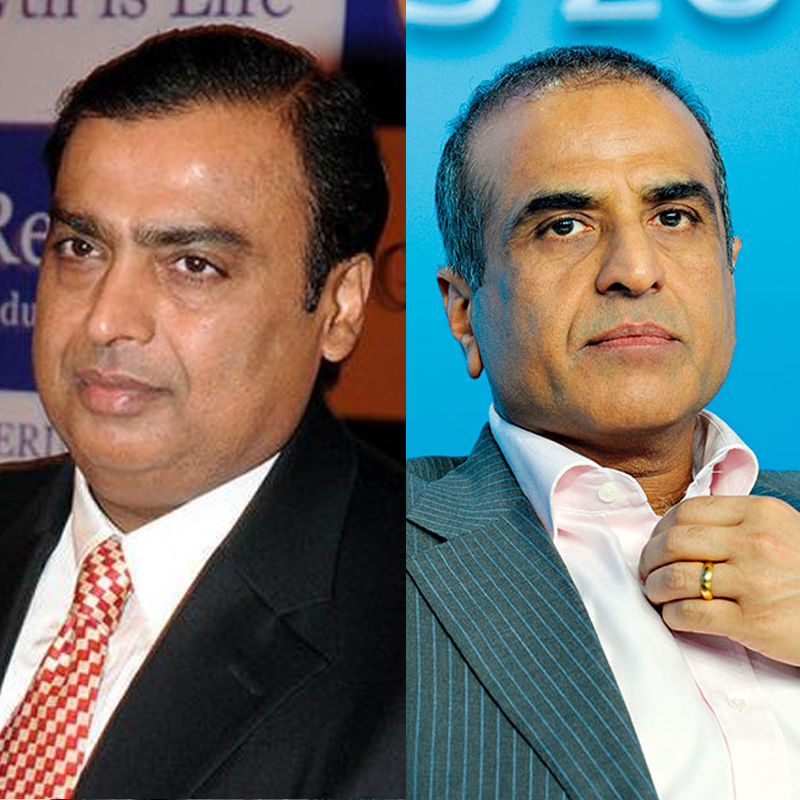
    MUMBAI: It’s common knowledge that Reliance Jio, Mukesh Ambani’s telecom venture, is up against incumbent rivals such as Vodafone, Bharti Airtel, and Idea Cellular. Jio closed 2016 with 72.4 million subscribers. Last September, it claimed to be the fastest growing technology operation in the globe after signing up 50 million subs in 83 days.

    Ambani has already invested Rs 1,71,000 crore (approx US$25 billion) into Jio to build India’s first fourth-generation (4G)-only infrastructure to provide high-speed internet. He recently announced that Jio will raise another Rs 30,000 crore through a rights issue, which will be used to expand existing network and lay additional optical fibre cable (OFC). OFC is vital for high-speed internet as it joins one telecom tower, transmitting air waves for wireless connectivity, to the other, via cables.

    Reliance announced plans for a rights issue of convertible preference shares at Jio to raise US$ 4.4 billion. A part of the funds will be used to continue funding its free internet services, which has been a reason for regulatory tussle with other telecom operators.

    Vodafone is fighting a legal case against Jio. Bharti CMD Sunil Mittal said that Jio’s free services started an unfair competition.

    Jio has already acquired 72 million subscribers, and is adding six lakh new ones every day, the company says. Jio’s offers set off a price war. Airtel now is offering Rs 9,000 of free 4G data to new subs and has also cut down its data prices by two-thirds. Idea also is offering several schemes to data users.

    Jio is getting more subscribers with an introductory and then New Year offer of free services until March. The company also claims the most extensive Indian 4G network which will reach soon 90 per cent population.

  • Jio may use US$4.4bn to lay OFC, expand network to stifle competition

    Jio may use US$4.4bn to lay OFC, expand network to stifle competition

    MUMBAI: It’s common knowledge that Reliance Jio, Mukesh Ambani’s telecom venture, is up against incumbent rivals such as Vodafone, Bharti Airtel, and Idea Cellular. Jio closed 2016 with 72.4 million subscribers. Last September, it claimed to be the fastest growing technology operation in the globe after signing up 50 million subs in 83 days.

    Ambani has already invested Rs 1,71,000 crore (approx US$25 billion) into Jio to build India’s first fourth-generation (4G)-only infrastructure to provide high-speed internet. He recently announced that Jio will raise another Rs 30,000 crore through a rights issue, which will be used to expand existing network and lay additional optical fibre cable (OFC). OFC is vital for high-speed internet as it joins one telecom tower, transmitting air waves for wireless connectivity, to the other, via cables.

    Reliance announced plans for a rights issue of convertible preference shares at Jio to raise US$ 4.4 billion. A part of the funds will be used to continue funding its free internet services, which has been a reason for regulatory tussle with other telecom operators.

    Vodafone is fighting a legal case against Jio. Bharti CMD Sunil Mittal said that Jio’s free services started an unfair competition.

    Jio has already acquired 72 million subscribers, and is adding six lakh new ones every day, the company says. Jio’s offers set off a price war. Airtel now is offering Rs 9,000 of free 4G data to new subs and has also cut down its data prices by two-thirds. Idea also is offering several schemes to data users.

    Jio is getting more subscribers with an introductory and then New Year offer of free services until March. The company also claims the most extensive Indian 4G network which will reach soon 90 per cent population.

  • Cable industry vetaran Ketan Thakker quits Digicable

    Cable industry vetaran Ketan Thakker quits Digicable

    MUMBAI: Ketan Thakker, a veteran in the cable television industry, has quit Digicable Network as Vice President – Technical after spending more than five years in the company.

    At Digicable, Thakker was overall business head for OFC infrastructure at a pan India level. He was also the technical in-charge of digital Headend and SMS of entire Western region.

    Thakker, a Diploma holder in Industrial Electronics, boasts of a professional career spanning more than 21 years encompassing CATV industry, digital headend and maintenance/design/re-design of entire network.
    Prior to joining Digicable, Thakker was associated with Wire & Wireless India Limited (now Siti Cable) as Deputy General Manager. He served Siti Cable for a year as an overall technical in charge of Digital Headend, SMS and Tech-operations.

    He had also worked with Raheja Group-promoted Hathway Cable and Datacom for five years as Senior Manager – Technical. He was overall technical in charge of Hathway – South Mumbai.

    Thakker was also associated with Win Cable and Datacom as Manager – Technical for a period of two years. He was responsible to supervise the technical aspects of headends for Win Cable in Mumbai, installation and maintenance of control room and trunk lines along with upgradation of trunk line mapping and also testing and inspection of CATV equipments.