Tag: Odisha

  • Going a la carte with Star and Indiacast has helped: Bibhu Prasad Rath

    Going a la carte with Star and Indiacast has helped: Bibhu Prasad Rath

    Bhibu Rath heads one of the small regional cable TV players in the TV distribution business: Ortel Communications. The MSO began as a local player in the state of Odisha. But, it has since spread into neighboring states such as Chattishgarh, West Bengal, Andhra Pradesh and Telangana. In fact, it is one of a handful of cable TV distribution companies which went in for an IPO and are listed on the Bombay Stock Exchange.

    Rath has been with Ortel since 1999 and no one probably knows the company and the business it operates better than he does. Hence, he has focused on building a two-way state-of-the-art communication network enabled for ‘triple play’ services (video, data, and voice capabilities) with control over the ‘last mile’ over the last few years. That regulation has stymied his VoIP ambitions, has not been a stumbling block. In fact, it has emboldened him to move aggressively in the direction of broadband.

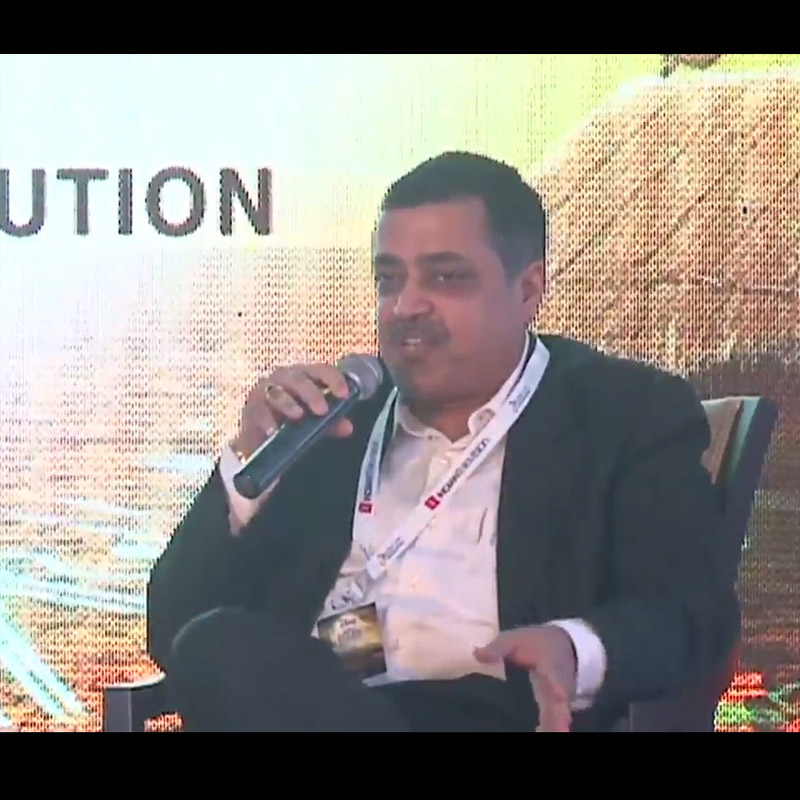
    Rath was one of the key note speakers at IDOS 2016 here. And, he had a one-on-one conversation with the Indiantelevision.com CEO and Editor-in-Chief Anil Wanvari. He was forthcoming and transparent on a range of issues. Read on to find out what he had to say:

    Are you at an advantage or disadvantage of being a niche player ?

    It’s a great advantage actually. You need to understand that why we are a regional player.  Because, we have always believed in depth and not in width. So, we are actually a last-mile player unlike other national MSOs. In a lighter vein, in fact, I keep telling people that we are not a MSO, we are the largest LCO. So, if you are  doing a last-mile network, you have limitations of national presence. So, we have consistently focused on the regional markets and, even within regional market, we have consistently focused on Phase III markets – tier 2, tier 3 markets. Not on the metros.  Like we are there in Telangana but not in Hyderabad. So, currently, we are focusing on four states even though we are present in six states  — that is Odisha, Chattisgarh, Andhra Pradesh and Telangana. And, we have a small presence in West Bengal and Madhya Pradesh. So, it gives us a great advantage that we are focused, we are localized, we are last mile, we are going directly to the consumer.

    Your non-Odisha market is around 233,000 subscribers and your major part, that is, 770,000 subscribers, are in Odisha. Is non-Odisha market going to grow or Odisha?

    That’s (non-Odisha) the one which is growing. In March 2015, when we went public we had half a million subs. Today, we are close to 800,000. Our guidance to the market has been — we will get to a million by March 2017.  If you see the growth in the last five quarters — that is four quarters of last year and Q1 of this year — you will see 70-75 per cent incremental growth has come from outside Odisha, and they are mostly in Andhra Pradesh, Telangana and Chhattisgarh. So that’s the trend going to continue and most of the growth will come from outside Odisha.

    Your analog and digital ARPUs are at Rs 141 and Rs 169 a month, but your digital ARPUs have come down. Why is that and where do you see it going?

    Well, digital ARPUs have come down marginally. But, the mix of analog and digital has gone up. So, digital as a percentage of cable TV swap has gone up very significantly in last five quarters. As of June-end, it was 45 per cent. That’s the reason why ARPU has marginally gone down.

    I have a slightly different view from the rest of the people from the industry. We don’t think this is a great ARPU-driven business. You need to realize that this is a wireline business — not wireless like DTH. So, the wireless guys like DTH have an inherent advantage that they can choose and pick their customer. 5,000 customers in Delhi, 50,000 in Odisha – it’s the same for them. We are in the wireline business. We are laying cable in front of homes and its extremely capex-heavy unlike the MSOs model. If you keep aside the STB, the last mile model is capex-heavy as compared to the MSO-LCO model, because a large part of the network is actually built by the LCO. Whereas, here we deal with it ourselves.

    Now, say, you network 100 homes. My objective is to get as as many of these 100 homes as I can as my customers instead of trying to raise my ARPU by Rs 10. I would prefer to operate at a moderate to low ARPU but I increase my market share and penetration ratio and make up through the number of customers than trying to increase the ARPUs.  So, if you see my penetration ratio: 770,000 customers I have 1.2 million home passes – that is like 60 per cent. To my mind that is a more important metric in the business than just the ARPU numbers. Having said that ARPU will increase – but only marginally, I am not a great believer invery high level of ARPU increase.

    Even in the context of digitization, I kept saying that its objective is not to increase ARPU. Why would the government and the regulator do something wherein the cost to the customer would go up? That’s just the antithesis of what the government does. The government would like to do what helps the consumers, and what helps the consumers is to give them choice, not raise prices.

    So, in doing digitization, give the choice to the consumer — let the consumer pick up at Rs 99, and let someone else pick up at Rs 500. Let your average be at Rs 150-200. Hence, we operate at high penetration, and moderate ARPUs.

    Being a regional player, do you have enough negotiating power? You recently concluded deals with Star and Indiacast which were challenging. Has it become easier for you to deal with the broadcaster?

    It’s a relationship  with the broadcasters — which has been going on but recently we have tried to bring a major shift in the relationship. The two deals which you mentioned with Indiacast and Star TV – they are two of the top half a dozen bouquets operating in India. What we tried to do actually is we tried to test and implement the true spirit of digitization. This means consumer should decide. Whether he wants a channel or not, he should decide and if he should pay.

    With these two deals, we said we will go a la carte. And, as you know, a la carte prices are extremely high. The effective price that a broadcaster gets from the consumers is typically between 10–15 per cent of a la carte price.

    So, for example, the Star TV bouquet – the a la carte prices are at Rs 200, the bouquet prices are typically at Rs 25-26. Despite the a la carte being high, we decided to try it. And we decided to offer it to our viewers and consumers, and allowed them to decide. And, to my surprise, the results have been fantastic.

    Being a last mile model, I don’t have issues of packaging, etc. So, we have complete packaging on our network. We have a backend which can activate a channel. A consumer can send an SMS and get his channel in two minutes via a call centre as well. The payout to me has come down significantly – very significantly — on these two bouquets. But, for consumers, it has gone up, for some it has gone down. So, it’s working very well. This is the way forward. Having done these two deals, I don’t want to do any more soon. I would like to stabilize these two first.

    Has your revenue been impacted because of this?

    Not at all, because when you put a channel on a la carte, there are two models that have been implemented. One is we have put a la carte add-on – that is consumers pay and take it. In another experiment I did, I just threw open the channels to consumers. I said you don’t have to pay anything extra, just decide what you want.  There are
    consumers who will be happy to pay a significant amount for the channels like Fox Life, CNBC, TLC and that’s beauty of doing a la carte, instead of dumping a CNBC channel on the entire base.

    In our markets, 90-95 per cent of the viewers don’t watch CNBC or Fox Life. Why should I dump it? Instead, let me give it to these 2-3 per cent consumers, and let them pay.

    So my revenue has not gone down and my costs have reduced. I am even ready to let go my revenue because these two are interrelated. Whether I increase the ARPU by Rs 10  or I reduce my cost by Rs 10, it doesn’t matter to my ROC. The whole idea is to move on to a pass on the model where consumers decide. The revenue may increase or decrease, only time will tell.

    The MIB says that 93 per cent of Phase III has been digitized whereas you have stated in your areas it is 50-55 per cent. Where lies the truth?

    I don’t want to comment on the MIB numbers because I actually don’t know where the numbers are coming from. We are below 50 per cent. As regards the litigation of DAS Phase III, we are one of the guys who went to court and got a stay. And, that hearing for case is coming up in October.

    That does not mean I did not want to digitize. I definitely want to godigital. I definitely want to get to 100 per cent but we wanted time. And, in many parts of the country, analogue was running in the month of January, and it is running even today. And I can safely tell you, if there was no stay order, analogue would have continued for some more time. I wanted legal cover that If I am doing analogue, I am not doing something illegal. I am pursuing digital in the true spirit. And, the offtake of digital has been very good actually. And, I don’t expect the court order to continue for a very long period. Irrespective of what happens in court, I am pursuing it and I will complete digitalization. We are fully committed to it.

    Your content cost has come down to Rs 50 or so is it because of Star and Indiacast deals or is it because of other factors? Do you expect them to go down further?

    I expect content costs to go down little further. It has been the combination of a couple of factors;  it is not because I got better deals with  broadcasters. The content cost has come down is because of two factors — one is the deal with Star TV and Indiacast on a la carte basis. But, this cost will go up in the long run because consumers will adopt more and more channels and we are mentally prepared that this will go up.

    And, at some point, even a la carte may actually exceed and go beyond what I was paying on a fixed-fee model. It will take time. But, we should be prepared to pay more on a la carte model. But, by then, consumers should also take more a la carte channels and my revenue should also go up.

    The other reason is that we are expanding a lot to other markets and, our expansion strategy has been to acquire LCOs  and the local MSOs. So, we basically do a lump sum, lock stock and barrel buyout. And, those guys we take over have been extremely efficient as compared to what we were doing in terms of negotiating with the broadcaster – their costs are low. Their costs essentially get passed on to us. So that counts for a little cheaper price. But, it will increase.

    You will not set up digital headends rather will go with opex model by taking intercity bandwidth. Is it a way forward for smaller players rather than investing in digital headends which are expensive?

    I think it cost around Rs 10 lakhs a year per link – that’s the deal I have.  I am sure Hathway, Den and Siti must be having better deals because of the size.. So we have taken a view that we will go on opex model. It will be like we will have one head end in Odisha and one for Andhra and Telangana  and one for Bengal and Chhattisgarh because they have language issues and content mix is different. That’s the way forward for the smaller guys.  But when you talk about the smaller guys, they may not have multiple locations to take link actually one of the reason the cable community in Phase III and Phase IV are finding difficult to execute digitization is essentially this.

    Because of this in Phase III you have markets with a million population and you have markets with 10,000 population. If you see the list that the government has issued, there are markets with 10,000-15,000 population at the low end. There are some states which have removed those lists and there are some states which never reacted.

    I have seen the Telangana, Andhra Pradesh list. There are homes with 10,00-20,000  population. For 20,000 population places,  that is about 4,000-5,000 homes. Out of this, 1,000 will be on DTH. You will have 3,000-4,000 cable customers. How does one actually do digital? Hathway, DEN, Siti and I can do it. Because, I have many other locations, I can take a link for Rs 10 lakh.

    But, if there is an independent guy, it is simply not possible, not viable from his perspective to set up a headend. The link is not an option for the smaller guys. That is one of the fundamental reasons why there has been a resistance to digitalization in Phase III and Phase IV. So that’s slowly getting sorted out. The link costs are coming down. The headend costs are coming down. The awareness is going up. So I am sure it will happen.

    You are investing  Rs 120 crore in coming year?

    When I did my IPO on 15 March, I had a two-year capex plan for FY-16 and FY-17. For FY-16 and FY-17, my plan was to go from half a million to one million by  FY17. So, to add this 500,000 customers, we had to put a capex of Rs 250 crore in these two years. Maybe this year’s numbers are part of it. So, if you are asking me, where is this going – in video, broadband or cable? In technology, nothing is called video or broadband, everything is based on the packet. So, given that we are a last mile player, our entire money goes into the network or buying out the LCO. And, even when I buy out an LCO, I dismantle the entire network and build my own network. So, the entire money goes into the network, creating the homes passed.

    Your broadband ARPUs are Rs 400. Are they going to up? Are the markets resistant to ARPU hikes in broadband?

    On the broadband side, the story is different. Video operates on a high penetration ratio. Broadband is on low penetration.  And, I believe that Broadband ARPUs will grow faster than cable TV ARPUs. Simply because there is a lot of upgradation change happening in the product itself. Earlier, we were on DOCSIS 2.0. We could provide 10 MBPs. Most of the consumers were on 512 KBPs or 1 MBPS or 2 MBPS. Now we have started DOCSIS 3.0. The technical spec is 300 MBPs. On the ground, we are able to deliver 100 MBPs. And the offers we have are 10 MBPS, 20 MBPs, 50 MBPS, and 100MBPs. This number is very less. This ratio between DOCSIS 2.0 and DCOSIS 3.0 is going to change. Increasing the speed will obviously lead to more downloads and streaming online. Hence, these ARPUS will increase.

    What we also have been doing is build mobility into the wire line. For example, you have a home wifi modem, you can use it to make your home wireless. You don’t need to put a separate router, the cable models of DOCSIS 3.0 have inbuilt routers. We are also building public hotspots. A KFC or a coffee shop — where consumers spend an hour or so. So you use the public hot spot and use your login and password to continue enjoy all the broadband speeds you enjoy at home. All these factors will lead to our broadband ARPUs going up.
  • Going a la carte with Star and Indiacast has helped: Bibhu Prasad Rath

    Going a la carte with Star and Indiacast has helped: Bibhu Prasad Rath

    Bhibu Rath heads one of the small regional cable TV players in the TV distribution business: Ortel Communications. The MSO began as a local player in the state of Odisha. But, it has since spread into neighboring states such as Chattishgarh, West Bengal, Andhra Pradesh and Telangana. In fact, it is one of a handful of cable TV distribution companies which went in for an IPO and are listed on the Bombay Stock Exchange.

    Rath has been with Ortel since 1999 and no one probably knows the company and the business it operates better than he does. Hence, he has focused on building a two-way state-of-the-art communication network enabled for ‘triple play’ services (video, data, and voice capabilities) with control over the ‘last mile’ over the last few years. That regulation has stymied his VoIP ambitions, has not been a stumbling block. In fact, it has emboldened him to move aggressively in the direction of broadband.

    Rath was one of the key note speakers at IDOS 2016 here. And, he had a one-on-one conversation with the Indiantelevision.com CEO and Editor-in-Chief Anil Wanvari. He was forthcoming and transparent on a range of issues. Read on to find out what he had to say:

    Are you at an advantage or disadvantage of being a niche player ?

    It’s a great advantage actually. You need to understand that why we are a regional player.  Because, we have always believed in depth and not in width. So, we are actually a last-mile player unlike other national MSOs. In a lighter vein, in fact, I keep telling people that we are not a MSO, we are the largest LCO. So, if you are  doing a last-mile network, you have limitations of national presence. So, we have consistently focused on the regional markets and, even within regional market, we have consistently focused on Phase III markets – tier 2, tier 3 markets. Not on the metros.  Like we are there in Telangana but not in Hyderabad. So, currently, we are focusing on four states even though we are present in six states  — that is Odisha, Chattisgarh, Andhra Pradesh and Telangana. And, we have a small presence in West Bengal and Madhya Pradesh. So, it gives us a great advantage that we are focused, we are localized, we are last mile, we are going directly to the consumer.

    Your non-Odisha market is around 233,000 subscribers and your major part, that is, 770,000 subscribers, are in Odisha. Is non-Odisha market going to grow or Odisha?

    That’s (non-Odisha) the one which is growing. In March 2015, when we went public we had half a million subs. Today, we are close to 800,000. Our guidance to the market has been — we will get to a million by March 2017.  If you see the growth in the last five quarters — that is four quarters of last year and Q1 of this year — you will see 70-75 per cent incremental growth has come from outside Odisha, and they are mostly in Andhra Pradesh, Telangana and Chhattisgarh. So that’s the trend going to continue and most of the growth will come from outside Odisha.

    Your analog and digital ARPUs are at Rs 141 and Rs 169 a month, but your digital ARPUs have come down. Why is that and where do you see it going?

    Well, digital ARPUs have come down marginally. But, the mix of analog and digital has gone up. So, digital as a percentage of cable TV swap has gone up very significantly in last five quarters. As of June-end, it was 45 per cent. That’s the reason why ARPU has marginally gone down.

    I have a slightly different view from the rest of the people from the industry. We don’t think this is a great ARPU-driven business. You need to realize that this is a wireline business — not wireless like DTH. So, the wireless guys like DTH have an inherent advantage that they can choose and pick their customer. 5,000 customers in Delhi, 50,000 in Odisha – it’s the same for them. We are in the wireline business. We are laying cable in front of homes and its extremely capex-heavy unlike the MSOs model. If you keep aside the STB, the last mile model is capex-heavy as compared to the MSO-LCO model, because a large part of the network is actually built by the LCO. Whereas, here we deal with it ourselves.

    Now, say, you network 100 homes. My objective is to get as as many of these 100 homes as I can as my customers instead of trying to raise my ARPU by Rs 10. I would prefer to operate at a moderate to low ARPU but I increase my market share and penetration ratio and make up through the number of customers than trying to increase the ARPUs.  So, if you see my penetration ratio: 770,000 customers I have 1.2 million home passes – that is like 60 per cent. To my mind that is a more important metric in the business than just the ARPU numbers. Having said that ARPU will increase – but only marginally, I am not a great believer invery high level of ARPU increase.

    Even in the context of digitization, I kept saying that its objective is not to increase ARPU. Why would the government and the regulator do something wherein the cost to the customer would go up? That’s just the antithesis of what the government does. The government would like to do what helps the consumers, and what helps the consumers is to give them choice, not raise prices.

    So, in doing digitization, give the choice to the consumer — let the consumer pick up at Rs 99, and let someone else pick up at Rs 500. Let your average be at Rs 150-200. Hence, we operate at high penetration, and moderate ARPUs.

    Being a regional player, do you have enough negotiating power? You recently concluded deals with Star and Indiacast which were challenging. Has it become easier for you to deal with the broadcaster?

    It’s a relationship  with the broadcasters — which has been going on but recently we have tried to bring a major shift in the relationship. The two deals which you mentioned with Indiacast and Star TV – they are two of the top half a dozen bouquets operating in India. What we tried to do actually is we tried to test and implement the true spirit of digitization. This means consumer should decide. Whether he wants a channel or not, he should decide and if he should pay.

    With these two deals, we said we will go a la carte. And, as you know, a la carte prices are extremely high. The effective price that a broadcaster gets from the consumers is typically between 10–15 per cent of a la carte price.

    So, for example, the Star TV bouquet – the a la carte prices are at Rs 200, the bouquet prices are typically at Rs 25-26. Despite the a la carte being high, we decided to try it. And we decided to offer it to our viewers and consumers, and allowed them to decide. And, to my surprise, the results have been fantastic.

    Being a last mile model, I don’t have issues of packaging, etc. So, we have complete packaging on our network. We have a backend which can activate a channel. A consumer can send an SMS and get his channel in two minutes via a call centre as well. The payout to me has come down significantly – very significantly — on these two bouquets. But, for consumers, it has gone up, for some it has gone down. So, it’s working very well. This is the way forward. Having done these two deals, I don’t want to do any more soon. I would like to stabilize these two first.

    Has your revenue been impacted because of this?

    Not at all, because when you put a channel on a la carte, there are two models that have been implemented. One is we have put a la carte add-on – that is consumers pay and take it. In another experiment I did, I just threw open the channels to consumers. I said you don’t have to pay anything extra, just decide what you want.  There are
    consumers who will be happy to pay a significant amount for the channels like Fox Life, CNBC, TLC and that’s beauty of doing a la carte, instead of dumping a CNBC channel on the entire base.

    In our markets, 90-95 per cent of the viewers don’t watch CNBC or Fox Life. Why should I dump it? Instead, let me give it to these 2-3 per cent consumers, and let them pay.

    So my revenue has not gone down and my costs have reduced. I am even ready to let go my revenue because these two are interrelated. Whether I increase the ARPU by Rs 10  or I reduce my cost by Rs 10, it doesn’t matter to my ROC. The whole idea is to move on to a pass on the model where consumers decide. The revenue may increase or decrease, only time will tell.

    The MIB says that 93 per cent of Phase III has been digitized whereas you have stated in your areas it is 50-55 per cent. Where lies the truth?

    I don’t want to comment on the MIB numbers because I actually don’t know where the numbers are coming from. We are below 50 per cent. As regards the litigation of DAS Phase III, we are one of the guys who went to court and got a stay. And, that hearing for case is coming up in October.

    That does not mean I did not want to digitize. I definitely want to godigital. I definitely want to get to 100 per cent but we wanted time. And, in many parts of the country, analogue was running in the month of January, and it is running even today. And I can safely tell you, if there was no stay order, analogue would have continued for some more time. I wanted legal cover that If I am doing analogue, I am not doing something illegal. I am pursuing digital in the true spirit. And, the offtake of digital has been very good actually. And, I don’t expect the court order to continue for a very long period. Irrespective of what happens in court, I am pursuing it and I will complete digitalization. We are fully committed to it.

    Your content cost has come down to Rs 50 or so is it because of Star and Indiacast deals or is it because of other factors? Do you expect them to go down further?

    I expect content costs to go down little further. It has been the combination of a couple of factors;  it is not because I got better deals with  broadcasters. The content cost has come down is because of two factors — one is the deal with Star TV and Indiacast on a la carte basis. But, this cost will go up in the long run because consumers will adopt more and more channels and we are mentally prepared that this will go up.

    And, at some point, even a la carte may actually exceed and go beyond what I was paying on a fixed-fee model. It will take time. But, we should be prepared to pay more on a la carte model. But, by then, consumers should also take more a la carte channels and my revenue should also go up.

    The other reason is that we are expanding a lot to other markets and, our expansion strategy has been to acquire LCOs  and the local MSOs. So, we basically do a lump sum, lock stock and barrel buyout. And, those guys we take over have been extremely efficient as compared to what we were doing in terms of negotiating with the broadcaster – their costs are low. Their costs essentially get passed on to us. So that counts for a little cheaper price. But, it will increase.

    You will not set up digital headends rather will go with opex model by taking intercity bandwidth. Is it a way forward for smaller players rather than investing in digital headends which are expensive?

    I think it cost around Rs 10 lakhs a year per link – that’s the deal I have.  I am sure Hathway, Den and Siti must be having better deals because of the size.. So we have taken a view that we will go on opex model. It will be like we will have one head end in Odisha and one for Andhra and Telangana  and one for Bengal and Chhattisgarh because they have language issues and content mix is different. That’s the way forward for the smaller guys.  But when you talk about the smaller guys, they may not have multiple locations to take link actually one of the reason the cable community in Phase III and Phase IV are finding difficult to execute digitization is essentially this.

    Because of this in Phase III you have markets with a million population and you have markets with 10,000 population. If you see the list that the government has issued, there are markets with 10,000-15,000 population at the low end. There are some states which have removed those lists and there are some states which never reacted.

    I have seen the Telangana, Andhra Pradesh list. There are homes with 10,00-20,000  population. For 20,000 population places,  that is about 4,000-5,000 homes. Out of this, 1,000 will be on DTH. You will have 3,000-4,000 cable customers. How does one actually do digital? Hathway, DEN, Siti and I can do it. Because, I have many other locations, I can take a link for Rs 10 lakh.

    But, if there is an independent guy, it is simply not possible, not viable from his perspective to set up a headend. The link is not an option for the smaller guys. That is one of the fundamental reasons why there has been a resistance to digitalization in Phase III and Phase IV. So that’s slowly getting sorted out. The link costs are coming down. The headend costs are coming down. The awareness is going up. So I am sure it will happen.

    You are investing  Rs 120 crore in coming year?

    When I did my IPO on 15 March, I had a two-year capex plan for FY-16 and FY-17. For FY-16 and FY-17, my plan was to go from half a million to one million by  FY17. So, to add this 500,000 customers, we had to put a capex of Rs 250 crore in these two years. Maybe this year’s numbers are part of it. So, if you are asking me, where is this going – in video, broadband or cable? In technology, nothing is called video or broadband, everything is based on the packet. So, given that we are a last mile player, our entire money goes into the network or buying out the LCO. And, even when I buy out an LCO, I dismantle the entire network and build my own network. So, the entire money goes into the network, creating the homes passed.

    Your broadband ARPUs are Rs 400. Are they going to up? Are the markets resistant to ARPU hikes in broadband?

    On the broadband side, the story is different. Video operates on a high penetration ratio. Broadband is on low penetration.  And, I believe that Broadband ARPUs will grow faster than cable TV ARPUs. Simply because there is a lot of upgradation change happening in the product itself. Earlier, we were on DOCSIS 2.0. We could provide 10 MBPs. Most of the consumers were on 512 KBPs or 1 MBPS or 2 MBPS. Now we have started DOCSIS 3.0. The technical spec is 300 MBPs. On the ground, we are able to deliver 100 MBPs. And the offers we have are 10 MBPS, 20 MBPs, 50 MBPS, and 100MBPs. This number is very less. This ratio between DOCSIS 2.0 and DCOSIS 3.0 is going to change. Increasing the speed will obviously lead to more downloads and streaming online. Hence, these ARPUS will increase.

    What we also have been doing is build mobility into the wire line. For example, you have a home wifi modem, you can use it to make your home wireless. You don’t need to put a separate router, the cable models of DOCSIS 3.0 have inbuilt routers. We are also building public hotspots. A KFC or a coffee shop — where consumers spend an hour or so. So you use the public hot spot and use your login and password to continue enjoy all the broadband speeds you enjoy at home. All these factors will lead to our broadband ARPUs going up.
  • Total 1,315 solar empanelled Wi-Fi towers built in Red Corridor

    Total 1,315 solar empanelled Wi-Fi towers built in Red Corridor

    NEW DELHI: Following a call by the government to increase the reach of communications in the Red Corridor, around 1,315 solar empanelled towers have been set up in the Left Wing Exteremists region in record time

    The work was undertaken by Vihaan Networks Limited (VNL), a pioneer in designing, developing and manufacturing of Telecommunications network solutions.

    The Home Ministry along with Department of Telecom (DoT) had decided to build a mobile phone network in the most-affected regions across ten Indian States, recognizing that combating insurgency in India’s Red Corridor must include the provision of a robust communication network as an important element of its strategy. These include some of the most hostile terrain in the country, with practically no roads, power or security.

    Around 2199 solar-powered mobile communication towers have been set up in a record time of less than a year, altering the geographical and social landscape of the area.

    On 20 August 2014, the Union Cabinet approved the extension of mobile telephonic services to 2,199 locations affected by Left Wing Extremism (LWE) in the States of Andhra Pradesh, Bihar, Chhattisgarh, Jharkhand, Maharashtra, Madhya Pradesh, Odisha, Telangana, Uttar Pradesh and West Bengal. There are 106 districts across 10 states which have been identified by the government as LWE-affected districts.

    The project was executed by Bharat Sanchar Nigam Limited (BSNL). BSNL has successfully installed towers at these locations giving network coverage to many villages as well as security forces camps and important locations with the help of domestic vendors Vihaan Networks Ltd and HFCL.

    India’s cell phone revolution has helped shape the economic development and improved governance for its citizens, leading to game-changing reforms such as better targeting of subsidies.

    Vihaan Network Chairman Rajiv Mehrotra said “It is a proud moment for us as we been able to connect millions of rural consumers, through our efficient infrastructure and expertise in Solar enabled telecom equipments. When we talk of integrated socio-economic development, it takes into account many areas that can benefit from faster access and enhanced productivities by using voice & data connectivity be it security, surveillance, connectivity and information access. In areas which are bereft of basic infrastructure, mobile connectivity underlines the solution to many.”

    VNL has accomplished connectivity in 10 states, 90 districts, 12,700 villages, 39, 00,000 mobile connections, 110 million crore connected citizens connected and enabled security forces.

    The project is funded by the Dot arm USOF, the total project cost was Rs 3567.58 crores this includes CAPEX as well as O&M for a period of 5 years.

  • Total 1,315 solar empanelled Wi-Fi towers built in Red Corridor

    Total 1,315 solar empanelled Wi-Fi towers built in Red Corridor

    NEW DELHI: Following a call by the government to increase the reach of communications in the Red Corridor, around 1,315 solar empanelled towers have been set up in the Left Wing Exteremists region in record time

    The work was undertaken by Vihaan Networks Limited (VNL), a pioneer in designing, developing and manufacturing of Telecommunications network solutions.

    The Home Ministry along with Department of Telecom (DoT) had decided to build a mobile phone network in the most-affected regions across ten Indian States, recognizing that combating insurgency in India’s Red Corridor must include the provision of a robust communication network as an important element of its strategy. These include some of the most hostile terrain in the country, with practically no roads, power or security.

    Around 2199 solar-powered mobile communication towers have been set up in a record time of less than a year, altering the geographical and social landscape of the area.

    On 20 August 2014, the Union Cabinet approved the extension of mobile telephonic services to 2,199 locations affected by Left Wing Extremism (LWE) in the States of Andhra Pradesh, Bihar, Chhattisgarh, Jharkhand, Maharashtra, Madhya Pradesh, Odisha, Telangana, Uttar Pradesh and West Bengal. There are 106 districts across 10 states which have been identified by the government as LWE-affected districts.

    The project was executed by Bharat Sanchar Nigam Limited (BSNL). BSNL has successfully installed towers at these locations giving network coverage to many villages as well as security forces camps and important locations with the help of domestic vendors Vihaan Networks Ltd and HFCL.

    India’s cell phone revolution has helped shape the economic development and improved governance for its citizens, leading to game-changing reforms such as better targeting of subsidies.

    Vihaan Network Chairman Rajiv Mehrotra said “It is a proud moment for us as we been able to connect millions of rural consumers, through our efficient infrastructure and expertise in Solar enabled telecom equipments. When we talk of integrated socio-economic development, it takes into account many areas that can benefit from faster access and enhanced productivities by using voice & data connectivity be it security, surveillance, connectivity and information access. In areas which are bereft of basic infrastructure, mobile connectivity underlines the solution to many.”

    VNL has accomplished connectivity in 10 states, 90 districts, 12,700 villages, 39, 00,000 mobile connections, 110 million crore connected citizens connected and enabled security forces.

    The project is funded by the Dot arm USOF, the total project cost was Rs 3567.58 crores this includes CAPEX as well as O&M for a period of 5 years.

  • Q1-17: Infrastructure leasing segment pulls down Ortel’s numbers

    Q1-17: Infrastructure leasing segment pulls down Ortel’s numbers

    BENGALURU: The Bibhu Prasad Rath led regional cable television and broadband internet player Ortel Communications Limited (Ortel) reported less than one third  ( 1/3.6 times) profit after tax (PAT) for the quarter ended 30 June 2016 (Q1-17, current quarter). Ortel reported PAT in Q1-17 at Rs 0.86 crore (1.6 percent margin) as compared to Rs 3.05 crore (7.5 percent margin) in the corresponding quarter of the previous year. The improved performance by company’s cable and broadband segments were pulled down by the lower execution of the company’s Infrastructure Leasing segment. Cable TV and broadband segments are the major contributors to Ortel’s numbers.

    Ortel provides services in the Indian states of Odisha, Chhattisgarh, Andhra Pradesh, Madhya Pradesh and West Bengal.

    Ortel’s Total Income from Operations (TIO) increased 29.1 percent year-over-year (y-o-y) in the current year to Rs 52.42 crore as compared to Rs 40.60 crore in Q1-16. TIO declined marginally (declined 1.6 percent) quarter-over-quarter (q-o-q) from Rs 53.28 crore in Q4-16.

    Company speak:

    Ortel President and CEO Rath said, “We have begun the year on a positive note with healthy results in our Cable Television and Broadband segments. This is reflected in the revenues which grew y-o-y by 45 percent and 26 percent respectively in Q1-17. I am also pleased to highlight that the total subscriber addition stood strong at 68,949 during the quarter taking our total subscriber base to 770,141. Our profitability however was impacted during the period under review primarily due to lower quarterly execution in the  Infrastructure Leasing business. Going forward I expect Infrastructure Leasing business to return back to normalcy in the coming quarters as execution picks up.

    Revenue breakup

    Cable TV revenue in Q1-17 increased 44.9 percent y-o-y to Rs 41.20 crore from Rs 28.43 crore in Q1-16 and increased 5.3 percent q-o-q from Rs 39.14 crore.

    Cable TV Activation fees or connection fees in Q1-17 were  almost 7 times at Rs 4.6 crore as compared to Rs 0.7 crore in Q1-16, but declined 23.8 percent q-o-q from Rs 6 crore. Cable TV subscription revenue in Q1-17 increased 38.7 percent y-o-y to Rs 27.7 crore from Rs 20 crore and increased 11.5 percent q-o-q from Rs 24.8 crore. Channel carriage fees in the current quarter increased 14.3 percent y-o-y to Rs 8.9 crore from Rs 7.8 crore and increased 7.8 percent q-o-q from Rs 8.3 crore.

    Broadband services revenue in Q1-17 increased 26 percent to Rs 9.5 crore from Rs 7.5 crore in Q1-16 and increased 6.3 percent q-o-q from Rs 8.9 crore. Internet connection fees in Q1-17 increased 13.4 percent y-o-y to Rs 0.7 crore from Rs 0.6 crore and increased 1.6 percent q-o-q. Internet subscription fees in Q1-17 increased 27 percent y-o-y to Rs 8.8 crore from Rs 7 crore and increased 6.6 percent q-o-q from Rs 8.3 crore.

    Ortel’s revenue from its infrastructure leasing segment in Q1-17 declined 75.4 percent to Rs 10 crore from Rs3.9 crore in Q1-16 and declined 78.4 percent q-o-q from Rs 4.4 crore.

    On a geographical basis, in the current quarter, revenue from Ortel’c core market – Odisha increased 13.9 percent to Rs 42.2 crore from Rs 37.1 crore but declined 5.3 percent q-o-q from Rs 44.6 crore. EBIDTA from the Odisha region in Q1-17 increased 5.5 percent y-o-y to Rs 17.2 crore from Rs 16.3 crore but declined 14.3 percent q-o-q from Rs 20.1 crore

    Revenue from Ortel’s Emerging Markets (Chhattisgarh, Madhya Pradesh, Andhra Pradesh, Telengana and West Bengal) more than tripled (3.2 times) y-o-y to Rs 9.7 crore in q1-17 from Rs 3 crore and increased 15.3 percent q-o-q from Rs 8.4 crore. Emerging markets reported lower negative EBIDTA in Q1-17 at Rs 0.7 crore as compared to a negative EIDTA of Rs 1 crore in Q1-16  and same as the negative EBIDTA of Rs 0.7 crore in Q4-16.

    Subscription numbers (revenue generating units – RGUs’), ARPU

    During the current quarter, the total subscribers (both cable and television) stood at 770,141 subscribers. Net addition in Q1-17 stood at 68,949 as compared to 74,717 subscriber additions in Q4-16. Percentage of digital TV subscribers in Q1-17 increased to 43.6 from 37.1 in the immediate trailing quarter.

    Television ARPU’s have been falling. Analog and Digital TV ARPU stood as Rs. 141 per month and Rs. 169 per month respectively. Digital ARPU in Q1-16 was Rs 185 and in Q4-16, it was Rs 178.

    The company added 5,124 broadband subscribers in Q1-17, taking its total broadband subscriber count to 77.609.

    Broadband ARPU in the current quarter increased to Rs 401 from Rs 393 in Q1-16 and Rs 398 in Q4-16.

    Let us look at the other numbers reported by Ortel in brief.

    Higher y-o-y total expenses (TE) in Q1-17 have also resulted in the lower PAT numbers for Q1-17 vis-à-vis Q1-16. Ortel’s TE in the current quarter increased 33.2 percent y-o-y to Rs 45.86 crore (87.5 percent of TIO) as compared to Rs 34.42 crore (84.8 percent of TIO), and increased 2.3 percent q-o-q from Rs 44.82 crore (84.1 percent of TIO).

    Programming cost in Q1-17 came in higher at Rs. 10 crore. Employee expenses during the current quarter stood higher y-o-y at Rs. 6.22 crore. EBITDA in Q1-17 (including other income) came in at Rs. 12.51 crore, representing a q-o-q decline of 6.1 percent.

    Note: The unit of currency in this report is the Indian rupee – Rs (also conventionally represented by INR). The Indian numbering system or the Vedic numbering system has been used to denote money values. The basic conversion to the international norm would be:

    (a) 100,00,000 = 100 lakh = 10,000,000 = 10 million = 1 crore.

    (b) 10,000 lakh = 100 crore = 1 arab = 1 billion.

  • Q1-17: Infrastructure leasing segment pulls down Ortel’s numbers

    Q1-17: Infrastructure leasing segment pulls down Ortel’s numbers

    BENGALURU: The Bibhu Prasad Rath led regional cable television and broadband internet player Ortel Communications Limited (Ortel) reported less than one third  ( 1/3.6 times) profit after tax (PAT) for the quarter ended 30 June 2016 (Q1-17, current quarter). Ortel reported PAT in Q1-17 at Rs 0.86 crore (1.6 percent margin) as compared to Rs 3.05 crore (7.5 percent margin) in the corresponding quarter of the previous year. The improved performance by company’s cable and broadband segments were pulled down by the lower execution of the company’s Infrastructure Leasing segment. Cable TV and broadband segments are the major contributors to Ortel’s numbers.

    Ortel provides services in the Indian states of Odisha, Chhattisgarh, Andhra Pradesh, Madhya Pradesh and West Bengal.

    Ortel’s Total Income from Operations (TIO) increased 29.1 percent year-over-year (y-o-y) in the current year to Rs 52.42 crore as compared to Rs 40.60 crore in Q1-16. TIO declined marginally (declined 1.6 percent) quarter-over-quarter (q-o-q) from Rs 53.28 crore in Q4-16.

    Company speak:

    Ortel President and CEO Rath said, “We have begun the year on a positive note with healthy results in our Cable Television and Broadband segments. This is reflected in the revenues which grew y-o-y by 45 percent and 26 percent respectively in Q1-17. I am also pleased to highlight that the total subscriber addition stood strong at 68,949 during the quarter taking our total subscriber base to 770,141. Our profitability however was impacted during the period under review primarily due to lower quarterly execution in the  Infrastructure Leasing business. Going forward I expect Infrastructure Leasing business to return back to normalcy in the coming quarters as execution picks up.

    Revenue breakup

    Cable TV revenue in Q1-17 increased 44.9 percent y-o-y to Rs 41.20 crore from Rs 28.43 crore in Q1-16 and increased 5.3 percent q-o-q from Rs 39.14 crore.

    Cable TV Activation fees or connection fees in Q1-17 were  almost 7 times at Rs 4.6 crore as compared to Rs 0.7 crore in Q1-16, but declined 23.8 percent q-o-q from Rs 6 crore. Cable TV subscription revenue in Q1-17 increased 38.7 percent y-o-y to Rs 27.7 crore from Rs 20 crore and increased 11.5 percent q-o-q from Rs 24.8 crore. Channel carriage fees in the current quarter increased 14.3 percent y-o-y to Rs 8.9 crore from Rs 7.8 crore and increased 7.8 percent q-o-q from Rs 8.3 crore.

    Broadband services revenue in Q1-17 increased 26 percent to Rs 9.5 crore from Rs 7.5 crore in Q1-16 and increased 6.3 percent q-o-q from Rs 8.9 crore. Internet connection fees in Q1-17 increased 13.4 percent y-o-y to Rs 0.7 crore from Rs 0.6 crore and increased 1.6 percent q-o-q. Internet subscription fees in Q1-17 increased 27 percent y-o-y to Rs 8.8 crore from Rs 7 crore and increased 6.6 percent q-o-q from Rs 8.3 crore.

    Ortel’s revenue from its infrastructure leasing segment in Q1-17 declined 75.4 percent to Rs 10 crore from Rs3.9 crore in Q1-16 and declined 78.4 percent q-o-q from Rs 4.4 crore.

    On a geographical basis, in the current quarter, revenue from Ortel’c core market – Odisha increased 13.9 percent to Rs 42.2 crore from Rs 37.1 crore but declined 5.3 percent q-o-q from Rs 44.6 crore. EBIDTA from the Odisha region in Q1-17 increased 5.5 percent y-o-y to Rs 17.2 crore from Rs 16.3 crore but declined 14.3 percent q-o-q from Rs 20.1 crore

    Revenue from Ortel’s Emerging Markets (Chhattisgarh, Madhya Pradesh, Andhra Pradesh, Telengana and West Bengal) more than tripled (3.2 times) y-o-y to Rs 9.7 crore in q1-17 from Rs 3 crore and increased 15.3 percent q-o-q from Rs 8.4 crore. Emerging markets reported lower negative EBIDTA in Q1-17 at Rs 0.7 crore as compared to a negative EIDTA of Rs 1 crore in Q1-16  and same as the negative EBIDTA of Rs 0.7 crore in Q4-16.

    Subscription numbers (revenue generating units – RGUs’), ARPU

    During the current quarter, the total subscribers (both cable and television) stood at 770,141 subscribers. Net addition in Q1-17 stood at 68,949 as compared to 74,717 subscriber additions in Q4-16. Percentage of digital TV subscribers in Q1-17 increased to 43.6 from 37.1 in the immediate trailing quarter.

    Television ARPU’s have been falling. Analog and Digital TV ARPU stood as Rs. 141 per month and Rs. 169 per month respectively. Digital ARPU in Q1-16 was Rs 185 and in Q4-16, it was Rs 178.

    The company added 5,124 broadband subscribers in Q1-17, taking its total broadband subscriber count to 77.609.

    Broadband ARPU in the current quarter increased to Rs 401 from Rs 393 in Q1-16 and Rs 398 in Q4-16.

    Let us look at the other numbers reported by Ortel in brief.

    Higher y-o-y total expenses (TE) in Q1-17 have also resulted in the lower PAT numbers for Q1-17 vis-à-vis Q1-16. Ortel’s TE in the current quarter increased 33.2 percent y-o-y to Rs 45.86 crore (87.5 percent of TIO) as compared to Rs 34.42 crore (84.8 percent of TIO), and increased 2.3 percent q-o-q from Rs 44.82 crore (84.1 percent of TIO).

    Programming cost in Q1-17 came in higher at Rs. 10 crore. Employee expenses during the current quarter stood higher y-o-y at Rs. 6.22 crore. EBITDA in Q1-17 (including other income) came in at Rs. 12.51 crore, representing a q-o-q decline of 6.1 percent.

    Note: The unit of currency in this report is the Indian rupee – Rs (also conventionally represented by INR). The Indian numbering system or the Vedic numbering system has been used to denote money values. The basic conversion to the international norm would be:

    (a) 100,00,000 = 100 lakh = 10,000,000 = 10 million = 1 crore.

    (b) 10,000 lakh = 100 crore = 1 arab = 1 billion.

  • Tata Salt energises devotees at Jagannath Rath Yatra’16 with ‘Sehat ki Chuski’ campaign

    Tata Salt energises devotees at Jagannath Rath Yatra’16 with ‘Sehat ki Chuski’ campaign

    MUMBAI: Tata Salt, a pioneer in the Indian branded salt market, today kicked off celebrations at the Puri Jagannath Ratha Yatra 2016. A mass pilgrimage of faith, the world renowned festival takes place every year at Puri, the temple town in Odisha typically during the month of July, which is one of the hottest months of the year. Keeping with the brand promise of ‘Desh ki Sehat, Desh ka Namak’, Tata Salt has launched an innovative campaign called ‘Sehat ki Chuski’ in order to provide energy to pilgrims visiting Puri for the Jagannath Ratha Yatra.

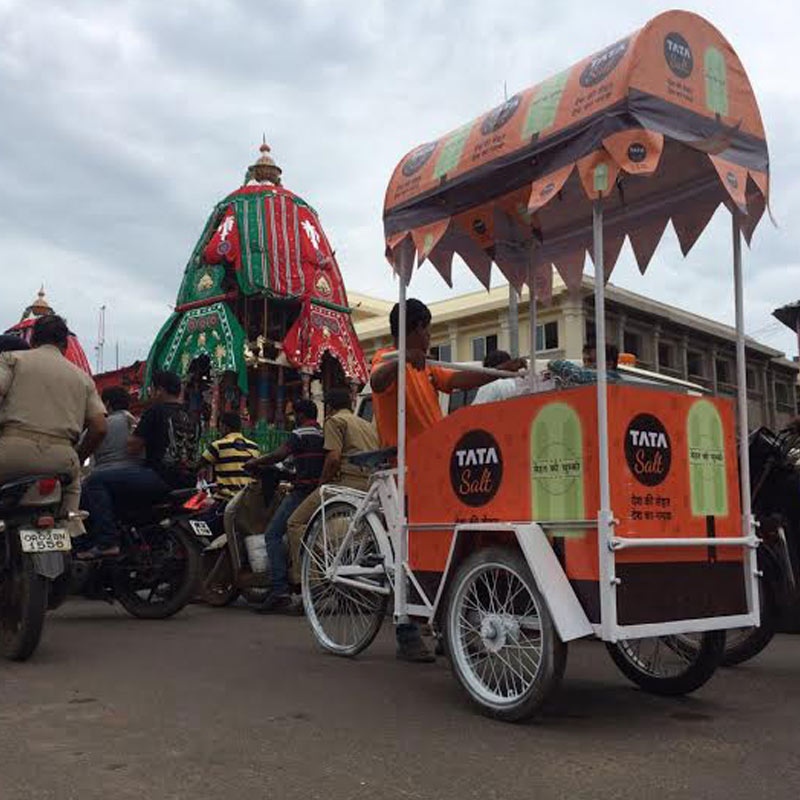
    The pilgrim town is thronged by devotees to witness the divine procession over a 1.5 kilometre stretch, where the heat can be unbearable for most. Identifying this need, Tata Salt ideated an easy to consume real time solution to keep pilgrims cool and energised during the festival, thereby combatting dehydration. Catering to more than 1 lakh pilgrims, Tata Salt will be seen distributing special “Energy Pops”, a handy energy ice bar made up of Tata Salt, lemon, sugar and purified water which will help replace the lost salt content and improve absorption of water in the body thus preventing the pilgrims from getting dehydrated. This mobile on- ground activation will take place at key touchpoints of the main Yatra road, where the pilgrims assemble in mass and a customised Tata branded cart will be used for the distribution of energy pops.

    Speaking on the innovation, Tata Chemicals Consumer Products Business head marketing Sagar Boke stated, “India is a land of diverse cultures and festival. The Puri Yatra is one such festival where people travel from various parts of the world to witness the Yatra and celebrate. We wanted to create a moment of experience around this occasion that goes beyond product sampling, through unique product interventions. Providing energy bars that use Tata Salt as an ingredient is one such step. This will not only create a contextual product experience, but also make the consumers’ Yatra experience more pleasant. We hope that this activity will create a strong emotional connect amongst our consumers,”

    Also known as the Festival of Chariots, Puri Jagannath Ratha Yatra is the oldest Rath Yatra taking place in India and the World, having been celebrated for more than five thousand years.

  • Tata Salt energises devotees at Jagannath Rath Yatra’16 with ‘Sehat ki Chuski’ campaign

    Tata Salt energises devotees at Jagannath Rath Yatra’16 with ‘Sehat ki Chuski’ campaign

    MUMBAI: Tata Salt, a pioneer in the Indian branded salt market, today kicked off celebrations at the Puri Jagannath Ratha Yatra 2016. A mass pilgrimage of faith, the world renowned festival takes place every year at Puri, the temple town in Odisha typically during the month of July, which is one of the hottest months of the year. Keeping with the brand promise of ‘Desh ki Sehat, Desh ka Namak’, Tata Salt has launched an innovative campaign called ‘Sehat ki Chuski’ in order to provide energy to pilgrims visiting Puri for the Jagannath Ratha Yatra.

    The pilgrim town is thronged by devotees to witness the divine procession over a 1.5 kilometre stretch, where the heat can be unbearable for most. Identifying this need, Tata Salt ideated an easy to consume real time solution to keep pilgrims cool and energised during the festival, thereby combatting dehydration. Catering to more than 1 lakh pilgrims, Tata Salt will be seen distributing special “Energy Pops”, a handy energy ice bar made up of Tata Salt, lemon, sugar and purified water which will help replace the lost salt content and improve absorption of water in the body thus preventing the pilgrims from getting dehydrated. This mobile on- ground activation will take place at key touchpoints of the main Yatra road, where the pilgrims assemble in mass and a customised Tata branded cart will be used for the distribution of energy pops.

    Speaking on the innovation, Tata Chemicals Consumer Products Business head marketing Sagar Boke stated, “India is a land of diverse cultures and festival. The Puri Yatra is one such festival where people travel from various parts of the world to witness the Yatra and celebrate. We wanted to create a moment of experience around this occasion that goes beyond product sampling, through unique product interventions. Providing energy bars that use Tata Salt as an ingredient is one such step. This will not only create a contextual product experience, but also make the consumers’ Yatra experience more pleasant. We hope that this activity will create a strong emotional connect amongst our consumers,”

    Also known as the Festival of Chariots, Puri Jagannath Ratha Yatra is the oldest Rath Yatra taking place in India and the World, having been celebrated for more than five thousand years.

  • nexGTv all set to claim Bengali market

    nexGTv all set to claim Bengali market

    MUMBAI: nexGTv, the subscription-led video entertainment app has announced expansion into the Bengali market with the acquisition of three Bengali channels – Rupashi Bangla, Dhoom Music and News Time Bangla – from Brand Value and an Oriya movie channel, Alankar TV, from Odisha Television Ltd. As a part of the initiative, nexGTv will now hold the worldwide digital rights to broadcast these channels for its users across the globe through its web and mobile platforms.

    Amongst the acquired channels, Ruposhi Bangla is a general entertainment channel with shows ranging from reality to socio-mythology, feature films to news updates and from comedy to drama. Dhoom Music is a dedicated channel for Bengali music, while News Time Bangla is a popular regional news channels that delivers news on current events and latest happenings in and around the West Bengal region. Alankar TV, on the other hand, is a 24-hour Oriya movie channel from Odisha Television Network and is also the first movie genre-specific channel in Odisha.

    nexGTv claims that by acquiring these channels, it underlines the commitment to deliver highly curated entertainment solutions to its users globally by augmenting its regional entertainment content library.

    Speaking on the announcement, nexGTv CEO Abhesh Verma said, “We, at nexGTv, enjoy a rich, diverse consumer base both within and outside the country. As such, our endeavour has always been to curate and deliver highly relevant and popular entertainment solutions to our viewership. We are confident that the latest addition will add greater value to the mobile viewing experience of our users by granting them access to even more regional content to satisfy their entertainment needs.”

    The application claims that nexGTv’s latest content acquisition will no doubt delight the expatriate population, who will now be able to view their preferred regional entertainment content at their convenience anytime, anywhere. All the channels are a part of the paid category at nexGTv, and can be accessed either through www.nexGTv.com or through the nexGTv mobile app for Android and iOS.

  • nexGTv all set to claim Bengali market

    nexGTv all set to claim Bengali market

    MUMBAI: nexGTv, the subscription-led video entertainment app has announced expansion into the Bengali market with the acquisition of three Bengali channels – Rupashi Bangla, Dhoom Music and News Time Bangla – from Brand Value and an Oriya movie channel, Alankar TV, from Odisha Television Ltd. As a part of the initiative, nexGTv will now hold the worldwide digital rights to broadcast these channels for its users across the globe through its web and mobile platforms.

    Amongst the acquired channels, Ruposhi Bangla is a general entertainment channel with shows ranging from reality to socio-mythology, feature films to news updates and from comedy to drama. Dhoom Music is a dedicated channel for Bengali music, while News Time Bangla is a popular regional news channels that delivers news on current events and latest happenings in and around the West Bengal region. Alankar TV, on the other hand, is a 24-hour Oriya movie channel from Odisha Television Network and is also the first movie genre-specific channel in Odisha.

    nexGTv claims that by acquiring these channels, it underlines the commitment to deliver highly curated entertainment solutions to its users globally by augmenting its regional entertainment content library.

    Speaking on the announcement, nexGTv CEO Abhesh Verma said, “We, at nexGTv, enjoy a rich, diverse consumer base both within and outside the country. As such, our endeavour has always been to curate and deliver highly relevant and popular entertainment solutions to our viewership. We are confident that the latest addition will add greater value to the mobile viewing experience of our users by granting them access to even more regional content to satisfy their entertainment needs.”

    The application claims that nexGTv’s latest content acquisition will no doubt delight the expatriate population, who will now be able to view their preferred regional entertainment content at their convenience anytime, anywhere. All the channels are a part of the paid category at nexGTv, and can be accessed either through www.nexGTv.com or through the nexGTv mobile app for Android and iOS.