Tag: obituary

  • Indian advertising stalwart Fali Vakeel passes away

    Indian advertising stalwart Fali Vakeel passes away

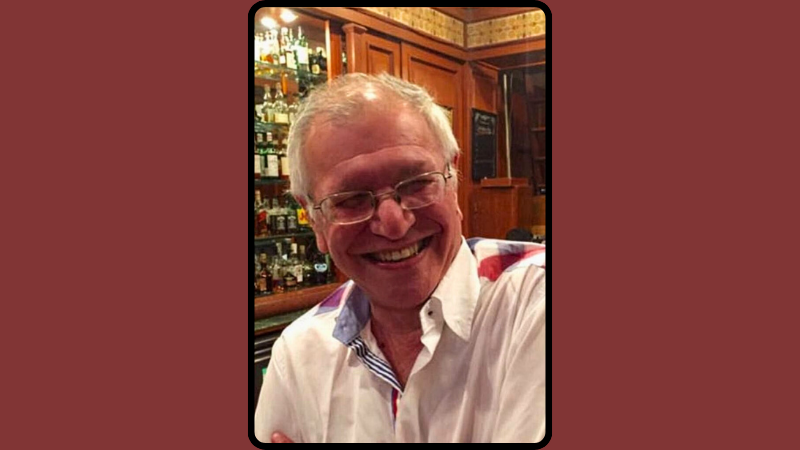
    Mumbai: Fali Vakeel, a towering figure in the world of Indian advertising, has passed away on 16 March 2024, just two months ahead of his birthday on 6 May.

    His contributions to the advertising industry have left an indelible mark that will be cherished for years to come.

    Vakeel’s career spanned over several decades, during which he played a pivotal role in shaping the landscape of Indian advertising. Even after his retirement as vice chairman of Lintas, Vakeel remained deeply intertwined with the agency, serving as the trustee of its Employee Welfare Trust.

    Throughout his illustrious career, Fali Vakeel witnessed the evolution of the advertising industry, navigating through numerous changes with resilience and grace. Fali Vakeel was not only known for his quick wit, wisdom, he was titled as the ‘Last of the Mad Men in Indian advertising,’ by his colleagues and peers in the industry.

    Expressing his profound grief, MullenLowe Global – Group CEO India and CSO (APAC) Subramanyeswar S (Subbu) said, “Once in a rare while, someone like Fali comes along to not only raise the bar in their field of operation, but they create an entirely new standards of measurement – CREATIVITY, in our case. Our deepest condolences goes to his family, personal friends, and to the entire Lintas community. He will always be an inspirer and admirer to us. May he rest in peace!”

    Under Vakeel’s leadership at Lintas experienced significant growth, securing prestigious clients and accolades. His impact extended beyond the boardroom. Fali was admired for his mentoring and nurturing of talent within the industry, shaping the careers of many aspiring advertising professionals. His dedication to fostering a culture of creativity will continue to inspire generations to come.

    In his memory, the Lintas family extends its deepest condolences to Fali Vakeel’s loved ones. A man of great warmth and humor, Fali Vakeel will be dearly missed by all who had the privilege of knowing him.

    His funeral will take place on 16 March Saturday at the Parsi Prayer Hall, Worli at 3.40 pm and Uthumna on Sunday 17 March at 3.40 pm.

  • Legendary filmmaker D Ramanaidu is no more, mourned by film industry

    Legendary filmmaker D Ramanaidu is no more, mourned by film industry

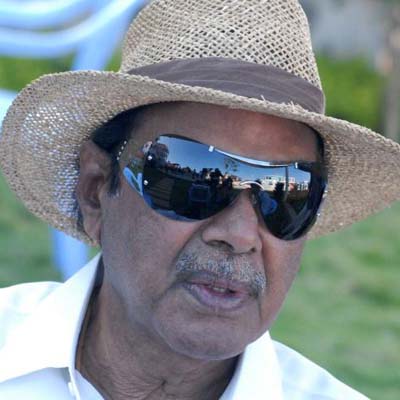
    NEW DELHI: Popular multilingual film producer D Ramanaidu died this morning of prostate cancer, aged 79.


    He had been suffering for the few days and is survived by his sons Suresh Babu who took over the Ramanaidu Studios in Hyderabad and younger son Venkatesh Daggubati who is a prominent actor, daughter Daggubati Lakshmi and grandsons Rana, Abhiram, Arjun, Naga Chaitanya, granddaughters Malavika, Hayavahini, Ashritha and Bhavana.


    Ramanaidu made his production debut with Ramudu Bheemudu in 1964 with NTR in the lead role. The movie was a blockbuster. He founded Ramanaidu Studio in Hyderabad in 1989. He also donned grease paint and did few roles, guest appearances in several films.


    He also forayed into politics and joined the Telugu Desam Party. He represented Bapatla Lok Sabha constituency (1999-2004) and lost the seat in the subsequent elections and then stayed away from politics.


    Winner of the Dadasaheb Phalke Award for lifetime achievement in 2009, he produced more than 150 films in 13 Indian languages. Ramanaidu was the 41st recipient of the award instituted in 1969 (the birth centenary of D. G. Phalke, who is generally regarded as the father of Indian cinema) and the 10th producer to have received the award.


    Born in June 1936, Ramanaidu was founder of Suresh Productions and holds the Guinness Book of World Records for the most films produced by an individual.


    In 2012, Ramanaidu was conferred with the third highest civilian award in the Republic of India, the Padma Bhushan in recognition for his contribution to Telugu cinema.


    Ramanaidu had contributed a substantial part of his earnings to numerous philanthropic purposes including the Ramanaidu Charitable Trust that was founded in 1991.


    Suresh Productions was started with his childhood friends including G Rajendra Prasad (Madhavi Combines).


    In 1968, B Nagireddy’s sons and Ramanaidu combined to form a company called Vijaya Suresh Combines and Suresh Movies. They did 4 movies together and in 1970, when they suffered a few losses, they decided to break up the partnership and go their separate ways.


    While producing the movie Secretary, he visited Hyderabad for shooting. He had never before considered moving to Hyderabad but during the shoot, he thought of building a studio in Hyderabad. Back then, Hyderabad was an underdeveloped and hilly area and many criticised him for risking his fortune on building a studio there.


    Premnagar by him in 1971 was a huge success under the Suresh Productions banner and then he produced up to 74 films from 1993 to 2005 in several languages.


    Brahmaputrudu was a big commercial hit and ended up helping him pay off the debts for his studio launched in 1989. In 1990, Ramanaidu Colour Lab was launched, and in 1994 he launched Cine Village in Nanakramguda, which was used by the entire industry for outdoor shoots.


    During his career as a producer, he introduced 24 directors and several actors and music directors who have since become very famous and owe their success to him. The Andhra Pradesh Government nominated him and director Bapu in November 2012.


    Ramanaidu has received an honorary doctorate from Sri Venkateswara University, Tirupati.


    Preminchu movie won 5 Nandi Awards during the year 2001 – 2002,


    He played different roles in various films under his own banner. For the first time he played a full-length role in a film named Hope which dealt with teenage suicides, educational stress in South India. This film also won the National Film Award on other social causes in the year 2007.


    He won the National Film Award for Best Feature Film in Bengali – Asukh – 1999; the Filmfare Best Film Award (Telugu) – Jeevana Tarangalu (1973); Filmfare Best Film Award (Telugu) –Soggadu (1976) and Filmfare Lifetime Achievement Award – South (2000).


    His 17 Hindi films include Kuch tum kaho kuch hum kahein, Aghaaz, Hum aapke dil me rehte hain, Santaan, Pem Quaidi, Tohfa, Dildaar and Prem Nagar.

  • RIP Jehangir Pocha: A journalist & a gentleman

    RIP Jehangir Pocha: A journalist & a gentleman

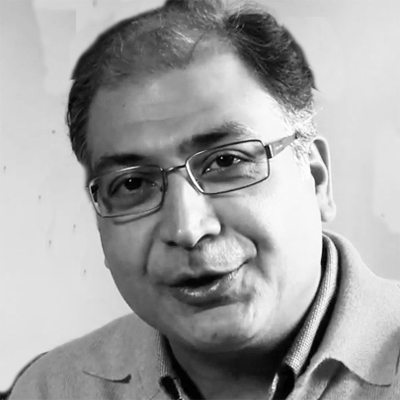
    To most viewers, he looked fit as a fiddle. Hence, when news broke that NewsX editor in chief Jehangir Pocha had breathed his last, it came as a shocker. Some had only spoken to him the previous evening, others last week, or very recently, or like us earlier this year when he attended the Indian Digital Television Honours in New Delhi as a representative of the ITV group.


    At first glance, Jehangir came across as a cool, calm, collected sort of a chap. A cultured Parsi gentleman used to speaking softly in measured tones when he encountered you in person. Beneath that mild-mannered exterior ran a probing journalistic mind, which posed many an incisive question that put those he interviewed on the 9X News channel on the spot.  


    But unlike other celebrity news anchors on other English news channels who indulge in histrionics and one-sided shrill shouting matches, he gave his guests a chance to speak. His questions begged an answer, and respond guests had to, because Jehangir would not let them get away without doing so. Whether it was the former chief minister of Delhi Sheila Dixit or Amitabh Bachchan or Anna Hazare.


    He was only a phone call away for us at the indiantelevision.com group and general manager Anoop Wanvari would oft reach out to him to partner with our various ground initiatives which he willingly did, even when he was finding it a struggle to keep NewsX going.  We are grateful to him for his support in our times of need.


    A former colleague, Indrajit Gupta, the founding editor of Forbes India, writes in an obituary piece in BusinessWorld, that he got a call early last week from him, saying he was frustrated with the Indian system and he was dying to go back abroad.


    “He sounded agitated. Venture capitalists had promised him they’d step in after the elections. But they hadn’t to back his plans. He wanted to bid for some distressed media assets in play,” writes Gupta in his obit. “The frustration was beginning to creep in.”


    His last tweet on the night before he passed away mentioned that he was “hurrying home” with a news clip (about a Bombay High Court judgment that stated that reaching home late consistently without informing your wife amounts to cruelty) attached to it.


    His demise prompted member of parliament Derek O’Brien to tweet: “The high pressure life of TV journalism?  Appan Menon at 49, SP Singh at 49 and today @JehangirPocha at 45 NewsX. Gone too soon.”


    And that’s a question which begs answering: is the high pressure life of TV news journalism getting to those in it?  They may not know it, but it probably is. When you are working in the business of television news, you are working in a pressure-cooker environment.  


    Deadlines because of the competitive nature of the business, irregular meals, pressure from affected vested interests while reporting, reporting from dangerous and conflict zones, keeping pace with the latest developments – the news journalist is on a treadmill that never seems to be stopping.


    For the managements of news organisations, they have to additionally deal with rising costs not accompanied by revenue increases; carping advertising partners disturbed by news reports; maintaining, nay, improving viewership ratings, innovating with changing technology and what have you.


    One can say that all these pressures are intrinsic – and have been so for long – to running a news channel. But they have been magnified in the recent past in India with increasing competition and the rapid commercialisation of news. It is quite likely that these will exacerbate further.


    Jehangir was under pressure. His channel was in keen competition with the English language news leader Times Now.  He wanted to expand his company’s business footprint, could not for want of capital and was thus frustrated, which added to his pressure.


    Therefore it’s about time TV news organisations introspected and even made those that are employed with them look deep within. Regular health checks, exercise, and leading a well-paced daily routine generally should be encouraged even more.


    It could go some way in preventing many more from going the Jehangir Pocha, Appan Menon, and SP Singh way.

  • Zohra Sehgal – the artiste with an infectious smile, is no more

    Zohra Sehgal – the artiste with an infectious smile, is no more

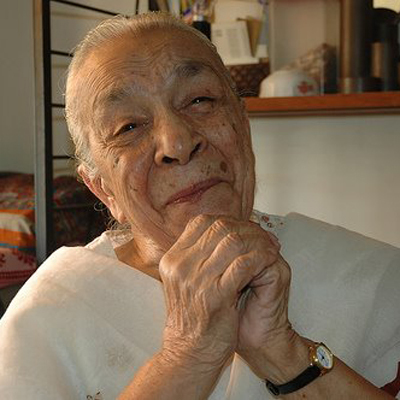
    NEW DELHI: Veteran actress Zohra Sehgal – who was known for her charming smile and keen sense of timing – passed away in the capital on 10 July at 4:00 pm.


    Zohra, who had turned 102 on 27 April this year, felt uneasiness after dinner on 9 July night and was rushed to Max Hospital in south Delhi. Her family confirmed that she had a cardiac arrest in the afternoon.  


    She is survived by her son Pavan and her daughter (eminent danseuse Kiran Sehgal), and four grandchildren.


    Born in 1912, she started her career as a dancer in choreographer Uday Shankar’s troupe. From 1935 to 1943, she was a leading dancer with the troupe and performed across the world including the United States and Japan.


    As an actress, Zohra appeared in varied roles that showed her range as an artiste. She had last appeared in the 2007 film ‘Saawariya’. 


    She has appeared in just over 50 films and television series starting with K A Abbas’ debut film Dharti ke Lal in 1946.


    Some of her better remembered films are Bhaji on the Beach (1992), The Mystic Masseur (2001), Bend It Like Beckham (2002), Dil Se (1998) and Cheeni Kum (2007); Hum Dil De Chuke sanam (1999), Veer Zara (2004),  and the TV series, The Jewel in the Crown (1984), Tandoori Nights (1985–87), Amma and Family (1996).


    At the age of 90, she got the lead character around whom the story revolved in 2002 film Chalo Ishq Ladaaye, where she had stunt sequences, emotional scenes, etc. Considered the doyenne of Indian theatre, she acted with Indian People’s Theatre Association and Prithviraj Kapoor’s Prithvi Theatre for 14 years.


    Zohra received the Padma Shri in 1998, Padma Vibhushan (2010), the Kalidas Samman in 2001, and in 2004, the Sangeet Natak Akademi’s highest award, the Sangeet Natak Akademi Fellowship for lifetime achievement.


    Born as Sahibzadi Zohra Begum Mumtaz-ullah Khan into a traditional Muslim family in Saharanpur in Uttar Pradesh, to Mumtazullah Khan and Natiqua Begum, belonging to Rampur, Uttar Pradesh, she was the third of seven. She was a tomboy fond of climbing trees and playing games. Zohra lost vision in her left eye as she contracted glaucoma at the age of one year. She was referred to a hospital in Birmingham where she was treated.


    She lost her mother while still young. According to her mother’s wishes, she and her sister were sent to Queen Mary College in Lahore (then part of undivided India). Her maternal uncle Sahebzada Saeeduzzafar Khan who was based in Edinburgh arranged for her to apprentice under a British actor. In Europe, her aunt Dicta took her to try in the Mary Wigman’s ballet school in Dresden, Germany, but she had not ever danced. She got admission and became the first Indian to study at the institution. She stayed in Dresden for the next three years studying modern dance, while living in the house of Countess Liebenstein. She happened to watch the Shiv-Parvati ballet by Uday Shankar who was touring Europe and this marked a turning point. He promised her a job on return to India.


    But even before she came back, she received a telegram from Uday Shankar asking her to accompany on a tour to Japan. On 8 August 1935, she joined his troupe and danced across Japan, Egypt, Europe and the US, as a leading lady, along with French dancer Simkie. When Uday Shankar moved back to India in 1940, she became a teacher at the Uday Shankar India Cultural Centre at Almora.


    It was here that she met her future husband Kameshwar Sehgal, a young scientist, painter and dancer from Indore, eight years her junior. They married on 14 August 1942 and had two children, Kiran and Pavan. For a while the couple worked in Uday’s dance institute at Almora. Both became accomplished dancers and choreographers. Kameshwar composed a noted ballet for human puppets and choreographed the ballet Lotus Dance. When it shut down later, they migrated to Lahore and set up their own Zohresh Dance Institute.


    Because of the growing communal tension preceding the Partition of India, they returned to Mumbai where her sister Uzra was already working with Prithvi Theatres. She joined Prithvi Theatre in 1945 as an actress with a monthly salary of Rs 400, and toured every city across India with the group for the next 14 years.


    She also joined IPTA and acted in several plays, and made her film debut in IPTA’s first film production, directed by Khwaja Ahmad Abbas, Dharti Ke Lal in 1946; she followed it up with another IPTA-supported film, Chetan Anand’s Neecha Nagar which became India’s first film to go to Cannes and won the Palme d’Or at the Cannes Film Festival.


    She also did the choreography for several Hindi films, including Guru Dutt’s Baazi (1951) and the dream sequence song in Raj Kapoor’s film Awaara.Kameshwar, on the other hand, became art director in Hindi films and later tried his hand at film direction.


    After her husband’s death in 1959, Zohra first moved to Delhi and became director of the newly founded Natya Academy. She then moved to London on a drama scholarship in 1962.Her first role for British television was in a BBC adaptation of a Kipling story, The Rescue of Pluffles, in 1964. She also anchored 26 episodes of BBC TV series, Padosi (Neighbours; 1976–77).


    In London, Zohra got her first break in the films and was signed by Merchant Ivory Productions. She appeared in The Courtesans of Bombay directed by James Ivory in 1982. This paved way for an important role as Lady Chatterjee in the television adaptation The Jewel in the Crown (ITV, 1984). She then acted in several other films and TV series before returning to India.


    She returned to India in the mid-1990s and lived for a few months in Burdwan. At that time she acted in several films, plays and TV series since. She first performed poetry at a memorial to Uday Shankar organised by his brother, Ravi Shankar in 1983, and soon took it in big way; she started getting invited to perform poetry at various occasions. She even traveled to Pakistan to recite verses for “An Evening with Zohra”. Her impromptu performances of Punjabi and Urdu became a norm. After stage performances she was often requested by the audience to recite Hafeez Jullundhri’s famous nazm, Abhi To Main Jawan Hoon.


    In 1993, a critically acclaimed play, Ek Thi Nani, was staged in Lahore for the first time, featuring Zohra and her sister Uzra Butt now staying in Pakistan. The English version, A Granny for All Seasons, was held at UCLA in 2001. In 2008, at the United Nations Population Fund (UNPF)-Laadli Media Awards in New Delhi, she was named Laadli of the century.


    In 2014, she became the longest-living actor to have appeared on Doctor Who, as well as the first centenarian associated with the show. The second is Olaf Pooley, who celebrated his 100th birthday on 13 March 2014.