Tag: NVOD

  • Singapore’s StarHub launches ‘PPV’ channel Demand TV

    Singapore’s StarHub launches ‘PPV’ channel Demand TV

    MUMBAI: Movie buffs in Singapore will have a new and convenient option to watch recently released movies in the comfort of their homes whenever they want.

    From tomorrow, 28 June 2005, Digital Cable customers of the Singapore-based information and communications company Star Hub can select a movie, a preferred viewing slot and catch the show without stepping out of their living rooms.

    As with watching movies in the cinemas, they only pay for what they choose to watch. All these are possible with StarHub Digital Cable’s launch of Demand TV. the company states that this is Singapore’s only Near Video-On-Demand (NVOD) service on television.

    Demand TV will offer critically acclaimed independent movies, and Hollywood blockbusters. There will be an average of 10 titles to choose from at any one time, and these will be scheduled over 20 Demand TV channels (StarHub Channels 120 to 139). Each movie will be aired in different timeslots, with intervals ranging from 30 minutes to two hours. One new title will be added to replace an older one at the beginning of each week.

    StarHub senior VP, cable TV services Sandie Lee said, “Each customer has unique needs. With that in mind, StarHub has constantly been enhancing our cable TV offerings. Today, we are one of the very few cable operators in the world that offer customers a say in the channels that form their basic tiers. The introduction of Demand TV is further proof of our commitment to give customers flexibility, choice and control.

    “With Demand TV, consumers can enjoy a chosen programme at their most convenient time, for a very affordable price. Demand TV further sets apart StarHub Digital Cable from other local service providers, offering yet another dimension to viewing pleasure unmatched by anyone else in Singapore.”

    Customers of Demand TV will catch the first-ever airing of the movies on local television, as StarHub will schedule the films as soon as three to six months after their theatrical releases in Singapore. For starters viewers can catch Hollywood titles such as Spiderman 2, Hellboy, 50 First Dates, White Chicks and Secret Window.

    They can also look forward to award-winning or critically acclaimed titles from around the world including Les Choristes (France), City Of God (Brazil), The Return (Russian) and Nobody Knows (Japanese). In addition, there will be some movies that are rated 16 or 18 such as Kevin Bacon’s The Woodsman.

    Very soon, Demand TV may also screen movies that are not available in local cinemas, or introduce special theme packages such as Bollywood movies and foreign-language films.

    “While our present line-up for Demand TV is solely made up of movies, we are not ruling out the addition of content from other genres, such as concerts and mini-series. Our plans for these will depend on the response and desires of our customers” Lee says.


  • The role of technology in combating fragmentation: B’cast Indaia

    The role of technology in combating fragmentation: B’cast Indaia

    MUMBAI: Broadband, Telecom, Wireless, Energy. The emerging gatekeepers of content. The Distributor is all set to rule. In the face of multiple platforms and an equal number of delivery modes and formats, how does one fight fragmentation effectively? Three sessions down at Day 2 of Broadcast India and one has more questions than answers… The sessions were effective, they set one thinking.
     
     
    In keeping with Indian trends, the day began an hour late, but once underway the speakers had the audience at rapt attention. Robin Alter from Descriptive USA, spoke on Metadata Architecture for broadcast. The session was an informative one, wherein Alter spoke on the benefits of creating a proper metadata architecture.
     
     
    Alter said, “Metadata enables business to run in an ever changing world of different perspectives.” Some key benefits he pointed out were-

    Efficient and advanced searching of content within the database
    New revenue and improved product development
    Distribution of any format to any channel
    Reduced IT complexity
    He emphasised on the importance of segmenting content hierarchically into segments, sequences and shots. “Describe the complete video while including it in the database. Mention details like background, date, title, context, frame rate, format etc. You never know in which way you could reuse the same content either in part or completely for different formats.”

    The second session had veteran broadcasting expert S S Swani giving a talk on ‘Emerging technologies in broadcasting’ Swani served as Doordarshan chief engineer for 35 years before he retired in 1994. The veteran has since had stints at Times Television and is currently with Panasonic Visuals.

    Speaking on how material sciences, micro electronics and space science had contributed to the evolution of broadcasting, Swani took the audience through a general comparison between various formats and spoke about the new emerging ones. An interesting thing he spoke about was the increasing use of HDTV cameras to get the rich film like feel. He also argued that, “Even as there is an ongoing debate about the PC moving forward to replace the TV with the help of broadband, the mindset when one is in front of the TV is quite more relaxed as to the mindset when one is in front of the PC.”

    Quentin Staes Polet speaking about capitalising content within the media and the entertainment space, gave a very enriching and strong presentation. He emphasised on the need for content creators to explore as many business model pilots as possible. He also alerted about the impending fragmentation and urged the audience to start thinking about how they would incentivise the audiences to view advertisements in the face of PVRs and NVOD.

    He illustrated how the new distributors were becoming the gatekeepers of content. He also drew the audience’s attention to the fact that if content creator didn’t work out and package content specifically for the consumers across different platforms, then the advertisers would prefer to switch to the carrier who created specific packages keeping audiences in mind.

    Polet further elucidated about how Digital Rights management and asset management would become crucial. “Digitise your assets. Find the killer application for your content type. Convergence based services are about cost versus benefit.”

    Even as one left the symposium, the big question kept nagging. How does one combat fragmentation effectively, using the same technology that has caused it?

  • I-Spatial, Orca to deliver TV via b’band in 7 Indian cities

    I-Spatial, Orca to deliver TV via b’band in 7 Indian cities

    MUMBAI: Emblaze Ltd has announced that its wholly owned subsidiary Orca Interactive Ltd has signed a licensing agreement with India’s I-Spatial Communications Pvt Ltd for its suite of middleware applications (RiGHTv).

    The agreement will enable the delivery of services including Video On-Demand (VOD), Near Video On-Demand (NVOD), and Live TV Channels to an initial 50,000 subscribers in seven major cities in India with an intention to expand to other cities.

    Orca will also provide system integration services for the video and interactive applications for TV, part of pre-integrated RiGHTv applications platform. The commercial launch over BSNL’s broadband network has already started on a trial basis in Bangalore and is scheduled to roll out commercially into other cities towards the end of this year.

    I-Spatial Communications Pvt Ltd., a telecom and media solutions company based in Bangalore, is in the process of setting up CDN (Content Delivery Network) services. I-Spatial has the country’s largest network ready to provide rich media content and versatile services to customer. The interactive services will use the BSNL network that currently service over 40 million subscribers. Orca will deploy the services in cooperation with selected pre-integrated solution partners, utilizing video solutions for MPEG 2 and 4.

    I-Spatial Communications chairman and MD M B Jagridar said, “We are delighted to be working with Orca in establishing the quality on demand service to our customers. They are the leading provider of open architecture applications software solution in the field of video on demand and their RiGHTv middleware is at the heart of our service. We look forward to a long and prosperous relationship. We believe that the integrated solution which can be deployed over the cable network in India as well, throws up opportunities for the cable industry to provide on demand services for their customers as an additional source of revenue.”

    Emblaze Ltd business development head Doron Cohen said, “”I-Spatial’s vision marks the beginning of a new era in television viewing in India. When it comes to broadband services, India has a potential to grow faster than any other country in the region Orca is proud be a part of a quality team that is bringing the broadband TV over telephone lines to Indian viewers as well as VCR functionality with DVD quality pictures on their television sets.”

    Orca’s RiGHTv applications are highly scalable solutions that facilitate the deployment of complete commercial iTV services. RiGHTv XVOD also allows operators to supply subscribers with video content on demand special features in an Interactive TV service. RiGHTv XBIP allows operators to create and manage live TV and NVOD channels over broadband networks.

  • DIRECT TO HOME (DTH) – AN INSIGHT TO THE INDIAN SCENARIO

    DIRECT TO HOME (DTH) – AN INSIGHT TO THE INDIAN SCENARIO

    The only constant in today’s Media industry is change. Given the growth and significance of this industry in the global economy, this change puts industry players in a permanent position of assessing new products, services and enabling technologies. Customers worldwide have become extremely choosy on what they want and it has become a challenge for the media players to not only meet such demands but also constantly innovate to stay alive in an extremely competitive environment. The likelihood of investing in a white elephant or “missing the train” of a successful product opportunity is surely as great as identifying the right product at the right time. Direct to Home (DTH) broadcasting has been one such area of high investment with a dual purpose of effecting good revenues in the long run and providing top class services as well.

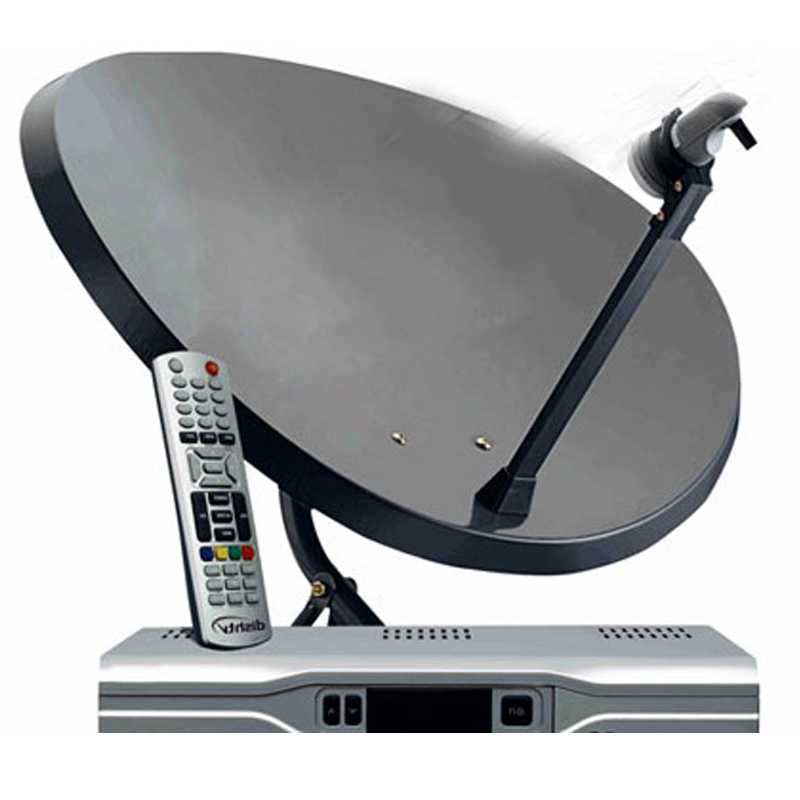
    Direct-To-home (DTH) TV distribution is one in which a large number of channels are digitally compressed, encrypted and beamed from very high power satellites. The programs can be directly transmitted to homes, using very small dish antennae and card operated Integrated Receiver Decoders (IRDS). It normally provides a basic service consisting of a certain number of channels at a particular cost. DTH can provide a lot of other high revenue generating, value-added services like Internet Access, Video Conferencing, Video On Demand, Home security/Shopping/Banking, E-mail, Pay Per View, Near Video On Demand and Data Broadcasts.

    The Market dynamics of DTH could be broadly classified as Broadcast policies and regulations, Market potential, Major players involved in DTH consortia, Costs, Revenues, Value added services, Evolving technologies and Superior content and connectivity. The DTH end-to-end service value-chain is complex, technologically sophisticated and includes almost all aspects of broadcasting, such as satellite ownership/bulk leasing of transponders, large scale broadcasting studios/up-link earth-station, acquisition/production/arrangement of many programming channels, user-friendly creation of an Electronic Programme Guide, sourcing/distribution/technical support of subscribers reception equipment, elaborate marketing of DTH services, comprehensive subscription billing systems and revenue collection, etc. These diverse requirements coupled with considerable financial risks involved, means that a consortium of companies into these services is the best likely solution for this venture.

    Certain Business Projections have been drawn for DTH service providers in India based on three parameters namely- Subscriber base, Project cost and Revenues. These parameters have been projected for the total market size for DTH in India.

    Subscriber Estimates– Firstly, since cable has penetrated the Indian market in a big way with roughly 35 million C&S homes, a parallel can been drawn with the U.S market pattern where cable was the first mover, present now in approximately 160 million households compared to a mere 10 million DTH homes. Due to this critical penetration achieved by CATV in India it is imperative that in its first few years of operations, DTH will be focused on a niche market. This niche would basically constitute the rich segment from urban as well as rural areas due to the primary reason of high initial costs for DTH and the associated psychology of people. The second reason could be the better service and value added services (VAS) like pay per view (PPV), NVOD and Internet being offered on DTH. Two approaches have been drawn for the subscriber projections. One is based on the disposable income of the population and the second based on cannibalization of CATV, multiple TV households and VAS, the projections from the two being approximately the same.

    Project Cost Estimates- Broad business assumptions here are that, a DTH platform would carry about 70 odd channels with additional services like PPV, NVOD and Internet. The principal costs would involve programming costs, satellite transponder costs, Conditional Access systems, Customer Premise Equipment costs and Marketing costs associated with DTH. It is found that the cost of financing the Customer Premises Equipment is massive and therefore it is viable to finance the set top box (STB) and dish antennae, the cost of which can be recovered from the customers on a monthly basis. However, it is assumed that the customer will pay for the installation charges. It is also interesting to note that financing the STB and dish antennae accounts for more than 75% of the project cost and is extremely price sensitive. Therefore a slight change in these equipment costs would significantly change the project cost. Drawing a parallel with cable costs here, it is seen that initially cable connections were costly. In fact one had to pay deposits too. However with the popularity of cable the costs reduced drastically. The same is expected to happen with DTH equipment whose costs are assumed to decrease by 10% on an annual basis.

    Project Revenue Estimates- The major business assumptions here are that, since a large chunk of the project cost deals with financing the equipment for DTH, so too will the earnings from recovering this cost from the subscribers form the major component of revenues earned. Therefore a decrease in the cost of equipment would actually help in faster recovery of the expenses incurred. The other broad channels of revenues are base subscription, bouquet subscription, and NVOD, PPV and Internet usage.

    Opportunities for DTH in India look great. There exists a tremendous potential for direct to home broadcast in this market and it is projected that by 2005 there would be around 2.5 million DTH subscribers in India. This figure is likely to increase due to the increase in TV and Cable households and also the growing multiple TV households, which would form a large percentage of the total subscriber base. Since India’s population crossed the one billion mark, it is no surprise that satellite operators and programmers world-wide have set their sights on the world’s largest open market for DTH satellite TV services. The growing popularity of TV as a communication medium has resulted in the TV media sectors undergoing a rapid transformation. Also when DTH transmissions start in India the market will open for the following types of equipment -Ku-band dish antennae and Integrated Receiver Decoders (IRD). In a couple of years with Multipoint Microwave Distribution System and Net Television the whole digital domain is going to open up very fast. DTH can help in narrower targeting of satellite delivered services, rather than a single regional service, allowing programming to be more directly geared to the interests, language and culture of the particular audience, as well as providing a vehicle that integrates and offers locally produced and local language material.

    Drawing a parallel with the American DTH market, certain conclusions are drawn. Cable has been an early mover in India like in the U.S and with DTH operations starting as early as ‘ 92 the American DTH market is 10 million homes big as of today compared to 160 million cable homes. Similarly, with cable penetrating 35 million homes in India, given the time and resources, the DTH market size would stand at approximately 5 million homes by 2007 assuming operations start by 2002. The American TV household is roughly about 90% of the total U.S population with a figure of 2.24 TV’s per household. This number has grown tremendously over the last 15 years and fast approaching saturation. This is boom time however, for the Indian TV market with numbers expected to touch 100 million six years hence from the present figure of 70 million odd. This combined with the growing multiple TV households shall triple the DTH subscriber base in 2004 from the 0.5 million expected in 2002(starting year of operation). Finally, the two main operators for DTH in the U.S, DirecTV and Echostar account for 95% of the total DTH subscriber base there and have proved to been extremely profitable. This has thrown a similar picture for the Indian scenario where not more than two DTH service providers could coexist profitably.

    In conclusion, it has now been over a decade since DTH satellite broadcasting began to show promise as a new technology capable of widespread distribution of programs and services. In those early days, the prime concern of many governments was that the spread of DTH satellite would result in mass Americanization and a decline in the cultural values and ideas of their people. The solution that has to be found is to maintain some form of national control, ranging from outright ban on ownership of satellite signal receiving equipment, to introducing licensing regimes, prescribing guidelines for program content and placing limits on foreign ownership of broadcasting licenses or ventures. The present DTH policy drawn addresses some of these issues which effectively strikes a balance between the economic benefits of introducing new services, the consumer demand for change and the government’s overriding interest in maintaining control over broadcasting. It remains to be seen how India will strike a final balance in the structuring of its laws and regulatory scheme to maximize the benefits of the new technologies, whilst ensuring that the national and public interests in the control and content of those services are protected.

    *The article is authored by Monideep Chattopadhay, a student of the ICFAI Business School, Bangalore.

    *All arguments and views expressed herein are the authors’ personal views.