Tag: NTP 2018

  • Comment: India’s NTP 2018 gets digital makeover but needs complimentary policies

    Comment: India’s NTP 2018 gets digital makeover but needs complimentary policies

    Criticism notwithstanding, Indian bureaucratic mandarins—babus as they are referred to in local lingo—do come up with draft policies that are contemporaneous, and at times when it’s least expected. The new digital avatar of the National Telecoms Policy 2018, slated to be operational later this year, could turn out to be just one such initiative—only if the political masters muster enough courage to push through with the proposed legislation and the will to follow up with complementary policies.

    Though surprises are the new norms with this government led by the maverick PM Modi—remember the late evening ‘Mitron’ address to the nation by the premier few years back announcing high denomination currency notes were being made illegal—it caught many napping when the Department of Telecommunications (DoT) posted on its website the draft of the much-awaited National Telecommunications Policy 2018 very late in the evening on Labour Day. So, what?

    The first surprise element was that the NTP 2018 had been rechristened National Digital Communications Policy 2018 (NDCP). The aim: put the draft in public domain to seek comments from key stakeholders and citizens, at large. But true to the government style—keeping things fluid—the deadline for comments is yet to be announced.

    The renaming of the policy was welcomed by the industry as it converges with the overarching Digital India vision of the present government; hiccups along the way to implementation, notwithstanding. However, such tweaks in the suggestions made by the telecoms and broadcast carriage regulator TRAI goes not only beyond just the nomenclature but also attempts to actualise provisions of the policy.

    What’s also important that while the government wants synergies between various organisations and ministries, it gives a thumb down to a TRAI proposal to make it—or any such other body—a converged regulator.

    A Truly Digital Communications Policy

    For quite some time, it was being felt by the government and industry alike that a specific road map is required to guide India’s successful movement into the emerging digital realm—to truly address the issue of convergence in the telecoms and broadcast services. To spark rapid all-round deployment of digital capable technologies, it is necessary all available mechanisms be looked at in a comprehensive manner; basically, shifting the focus from just wired and wireless telephony and broadband and expanding the horizons to areas such as satellite communications and broadcast carriage services.

    The industry had been demanding that already existing infrastructure assets in sectors such as broadcast and power be utilised to efficiently achieve a demanding goal of laying down high speed fibre infrastructure across India. Thus, a digital-centric telecommunications policy was required to address the crucial aspect of infrastructure sharing and integration.

    Furthermore, to firmly strengthen India’s position in the digital sphere, it is necessary that the web-hosting ecosystem, including data storage, be strengthened by implementing norms and standards that are in conformity with international best practices. This gains importance with increasing reports and instances of data breaches and leaks. Also, core principles such as separation of content/applications and infrastructure/carriage layer underlying network neutrality need to be crystallised and affirmed through statutory and policy provisions.

    The present draft NTP 2018—or isn’t it better to call it from now on NDCP 2018? —has taken into account many concerns and challenges and seems like an earnest effort on the part of the government to ensure that India’s broadband and digital sectors are backed by sound policy norms and principles.

    Has DoT Planned Well for India’s Digital Future?

    The DoT has gone ahead and staked its claim to the entire swathe of telecommunications technologies and the methodologies through which government’s digital goals can be rapidly deployed, e-governance included. Now, this could turn out to be an asset as also a weakness, given inter-departmental politics and power play.

    DoT has called for an overhaul of India’s archaic satcom policy in line with international standards and also advocated for greater participation by private players in commercial satellite operations — a vision that needs to be matched with some liberalisation at Department of Space (DoS) and India’s space agency ISRO, both of which report directly to the Prime Minister’s Office. To spearhead the contribution of private satcom industry in providing broadband to far flung districts, there’s specific mention of opening Ka-band for private use and also for utilisation of high through-put (HTS) satellites.

    With a view to reducing burden of laying down fresh wireline fibre infrastructure, there’s clear mention of recommendation for “leveraging existing assets of the broadcasting and power sector to improve connectivity, affordability and sustainability”. This could reduce the tendency of telecom industry to overbuild fibre and brings the vast amounts of broadband-capable digital cable infra created under Ministry of Information and Broadcasting (MIB)’s mandate of digitising cable networks across the country and within the purview of Digital India programme.

    DoT has also realised the need to formulate a coherent approach to reap the benefit of technological convergence. It has specifically called for statutory amendments to the vintage Telegraph Act, 1885 for “enabling infrastructure convergence of IT, telecom and broadcasting sectors”. This highlights the department wants to create a defined policy structure for seamless use of all broadband capable infrastructure, irrespective of differences amongst sectors. It also reflects clear intent of DoT to focus only on convergence of infrastructure, rather than convergence of applications/media running on this layer.

    Therefore, DoT has focused sharply (and some may say appropriately) only on enabling carriage services and the surrounding digital ecosystem rather than delve into other unrelated areas such as media.  No wonder it has called for separation of infrastructure/carriage layer from applications/content layer. Moreover, it has called for recognising the need to uphold the core principles of network neutrality by “amending the licence agreements to incorporate the principles of non-discriminatory treatment of content, along with appropriate exclusions and exceptions as necessary”.

    Furthermore, the DoT has gone a step ahead and acknowledged the primacy of principles and objectives contained in the National IPR Policy related to telecommunications and sought implementation to kick start development of indigenous IPRs.

    The Road to the Final Draft

    Though the industry, by and large, has welcomed the draft policy as it gears itself to fulfil the call for the now highly debatable “USD 100 billion” in investments, there are a few asks that still need to be fulfilled. The investment aspect itself is ambitious given the present health of the telecoms sector where a big downside of the business is the pink slips presently being handed out by telcos, big and small.

    Another important aspect would be to simplify and streamline all departmental procedures such as windowing of satellite frequencies by the WPC, a part of the DoT, which has been a bottleneck in improving ease of doing business in satcom and broadcasting sectors.

    Given that the DoT has already referred to National IPR Policy for the purpose of all IPRs, including patents, trademarks and copyrights, related to telecommunications, it is vital that it settles the debate between carriage and content industries once and for all and pursues the goal of harmonisation of telecom policy construct with the applicable domestic and international IPR regimes.

    The key would be to now take all the constructive inputs from the industry and iron out the remaining creases to create an effective implementation framework to turn India into a truly digitally empowered society.

    While we debate the National Digital Communications Policy 2018, it would be worthwhile to go back into history and attempt reading the Communications Convergence Bill that was introduced in Parliament in 2001. A real visionary piece of draft legislation, the policy was considered so futuristic at that point of time that a joint parliamentary committee red flagged it at 70-odd places, which effectively sounded the death knell for the proposed legislation that was aimed at promoting and developing the entire communications sector—encompassing the broadcasting, telecom and multimedia sectors—keeping in view emerging convergence of techs and services. Drafted by eminent jurist Fali S Nariman-headed panel, the draft still remains as one of the finest pieces of convergence regulations that never saw the light of the day.

    In the end, one cannot but agree with lawyer-researcher at India’s Centre for Internet and Society Anubha Sinha’s observations. Writing for The Wire, an online news venture, Sinha highlighted: “While the policy [NTP 2018/NDCP 2018] is broad and forward-looking, the true intent and meaning of the listed steps will only be understood when complementary legislative and granular policy actions to support these strategies are crystallised. That will make all the difference.”

    Also Read :

    DoT addresses broadband issues in policy out for public consultation

    Zee, Star, NBA oppose converged regulator for broadcast and telecoms

    TRAI releases paper on National Telecom Policy 2018

  • TRAI sees merit in using satcom for broadband delivery

    TRAI sees merit in using satcom for broadband delivery

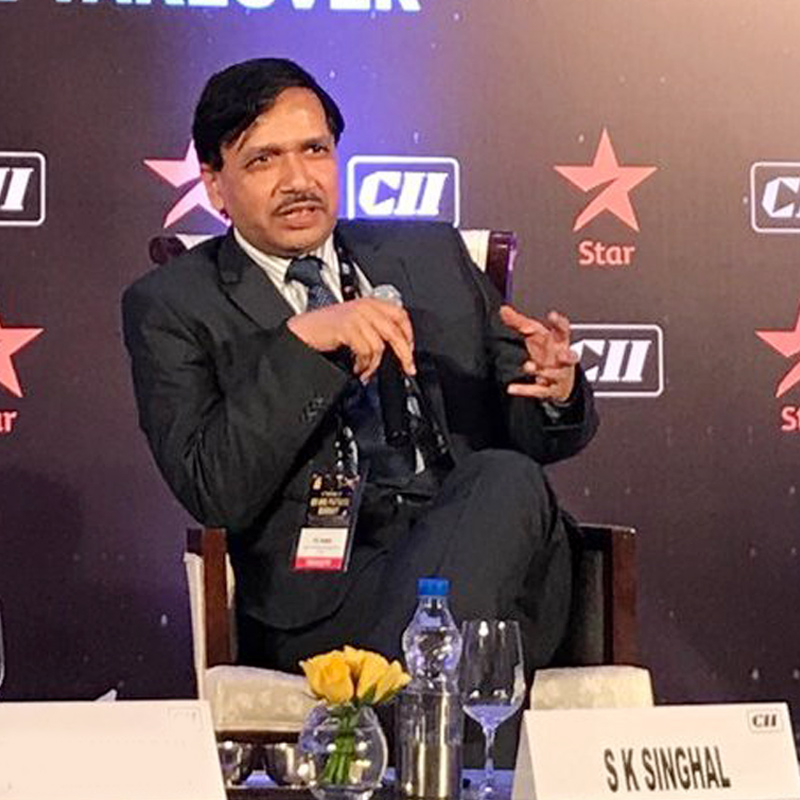
    NEW DELHI: India needs to create digital platforms, pushed by government policies and private sector entrepreneurship, which are specific to India and address its specific needs, telecom and broadcast regulator TRAI advisor SK Singhal said on Wednesday, adding that affordable broadband and allied services like television form the backbone of NTP 2018.

    “We need to create policies (including those pertaining to the digital world) that address our specific needs,” Singhal said at the CII Big Picture Summit 2017, adding that optimal usage of capacity created by cable networks is a must to deliver broadband services to every corner of India as envisioned by PM Modi.

    Singhal, along with Broadcast Engineering Consultant India Ltd (BECIL) CMD George Kuruvilla were speaking on the theme of `Connected India is Digital India’ and how for digital India to be truly implemented broadband access had to be made affordable, including all mediums of delivery like satellite communications (satcom) and cable.

    Pointing out that a stronger ‘collaboration’ is needed between operators of cable networks and those who use the pipe to deliver services, Singhal said that TRAI has already recommended to the government to use cable networks’ broadband delivery potential to fulfil the goals of the New Telecom Policy 2018.

    However, he officially admitted that to fully realise the digital potential of cable networks, some “policy hiccups” also need to be ironed out along with proper guidance in entrepreneurial skills of people who operate such networks.

    Economic Times, in September, had quoted telecoms minister Manoj Sinha as saying that the NTP 2018, expected by March 2018, will focus on providing affordable internet access to 1.3 billion Indians and facilitate domestic manufacturing to curb dependence on imports. He had added that NTP will address sector issues and make them future-proof with the onset of disruptive technologies such as fifth-generation (5G) and AI.

    Dwelling further on building broadband capacity and fully “unleash the potential” of cable networks, Singhal said set top boxes too need to be unbundled or made interoperable. TRAI has an interaction going on with all stakeholders on the issue and some field tests have also been conducted on interoperable boxes.

    Asked how the draft space policy, presently being reviewed by various stakeholders, could facilitate increased use of satellite communications to give a fillip to delivery of broadband services, Singhal skirted a direct answer as space related policies were handled by ministries of telecoms and space (department of space falls within the ambit of prime minister’s office).

    ALSO READ: MIB, TRAI allay industry fears on sat capacity leasing & content regulations

    Prasar Bharati, Dish TV, Star, Zee and BES bat for KU-band open-sky policy

    ISRO stresses on indigenization; TRAI for Open Sky policy