Tag: NTO

  • TRAI does not intend to revise NTO, aims to fine-tune it

    TRAI does not intend to revise NTO, aims to fine-tune it

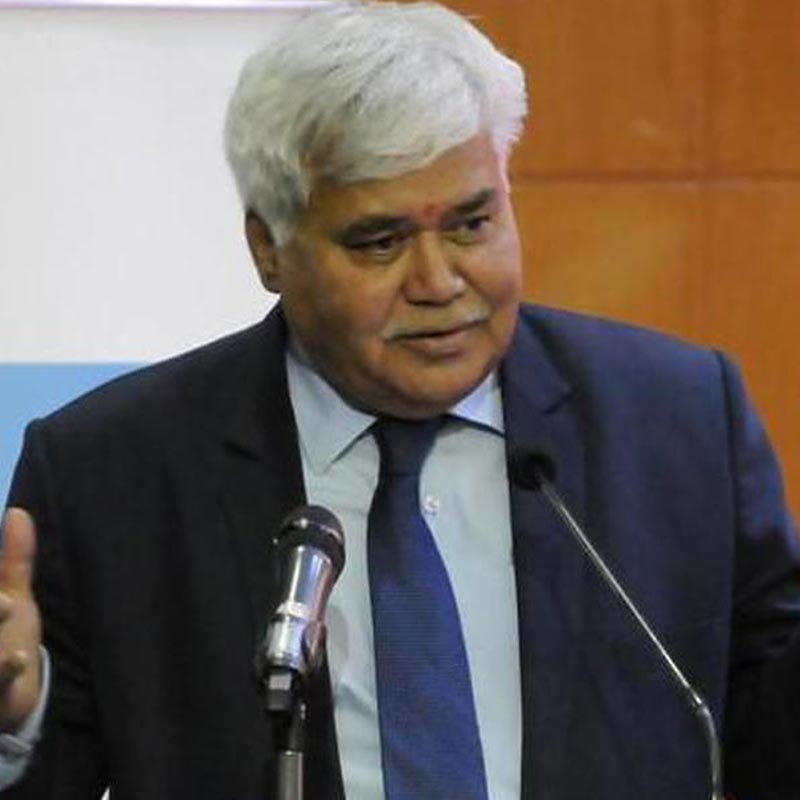
    MUMBAI: Amid several ongoing speculations on changes in the new tariff order (NTO), Telecom Regulatory Authority of India (TRAI) chairman RS Sharma clarified that the regulatory body does not have any plan to revise the pricing framework. He also added that it is only trying to fine-tune it due to certain issues consumers are facing.

    “The framework is already fixed. There is no proposal to change any component of that framework, and if somebody is making a point that we (TRAI) are changing the framework, it is absolutely false. Since this framework has started operating, we have observed that certain issues largely related to consumers have cropped up. We are only trying to fine-tune it,” Sharma said in an interview with the Economic Times.

    He also added that the consultation paper which stirred the recent controversies is not about changing the framework but it is bringing perfection in the phenomenon observed in the last few months. After finding certain issues, it brought the consultation paper on the table. But it may tweak a few parameters if it finds that all parameters are not working fine.

    “We are ensuring that consumers have a choice and are empowered to exercise their choice. Our objective is not to increase or decrease ARPU. Our aim is to enable the consumers to choose channels and safeguard them against any obstacle in their path,” he said.

  • TRAI’s tariff related consultation paper draws concern from IBF

    TRAI’s tariff related consultation paper draws concern from IBF

    MUMBAI: The IBF notes with some concern the issues raised for consultation by TRAI in the Consultation Paper issued on 16th August 2019 (CP).  These issues strike at the very heart of the new MRP based tariff regime which TRAI made effective from 1st February 2019 (NTO).  It is fair to say the implementation of the NTO has resulted in massive changes in the distribution landscape. Nevertheless, with the support of all stakeholders including broadcasters, DPOs and the end consumer, the transition to the new regime is being managed relatively smoothly. Broadcasters, on their part, along with other stakeholders, have done their best to ensure a smooth transition without a disruption of services. TRAI itself has stated at several fora that over 90% of consumers have migrated to the new tariff regime by choosing channels and/or bouquets of their choice.

    In  compliance  with  the  NTO,  pay  broadcasters  have  published  their  Reference Interconnect Offers (RIOs) pricing their channels in a la carte and bouquet formations in accordance with the regulations.  DPOs in turn have offered these channels both on a la carte basis and bouquets customized to meet the choice of their subscribers.  In fact, it was TRAI that mandated DPOs to offer their subscribers a “best fit” plan of a la carte and bouquets to encourage a seamless transition to the new tariff regime.

    Surprisingly barely a few months after the commencement of the NTO and even before the industry at large and more importantly the end consumer has fully adapted to the new regulatory regime, TRAI proposes a fresh CP seeking to make fundamental changes in channel pricing and bouquet formation.  This goes against all norms of a stable regulatory regime so necessary for the economic advancement of any industry. TRAI’s CP proceeds on the assumption that consumers are being denied their choice of channels by excessive discounts on bouquets. IBF wishes to point out that the cap on bouquet discounts under the NTO was struck down by the Madras High Court as “arbitrary”. Further, the global practice in the television and cable industry is the offering of content in bouquets customized to meet the diverse needs of consumers. A report published by the prestigious thinktank,  the  Indian  Council  for  Research  on  International  Economic  Relations (ICRIER), in March 2019 indicates that given a choice consumers, even internationally display a preference for bouquets. A 2004 FCC report concluded that mandating a la carte for cable consumers in the USA would very likely harm new and niche channels and reduce choice to consumers. An evaluation of a similar proposal in Canada in 2014 concluded that “unbundling” could have adverse effects for the broadcasting sector and could result in 26% of the current channels becoming unviable. As per CASBAA, in a study of broadcast regulations in 10 countries, apart from India, no country mandated a la carte and bouquets were the choice of consumers. The NTO itself allows broadcasters and DPOs to offer channels both a la carte and in bouquets giving the consumer the freedom of choice. In fact, the basic tier mandated by the NTO of 100 FTA channels for Rs. 130 is itself a bouquet offering. Thus, the impression being created that broadcasters are gaming the system to push bouquets is incorrect.

    The essence of a free market economy is that consumers make their own choices about the products they buy or the services they wish to receive. Broadcasters have not only published  their  channel  prices  a  la  carte  and  for  bouquets  but  also  publicized  their offerings through advertisements and promotions enabling the consumer to make an informed choice. As TRAI itself points out in the CP while a large number of consumers have opted for bouquets, many have also opted for a la carte channels. It is therefore incorrect and would be an affront to the consumer’s intelligence to suggest that they choose channels only on price and not on the quality of their content.

    The Honorable Prime Minister’s call to make India a USD 5trillion economy by 2025 requires all industries to grow exponentially and contribute to overall GDP. Frequent tinkering with regulations and attempting to micro-manage free markets can lead to adverse consequences. Promoting a la carte at the cost of bouquets will deny consumers the choice they need in a country like India with such a large and variegated diversity of cultures and languages. Smaller as well as niche content channels will lose out and their viability will come under question. Broadcasters will be unwilling to launch new channels and producers will be unwilling to experiment with new content. All this will lead to fewer shows being produced which will have a knockdown effect on downstream production and on employment in the sector.

    The broadcasting industry has gone through several major regulatory changes in the last few years moving from analogue to CAS to digital and addressable systems and now to an MRP pricing regime. Stability in policy formulation and “soft touch” in regulatory oversight is an absolute necessity for healthy industry growth. The Government’s focus on “ease of doing business” warrants minimal regulatory intervention. Hence regulatory intervention at this early stage in the implementation of the NTO is not only premature but will have disastrous consequences for the broadcasting industry. In these circumstances, IBF would urge TRAI to defer any further regulatory interventions and allow the industry and its stakeholders and especially the consumer more time to adapt to the new regulatory regime.
     

  • MTV aims for 5 bn watch minutes in second half of 2019

    MTV aims for 5 bn watch minutes in second half of 2019

    MUMBAI: Viacom18’s youth channel MTV witnessed 700 million views and 3.67 billion minutes viewership in H1 2019, on TV and VOOT respectively. With that achievement in mind, the channel is expecting 5 billion watch minutes on the channel in H2 CY 2019. Viacom 18 head-youth, music and English entertainment Ferzad Palia spoke to Indiantelevision.com on growth drivers for H1, strategy to achieve 5 billion in H2, plans for stronger H2 2019 and impact of NTO on the channel.

    “The first half of 2019 has been positive for us. We have seen a good growth in terms of consumption of the content that we create both on TV and VOOT. People are engaged, more people are watching us than ever before and they are watching us for a considerable amount of time as well,” he said.

    Speaking on the growth drivers for H1, Palia said, “We experimented with long format and different kinds of content and all these have given us good results. Roadies and Love School’s seasons have done well. We are now launching three more shows, with which we expect to take it a notch higher.”

    The channel has announced three shows for the quarter – MTV Hustle, Spitsvilla season 12 and Ace of Space Season 2.

    Revealing plans for H2 2019, Palia said, “These three are the shows that we have announced. MTV Hustle is a brand new show with new format that hasn’t been done before. It is a very strong platform for budding talent in the rap and hip hop space because till now there has been no big platform for this genre. There is a lot of talent which is there in the country that doesn’t get a mass platform. So, we are expecting this show to be a big growth driver for the channel in H2.”

    Talking about Splitsvilla, Palia said, “Spitsvilla is a unique concept which we have seen growing every season and now in its 12th season we are keeping the format fresh and evolving it as per viewers' choice that is working well for us. We are quite certain that this season will be different from the rest of the seasons.”

    He further said that by October the channel will be coming up with more new shows.

    In H1 2019 the channel witnessed 3.67 billion minutes of viewership and in H2 it is aiming for 5 billion. Palia shared his plan on achieving the number. He said, “Lot of properties are returning and those properties have significant attraction. Then we have new shows in October and November, so we are strengthening our lineup. In the first half itself we have done close to 4 billion minutes. I see the second half to reach at least 5 billion.”

    Palia also shared his views on the impact of NTO on the youth channel. He said, “When the NTO was announced it was expected that the reach for our channel would come down a bit. But we see ourselves in a unique position for two reasons. One is that our content is very different and we are the only guys who are making this kind of content. We are the only content creator making original youth-specific content. Second reason is that the channel has lot of loyal audiences.”

    He also added, “Another reason why it didn’t impact us much is that MTV has been there for many years and now it is not just a TV channel and has been consumed on digital too so our base number has also grown. I think we are in quite a strong position.”

    Answering the query about difficulties faced in selling the inventory due to economic slow down, Palia said, “The ad market is a bit muted but not only specifically for us but across the board. Things are happening back to back in the economy. NTO happened and the advertisers were waiting for that to settled down. We expect a very strong bump-up starting September.”

    He also commented on the landing page debate, “Without getting to any side of the debate we have seen no impact of landing pages on our channel.”

  • Airtel Digital TV’s ARPU fell to Rs 157 in Q1 20

    Airtel Digital TV’s ARPU fell to Rs 157 in Q1 20

    MUMBAI: Airtel Digital TV’s average revenue per user (ARPU) fell to Rs 157 per month in the first quarter (Q1) of FY 20 from Rs 233 in the last quarter of FY 19. The ARPU for DTH services of Bharti Airtel also saw a 31.6 per cent decline on a year-on-year basis.

    Revenue from Digital TV services stood at Rs 7,389 million while it was Rs 9,924 million in Q1 FY 19. EBITDA for this segment continued to improve and was Rs 5,263 million as compared to Rs 4,010 million in Q1 of FY 19.

    Airtel Digital TV saw net addition of 634K customers in the quarter. At the end of the first quarter, the DTH arm of Bharti Airtel had 16 million customers with a year-on-year 9.4 per cent growth.

    “Subsequent to the new tariff order (NTO), the service providers are responsible only for re-transmission and are not in a position to control content and pricing. Accordingly, the gross revenue is only to the extent of net value retained i.e. customer payments received net of broadcaster’s fee (erstwhile content charges) w.e.f quarter ended 30 June 2019,” the company noted.

  • Sony MAX competes with the GEC genre for advertisers: Vaishali Sharma

    Sony MAX competes with the GEC genre for advertisers: Vaishali Sharma

    MUMBAI: Indians are obsessed with their stars and connect on an emotional level to the stories playing out on screens. Catering to this population of cine-lovers is Sony MAX that has been feeding this madness for the last 20 years through its vast content library, offering the best Hindi movies. And now to mark the successful completion of these two decades, it has kick-started months of interesting campaigns with its ‘Yeh Hai Desh Ki Deewangi’ TVC.

    The campaign is an extension of its ‘Deewana Bana De’ positioning and features ‘Gullu Gulati’ as a mirror image of every movie lover in the country. Speaking about the celebratory campaign with Indiantelevision.com, Sony SAB, PAL and Sony MAX movie cluster head, marketing, and communications Vaishali Sharma shared that it is a celebration of the channel’s relation with its viewers.

    She said, “It is pretty tough to create a campaign for the brand that is already very successful and also has a strong positioning, which it doesn’t want to change. So, we decided to let the campaign be a celebration of our success and the leadership position that we have been maintaining for the past 148 weeks. Also, it is a celebration of our relationship with our viewers and the passion for movies.”

    The campaign, which showcases the protagonist recreating iconic characters like Raj from Dilwale Dulhania Le Jayenge, Vijay from Don, Munna Bhai from Munna Bhai MBBS and Baahubali from Baahubali has been created by DDB Mudra group. Praising the agency for its cooperation and support, Sharma said that the agency not only knows the channel well but also loves what it does.

    Apart from the campaign, the channel will be running a number of online activities to mark the celebration. The campaign will be played on digital and on cross channel platforms along with theatres. The channel will also be doing some interactive activities with its followers online like the #Deewangi challenge and ‘your best deewana fan moment’, revealed Sharma.

    Elaborating on how the channel will continue to maintain its strong position in the market as it steps into the 21st year, Sharma said that it is very difficult to share what is going to happen in the next year as the industry is very dynamic.

    “Every day the industry is seeing some changes. Especially with the NTO, there has been a great transformation and one needs to adapt to it. Right now, the focus remains on bringing a premium experience to users both on and off-air,” Sharma noted.

    She added that the channel has grown tremendously well in the past few years and is planning to continue on the same path. “We are not just a movie channel but we compete with the GEC space. We offer the advertisers the same reach as other channels. I think we are a fantastic reach platform (for the brands).”

    On being asked how she is planning to maintain the growth in the NTO world, Sharma said that it is practical to move on with the new tariff order. “I think it is an opportunity for us to really market ourselves strongly to the consumers and I think we should continue doing that and create a strong demand (for our content),” she concluded.

  • Tata Sky’s final arguments in TRAI tariff order matter listed for 19 July by Delhi HC

    Tata Sky’s final arguments in TRAI tariff order matter listed for 19 July by Delhi HC

    MUMBAI: The Delhi High Court on Thursday adjourned the hearing of the petition of top DTH operators Tata Sky, Airtel Digital TV and Sun Direct, and broadcaster Discovery India Communication challenging Telecom Regulatory Authority of India (TRAI) and its new tariff regime to 19 July. according to sources close to the development, he DTH player Tata sky will conclude its argument on the same day. 

    During the hearing on 2 May, the regulatory body argued partly in the court. Before that, the last two hearings held on 11 April and 25 April were adjourned without any significant development.

    In the beginning of April, Discovery India concluded its arguments. The matter is being heard by Chief Justice Rajendra Menon and Justice V Kameswar Rao.

    Notably, the extended deadline for consumer migration under the new regime expired on 31 March. While TRAI has repeatedly said most consumers have moved to the new regulatory framework with a reduction in cable bills, several reports have claimed otherwise. In the last two weeks, TRAI also sent directives to several distribution platform operators across the country for not complying with tariff order rules properly.

    Earlier in February, the regulatory body extended the deadline to pick channels under the new regime till 31 March as well as gave a directive of Best Fit Plans. The subscribers that don’t opt for new channels would be moved to ‘Best Fit Plans’, which would be developed as per usage pattern, language and channel popularity, the sector regulator said in its statement.

    Chief Justice of Delhi High Court Rajendra Menon on 13 February questioned TRAI for altering the implementation process of its new tariff regime without informing the court. The chairperson of the sector regulator had also been directed to file an affidavit within a week explaining these changes.

    While the regulatory body has continuously declined that cable bills would go up under the new regime, several reports, as well as surveys, have indicated the hike in the monthly bill. Due to the change in pricing, many experts predicted that consumers would shift to OTT platforms eventually. To decrease the churn rate, some of the DTH players have removed network capacity fee for long duration packs.

    In 2017, Bharti Telemedia, Tata Sky and Discovery Communications India had filed petitions against TRAI, challenging its tariff order and the interconnect regulations. Unlike the position adopted by Star India wherein it questioned the regulatory powers of TRAI, the matter in the Delhi HC questions the regulator’s power to wipe out deals that operators enter into to fix commissions and rates for customers.

  • IPL 2019: Tata Sky, Airtel Digital TV, Dish TV woo consumers with sports packs

    IPL 2019: Tata Sky, Airtel Digital TV, Dish TV woo consumers with sports packs

    MUMBAI: Just as the 12th edition of the Indian Premier League (IPL) has launched, DTH operators have come up with special packs that includes Star Sports channels along with a range of channels from other genres.

    Tata Sky, Airtel Digital TV and Dish TV have launched a variety of sports packs.

    As per reports, Tata Sky has launched a Family Sports HD pack consisting of of 96 channels that costs Rs 646 per month which includes all sports channels from Star and Sony. The company is also providing SD pack for Rs 456 per month. Customers also have the choice to select other packs like Family Kids Sports and premium English Sports packs.

    Not only this, some of the regional plans, such as Marathi and Hindi basic packs, are also being offered by the DTH operator which includes Star Sports channels for Rs 338 per month.

    Likewise, Airtel Digital TV is also offering a plan, My Sports HD pack which apart from sports channels, provides SD channels across a variety of genres like news, movies, kids, and infotainment for Rs 493 per month.

    Moreover, Dish TV is offering a Maxi Sports Pack which offers sports, kids and Hindi entertainment channels at Rs 326 per month.

    Hotstar's VIP plan allows one to watch live cricket, premier league and formula 1 races. The online streaming platform is offering access to most of its premium content for the entire year for Rs 365.


  • ISA advises against using BARC data for media planning, buying during tariff order transition

    ISA advises against using BARC data for media planning, buying during tariff order transition

    MUMBAI: With the new TRAI tariff order coming into force from 1 February, the consumption pattern of TV viewership is expected to vary significantly following the impact on the distribution value chain. Considering the challenges during this transition period, the Indian Society of Advertisers (ISA) executive council has advised its members against using the BARC viewership data for media planning, evaluation and buying perspective.

    ISA is of the opinion that it would take a minimum of six weeks to assess the stability of the viewership numbers post the tariff order implementation. The national body of advertisers also believes that the impact will be significantly different in each region of the country given the varied distribution and broadcast landscape .

    To drive home the point, the ISA has drawn a parallel to the implementation of GST that involved India moving to a new tax regime.

    ISA is also of the view that variance in pre and post evaluations will be higher than the usual and will be highly unpredictable.

    The advertisers’ body also reassured its members that it would work closely with BARC to ascertain the time period when data becomes stable and usable for planning and buying.

    The ISA Executive Council and the ISA Core Media Committee have been in active engagement with BARC Board, Technical Committee and NTO task force over the past few months to arrive at the way forward during this transition period.

  • The challenge of DD FreeDish and new tariff order for DPOs

    The challenge of DD FreeDish and new tariff order for DPOs

    GOA: With the emergence of a large number of OTT platforms and cord-cutting phenomenon globally, the future of pay-TV has often been questioned. The talk of the town seems to be about the how pay-TV industry will continue to thrive in such an environment. Moreover, the new tariff order (NTO) in India is also set to overhaul the entire value chain, leading to some uncertainty.

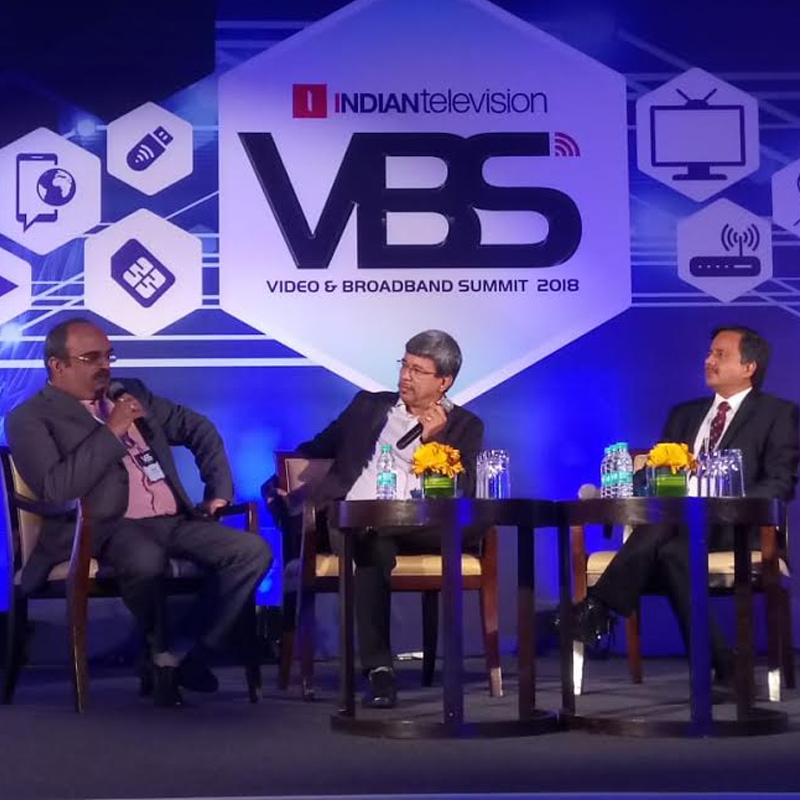
    Against this backdrop, Video and Broadband Summit 2018 held an intense discussion on the “future of pay TV in India”. Travelxp CEO Prashant Chothani and Doordarshan additional director general Sunil participated in the session which was moderated by Indiantelevision.com founder and CEO Anil Wanvari. The session had viewpoints from two entirely different players as Chothani provides a niche premium offering to viewers, while Sunil is responsible for public service which caters to the masses.

    Travelxp works on a B2B2C model despite having 100 per cent original content. Chothani, who is very passionate about linear TV, does not share his content with any OTT platform other than Netflix in North America. He thinks it is extremely crucial to protect linear business as much as possible.

    Chothani, talking about the NTO, said that DPOs are in existential crisis. He thinks DD FreeDish is the biggest challenge for distribution platform operators (DPOs) as the former offers over 100 free to air channels to consumers for free and the latter has to charge Rs 130 for the same as per the NTO.

    “FreeDish is your biggest competitor. Where do you think these 30 or 40 million homes have come from? They go to a large part of north India, UP, Bihar and lot many other markets, where the customer is not willing to pay even Rs 99. There comes the cord cutting in favour of DD FreeDish because this population is satisfied whatever channels come to them for free,” he commented.

    While there are already technological disruptors like Hotstar, Netflix, Amazon threatening linear TV’s growth, consumers, who don’t wish to pay for the channels, can turn to DD FreeDish, said Sunil endorsing Chothani’s view.  

    From the audience, Doordarshan director general Supriya Sahu added that DD FreeDish is not only used by a marginal section of the society but the service is quickly evolving as an alternative option which clearly indicates that it could be a potential threat for DPOs.

    When asked if DD FreeDish would partner with broadcasters, Sunil said he was open to the idea of collaboration. Rather than making money, the pubcaster’s aim is to let the system grow, he said.

    “We have to work on a business model on that front and it is very difficult to answer this question at this point of time because the call has to be taken by the government. But yes cable operators and broadcasters are a part of this system. They are always welcome to partner with us,” he added later.

    He also thinks NTO will be a big game changer as the difference in price between small LCOs and bigger ones has been taken away by TRAI regulations. He also believes that the future of pay-TV is threatened by TRAI regulations. Customers will watch what they want, where they want and when they want and will only pay for that purchase, he added.

    Chothani also added that India is a very price sensitive market. Even in Serbia where currency value is weaker than India’s, Coke is priced the same as in Germany but in India, it is offered at a much cheaper rate. This nature does not fade away when it comes to entertainment.

    “We content creators got greedy. We thought why would you pay 50-60 per cent money with DPOs and do B2B2C business why not B2C. If you see RIOs of some broadcasters, you will see their B2C offering subscription on their apps is cheaper than they are giving to LCOs or DPOs. Why? Because OTT apps are not regulated,” said Chothani.

    “So, this regulation is also going to take away a lot of customers from traditional DPOs unless they play smart. Broadcasters have been playing this game for too long and will keep on playing for times to come. But DPOs need to rethink now. This is a golden opportunity for them. So, they need to get behind and think how they can make consumers pay for content while DD FreeDish is offering so many channels for free,” he added.

    The experts believe that though the future of pay-TV has a few challenges, the NTO offers opportunities to restructure the industry and make the business profitable for all.