Tag: NTO

  • ZEEL’s Kartik Mahadev on Zee Café strategy, BBC First block, post-NTO campaigns

    ZEEL’s Kartik Mahadev on Zee Café strategy, BBC First block, post-NTO campaigns

    MUMBAI: English entertainment channels were feared to face the most challenging time in the NTO phase. ZEEL English Cluster Business Head Kartik Mahadev informs that initially there was a period of flux at ground level but increasing awareness of the MRP regime through campaigns has helped the subscription numbers to grow steadily. #WhereIsMyChannel campaign during transition period of NTO has resulted in an increase of subscription number for the Zee english cluster HD channels, with &flixHD reaching amongst the top two English movies HD channels.

    Mahadev spoke to Indiantelevision.com on strategies, campaigns, NTO impact, challenges faced by English entertainment channels and upcoming programmes on Zee Café. 

    Can you tell us about Zee Café’s TV-First strategy and how does it work?

    Our viewers have a keen eye for content that is new. They follow the latest trends and seek the same when it comes to their content consumption preferences. With Zee Café, it has been our constant endeavour to provide the newest and the best shows to our viewers. With over 70% of our content being available on TV first even before the digital platforms, our discerning audience gets to witness the most-recent shows that are making a mark across the globe. Unlike other broadcasters, this TV-First approach of Zee Café has truly enabled us to serve as disruptors in the category. Shows such as American Idol, Battlebots, Seal Team, FBI, A Million Little Things, Charmed, are success stories of this approach, which have been extremely well-received by our viewers. This season, with BBC First too, we brought six shows to India for the first time only on television screens first. This is a format that truly works well with our loyal audience.

    It has been three years since the channel launched BBC First in association with BBC Studios, how has your association been so far? How has the programming block BBC First grown over the years?

    In a category homogenised by American content, we took a differentiated approach by launching British dramas in 2017. This was widely appreciated by our viewers. In the week of its launch for both seasons, the TSV of the 10 pm time band doubled. The slot viewership in the 2018 season increased by 50%. We generated a total of 50 million impressions on digital with our respective hashtags trending in the last two seasons, along with increasing the channel reach by over 100%. Over the last two years, the block has been immensely appreciated by our viewers who consider it an evolved choice of consumption. British dramas gratified the voracious appetite of our audience and garnered a positive response across mediums. With the highest brand resonance for our viewers, BBC First has truly become the flagship property for the channel. The third season upheld this legacy and met with immense positive reception with a 5X increase in viewership as compared to four weeks before the launch for the 10 pm time slot.

    Brief us on #ShakenAndStirred campaign.

    Our viewers are evolved, motivated and have a global outlook. They are on the constant look-out for what is new and different along with meaningful engagements. With an abundance of content at their disposal now, it becomes more important than ever to communicate in a way that they feel this is for them. This year’s BBC First block provides our audience a point of deep connection with stories that are powerful and visceral through the shows which are a part of the block. Keeping this is mind, Zee Café took a differentiated approach and launched the campaign #ShakenAndStirred. Through the campaign for BBC First we wanted to bring alive the compelling drama and strong characters that leave a lasting impression on the viewer. The quintessential British phrase, shaken and stirred, emerged as the creative thought as it best describes the impact that the unpredictable British dramas would leave on our viewers.

    The idea was to bring out the uniqueness of each of these contemporary dramas, making it relevant to the Indian viewer. So, we collaborated with an authority in drama – Nawazuddin Siddiqui. Bringing in a local connect with his quintessential demeanour, an excited Nawazuddin, sharing his anticipation for British dramas that promise to leave you not just shaken but also stirred. Collaborating with Nawazuddin Siddiqui helped us build engaging and conversational communication, building a strong point of view for the brand. This truly reflects in the way the campaign was received across platforms with immense positive feedback from readers who appreciated the creative effort.

    Which mediums were used for #ShakenAndStirred campaign?

    We launched the #ShakenAndStirred campaign across on-air and digital platforms and amplified the same through media communication. The aim was to build conversations around British dramas and the unique promo featuring Nawazuddin Siddiqui enabled us to amplify the announcement. Further, as part of the launch, we also engaged with the fans through an exclusive preview clip of Brexit: The Uncivil War which was shared on Zee Café’s social handle, one hour before the on-air telecast. Together, all the activities paved the way for a high-decibel launch of the third season of BBC First.

    How has the responses from advertisers been, on this property?

    While the block has resonated well with our loyal audience, we’ve always managed to partner with some of the most reputable brands who’ve equally appreciated our endeavour. Over the three seasons, we have had brands such as Prestige, Dominos, Hershey’s, L’Oreal, Phillips, and Vicks with most as recurring sponsors on the BBC First block.

    How do you see the growth of English Entertainment channels in Indian market, post NTO?

    The English category on television has been growing steadily over a period of time. In last three years (pre-NTO), the viewership on English GEC genre has grown almost 2.5 times, while the English movie genre has witnessed a 26% growth in viewership and 28% growth in reach, as per BARC India data. Any big change is ought to have teething problems and NTO was no different, as it initially brought a period of flux at ground-level with consumers and distributors being confused about the regime. Largely, channel packs were being picked more on the basis of DPO suggestions. Six months on, we have observed that with increasing awareness of the MRP regime, the subscription numbers are steadily growing.

    What was the impact of NTO on Zee Café?

    One of our recent consumer research studies has reinstated that ‘TV Content is playing a strong role in bringing families together.’ For a lot of urban English consumers, TV is the Go To destination for discovery and effortless viewing. Our studies have suggested that consumers today look for curated content. They don’t want to invest time in trying to decide what best meets their interests. That’s where Zee Café as a channel comes into play. Through the channel's offerings we consistently ensure that all our programming blocks are curated based on audience tastes whether it be a block like BBC First or even Hollywood On Café. For instance, our viewers increasingly look for the latest shows and with our programming block ‘Along With The US’ they get to witness the newest international series that are trending globally and watch it live on Zee Café, before anywhere else. So, the takeaway from this is that the best curators today shall win the game. As per BARC, July 19, AB households, Indian Urban; Zee Café has the highest reach in the category and we are certain that, with growing awareness of the NTO regime, the coming quarter looks promising.

    During the transition period of NTO, ZEEL had launched #WhereIsMyChannel campaign for its English Channel cluster. How well did that campaign work?

    #WhereIsMyChannel has been successful in driving salience and consideration for the English channels amongst the target audience. Within two weeks, we delivered over 25 million sharp targeted video views with strong engagement rates. The campaign has reached to about 58 million viewers on digital and 41.53 million viewers on TV, for the two ad films. In a competitive category with several brands, the campaign has delivered over 70% ad cut-throughs which is quite strong. The ad campaign is being promoted across Zee Network’s social handles and the TV channels on air. The digital video with RJ Balaji, Mallika Dua and Varun Thakur are also a success indicator for the original films which have become a reference point for other unbranded original renditions to be created.

    Overall, it has helped drive subscription for the channel where viewers are now actively involved in the decision-making process. The campaign as also resulted in increased subscription for the Zee English Cluster HD channels, with &flixHD reaching amongst the top two English Movie HD Channels. With increasing awareness of the MRP regime, the subscription numbers are steadily growing.

    What are the challenges faced by English Entertainment channels?

    One of the biggest challenges in the ecosystem undoubtedly has been the NTO. While the English audience is highly involved in their content choices, they were not used to making the purchase decision and typically, the more affluent households would buy subscription annually. Today, there is ~90% awareness about the change, however there was a need to help consumers through the decision funnel, helping them make an active and informed choice. Hence, we launched the #WhereIsMyChannel campaign encouraging consumers towards becoming more active in making a purchase decision for International entertainment on television. Post NTO, we have observed that viewers are now adding premium packs and upgrading to HD channels. This has bolstered English Entertainment as our HD channels have seen a steady growth in subscription.

    Advertisers have spent their major chunk on Sports channels and News channels in the first half of 2019. How do you see the second half of the year especially for niche channels?

    English category caters to a unique set of influential and aspirational audiences, through its high- quality content. At Zee English Cluster, over the years, we have garnered a unique loyal audience base that consistently supports our channels which truly reflects in our movie channels &flixHD and &Privé HD having ranked number 2 and 1 respectively in their category. Premium brands across automobile, telecom, BFSI and FMCG, amongst many other categories, have over the years found a great fit with this category.

    Especially since most of the English content available on OTT has the paywall limitation, brands who want to exclusively target English category, majorly look to associate with this content, come on TV. To reach out to our affluent viewers, they have partnered with us on impact campaigns to drive perception and recall. Moreover, during peak in sports tournaments, television itself witnesses an overall growth in viewers which in turn elevates the viewership of entertainment channels as well. This year &flix launched a campaign #FlixMovieLeague to support the spirit of the sporting events in the country. So, it goes without saying that English category will continue to serve as the best platform for advertisers to reach out to the relevant audience.

    What are the new programming launches on Zee Café?

    With the festive fervour, we are bringing two of our flagship properties on Zee Café namely – Along With The US and Hollywood On Café as part of our festive offering to viewers. Last year, in its 2018 edition, Along With The US grew the 7PM – 10PM slot viewership by 52% (as per BARC, NCCS AB 15-40-Megacities). This year, with present the latest seasons of both popular favourites like Grey’s Anatomy and Supergirl, and new shows such as Carol’s Second Act and The Unicorn we are extremely thrilled to take it a notch up. Moreover, we are truly proud of a property like Hollywood On Café that brings the scale and grandeur of Hollywood on television. As part of the block last year, shows such as The Sinner and The Night Manager witnessed an increase in slot viewership by 55% and 75% respectively. This year, with a collection of shows such as LA’s Finest and The Son we have truly raised the bar and are certain that the festive line-up with resonate well with our discerning audience.
  • Most-watched regional news channels

    Most-watched regional news channels

    BENGALURU: Regional news is has more per capita consumption in respective languages than Hindi or English news . Further, the consumption of all regional news channels is larger than Hindi news.

    Data across three separate periods has been considered in this paper – For the current period, data for a 26-week period, starting week 13 of 2019 until week 39 of 2019, has been used. For the pre-NTO period, data across 23 weeks between week 35 of 2018 and week 5 of 2019 has been considered. For the post-NTO period, due to BARC’s adoption of an earlier method of treatment of landed pages and outliers, data across 17 weeks between week 23 and 39 of 2019 has been considered.To arrive at the per capita viewership or consumption, the author has considered the 17 weeks average (post NTO) and the 23 weeks average (pre NTO) number divided by the respective population of the respective market as per BARC India, Households and Individuals Universe Estimate – 2018 (BARC Population Estimates 2018).

    Why these specific periods?

    BARC started publication of viewership data in the public domain of news channels in the four South Indian languages in week 1 of 2019. Four additional regional news channels besides the four South Indian languages in the public domain were added in week 35 of 2018. Later, BARC had stopped publishing data in the public domain between weeks 6 and 12 of 2019 to enable viewership to stabilise. Hence the only stable data available in the public domain before the implementation of NTO was between weeks 35 of 2018 and week 5 of 2019, or for a 23-week period. After recommencement of publishing data in week 13 of 2019, BARC reverted to an older method of treating landed changes and outliers in week 23 of 2019.The latest data available at the commencement of writing of this article was week 39 of 2019, hence average viewership for this period of 17 weeks has been considered. For overall viewership trends in the current period, data between weeks 13 and 39 or for 26 weeks (roughly half a year) has been considered.

    Markets and Demography

    BARC has specified the following demographics of the news channels for the data that it releases in the public domain:

    Hindi news: Hindi Speaking Markets, both urban and rural or HSM (U+R): NCCS All: 15+ Individuals.

    Telugu news: Andhra Pradesh or AP/Telangana (U+R): NCCS All: 2+ Individuals

    Kannada news: Karnataka (U+R): NCCS All: 2+ Individuals

    Tamil news: Tamil Nadu/Puducherry (U+R): NCCS All: 2+ Individuals

    Malayalam news: Kerala (U+R): NCCS All: 2+ Individuals

    Oriya news: Odisha (U+R) : NCCS All : 2+ Individuals.

    Assamese news: Assam / North East / Sikkim(U+R): NCCS All: 2+ Individuals.

    Bangla news: West Bengal or WB  (U+R): NCCS All : 2+ Individuals,

    Marathi news: Mah/ Goa (U+R) : NCCS All : 2+ Individuals.

    English news: All India (U+R): NCCS AB: Males 22+ Individuals.

    BARC considers HSM or Hindi Speaking Market as All India without the four South Indian markets. Hence, the author has subtracted the NCCS 15+ population of the four South Indian markets from the All India NCCS 15+ population to arrive at the HSM 15+ population numbers. In the case of per capita consumption for South India, the author has taken the sum of average weekly impressions of the top 5 channels for each language and then added the four sums to arrive at the total average weekly impressions for South India, this total average has then been divided by the 2+ population figures for each of the four languages/six states as per BARC Population Estimates 2018. In the case of English news, the author has calculated the NCCS 22+ Males population by extrapolating the overall male and female ratio and the ratio of the 22+ individuals with the all India population with the sum of BARC numbers for NCCS A 22+ and NCCS B 22+. To arrive at the per capita consumption of news on the top 5 channels for the country, the 23 week average of the 10 languages has been divided by the 2+ population of India as per the above mentioned BARC Universe estimates. Individual HSM (R) and HSM (U) viewership numbers have not been considered to arrive at the per capita consumption of news on the top 5 channels for the country.

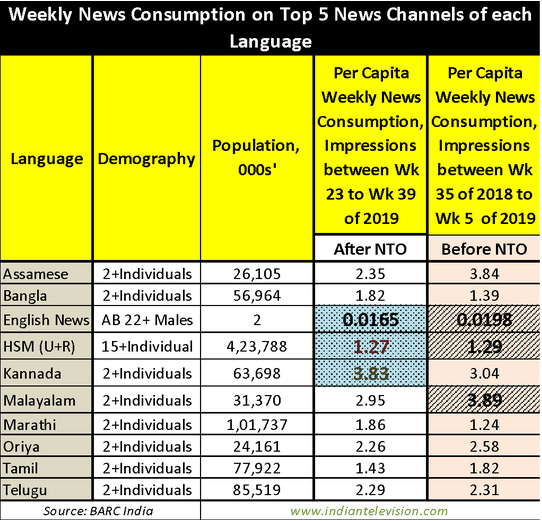
    Per Capita news Consumption post and pre implementation of NTO

    Please refer to the chart below for per capita news consumption of the top 5 channels of each language.

    Current Status

    The charts below covers data between weeks 13 and 39 of 2019, the last week for which BARC data was available at the time of writing of this report. This report covers approximately six months of calendar year 2019. BARC had stopped publication of data in the public domain after week 5 of 2019 to enable ratings to stabilise after the implementation of TRAI’s new tariff order and recommenced publication of the same in week 13 of 2019. Hence, here onward this paper looks at news-watching trends of top 5 news channels across 10 languages.

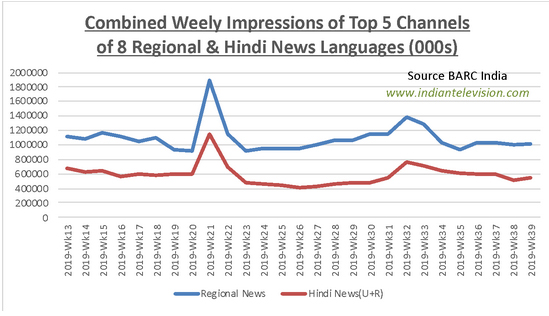
    The unit of viewership measure in all cases in the charts below is thousand weekly impressions. Please refer to the figure below:

    As is obvious from the chart above, viewership of the top 5 regional news channels of 8 languages is far higher, by an average of about 46.33 percent,than the viewership of Hindi news channels in HSM (U+R) during the 26 weeks under review).

    Most-watched regional news channels

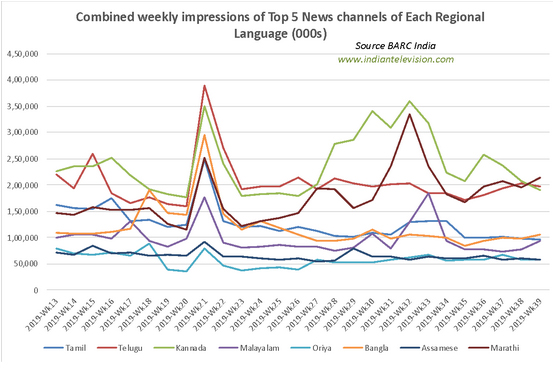
    Here below is a chart showing the viewership data for news channels in the eight languages mentioned above in their respective markets. As is obvious, Kannada news has a much bigger viewership even in absolute numbers than other languages.

    Most-watched Assamese news channels

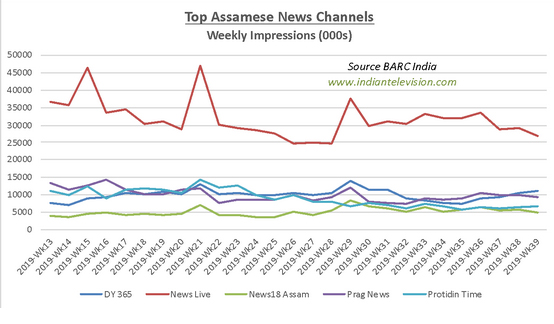
    Five channels were present in BARC’s weekly list of Top 5 Assamese news channels during all the weeks between weeks 13 and 39 of 2019. News Live was the most-watched Assamese news channel by far.

    Most-watched Bangla news channels

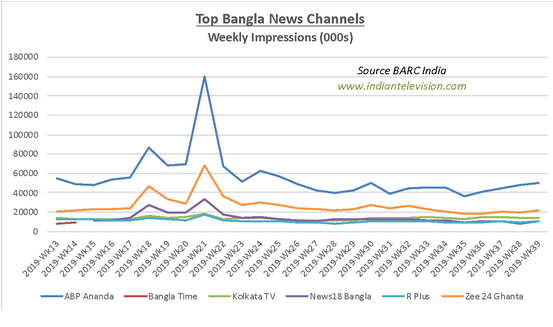
    There were five channels that have consistently appeared in BARC’s weekly lists of Top 5 Bangla news channels during all the 26 weeks under review in this paper. As is obvious, ABP Ananda was the most-watched Bengali news channel, followed by Zee 24 Ghanta. Please refer to the figure below:

    Most-watched Kannada news channels

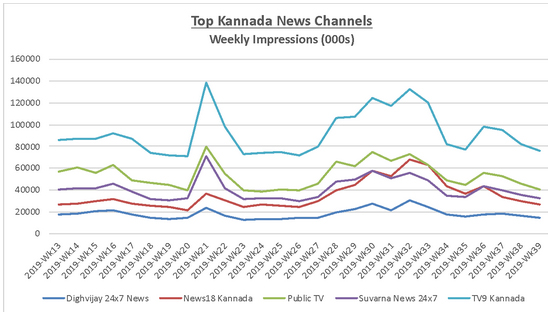
    BARCs weekly lists of Top 5 Kannada news channels between weeks 13 and 39 also had five channels that were consistently present during the entire period. TV9 Kannada was by far the most-watched Kannada news channel followed by Public TV during the period under consideration in this paper. Please refer to the figure below

    Most-watched Malayalam news channels

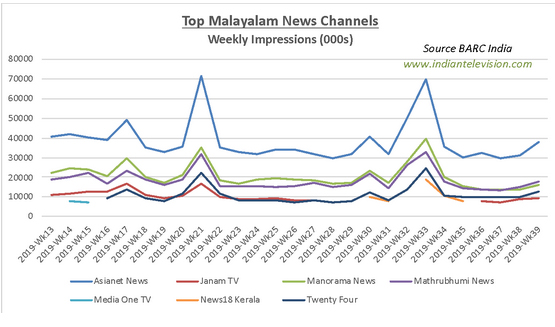
    Seven channels, each of them at least once, appeared in BARC’s weekly lists of Top 5 Malayalam news channels during the period under consideration. Of these 7, three have consistently appeared in the Malayalam news channels lists during all the 26 weeks under review. These three channels were – Asianet News, which is by far the most-watched  Malayalam news channel, followed by Manorama News and Mathrubhumi News. Please refer to the chart below:

    Most-watched Marathi news channels

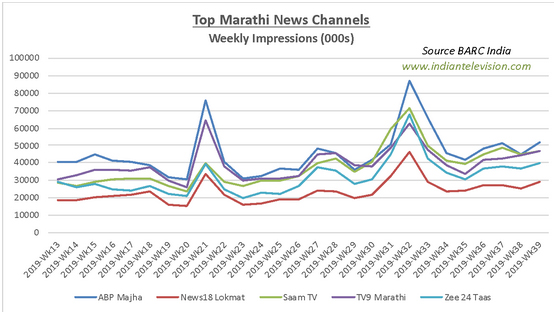
    In the case of Marathi news also, five channels consistently appeared in BARC’s weekly lists of Top 5 Marathi news channels. ABP Majha was the most-watched Marathi news Channel. During 15 of the 23 weeks under consideration, TV9 was the second most-watched Marathi news channel. However, since week 32 of 2019, Saam TV has been ranked second in BARC’s weekly lists of Top 5 Marathi news channels. Please refer to the chart below.

    Most-watched Oriya news channels

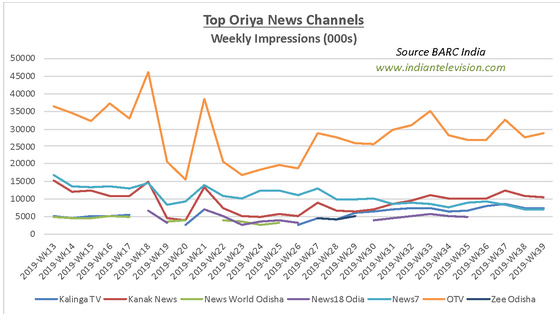
    Seven channels, each of them at least once, appeared in BARC’s weekly lists of Top 5 Oriya news channels during the period under consideration. Of these 7, three have consistently appeared in BARC’s weekly Oriya news channels lists during all the 26 weeks under review. They are OTV, which was the most-watched Oriya news channel, followed News7 and Kanak News at second and third place respectively. Please refer to the figure below:

    Most-watched Tamil news channels

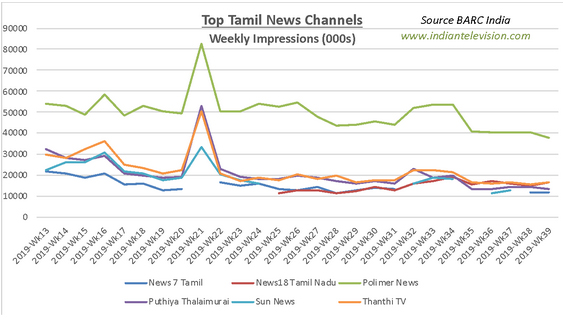
    Six channels appeared in BARC’s weekly lists of Top 5 Tamil news channels at least once. Three of these channels have consistently appeared during all the 26 weeks under consideration in BARC’s Top Tamil news channels list. Polimer News was the most-watched Tamil news channel by far and was followed by Thanthi TV and Puthiya Thalaimurai at second and third place respectively. Please refer to the figure below:

    Most-watched Telugu news channels

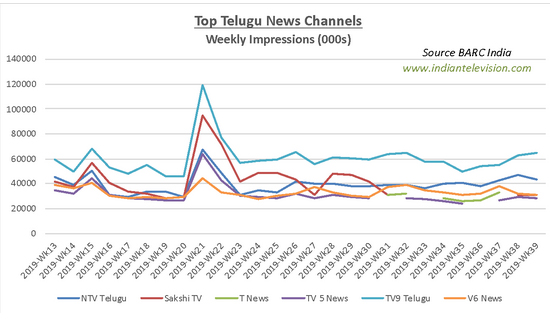
    Six channels appeared in BARC’s weekly lists of Top 5 Telugu news channels at least once between weeks 13 and 39 of 2019. Three of these channels have consistently appeared during all the 26 weeks under consideration in BARC’s Top Telugu news channels list. TV9 Telugu was the most-watched Telugu news channel during the 26 weeks under consideration in this paper. NTV news was at second place followed by V6 news at third place. Please refer to the chart below:

    Closing Remarks

    Media groups and news networks such as the ABP Group and Associated Broadcasting Company Private Limited (TV9) have channels in more than one language that are among the Top 5 channels in that market or language.  Many of them have news channels in other languages/markets also.

    Television news is an important genre. India has multiple languages and small and big networks, independent channels – television broadcasters to be more precise – cater to viewers’ tastes by beaming in content that they prefer. News is an important genre, and there are news channels galore across languages – some of them have even been crowned as ‘views’ channels. The FICCI M&E 2019 report says that 43 percent of the 885 private TV channels in India were ‘news channels’. The FICCI report says that news, which commands a 7 percent share of viewership garnered a disproportionately high share of advertising volumes. The lion’s share totaling 77 percent of the viewership was taken by escapism – or movies and GECs. Yet, Hindi regional news was amongst the top 10 genres and had 5 percent of the advertisement share in terms of volumes of advertisements or insertions.The report also says that contrary to popular perception, TV viewership is high amongst youth (15-30 years) even in the digital age. Youth contribute 32 percent to total viewership with a 30 percent and 32 percent split between urban and rural India.

    An earlier BARC report says that news events cannot escape the lure of drama. And drama includes elections and election results, deaths of celebrities, high court and supreme court verdicts on celebrities and sensitive issues, major changes such as demonetisation announced by the central government, major public holidays such as Independence and Republic days, important events such as the Uri surgical strikes that pertain to terrorist attacks and counter-attacks, etc. Data for election results week – week 21 of 2019, could not be considered in this paper for analysis of per capita consumption because of the change in BARC’s methodology two weeks after election results week. However, week 21 data has been considered in other parts of the report.

  • All India Digital Cable Federation welcomes festive promotion by broadcasters

    All India Digital Cable Federation welcomes festive promotion by broadcasters

    MUMBAI: While All India Digital Cable Federation (AIDCF) in association with its LCO operator partners always strives to deliver better services to consumers, the federation has welcomed festive promotion by broadcasters offering a discount on select a-la carte channels. AIDCF hopes that such promotional schemes from broadcasters will continue.

    “We from AIDCF commit that we will ensure all such benefits are passed to the consumers. We also hope that new consumer offers will come which will help in boosting consumption,” the federation said in a release.

    Already, voluntarily AIDCF has announced its members will include 150 SD channels instead of 100 SD channels for those subscribers who renew on or before the due date. The decision by AIDCF members resulted in savings of Rs 40 in NCF charges for cable TV customers. AIDCF is looking forward to similar consumer-friendly steps from its broadcaster partners.

    “We thank TRAI for the relentless pursuit to empower TV consumers and give consumers power of choice. To follow the spirit of NTO, cable operators enabled true customer choice by providing each customer choice to select any combination. Today, millions of unique plans are provided by cable operators despite all technical challenges. This is true consumer choice and level of customization is unmatched by any industry in India” AIDCF president SN Sharma said in a press conference.

    AIDCF thanked its LCO partners for continuing to service customers for past 25 years. The federation also pointed out that the operator partners have always upheld the consumer service and successfully seen so many transitions- right from the analogue era to digitization to post NTO world today and they intend to keep this partnership going strong for future. AIDCF also noted that LCO community has been working very hard in helping implement the new NTO and enabling the consumer to choose channels as per her wish.

    All members of AIDCF are pushing all boundaries and plan to announce new packages at attractive price points to offer superior value to subscribers. A few months experience with customer choice data post-NTO have enabled the MSO to create newer packages servicing customer specific needs in a better way by evolving packages.

  • ZEEL CMO Prathyusha Agarwal on niche channels in NTO, regional portfolio and subscription growth

    ZEEL CMO Prathyusha Agarwal on niche channels in NTO, regional portfolio and subscription growth

    MUMBAI: Zee Entertainment Enterprises Ltd (ZEEL) CMO Prathyusha Agarwal believes that the new tariff order (NTO) was TRAI’s best move for the industry as it has opened one more way to monetise apart from advertising. Now, subscription revenues count too. Post NTO, Zee’s subscription revenue has grown by 46 per cent in the last quarter.

    Agarwal says that there was a popular belief that niche channels would suffer the most with the implementation of NTO but there was a subscription uptake. She said, “Contrary to popular belief the subscription uptake was great. We see it as an opportunity now that there will be subscription numbers available, which will be in millions.”

    She further says, “So, if an advertiser is trying to reach out to premium audiences or English-consuming audiences, they know that these are the millions of people available, and what kind of consumption they are indulging in as well. So I think that NTO is a good move for niche channels. Of course, at first, the last mile was giving the idea that English channels are only available in higher-priced packs and such things. But we campaigned for the English cluster and that’s our focus even today. That's a great way to go for a niche channel and even for the advertiser, as this is where they have audiences who have consciously purchased you and you can reach out through advertising.”

    Agarwal goes on to say that in tier 2 cities, English content is available only through TV channels and Zee’s aim is to serve them curated content. “Our single-minded focus for the English cluster is about getting great quality, exclusive content and making it available first on TV,” she says. 

    There is bound to be some pricing variable since this is happening for the first time. “The NTO move has been contrary to all popular belief; pay channels have grown in reach. So there's been a 5 per cent growth at all India level and 10 per cent growth at an HSM-level for pay GECs. From Q1 FY 19 to Q1 FY 20 there is also been a 1.5 per cent increase in total TV viewership,” she reveals.

    “Last quarter, we had a 46 per cent growth in subscription revenues thanks to our strong regional channel brands as well. For example in Zee Marathi and Zee Bangla, our share is more than number two and number three put together. We've had that kind of pull in the market and hence the ease of transition was faster for us,” she adds. Agarwal says that where the channel number dropped from 50 to 40, the quality of consumption has improved.

    Even though NTO took a toll on several companies’ finances, Agarwal says that there was a larger economic downturn as well. People held on to the money to invest for festive time, which is the later part of the year. That is taking place now.

    She goes on to state that the 30 per cent of Zee viewers has converted to 80 per cent. While people knew they wanted Zee channels, the network eased the process and friction.

    Recently, TRAI released a consultation paper to review NTO stating that broadcasters have been misusing the new rule. On this, Agarwal says that people are only getting accustomed to the new climate. “I don't think anybody is trying to misuse. When you get a variable for the first time, it will take a while before market dynamics and the feedback loop happens. I would actually say that the entire sector needs to come together and ensure demand pricing stabilises. The current journey is more of a learning journey and it happens in any category where pricing is just about to start,” she adds.

    Zee will continue to build culturally deep-seated content and original hours in every region. But the single-minded focus across channels is to drive demand lead subscriptions. “I think there's no better way than consumers asking for your channels and ensuring that we are available, easily accessible and delivering value. Going ahead, the roadmap will strongly drive the behaviour of evolving purchase and subscription and that's what will drive our subscription revenues.”

    As clients want to speak to the different regions of India, she says, “We will focus to do more and maybe expand the portfolio in the regional. We will add more and more offerings to speak to the many Indias.”

  • DPOs say broadcasters misusing TRAI tariff order with heavy discounts

    DPOs say broadcasters misusing TRAI tariff order with heavy discounts

    MUMBAI: Distribution platform operators (DPOs) believe that broadcasters have misused the flexibility available to them to give a discount on the sum of a-la-carte as high as 90 per cent. The operators have shared their views on Telecom Regulatory Authority of India's (TRAI) consultation paper (CP) on ‘Tariff related issues for Broadcasters and Cable services. The industry has also given mixed views over the implementation of the 15 per cent cap on discount for a-la-carte by broadcasters.

    TRAI had released the consultation paper seeking responses from stakeholders to review the new tariff regime on 16 August 2019. In its consultation paper, the authority informed that it has observed that broadcasters are offering bouquets at a discount of up to 70 per cent of the sum of a-la-carte rates of pay channels constituting those bouquets. “It indicates that in absence of any restriction on the discount on the offering of bouquets, broadcasters are making prices of a-la-carte channels illusory thereby impacting the a-la-carte choice of channels by consumers and giving huge discounts on bouquets to push even those channels which are not the choice of subscribers,” said TRAI.

    Tata Sky in its responses to TRAI expressed disappointment of not revisiting the entire new regime. It said, “We are glad that TRAI has finally acknowledged these misgivings, however, to our  disappointment, TRAI, instead  of conducting a  holistic exercise of revisiting the new regime in entirety has chosen to selectively focus only on  few issues thereby limiting the scope of the exercise.”

    “Having acknowledged the serious misgivings in the regulations, the current consultation is a piece-meal and isolated effort and not the appropriate way forward,” opined Tata Sky.

    It also suggested that TRAI should allow the price forbearance models at the wholesale and the retail level. Further, the channel pricing framework and methodologies should be left to the parties involved, allowing the market forces and negotiation between the parties to decide the same.

    Tata Sky also informed the authority that it is against implementation of any kind of cap overpricing. It suggested, “The DPO bouquet is much more subscriber-friendly as it caters to the needs of the subscriber for availing channels from multiple broadcasters within a pack rather than having to subscribe to multiple bouquets/ or channels.”

    However Bharati Telemedia, in its responses, said, “We are of the view that at this stage, no changes should be made to any of the provisions of the tariff order including the provision w.r.t discount on sum of a-la-carte channels forming part of bouquets offered either by the broadcaster or the DPOs. Any changes at this stage will be equivalent to migration and this may not be the ideal time to cause any interference as it will also lead to unnecessary disturbances and customer dissatisfaction.”

    DEN Networks said that some broadcasters are indulging in heavy discounting of bouquets by taking advantage of non-implementation of 15 per cent cap on discount which has created a non-level field vis-à-vis other broadcasters.

    DEN Networks also expressed that popular channels are being unnecessarily clubbed with non-popular channels to push their uptake. It said, “The broadcasters who have large number of channels in their repertoire, are engaging in a practice of forming large number of heavily discounted bouquets (with minor changes) to push popular channels with non-driver channels. It can be seen that the channels which were FTA before the implementation of the new regulatory framework have been converted into pay channels with the price range of Rs 0.10-0.50/- just to push them with in a bouquet with popular channels of the broadcaster.”

    The operator believes that the non-implementation of 15 per cent cap on discount clubbed with the ceiling of Rs 19/- on the price of MRP of a-la-carte channels forming part of such bouquets is responsible for pushing unwanted channels along with popular channels.

    All India Digital Cable Federation (AIDCF) in its responses to TRAI said, “The non-implementation of the said proviso has given leverage to the broadcasters to offer their bouquets at discount which is as high as 70 per cent of the sum of a-la-carte channels forming part of such bouquets. This flexibility of giving discounts without a cap, created a non-level playing field for the distributors because the bouquets were priced on a discriminatory basis.”

    Sharing similar views, AIDCF and GTPL Hathway said, “The flexibility available to broadcasters to give discount on sum of a-la-carte channels forming part of bouquets has been grossly misused by the broadcasters. The same has also been acknowledged by the authority. It is pertinent to mention that the broadcasters have not only offered huge discounts as high as 90 per cent on their bouquets but have also created confusion in the minds of consumers, by offering  numerous bouquet(s) comprising of few popular  and bulk of non-popular channel(s) with a clear intent to push their non-popular channels.”

  • Discovery Kids’ eyes top 3, improved time spent with ‘Fukrey Boyzzz’

    Discovery Kids’ eyes top 3, improved time spent with ‘Fukrey Boyzzz’

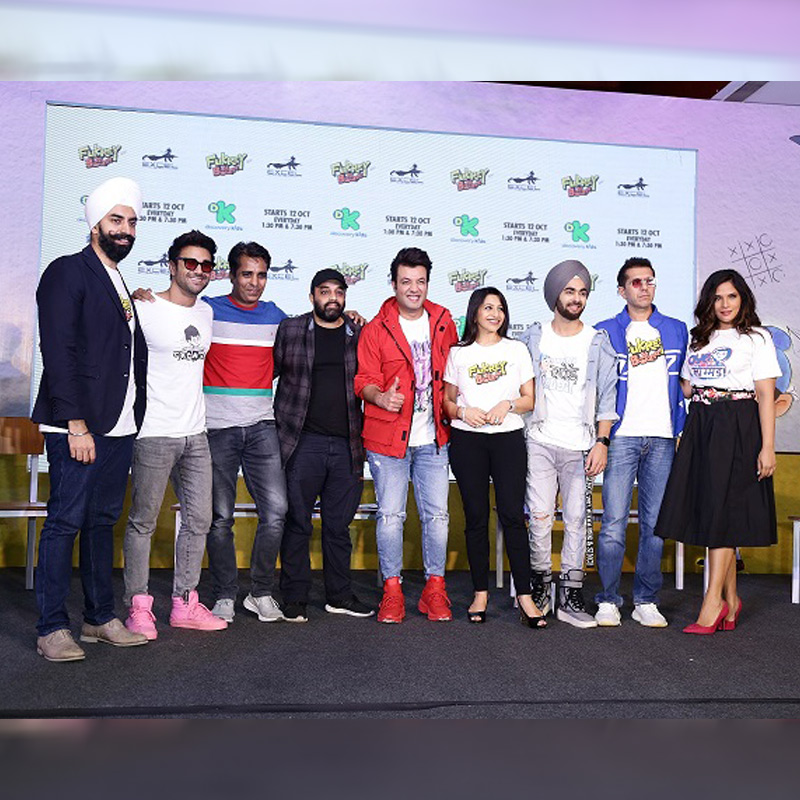
    MUMBAI: Discovery Kids is all set to achieve its goal to be in the top three positions of the kids' genre and probably address the issue of time spent on the channel with the strategic launch of Fukrey Boyzzz. In an interaction with Indiantelevision.com, Discovery Kids business head Uttam Pal Singh informed that the channel has gained its viewership back post NTO regime but it needs to address the challenge of time spent and hopes the new show will help there.

    When Discovery managing director South Asia Megha Tata joined the company in April 2019, she made the kids genre as a crucial focus area with an aim to raise its level to the top three channels.

    Tata admitted that the kids' genre hasn't grown dramatically in the last few years. It is stuck in a particular space and has become more competitive. As a result, there are more players entering the space but the share is not growing.

    Singh said that the aim is to invest, invent and innovate the content to engage with as well as expand audiences. “In the kids’ genre, there is a plethora of content targeted at 4-8 years, however, there is a prominent white space for content targeted at pre-teens broadly bracketed between 8-14 years old. With Fukrey Boyzzz and its hilarious ensemble of Choocha, Hunny, Lalli and Bholi, we are launching a new contemporary series which will have a much wider appeal. In fact, we are confident that this innocent fun feast will attract co-viewing – parents watching along with their children.”

    Fukrey Boyzzz is an apt representation of our ambition in the kids’ genre.  We will continue to innovate and invest heavily in the genre with an aim to be a consistent top 3 player,” said, Tata at the launch of the series. “We are also working towards skinning the Fukrey Boyzzz IP in multiple ways including launching branded merchandise.”
     
    “The launch of Fukrey Boyzzz opens new horizons for us. We are making our foray into animation and are enamoured with how this series has shaped-up. I am extremely excited to have characters from our film Fukrey spread joy to everyone with their crazy antics at school,” said Excel Entertainment co-founder Ritesh Sidhwani as the show preview was unveiled.

    Last year, the channel also premiered a similar animated series called Little Singham which was adopted from the Bollywood movie Singham.

    "Little Singham has done really well for us; it was a Bollywood movie which became a fabulous kids franchise making Little Singham the most-loved animated character in the country today. One of the things that we learned from Little Singham is that it’s not just about creating an animated series out of a successful Bollywood movie, it’s important to make it relatable to our target audience i.e., kids and package it with the right storytelling. We have got all those things in place with Fukrey Boyzzz. The series will bring another disruption like Little Singham in the kids genre and it will also take us to towards our goal to be in the top three positions," she said.

    Fukrey Boyzzz is the animated series of Bollywood franchise Fukrey and Fukrey Returns which is set to premiere on 12 October on Discovery Kids. Discovery Kids will air 156 episodes in season 1 at 1.30 pm and 7.30 pm every day in six languages – Hindi, Tamil, Telugu, Malayalam, Kannada and English.  The channel will launch an aggressive marketing campaign based on the core ethos of the show ‘Friends + Masti = Fukrapanti’.  Fukrey Boyzzz is produced by award-winning production house Paper Boat for Discovery Kids. 

  • Zee Bangla’s Samrat Ghosh on economy slowdown, NTO & consumption trends in Bangla market

    Zee Bangla’s Samrat Ghosh on economy slowdown, NTO & consumption trends in Bangla market

    MUMBAI: Zee Entertainment Enterprises Ltd’s regional channel Zee Bangla recently completed 20 years of its journey in the Bangla market. The mantra of consumer-centricity has kept the channel in the leading position in the market. Going farther in its journey, the channel wants to be known as a brand which is relevant, relatable and embedded into Bengali values and culture. While speaking to Indiantelevision.com, ZEEL cluster business head- East Samrat Ghosh spoke on the journey of channel, evolution of content in the Bangla market, consumption trends, impact of economy slowdown and advertisement on the channel.

    He believes that the Bangla TV industry is on a growth path. In the last 20 years, the original hour of content offering has increased by almost 2.5X – 3X. In terms of growth and advertisement on the channel, Ghosh informed that post NTO the subscription revenue has over delivered and there has also been a healthy growth in its top line.

    Approximately 20 per cent of the overall ad revenue on the channel is from local advertisers and the number is expected to increase during the festival season. “There is a purchase cycle which happens during festival season and Durga puja being one of them, we see local advertisers advertising more to get the reach. We are hoping to surpass last year numbers even after the challenging scenario of economy slow down in the market. In our case, we are expecting a healthier growth and better than last year’s number.”

    Ghosh also said that the television is the less impacted medium in the current economy slowdown scenario and Zee Bangla doesn’t see any impact on its ad revenue. Explaining further he said, “It all depends on how you reach out to your consumers. For example, sectors like FMCG, automobiles, consumer durables etc., always requires a platform to reach out to the target audience. Television being the highest penetrated medium in the country, the impact of economy slowdown on television is not that huge compared to the other medium. In Bengal, we are the highest penetrated platform in the market and therefore the dependability of the advertisers on Zee Bangla is quite high.”

    Explaining how the channel will work on viewership, he said, “There are some factors which will attribute for bringing back the reach- one is the brand pull and second is how aggressively we are marketing the product to the consumer. It’s an ongoing journey. Mostly the migration that I have seen in the market post-NTO is around 87 to 88 per cent, so there is a gap of ten to twelve per cent of migration which is yet to happen.”

    Compared to overall TV penetration in the country, Bengal is lower than the national average. TV penetration in all India is 66 per cent and in West Bengal it is 60 per cent. “One out of three TV audience of West Bengal is from AB Segment (AB:CDE – 33:67) and this ratio is way behind national ratio (47:53), especially in the rural market (23:77), opined Ghosh.

    “In other markets, a lot of content is telecast in the morning and afternoon bands and some of them also offer original content in the afternoon. But in Bangla market, primarily with regards to the GECs, there is no offering of original content in the afternoon. Mostly the focus is towards primetime,” said Ghosh.

    Viewers in Bangla market watch 19 hours of TV content in a week. They consume only 53 per cent Bengali content, mostly Bengali GEC content (43 per cent) followed by Hindi movies (16 per cent). 63 per cent of Bengali viewership consumption happens in primetime (16:30 – 24:00). In the morning their preference is news, movies in the noon and GEC in the evening. Most of these viewers (52 per cent) are of 30 years+ and they contribute 57 per cent of time spent.

    For the industry to grow, Ghosh said that there is a need for new actors and writers. “Currently, this seems to be a challenge. However, since last year Zee Bangla has initiated a project under the name ‘Yes Bangla’ to find and nurture new sets of actors and writers. Another challenge is staying relevant to audiences in an environment of growing digital traction. Next challenge is that the total reach of the market is yet to come back vis-a-vis pre-NTO regime.”

    “Through our programmes and campaigns, we have encouraged our viewers to move ahead and chase their goals by unshackling their inner fears and in the journey taking the entire family together. The reflection of the same will be captured in all our future shows as well.  To celebrate these unique 20 years, Zee Bangla is also launching an in-house annualised magazine ‘Sonar Songshar’,” said Ghosh.

    Zee Bangla was launched in September 1999 earlier in the name of Alpha Bangla and over the last 20 years, the channel has offered various fictions, non-fiction shows and premiere blockbuster movies. In 2018, it had refreshed its brand philosophy to ‘Notun Chhonde Likhbo Jibon’ which means ‘Let’s orchestrate life in a new rhythm’.

  • TRAI extends deadline for comments on consultation paper to review NTO

    TRAI extends deadline for comments on consultation paper to review NTO

    MUMBAI: The Telecom Regulatory Authority of India (TRAI) has extended the deadline for the receipt of comments and counter comments on Consultation Paper on "Tariff related issues for Broadcasting and Cable services" till 23 September and 7 October respectively.

    The Authority had issued a consultation paper on "Tariff related issues for Broadcasting and Cable services" on 16 August 2019 inviting written comments from the stakeholders by 16 September 2019 and counter-comments, if any, from the stakeholders by 30 September 2019.

    In its release TRAI said, “On request from the stakeholders, the last date for receipt of written comments and counter-comments, if any, from the stakeholders, has been extended up to 23 September 2019 and 7 October 2019 respectively. No requests for any further extension of time for submission of comments shall be entertained.”

    TRAI issued the consultation paper to discuss the issues that have come up post implementation of the new regime. The authority also had extensive interactions with stakeholders including consumers and consumer organisations, at various forums, wherein stakeholders have also raised certain issues such as variable NCF for different regions, NCF for multi TV home, discount on long term plan, DD channels as part of one hundred channels etc.

    TRAI has observed that too many bouquets are formed by the broadcasters/DPOs and many of them contain very similar set of channels, with very few changes. This, according to the sector regulator, is not only creating confusion among consumers but also becoming a hurdle in choosing the channels.

    With too many bouquets of broadcasters and DPOs, consumers get confused and as a result are forced to adopt some suggested packs of TV channels, killing the freedom given to consumers to choose desired TV channels, feels the sector regulator.

  • NTO ambiguity resulting in ad rev drop for small broadcasters, niche channels

    NTO ambiguity resulting in ad rev drop for small broadcasters, niche channels

    MUMBAI: Just when it felt like the dust on the NTO had settled, Telecom Regulatory Authority of India (TRAI) came out with yet another consultation paper reviewing the order, seeking more fundamental changes in channel pricing and bouquet formation. As clarified by TRAI chairman RS Sharma, while the regulatory body does not plan to revise the pricing framework, it is surely looking at fine-tuning the existing parameters as consumers are facing certain issues because of the current set of rules.

    This has once again left a big question mark on the fate of broadcasters and might have a bigger impact on advertising revenues as well.

    Y&A Collective co-founder S Yesudas told Indiantelevision.com that this uncertainty over the tariff order and channel pricing will impact nice channels the most, resulting into a dip in their revenue.

    He said, “The biggest sufferers will be niche channels, particularly those which are mid and bottom-rung. Even as the power to choose rests with consumers and the general mindset of sensitivity for the paid-for options resulting in those always taking precedence, the snacking-in viewership will reduce.  Between the two time periods, pre-new tariff order to July 19, there’s apparently already a drop of approximately 7 per cent of the total TV impressions. This will consequently mean revenue reduction.”

    HyperCollective founder and CCO KV Sridhar (Pops) also agreed that the past few months have seen a dip in the revenues for broadcasters, barring a few big ones, because of many reasons like the economic slowdown and growth of digital bouquets, along with the NTO.

    “The NTO is putting a lot of pressure on the broadcasters and some easing out is required, maybe not so suddenly but definitely. The bigger groups like Star and Sony can survive in the turmoil, but it is difficult for smaller groups, especially independent channels and some regional channels,” he said.

    TheSmallBigIdea CEO & co-founder Harikrishnan Pillai shared that this ambiguity over the tariff might result in advertisers taking their money to digital platforms than spending on television.

    He said, “One needs to reckon that any industry with fluttering policy fuels questions on its stability. While TV broadcasting is the most robust of all mediums, the effect of such policy-based tremors cannot be ignored. Especially by smaller TV channels, which already are fighting for eyeballs. It is likely that they might be ignored by the advertiser for other lucrative digital options. Investment into fresh content might take a back seat, which might further make it difficult for certain channels to attract advertisers on the back of new shows."

    Sridhar also noted that the loyalty of the consumer is with the content and not the channel. If they can access the same content on OTT platforms or other media, they will not want to spend on purchasing the channels.

    He further elaborated, “Advertisers are interested in viewership only. Also, they would play their ads during the content that is relevant to them. They are not going to place an ad on your channel even if you offer cheaper slots, or guarantee greater reach. Every advertiser is looking for relevant content now. If the content is not good, your channel will drop. OTT, therefore, is a big hindrance for the broadcasters in getting revenue.”

    While the tariff order seems to be generating problems for the broadcasters, Yesudas feels that it will be beneficial for the marketers and advertisers. He said, “Marketing and adverting industry will only stand to gain from this as there will be further consolidation of the viewership pie.  While the top-rung channels will find a place in almost all media plans (with reduced  cost per contact) the mid-and bottom-rung channels which no longer can only stay focused on transactional and passive advertising time selling will also embrace true innovation in helping clients solve certain marketing challenges within a segment of consumers, they can influence.”

  • TV homes continue to grow post new tariff order implementation

    TV homes continue to grow post new tariff order implementation

    MUMBAI: The recent IRS study revealed that TV homes have continued to witness growth in the post-implementation period of TRAI’s new tariff order (NTO). According to the IRS study that was conducted, post NTO period shows that in Q2 2019 TV homes grew to 194 million from 192 million TV homes in Q1 2019.

    As per IRS study in 2017, there were 183 million TV homes. According to BARC India in 2016 there were 183 million TV homes and in 2018 there were 197 million TV homes.  

    The NTO was implemented on 1 February 2019 with an aim to allow customers to select and pay only for the channels they want. Many companies also witnessed a bad quarter during the transaction period of NTO.

    After the few months of implementation of NTO, TRAI released a consultation paper to review the issues of pricing of the channels. The paper primarily discusses issues related to discounts in the formation of bouquets, ceiling price of channels for inclusion in bouquet, need for formation of bouquet by broadcasters and DPOs, variable NCF and discounts on long term plan, etc.