Tag: NTO

  • English News viewership decline continues in week 3 of 2020

    English News viewership decline continues in week 3 of 2020

    BENGALURU: Viewership of English News channels continued a downward spiral in in week 3 of 2020 (Saturday, 18 January 2020 to Friday, 24 January 2020, week under review). Analysis of Broadcast Audience Research Council of India (BARC) data of 44 weeks between week 13 of 2019 and week 3 of 2020 reveals that the four week combined average viewership of the top 5 English News channels declined 23 percent for week 53 of 2019 and week 3 of 2020  (4 week period under review) to 1.724 million weekly impressions as compared to the average combined viewership of the 44 week period of 2.235 million weekly impressions. Viewership during the period under review declined 15.1 percent from 2.032 million weekly impressions calculated for the immediate trailing 4 week period (week 49 to week 52 of 2019).

    The last few weeks have been reasonably eventful. Among the newsworthy happenings include the fact that the fall out of the Citizenship Amendment Act is still unfolding, not only in India but in other geographies as well. Further, assembly elections for the state of Delhi have been announced, the lawyers of the condemned Nirbhaya rapists managed to delay their executions to the first of February. Please refer to the figure below for the four week average of combined ratings of top 5 English News channels between weeks 13 of 2019 and 3 of 2020.
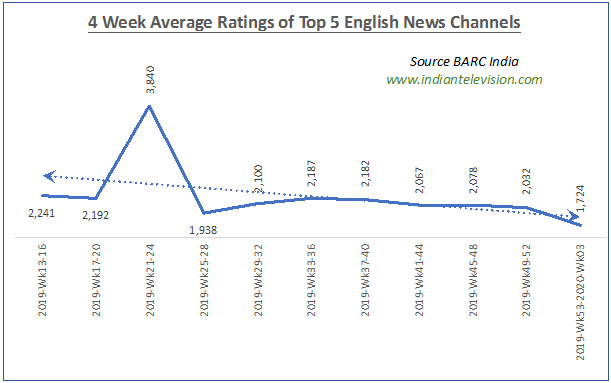
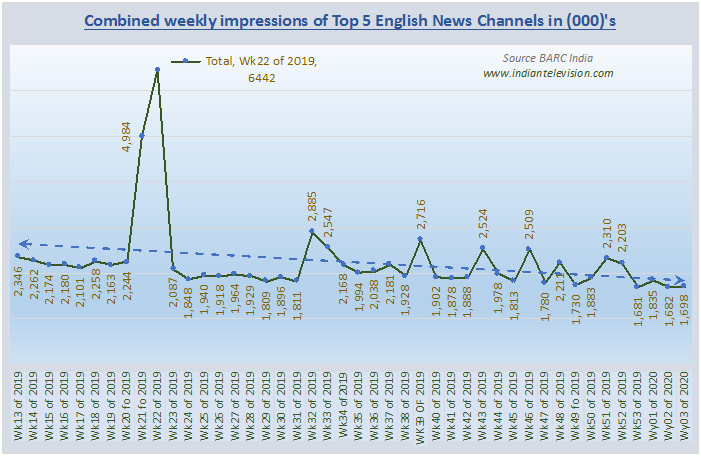
    It must be noted that BARC had stopped publishing data in the public domain between weeks 6 and 12 of 2019 to allow for ratings to stabilize after the implementation of Telecom Regulatory Authority of India (TRAI) New Tariff Order (NTO), hence data between weeks 13 of 2019 and 3 of 2020 has been considered in this paper. Though the combined ratings of the top 5 English News channels in week 3 of 2020 were slightly higher than those of the immediate trailing week (week 2 of 2020), they were 24 percent lower than the 44 week average.

    The figure below shows that combined ratings of the top 5 English News channels between week 13 of 2019 and week 3 of 2020.
    Week 3 of 2020

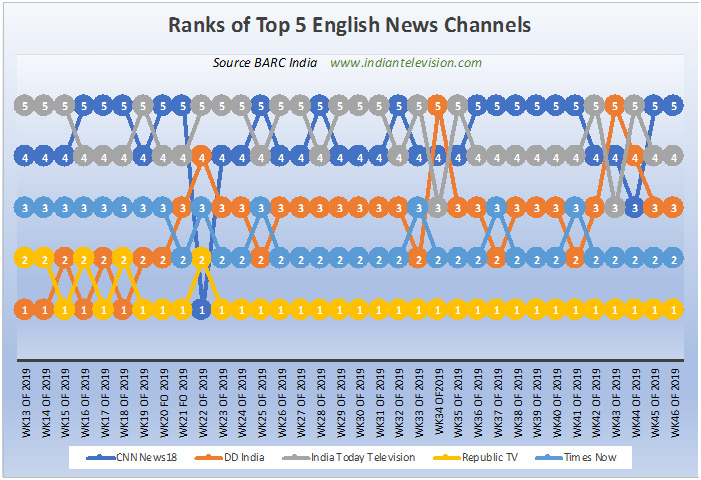
    Ranks 1, 2  and were held by the same channels in week 3 of 2020 as in the previous week – Republic TV, Times Now and India Today TV retained places 1, 2 and 3 respectively. DD India pushed its way to fourth rank from fifth rank in week 3 of 2020,  while CNN News18 dropped to fifth place from fourth. Please refer to the figure below: 

    Two channels lost viewership in week 3 of 2020 – CNN News18 and Republic TV as compared to the previous week, while the other 3 made slight gains. Arnab Goswami’sfirst placed Republic TV saw viewership decline by 5 percent to 0.568 million weekly impressions from 0.598 million. At rank two, Times Now saw viewership climb 11 percent to 0.472 million weekly impressions from 0.425 million weekly impressions. Third ranked India Today Television saw  viewership increase 4.3 percent to 0.265 million weekly impressions in week 3 of 2020 from 0.254 million weekly impressions in week 2. At rank 4, DD India saw viewership rise 7.3 percent to 0.207 million weekly impressions in week 3 of 2020 from 0.193 million weekly impressions in the previous week. CNN News18 saw ratings decline 12.3 percent to 0.186 million weekly impressions  in week 3 of 2020 from 0.212 million weekly impressions in week 2.

    Please refer to the figure below:


  • IBF questions need for new tariff order revisions

    IBF questions need for new tariff order revisions

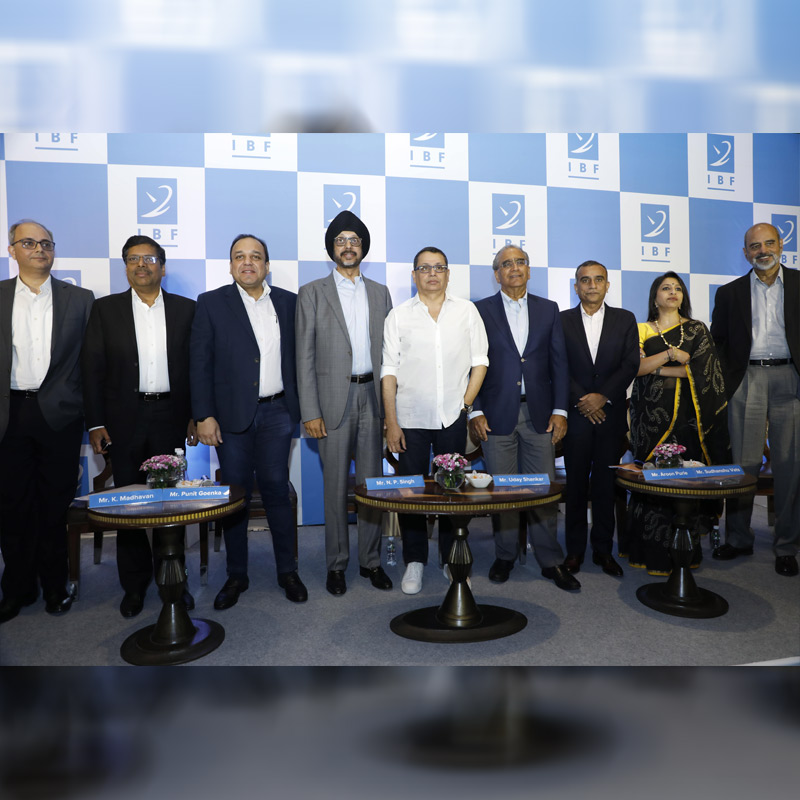
    MUMBAI: The last six months have been rather unsettling for the television sector what with the regulator the Telecom Regulatory Authority of India revising tariff regulations for pay TV at least a couple of times. Indian broadcasting CEOs hence came together under the umbrella of the Indian Broadcasting Foundation (IBF) on 10 January to air their concerns about the latest amendments in the new tariff order.  They were more than clear that the latest revision is going to adversly affect their toplines and bottomlines and hence that may leave them no recourse but to consider legal options.

    While the new price regime implemented in the last year did not have enough time to settle, the Telecom Regulatory Authority of India (TRAI) once again revised the order recently including reducing the pricing cap to Rs 12 per channel to be included in a bouquet, down from Rs 19 per channel.

    “Even as the new regime was settling down, on 1 January 2020, TRAI notified certain amendments to the New Tariff Order and Interconnection Regulations for the broadcast sector. These amendments attempt to make further disruptive changes in an industry already grappling with the paradigm shift to an MRP based pricing regime,” IBF president and  Sony Pictures Networks MD & CEO N P Singh expressed.

    He also mentioned that while the broadcasting industry is apprehensive about the magnitude of changes, they support bringing in order into the system.

    Singh also noted that the collective cost to the broadcasters was well over Rs 1,000 crore in just communicating the changes to the consumers. Moreover, there was an overall loss of 12-15 million subscribers in the process.

    Walt Disney Company Asia Pacific president, Star  Disney India chairman Uday Shankar also raised the question that if a comprehensive exercise was done last year, then what is the need for the current revision. He also added that if TRAI is so concerned with bringing down the price for the consumer then why, in the name of NCF (network capacity fee), distributors are being allowed to charge as much as Rs 160 for something that DD FreeDish is giving for free.

    “The objective of NTO 1 was first – to give choice to consumers, second – to bring transparency and third – to reduce litigation. While only the first two have happened, it's too early to talk about the third. Statistically, overall 94 per cent of Indians are aware of the NTO and the choices they have because of the efforts made by the broadcast industry collectively. The month on month churn in industry shows that people are continuously fine-tuning their choices. The other objective of NTO was transparencey which it has also brought in. The question therefore, is ‘what is the fundamental need to change again?,’" posed Viacom18 Group CEO & MD & IBF vice president Sudhanshu Vats.

    "India is a heterogenous country with different choices and abilities to pay. In every sector there is a wide spectrum and that needs to play out more in Indian media as well. This push for consistency shouldn’t come in the way of the industry's and the economy's growth. In the M&E industry there is a lot of dynamism and flux and hence the broadcast sector needs to be able to settle down. If there has to be any change we need to allow for enough time for its implementation and also changes shouldn't be suggested so frequently," he added.

    Shankar also emphasised on the problems that long-tail channels will face. He commented that the latest revisions will seriously threaten the existence of smaller channels. He also raised concerns about the quantum of investment in content, which broadcasters have been making. 

    Zee Entertainment Enterprises Ltd (ZEEL) CEO & MD Punit Goenka also questioned if these changes are in line with the government’s stated intent of improving the ease of doing business. According to him, whether it will really benefit end consumers is also arguable. 


  • Edelweiss bearish on Q3 performance of media industry

    Edelweiss bearish on Q3 performance of media industry

    MUMBAI: Financial services conglomerate Edelweiss is bearish on the third-quarter performance of the media industry. The firm has predicted it to be one of the toughest quarters for the industry with a  decline in both revenue and EBITDA. The report has also suggested that ad growth of broadcasters is likely to be under severe pressure due to an economic slowdown and high base while subscription revenue growth for broadcasters is likely to remain robust owing to the new tariff order (NTO).

    The report anticipates ZEEL’s Q3 revenue, EBITDA and PAT to decline by 5 per cent, 22 per cent and 21 per cent YoY respectively. It has also predicted advertisement revenue to decline owing to the economic slowdown, cutback in ad spends by large categories like consumer goods, auto, telecom and retail and withdrawal from the FreeDish platform. However, it belives subscription revenue growth to remain roboust owing to the tailwind from NTO and viewership gains in portfolio channels.

    “Amidst this challenging environment, we expect ZEEL's revenue to decline 5 per cent YoY, with domestic ad revenue declining 13 per cent (on a base of 22 per cent) and subscription revenue growing ~19 per cent YoY (on a base of 29 per cent). We expect EBITDA margin to contract ~630bps YoY owing to decline in ad revenues,” it added.

    It anticipates SUN TV Network’s Q3 EBITDA and PAT to decline by 12 per cent, 26per cent and 15 per cent  YoY respectively. Sun TV Network’s ad growth likely to be impacted by the broad-based ad slowdown and increased competition in regional markets. On the other hand, subscription revenue growth is likely to remain robust in the quarter as well.

    "Overall, we anticipate SUN TV’s revenue growth to decline 12 per cent YoY on account to dwindling ad revenue and absence of movie release (blockbuster movie in the base – Sarkar). Advertising growth for the business is expected to decline by low to mid double digit YoY. Subscription growth expected to be 16 per cent in Q3FY20 on a base of 24 per cent (9 per cent growth in DTH; 40 per cent in cable). The production business did not have any releases this quarter. We estimate EBITDA to decline 26 per cent in the wake of weak ad revenue growth and increased investment in fresh programming for SUN NXT and other tele channels,” the report adds.

    At the same time, it predicts a flattish performance of DTH operator Dish TV as well. Moreover, the pressure on subscriber addition and ARPU is predicted to remain given stress in rural economy and migration of customers to the FreeDish platform. Overall, a fall of 4 per cent qoq in both revenue and EBITDA, while ARPU is likely to decline at Rs 108, as per Edelweiss estimates.

    After a transform change last year with the roll out of NTO, the Telecom Regulatory Authority of India (TRAI) has released a few amendments to the new price regime very recently. While the proposed changes are beneficial for customers, broadcasters’ subscription growth could slow down due to the price revision as the financial services group suggests at the same time.

    While the amendments are consumer friendly, the report suggests that the new guidelines can lead to reduction in end-consumer ARPUs owing to the constraints placed on – bouquet discounting , price-linked bouquet inclusion of channels, and cap on the network capacity fee. However for broadcasters, this could lead to slowdown in the subscription revenue growth in the NTO as the prices are likely to come down.

    “On the flipside, we might also see – i) increased offtake of channels due to the downward price revision. ii) Migration of FreeDish customers to pay TV which could partially offset the slowdown in subscription revenues,” it adds.

    “Q4FY20 to be impacted marginally due to these amendments as they are effective from 1 March 2020. Overall, this is likely to be potentially negative for broadcasters given – ad revenue growth has been sluggish and resumption looks challenging; larger portion of growth for broadcasters in FY20 had been driven by the subscription revenues. However, in the long run, this would have a positive impact for the  broadcasters, as this reduces the OTT migration risk by reducing the price differential,” Edelweiss points out. 

  • NTO 2.0 will affect viability of pay TV industry: IBF

    NTO 2.0 will affect viability of pay TV industry: IBF

    MUMBAI: The broadcast sector has expressed its shock and dismay with the latest notification from TRAI issued on 1 January 2020, amending the new tariff order (NTO) and interconnection regulations. Indian Broadcasting Foundation (IBF) believes that both the amendments will severely impair broadcasters' ability to compete with other unregulated platforms and adversely affect the viability of the pay TV industry.

    "IBF is disappointed at the lack of understanding shown by the regulator. It will strategise its future course of action, including evaluating legal options, based on feedback from its member channels and networks," said the body.  

    The association in its response to TRAI's consultation paper had pleaded with the regulator to adopt a "soft touch" and allow the industry to come to terms with the NTO before making further changes. "In fact, TRAI itself had acknowledged this need by proposing a two year moratorium on further regulation. It appears all IBF's pleas have been ignored. Unfortunately, in this exercise, content creators and owners have been disempowered and the entire authority has shifted to the middlemen," expressed IBF.

    IBF has conveyed that these changes will have very significant and industry growth-hampering ramifications for the broadcast sector. At a time when the economic environment is tough, this tariff order will force a lot of channels to shut down and will lead to unemployment in the sector. While the government is looking at ramping up growth, these changes will have the opposite effect for the broadcast sector just recovering from the twin shocks of NTO in the first half of 2019 and the ad slowdown business.

    IBF said that it has always believed that consumers pay for the value of the content. Post NTO, the ecosystem had just settled down with about 200 million consumers choosing their favourite channels. "We have to allow the changes to fully settle down and the market forces to prevail while resisting the temptation to continuously tinker with the regulation. The Regulator’s intent was to address infirmities in the NTO, however, it has been done solely at the cost of the broadcasting fraternity," said IBF.   

    In the last 15 years of regulating the broadcast sector TRAI has issued more than 36 tariff orders and ancillary regulations in an attempt to micromanage what is arguably the cheapest form of news and entertainment in the world. This goes contrary to the government's stated position of ensuring the "ease of doing business". While TRAI claims the amendments are in the consumers’ interest, it appears to have conveniently forsworn the interest of broadcasters. This change will only benefit the DPOs as they have been allowed to charge as much as Rs 160 for the channels that are supposed to be ‘FREE’.

    "As per the new amendments, TRAI has reduced the cap on the MRP of individual channels, which can form part of any bouquet, to Rs 12 per month, from the earlier cap of Rs 19. Less than a year ago, TRAI itself determined that the price per channel can be Rs 19, which has now been reduced to Rs 12 without giving any logical reason. Thus making the change totally arbitrary," said IBF.  

    It also said, "Over-regulation, inconsistency and frequent changes in the regulations by the regulator has already cost the broadcast sector 10-12 million TV subscribers as per various industry estimates in 2019. These amendments will compound the problem further."

  • Role of NTO in the rise of FTA channels

    Role of NTO in the rise of FTA channels

    MUMBAI: With New Tariff Order (NTO) coming into force, 2019 has been one of the best years for free-to-air channels. The initial period was dark when people took time to select the channels of their choice. In this transition period FTA channels got an opportunity to be sampled on pay platforms as well. Because of NTO, FTA channels have not only marked their presence there but also made price corrections. Going ahead FTA channels, like 9XM, Fakt Marathi, plan to focus on content.

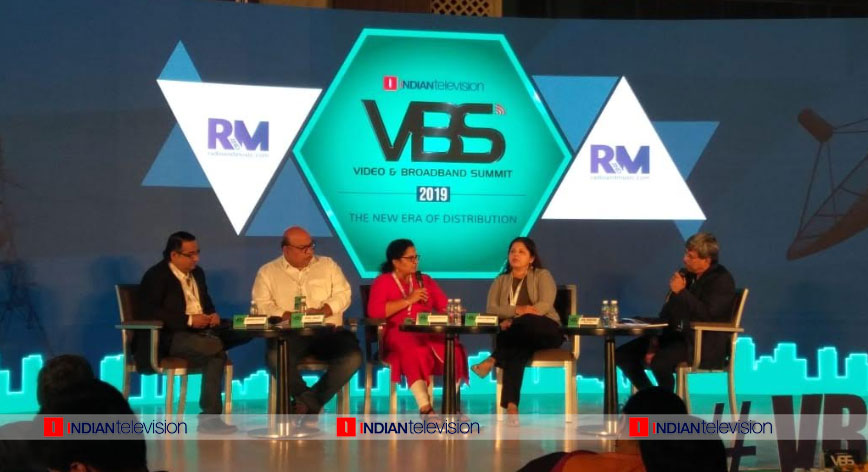
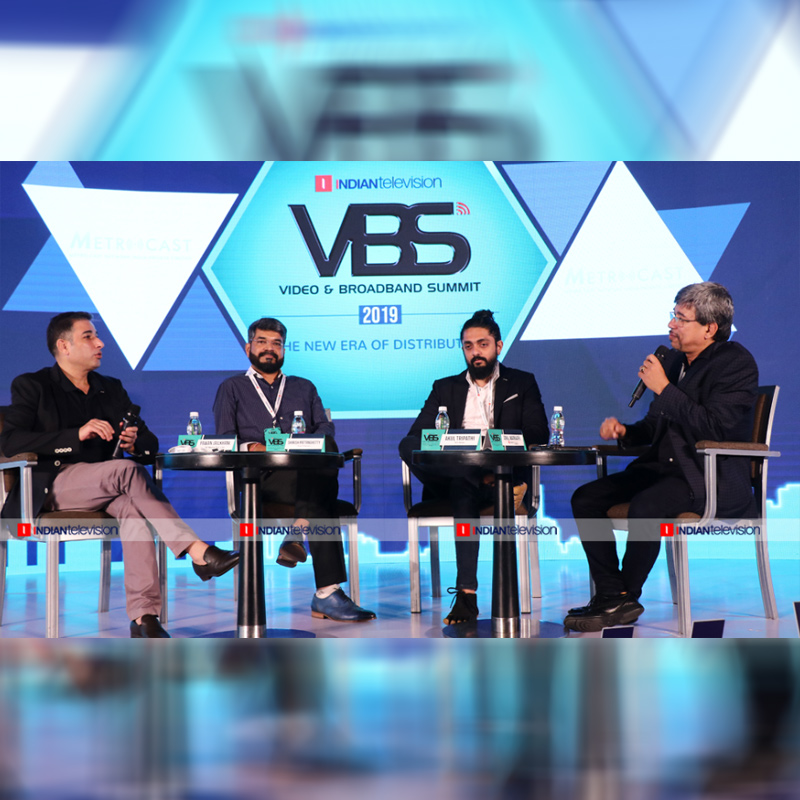
    One of the most interesting sessions of VBS 2019 organised by Indiantelevision.com on 11 December 2019 was ‘FTA: The Roadmap Ahead’. The panel discussed NTO impact, key issues faced by the FTA channels, content focus on FTA channels, how FTA channels are dealing with distribution, carriage issues and the roadmap for next 2 years.

    The panel was moderated by Indiantelevision.com founder, CEO and editor-in-chief Anil Wanvari with 9XM Media chief revenue officer Pawan Jailkhani, Enterr10 Media Fakt Marathi MD Shirish Pattanshetty and IN10 Media COO Akul Tripathi.

    FTA channels largely got their reach because of the distribution but now like any other pay channel they want to focus on content. “There is a possibility that we were running the traditional old content but now we started producing fresh content as well,” said Pattanshetty.

    Jailkhani believes distribution has done a fantastic job whether it is pre NTO or post NTO. Channels have got unimaginable reach and penetration. Earlier FTA channels used to get reach largely because of distribution and not because of content. “But now, FTA platforms are focusing on content not because of TV or competition but largely because OTT is a threat. From a content perspective, it is a threat because time spent is shifting to videos, to those platforms basically. So that’s how TV channels or FTA channels have woken up and said we need to focus on content,” said Jailkhani.

    Tripathi opined, “We never need to produce new content, there is always content available which people haven’t seen even in different eras.  The content also needs to be relevant. Right now, they would be watching it because it is a new thing and they are watching it for the first time. Going forward with the availability of the content and with the way of accessing the content, they are going to find the content that is more relevant.”

    Even FTA music channel 9XM curates fresh music content every Thursday or Friday. There are close to 7-10 movies every week that are released. 9XM runs fresh songs and curates them too. “Curation plays a part but on GECs, the time spent plays a major role. Fresh content with the current theme is very important,” said JailKhani.

    Post NTO, 9XM has gained the number 1 position in terms of reach. It’s also ahead of Star Plus in terms of reach. But what it is not able to convert is the actual viewership. Because it does not have time spent like GECs  as it runs two and a half minutes of song and not half an hour of fiction show.

    Jailkhani said that India is an underdeveloped, undersold advertising market. “We don’t get the ROIs which we should have got as per reach these guys get about channels – 100 million, 150 million reach week on week unduplicated. And it's huge. But we are not able to monetise it as per our expectation. But with NTO some price correction of about 15 to 20 per cent happened on 9XM.”

    The panelists also informed that there is a perception that FTA channels are free channels or will not have viewership in urban cities like Mumbai. But data of channels like Dangal, 9XM or Show Box show they did well on pay platforms and also lead in pay homes.

    Like any other paid channel, FTA channels invest in buying content and even pay premium to buy exclusive content to grab the maximum eyeballs. The channels don't compete with its competitors but overall TV viewership to get the maximum eyeballs.

    Pattanshetty also informed that regional FTA channels do face issues when they get carried. “We recently launched Bangla so it becomes very mandatory that we are available in the Bangla market. And it’s not easy to get carried. The comparison is who is the last guy who launched and what charge he has paid. He has to pay the premium charge and you might not be able to get the required placement that you are looking at,” he said.

    The panelists also revealed their company’s upcoming two-year plans. 9XM plans to bring digital channels. Enterr 10 plans more regional channels and fresh content for the views and IN10 Media intends to launch a new channel.

  • VBS 2019: Industry stalwarts discuss NTO second phase issues

    VBS 2019: Industry stalwarts discuss NTO second phase issues

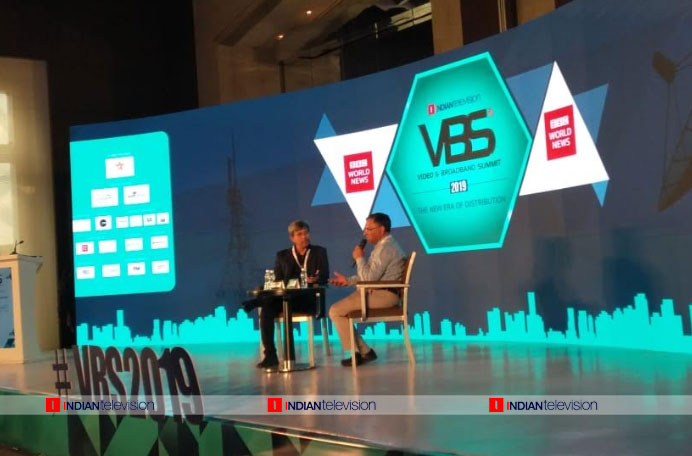
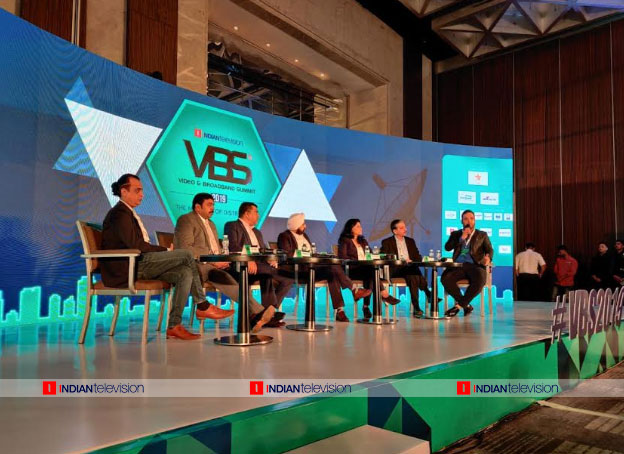
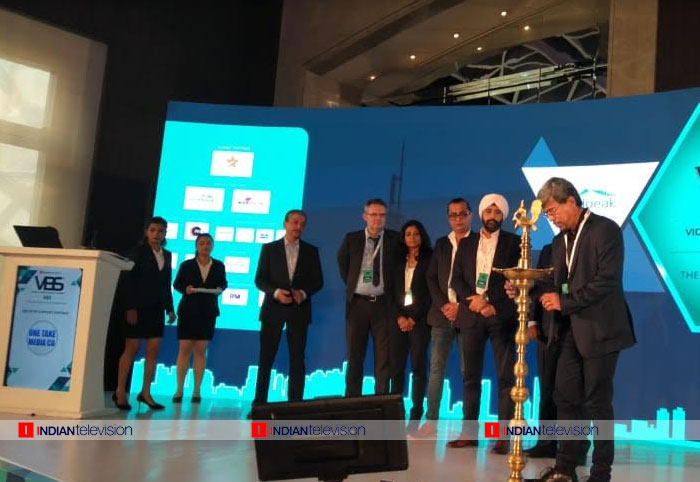
    MUMBAI: The sixteenth edition of the Video and Broadband Summit (VBS) organised by Indiantelevision.com has brought together industry doyens under one roof to discuss and understand the impact of the new tariff order (NTO) on the television broadcasting and distribution sector. VBS 2019 marked the presence of leaders from DTH, cable and broadband, broadcast, regulatory bodies and technology segments to discuss the state of the industry, key issues and finding solutions.

    Indiantelevision.com CEO, founder and editor-in-chief set the tone for the day with his welcome speech. "It is the best time for TV industry today. We are in the midst of uncertain times but uncertain times bring a lot of opportunities to build the business and explore the new way of building the cable-TV industry." He also emphasised on initiating a discussion on best practices, case studies on better execution and way forward towards a healthy television ecosystem.  

    The one-day conference began with a special address by TRAI advisor Arvind Kumar. He briefed the audience on the reason behind releasing the consultation paper to review NTO within few months of the regulatory framework. He informed that the consultation paper is only to address some infirmities in the NTO and will not bring any fundamental changes to the regulatory framework.

    “Broadcasters should rest assured that the new consultation paper will not seek to decide their channel prices. The only objective of the new consultation paper is to open a debate on how the NTO is impacting the industry and to address some of the infirmities in the NTO. The main objective of the industry was transparency and to create a level-playing field for everyone. NTO has empowered the consumer by giving him choice,” he said.

    In a fireside chat with Anil Wanvari, JioFiber president Anuj Jain elaborated on the company's plan and partnership.  He says, "Cable is a global technology and our intent is not to bring disruption in the market but add value to the industry. We have to see that television and OTT complement each other and the value that we bring is broadband. With broadband, we bring OTT content and voice services. There is enough space for everyone, there is nothing called overlap. "

    The session was followed by BARC India’s presentation on ‘TV viewership trends-post NTO era’ by chief operating officer Romil Ramgarhia. 

    The first panel discussion of VBS 2019 focused on NTO-The future roadmap. The panel was moderated by Elara Capital VP- research analyst (media) Karan Taurani with panellists IndiaCast Media Distribution president Amit Arora, Star India Distribution distribution and international business president and head Gurjeev Singh Kapoor, Metro Cast Network India promoter Nagesh Narayandas Chhabria, The Remediation Company founder & partner Shyamala Venkatachalam ; IndusInd Media & Communications chief executive officer Vynsley Fernandes and GTPL Hathway vice president Yatin Gupta.

    The objective of the NTO was to bring transparency, freedom of choice and level playing field in the industry. The panellists shared their perspective on the impact of NTO on the media and entertainment ecosystem, pricing, bouquet and ala carte price, and recently released consultation paper to review NTO.  The panellists agreed that the dust of new tariff order has settled down but the NTO 2.0 period might impact pricing again. With the new consultation paper, Gupta expects that there would be price capping on bouquets and ala carte. 

    The next panel discussion highlighted the advertisers’ take on the dynamic pay-TV landscape and how AdEX is likely to fare going forward with more changes anticipated to NTO. The panel ‘The Advertisers’ View’ was moderated by Anil Wanvari. ITC Ltd head media and PR Jaikishin Chhaproo, Havas Media Group West & South managing partner Kunal Jamuar, Godrej Consumer Products VP and head media services Subha Sreenivasan Iyer and Madison Media vice president Vandana Ramkrishna were the panellists.

    After that, Broadpeak business development manager Hervé Creff gave a presentation on ‘Keeping control of HDMI1 with Android TV operator Teir – the ‘super – aggregator’ approach’.

    The first half of VBS 2019 successfully ended with a panel discussion on ‘Transforming the sector to fuel growth’. Elara Capital VP research analyst (media) Karan Taurani, Shemaroo Entertainment chief operating officer Kranti Gada, BBC Global News South Asia distribution head Sunil Joshi and PwC India media, entertainment and sports advisory –partner and leader Raman Kalra were the panellists. The session was moderated by SBICAP Securities equity research head Rajiv Sharma.

    For more updates from post-lunch sessions stay tuned.

  • BARC week 47: English news ratings plunge to a new low

    BARC week 47: English news ratings plunge to a new low

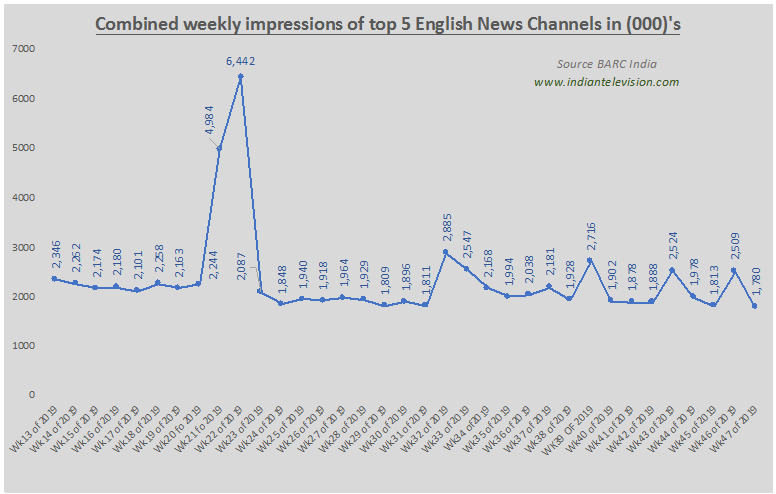
    BENGALURU: After the previous week’s uptick, due to the Ayodhya and other Supreme Court of India verdicts, English News viewership plunged to a new nadir in 2019 in week 47. The combined weekly impressions of the Top 5 English News channels in week 47 of 2019 (Saturday, 16 November 2019 to Friday, 22 November 2019, period or week under review) were just 1.780 million weekly impressions according to Broadcast Audience Research Council of India (BARC) weekly data. Combined ratings of Top 5 English News channels viewership declined 28 percent during the week under review from the 2.509 million weekly impressions recorded in the previous week (week 46).

    BARC weekly data in this paper is being considered from week 13 of 2019 to week 47. Calendar year 2019 has been an eventual year as far as publication in the public domain of Broadcast Audience Research Council of India (BARC) weekly viewership data is concerned. First,the ratings  agency stopped publishing data in the public domain from week 6 of 2019 onward after the implementation of Telecom Regulatory Authority of India  (TRAI) New Tariff Order (NTO), ostentatiously to give time for viewership to stabilize and hence prevent ‘misuse’ of data. On coercion from TRAI, BARC started putting up data in the public domain from week 13 of 2019 onward, only to revert to an older version of treating data on the landing pages and outliers from week 23 of 2019. Hence the combined viewership of the Top 5 English News channels has been the lowest yet during the 35 weeks since week 13 of 2019.

    There was no change in the channels in BARC’s weekly list of top 5 channels in week 47 of 2019 as compared to weeks 45 and 46 of 2019. Even the ranks of the 5 channels were in the same order. Please refer to the figure below:
    Top 5 English News channels in week 47 of 2019

    As mentioned above, there was no change in list of channels in terms of rank and file during week 47 of 2019 as compared to week 46. Though the Arnab Goswami led Republic TV headed the pack at first rank during the period under review, it witnessed the largest fall in viewership among the top 5 English News channels in week 47 of 2019. Republic TV’s viewership declined 0.301 million weekly impressions or 35 percent in week 47 of 2019 to 0.558 million weekly impressions  from 0.859 million weekly impressions in week 46.

    Ranked second, Times Now witnessed the third steepest fall in percentage terms and the second in terms of absolute numbers among the top 5 channels of its genre with a decline of 0.150 million weekly impressions or 26.5 percent at 0.415 million weekly impressions in week 47 of 2019 as compared to 0.565 million weekly impressions in the previous week.

    PubcasterDoordarshan’s DD India witnessed the second steepest decline in percentage terms at 28 percent or a decline of 0.120 million weekly impressions (third most in absolute numbers) to 0.308 million weekly impressions in week 47 of 2019 as compared to 0.428 million weekly impressions in week 46.

    With a decline of 22.4 percent or 0.08 million weekly impressions, the India Today group’s India Today Television saw the least decline in percentage terms and the fourth lowest in absolute numbers with a fall of 0.080 million weekly impressions in week 47 of 2019 as compared to week 46. India Today Television scored 0.281 million weekly impressions during the period under review as compared to 0.361 million weekly impressions in week 46 of 2019.

    Mukesh Ambani’s Network18 associated CNN News18 saw ratings decline by 0.077 million weekly impressions or a fall of 26.1 percent in week 47 of 2019 to 0.218 million weekly impressions from 0.295 million weekly impressions in the previous week.

    Please refer to the figure below:


  • Video and Broadband Summit 2019 to discuss way forward with NTO & changing digital landscape

    Video and Broadband Summit 2019 to discuss way forward with NTO & changing digital landscape

    MUMBAI: How is the new tariff order (NTO) impacting the broadcast and video distribution landscape in India? How can broadcast networks effectively partner with LCOs and MSOs to successfully navigate the post-NTO environment? These are some of the key themes which will be discussed at the Video and Broadband Summit 2019.

    Running in its sixteenth year, the summit will be held in Mumbai on 11 December and will bring together stalwarts from television broadcasting, internet and distribution sectors under one roof to discuss and deliberate key issues facing the sector and recognise the accomplishments of key stakeholders.

    Over the last one-and-a-half-decades, VBS (earlier IDOS) has grown to become India's definitive Pay-TV and video distribution get together. However, this year’s summit is critical given that 2019 has witnessed some of the most fundamental changes in the pay TV and broadcast industry.

    While, on the one side TV networks, LCOs, MSOs and DTH players are still adjusting to the fundamental changes introduced by the NTO – described by many as the most significant reform in broadcast TV in decades – on the other, India has seen exponential growth of OTT players. Together, these changes will fundamentally alter how Indians consume entertainment in the years to come.

    If these changes were not enough in themselves, the telecom and internet distribution sectors are also undergoing fundamental changes. While, the entry of Reliance Jio Fibre has not proved to be the ultimate disruptor industry experts were expecting it to be, the recent Supreme Court ruling on the AGR (adjusted gross revenue) issue, asking telecom companies to pay Rs 92,000 crore has considerably dampened the industry sentiment and can negatively affect their ability to raise funds for broadband, network expansion and digital India.

    Not surprisingly, since the Supreme Court ruling, all major telecom operators in India, ranging from Airtel, Vodafone Idea and Reliance have announced mobile tariff charge hikes by as much as 20 per cent. Given that Airtel and Reliance are also deeply entrenched in providing broadband services, any tariff hike can impact broadband penetration as well.

    The delegate profile for this year’s VBS is a reflection of the concerns facing the industry. As many as 60 per cent of the participants in this year’s VBS will be LCOs, MSOs and distributors, while 15 per cent delegates will be coming from broadcast networks including Star India – also a summit partner. Significantly, 25 per cent of the delegates this year will come from telecom, broadband, technology and data platforms. Without doubt, apart from getting the industry perspective on various issues ailing the industry as well as future opportunities, the summit will also provide an excellent opportunity for networking between the various stakeholders in the media and entertainment industry.

    Some of the key sessions in the summit will be:

    • Free To Air: The roadmap ahead
    • NTO: The future roadmap; TRAI consultation paper and how will the amendments to the existing tariffs play out?
    • Transforming the sector to fuel growth: What are the key issues facing the sector? How can more transparency and discipline be injected into it?
    • The distribution challenge: How are distribution companies innovating to stay ahead of the curve? What measures are they adopting to counter relentless disruption?
    • Internet: The changing role in video distribution
    • Role of the LCO: How has the role of the LCO changed under the new regulatory framework and its significance going forward? 
    • The advertisers’ view: Advertisers’’ view on dynamic Pay-TV landscape and how AdEx is likely to fare going forward with more changes anticipated to the NTO.

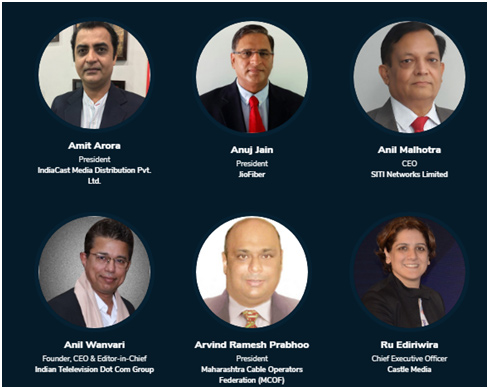
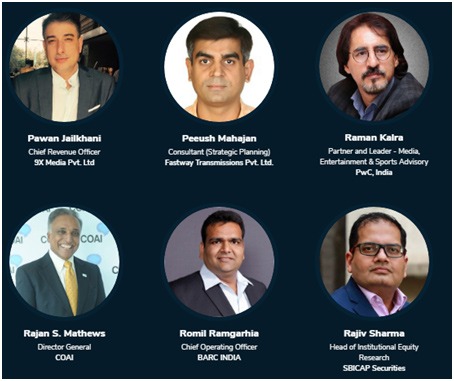
    To discuss all these relevant issues, the summit has also lined up a distinguished panel of more than two dozen speakers. Among them are:

    The VBS summit is an initiative of Indiantelevision.com. Started in 2000 by media and television analyst Anil Wanvari, Indiantelevision.com is the first online information and interactive service focusing on the Indian television and media business. Indiantelevision.com organises close to a dozen events every year, among them are The Indian Telly Awards, Tele-Wise Tamil, Media HR Summit, Brandvid Awards, Vidnet, The Indian Telly Technical Awards, and The Content Hub.
     

  • BARC week 46: Uptick in English news channel viewership

    BARC week 46: Uptick in English news channel viewership

    BENGALURU: Recent events in the country resulted in the increase in viewership of news channels. Broadcast Audience Research Council of India (BARC) weekly data for Top 5 English news channels in week 46 of 2019 (Saturday, 9 November 2019 to Friday, 15 November 2019, week or period under review) shows a sharp increase in ratings as compared to the previous week. Among the major news events that took place during the week under review was the Supreme Court’s verdict for the Ayodhya dispute. 

    Over the past few weeks, combined viewership of the top 5 English news channels had stabilised to some extent and then witnessed a slight dip in week 45, which was followed by an increase of 0.696 million or 38.4 percent in week 46 of 2019. The combined weekly impressions of the top 5 English news channels were 1.813 million in week 45 and 2.509 million in week 46 of 2019.

    A slight digression here. It must be noted that since week 13 until week 46 of 2019, the channels have been the same in BARC’s weekly list of Top 5 English news channels, except for tweaking of ranks. BARC has stopped publishing data in the public domain after week 5 of 2019 to allow ratings of channels to stabilize after the implementation of the Telecom Regulatory Authority of India (TRAI) mandated New Tariff Order (NTO). BARC recommenced publishing data in the public domain in week 13 of 2019 on urging by TRAI.

    Please refer to the figure below: 
    Top 5 English news channels in week 46 of 2019

    As mentioned above the Top 5 English news channels in week 46 have been the same since week 13 of 2019. In the case of week 46 of 2019, even the ranks of the channels were the same as in the previous week (week 45). 

    Please refer to the figure below for ranks of the top 5 channels:

    In absolute numbers, the Arnab Goswami-headed Republic TV saw the maximum increase in viewership with an uptick of 0.263 million impressions (44 percent increase), while India Today Television saw the ratings increase by just 86,000 (31.2 percent increase) in week 46 as compared to week 45 of 2019. In terms of percentage, pubcaster Doordarshan’s English news channel DD India saw viewership increase of 52.9 percent (0.148 million weekly impressions),while Times Now saw an increase of just 32.4 percent (0.152 million weekly impressions) in week 46 as compared to week 45 of 2019.

    Over the past few weeks, combined viewership of the top 5 English news channels had stabilised to some extent and then witnessed a slight dip in week 45, which was followed by an increase of 0.696 million or 38.4 percent in week 46 of 2019.

    Republic TV scored 0.859 million weekly impressions in week 46 as compared to 0.596 million weekly impressions in week 45 of 2019. At second rank, Times Now scores 0.565 million weekly impressions during the period under review as compared to 0.454 million weekly impressions in the previous week.

    Ranked three in week 46 of 2019, DD India scored 0.428 million weekly impressions as compared to 0.280 million weekly impressions in week 45. India Today Television garnered 0.362 million weekly impressions in week 46 at rank 4 as compared to 0.276 million weekly impressions in week 45 of 2019. Completing the quintet at rank 5 was Network18’s CNN News18 which saw viewership increase of 88,000 weekly impressions in week 46 of 2019 to 0.295 million weekly impressions from 0.207 million weekly impressions in the previous week.
    Please refer to the figure below:


  • Airtel Digital TV revenue and profit up as Bharti Airtel reports record loss

    Airtel Digital TV revenue and profit up as Bharti Airtel reports record loss

    BENGALURU: Indian telecom major Bharti Airtel reported 17 percent y-o-y increase in revenue for its Digital TV Services for the quarter ended 30 September 2019 (Q2 2020, quarter or period under review) as compared to the corresponding year-ago quarter Q2 2019. The company says that with the adoption of IndAS 116, effective 1 April 2019, the results and ratios of periods commencing 1 April  2019 are not comparable with previous periods.

    Further, pursuant to reporting changes in DTH effective April 1, 2019 (content cost becoming a Pass through expense) on comparable basis, the y-o-y revenue growth for the period ended 30 Sep 2019 is 17 percent (Quarter ended) and 16 percent (six months ended). EBITDA/ Total revenues is 43.3 percent for the quarter ended 30 Sep 2019 and 42.8 percent for the six months ended 30 Sep 2019 adjusting for the reporting changes.

    Without taking into accounting the adoption of IndAS 116, Airtel’s Digital Services revenue declined 22.9 percent y-o-y to Rs 789.3 crore in Q2 2020 from Rs 1,024.2 crore. Operating profit or EBIDTA for Airtel’s Digital TV Services increased 41.6 percent y-o-y in Q2 2020 to Rs 560.7 crore from Rs 396 crore. EBIT for the period under review increased 70 percent y-o-y to Rs 3,243 crore from Rs 1,905 crore.

    The company reported 14.2 percent increase in capex for Q2 2020 at Rs 205.2 crore as compared to Rs 179.7 crore in Q2 2019.

    Digital TV Services subscription numbers

    Airtel Digital TV Services subscribers increased 9.7 percent y-o-y in Q2 2020 to 1.62 crore from 1.48 crore in Q2 2019. Airtel Digital TV Services had 1.6 crore subscribers in the immediate trailing quarter Q1 2018. The company reported net additions of 181,000 Digital TV subscribers in Q2 2020. Average revenue per user (ARPU) in Q2 2020 increased to Rs 162 from Rs 157 in the immediate trailing quarter, but was far lower than the Rs 232 in Q2 2019. In US$ terms, the company reported ARPU of $2.3, $2.2 and $3.3 for Q2 2020, Q1 2020 and Q2 2019 respectively. Monthly churn in Q2 2020 was higher at 1.6 percent as compared to 1.0 percent in the immediate trailing quarter Q1 2020 and 1.3 percent in the corresponding year ago quarter.

    Bharti Airtel Numbers

    Bharti Airtel consolidated revenues for Q2 2020 at Rs 21,131 crore grew 6.9 percent y-o-y (reported increase of 4.9Percent) on an underlying basis. India revenues for Q2 2020 at Rs 15,361 crore increased by 5.7 y-o-y (reported increase of 3.0percent) on an underlying basis. Mobile revenues witnessed a y-o-y growth of 7.1 percent. Mobile data traffic has nearly doubled to 4,497 PBs in the quarter as compared to 2,478 PBs in the corresponding quarter last year. Mobile 4G data customers increased by 56.9 percent to 10.31 crore from 6.57 crore in the corresponding quarter last year. Digital TV revenue witnessed a growth of 17.1 percent y-o-y on an underlying basis (decline of 22.9 percent on reported basis due to reporting changes in DTH pursuant to the new tariff order). Airtel Business has sustained its performance on ay-o-y basis.

    Bharti Airtel’s consolidated EBITDA at Rs 8,936 crore increased 40.9 percent y-o-y. Consolidated EBITDA margin increased by 10.8 percent to 42.3 percent in the quarter as compared to 31.5 percent in the corresponding quarter last year. Consolidated EBIT increased by 85.2 percent y-o-y to Rs 1,993 crore. Consolidated Net Loss before exceptional items for the quarter was  Rs 1,123 crore. The consolidated net loss after exceptional items for the quarter was Rs 23,045 crore.

    Company Speak

    Bharti Airtel MD and CEO Gopal Vittal said in a press release, “Despite being a seasonally weak quarter, we witnessed positive revenue growth in Q2 on the back of various initiatives aimed at providing superior differential services through our Thanks platform. We continue to witness strong data traffic growth of approximately 81 percent y-o-y and added about 0.8 crore 4G customers on our network during the quarter. We remain committed to strengthening our network and providing a superior experience to our customers. On the AGR verdict of the Hon’ble Supreme Court, we continue to engage with the government and are evaluating various options available to us. We are hopeful that the government will take a considerate view in this matte given the fragile state of the industry.”