Tag: NTO 2.0

  • IMCL’s Vynsley Fernandes on NTO changes, tech improvements and staying relevant

    IMCL’s Vynsley Fernandes on NTO changes, tech improvements and staying relevant

    MUMBAI: In the last couple of years, streaming services have emerged as a big challenge to traditional cable distributors while the business model has changed too owing to the new tariff order (NTO). Amid the flux, upgrading the existing structure, technology and strategy has become necessity to stay relevant. At the commemoration of the twenty fifth anniversary celebration, IndusInd Media and Communications Ltd (IMCL) unveiled a new mnemonic logo #IamNXT25. As a part of the celebration, the company is launching many new products and solutions to stay relevant in the game.

    As IMCL CEO Vynsley Fernandes summarises, “So everything we do from now is how do we stay relevant and how do we grow and how do we become a brand new generation for the next 25 years.” He adds that a better integration of IMCL’s four products – digital cable, Headend-In-The- Sky (HITS), broadband business and entertainment content will be noticeable. Citing an example, he says IMCL has launched a combination product of HITS and broadband in Hyderabad.
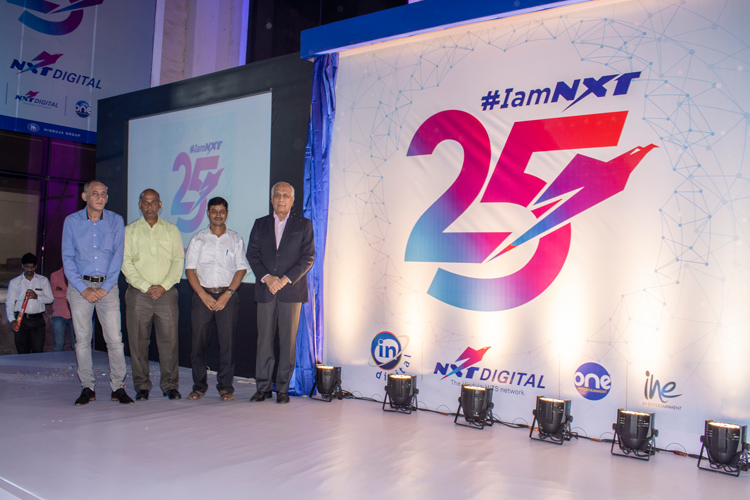
    IMCL’s intra and inter collaborative strategy going forward:

    Talking to Indiantelevision.com, Fernandes also speaks about how IMCL strikes the balance between HITS and digital cable. He says that while the former helps IMCL in remote areas, the latter keeps reigning in high density cities. He cites the example of Andaman and Nicobar Islands, where HITS is a great solution and IMCL has close to 20,000 customers there. Moreover, it is looking at offering customers cable or HITS in their individual terrains coupled with broadband services.

    In a unique model, IMCL has also collaborated with some very large MSOs in India including its competitors who are keen to leverage HITS technology. Under the ‘managed service model’, they will use the technology in the remote areas as a delivery mechanism. While IMCL currently has 5 million subscribers, it has signed managed services agreements for another 5 million customers.
    “We have crossed 50 cities already as we speak. And while broadband has continued to grow and has a significant growth, it will get a renewed thrust in this combo package. Because wherever we go, wherever we have HITS or digital cable, we are bundling our broadband service with it so that will carry more traction. So, while we may not necessarily look at radically growing beyond 50 cities or 50 towns, we are looking at increasing the penetration of our broadband within those 50 cities and towns by bundling it with either with digital cable or HITS,” Fernandes comments on broadband expansion.

    Talking on technological investments, he adds that IMCL has just completed satellite migration moving from Vikon 5 to Intelsat 39. He also adds that IMCL is now on a new technology, 32 APSK. He says that the focus is on ensuring not just investments in new technology, but investments in cutting edge future-proof technology.

    Did IMCL lose consumers during NTO 1.0?

    “I think it would be incorrect to say that our growth in revenues and ARPU is only to do with NTO. We have been building our capabilities and our model year-on-year to meet our promoter’s vision for the future. The group envisaged the need for another cutting-edge platform that could reach phase 3 and 4 markets, and HITS (headend-in-the-sky) was the only way to do this and we launched our HITS services in 2015,” he comments on NTO 1.0’s effect on financial stability.

    “We also were the first MSO to move to prepaid billing of both operators and subscribers. This was a huge challenge in a market used to postpaid transactions, yet we realised that this is where ultimately the industry would have to get to in order to survive. This transition caused us some churn but helped us towards improving our financial stability,” he adds.

    He mentions that IMCL was one of the first MSOs to launch mobile and web applications to help operators and subscribers activate and interact with its platforms more easily. It even migrated to 16APSK modulation on the HITS satellite in order to be able to add more channels within the existing satellite capacity without increasing costs.

    He accepts that IMCL lost subscribers in the new regime like other DPOs but he claims their churn rate was less than that experienced by others. Firstly, he mentions that IMCL engaged with partners, cable operators/distributors, early on, way before implementation of NTO 1.0, in November 2018 – to help them understand what NTO was all about and how it needed to be implemented. IMCL conducted around 150 workshops and training sessions all across India as it felt it was important for all stakeholders to understand and grasp the changes taking place.

    IMCL ensured that everyone was ready and knew how to create packages, bundles, what types of questions subscribers were likely to ask. He says they were, therefore, ready on the ground for handling the shift to the NTO regime.

    “Secondly, the technology we had implemented allowed us to be able to cater to subscribers’ requirements. One important thing about NTO was the whole concept of allowing the customer to choose what he wants to watch and paying only for that. Whilst we did create our own packages to help subscribers, these only have a penetration of around 18 per cent in HITS. The other 82 per cent of our subscribers opted to select their own choice of broadcaster bouquets and ALC. This capability to allow the consumer to effect their choice was one of the key reasons for customer satisfaction and therefore reduced churn,” he states.

    What does IMCL expect from NTO 2.0 and how are they preparing?

    From a DPO perspective, he does not think there'll be significant changes with the implementation of NTO 2.0. Overall, it is effectively tweaks to the NTO 1.0 framework including multi-home TV, right pricing etc, as he says. According to him, there is logic in putting in regulations for multi-homes as this was not included in original regulations. He hopes that it can now use this to help claw back some of the customers it had lost during NTO 1.0 who had relinquished their 2nd and 3rd TVs at home.

    He is also of the view that there will be no significant revenue changes if broadcasters reduce channel prices. He thinks that the more the prices of content drop, the more customers are likely to increase their viewing of content and add their 2nd/3rd TVs to their homes again, many of which were discontinued when transitioning to the NTO regime. He believes that revenues could possibly increase as customers expand their portfolio of channels.

    Fernandes notes that with respect to NTO 2.0, perhaps the key driver is technology-readiness and communications. “Our technology is completely ready if we have to provide new bundles, packaging and pricing. Our systems are effectively already delivering such requirements. We’ve deployed systems from global leaders in pay-TV technology and that are being used by some of the largest platforms in the world. So for us to be able to make a transition, however small or significant, we're ready for it,” he comments.

    “From a communications perspective, we work very closely with our business partners and our local cable operators. They have all played a significant and critical role in helping us to implement NTO 1.0.  Our success has not been because of us directly marketing to subscribers, but because our business partners and LCOs are able to reach and educate customers personally. We would use the same mechanism all over again because we've seen it to be very successful,” he signs off. 

  • GTPL Hathway believes NTO 2.0 won’t affect price stability

    GTPL Hathway believes NTO 2.0 won’t affect price stability

    MUMBAI: At the very beginning of 2020, the Telecom Regulatory Authority of India (TRAI) issued fresh amendments to the New Tariff Order (NTO) within less than one year of its implementation. Rattled by the sudden change, the stakeholders in the industry seem to be displeased. But in contrast, GTPL Hathway believes NTO 2.0 is an extension of NTO 1.0 and price stability in the market will continue despite the revision.

    “There is NCF for Rs 160 in the new NTO and there is NCF Rs 130 in the earlier NTO plus we could charge additional Rs 20 for every additional 25 channels, so broadly speaking, from a short-term perspective, they are more or less similar kind of thing. So, NCF has a big portion of earning. That is something which is more or less protected while one can debate on what kind of future impact it will have after three years, after five years, but from a short-term perspective that is protected,” GTPL Hathway chairman and non-executive director  Rajan Gupta said in an earnings call after q3 result.

    “In fact, we have the ability to charge Rs 30 more in case market forces allow us to charge and GTPL being high market share in many territories, they should have the ability to charge higher and we are happy about the consumer. I think consumers will have more choices,” he added.

    According to Gupta, DPOs with higher market share should be able to make many more relevant bouquets for consumers, for example, genre-level bouquet while currently bouquets are limited to five-six, which is more based on the ARPU slabs.  He said having very micro bouquets is also needed.  He stated that can happen with NTO 2.0 on the back of flexibility it offers for DPOs.

    Although he mentioned this is not a full assessment on NTO 2.0 but the MSO believes on the basis of the initial assessment that it should see a lot of stability in earnings and cash flow.

    “It is too early to speak about how the ARPU will happen in NTO 2.0. In NTO 1.0, if you see this quarter, our ARPU has stood at around Rs 118 and we are expecting that it will go up in q4. We have gone down by Re 1- Rs 1.5 because of the festive offer given by the broadcasters. We are expecting that in q4, it will go up as the festive offer is over. Right now, we have to wait to see what new bouquets, new channel prices come from the broadcasters in NTO 2.0 and only after the assessment, we can comment on NTO 2.0 ARPU,” GTPL Hathway  Cable TV business head and chief strategy officer Piyush Pankaj said.

    He also added that it is not certain right now if less money will be coming from customers because it depends on what type of bouquets and a-la-carte price the broadcasters will come through. But he said there is price stability in the market during the last one year and they believe price stability would continue.

  • NTO 2.0: Bombay High Court adjourns case to 26 Feb

    NTO 2.0: Bombay High Court adjourns case to 26 Feb

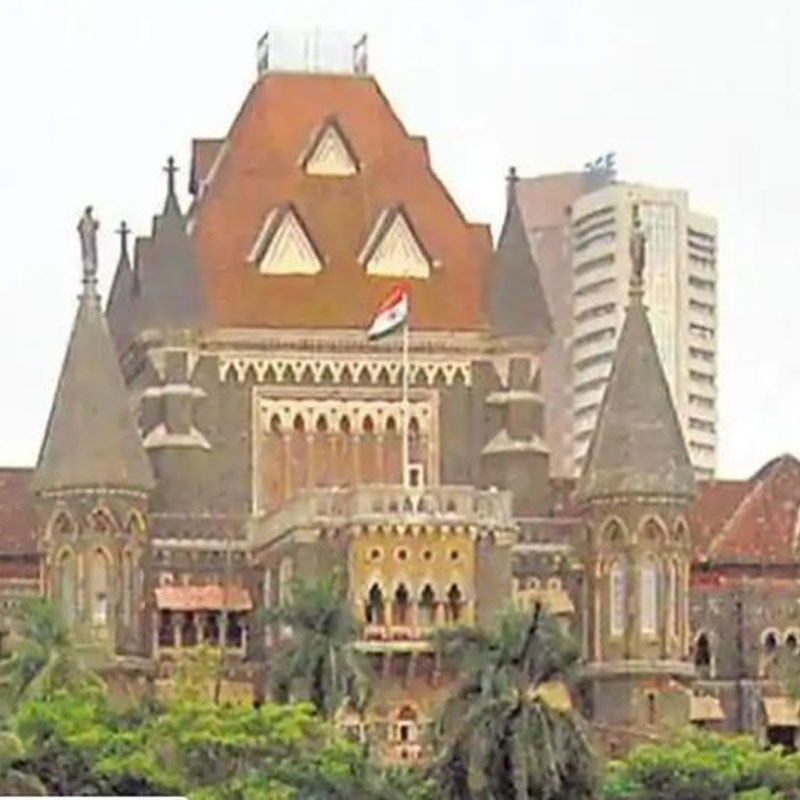
    MUMBAI: The Bombay High Court has adjourned the ongoing case between the Telecom Regulatory Authority of India (TRAI) and broadcasters on the new tariff order (NTO) to 26 February. During the last hearing , no interim relief had been granted.

    Last time, the advocate for TRAI made a statement at the very beginning that the arguments should be based only on the petition and not on the rejoinder. Countering that, the advocate for Film & TV Producers Guild of India stated that there is nothing new in the rejoinder and everything is available in public domain.

    He also touched upon the point of the newly imposed twin conditions levied in the amendment of new tariff order where one condition is the cap of Rs 12 in a bouquet, the other being the discount on channel bouquets to around 33 per cent.

    Earlier, broadcasters were giving higher discounts pursuant to cross subsidies available by including smaller channels in its bouquets, which was totally in favour of consumers. He argued that if a consumer has to watch the so-called popular/niche channels (terms used by TRAI), he has to pay a higher price and it will increase his monthly bill.

    He also continued that although they do not come under the direct purview of TRAI, the amendments in the tariff order can affect their revenue. As the regulatory body has put a cap of Rs 12 on pay channel that can be included in a bouquet, the broadcaster cannot charge more than Rs 12 for that pay channel in a bouquet.

    The broadcaster has to pay huge amount to acquire content. Due to the regulations, if the broadcaster is not able to include it in a bouquet, it may prefer not to acquire such high priced content. Moreover, if broadcasters can not acquire quality content, the customer will lose.

    While broadcasters have the flexibility to decide the price of its pay channel and the customer should be able to view quality content on his TV, both these conditions are violated by the order.

    Last month, the Indian Broadcasting Foundation (IBF) along with others has filed a writ petition in the Bombay High Court against the TRAI order. The petitioners mentioned that the as amendments which has been notified in “consumer interest," will have exactly the opposite effect, leading to crippling of the business of broadcasters and ultimate suffering of the consumer.

  • NTO 2.0 case: No interim relief granted, to be heard on 12 Feb

    NTO 2.0 case: No interim relief granted, to be heard on 12 Feb

    MUMBAI: The Bombay High Court has listed the next hearing of the ongoing case between the Telecom Regulatory Authority of India (TRAI) and broadcasters on the new tariff order (NTO) on 12 February. No interim relief has been granted yet which can be argued at the next hearing. It has also been directed to issue a notice to Maharashtra advocate general.

    During Thursday’s hearing, the advocate for TRAI made a statement at the very beginning that the arguments should be based only on the petition and not on the rejoinder. Countering that, the advocate for Film & TV Producers Guild of India stated that there is nothing new in the rejoinder and everything is available in public domain.

    He also touched upon the point of the newly imposed twin conditions levied in the amendment of new tariff order where one condition is the cap of Rs 12 in a bouquet, the other being the discount on channel bouquets to around 33 per cent.

    Earlier, broadcasters were giving higher discounts pursuant to cross subsidies available by including smaller channels in its bouquets, which was totally in favour of consumers. He argued that if a consumer has to watch the so-called popular/niche channels (terms used by TRAI), he has to pay a higher price and it will increase his monthly bill.

    He also continued that although they do not come under the direct purview of TRAI, the amendments in the tariff order can affect their revenue. As the regulatory body has put a cap of Rs 12 on pay channel that can be included in a bouquet,  the broadcaster cannot charge more than Rs 12 for that pay channel in a bouquet.

    The broadcaster has to pay huge amount to acquire content. Due to the regulations, if the broadcaster is not able to include it in a bouquet, it  may prefer not to acquire such high priced content. Moreover, if broadcasters can not acquire quality content, the customer will lose.

    While broadcasters have the flexibility to decide the price of its pay channel and the customer should be able to view quality content on his TV, both these conditions are violated by the order.

    Earlier in the month, the Indian Broadcasting Foundation (IBF) along with others has filed a writ petition in the Bombay High Court against the TRAI order. The petitioners mentioned that the as amendments which has been notified in “consumer interest," will have exactly the opposite effect, leading to crippling of the business of broadcasters and ultimate suffering of the consumer.