Tag: NTO 2.0

  • Bombay HC orders conflicting parties to present submissions on the validity of sec11 of TRAI Act by 31 August

    Bombay HC orders conflicting parties to present submissions on the validity of sec11 of TRAI Act by 31 August

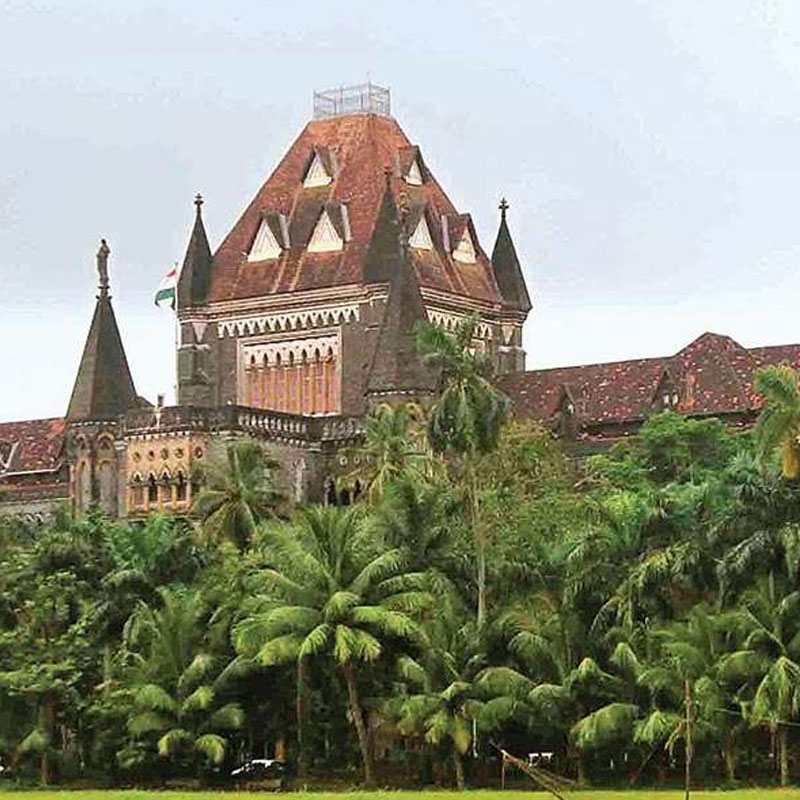
    KOLKATA: Amid the ongoing tussle between the Broadcasters and the Telecom Regulatory Authority of India( TRAI) regarding the amended new tariff order (NTO 2.0), the Bombay High Court’s division bench comprising of Justice A A Sayed, Justice Anuja Prabbhudesai heard the case on Thursday. The bench has ordered the parties to submit additional submissions on the validity of section 11 of the TRAI Act by 31 August. 

    The bench will hear the matter finally on 2, 7 and 8 September and will pronounce judgment following the hearings. As per today’s order, regulations will remain in force but no coercive steps can be taken by the regulator. It also added the Indian government is at liberty to file an affidavit on the validity of section 11 if needed. 

    Meanwhile, TRAI in a recent notification directed all broadcasters to comply with the provision of NTO 2.0 by 26 August, substituting the earlier timeline of 10 August as the final judgement on the case was expected on 24 August. The confusion regarding the implementation appears to persist as again the pronouncement of verdict has been postponed to next month. 

    Earlier this year,  the power to issue tariff orders by TRAI was challenged by broadcasters when they filed a writ petition on NTO 2.0 against the authority. “Violation of the mandatory principles of Section 11(4) of the TRAI Act and thus acting in a matter that is inconsistent with the TRAI Act, 1997” – was mentioned as one of the broad grounds of the challenge.

  • ZEEL’s Punit Goenka expects advertising growth to be back in H2, moderate sub growth for FY 21

    ZEEL’s Punit Goenka expects advertising growth to be back in H2, moderate sub growth for FY 21

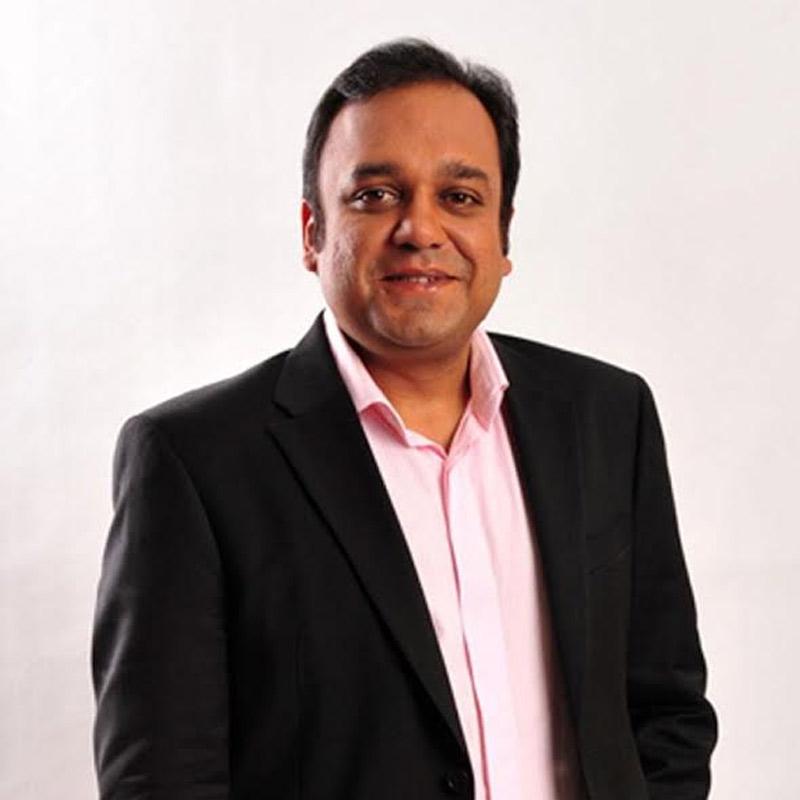
    KOLKATA: The unprecedented Covid2019 crisis has had a major impact on media and entertainment business, the leading player Zee Entertainment Enterprises Limited (ZEEL) reported a revenue decline of 34.7 per cent YoY in the first quarter (Q1) of the financial year (FY) 21, led by the sharp decline in ad revenues. As the economy has started showing signs of slow recovery, ZEEL MD and CEO Punit Goenka expect the growth of the advertising to be back in the second half of the year.

    “On the advertising side, our outlook is quite positive. We do expect the growth to be back in the second half of the year. We are targeting growth from the third quarter itself. We have factored in IPL into the same number. I don’t want to comment on what IPL is going to do, what is the industry going to do. It’s a very normal feature now,” Goenka stated in an investors call after declaring Q1 results.

    The company executives stated that the recovery has already begun and the advertisers are coming back as consumer spending has started again. ZEEL is seeing improvement in ad revenue on a month-on-month basis. 

    Goenka also mentioned that FMCG is the largest sector of advertisement that ZEEL gets. Hence, this sector is the first one to start moving for the broadcaster to have any semblance of growth coming back. 

    “If we look at the initial days, almost all discretionary companies completely stopped advertising and advertising was primarily dominated by FMCGs in the month of April. So, as things have progressed, FMCGs have been scaling up their investments. On top of that, we are seeing discretionary categories like Auto, Handset all are coming back. But primarily, it is FMCG where the rebound is strong. As festive seasons kicks in we will expect other categories like telecom, consumer durables, e-commerce to scale up their investment. And on the basis of that, we are projecting that we will see acceleration starting September,” ZEEL corporate strategy and investor relations head Bijal Shah said.

    ZEEL does not predict any major enhancement in CAPEX for the FY. Although it will be better positioned to guide the EBIDTA margin at the end of Q2 given the persisting uncertainties, it emphasizes that there will be an improvement compared to Q1. ZEEL expects the margin to improve sequentially every quarter, gradually inching back to 30 per cent. If everything is normal, it expects the margin to be at 30 per cent or above at FY 22. 

    The broadcaster will go back to its normal run rate on content cost in q2 itself because all channels have started going back to normal production level which was before pre-COVID. However, the content cost-revenue ratio may go up for this FY given the drop in advertising revenue. 

    “We have been really working on collections. While the receivables went up last year, we will see our receivables coming up as things settle down. In the coming quarters of FY 21, our receivables should be in line with what there were in earlier years,” ZEEL CFO Rohit Gupta said.

    “ In terms of domestic subscription revenue, we have factored in several price increases in channels and bouquets. Since a stay has been put on NTO 2.0, we have not been able to take those hikes. We do expect the domestic subscription growth will be moderated for the current year. NTO 2.0, whenever implemented, will have very short term impact as we do believe our content has the ability for consumption pull. Our ZEE5 subscription growth will also aid the growth,” Goenka commented. 

  • TRAI directs broadcasters to comply with the provision of NTO 2.0 by 26 August

    TRAI directs broadcasters to comply with the provision of NTO 2.0 by 26 August

    NEW DELHI: Telecom Regulatory Authority of India (TRAI) in a recent notification has directed all broadcasters to comply with the provision of the New Tariff Amendment Order (NTO 2.0) by 26 August. The broadcasters were previously asked to comply by NTO 2.0 by 10 August but due to the ongoing battle between broadcasters and the regulatory body, the date has been substituted by 26 August.

    The Bombay High Court’s Verdict on the NTO 2.0 case between broadcasters and the TRAI is expected on 24 August.

    The Indian Broadcasting Foundation (IBF) and other broadcasters had approached the Bombay High Court over the Telecom Regulatory Authority of India’s (TRAI) July 24 directive, wherein it has asked all broadcasters to comply with NTO 2.0 by August 10, despite the fact that the matter is sub judice and the final judgment has been reserved by the court.

    In one of the hearing, the case was listed before the original bench comprising Justice AA Sayed and justice Anuja Prabhudesai. While the legal battle is ongoing since long, TRAI citing a regulatory vacuum released a fresh directive on 24 July irking the broadcasters who have already been battling with the impact of the ongoing pandemic.

    It asked broadcasters to publish details including maximum retail price per month of channels and maximum retail price per month of bouquets of channels, the composition of bouquets and also amended reference interconnected offer (RIO) and other details on their website. 

  • Bombay high court’s NTO 2.0 verdict on 24 August

    Bombay high court’s NTO 2.0 verdict on 24 August

    KOLKATA: The Bombay high court's verdict on the NTO 2.0 case between broadcasters and the Telecom Regulatory Authority of India (TRAI) is expected on 24 August. Until then, all parties have agreed to wait before taking any further decision. 

    During a hearing last week, the court asked both parties to follow “gentlemen’s word” and TRAI also assured to not take any action against broadcasters who haven't yet implemented NTO 2.0.

    During Friday’s hearing, the case was listed before the original bench comprising justice AA Sayed and justice Anuja Prabhudesai. While the legal battle is ongoing since long, TRAI citing a regulatory vacuum released a fresh directive on 24 July irking the broadcasters who have already been battling with the impact of the pandemic.

    It asked broadcasters to publish details including maximum retail price per month of channels and maximum retail price per month of bouquets of channels, the composition of bouquets and also amended reference interconnected offer (RIO) and other details on their websites by 10 August.

    Follow Tellychakkar for the consumer facing news & entertainment

  • NTO 2.0: DPOs express discontent over partial implementation of regulation

    NTO 2.0: DPOs express discontent over partial implementation of regulation

    KOLKATA: With constant changes in regulations, the pay-TV sector in India continues to face uncertainty. Major broadcasters have come together to fight the implementation of the amended new tariff order (NTO 2.0) as directed by the Telecom Regulatory Authority of India (TRAI). However, distribution platform operators (DPOs) have already complied with the network capacity fee (NCF), multi-TV charges, etc., under the new directive and express dissatisfaction over the partial implementation. 

    “TRAI had asked all DPOs to adhere with NTO 2.0 on NCF, multi-home and others. As broadcasters have not given any new rates, you can’t implement the full NTO 2.0. If you implement half NTO, you have taken whatever is negative on your books but whatever positive we could take from broadcasters’ side has not happened. Hence, it is harmful to both DPOs and subscribers. We will be struggling how to handle it if the issues drag on and broadcasters don’t come out with new prices,” says GTPL Hathway CATV business head and chief strategy officer Piyush Pankaj.

    While broadcasters are reeling under Covid2019 impact, TRAI came out with a directive to implement NTO 2.0 by 10 August. As the petition against it was already sub judice, the broadcasters went to the Bombay high court challenging the directive. The court asked both parties to go by “gentlemen’s word” and TRAI assured it would not take any action till the next hearing. The court is hearing the case today before a bench comprising justice AA Sayed and justice Anuja Prabhudesai. 

    Another executive from a national MSO also brought up the fact that TRAI made all DPOs to implement the order on 1 March. But DPOs could not implement new pricing without broadcasters publishing it. Hence, many DPOs reached out to TRAI saying that either broadcasters should comply with all the rules or the authority should roll back pressure on DPOs. He also informs that one of the large broadcasters already published new pricing with 10-15 per cent hike but was continuing with the old reference interconnect offer (RIO).

    “Any channel which is above Rs 12 cannot be clubbed in a bouquet. If broadcasters don’t reduce the prices to be included in the bouquet that will affect all our bouquets,” says Metrocast Network Services promoter Nagesh Chhabria. However, he adds that there is no issue currently as Metrocast is continuing with the old model.

    “It’s an ecosystem, you cannot implement regulations in bits and parts,” says UCN Cable Network director Jagdish Paliya. However, he adds that NTO 2.0 is not very favourable for DPOs, too, as making a discount on second box compulsory is harsh on the operators.

    But what if the order comes in favour of the implementation of NTO 2.0? Here, the DPOs echo broadcasters’ view that executing it amid a pandemic would be very difficult. While approximately 15 million pay-TV subscribers cut the cord during NTO 1.0 implementation, the executive from a national MSO posed the most important question – will more subscribers drop off now?

  • NTO 2.0 hearing postponed, TRAI assures no action till next hearing

    NTO 2.0 hearing postponed, TRAI assures no action till next hearing

    KOLKATA: The uncertainty regarding the implementation of NTO 2.0 prevails, as the broadcasters’ petition against The Telecom Regulatory Authority of India's (TRAI) move to make them comply with the order by 10 August, went unheard for the second day on Friday due to paucity of time. The case has been listed before the original bench for Monday or Tuesday.

    Earlier, the Bombay high court, suspended all the hearings due to heavy rains on Thursday when the matter was listed for hearing.

    According to the sources close to the development, the bench has not passed any order at Friday’s hearing but has listed it before the original bench comprising of Justice AA Sayed and Justice Anuja Prabhudesai. However, TRAI has reassured no action will be taken till the matter comes up before the original bench. 

    While the legal battle is ongoing for a long-time, TRAI citing a regulatory vacuum released a fresh directive on 24 July irking the broadcasters who have already been battling with the impact of the pandemic. It asked broadcasters must publish details including maximum retail price per month of channels and maximum retail price per month of bouquets of channels, the composition of bouquets and also amended reference interconnected offer (RIO) and other on their website.

  • TRAI directs broadcasters to implement NTO 2.0 by 10 August

    TRAI directs broadcasters to implement NTO 2.0 by 10 August

    NEW DELHI: The Telecom Regulatory Authority of India (TRAI) has directed all broadcasters to comply with the provisions of the New Tariff Amendment Order (NTO 2.0) by 10 August. Broadcasters must publish details including maximum retail price per month of channels and maximum retail price per month of bouquets of channels, composition of bouquets and also amended reference interconnected offer (RIO) and other on their website.

    The regulatory body said, “In order to promote orderly growth of the sector and to balance the interests of service providers and to safeguard the interest of the consumers, it is necessary to give effect to Tariff Amendment Order 2020 and interconnection amendment regulations 2020 without any further delay.”

    The regulatory body on 1 January, had notified the NTO 2.0 and the interconnection amendment regulations 2020. “TRAI has issued direction to all broadcasters to ensure compliance of various provision of the Telecommunication (broadcasting and cable) services dated 1 January 2020 and telecommunications (broadcasting and cable) services interconnection regulations, dated 1 January 2020.”

    TRAI has also expressed discontent over one broadcaster allegedly discontinuing its low priced bouquets from 1 August and pushing higher-priced bouquets, in violation of NTO 1.0. It has also stated that the broadcaster has not informed TRAI about such change.

    The authority has also claimed that distribution platform operators (DPOs) have complained that some of the broadcasters are not willing to sign RIOs according to NTO 2.0. Hence, many DPOs are not willing to enter into such agreements creating an overall regulatory vacuum in the industry. Moreover, it has been also stated that some broadcasters are extending old agreements with few DPOs. 

    The industry watchdog has stated that non-implementation of the NTO 2.0 is leading to chaos in the sector and jeopardising the business processes which has been harmonised after NTO 1.0 came into effect. According to it, delay and uncertainty in the implementation of NTO 2.0 will again bring back non-transparency and discriminatory practices in the sector.

    Notably, major broadcasters moved to court after NTO 2.0 was notified. While the cases are subjudice, the ongoing pandemic has delayed the judgements. Hence, an ambiguity is prevailing in the industry. And the latest notification might irk broadcasters more.

  • Tamil Nadu MSO writes to TRAI alleging broadcasters’ non-compliance to NTO 2.0

    Tamil Nadu MSO writes to TRAI alleging broadcasters’ non-compliance to NTO 2.0

    KOLKATA: Tamil Nadu-based multi-system operator (MSO) Apple Network Private Ltd. has written a complaint to the Telecom Regulatory Authority of India (TRAI) against major pay-TV broadcasters for allegedly not complying to new tariff order 2.0 (NTO 2.0). It also claimed that broadcasters are not coming forward to execute the new RIO agreements/ amendments in accordance with NTO 2.0.

    The complaint is “against the Pay Channel broadcasters but not limited to Star India, Sony Pictures Network India, Zee Entertainment Enterprises Ltd, IndiaCast Media Distribution Pvt Ltd, Discovery Communications India, Bennet Colman and Company Ltd etc. as the said broadcasters are acting arbitrary and are showing high handedness by not complying with law of land,” the MSO wrote to TRAI.

    The MSO also demanded that the invoices sent by broadcasters since March until date (6 July) have to be corrected as NTO 2.0 came into effect from March. It has also mentioned that despite several petitions, the broadcasters have failed to get any interim stay on the order. It has alleged that despite repealed requests broadcasters are not uploading the amended RIO on their respective websites. 

    It has added that due to the current situation LCOs have not been able to collect payment causing immense suffering to its business. But broadcasters are not offering any relief and are demanding the entire Invoice amount which is generated on the basis of MSR report.

    “Therefore, in view of the above, the undersigned herein requests you to take severe coercive actions against the pay channel broadcasters for non-implementation of NTO 2.0 as on account of Covid2019, it is totally uncertain as to when the writs pending in different high courts will be taken up and until then, the broadcasters can not be permitted to illegally enrich themselves. Further, you may direct all pay channel broadcasters to enter valid RIO agreement in compliance with NTO 2.0 and accordingly revise the billing wef 1 March 2020,” it added. 

  • TV industry needs to come out of old ways: Sanjeev Kapoor

    TV industry needs to come out of old ways: Sanjeev Kapoor

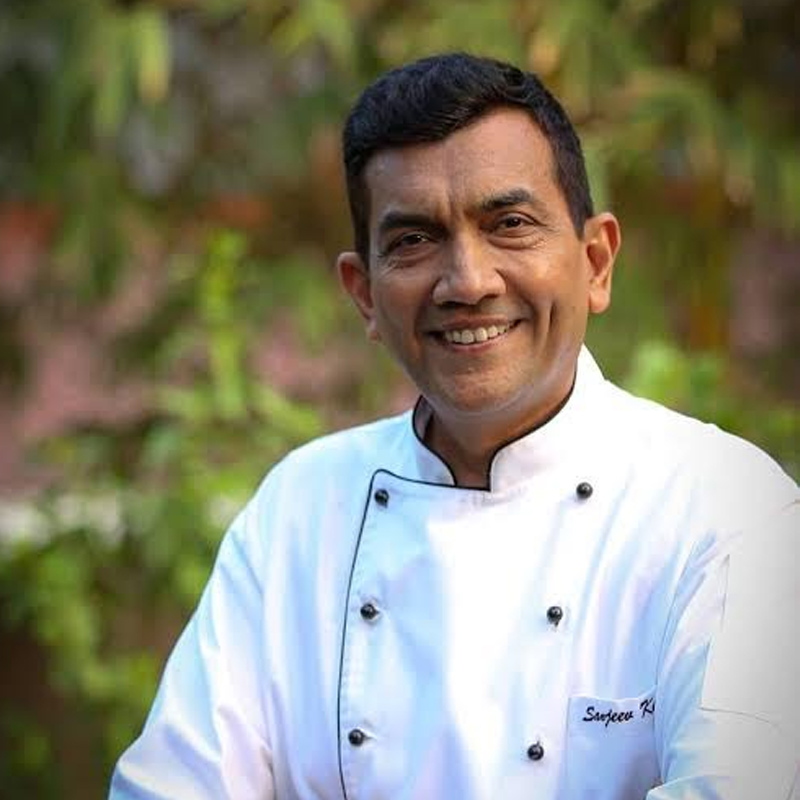
    MUMBAI: A number of brands often advertise on speciality TV channels to reach a specific target audience. But, with the lockdown, advertisers have nearly stopped ad spends on niche channels. Celebrity chef and food entrepreneur, Sanjeev Kapoor, in a virtual fireside chat with indiantelevision.com founder, CEO and editor-in-chief Anil Wanvari spoke at length about his speciality channel Food Food, his company Wonderchef and life after NTO 2.0.

    Kapoor said that in the upcoming times, speciality is going to bring more premium. It is easier to understand target audience in social media. There is more data available to provide brand and advertisers. Whereas on TV, a specialised channel is asked many questions. 

    Kapoor highlights that the premiumisation of speciality channels has already started on digital and all the creamy digital assets are being taken and TV has not understood this concept yet.

    He also gives a warning to TV channels. “I have said this three years ago that the death of TV is coming and I don’t think so it is about consumption. According to data, the consumption of content on digital assets in the last month has doubled which is not the case with TV. The CPMs are also good on YouTube which is not the case with TV. And look at how the world is still living in the old ways."

    According to Kapoor nothing has changed post NTO 2.0 whether you are a paid channel or free. No matter what, you have to pay carriage fees. He feels that if you are a smaller channel there is more arm twisting. 

    India's most-loved chef seems to be upset with the situation for his channel during lockdown. He said, "Even in the lockdown when everyone says be compassionate, there is a ticker that says Food Food channel is not available.  As far as carriage fee is concerned, I am not in that position to pay. Do you think when people want to see content on food this is how television should act? We still believe in the power of content. So, we will partner with distribution mechanisms who are fair."
    He added, "Tata Sky understands speciality. They are our partners for quite a long time. With Jio coming in I see a hope for speciality channels. But the people who think old school have not changed."

    Food Food is currently available on Tata Sky and Airtel. On the cable side it is available on Siticable, GTPL Hathway and small cable networks.

    He also felt that there is a need to change the way advertising works on TV.

    He said, “There should be a mechanism where people will feel benefited from advertising; it should not be shot in the dark. People say that a GEC channel's and a specialty channel like FOOD FOOD’s rate should be the same. That's like saying a general physician and a heart surgeon should charge the same. It doesn’t work like that. Our media has not understood this yet. I think this is the time to change, to respect each and every person and all specialties.”

    Kapoor, who runs a company named Wonderchef and is also the brand ambassador of the same company, believes in spending wisely.

    "If money cannot be converted into sales then it is money not spent well. This is my approach since the beginning.That is why I say variable cost model is important. I am ambassador for many brands. I tell them that I will not take the money if I cannot give you better sales. You can do a percentage sales with me; a royalty kind deal." 

    In the future he looks at investing in artificial intelligence, ML platforms and Google Home. "I would invest more on solutions for bringing better content and better quality in food," he concluded.
  • Sun TV’s petition against NTO 2.0 adjourned for three weeks

    Sun TV’s petition against NTO 2.0 adjourned for three weeks

    MUMBAI: While Sun TV Network had challenged the Telecom Regulatory Authority of India’s (TRAI) recent amendments to the New Tariff Order (NTO 2.0) in the Madras High Court in January , the ongoing matter has been adjourned by three weeks.

    The matter has been adjourned automatically by the Chief Justice as only urgent matters will be taken up under the current circumstances.

    “There was absolutely no material available either scientifically or legally assessed that could support the introduction of the tariff,” the petition said. The broadcaster also said that the regulatory body had amended NTO without consulting the broadcasters.

    The Indian Broadcasting Foundation (IBF) also filed a writ petition against the regulatory body seeking a stay on the implementation of the recent amendments to the New Tariff Order in the Bombay High Court. However, the verdict is still awaited.