Tag: NTO 2.0

  • Broadcasters to let 12 August deadline on NTO 2.0 pricing slide

    Broadcasters to let 12 August deadline on NTO 2.0 pricing slide

    New Delhi: The action and buzz is gathering pace in the television ecosystem even as the deadline for broadcasters to file the new pricing for their channels under NTO 2.0 is set to expire on 12 August 2021.

    A section of the distribution sector – consisting of DTH operators and cable TV operators –  maintains that broadcasters will have to file their new reference interconnect orders (RIO) declaring their bouquet pricing and the MRPs of their channels under NTO 2.0 by Thursday.

    The latter had approached the Bombay high court in July asking it to stay the NTO 2.0 but it had turned down their plea. The court had given them six weeks to get their acts together even as it had informed the sectoral regulator – the Telecom Regulatory Authority of India (Trai) not to take any coercive action against the broadcasters in the interim. The deadline given by the court to them ends on Thursday and the watchdog can, if it chooses, penalise the TV networks.

    Earlier, the Trai had brought down the MRP for a TV channel from Rs 19 to Rs 12, something which the broadcasters have been protesting against.

    Senior executives from TV networks – under the umbrella of the Indian Broadcasting Foundation – were in meetings all of Wednesday. A senior broadcasting executive told Indiantelevision.com that the Trai cannot and should not take a tough stand against broadcasters as the Supreme Court’s next hearing is scheduled for 18 August.

    The IBF and its member broadcasters had challenged the Bombay HC order which had upheld the constitutionality of the NTO 2.0. On 6 August, the apex court asked them to get back to it with slimmer petitions, and posted the matter for hearing on 18 August.

    “The case is sub-judice, and the Supreme Court will hear it only on 18 August so the matter of “stay orders” does not arise,” said the executive.

  • SC adjourns NTO 2.0 hearing to 18 August

    SC adjourns NTO 2.0 hearing to 18 August

    Mumbai: The Supreme Court on Friday adjourned the hearing in a matter pertaining to the New Tariff Order (NTO 2.0) to 18 August.

    Last month, The Indian Broadcasting Foundation (IBF) and several leading broadcasters had filed a petition in the Supreme Court against the Bombay high court verdict dated 30 June, which had upheld the constitutionality of the NTO 2.0. The amended NTO 2.0, passed by the Telecom Regulatory Authority of India (TRAI) in January 2020, was challenged by broadcasters in the Bombay HC.

    After a legal tussle that lasted over a year, TRAI had managed to get a green signal from the court on 30 June on the implementation of the amended NTO 2.0. The division bench of the HC had stated that the challenge to the constitutional validity of the 2020 rules and regulations of TRAI does not hold any water. At the same time, it termed one of the twin conditions “arbitrary”, according to which the maximum retail price of an a-la-carte channel could not be more than one-third the maximum rate of a channel in the bouquet.

    The judgment was passed on the petitions filed by several broadcasters under the umbrella of the Indian Broadcasting Foundation (IBF) including ZEE Entertainment, Star India, TV18, and Sony Pictures Network India (SPN) who had challenged the NTO 2.0 terming it “arbitrary and in violation of their fundamental right”.

    The NTO 2.0 prescribed linkage between a-la-carte price and bouquet and reduced the price cap on the subscription fees for pay channels.

  • Indian Broadcasting Foundation (IBF) moves SC against HC’s NTO 2.0 verdict

    Indian Broadcasting Foundation (IBF) moves SC against HC’s NTO 2.0 verdict

    New Delhi: The Indian Broadcasting Foundation (IBF) has filed a petition in the Supreme Court against the Bombay high court verdict, which had upheld the constitutionality of the amended New Tariff Order (NTO 2.0) passed by the Telecom Regulatory Authority of India (Trai).

    After a legal tussle that lasted over a year, Trai had managed to get a green signal from the court on 30 June on the implementation of amended NTO 2.0 passed in January, 2020. The division bench of the high court stated that the challenge to the constitutional validity of the 2020 rules and regulations of Trai does not hold any water. At the same time, it termed one of the twin conditions “arbitrary”, according to which the maximum retail price of an a-la-carte channel could not be more than one third of the maximum rate of a channel in the bouquet.

    The court had passed the judgement on petitions filed by several broadcasters under the umbrella of the Indian Broadcasting Foundation (IBF) including Zee Entertainment, Star India, TV18, and Sony Pictures Network India (SPN) who had opposed the order, challenged the tariff order and termed it “arbitrary and in violation of their fundamental right.”

    According to broadcasters, the new order could lead to a drop in the subscription revenue, especially now, when the industry is reeling under pandemic-induced low advertising revenue. NTO 2.0 has prescribed linkage between a-la-carte price and bouquet, and reduced the price cap on the subscription fees for pay channels. So, TV broadcasters can include a channel in a pack only if it is priced at Rs 12 or less than that. Earlier, this limit was Rs. 19.

    The broadcasters only got partial relief when the high court struck down one of the twin conditions relating to the average pricing of a channel in a bouquet terming it as ‘arbitrary’. This will allow broadcasters to increase the number of channels they want to provide in the bouquet and enhance the value delivered to consumers.

    According to the condition the a-la-carte rates of each pay channel (MRP), forming part of a bouquet, shall in no case exceed three times the average rate of a pay channel of that bouquet. So, if the maximum price of a channel in a pack was Rs.12, a broadcaster could not charge more than four rupees for an a-la-carte channel.

    The high court had also extended its previous interim order, asking Trai not to take any coercive action against the broadcasters, if they did not implement the new tariff order. The order was extended for the next six weeks.

  • NTO 2.0 verdict: Who wins what?

    KOLKATA: One of the major issues that has dominated the pay TV ecosystem in India is in constant conflict between stakeholders and the sector regulator, the Telecom Regulatory Authority of India (Trai).  With the Bombay high court pronouncing its verdict on the amended new tariff order matter, one of the long-fought battles between the two may have come to an end. It upheld the constitutional validity of Trai’s NTO 2.0 but set aside the second clause of twin pricing conditions. The court’s decision is receiving mixed reviews from senior industry executives.

    On Wednesday, the division bench of Justices Amjad Sayyed and Anuja Prabhudessai passed judgement on several petitions filed by broadcasters and industry bodies like the Indian Broadcasting Foundation (IBF). The bench stated that the challenge to the constitutional validity of the 2020 rules and regulations of Trai does not hold any water. At the same time, it termed one of the twin conditions arbitrary according to which the maximum retail price of an a-la-carte channel could not be more than one third of the maximum rate of a channel in the bouquet.

    “We welcome this verdict of the honourable Bombay high court on amendment in tariff regulation. The full implementation of the amendment will bring more transparency in industry and give more choices and power to the customer. We are hopeful that this will get implemented soon. It is good for all stakeholders in the industry value chain,” GTPL Hathway cable TV head & chief strategy officer Piyush Pankaj said.

    Others in the business are not so sure because they believe it will definitely lead to a decline in subscription revenues. Considerably, major broadcasters have not already witnessed a fall in subscription revenue after partial implementation of NTO 2.0.  But they fear that after this verdict, there will be a faster movement towards a-la-carte from bouquets thus leading to lower ARPUs.

    One of the senior executives with a leading broadcaster said squashing the second twin condition can be looked at as a big win for broadcasters. This clause had the potential to effectively hamper broadcasters from packaging their channels as they had to bundle similarly priced offerings together as part of the bouquet. 

    However, the grounds that it has been struck down on are not very solid, another senior executive added. This battle was unnecessary and a fight for power, he noted, especially given the cost. Moreover, very few broadcasters were looking at pushing high pricing for channels anyway. Even these broadcasters also cannot go for high pricing now due to changed market dynamics in the last one year due to pandemic. As Trai still has substantive grounds to reclaim whatever has been lost, they might look at rechallenging it, the executive noted.

    “We believe there is a high likelihood of this being contested in the supreme court by Trai as the entire reasoning of getting the NTO 2.0 was to cap discount and move to selective viewing which the NTO 1.0 did not fulfil,” Elara Capital VP research analyst (media) Karan Taurani said in a note.

    “We continue to believe that the negative impact of NTO 2.0 is highest for Star whose bouquet prices have a higher discount factor and lowest for Sun TV whose discounting of bouquet vs ala carte is already at very low levels, which will lead to continued outperformance for Sun TV on subs revenue front despite NTO 2.0. On the other hand, this order is low to moderately negative for Zee,” stated Taurani.

    Back in 2018, Madras high court had also set aside the capping of discounts to 15 per cent mentioned in the Tariff Order and Interconnection Regulations of 2017. However, the battle reached the supreme court where the regulator won the case. Within a year of implementation of the regulation, the authority brought changes which irked broadcasters starting the second battle. Now are we in for the third?

  • Bombay HC upholds TRAI’s NTO 2.0 except second provision of twin conditions

    KOLKATA: After a long legal battle between broadcasters and the telecom regulatory authority of India (TRAI), the Bombay High Court on Wednesday pronounced judgment on the amended new tariff order (NTO 2.0) case. 

    The court has upheld the constitutional validity of NTO 2.0 but has partly struck down the second provision of the twin conditions.

    As per the second provision, the a-la-carte rates of each pay channel (MRP), forming part of a bouquet, shall in no case exceed three times the average rate of a pay channel of the bouquet of which such pay channel is a part. The court has mentioned the clause as an arbitrary condition. 

    The Indian Broadcasting Foundation (IBF), along with other broadcasters had filed a writ petition in the Bombay High Court against TRAI in January 2020, soon after the regulations came into place.

    More to follow…

  • Broadcasters write to Bombay HC requesting timely verdict on NTO 2.0 case

    Broadcasters write to Bombay HC requesting timely verdict on NTO 2.0 case

    KOLKATA: Broadcasters have lodged an application before the Bombay high court requesting speedy pronouncement of verdict in the amended new tariff order (NTO 2.0) case.

    The petitioners have mentioned that detailed arguments on the case were heard in September-October 2020. Subsequently, the judgement was reserved via an order on 20 October. However, the revised tariff regime has not been implemented so far and TV broadcasting ecosystem has continued to operate under the NTO price regime implemented in 2019.

    “It is submitted that the judgement remains reserved and since the issues pending for adjudication before the honourable court are substantial, an early pronouncement of judgement will be in the best interest of all stakeholder,” the petition read.

    In this regard, the Telecom Regulatory Authority of India (TRAI) also wrote to Bombay high court in late February requesting urgent listing of the case, so that a verdict may be passed soon in the matter. An industry source close to the developments in the court said at that time: "With this filing of application before the Bombay high court, the newly appointed chairman of TRAI, PD Vaghela has made it clear that the authority seeks to implement NTO 2.0 as soon as possible. “

    TRAI’s decision to implement NTO 2.0 in the beginning of 2020 came as a shocker for the broadcasting industry. In an unprecedented move, all major broadcasters came together to challenge the new tariff regime in court. Following continuous hearings from the end of February to early March 2020, the judgment was reserved on 4 March, after which the lockdown was imposed. A praecipe dated 15 June was filed by TRAI for the verdict. Post that, the matter was heard throughout September- October. The parties in conflict have wrapped up their arguments and written submissions have also been filed.

    The authority has defended its decision saying the amendments will usher in better consumer offerings. On the other hand, the industry stated the over-interference of TRAI, especially in the area of pricing, is hurting the stability of the sector. TRAI released directives for immediate implementation of NTO 2.0 even during the pandemic, which was restrained by the Bombay high court.

  • NTO 2.0 case: Judgement reserved, TRAI can’t take any coercive step

    NTO 2.0 case: Judgement reserved, TRAI can’t take any coercive step

    KOLKATA: The Bombay High Court bench today reserved its judgement on the NTO 2.0 case. After hearing both sides, the court has also ordered the Telecom Regulatory Authority of India (TRAI) not to take any coercive action against the broadcasters for non-implementation of the amended tariff order.

    Within a very short span of new tariff order (NTO) implementation, TRAI had issued a set of amendments at the beginning of 2020. It was challenged legally by the major broadcasters. Even while the case was sub-judice, TRAI had released fresh directives on 24 July, asking broadcasters to publish details including maximum retail price per month of channels and maximum retail price per month of bouquets of channels, the composition of bouquets and also amended RIO and other details. This further irked the broadcasters.

    In the last couple of years, the industry has been overburdened by regulations. According to a FICCI -EY report, NTO 1.0 reduced the number of TV subscribers by 26 million. While broadcasters are reeling from the impact of Covid2019 , it is of serious concern how another change will impact the industry.

  • Bombay high court questions TRAI on twin conditions, DPO bouquets

    Bombay high court questions TRAI on twin conditions, DPO bouquets

    KOLKATA: Within a very short span of the new tariff order (NTO) implementation, the Telecom Regulatory Authority of India (TRAI) issued a set of amendments at the beginning of 2020. These have been challenged legally by the major broadcasters, and the litigation is still in progress.

    In an interesting twist, at today's hearing yesterday, the bench at Bombay High Court has questioned the relevance of a few important clauses of the regulation.

    The division bench of the Bombay high court comprising Justice AA Sayed and Justice Anuja Prabhu Desai asked whether the twin conditions were placed by TRAI for consultation. The industry regulator had introduced this clause citing “manipulation” of consumer choice by broadcasters.

    Read more news on Trai

    “The sum of the a-la-carte rates of the pay channels (MRP) forming part of a bouquet shall in no case exceed one and half times the rate of the bouquet of which such pay channels are a part. The a-la-carte rates of each pay channel (MRP),forming part of a bouquet, shall in no case exceed three times the average rate of a pay channel of the bouquet of which such pay channel is a part,” TRAI said along with introducing the Rs 12 cap for introducing a channel in a bouquet.

    TRAI has been upholding (amended tariff order) NTO 2.0 for bringing rationality between a-la-carte price and the bouquet price. But several reports have indicated that consumers opted for the distribution platform operator (DPO)-designed bouquets post NTO 1.0.

    Considerably, the bench also mentioned that more than 90 per cent bouquets in the market are DPO bouquets which do not appear to be under the same restrictions as the broadcaster’s bouquets. The bench asked TRAI's counsel to explain how and whether DPO bouquets are bound by restrictions as compared to the broadcasters.

    Giving an example of NTO 1.0 which was implemented without the discount cap on the formation of a bouquet by the broadcasters, the bench asked whether NTO 2.0 could be implemented without some of the provisions.

    Read more news on NTO

    The counsel appearing for TRAI has sought time to respond till the next date of hearing, 8 October.

     It is expected that counsels for the union of India and TRAI will complete their arguments during the next hearing. However, keeping in mind the rejoinder to be made by the broadcasters, the first half of Friday has been kept as reserve time.

    Over the past couple of years, the industry has been overburdened by regulations. According to a FICCI -EY report, NTO 1.0 reduced the number of TV subscribers by 26 million. While broadcasters are reeling from the Covid2019 impact, it is of serious concern how another change will impact the industry. 

  • NTO 2.0 update: Broadcasters conclude their argument before Bombay HC

    NTO 2.0 update: Broadcasters conclude their argument before Bombay HC

    KOLKATA:  As the ongoing legal battle between broadcasters and the Telecom Regulatory Authority of India(TRAI) in Bombay High Court nears its ending, the broadcasters have concluded their argument.

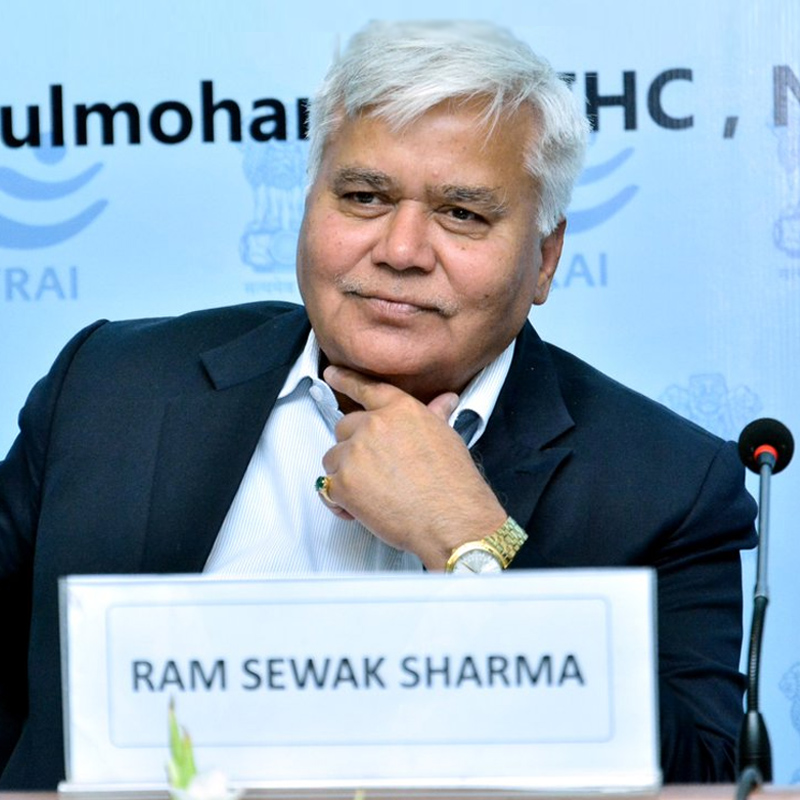
    On 18 September, the solicitor general will open for TRAI before the court. TRAI chairman R S Sharma said earlier that non-implementation of NTO 2.0 will bring back discriminatory practices and create a regulatory vacuum. He said that the tariff order has brought the perfect balance between consumer choice and industry benefits.  

    Sharma mentioned that while it has given new power to the consumers to watch channels of their own choice, it has provided broadcasters the liberty to decide the pricing of their channels, distributors to have an independent source of revenue through network capacity fees.

    Earlier during a hearing on 2 September, senior advocate Harish Salve argued that NTO 2.0 contradicts provisions of the Indian constitution that guarantees the freedom of speech and expression to all citizens.

    Amid Covid2019 pandemic, TRAI directed the broadcasters on 24 July to comply with the new amendments by 10 August, which created another round of tension and the broadcasters went back to Bombay High Court. The High Court ordered TRAI to not take any coercive action against the stakeholders until the verdict comes out.

  • TRAI always believes intervention should be limited to market failures: R S Sharma

    TRAI always believes intervention should be limited to market failures: R S Sharma

    KOLKATA: The cable and broadcasting industry has been despondent of late due to several new regulations. Many of the stakeholders have complained about “over-regulation” stunning the growth of the business and causing unnecessary burdens. The outgoing chairman of the Telecom Regulatory Authority of India (TRAI), R S Sharma, has refuted the claims reemphasizing that the authority has always looked at light-touch regulation. Sharma stated that TRAI has always believed intervention should be limited to market failures, adding that it has never interfered if the market is trouble-free. He addressed several controversial issues.

    During a conversation with Governance Now MD Kailashnath Adhikari, Sharma has spoken in favour of the most controversial regulation of this year, the amended New Tariff Order (NTO 2.0). He said that the tariff order was brought to strike a perfect balance between consumer choice and industry benefits.

    Sharma mentioned that while it has given new power to consumers to watch channels of his own choice, it has also given broadcasters the liberty to decide the pricing of their channels, distributors to have an independent source of revenue through network capacity fees. “In such a situation, it will be unfair to call it over-regulation,” he commented.

    He reiterated that TRAI’s data shows that 90 per cent of the people watch only about 50 channels out of the 800-900 channels in the country. He also added that OTT platforms allow much more freedom to watch content compared to linear TV, and this is one of the primary reasons for the audience shifting to OTT platforms. After the implementation of NTO in last year, many long-tail channels shut their shops. “IBF’s statement is rubbish, and it brings fear in the minds of people,” Sharma stated, mentioning that the case is sub judice in court. 

    Earlier this year, when the pandemic started hitting the ad revenue dependent broadcasting industry, TRAI issued a set of recommendations for a major overhaul of the country’s TV viewership measurement agency, BARC India, a joint industry body of the broadcasters, advertisers, and advertising agencies. Recommendations included an increasing number of people meters from 44,000 to 66,000 by the end of 2020 and 1,00,000 by the end of 2022. Many stakeholders commented that it seemed to throttle the entire system rather than reforming. 

    “Audience measurement is a significant source for broadcasting to get advertising and program sponsorship. In fact, that is the only currency. An industry dependent on advertising for survival and growth, audience measurement is a critical activity. Broadcasting is one such sector that is largely dependent on advertising revenue. Broadcasters earned revenue Rs 45000 crore in 2019, 32000 crore was collected from advertising. This underlies the dependence on the flow of advertising, which largely hinges on the profile of their audience and popularity of the content, which is assessed by television audience measurement rating. It is imperative that the process of that measurement should be objective, fair, neutral, transparent,” Sharma commented.

    “Some important recommendations are the need for structural reformation of governing of BARC to mitigate the potential risk of conflicts, bring transparency, and the confidence of all stakeholders on the TV audience measurement system. To create a credible and accurate collection of data, multiple data agencies need to be in competition, which would bring new technologies, research methodologies, and new ways to ensure better data quality,” Sharma further adds. 

    According to him, technology is ever-evolving, and the TV rating system needs to be in tandem. While Sharma mentioned that TRAI only gave the recommendation of the constitution of BARC, he also stated that periodical reformations are needed. Many stakeholders raised the issue of huge investment in restructuring. He said that many reformations could be carried out in a frugal way on the back of new technologies.