Tag: NTO 2.0

  • Trai defers NTO 2.0 implementation to 1 June

    Trai defers NTO 2.0 implementation to 1 June

    Mumbai: The Telecom Regulatory Authority of India (Trai) on Thursday extended the deadline for implementation of new tariff order (NTO) 2.0 to 1 June. The previous deadline was 1 April.

    As per the plan, Trai has allowed broadcasters to revise their reference interconnect offers (RIO) by 28 February and publish the same on their websites. It has also asked distributed platform operators (DPOs) to report the distributor retail price and composition of the bouquet of pay channels by 31 March in compliance with the new regulatory framework. Those who have already submitted can revise their RIOs by 31 March.

    “Keeping in view the current pandemic situation across the country and requests received from stakeholders for extension of time for implementation of new regulatory framework 2020, it has been decided to extend the time limit for implementation of new regulatory framework 2020,” said Trai in the statement.  

    Several stakeholders have informed Trai that due to the present Covid situation most of their staff who were affected were unable to attend office due to guidelines by state governments. Cable operators’ staff were finding it difficult to reach Covid affected subscribers/areas for collection of choices.

    Further, Trai has asked all distributors of TV channels to ensure that with effect from 1 June services to the subscribers are provided as per the bouquets or channels opted by the subscribers.

  • VBS 2022: Getting ready for the post-pandemic world

    VBS 2022: Getting ready for the post-pandemic world

    Mumbai: Indiantelevision.com is back with the 18th edition of the Video & Broadband Summit (VBS). The day-long summit will be held virtually on 19 January 2022, from 10.00 am to 5.00 pm. VBS 2022 is co-powered by broadpeak. Disney Star is presenting partner and NxtDigital is the summit partner.

    This year’s Video & Broadband Summit will provide a platform for industry and opinion leaders to discuss key issues being faced by the television industry as a result of the Telecom Regulatory Authority of India (Trai)’s New Tariff Order 2.0, broadband-fuelled growth of digital platforms, and the impact of cord-cutting on DPOs, as well as the possible ramifications of the impending 5G launch that has already created a stir among broadcasters and distributors.

    Some of the broad themes to be covered include Rising Cost of Video Entertainment, Changing Business Models and Revenue Models, Value-Added Services, and getting back to basics in a Post-Pandemic World. VBS 2022 will also delve into the concerns and opportunities around the 5G Teleco Threat, Virtual MVPDs, Cable TV’s Technology, and Back-End Challenges, DPO’s Marketing Drive, and the gradual expansion of Over the Top (OTT) Platforms.

    The summit will begin with an introduction by Indiantelevision.com Group founder CEO and editor-in-chief Anil Wanvari, followed by a presentation on the rising cost of video entertainment.

    First on the agenda is a fireside chat with M&E consultant Anuj Gandhi. During the next session moderated by former senior VP Star TV and CEO KCCL Shaji Mathews, Fastway’s Prem Ojha, Travelxp’s Prashant Chothani, Asia Satellite Telecommunications Holdings’ Rajdeepsinh Gohil, Shemaroo Entertainment’s Sandeep Gupta, BBC Global News’ Sunil Joshi, and Zeel’s Anil Malhotra will share their thought on ‘Getting Back to Basics and to a Post Pandemic World’.

    Lined up next is another fireside chat between NxtDigital MD and CEO Vynsley Fernandes and Anil Wanvari. Thereafter Gurjeev Singh Kapoor (Star & Disney India), Vynsley Fernandes, Amit Arora (Indiacast Media Distribution), Sambasivan G (Tata Sky), Ashish Pherwani (E&Y), and SN Sharma (DEN Networks) will delve on ‘Shaping the growth of linear TV distribution and subscription’.  

    In the post-lunch session, a panel consisting of MN Vyas (founder-director PlanetCast), Abhishek Gupta  (vice president IT, Dish TV), Yann Begassat (business development director, Broadpeak), and Salil Thomas (general manager & head ACV & Technology,  Asianet Satellite Communications Ltd) will demystify ‘The 5G Opportunity’ for the viewers. The talk will be moderated by Satcom Industry Association – India, senior director technology and policy Rajeev Gambhir.

    Following a fireside chat with Jio Platform’s Saurabh Sancheti, the event will wrap up with a discussion on ‘Delighting the Indian Consumer – Challenges & Opportunities’ between Rajib Mukherji (EVP-Strategy, IndiaCast Media Distribution Pvt Ltd.), Nagesh Chhabria (promoter, Metrocast), Rouse Koshy (chief operating officer, NXTDigital) and Yatin Gupta (senior VP, GTPL).

    The Video & Broadband Summit (VBS) 2022 will be live-streamed on Indiantelevision.com’s social media handles.

    For more details: https://www.videoandbroadbandsummit.com/ 

  • NTO 2.0: Sony revises tariffs in new RIO effective 1 April

    NTO 2.0: Sony revises tariffs in new RIO effective 1 April

    Mumbai: Sony Pictures Networks India (SPNI) has published its new reference interconnect offer in compliance with the Telecom Regulatory Authority of India (Trai) new tariff order (NTO) 2.0 effective from 1 April.

    The broadcaster owns and operates 16 channels and has revised tariffs for its Hindi GECs, sports, Hindi movie, kids and infotainment channels. 

    Previously priced at Rs 19, SPNI has revised the MRP of its Hindi GECs Sony SAB (Rs 23) and Sony Entertainment Television (Rs 24), and sports channels Sony Six (Rs 20), Sony Ten 1 (Rs 20), Sony Ten 2 (Rs 20), Sony Ten 3 (Rs 12) and Sony Ten 4 (Rs 12). Earlier priced at Rs 2, it has hiked the tariffs for its kids’ channel Sony Yay! and infotainment channel Sony BBC Earth to Rs 3. It has also slashed the pricing of its Hindi movie channel Set Max from Rs 15 to Rs 12.  

    As per NTO 2.0 regulations, Trai mandated that a channels’ MRP must not exceed Rs 12 for it to be included in any bouquet.

  • NTO 2.0: Indiacast publishes new RIO effective from 1 April

    NTO 2.0: Indiacast publishes new RIO effective from 1 April

    Mumbai: Indiacast, the distribution company jointly owned by TV18 and Viacom18, has published its new reference interconnect offer (RIO) in compliance with the Telecom Regulatory Authority of India’s (Trai) new tariff order (NTO) 2.0 effective from 1 April.

    The revised RIO contains the a-la-carte and bouquet prices of 59 channels owned and operated by Network18, TV18, and Viacom18. The RIO contains the MRP of the new sports channels launched by Viacom18 tentatively named Sports18 and Sports18 HD and priced at Rs 12.

    As per clause 23 (a) of the RIO, “The availability of Sports18 and Sports18 HD channels (Sports18 channels), as well as bouquets comprising of Sports18 channels, are dependent on introduction of Sports18 channels.”

    “In case TV18 decides not to introduce and/or there are any changes in the introduction date of Sports18 channels, then intimation of the same will be sent by TV18 to affiliate in writing,” it added.

    “In case of any change in introduction date of Sports18 channels, then the availability of Sports18 channels as well as bouquets comprising of Sports18 channels shall be effective the last intimated date of introduction of Sports18 channels.”

    “Further, until the introduction of Sports18 channels, the validity of the remainder provisions of this agreement shall not be affected and any stipulations so far as they are related to Sports18 channels will come into force only from the date of introduction of the Sports18 channels.”  

    Viacom18 channels, including their flagship GECs – Colors (Rs 21), Colors HD (Rs 23); their regional language channels – Colors Kannada (Rs 21), Colors Kannada HD (Rs 23), and Colors Marathi HD (Rs 17) will not be included in any bouquet. As per NTO 2.0, Trai mandated that a channels’ MRP must not exceed Rs 12 for it to be included in any bouquet. The broadcaster has also intimated affiliates its free-to-air channel Colors Cineplex Bollywood will be converted into a pay channel effective from 1 April and will be priced at Rs 0.10.

  • #Retrace2021: The year of regulatory challenges and no TRPs for news channels

    #Retrace2021: The year of regulatory challenges and no TRPs for news channels

    Mumbai: The year 2021 began with a rather chaotic legacy handed over by 2020. In the aftermath of the TRP Scam, TV ratings for the news genre remained suspended throughout the year. The legal tussle between Telecom Regulatory Authority of India (Trai) and broadcasters over the rollout of the New Tariff Order (NTO) 2.0 continued to dominate the headlines.

    Adding to this, was the Information Technology (Intermediary Guidelines and Digital Media Ethics Code) Rules, 2021 (IT Rules, 2021), announced in February which set the ball rolling for regulation of digital and social media. This was followed by the Cable Television Networks (Amendment) Rules, 2021 (CTNA 2021) and the proposed amendments to the Cinematograph Act, 1952, all of which sought to regulate content across media including digital, and align it with ‘public interest’.

    Also Read: SC refuses to grant interim protection to Tandav makers

    The year began with the controversy over the Amazon Prime web series ‘Tandav’ which became the tipping point for the government which was already deliberating the regulation of digital media including social. The show and its star cast was accused of hurting the religious sentiments of a particular community prompting the show’s director Ali Abbas Zafar to issue an unconditional apology on social media. The spate of FIRs and threats continued unabated despite the omission of two ‘objectionable’ sequences, and apologies from the platform and its then country head Aparna Purohit.

    Also Read: Tandav : And the future of storytelling

    While the hitherto pampered OTT-verse was bracing itself for government oversight, the pay-TV universe continued to be cannibalised by it and DD Free Dish at the top and bottom tiers. Even as distribution players worked on diversifying their offerings to embrace the imminent digital takeover and on building new ones to challenge Free Dish, they kept pushing for regulatory interventions to tackle the issue at its core. Though well within its rights to strive for survival, in the process of manoeuvring these challenges, the industry ended up creating another flashpoint between the regulators/government and itself.

    2021 closed with a trailer to the next big fight with Trai questioning the availability of linear channels on OTT and telco apps which, it said, is in violation of Clause 5.6 of Policy Guidelines for Downlinking of Television Channels dated 5 December 2011. Broadcasters, on the other hand, invoked section 37 of the Copyright Act 1957 known as Broadcast Reproduction Right (BRR) to justify their channels’ presence on their own OTT platforms and third-party aggregator apps. Also because they are not licensees under Trai Act, they do not fall under the scope of Trai Act or Interconnection Regulations or Clause 5.6 of Downlinking guidelines.

    Here, we take a look back at the regulatory events and challenges that re-defined the Indian TV industry in 2021.

    Legal tussle over NTO 2.0

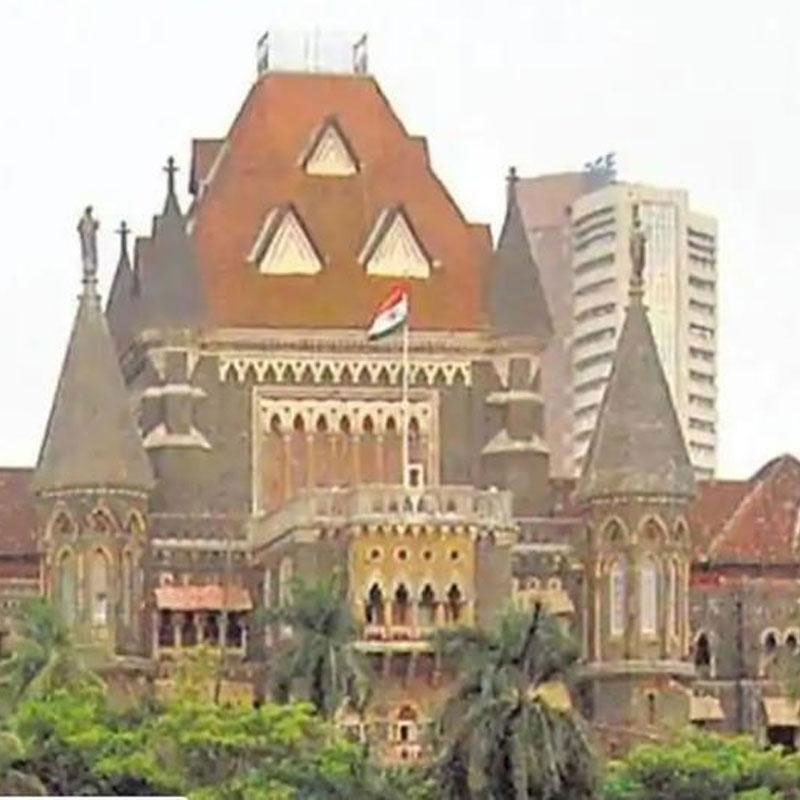
    One of the biggest developments of the year was the pronouncement of the Bombay High Court order on the NTO 2.0 case on 30 June. After a legal tussle that lasted over a year, Trai had managed to get a green signal from the court on the implementation of the amended rules. While the HC upheld the constitutional validity of NTO 2.0, it termed one of the twin conditions “arbitrary”, according to which the maximum retail price of an a-la-carte channel could not be more than one-third the maximum rate of a channel in the bouquet.

    Also Read: NTO 2.0 Verdict : Who Wins What?

    Following the notification of NTO 2.0 in January 2020, several broadcasters under the umbrella of the Indian Broadcasting and Digital Foundation (IBDF) and a couple of other private channels challenged the amendment terming it “arbitrary and in violation of their fundamental right”. The NTO 2.0 prescribed linkage between a-la-carte price and bouquet via the imposition of twin conditions on bouquet pricing, and reduction in price cap from Rs 19 to Rs 12 for pay channels, thereby incentivising a-la-carte alone.

    Having recognised the adverse impact of NTO (2019) on all stakeholders including consumers, broadcasters and distributors refused to accept the judgement and challenged it further in the Supreme Court in July. After a series of adjournments, the apex court, on 30 November, posted the matter for hearing on 15 February 2022.

    Meanwhile, in November, Trai moved the deadline for implementation of NTO 2.0 from 1 December 2021 to 1 April 2022. Distribution platforms like DTH and cable will now have to seek subscriber choice till 31 March 2022, it said. The deadline for broadcasters to come up with their new reference interconnection offers (RIOs) and simultaneously publish the required information about channel and bouquet offerings, as well as their MRPs on their websites was also extended to 31 December.

    Also Read: Trai extends NTO 2.0 implementation to 1 April 2022

    Several large networks including ETV, Discovery Communications, Sun TV, Times Networks, ZeelL, SPNI, and others had come out with their new RIOs in October-November. In what looked like a refusal to back down, the broadcasters preferred to pull their popular channels out of the bouquets instead of reducing the price to Rs 12. Their move flies in the face of the regulators’ assertion and intention of preserving the interest of customers.

    Despite the short-lived benefits of incentivising à la carte and changes in NCF for broadcasters and distributors, the attempt to regulate channel pricing was soon recognised by all stakeholders as being counterproductive. Aside from having an overall negative effect on reach and viewership for broadcasters, it led to the shutting down of many niche channels which became inviable as a result of NTO implementation. The impact for distributors was felt when customers gravitated towards either OTTs or Free Dish to counter the increase in their monthly subscription bills.

    Also Read: DTH operators write to Trai over broadcasters offering pay channels on DD Free Dish

    The implementation of NTO 2.0 will further hasten this migration. Foreseeing the detrimental scenario, Direct-to-home (DTH) service providers including Tata Sky and Airtel Digital TV wrote to Trai in September asking the regulator to address the issue of broadcasters making their pay channels available on DD Free Dish. Alleging that this goes against the current tariff regime which mandates the designation of channels as either pay or FTA and prohibits their bundling together, they once again raised the demand for such designation to remain constant across distribution platforms.

    Also Read : There needs to be a level-playing field : Tata Sky CEO Harit Nagpal

    Further, in a letter dated 28 December written to Prime Minister Narendra Modi, the Delhi-based All Local Cable Operators Association alleged that the Trai and broadcasters are “forcibly pressurising” MSOs to implement the new tariff order, which will lead to cable TV operators, national MSOs and independent MSOs incurring huge losses. The NTO 2.0, if implemented, will lead to the unemployment of lakhs of families connected with the cable TV industry, it said. Several other representative organisations have also raised the issue with the government and regulators frequently.

    Also Read : Trai vs Broadcasters : Impact could be larger than expected

    IT Rules, 2021 & Cable Television Networks (Amendment) Rules, 2021:

    The introduction of the Information Technology (Intermediary Guidelines and Digital Media Ethics Code) Rules, 2021 by the ministry of electronics and information technology (MeitY) in February sought to regulate social media, digital platforms, and streaming services in the country through a three-level grievance redressal mechanism.

    The “soft-touch regulatory architecture” comprised Level I – self-regulation by broadcasters, Level II – Self-regulation by registered self-regulating bodies of the broadcasters, and Level III – oversight mechanism by the central government. Later in June, the government extended this framework to Cable TV with the Cable Television Networks (Amendment) Rules, 2021.

    Also Read: MIB amends Cable TV rules for redressal of broadcast related complaints

    Also Read: Trai issues new consultation paper to regulate monopoly in Cable TV services

    The new regulations, along with proposed amendments to the Cinematograph Act, 1952, brought together all forms of media in the country barring newspapers under the three-layer regulatory mechanism. Consequently, they also ran into troubled waters with broadcasting associations like NBA and IBDF and some independent players filing several petitions in various high courts.

    News Broadcasters Association (NBA) president Rajat Sharma wrote to the then I&B minister Prakash Javadekar requesting the exclusion of digital news platforms owned and run by traditional news media from the purview of the provisions of the new IT Rules, 2021. In July the organisation approached the Kerala HC with a writ petition contending that the oversight mechanism gives the executive “unfettered, unbridled and excessive powers to regulate the content of TV channels of news broadcasters.”

    Also Read : No exemption for mainstream media from IT rules

    The IBDF, Sun TV Network, and SJ Clement filed separate petitions challenging the constitutional validity of Part III of IT Rules 2021 and CTN Amendment Rules 2021 in the Madras high court.

    In May, IBF had renamed itself as IBDF bringing all digital/OTT platforms under its purview. It also announced plans to form a new subsidiary – an industry-led Self-Regulatory Body (SRB) called Digital Media Content Regulatory Council (DMCRC) to serve as a second-tier mechanism at the appellate level specifically for digital. The DMCRC is similar to Broadcast Content Complaint Council (BCCC) which IBF had successfully implemented for the linear broadcasting sector in 2011. 

    Also Read: Former SC judge Justice Vikranjit Singh Sen appointed chairman of IBF’s new self-regulatory body

    Overhaul of TRP ratings

    The committee on TRP ratings formed by the government in the aftermath of the 2020 TRP Scam came up with its recommendations pushing for the formation of multiple rating agencies in competition to Barc India and creating a specialised regulator to oversee all of them. The 39-page report submitted by the committee early this year was shared with Broadcast Audience Research Council (Barc) India and other broadcasters in November to take the discussions forward.

    Led by Prasar Bharati CEO Shashi Shekhar Vempati, the four-member team also included – IIT Kanpur, professor of statistics, department of mathematics and statistics, Dr Shalabh; C-DOT executive director Dr Rajkumar Upadhyay; Decision Sciences Centre for Public Policy professor Pulak Ghosh.  After consultation with stakeholders such as Barc India, MDPL, Zappr Media, Nielsen India, and Tata Sky AMS, the committee had issued several specific and sweeping recommendations on the technical aspects of TV rating measurement in India.

    Observing a broad consensus among industry stakeholders in favour of leveraging return data capabilities, it recommended that RPD should be made mandatory for set-top-boxes (STBs) deployed by distributed platform operators (DPOs). The collection of viewership data by DPOs is to be governed by privacy norms prescribed by the government/regulator. 

    Also Read : Govt committee seeks to set up specialised regulator for media ratings

    The report noted that crowdsourcing approaches could be economical alternatives to RPD and should be open to rating agencies to enrich panel-based measurement. The committee also batted for an open data ecosystem allowing academics and independent researchers access to algorithms and raw datasets to analyse, validate and enrich them.

    The television rating system in India had come under scanner in October 2020 when Mumbai Police claimed in a press briefing that they have probed a case of manipulation of TRPs and found some incriminating evidence. The police said the accused were allegedly bribing the households to keep a particular channel running, leading to several arrests. Three news channels, Republic TV, Fakt Marathi, and Box Cinema were named in an alleged TRP tampering scam. BARC had also temporarily suspended the publishing of weekly data for news channels, which remains in limbo to date.

    Also Read: MIB to implement TRP ratings recommendations soon: Anurag Thakur

    Making satellite-broadband services cheaper

    The cost of satellite-broadband services continues to remain on the higher side in the country, posing a major challenge to its wide adoption by the end-users. The issue was also taken by India’s telecom regulator which is looking for ways to drive down the rates of satellite broadband. Early this year, Trai also floated a discussion paper and sought views to make satellite communications more affordable in the country. 

    Among other issues, Trai also sought views on whether satellite service licensees should be allowed to obtain bandwidth from foreign satellites for providing IoT connectivity. Also, whether any specific or all bands should be permitted for provisioning satellite-based IoT connectivity. It also invited suggestions on whether a new licensing framework should be proposed for the provision of satellite-based connectivity for low-bit-rate applications or the existing licensing framework may be suitably amended to include the provisioning of such connectivity.

    Also Read: Trai seeks suggestions to make satellite broadband services affordable

    5G roll-out and spectrum clash:

    Earlier in the year broadcasters expressed concern over the rollout of 5G at a near-clashing frequency. Their apprehension was that the spectrum range of 3.0-3.6GHz identified for 5G does not allow for a buffer or ‘guard band’ before satellite television operates at 3.7 to 4.2 GHz. This could lead to disruption in television and radio services in the country. Even though welcoming of 5G has held great opportunity for the M&E industry in the era of convergence, broadcasters said that in the event they had to move to a higher frequency, the government should intervene with subsidies to offset the cost incurred.

  • Trai to form committee for smooth rollout of NTO 2.0

    Trai to form committee for smooth rollout of NTO 2.0

    Mumbai: The Telecom Regulatory Authority of India (Trai) has decided to form a committee with representation from leading pay TV industry associations to ensure the smooth implementation of the New Regulatory Framework 2020 and identify impediments with counter-measures for the overall growth of the broadcast sector.

    In a letter dated 22 December, accessed by Indiantelevision.com, Trai had asked the Indian Broadcasting and Digital Foundation (IBDF), the All India Digital Cable Federation (AIDCF), and the DTH association to nominate a maximum of two representatives to be part of the implementation committee.

    Early this November, the regulator had notified stakeholders that implementation of the new tariff order (NTO 2.0) would be delayed until 1 April 2022. This decision was taken after various stakeholders expressed concerns to the regulator with respect to the timeframe for migration of 150 million pay TV consumers and sufficient time for service providers to upgrade their IT systems and incorporate various channels/bouquets before offering the same to consumers.

    In the latest development, Delhi-based Cable Operators Welfare Federation (COWF) has written to Trai to be a part of the implementation committee and include two local cable operator (LCO) representatives from four zones or four representatives from the All India Federation. “LCOs deserve to be treated as frontline workers who touch base with each subscriber at least once a month. During the implementation of the regulatory framework the best way to reach the subscriber is to communicate in person, in their language, using printed handouts to evaluate options and help subscribers make a well-informed decision,” the letter reads.

    The LCOs also argue that market discovery of prices of pay-TV channels and consumption pattern evolution cannot be back-end driven, rather the front-end instructions should drive the backend. “The DPOs manage the back-end that would implement the service requests coming in from the front-end and therefore should not impose any packages and choices on subscribers,” it added.

    COWF has now also written to prime minister Narendra Modi to halt the implementation of new tariff framework, discard NTO 2.0, and consider making “cable-operator friendly amendments” in Digital Addressable Systems (DAS) law. The operators also suggest that linear TV channels no longer be distributed on OTT platforms. They lettered dated 29 November, also says that the NTO 2.0 regulation will increase unemployment and result in the downturn of lakhs of people employed by the cable TV industry.

  • Star and Disney India postpones new channel launches till further intimation

    Star and Disney India postpones new channel launches till further intimation

    Mumbai: Star and Disney India has deferred the launch of 15 (SD+HD) channels and renaming of one channel until further intimation.

    “This is to inform all distributors of television channels that the launch of following 15 channels and name change of following one channel have been deferred till further intimation by Star,” it said.

    The channel launches that have been held back include Star Gold Romance, Star Gold Thrills, Jalsha Josh, Star Movies Select, Pravah Pictures, Star Kirano, Star Sports 1 Tamil HD, Star Sports 1 Telugu HD, Disney Channel HD, Hungama HD, Star Gold 2 HD, Pravah Pictures HD, Vijay Super HD, Asianet Movies HD and Star Kirano HD. The renaming of Marvel HQ to Super Hungama has also been delayed till further notice.

    The broadcaster had published its new reference interconnection offer (RIO) on 15 October mentioning the new channels and declaring the new channel and bouquet pricing in compliance with the new tariff order (NTO) 2.0. Star planned to launch its new channels between December 2021 and January 2022.  

    The Telecom Regulatory Authority of India (Trai) notified that it has extended the deadline for implementation of NTO 2.0 till 1 April 2022. In the meanwhile, broadcasters must revise their RIOs by 31 December and distribution platform operators must report their distribution retail price of pay channels and bouquets by 31 January 2022.

    The broadcasters’ association Indian Broadcasting and Digital Foundation (IBDF) and Trai have been embroiled in a legal battle on the matter of NTO 2.0 implementation. The final hearing of the Supreme Court on the matter is on 30 November.  

  • Dish TV India focused on repayment of debt in Q2 FY22

    Dish TV India focused on repayment of debt in Q2 FY22

    Mumbai: Dish TV India has reported its second quarter results for FY 2022. The company reported consolidated subscription revenues of Rs 6445 million and operating revenues of Rs 7181 million. It reported subscription revenues of Rs 6659 million and operating revenues Rs 7310 million in the previous quarter.

    The company has tapered down its debt to Rs 5566 million while adding more than 0.6 million subscribers at the gross level. At a net level though, it recorded negative additions prioritising repayment of debt over adding fresh subscribers. Dish TV India repaid debt of Rs 697 million during the quarter to arrive at a closing debt of Rs 5566 million.

    “It was business as usual at India’s leading DTH Company despite some chaotic developments on the corporate front towards the end of the quarter,” the company noted. It is referring to its boardroom battle with shareholder Yes Bank on the issue of reconstitution of the board.

    Retention and upgradation focused campaigns continued in line with the objective of increasing the lifetime value of subscribers. Furthermore, to increase stickiness, ‘Watcho’- the in-house OTT app of the company was loaded with freshly curated content. The platform debuted several new web series to further enhance the complimentary bouquet of offerings for Dish TV India subscribers. ‘Watcho’ continued to gain strength as an OTT platform with a strong semi-urban presence in addition to significant tier-1 visibility. The app has recorded total cumulative downloads of 36 million so far.

    “We continue to remain focused in our efforts to drive business performance using tools that enhance the viewing experience of subscribers on both, the traditional as well as the OTT offering,” said Dish TV India group chief executive officer Anil Dua. “We remain sensitive to changing consumer needs and look forward to new launches and a wider audience base.”

    During the quarter, Dish TV announced the launch of its ‘QR Scan Feature.’ The scan to pay feature aims at giving customers a hassle-free single click payment experience when it comes to recharging their Dish TV account or paying utility bills. Dish TV and d2h subscribers will now be able to pay their bills in a few simple steps by scanning the QR code on the company’s websites, www.dishtv.in and www.d2h.com using any UPI app or wallet. UPI is currently the easiest and the most secure way of digital payments owing to its multifactor authentication which requires the users to verify themselves via multiple sources.

    The onset of the festival period towards the end of the second quarter along with some normalization in consumer spending post the second wave of the pandemic encouraged the launch of customised new offerings for existing as well as new subscribers. Dish TV India launched a special ‘Get 1 for 5 Recharge Offer’ as per which a complimentary month of subscription was provided for every five months of recharge. In addition, a ‘Lucky Recharge Offer’ wherein customers could avail up to 100 per cent cashback on recharge of Rs 501 was also launched.

    “Household spending however did not fully recover during the quarter and despite a fairly extensive sports calendar, recharges were not in line with earlier years. Both, streaming platforms as well as Free Dish, continued to give competition to conventional distributors with some of the DTH subscribers at the upper end exploring OTT services while those at the lower end sampling Free Dish services,” said the company.

    Operating revenues for the quarter were Rs 7181 million. EBITDA was Rs 4270 million. EBITDA margin was at 59.4 per cent. Profit before tax for the quarter was Rs 553 million. Net profit for the quarter was Rs 354 million.

    “Consumers typically tend to step up spending during festivals and the festive season traditionally accounts for majority of the annual revenues of the company. Upbeat consumer spending is expected during the festival quarter this year compared to the same quarter last year,” said the company in a statement.

    NTO 2.0

    The Telecom Regulatory Authority of India (Trai) recently extended the deadline for enforcing the new tariff order (NTO) 2.0 by announcing an execution plan for migrating subscribers to the new regime. Trai directed distribution platforms to ensure that subscribers avail of pay-tv services as per NTO 2.0 norms with effect from 1 April 2022, moving the earlier 1 December 2021 deadline. While distribution platforms like DTH and cable will have to seek subscriber choice till 31 March, broadcasters will have to submit the required information to Trai by 31 December.

    Several broadcasters had earlier challenged the NTO 2.0 in various high courts. However, in an order passed on 30 June, the Bombay high court had upheld the validity of NTO 2.0, except the second proviso to the twin conditions which stated that the a-la-carte rates of each pay channel (MRP) forming part of a bouquet shall in no case exceed three times the average rate of a pay channel of the bouquet of which such pay channel is a part.

    Broadcasters had then approached the Supreme Court challenging the Bombay high court order. The Supreme Court is yet to announce its decision.

    “We would be watching the developments on the litigation front for now while simultaneously acting towards implementation of the order,” said Dish TV India chairman and managing director Jawahar Goel.

  • NTO 2.0: Discovery Communications India publishes new RIO

    NTO 2.0: Discovery Communications India publishes new RIO

    Mumbai: Discovery Communications India has published its reference interconnection offer (RIO) issued under telecommunications (broadcasting and cable) services interconnection (addressable systems) regulations, 2017 for all distribution platforms. The new RIO will be effective from 1 December onwards. 

    The tariffs for TV channels mentioned in the RIO adhere to the Telecom Regulatory Authority of India (Trai) new tariff order (NTO) 2.0.

    The channel operates nine standard definition pay-TV channels and five high definition pay-TV channels. It is also offering eight bouquets to TV subscribers.

    The implementation of the new tariff order 2.0 is on hold as broadcasters under the aegis of the Indian Broadcasting Foundation (IBF) have challenged the Trai order in the Supreme Court. The final hearing on the matter is scheduled for 30 November

  • NTO 2.0: ETV publishes new RIO effective 1 December

    NTO 2.0: ETV publishes new RIO effective 1 December

    Mumbai: Eenadu TV (ETV) has published its reference interconnection offer (RIO) issued under telecommunications (broadcasting and cable) services interconnection (addressable systems) regulations, 2017 for all distribution platforms. The new RIO will be effective from 1 December onwards. 

    The tariffs for TV channels mentioned in the RIO adhere to the Telecom Regulatory Authority of India (Trai) new tariff order (NTO) 2.0.

    The channel operates 24 channels and is offering three bouquets to viewers. Its Telugu general entertainment channel ETV Telugu and ETV HD are priced greater than Rs 12. As per new tariff regime 2.0 order, Trai has mandated that a channel’s MRP must not exceed Rs 12 for it to be included in any bouquet.

    The implementation of the new tariff order 2.0 is on hold as broadcasters under the aegis of the Indian Broadcasting Foundation (IBF) have challenged the Trai order in the Supreme Court. The final hearing on the matter is scheduled for 30 November.