Tag: NTO 2.0

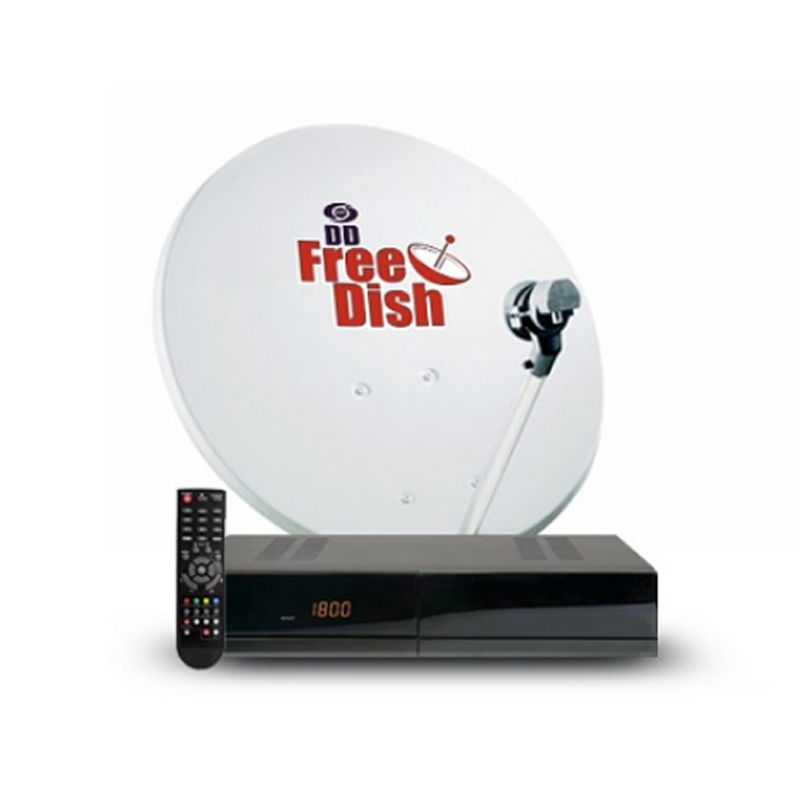
  • DD Free Dish announces Sony Pal & Colors Rishtey to go live effective 1 December

    DD Free Dish announces Sony Pal & Colors Rishtey to go live effective 1 December

    Mumbai: Prasar Bharti’s free direct-to-home (DTH) platform announced the return of two general entertainment channels, Sony Pal and Colors Rishtey, effective from 1 December. The free-to-air platform has unveiled the comeback news of big media giants via a tweet shared on 21 November.


    Colors Rishtey and Sony Pal won the 63rd e-auction process, which was conducted on 18 November 2022.

    Recently, the public broadcaster has invited applications for allotment of vacant MPEG-2 and MPEG-4 slots of DD Free Dish platform on a pro-rata basis for the period from 1 December 2022 to 31 March 2023.

    In April 2022, four big broadcasters—Zee Entertainment Enterprises, Viacom18 Network, Sony Pictures Networks, and Disney Star India—withdrew their flagship channels from bouquets. The decision came in January 2020, when the Telecom Regulatory Authority of India (Trai) announced NTO 2.0, which capped a bouquet channel price at Rs 12 instead of Rs 19 (as per the first NTO).

    In order to increase their advertising revenue and gross rating points (GRPs), the broadcasters decided to rejoin the DD Free Dish platform, as it has a lesser number (176+) of TV channels to compete with than private DTH (500+) services.

    Earlier, when the big players decided to quit the platform, they were completely aware that they had taken on the risk of losing subscribers and ad revenue through that move. Broadcasters knew that if they did not bring back their channels on the platform, then they may have to shut down these channels, as at present, free users are shifting to DD Free Dish for free entertainment and paid DTHs are moving towards OTT streaming apps.

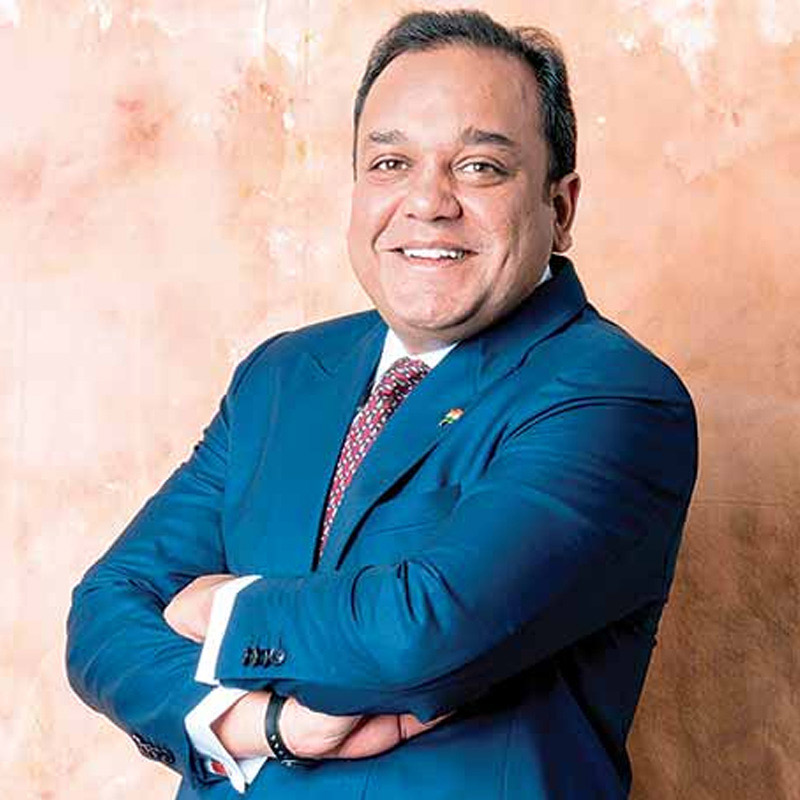
  • “Our focused efforts and investments in content and user experience enhancements are displaying positive results”: ZEEL MD & CEO Punit Goenka

    “Our focused efforts and investments in content and user experience enhancements are displaying positive results”: ZEEL MD & CEO Punit Goenka

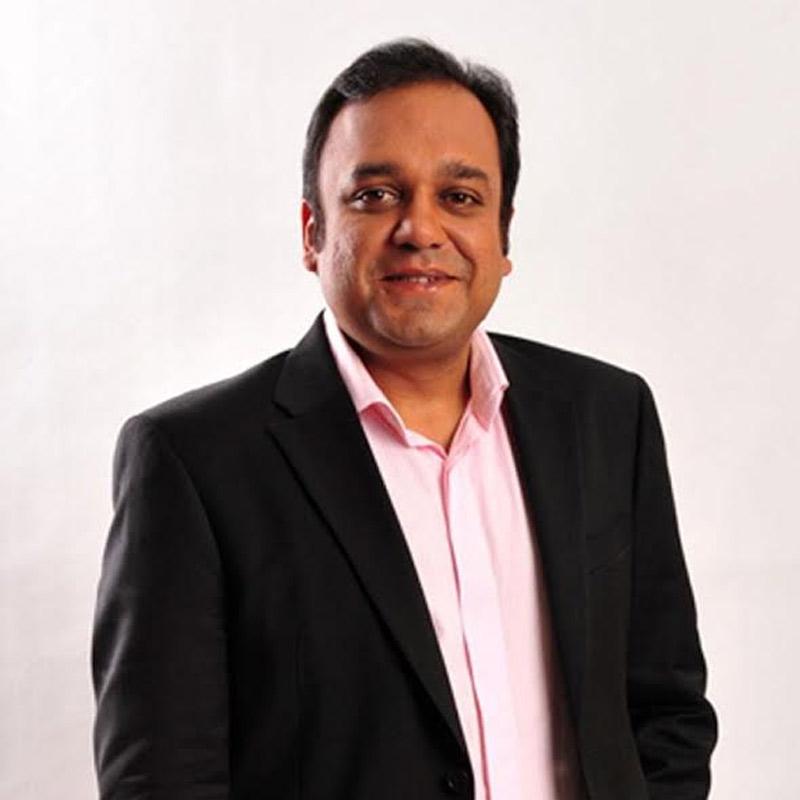
    Mumbai: Speaking in a conference call, ZEEL managing director & CEO Punit Goenka said during the company’s Q2 FY23 earnings call that he remains hopeful of a steady recovery in the advertising environment during the second half of the fiscal given some of the green shoots due to a good monsoon and the onset of the festive season.

    “We are utilising this period to further strengthen the resilience and fundamentals of our business across all aspects. Our focused efforts and investments in content and user experience enhancements are displaying positive results. Going forward, we remain cautiously optimistic about the overall advertising sentiment gradually recovering through the second half of the fiscal year, which will further aid revenue growth.”

    While the underlying impact of the macroeconomic headwind across the industry continued to spill over in the second quarter of the fiscal year, Goenka emphasised, “That said, we have been able to moderately grow our advertising revenues sequentially in the second quarter on the back of our network share gain and focused efforts from our ad sales team.”

    He noted that the merger with Sony should be completed within this financial year. “As you would know, this is something that we are grappling with on a daily basis because the regulatory approval is required, and we can’t give you one final date. The number of days required for delisting or the company’s continued delisting, our expectation is it will be about five to six weeks.”

    Talking about sports being a newer growth opportunity. Goenka mentioned, “In addition to strengthening our current offerings, we are also consistently identifying new growth opportunities for sustained value creation. We took yet another firm step in this direction by sharpening our strategic vision to build the sports business for the company. The strategic licensing agreement with Disney Star makes Zee the exclusive TV destination for all ICC events starting in 2024. Going forward, all our investment decisions to make the sports segment a compelling value proposition for the company will continue to be taken with a prudent approach. Our energies remain focused on enhancing performance across platforms through compelling content offerings and delivering a robust user experience.”

    “For instance, our linear viewership share has increased QoQ, and our key markets like Hindi and Tamil are showcasing an improvement in their performance.” He explained that both in Tamil and Hindi, it is basically implementation and picking the right shows that have worked for it. “In Hindi, particularly, both fiction and non-fiction have done well for us. Tamil is still largely fiction-driven, and we are pretty confident that these will now continue to grow from here. They are stabilised at this level, and now we should see more growth coming. In Marathi, as I mentioned in previous calls to Abneesh, it was an implementation and team issue. A new team was formed about a quarter of a year ago. They are working on plans for getting the turnaround to happen in Marathi, too. I’m quite hopeful that in the next couple of quarters we’ll see something turn around there.”

    When asked about the reason for the NTO 2.0 delay, Goenka stated, “I don’t know what Trai was planning to do, but as I understand it from informal sources, they were trying to build consensus amongst all the stakeholders. As you will understand, building consensus in this industry among broadcasters, cable operators, and DPOs is not easy. I think that is largely the reason for the delay.”

    “My view is that they are finished with all the discussions and everything. We should see the NTO guidelines come out anytime now. As Rohit (ZEEL CFO Rohit Gupta) mentioned, the 28 of February is the deadline they have kept, but I’m quite confident that they will not miss this deadline,” he added further.

    Gupta noted that in the absence of a clear path ahead for NTO 2.0, the near-term outlook for subscription growth remains uncertain and muted. “We will continue to monitor NTO 2.0 guidelines and will be prepared to implement the same for improved long-term revenue outcomes.”

    When asked about the possibility of rethinking capital allocation towards movies given the disappointing performance of Hindi cinema, Goenka said that the company is rethinking or re-studying its movie portfolio strategy and maybe rejigging the capital allocation within that. “So, instead of spending a lot more on, let’s say, Hindi, for example, do we want to spend a little bit more on the regional languages, which are doing much better than the Hindi side, but will we completely look at reducing capital allocation to movies. No, that’s not in the thought process.”

    When asked if it makes sense to buy movie rights after their theatrical release, Goenka responded that, unfortunately, the industry does not work that way because these films are sold even during production. “If we were to wait for the film to be released in theatres and then take the chance of buying the film, there is a risk to that as well. So therefore, the industry is behaving in the manner that it does. Therefore, we have to participate and play the game as per the industry, and our view is that we would also like to continue to build and buy as little as possible. At times that’s not possible, but we are working on that strategy,” he concluded.

  • Trai extends deadline for implementation of new tariff order to February next year

    Trai extends deadline for implementation of new tariff order to February next year

    Mumbai: Telecom Regulatory Authority of India (TRAI) has decided to extend the deadline for implementation of the new tariff order (NTO 2.0) from 30 November 2022 to 28 February 2023.

    As per the regulatory filing, the authority said, “All the distributors of television channels shall ensure that services to the subscribers, with effect from 28 February 2023, are provided as per the bouquets or channels opted by them.”

    Several representations have also been received from the stakeholders requesting an extension of the time limit for implementation of the New Regulatory Framework 2020. According to Trai’s recent notice, it stated, “All the broadcasters shall report any change in name, nature, language, MRP per month of channels, and composition and MRP of bouquets of channels by 30 November 2022, and simultaneously publish such information on their websites,” it stated.

    “The broadcasters who have already submitted their reference interconnect offers (RIO) in compliance with the New Regulatory Framework 2020 may also revise their RIOs by 30 November 2022,” it further added.

    In addition to it, Trai also said, “All distribution platform operators (DPOs) will need to submit their distributor retail price (DRP) of pay channels and bouquets & composition of bouquets of pay and free-to-air channels, by 31 December 2022 to Trai.”  

    The authority further, in compliance with the New Regulatory Framework 2020, asked DPOs to revise their already-submitted RIOs by 31 December 2022. 

    After receiving comments and counter comments from the stakeholders on the consultation paper, TRAI was to conduct an open house discussion (OHD) on 21 July 2022, which is now scheduled to take place on 8 September 2022.

    New Tariff Order

    When NTO was first introduced and gave customers the option to select channels à la carte, the price of entertainment increased, forcing Trai to modify its order. In January 2020, NTO 2.0 was introduced, capping the price of a bouquet channel at Rs 12 as opposed to Rs 19. This was not supported by any logical justification or consumer insight, according to the Indian Broadcasting Digital Foundation (IBDF), a unified representative body of Indian television broadcasters.

    Broadcasters have resisted the new tariff order vigorously and reacted by removing premium channels from bouquets and increasing their prices from Rs 20 to Rs 30 after losing the legal battle to overturn the Trai order in both the Bombay High Court and the Supreme Court.

    Cable operators were compelled to ask the regulator to postpone the implementation of NTO 2.0 as a result of major broadcasters like Star, Zee, Sony, and Viacom18 choosing to raise the MRP of their well-liked channels and keep them out of bouquets. For instance, the All India Digital Cable Federation had urged Trai to reconsider the order’s provisions in light of the sustainability aspect of putting this framework into place.

  • Trai extends deadline for comments on consultation paper related to new regulatory framework

    Trai extends deadline for comments on consultation paper related to new regulatory framework

    Mumbai: The Telecom Regulatory Authority of India (Trai) has decided to extend the deadline for receiving comments and counter comments on the consultation paper regarding the issues related to the new regulatory framework for broadcasting and cable services.

    The deadline has been extended until 6 June for comments and until 13 June for counter comments.

    Trai decided to extend the deadline after it received requests from stakeholders for an extension of time for the submission of comments on the consultation paper.

    Trai released the consultation paper on 7 May and the last day for receiving comments on the issues raised in the consultation paper was set as 30 May for comments and 6 June for counter comments.

  • Uptake of free DTH has come down since major broadcasters left: Punit Goenka

    Uptake of free DTH has come down since major broadcasters left: Punit Goenka

    Mumbai: The uptake of free direct-to-home services has come down since the major broadcaster networks collectively left the platform on 1 April, stated Zee Entertainment Enterprises Limited managing director and chief executive officer Punit Goenka during an earnings call.

    The company reported its fourth quarter and yearly results for the financial year ended 31 March. Goenka said, “Cord-cutting has slowed down now that GECs (general entertainment channels) have come out of the Free Dish platform. So far, the decline in subscription revenues has been because we were losing subscribers. The good thing is we’re not losing subscribers to digital but rather subscribers are migrating from pay linear to free linear TV.”

    On merger with Sony Pictures

    Goenka also shared an update on the merger process between Zee and Sony Pictures Networks India. The two companies had signed a definitive agreement in December 2021 and submitted key documents with the stock exchanges for the necessary approval. Analysts queried Goenka whether the timeline for completion of the merger would remain at eight to nine months as the company was still awaiting approval from the exchanges.

    “My speculation is that because this is a large merger there have been a significant number of queries by the stock exchanges that we have been answering. It has been two weeks or ten days since we last got any query from the exchange and I am still positive towards the eight to nine months timeline,” replied Goenka.

    Zee is expected to be one of the major contenders for the Indian Premier League (IPL) media rights auction that is set to begin on 12 June. With the merger process still underway, analysts asked Goenka whether Zee was in a position to bid for the media rights without the capital infusion of $1.57 billion (~Rs 12,000 crore) from Sony.

    “We have a healthy balance sheet and we can participate (in the IPL media rights) on our own,” said Goenka. He also noted that the TV and digital rights package being sold separately “doesn’t preclude us from bidding for either part of all of the rights packages being sold.”

    Goenka stated that the company is still evaluating its strategy concerning IPL media rights.

    Zee expects its advertising revenues to face pressure in the coming quarter due to the inflationary situation that has impacted FMCG advertisers who account for up to 53 per cent of ad spend on the network.

    The company also expects to see a short-term impact on ad revenues after pulling its GECs from the Free Dish platform. “This will be a transitional impact and we expect to recover as intended benefits accrue on the pay side of the business,” remarked Zeel chief financial officer Rohit Gupta.

    He added, “In FY23 from a quarter-on-quarter progression perspective we expect the margins to improve as we progress through the year.

    The first quarter will have the most immediate impact in terms of inflationary dynamics. FTA drop, accelerated investments and seasonal expenses such as increments etc., will have an impact on revenues. As revenues scale up in subsequent quarters, we expect margins to start inching up in the later part of the year.”

    The embargo on NTO (New Tariff Order) 2.0 continues to impact the broadcast industry in terms of subscription revenues. However, the management of Zee expects to see a positive quantum in terms of revenue growth for FY23 now that the pandemic has subsided.

    Zee reiterated its commitment to scale investments in content, technology and product. The company is particularly increasing investments on OTT content with more regional content in the pipeline and partnering with global studios, independent creators and premium content production houses. Zee5 saw 31 per cent growth in revenues for FY22 and its global monthly active users (MAUs) stood at 104.8 million. Average watch time on the platform increased to 214 minutes.

    Following the success of “Kashmir Files” that grossed Rs 200 crore in the box office, Zee Studios is gearing up to release 20-25 movies this year.

    On the linear TV side, the company plans to increase investments in its Hindi, Marathi and Tamil portfolio of channels to grow market share.

    Linear TV market

    Zee’s linear TV market share declined to 17.1 per cent in Q4 2022. Zee has also considerably brought down its debt to Dish TV India from Rs 5.8 billion in March 2020 to Rs 2.4 billion in March 2022.

    The company reported operating revenue of Rs 8189.3 crore up by 14.1 per cent year-on-year. Its profit after tax increased by 31.7 per cent and stood at Rs 964.4 crore. Advertising revenue stood at Rs 4396.5 crore in FY22 up by 18 per cent year-on-year. Subscription revenue remained stable at Rs 3246.6 crore. The company’s expenditure for the year came up to Rs 6467.3 crore out of which operating expenses stood at Rs 4044.9 crore. The company’s programming and technology costs increased year-on-year driven by higher theatrical revenue, continued investments in Zee5 and new launches across the market.

  • Trai seeks views of stakeholders on new tariff order

    Trai seeks views of stakeholders on new tariff order

    Mumbai: The Telecom Regulatory Authority of India (Trai) has issued a consultation paper on issues related to the new regulatory framework for broadcasting and cable services. The regulatory body has invited stakeholders to express their written comments on the issues in the consultation paper by 30 May and counter comments by 6 June.

    In December 2021, Trai formed a committee consisting of members from the Indian Broadcasting and Digital Foundation (IBDF), All India Digital Cable Federation (AIDCF) and DTH Association to deliberate on the various issues related to the implementation of the New Regulatory Framework 2020.

    Implementation of tariff order

    The stakeholders’ committee identified several issues related to New Regulatory Framework 2020 for consideration and requested Trai to immediately address the critical issues which could create impediments to the smooth implementation of the tariff order.

    To summarise the issues, Trai addressed seven questions to stakeholders concerning the ‘New Tariff Framework 2020’ in the consultation paper as follows:

    1. Should Trai continue to prescribe a ceiling price of a channel for inclusion in a bouquet?

    A. If yes, please provide the maximum retail price (MRP) of a television channel as a ceiling for inclusion in a bouquet. Please provide details of calculations and methodology followed to derive such ceiling price.

    B. If not, what strategy should be adopted to ensure the transparency of prices for a consumer and safeguard the interest of consumers from perverse pricing?

    2. What steps should be taken to ensure that popular television channels remain accessible to a large segment of viewers. Should there be a ceiling on the MRP of pay channels? Please provide your answer with full justifications/reasons.

    3. Should there be a ceiling on the discount on the sum of a-la-carte prices of channels forming part of bouquets while fixing MRP of bouquets by broadcasters? If so, what should be the appropriate methodology to work out the permissible ceiling on discounts? What should be the value of such a ceiling?

    A. Should channel prices in bouquets be homogeneous? If yes, what should be appropriate criteria for ensuring homogeneity in pricing the channels to be part of the same bouquet?

    B. If not, what measures should be taken to ensure an effective a-la-carte choice which can be made available to consumers without being susceptible to perverse pricing of bouquets?

    C. Should the maximum retail price of an a-la-carte pay channel forming bouquet be capped regarding the average prices of all pay channels forming the same bouquet? If so, what should be the relationship between the capped maximum price of an a-la-carte channel forming the bouquet and the average price of all the pay channels in that bouquet? Or else, suggest any other methodology by which the relationship between the two can be established and consumer choice is not distorted.

    5. Should any other condition be prescribed for ensuring that a bouquet contains channels with homogeneous prices? Please provide your comments with justifications.

    6. Should there be any discount, in addition to the distribution fee, on MRP of a-la-carte channels and bouquets of channels to be provided by broadcasters to DPOs? If yes, what should be the amount and terms and conditions for providing such a discount?

    7. Stakeholders may provide their comments with full details and justification on any other matter relating to the issues raised in the present consultation.

    Trai notified stakeholders of the regulations under the New Regulatory Framework 2020 on 1 January 2020. As per the regulations, Trai allowed for 200 SD channels for the maximum price of Rs 130. It also necessitated that in multi-TV homes distributed platform operators (DPOs) charge a network capacity fee (NCF) for any subsequent TV connection that cannot be more than 40 per cent of the NCF for the first TV.

    The regulations also mandated that only channels with MRP of Rs 12 could be a part of a bouquet. It also called for reasonable pricing of a-la-carte channels and bouquets by providing twin conditions

    a) the sum of the a-la-carte rates of the pay channels (MRP) forming part of a bouquet shall in no case exceed one and half times the rate of the bouquet of which such pay channels are a part and

    b) the a-la-carte rates of each pay channel (MRP), forming part of a bouquet, shall in no case exceed three times the average rate of a pay channel of the bouquet of which such pay channel is a part. In a ruling dated 30 June 2021, the Bombay high court struck down the second twin condition after a challenge issued by broadcasters.

    “The provisions related to Network Capacity Fee (NCF), multi-TV homes and long-term subscriptions of New Regulatory Framework 2020, have already been implemented and due benefits are being passed on to the consumer at large,” said Trai in its statement.

    Pricing of channels

    However, Trai noted, that reference interconnection offers (RIOs) filed by broadcasters, listing the MRP and bouquet price of their channels, reflected a common trend. The broadcasters priced their most popular channels including sports channels beyond Rs 20 per month keeping them out of the bouquet. “The revised RIOs as filed indicate a wide-scale changes in the composition of almost all the bouquets being offered,” said Trai.

    After the RIOs were filed, Trai received representations from DPOs, local cable operators (LCOs) and consumer organisations. The DPOs highlighted the difficulties faced by them in implementing the new rates in the system and migrating the consumers to the new tariff regime through the informed exercise of options impacting almost all bouquets.

    This paper primarily discusses issues related to discounts given in the formation of the bouquet, the ceiling price of channels for inclusion in the bouquet, and discounts offered by broadcasters to DPOs in addition to distribution fees.

  • Probe against Star India for alleged abuse of dominant position

    Probe against Star India for alleged abuse of dominant position

    Mumbai: The Competition Commission of India (CCI) has ordered a probe into the alleged abuse of dominant position by Star India. The complaint was filed by Asianet Digital Network against Star India, Disney Broadcasting (India), and Asianet Star Communications, said PTI in a news report.

    According to the complaint, Star India was providing a bouquet of channels to the competitor of the informant at lesser prices resulting into denial of market access and also amounting to unfair/discriminatory pricing.

    It chose an indirect way to provide these discounts to circumvent the New Regulatory Framework of Trai by way of promotion and advertisement payments to informant’s competitor through high valued advertising deals, the complaint alleged.

    “Therefore, on the basis of market share, dependence of consumers, size and resources of the enterprise (being part of global media conglomerate), vertical integration of the enterprise and countervailing power, the Commission is of prima facie view that OP-1 enjoy a position of dominance in the relevant market delineated supra,” it noted.

    The relevant market prima facie appears to be “market for provision of broadcasting services in the state of Kerala,” the regulator said.

    “The alleged discriminatory conduct of price discrimination between different multi-system operators of Star India has resulted into significant loss in the consumer base of the Informant and therefore prima facie appears to be in violation of the provisions of section 4 of the Competition Act, due to discriminatory pricing and denial of market access.”

    The section 4 pertains to abuse of dominant position.

    “Accordingly, the Commission directs the Director General (DG) to cause an investigation to be made into the matter and submit an investigation report within a period of 60 days from the date of receipt of this order,” CCI said in an order dated 28 February.

    It further said that nothing in this order shall be tantamount to a final expression of opinion on the merits of the case, and the DG shall conduct the investigation without being swayed by the observations. Separately, the regulator has dismissed a plea of interim relief filed by the informant.

  • Broadcasters to withdraw petitions challenging Trai on NTO 2.0 in SC

    Broadcasters to withdraw petitions challenging Trai on NTO 2.0 in SC

    Mumbai: The Indian Broadcasting and Digital Foundation (IBDF) and its members are likely to withdraw their petitions challenging the New Tariff Order (NTO) 2.0 in the Supreme Court, sources told indiantelevision.com. The apex court took up broadcasters’ applications for withdrawal of the petition while hearing the matter on Tuesday.

    Earlier this month, The Telecom Regulatory Authority of India (Trai) had extended the deadline for implementation of the new tariff order (NTO) 2.0 to 1 June. The previous deadline was 1 April.

    Trai had then also allowed broadcasters to revise their reference interconnect offers (RIO) by 28 February and publish the same on their websites. Distribution platform operators (DPOs) were directed to report the distributor retail price and composition of the bouquet of pay channels in compliance with the new regulatory framework by 31 March. Those who have already submitted can revise their RIOs by 31 March.

    In response to the earlier deadlines, broadcasters had come out with their new RIOs in October-November last year, preferring to pull their popular channels out of the bouquets instead of reducing the price to or below Rs 12. Though still above the cap, many of these prices were revised down later.

    Pertinent in this regard is Trai’s intention to form a committee with representation from leading pay-TV industry associations to ensure smooth implementation of the New Regulatory Framework 2020. In a letter dated 22 December 2021, the regulator has asked the IBDF, All India Digital Cable Federation (AIDCF), and the DTH association to nominate a maximum of two representatives to be part of the implementation committee.

    Prior to this, Trai had in November 2021, notified stakeholders that NTO 2.0 implementation would be delayed until 1 April. Speculations regarding backroom parleys between the telecom regulator and broadcasters to end the impasse have also been in the news lately. 

    This copy will be updated.

  • Dish TV India reports third-quarter revenue of Rs 7107 million

    Dish TV India reports third-quarter revenue of Rs 7107 million

    Mumbai: Dish TV India Ltd has reported its third-quarter fiscal 2022 results on Monday. The company reported operating revenue of Rs 7107 million for the quarter ended 31 December 20201. Its subscription revenue stood at Rs 6459 million, EBIDTA was Rs 4260 million and profit after tax was Rs 802 million.

    The company paid off debt of Rs 1031 million during the quarter with the resultant interest expense coming down by 57.9 per cent on a year-on-year basis. It had a closing debt of Rs 4535 million at the end of the quarter.

    In the third quarter, Dish TV India ramped up gross acquisitions to almost pre-pandemic levels, though continued dependence on exclusively internal funds restricted the ability of the business to go all out thus keeping net additions under pressure.

    “Consumers typically tend to step up spending during festivals with the season traditionally accounting for the majority of the annual revenues of businesses,” said the statement. “Expecting a similar trend and considering the earlier subdued demand due to repeated waves of the pandemic, Diwali 2021 witnessed aggressive marketing by consumer-focused companies. While higher marketing spends did help generate incremental acquisitions, consumer spending went below par once the pent-up demand was exhausted. Early cases of the third wave of the pandemic in mid-December too had a negative effect on consumption.”

    During the quarter, Dish TV India took a price hike of around 25 per cent on both its standard-definition and high-definition hardware. “With rural stress and inflationary pressures, price-sensitive customers at the bottom of the pyramid remained vulnerable to churn to the free DTH platform. Streaming platforms, as well as content bundling by telecom players, continued to give competition to DTH service providers,” said the statement.

    “As a category, DTH has been facing competition at various levels however the platform has the unique strengths that will continue to set it apart from other video platforms,” said Dish TV India Limited group CEO Anil Dua. “We remain committed to offering the best solution to our subscribers, be it in the linear or OTT space and hope to change the game with innovative offerings and winning partnerships.”

    The Telecom Regulatory Authority of India (Trai), on stakeholders’ request, recently extended the deadline for enforcing the new tariff order (NTO) 2.0 to 1 June from the earlier fixed deadline of 1 April.

    “The DTH industry has been working on the implementation of the new tariff order (NTO) keeping in mind the earlier deadline however the extended timeline will give us even more time to sort out any migration issues,” said Dish TV India Limited CMD Jawahar Goel. “We would also be watching the developments on the litigation front while simultaneously working towards implementation of the order.”

  • Barc taken steps to improve corporate governance & streamline processes: Anurag Thakur

    Barc taken steps to improve corporate governance & streamline processes: Anurag Thakur

    Mumbai: The minister of information and broadcasting Anurag Thakur informed the Lok Sabha on matters concerning Broadcast Audience Research Council (Barc) India ratings and new tariff order (NTO) 2.0 during a session on Thursday.

    The minister was queried whether Barc ratings were marred in serious charges of manipulation and what actions it proposed to ensure robust data.

    The minister told the Lok Sabha that Barc has taken various steps on corporate governance and on streamlining of processes and their transparency. “The management involved in the ratings generation process has been institutionally removed. The oversight and technical committees within Barc have been strengthened for data validation and methodology. The access protocols for data have been revamped and tightened,” he said.  

    Ever since news reports published in October 2020 expressed concerns related to TV ratings, “Barc has responded by actively pursuing action against those involved in tampering the samples and had filed 11 FIRs through its vendors across many states,” stated Thakur.

    The I&B ministry has also instituted a committee led by Prasar Bharati CEO Shashi Shekhar Vempati to study the concerns related to television rating points (TRPs) and address them in light of fresh recommendations by Trai and technological advancements.

    The I&B minister was also asked whether it has come to the notice of the government that some broadcasters are tweaking NTO 2.0 and keeping their popular channels out of the bouquet. Subsequently, whether this has led to viewers paying 50 per cent more in tariffs and in turn if the government has also fixed a maximum price for channels outside of a bouquet.

    On the matter of NTO 2.0, the minister said that broadcasters have declared the maximum retail price of their popular channels above Rs 12 and are offering such channels on an a-la-carte basis.

    “As per the implementation plan of new regulatory framework 2020 issued by the Telecom Regulatory Authority of India (Trai) the distribution platform operators (DPOs) are required to declare rates of channels and bouquets offered to consumers by 31 January and thereafter offering to the consumer will be made available from 1 April. Therefore, final prices for the consumers can be ascertained after 31 March when the choice of channels are exercised by consumers,” he explained.