Tag: NTO

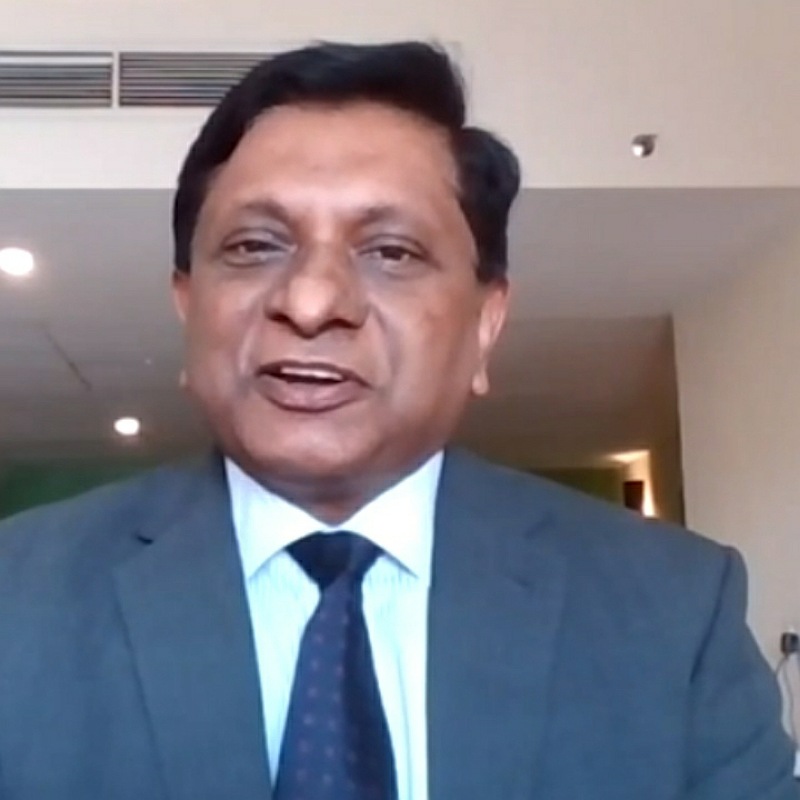
  • “We have penetrated globally, and that shows the strength of our content”: Travelxp’s co-founder & CEO Prashant Chothani

    “We have penetrated globally, and that shows the strength of our content”: Travelxp’s co-founder & CEO Prashant Chothani

    Mumbai: Having endured two difficult years due to Covid-19, travel channel Travelxp is now looking at strong growth. Travelxp co-founder & CEO Prashant Chothani said that the broadcaster, which recently launched in Portugal, will also expand its presence in 10 more countries in future. It will also triple the content output compared to pre-Covid. He mentioned that the broadcaster is profitable while noting that content costs have more than doubled, in part due to sharply rising airfares.

    In an interaction with Indiantelevision.com, he said, “We have just launched in Portugal, which is our 81st country and 21st language. We will launch in 10 more countries in the upcoming months. We will soon be introducing a dedicated feed for Latin America. The aim is to enter more markets. We will ramp up our content & production initiatives to make up for the time that we lost due to Covid-19. As you know, we are a travel channel and nobody could travel. So, producing travel content was impossible. That was the biggest drawback. Now we are ramping up content production like never before. The aim is to cater to the accelerated market growth and demand.” 

    Growing during Covid-19: In India, the channel is produced in English and then dubbed into Hindi, Bengali, and Tamil. More Indian languages will come by the end of the year or the beginning of next year. “We will launch at least three to four new languages in India.” He maintains that the channel is profitable. 

    He added, “Even during Covid-19, our subscription revenues almost doubled worldwide. 95 per cent of our revenues come from subscriptions. During Covid-19 we did several distribution deals. People were sitting at home and viewing the world. We have almost grown two times. India was stagnant. 95 per cent of our revenues come from subscriptions. We are largely a subscription-driven business globally. Advertising is something that we introduced recently.”

    “Audiences’ minds are open when they watch us, and they are in a great mood to receive advertiser messages. The communication impact is much higher. People are in a happy state of mind when they watch us. We have very high-end advertisers who value the kind of audience that we bring. The plan going forward is to ramp up marketing initiatives, affiliate marketing initiatives, and work with platforms around the world. Viewers will be updated on the content being produced,” Chothani said.

    Content costs: He noted that the content production costs have at least doubled and, in some cases, have tripled. The cost of travel has shot up. “The flight that earlier cost Rs 40,000 now costs Rs 1,20,000. Also, content production costs are at an all-time high. But at the same time, we will produce three times the amount of content compared to pre-Covid. We have to do justice to the platforms that we are present on. We have to showcase not only good but the best quality content.”

    Distribution: He maintains that not being part of a distribution network is not an issue. Today, he said, with the NTO (new tariff order), Trai wants to de-bundle. Success, he maintains, is about a channel’s USP and not being part of a network. “Nobody produces the kind of content that we do. We have penetrated globally, and that shows the strength of our content. We talk to mainstream audiences in various countries. In India too, there is an advantage. It all does not boil down to the network. That is irrelevant if the content is bad. If the content is good, anybody can sell it.” He added that NTO will keep on evolving. “People have different views on it. It is confusing. Where it will go, there is no clarity. It is caught between regulation and litigation. There is also no clarity between linear and non-linear as the latter is not regulated.”

    “The distribution platforms have been impacted more. People work around it, which means that you adjust your business plans. There is both a B2B2C and D2C business. It depends on where you are and how you are being impacted. I think that DD Freedish may be a bigger issue for some broadcasters and platforms than the NTO. With changing times, channels have to change. If viewership is falling for a channel, then the programming strategy for that channel may not be correct. Or in the case of a platform, maybe the platform does not have the channel that subscribers want. It is not that viewership per se is falling. It is just that viewers have gone elsewhere. For us, we are happy with the viewership.”

    At the same time, he also noted that distribution platforms have to make an effort to educate consumers about the content available on various channels. In a B2B2C, the B in the middle has to properly market to the C at the end. “There has to be the proper focus between both the Bs to reach out to the C.”

    Content strategy: In terms of shows on Travelxp, he said that they are about the destination, food, culture, history, and heritage. The aim is to have the travel experience percolate into the viewer’s mind. “It is about having travel content that is informative, well researched, and produced with the highest production quality. This makes the difference. It is not a fiction show where you have to think of new stories. We have to ideate new ways of experiential travel that can be introduced and what new destinations in the content line-up can be showcased. Till now, we have filmed in 65 odd countries. There are always new ways of presenting content and presenting a destination. Each piece of content is unique. It is completely different.”

    Shedding light on the amount of time it takes to produce a show, he said, “It takes nine to 10 months to create a show of two to three hours. Research takes two months at least. One month is spent on pre-production, getting the required permissions, etc. One to 1.5 months is spent on production. Then two months are devoted to post-production in terms of things like colouring, grading, etc. It is like making a movie. We will make a movie about that destination. You cannot go wrong when it comes to research. It is not like filming for a social media platform. You cannot take away from what they are doing, but the audience there consumes it for fun.”

    “People consume us for information, knowledge, entertainment, and infotainment. People come to us. On social media, travel content comes to you. It is content that comes by the way. People, on the other hand, watch Travelxp by appointment,” he explained.

    The travel scenario: He noted that right now there is a huge boom in travel and it is about revenge travel. But he also explains that things will be moderated in a few months. He does not think that Covid-19 and monkeypox will be a challenge. People, he noted today, do not care about it. “I don’t think people are even bothered about them. Nobody is withdrawing from travel due to any threat. Unless something dramatic happens, there will be no impact,” he said.

    The potential inflation impact: He does, however, concede that inflation is a challenge. The challenge will be seen months down the line. That is because people plan their travels slightly in advance. So the inflation impact on travel will come up pretty late. There is a time lag. He noted, “The cause and effect time lag will be there, and at the same time, revenge travel will settle down. Between 3-6 months, you will see revenge travel moderately. Things will become real.”

    “Inflationary pressures will add to the travel impact. There will be a scale down from the travel levels that are being seen now. This is a temporary travel boom being seen now. My hope, though, is that more and more people will want to travel now, which will be very good for us and other travel stakeholders. Earlier, travel was a luxury. Now people view travel as a necessity.”

    Travelxp, he added, also plays the role of a memory re-collector for viewers who have visited a destination that is being showcased. “It is also a great infotainment entertainer. You want informational content that gives you relief from the pressure of the inflationary times that we live in. Viewers get refreshed and inspired by our content. Viewers relive memories with us. People remember our content for a long, long time.”

    The challenge: Right now, the challenge for the travel industry is that the stakeholders, like airports, are struggling to cope with the huge demand. “Fares are exorbitantly high; airports and hotels are facing financial pressure. Revenge travel is happening. People just want to travel. We are exploring new destinations. We are also revisiting destinations that we have covered in the past, and we aim to show viewers how they can explore the same destination in a new way. Our job is to excite travellers,” he said.

    Being about the big screen: On digital, Travelxp has an app which was launched in the previous quarter. But he stressed that content created is meant to be watched on the television set, not on the mobile. That is why features like augmented reality will not play a role in Travelxp.

    “Travelxp is a big-screen television experience. We are not producing content for mobile phones. There you fight with the likes of Youtube and Instagram, where user-generated content comes into play. Television cannot work for augmented reality. Even on non-linear apps, everything has shifted to the television set.”

    He also noted that it is a false statement that content viewership is migrating from TV to OTT. People are also taking OTT and are also watching linear TV. It remains to be seen if OTT growth remains high. The base was low, he explains. In the long run, the current distribution platforms like Tata Play and Hathway will offer an aggregated offering of linear and non-linear. The aggregator model also has a role in Travelxp’s distribution plans, he explains. “The future will see everything available. You can buy an app on a standalone basis and also through the aggregator route, where both TV channels and OTT apps are available in one place.”

  • We’re conveying broadcasters’ concerns to the regulator: MIB Secy Apurva Chandra on NTO 2.0

    We’re conveying broadcasters’ concerns to the regulator: MIB Secy Apurva Chandra on NTO 2.0

    Mumbai: Despite the pandemic-induced slowdown, India’s media and entertainment industry can grow at least nine per cent every year to reach $70 billion by 2030, said ministry of information and broadcasting (MIB) secretary Apurva Chandra.

    The top ministry official was discussing the evolution of India’s broadcasting industry at the Apos India Summit that began virtually on Tuesday.

    Highlighting how the $25 billion industry is being recognised as a significant generator of employment, Chandra said the sector’s role in growing the nation’s soft power through dissemination of content worldwide is laudable.  The phenomenon has especially been powered in a big way by the pandemic-induced OTT boom.

    “The massive proliferation and adoption of OTT platforms have led to Indian content being translated into several languages and released internationally, thus making it available anywhere in the world at the same time. As I understand from the likes of Amazon and Netflix, there are a lot of viewers of Indian content abroad, including in countries like Mexico, Brazil and Spain,” said Chandra.

    The burgeoning of online video has however been accompanied by growing piracy concerns. While there exists in India a robust and well-entrenched Copyright Act that is administered by the department for promotion of industry and internal trade, the MIB is in the drafting stages of a ‘Cinematograph Act’. “The new legislation which will have a specific anti-piracy provision has already been introduced in the parliament,” informed Chandra.  

    Additionally the ministry has also agreed to extend in-principle support to CII’s (Confederation of Indian Industry) proposal of formulating an industry body to tackle all forms of copyright violations.

    The MIB secretary also noted the recent developments pertaining to the implementation of the New Tariff Order (NTO) 2.0, and said the ministry is in touch with the broadcasters regarding the issue.

    “The New Tariff Order (NTO) 1.0 guidelines implemented a couple of years ago gave rise to some apprehensions among broadcasters, and these seem to have been further aggravated by NTO 2.0. Prior decision on the matter has been challenged in the Supreme Court. We are also in touch with the broadcasters regularly and are conveying their concerns to the regulator (Trai),” said Chandra, adding that the ministry can act as a bridge between industry stakeholders and regulators, particularly in the context of recent regulatory changes.

    Chandra added that he welcomes the idea of the ministry having a larger role to play in the regulation of the broadcasting industry. “The MIB has received a request for inducting a part-time member from the sector into Trai, and we are open to the suggestions/nominations in this regard,” he added.

    Sharing his perspective on the scope for a unified regulatory policy/body for the M&E industry, he said that given the complexities and diversity of the sector, there needs to be a much larger debate on whether all stakeholders can come under a common policy. “It is bound to have its own challenges and concerns,” he reckoned.

    Among other initiatives, a ‘Broadcaster Seva Portal’ will soon be launched to take all application and approval procedures online. Changes in uplinking and downlinking guidelines can also be expected in the next three-four months, he said.

  • DTH operators write to TRAI over broadcasters offering pay channels on DD Free Dish

    DTH operators write to TRAI over broadcasters offering pay channels on DD Free Dish

    Mumbai: Direct-to-home (DTH) service providers including Tata Sky and Airtel Digital TV have written to the Telecom Regulatory Authority of India (TRAI) asking the telecom regulator to address the issue of broadcasters making their pay channels available on Prasar Bharati’s FTA platform DD Free Dish.

    According to the DTH players, this goes against the current tariff regime which mandates the designation of channels as either pay or FTA and prohibits their bundling together. Tata Sky and DTH players want that such designation remains constant across distribution platforms, a matter they had requested the TRAI to look into earlier as well, but to no avail.

    It is being alleged that despite the above mandates and guidelines, broadcasters such as Zee, Sony, Star, Viacom18 and others continue to exploit loopholes to make their second-tier channels like Zee Anmol, Sony Pal, Star Utsav and Colors Rishtey available for free on DD Free Dish in order to increase their reach beyond the pay universe and get more advertising dollars. However, the same channels are present on private distribution platforms as pay channels, in accordance with their MRP filing with TRAI.

    DTH operators say that the practice is highly discriminatory as not only are the private DPOs paying the broadcasters to distribute these channels, but also charging subscribers for the same. On the other hand, DD Free Dish receives a license fee for making them freely available to viewers.  

    Reviving their demand, the DTH players have requested the TRAI to level the playing field for the public service broadcaster and themselves in this regard.

    Tata Sky CEO Harit Nagpal says that he is not against these channels being free nor is he asking the broadcasters to pull them off DD Free Dish, but asking for a level-playing field and parity. “We are just demanding that if these channels are available as free on DD Free Dish, it should also be the case on my platform. There are about 20 FTA channels on DD Free Dish that are being offered to my viewers at a price anywhere between ten paise – three rupees, which is highly discriminatory,” he says.

    Responding to the TRAI’s contention of DD Free Dish not being covered under NTO, he says that the regulator misses the point here. “This is not about DD Free Dish, but the channels,” states Nagpal.

    A senior official from a leading cable operator remarks, “I am not sure but the broadcasters may be taking advantage of a legal loophole where TRAI cannot regulate DD Free Dish which comes under Prasar Bharati. A channel that is allotted a slot on DD Free Dish may immediately gain 50 GRPs while FTA channels not on the free DTH players are struggling at seven GRPs. That’s the advantage of DD Free Dish.  Broadcasters slowly want to move pay-TV subscribers away from the value chain. In urban markets, they are going direct-to-customer by distributing their channels on their OTT platforms and in rural markets, they are opting for DD Free Dish. This practice boosts both advertising and subscription revenues for broadcasters.”

    Calling the unfair practice a “double whammy” for DPOs, he reveals that TV broadcasters are ready to pay Rs 8-16 crore in advance to be allotted a slot on DD Free Dish. “They are paying an enormous carriage fee and not charging a subscription fee for their pay channels on DD Free Dish whereas on cable and DTH operators they are paying much lower carriage fees and are charging a subscription fee. It’s a complete double negative.”

    It is important to note here that as per the new tariff order, 1.0 carriage fees on DTH and cable operators are capped at four lakh per month. According to TRAI performance indicator report Jan-March, DTH subscribers declined by 1.4 million at the end of March. 

    The unnatural growth in the number of pay channels on DD Free Dish has unbalanced the equation for cable and DTH operators. “Reports say that 40-50 per cent of the urban markets are already on OTT platforms. The rural market is still growing where broadcasters are trying to cut out ‘middle men’ like cable and DTH operators. This will slowly lead to the decline of the industry in five to ten years,” he reckons.

    Like Nagpal, he also demands that either the broadcasters should pull their pay channels from DD Free Dish or they should make those channels FTA for all DPOs. If there is parity on all platforms, no one will complain. 

  • ZEEL reports higher subscription and OTT rights revenues for first quarter

    ZEEL reports higher subscription and OTT rights revenues for first quarter

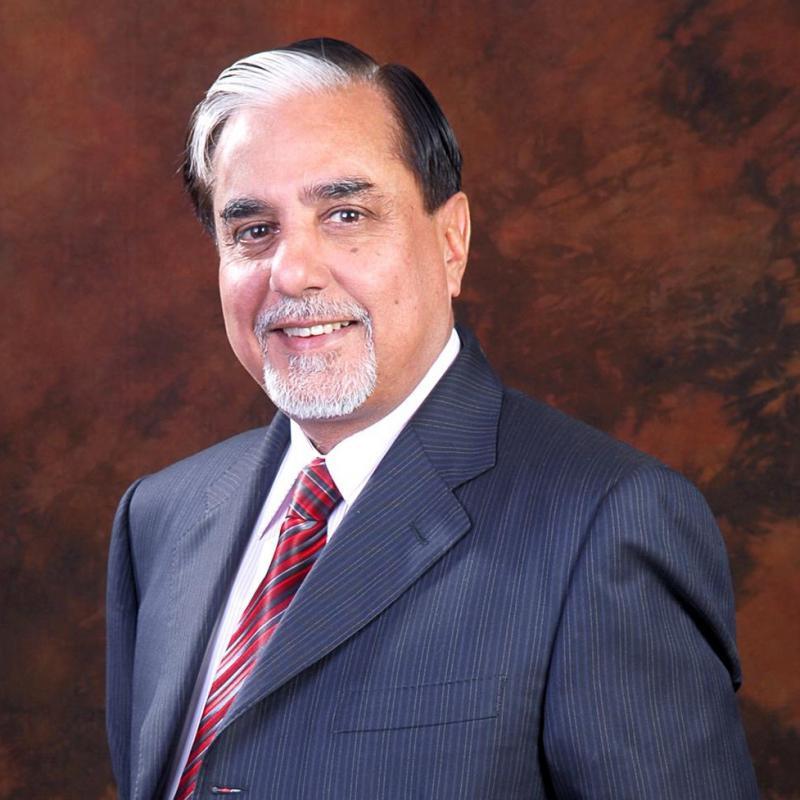
    BENGALURU: Subhash Chandra’s Zee Entertainment Enterprises Limited (Zeel) reported a profitable quarter, albeit with steep declines in top-line and bottom-line numbers for the quarter ended 30 June 2020 (Q1 20210, quarter or period under review, COVID2019 quarter) as compared to the corresponding year-ago quarter Q1 2020. A number of Indian media and entertainment companies have reported a loss for COVID2019 quarter. Among other silver linings is growth in subscription revenue and growth in other sales and services which includes the sale of rights of movies to OTT platform. These numbers increased y-o-y by 5 per cent and 30.2 per cent respectively.

    Zeel reported 34.7 per cent lower y-o-y operating revenue at Rs 1,312.03 crore for Q1 2021 as compared to Rs 2,008.12 crore in Q1 2020. Total income (Operating revenue plus other income) fell 32.8 per cent y-o-y to Rs 1,338.41 crore from Rs 2,112.03 crore in Q1 2020.

    Ad revenue fell 59.5 per cent y-o-y in Q1 2021 to Rs 421.06 crore from Rs 1,186.71 crore in Q1 2020. Subscription revenue and other sales and service revenue increased y-o-y during the period under review as mentioned above. The company reported Rs 744.34 crore and Rs 708.77 crore as subscription revenue and Rs 146.63 crore and Rs 112.64 crore towards other sales and services for Q1 2021 and Q1 2020 respectively.  Zeel says in an investor presentation that subscription revenue increase was led primarily by increase in its OTT platform ZEE5 subscription revenue.

    Zeel says that international Ad revenue was Rs 37.1 crore, international subscription revenue was Rs 81.8 crore and other sales and services revenue was Rs 15 crore.

    Zeel reported profit after tax (PAT) of Rs 29.28 crore for COVID2019 quarter, which was just about one-eighteenth (declined 94.5 per cent) of the PAT of Rs 529.76 crore for Q1 2020. Operating profit (EBIDTA) for Q1 2021 was Rs 219.93 crore (16.8 per cent of operating revenue), or about one third (down 66.7 per cent) of Rs 659.75 crore (32.9 per cent of operating revenue) for Q1 2020.

    Let us look at the other numbers reported by Zeel for Q1 2021

    Total expenditure for Q1 2021 was Rs 1,280.80 crore which was 6.5 per cent lower y-o-y than the Rs 1,369.99 crore in Q1 2020. Operational costs in Q1 2021 were 15.7 per cent lower y-o-y at Rs 657.79 crore than the Rs 780.02 crore in Q1 2020. Employee benefits expense in Q1 2021 at Rs 200.12 crore was almost flat (fell 0.1 per cent) y-o-y as compared to Rs 200.33 crore in Q1 2020.

    Financial costs were less than a fourth (declined 78 per cent) y-o-y during the quarter under review at Rs 4.52 crore as compared to Rs 20.51 crore in Q1 2020. The company reported a fair value loss of Rs 112,33 crore in Q1 2021 as compared to a fair value gain of Rs 67.88 crore for Q1 2020 for its investments in overseas mutual funds. Advertisement and publicity expenses during the period under review at Rs 111.09 crore were 43.2 per cent lower y-o-y than the Rs 195.46 crore in Q1 2020. Other expenses in Q1 2021 at Rs 123.10 crore were 28.7 per cent lower than the Rs 172.56 crore in Q1 2020.

  • Airtel Digital TV operating revenue up as bottom line dips for first quarter

    Airtel Digital TV operating revenue up as bottom line dips for first quarter

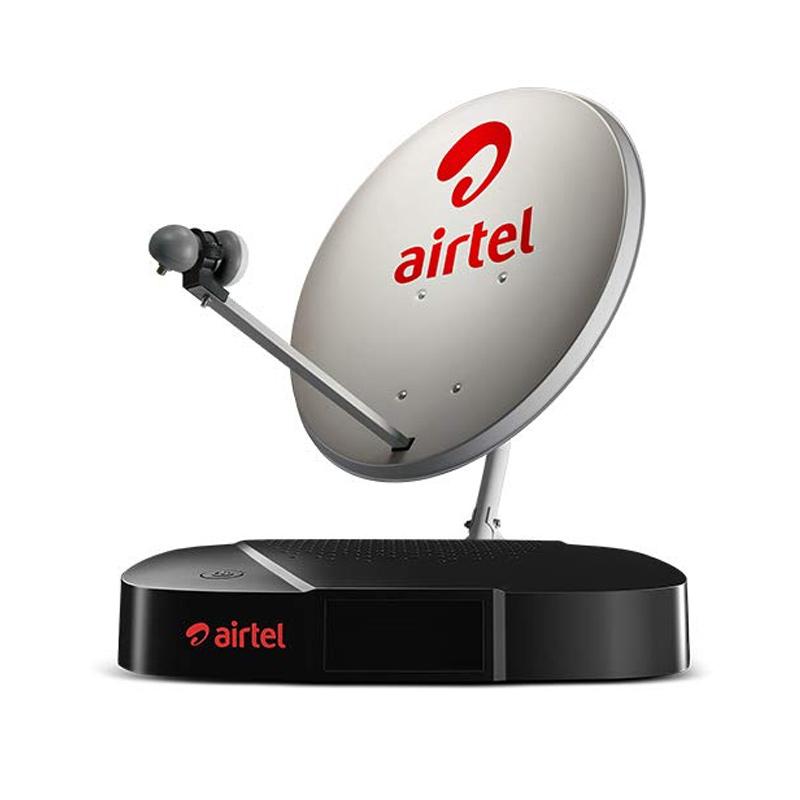
    BENGALURU: The digital TV services segment from Sunil Mittal’s Bharti Airtel Ltd (Airtel), Airtel Digital TV, which provides direct to home (DTH) satellite television services, reported growth of 0.8 percent in operating revenue at Rs 744.8 crore for the quarter ended 30 June 2020 (Q1 2020, quarter or period under review) as compared to Rs 738.9 crore for the corresponding quarter of the previous year Q1 2019 (y-o-y). However, this is not a true oranges-oranges comparison, since as of 1 March 2020, Airtel Digital TV services has implemented new guidelines of NCF (Network Carriage Fees) under the new tariff order (NTO) from Telecom Regulatory Authority of India (TRAI). The company says in a media release that Airtel Digital TV revenue witnessed a growth of 9.3 percent y-o-y on an underlying basis, on the back of strong customer additions.

    Airtel Digital TV operating profit for the quarter under review declined 23.5 percent to Rs 276.2 crore (37.1 percent of operating revenue) as compared to Rs 361.2 crore (48.9 percent of operating revenue) for Q1 2020. Airtel reported 1.3 percent growth in Assets to Rs 3,462 crore for Q1 2021 from Rs 3,417.4 crore in Q1 2020. However, Assets in Q1 2021 were 12.9 percent lower than the Rs 3,794.9 crore in the immediate trailing quarter (Q4 2020). The segment’s liabilities for Q1 2021 grew 11.6 percent to Rs 4000.5 crore from Rs 3,585.2 crore in Q1 2020. Liabilities in the quarter under review were however 3 percent lower than the Rs 4,122.4 crore in the immediate trailing quarter Q4 2020.

    The company reported a 5.1 percent y-o-y increase in net DTH subscribers in Q1 2021 at 1.68 crore as compared to 1.6 crore in the corresponding quarter of the previous year.

    Bharti Airtel’s consolidated revenue for Q1 2021 grew 15.4 percent on an underlying basis to Rs 23,939 crore as compared to the year ago quarter. Consolidated EBIDTA for the quarter under review was Rs 10,639 crore (44.4 percent margin). India revenue at Rs 17,589 crore were up 14.6 percent and up 15.1 percent on an underlying basis y-o-y.

    An earnings media release for Q1 2021 quotes Airtel MD and CEO, India & South Asia Gopal Vittal: “We are going through an unprecedented crisis caused by COVID. Despite this, our teams have served the country well and kept our customers connected. Data traffic growth surged by ~73 percent y-o-y even as 4G net additions slowed down to 2 Million caused by supply chain shocks in the device ecosystem. Revenues grew by 15% Y-o-Y and performance was satisfactory across all segments. Our flagship “War on Waste” program, helped improve EBITDA margin by 1.6 percent over the previous quarter. To serve our customers even better, we have launched a company-wide program to improve our customer experience. We continue to invest in the best of emerging technologies to make our networks future ready. We have made rapid strides in our digital business, with nearly 155 million monthly active users across Airtel Thanks, Wynk, Xstream and our payments platforms. Today, 60 percent of Airtel’s entire business goes through its digital channels. We are most excited about the string of partners we are attracting in order to build greater stickiness and ultimately growth from our digital assets.”

    Follow Tellychakkar for the consumer facing news & entertainment

  • Difficult to balance consumer interest with stakeholder objectives: TRAI’s RS Sharma

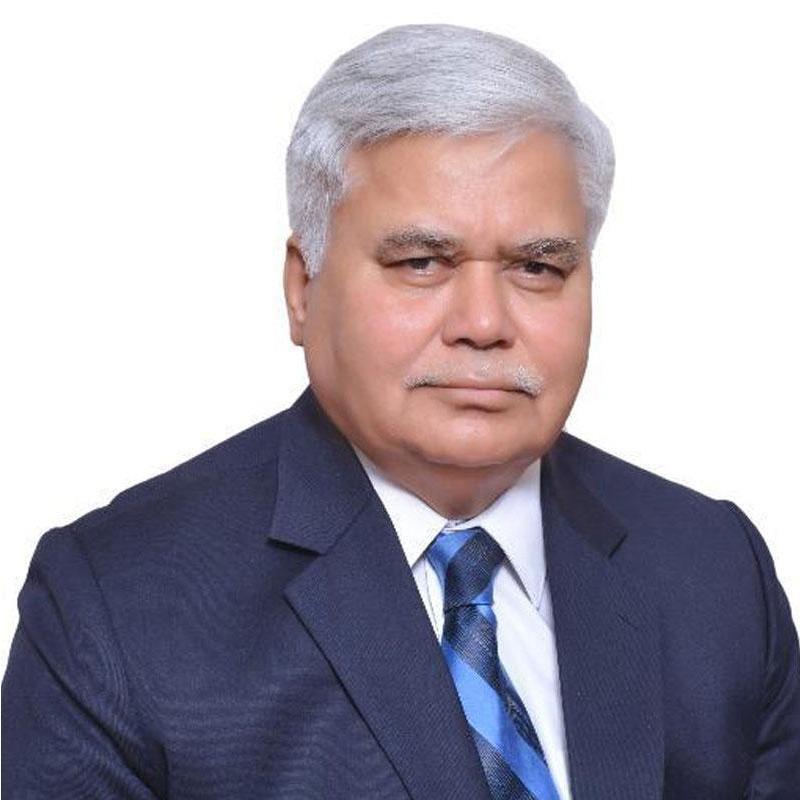
    Difficult to balance consumer interest with stakeholder objectives: TRAI’s RS Sharma

    NEW DELHI: Telecom Regulatory Authority of India chief RS Sharma, on Thursday, demystified myths and impressions about the regulation of the sector in a panel discussion at FICCI FRAMES 2020.

    He said that it is immensely difficult for regulators to strike a balance between consumer interest and objectives of other stakeholders. Sharma commented when Media Partner Asia executive director and co-founder Vivek Couto asked about heavy-handed TV regulations.

    "The objective of TRAI is to ensure the interest of consumers, stakeholders, distributors and creators and ensure there is a growth of the sector. Since 2004 to 2017, there were price caps. If you put these price caps, it disincentivises the producers. Why should I keep any control on pricing? The industry thinks the regulator is heavy-handed and the regulator thinks they are light touch. The basic approach TRAI has had in regulating this sector is that we have adopted a light-touch approach and allowed market forces to operate in this space. We believe that the market is the best determinant and accelerator for the adoption of new technologies and satisfying consumers, so long as there is fair play, transparency, non-discrimination. Then, we don’t need to intervene.”

    Sharma emphasised that for regulators consumers’ choice will always have major importance.

    Speaking about the evolution of the sector and change in consumption patterns of viewers, he pointed out that proliferation of cheap data that will drive OTT services.

    According to the new tariff order (NTO), consumers could choose the TV channels they want to watch and pay only for them at maximum retail prices (MRPs) set by broadcasters, instead of the pre-set bouquets offered earlier. It was said that the NTO will make channels cheaper but it seems prices of like-to-like option went up. Sharma argued that the amendments to NTO and the TRAI channel selector app were introduced to make things transparent for consumers.

    “As technology moves forward, with 5G, there will be more disruption and change in watching habits. Emerging trends will necessitate a new framework. Regulation should ensure that technological developments are not throttled or scuttled. They should be allowed to grow and take place," he said.

    Meanwhile, the ministry of information & broadcasting additional secretary Atul Kumar Tiwari spoke on the contentious subject of regulatory structure for OTT platforms. He said, "We invited them to come back to us with some kind of self-regulatory mechanism. We would like to have a light-touch regulation but there has to be some kind of regulation on the streaming content."

  • After NTO implementation, Indians ditching TV for OTT: survey

    After NTO implementation, Indians ditching TV for OTT: survey

    MUMBAI: People are migrating to online media for content after Telecom Regulatory of India (TRAI) came up with the New Tariff Order (NTO), says a survey. According to a research done by YouGov, around half of Indian DTH subscribers (48 per cent) said the amount of time they spend watching original online content (on Netflix, Amazon Prime, Hotstar, etc.) has increased after the implementation of the TRAI tariff order last year. Almost as many (42 per cent) said the same for time spent watching television content digitally.

    The latest findings seem to validate its previous survey done in 2019. As per that survey, when the order was first passed, half of the 1020 respondents (49 per cent) indicated their inclination to spend more time online watching original content as a result of this amendment.

    TRAI is all set to implement the proposed NTO 2.0 starting 1 March 2020. Though the regulatory body argues that the new tariff order has benefitted the end consumer, the reality seems to be different.

    As per the earlier order, users were to choose channels they liked and pay standardised rates for only those they watch. Although this move was meant to enhance the customer’s television viewing experience, people did not seem too happy with its execution.

    The TRAI guidelines seem to have adversely impacted the business of television and 43 per cent said their TV-viewing time has decreased in the last year.

    Furthermore, one in six (16 per cent) claimed to have unsubscribed from a DTH connection or network because of the TRAI rule, and one in five (21 per cent) have unsubscribed and moved entirely online for content.

    Men were more likely than women to disconnect their cable connection (19 per cent vs 13 per cent) while the youngest generation, GenZ, were more likely than the rest to not just unsubscribe but migrate online as well (26 per cent).

    NTO 2.0 is likely to make subscriptions affordable by offering consumers 200 channels with the base slab of Rs 130 as opposed to 100 channels offered earlier. The data shows that the majority of respondents (60 per cent) favour the revised order, 14 per cent disapprove of it and 26 per cent have no view in this regard.

    Support could be due to the fact that people positively perceive this change and more than half (56 per cent) feel it will empower them to choose the channels they like. Although people largely support it, many (36 per cent) feel the new amendment will confuse consumers by giving them too many options to choose from.

    Following the introduction of the TRAI regulatory framework last year, 40 per cent TV-viewers selected channels individually and paid for each, 37 per cent bought a bundle pack and 23 per cent opted for free-to-air channels with few additions.

    The ones who bought a bundle pack were more likely to say they paid more than they used to earlier as compared to the ones who selected channels individually or kept all free channels- who instead were more likely to say they paid lesser than before (29 per cent and 30 per cent, respectively).

    If the new TRAI rule comes into force, most people (38 per cent) are still likely to individually select channels. The proportion of people wanting to buy a bundle pack as well as keep free channels is similar, at 31 per cent each, suggesting that people are equally receptive to each of the offerings.

    YouGov India general manager Deepa Bhatia said: “YouGov’s survey last year rightly predicted the likely impact of the new regulation on consumer viewership. The latest findings validate this prediction. The new order is likely to disrupt the business further and hence it is even more important for advertisers to study the changing consumer needs and behaviour and reallocate their media budgets accordingly.”

  • NTO 2.0 will not have much impact at consumer level: Shaji Mathews

    NTO 2.0 will not have much impact at consumer level: Shaji Mathews

    MUMBAI: Even as stakeholders have moved courts against Telecom Regulatory Authority of India’s (TRAI) amendment of the New Tariff Order (NTO), analyst and consultant Shaji Mathews feels that it will not have any significant effect on the existing system. “I don’t think NTO 2.0 will have much effect on the consumer either, because whatever changes and choices consumers were to make, happened during the NTO 1.0 implementation. Once the legal battle on NTO 2.0 is over, the MSOs will implement it at the consumer level with cautiousness. They won’t disrupt the system,” says Mathews, who previously held positions as the VP of Star TV, COO of GTPL and CEO of KCCL.   

    According to him, NTO 1.0 was expected to remove discriminatory agreements which were imposed by broadcasters and create a level-playing field for small MSOs as well. “For that TRAI brought in the MRP regime, which was uniform pricing across the country for the consumers and transparent margins for the distribution platforms, whether they are small or big,” he says. It was expected that the MRP system will push broadcasters to bring consumer-friendly pricing, enabling consumers to avail a multitude of channels of their liking within the rates they were paying.

    “In the process, what happened was that consumers who were expecting to go a-la-carte found themselves at the receiving end because broadcasters basically priced the channels in such a way that they can defeat the whole purpose of the NTO itself,” he points out. 

    Now, by bringing in MRP regime, TRAI is expected to make it easy for consumers to choose channels based on prices.

    It also brought in certain regulations, on bouquet pricing, that the discount in pricing should not be more than 15 per cent. But while implementing, that was removed from the regulation and was kept in abeyance because of the remark of the Madras High Court. However, in the legal battle at Supreme Court, the remark made by the SC prompted the regulator to go approach the Supreme Court for a decision on the 15 per cent. But the apex court threw it back to TRAI and asked it to take steps which were within TRAI’s powers.

    In that scenario, he says that TRAI had to come out with NTO 2.0 wherein some regulations related to a-la-carte rate and bouquet rate had to have interlinked logics. And TRAI stepped in to clear the anomalies which were there in NTO 1.0.

    According to him, the consumers are not bothered about all these things. They want convenience. “I don’t share the views of TRAI and many other stakeholders that the consumer is so bothered about his freedom to choose on an a-la-carte basis. There are 800 channels in this country. In the NTO 1.0 regime, when broadcasters brought out the bouquets, there was no limit on the number of bouquets you could make. There were about 500 packages to choose from, and the consumers were frustrated. There is no point in forcing a-la-carte on consumers; they don’t really bother about whether it is a-la-carte or bouquet. They are bothered only about convenience, getting to watch their favourite channels, and they don’t want to pay too much. All these three were disrupted by the NTO. The consumer was not in a position to choose from too many packages and too many a-la-carte options.”

    Broadcasters, on their part, jacked up the prices, he said. All these went against the consumer requirements, resulting in a lot of them reducing their stickiness to watching TV. According to him, the cable industry lost around 10 to 15 per cent subscribers because of NTO.

    “It is not necessary that these consumers migrated to DTH. They did not go to OTT or YouTube, either. In fact, a lot of consumers did not go anywhere. They may come back to the system over a period of time. They have other priorities in life. They were like, let it be. That was the effect of NTO,” says Mathews. 

    He is certain that there won’t be much of a change in the case of NTO 2.0.

    “What I expect is that broadcasters will come out with revised prices. Having learned lessons from the implementation of the NTO, MSOs will not disrupt the system this time. If broadcasters reduce the prices, I think MSOs will give more channels to the consumers for the same price.  I don’t see the possibility of broadcasters increasing the prices, except in one or two cases. Some of the broadcasters are very aggressive in their stand. As regulator has come up with the Rs 12 pricing cap, some aggressive broadcasters might remove their channels from the bouquet,” he explains.

    Asked about the broadcasters’ complaint that their freedom to price has been curtailed by the NTO, he said: “Their freedom to price is there; only their freedom to bundle has been restricted. Their charges with regard to the loss of control over the pricing won’t stand. Broadcasters are making a fuss on this because it is their strategy of ensuring that the outcomes are advantageous for them.”

    On the question of TRAI’s authority to fix price cap, Mathews answers that the cap is only on the bundled channels, not on any other channels.

    He is also sure that none of the distribution platforms will create any disruptions under the NTO 2.0 regime. According to him, during NTO 1.0 the platforms went a little overboard in implementation. “So this time they will definitely not do anything disruptive. They will proceed cautiously. There will not have the same kind of disruption as we witnessed during NTO 1.0,” he states.

  • English news records highest ratings in 2020 during Delhi elections, results week

    English news records highest ratings in 2020 during Delhi elections, results week

    BENGALURU/MUMBAI: Runup to elections and election results announcements are big viewership drivers for news channels in India. Assembly elections on 8 February 2020 and announcement of the election results of the New Delhi legislative assembly in week 6 of 2020 (Saturday, 8 February 2020 to Friday, 14 February 2020, week or period under review) boosted the combined viewership of the Top 5 English News channels by 49.5 percent as compared to the previous week. Broadcast Audience Research Council of India (BARC) reported a total of 2.741 million impressions for the top 5 English News channels in the week under review. The combined total of the top 5 channels during the previous week (week 5 of 2020) was 1.835 million weekly impressions.

    Combined impressions of the top 5 English News channels in week 6 of 2020 was the highest ratings to date in 2020. The previous highest combined total of the top 5 English News channels in 2020 was in week 4 at 2.582 million weekly impressions. Further, the average combined weekly impressions of the top 5 English News channels during 41 weeks of the previous calendar year was 2.271 million weekly impressions. It must be remembered that BARC had stopped publication of ratings in the public domain to allow viewership to stablise after the implementation of Telecom Regulatory Authority of India (TRAI) New Tariff Order (NTO) for the weeks 6 to 12 of 2019. Hence, average of the remaining 41 weeks of 2019 (weeks 13 to 53 of 2019) or post week 12 of 2019 average has been considered.

    Top 5 English News Channels in week 6 of 2020

    Four of the channels in BARC’s weekly list of Top 5 English News channels for week 6 of 2020 were the same as in the previous week. Pub-caster Doordarshan’s English News channel DD India exited the list during the period under review, while the Radhika and Pronnoy Roy headed NDTV 24×7 made a rare appearance into BARC’s weekly list of Top 5 English News channels in week 06 of 2019.

    At its normal numero uno position was the Arnab Goswami headed Republic TV with a phenomenal 74.5 percent lead in ratings in week 6 of 2020 of 1.141 million weekly impressions as compared to the 0.654 million weekly impressions in week 5. Also at its normal second rank was Times Now with 0.664 million weekly impressions in week 6 of 2020 which was 24.3 percent more than the 0.534 million weekly impressions in week 5. Continuing on at its previous week’s third rank was the India Today group’s India Today Television with 0.415 million weekly impressions in week 6 of 2020, a jump of 40 percent from the 0.303 million weekly impressions in the previous week.

    Climbing up to fourth rank in week 6 of 2020 from the previous week’s fifth rank was Network18’s CNN News18 with 0.263 million weekly impressions, which was 61.3 percent more than the 0.163 million weekly impressions in week 5. Entering BARC’s weekly lists of Top 5 English News channels for was NDTV 24×7 with 0.258 million weekly impressions. This was NDTV 24×7 second appearance in BARC’s top 5 English News channels list in 2020. The channel had appeared in the lists earlier in calendar year 2020 in week 1.

  • GTPL Hathway believes NTO 2.0 won’t affect price stability

    GTPL Hathway believes NTO 2.0 won’t affect price stability

    MUMBAI: At the very beginning of 2020, the Telecom Regulatory Authority of India (TRAI) issued fresh amendments to the New Tariff Order (NTO) within less than one year of its implementation. Rattled by the sudden change, the stakeholders in the industry seem to be displeased. But in contrast, GTPL Hathway believes NTO 2.0 is an extension of NTO 1.0 and price stability in the market will continue despite the revision.

    “There is NCF for Rs 160 in the new NTO and there is NCF Rs 130 in the earlier NTO plus we could charge additional Rs 20 for every additional 25 channels, so broadly speaking, from a short-term perspective, they are more or less similar kind of thing. So, NCF has a big portion of earning. That is something which is more or less protected while one can debate on what kind of future impact it will have after three years, after five years, but from a short-term perspective that is protected,” GTPL Hathway chairman and non-executive director  Rajan Gupta said in an earnings call after q3 result.

    “In fact, we have the ability to charge Rs 30 more in case market forces allow us to charge and GTPL being high market share in many territories, they should have the ability to charge higher and we are happy about the consumer. I think consumers will have more choices,” he added.

    According to Gupta, DPOs with higher market share should be able to make many more relevant bouquets for consumers, for example, genre-level bouquet while currently bouquets are limited to five-six, which is more based on the ARPU slabs.  He said having very micro bouquets is also needed.  He stated that can happen with NTO 2.0 on the back of flexibility it offers for DPOs.

    Although he mentioned this is not a full assessment on NTO 2.0 but the MSO believes on the basis of the initial assessment that it should see a lot of stability in earnings and cash flow.

    “It is too early to speak about how the ARPU will happen in NTO 2.0. In NTO 1.0, if you see this quarter, our ARPU has stood at around Rs 118 and we are expecting that it will go up in q4. We have gone down by Re 1- Rs 1.5 because of the festive offer given by the broadcasters. We are expecting that in q4, it will go up as the festive offer is over. Right now, we have to wait to see what new bouquets, new channel prices come from the broadcasters in NTO 2.0 and only after the assessment, we can comment on NTO 2.0 ARPU,” GTPL Hathway  Cable TV business head and chief strategy officer Piyush Pankaj said.

    He also added that it is not certain right now if less money will be coming from customers because it depends on what type of bouquets and a-la-carte price the broadcasters will come through. But he said there is price stability in the market during the last one year and they believe price stability would continue.