Tag: NSS

  • SES renews deal with Pakistan’s Supernet

    SES renews deal with Pakistan’s Supernet

    NEW DELHI: SES, a satellite operator with a fleet of 53geostationary satellites, has renewed a multi-year multi-million dollar contract with Pakistan‘s satellite network service provider Supernet.

    Supernet will acquire C-band capacity on the SES NSS-12 satellite at the prime orbital location of 57 degrees east. The capacity of this satellite, combined with the strong system integration capabilities of Supernet will provide a high quality GSM backhaul services to mobile operators in Pakistan.

    This will also expand network coverage in the remote mountainous areas in the northern region and hard to reach southern regions of the country.

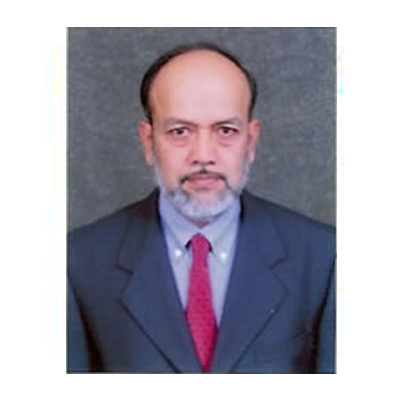
    Supernet COO Hamid Nawaz was present on the occasion at CommunicAsia2013 and said the company was quite satisfied with the performance of the NSS-12 satellite throughout Supernet‘s networks.

    SES Asia-Pacific and the Middle East senior VP commercial Deepak Mathur expressed his satisfaction at working with Supernet since 2010 and delight at being able to support the company‘s growth.

  • ‘We have stepped up work on digitalization for Prasar Bharati’ : Baljit Singh Lalli – Prasar Bharati CEO

    ‘We have stepped up work on digitalization for Prasar Bharati’ : Baljit Singh Lalli – Prasar Bharati CEO

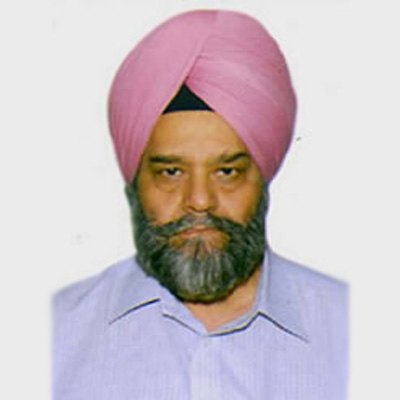
    Baljit Singh Lalli, who took charge as chief executive officer of Prasar Bharati at the end of December 2006, is an Indian Administrative Service officer of the 1971 batch from the Uttar Pradesh cadre with vast administrative and managerial experience spanning over three decades.


    In an interview to indiantelevision.com’s BB Nagpal, Lalli answered various questions relating to the falling revenue of Doordarshan, the cricket telecast rights controversies and other issues.


    Excerpts:

    Doordarshan’s gross revenue fell by about Rs 1300 million to RS 8,182.2 million in 2006-07, as compared to RS 9,469.6 million in 2005-06. But the gross revenue of All India Radio rose marginally by RS 148.2 million to RS 2,836.5 million in the same period. To what do you attribute these losses?
    As you know, Doordarshan has lost around RS 3400 million because it did not have the telecast rights for cricket. If you do not count what we lost because of cricket, the revenues of Doordarshan have actually gone up as far as other programmes go. But we have already made up RS 2 billion. On the other hand, AIR earned just under RS 96.4 million from the World Cup 2007.

    Why is it that Prasar Bharati wakes up so late to bid for the cricket telecast rights and then has to pass a mandatory sharing legislation?
    I cannot answer that because it happened before I joined. But you must understand that the amount for bidding for rights for up to five years is more than what a public broadcaster can afford. As far as the legislation is concerned, it is necessary to understand that the Uplinking and Downlinking Guidelines issued in November 2005 were clear on mandatory sharing of rights for terrestrial showing, but were being violated by the rights holders.

    For a long time, Prasar Bharati has been talking of strengthening its marketing strategy, but the results do not seem to be showing?
    That is not true. As I said, we have made up a lot of the losses caused because of not having telecast rights. We have now taken steps to streamline the marketing procedures. Also, the attempt is to bring in greater synergy between All India Radio and Doordarshan. We have set up a committee and sent out new proposals to our marketing people in Mumbai, Kolkata, Chennai, Guwahati and other places.


    AIR has already made more than five times the projected revenue from cricket. You should also not forget that Prasar Bharati is a public broadcaster and cannot resort to generating revenues the way some other channels can. At the same time, we are now having closer monitoring of the marketing activity, and are also recruiting professionals for the work.

    A Comptroller and Auditor General Report talks of losses on various counts, including arbitrary fixation of advertisement rates for feature films to favour certain filmmakers. How will you ensure proper checks and balances?
    I have not seen the report so far, and in any case it relates to 2004-05. We have now put a new system in place for acquiring films. We will now be able to get the best films at competitive rates, through a policy that will be completely transparent. The films will be selected in good time. The Grading Committee in Doordarshan will then categorise the films as specified in the policy. No individual producer or filmmaker will be shown favours of any kind.

    An Acquisition Policy announced by Doordarshan to acquire quality programmes has reportedly led to scams including submission of duplicate or blank tapes?
    Yes, I am aware of this case. The matter relates to October-November last year when new programmes were being acquired for the DD Urdu Channel. Our internal inquiry showed that around 250 blank tapes had been submitted along with other programmes. A committee of officers in Doordarshan is inquiring into the matter and would be able to identify those guilty and action would be taken, irrespective of whether it is only outside producers or someone within Doordarshan. As no money had been paid to any producers so far, there is no question of any loss of revenue on account of this. I am in principle opposed to acquiring old programmes, and this had been done under a policy announced before I joined.

    But this has already led to an order for transfer of senior officers in Doordarshan who have been in their posts for more than six years?
    That order has nothing to do with the tapes. In fact, I issued that general order separately for transfer at Supervisory levels. And all sections of employees have welcomed it. The section of employees most affected by this, the Programme Staff Association of AIR and DD, has sent me a letter welcoming this decision.

    You had announced earlier that Prasar Bharati would switchover to the Indian satellite Insat-4B by June. Is that work on schedule and how many transponders will you be using?
    Yes, we are shifting DD Direct, the Direct-to-Home service, to the Insat-4B from 1 June. We have been assured by the Indian Space Research Organisation that we will not face any shortage of transponders. We will initially be using five transponders but can ask for more whenever needed.


    The shift from the Netherlands-based NSS 6 will not only mean savings in foreign exchange, but also clarity in picture since the Indian satellite is better placed than the European satellite. Prasar Bharati pays NSS around RS 225 million annually. The initiative was motivated by patriotic instincts. Insat-4B is located in a geostationary orbit of 93.5 degrees East, which is closer to Indian than NSS 6, which is located at 95 degrees East.

    What about the commitment by Isro to Sun TV because of the loss of Insat-4C?
    I am aware of the reported commitment by Isro, but this will not affect DD’s requirement. The Insat-4B has 12 KU band and as many C band transponders for communication and broadcasting services. DD Direct will be able to beam up to 10 channels from each transponder. It presently beams around 32 channels of which 26 are its own, but this number is expected to go up to 50 with private FTA channels becoming available.

    What are you doing to effect a smooth transition to Insat-4B?
    We have held meetings with cable operators, hardware manufacturers and multi system operators to familiarize them with the changes that will have to be made to reach out to 4.8 million viewers of the free-to-air DD Direct. Doordarshan has circulated a four-page brochure to educate viewers and service providers about the changes to be made to their dish antennae and in the set top boxes. Though the service providers will make these changes, this can be done even by subscribers themselves. Each antenna has to be rotated (with the person standing behind the dish antenna) clockwise by 1.5 degrees to the right and tilted up by 1.5 degrees.


    DD’s DTH would be available across five transponders in the KU Band on Insat-4B, on the frequencies 10990, 11070, 11150, 11490 and 11570 MHz on vertical polarisation and a uniform symbol rate of 27500 ksps.

    We have now taken steps to streamline the marketing procedures. Also, the attempt is to bring in greater synergy between All India Radio and Doordarshan

    Will DD Direct continue to be Free-to-air?
    For the present, yes. We do not see it becoming encrypted in the near future.

    The Planning Commission’s Sub-Group on ‘Going Digital’ has recommended that Doordarshan should commence digital terrestrial transmission by the 2010 Commonwealth Games, and should have a phased approach for going digital covering all the seven mega cities by 2011 in the first phase and the rest of the country by 2013.
    Yes, the Report had also recommended a group chaired by me with some private broadcasters like Star, Zee, Sony, Eenadu etc. and their major MSOs to examine an 11-stage process. We will also consider introduction of HDTV in a phased manner starting from Delhi (2008-09), extending it to all the six mega cities to ensure coverage of Commonwealth Games in HDTV format in 2010.


    We have made some proposals which are with the Planning Commission. In fact, this is a major thrust area in the Eleventh Five-Year Plan. I personally met officials of the Planning Commission recently and gave a projection of RS 5000 crore (RS 50 billion).


    Has Prasar Bharati begun working on plans for optimum coverage of the Commonwealth Games?
    Yes. In fact, I have had one meeting with Mr Suresh Kalmadi, President of the Indian Olympic Association and Chairman of the Organising Committee for the Games, and told him we will need financial support for adequate coverage of the Games. I will be meeting him again shortly.

    A Technical Group had been set up to examine Encryption Mandate for DD signals, particularly for cricket telecasts. There appears to be a lot of disagreement among members of the Group on the issue. What is the position about this?
    Yes, the Ministry had set up a Group headed by AIR Director General Brajeshwar Singh to go into the issue. The report of the Group has already been submitted to the Information and Broadcasting Ministry, and perhaps you should be asking the question there. As far as I know, the report was unanimous.

    Prasar Bharati had announced a policy on telecasting series based on Indian Classics. What is the progress on that front?
    The work is going as planned. The Committee met recently and cleared twenty to twenty-five proposals related to Hindi, Punjabi, Bangla, Gujarati and Telugu classics. Filmmakers like MS Sathyu, Gulzar and Muzaffar Ali have been commissioned for some of the classics.

    The concerned Parliamentary Standing Committee has expressed its displeasure over the progress in Digitalisation and building of archives for Prasar Bharati?
    We have stepped up the work on digitalization. We will be able to work even after the Archives are shifted to the Central Production Centre Building in Sirifort Village. This will be done in the next two or three months after DD News shifts to the DD Building in the Mandi House area. Meanwhile, digitalization of broadcasting in the public broadcaster would be completed by 2017. Out of the 64 Doordarshan studio centers, 17 had been fully digitalized while another 30 were partly digitalized.

    DD India is available via Satellite all over the world, but there are few takers even in countries with large Indian population. DD has had to tie up with local cable operators in the United Kingdom recently. What are you doing to popularized Indian channels in other countries?
    Doordarshan has launched two channels DD India and DD News in the United Kingdom with the help of Rayat Television Enterprises Ltd. following an agreement with Prasar Bharati for the distribution of these channels in UK for a period of five years.


    DD India has seven Hindi and six English news bulletins daily, while DD News has 19 English and 24 Hindi news bulletins daily respectively. Although both these satellite channels are free to air and could be seen anywhere in the world, this is the second time that Prasar Bharati has entered into an agreement with a distributor to ensure the channels reach viewers’ homes.


    Prasar Bharati also has a similar arrangement in the United States with companies owned by persons of Indian origin. The aim will also be to reach out in the Middle East, Malaysia, the rest of Europe, Canada and so on, and the broadcaster has invited ‘Expressions of Interest’ from entrepreneurs in these countries.

    Prasar Bharati Act has provision for Broadcasting Council which never came into existence. Will this become redundant under the new Bill that provides for a Regulatory Authority?
    I think you should ask the Ministry to answer that question. I can only tell you that we have urged the Ministry to strengthen our hands, and have asked for extra funds to be invested in public service broadcasting.

    Doordarshan has launched the Digital Video Broadcasting – Handheld (DVB-H) as a Pilot Project in Delhi. What about other cities?
    The Pilot Project is aimed at reaching mobile phones within a radius of 12 kilometers of the Doordarshan television tower on Parliament Street in New Delhi. After watching the outcome of the launch of this service in Delhi, the system will be replicated in Mumbai, Kolkata, and Chennai. The service is initially free to air and the channels available are DD National (DD 1), DD News, DD Bharati, DD Sports, DD Urdu, DD Punjabi, DD Bangla and DD Podhigai. The scheme is ‘vendor neutral’ and any mobile provider with a compatible handset can download the signals and transmit them. I hope the number of channels would be raised to ten to 15 in the next few months.

    There have been promises for increasing a scientific temper in the country through the media. The private channels have not done much, and DD’s efforts in the initial years also appear to have come to a stop?
    That is not true. We recently launched Mike Pandey’s series at an appropriate time, and have commissioned the Bedi Brothers to make a new series. We have finalised an MoU with Vigyan Prasar of the Department of Science and Technology to encourage a scientific temper. Programmes have been made earlier also for Science Channel which is a joint venture of Isro and Vigyan Prasar under Department of Science and Technology (DST). Till August 2006, 60 episodes have been transmitted. The programmes are being transmitted on DD-1 as a 30-minute capsule, and programmes are aimed at children in the age group 12 to 18.

    What specific programmes are being telecast to mark 150 years of the freedom struggle?
    DD has identified a series of programmes from its own archives, like Bharat Ek Khoj by Shyam Benegal based on Jawaharlal Nehru’s The Discovery of India, Swaraj by Manju Singh, and Colours of Freedom by Buddhadeb Dasgupta. DD has also commenced telecast of Dr Girish Karnad’s series Swarajnama.

  • Isro being approached for more transponders for DD Direct

    Isro being approached for more transponders for DD Direct

    NEW DELHI: Doordarshan is expected to switch over to an Indian satellite Insat 4B by early May for its direct-to-home DD Direct service, but it is unlikely to get more than five transponders. The satellite is being launched 10 March from Kourou in French Guiana.

    Prasar Bharati sources tell indiantelevision.com that though the Indian Space Research Organisation (Isro) had been requested to give first priority to the public broadcaster in the matter of leasing transponders, it was learnt that the Sun Group owned by Kalanithi Maran may get six transponders for its Sun Direct DTH and one for digital satellite news gathering.

    The sources said Isro had been approached to clarify the air on the number of channels it could give to Doordarshan, particularly in view of the efforts by the public broadcaster to switch over to an Indian satellite and not spend money in foreign currency for the American-owned NSS-6 satellite.

    The switchover is expected to result in a saving of around $5 million and Prasar Bharati chief executive officer BS Lalli confirmed that he had turned down the reminder by the American satellite for a renewal of contract.

    (It is learnt that Isro agreed to the demand for Sun for transponders after the failure of the Insat-4C last year. However, Isro has given the option to Sun to take transponders on a foreign satellite with the help of the space agency, since Insat 4B was meant for DD Direct.)

    Switching over to the new satellite will mean rotating the dish antennas slightly from the existing 95 degrees to 93.5 degrees. Lalli does not think any re-programming of
    set-top boxes will be required but said that this could be done easily if needed.

    The Insat-4B, the second satellite in the Insat-4 series, will be carrying 12 Ku band and as many C band transponders for communication and broadcasting services. Airtel is understood to have booked transponders for its services.

  • NSS – 8 satellite launches Friday

    NSS – 8 satellite launches Friday

    MUMBAI: The Sea Launch team has initiated a countdown at its equatorial launch site. This is in preparation for the launch of the NSS-8 communications satellite for SES New Skies which will take place tomorrow 26 January 2007.

    The NSS-8 satellite is a Boeing 702 spacecraft that carries 56 C-band and 36 Ku-band transponders. It is designed to replace the existing NSS-703 satellite as the centerpiece of New Skies’ strategic Indian Ocean contribution to SES’ global communications network.

    NSS-8 will support a range of functions, including corporate communications, Broadband Internet services and broadcast applications to the Indian sub continent, Europe, Africa, the Middle East and Asia. Designed for a 15-year lifespan, the satellite will have 18 kilowatts of total power at the beginning of life on orbit.
     

  • Celcom and NSS launch SecretSMS

    Celcom and NSS launch SecretSMS

    BANGALORE: Celcom (Malaysia) Berhad and NSS MSC Sdn Bhd today launched a revolutionary product called SecretSMS. SecretSMS is a simple software that encrypts SMS messages thereby offering security and privacy.

    Starting today, over 2 million Celcom subscribers with smart phones will be able to enjoy a whole new SMS experience, especially those seeking to keep their text life private, states an official release.

    SecretSMS is derived from a backbone technology called XMS (Xecure Message Service) that was developed by NSS. NSS is proud to partner with Celcom to introduce the SecretSMS to the market. Research statistics reveal that this product will appeal to the youth population who use messaging as their primary means of communications, the release adds.

    Text messages that are stored in the phones are readily accessible. Anyone can have access to your phone if it is left unattended. Some personal or sensitive messages might even get read by the wrong person without prior permission, which could eventually lead to unnecessary misunderstandings or even mishaps.

    SecretSMS transmits and stores sensitive messages that are accessible with a password known only to the mobile owners. SecretSMS is powered by 128-bit encryption that encrypts incoming and outgoing SMS’s in the transmission process. To read the encrypted messages, users have to key in the valid password. Hence, mobile users have complete control over their privacy in the SMS communications.

    XMS technology is set to penetrate the global market particularly in the US, UK, Singapore, Indonesia, Philippines, Vietnam, Sri Lanka where NSS is already in talks with the local mobile operators and financial institutions, as per the official release.