Tag: Nripendra Misra

  • Fresh attempt underway to study convergence of communications & broadcasting

    Fresh attempt underway to study convergence of communications & broadcasting

    NEW DELHI: More than a decade after the then Union government, headed by Atal Bihari Vajpayee, failed to agree on a Convergence Commission of India, a new attempt is being finalized to establish a single regulatory framework for communications, IT and broadcasting sectors.


    The Department of Telecom is likely to make a presentation on the proposed Communications Convergence Bill to the Prime Minister’s Office on 15 February.


    A Group of Ministers headed by then Finance Minister Yashwant Singh had held several meetings on the possibility of a Convergence Commission of India but failed to reach consensus. Members included Arun Jaitley (then Law Minister), the late Pramod Mahajan (then Telecom and IT Minister) and Sushma Swaraj (then Information and Broadcasting Minister). A draft had in fact been prepared in 2000 but it was then learnt to have been shelved because of differences between the then Telecom and I&B Ministers.


    According to Department of Telecom sources, the presentation being prepared by it will be made before Principal Secretary Nripendra Misra on 15 February and those expected to be present will include Telecom Secretary Rakesh Garg, Telecom Regulatory Authority of India chairman Rahul Khullar, and I&B secretary Bimal Julka.


    The new Bill proposes a super regulator – Communications Commission – with defined powers, procedures and functions for regulatory and licensing functions, and an Appellate Tribunal.


    The aim is to replace all old and redundant legislations, which include the Telegraph Act of 1885, as well as Indian Wireless Telegraphy Act 1933, Cable TV Networks (Regulation) Act 1995, and IT Act 2000.


    The super regulator is proposed to be a six-member body with a chairman who will have a five-year tenure. Members will include one each from sectors like telecom, broadcasting, finance, management, accountancy and either law or consumer affairs.

  • Lok Sabha passes TRAI amendment bill

    Lok Sabha passes TRAI amendment bill

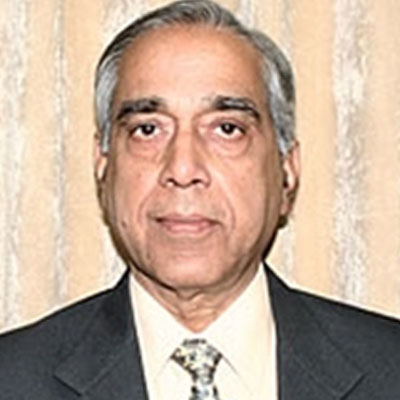
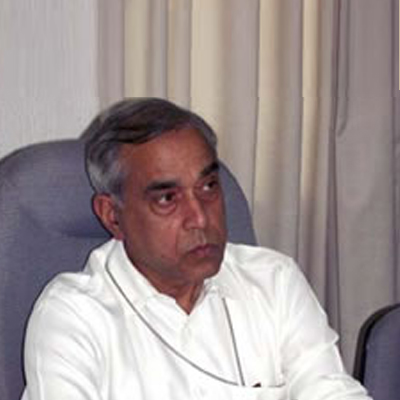
    NEW DELHI: The appointment of former Telecom Regulatory Authority of India (TRAI) chairman Nripendra Misra as principal secretary to the Prime Minister got legislative sanction in the Lok Sabha when it passed the amendment to the TRAI Bill to remove the clause which bars appointment of former TRAI officers in government posts.


    The amendment was passed despite protests by the Congress. The Nationalist Congress Party which is an ally of the Congress had over the weekend said that it would support the amendment as this was not the first case of a retired government servant being re-employed in the government. The Trinamool Congress which had initially said it would oppose the bill decided to support it.


    The Bill replaces the ordinance issued on 28 May by the Bharatiya Janata Party which said it was based on merits while the Congress has criticised the government for showing undue haste in bringing a person specific ordinance.


    Under Parliamentary procedures, any ordinance has to be replaced by an Act within six weeks of the session that commences after the promulgation of the ordinance.


    The government strongly defended the move. Law and Telecom Minister Ravi Shankar Prasad said the government is in “full power to bring the bill” and the effort was to bring TRAI on par with other similar organisations like the Competition Commission.


    Misra, a 69-year old 1967-batch Indian Administrative Service officer of Uttar Pradesh cadre who retired in 2009, joined the Prime Minister’s Office the day the ordinance was promulgated. Before the Ordinance was promulgated, the TRAI Act prohibited its chairman and members from taking up any other job in central or state governments after demitting office.


    The TRAI Act 1997 says: “The chairperson or any other member ceasing to hold office as such, shall (a) be ineligible for further employment under the Central government or any state government or (b) not accept any commercial employment for a period of two years from the date he ceases to hold such office.”


    The amended section now reads: “The chairperson and the whole-time members shall not, for a period of two years from the date on which they cease to hold office as such, except with the previous approval of the Central government, accept “(a) any employment either under the Central government or under any state government; or “(b) any appointment in any company in the business of telecommunication service.”


    Although the BJP is in a minority in the Rajya Sabha, the Bill is expected to be passed in the Upper House as the Samajwadi Party and Bahujan Samaj Party apart from NCP and TMC are also supporting it.


    The bill will become a law after it is passed by the Rajya Sabha and assented to by the President.

  • Government takes legislative step to accommodate Nripendra Misra in PMO

    Government takes legislative step to accommodate Nripendra Misra in PMO

    NEW DELHI: The change of government always brings about a shake-up of senior executives in various posts, and this is done even if it necessitates changing laws to accommodate an individual or an individual’s chosen one.


    The Telecom Regulatory Authority of India (TRAI) is being amended so that former TRAI chairman Nripendra Misra – a 1967-batch IAS officer who is now 69 years of age – can be appointed as principal secretary to Prime Minister Narendra Modi.


    A bill in this regard was introduced in the Lok Sabha to replace an ordinance brought out by the government to amend the act which prohibited its chairman and members from taking up any other job in the central or state governments after demitting office.


    Some Congress members told indiantelevision.com that this would open the Pandora’s Box as it would be used by every successive government to bring their favourites to key posts. Furthermore, this precedent may lead to amendments in other organisations where similar restrictions have been put in place.  


    With the Bharatiya Janata Party issuing a whip to its members to support the bill, it is bound to be passed. However, it may face a tougher task in the Rajya Sabha where the BJP does not have a majority.


    The TRAI (Amendment) Bill, 2014 was debated in the House today.


    According to the present TRAI Act: “The chairperson or any other member ceasing to hold office as such shall (a) be ineligible for further employment under the central government or any state government or (b) not accept any commercial employment, for a period of two years from the date he ceases to hold such office.”


    The ordinance amends this section to read as: “The chairperson and the whole-time members shall not, for a period of two years from the date on which they cease to hold office as such, except with the previous approval of the central government, accept “(a) any employment either under the central government or under any state government; or “(b) any appointment in any company in the business of telecommunication service.”


    Misra is an IAS officer from the Uttar Pradesh cadre and his appointment as principal secretary will be co-terminus with the term of the PM or till further orders, according to an order issued by the Ministry of Personnel. The principal secretary to the PM is a key post and acts as main link for coordination among Prime Minister’s Office, cabinet secretariat and secretaries of ministries. 

  • ‘Cas is here to stay’ : Nripendra Misra – Trai chairperson

    ‘Cas is here to stay’ : Nripendra Misra – Trai chairperson

    Nripendra Misra is a suave IAS officer with a reputation of being completely above board, and perhaps lacking the ‘guile‘ that puts many others in the topmost slots of the bureaucracy, fellow officials say of him in a positive sense. After the first initial setback for Conditional Access System in 2003, it was during Misra‘s tenure that Cas was enforced in parts of Mumbai, Kolkata and Delhi. And it was war… MSOs had to be readied, LCOs trained to shift to higher technology, broadcasters‘ resistance to be broken down by assuaging their fears and yet, the court order had to be implemented within the deadline: 31 December 2006.

    It could not have been a pleasant task. Amidst all this, Misra and his dedicated but small team is going about handling one of the noisiest of industries in the country, issuing consultation papers, and ushering in new technologies.

    Misra took his stand on various contentious issues during an interview with indiantelevision.com‘s Sujit Chakraborty.

    Excerpts:

    It has been nine months since Cas was implemented in parts of Kolkata, Mumbai and Delhi, after Chennai was brought under Cas. Towards the beginning there were uncertainties, and some people even opposed Cas. So today, what is your assessment of Cas? Is it a success or a failure in numerical terms?
    Well, we never had a target in terms of penetration percentages. It was left to the subscriber who wanted to opt for choice, whether he wanted pay channels or FTAs and which are the ones he wanted. The latest numbers tell me that about six lakh (600,000) homes have opted for Cas in the mandated areas.

    That is out of a universe of around 1.6 million cable homes…?
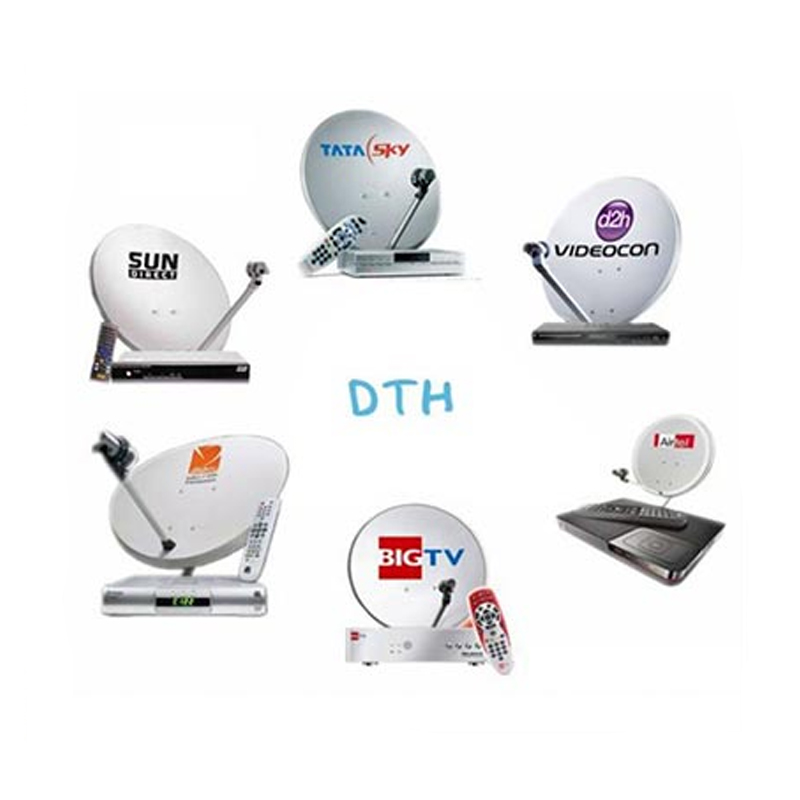
    Yes, so that is about 30 per cent of subscribers. Then you have also a similar facility in DTH, which has also been accepted by many. In Kolkata particularly, the response has been poor because most of the popular channels are FTAs. So if the criterion is in terms of numbers, I think it has been a very satisfactory performance.

    But it is not the number that is important. Unfortunately, we are always missing the true substance when attempting to evaluate Cas.

    What is it we are trying to do? We are trying to set up a mode of digital transmission, which is more efficient and more accommodative. It is the global practice. Analogue is gradually getting out of the scene, and so we have to make a beginning. That was made into a kind of a pilot in these four areas.

    Today you have a choice, you have DTH and you have Cas. Tomorrow you may have HITS… which is another option. You have voluntary Cas. So a beginning has been made, a seed has been sown, which must someday fructify in terms of an all India feature. Success has to be measured in terms of whether it is a trendsetter or not, and not in terms of how many people have opted for it or not.

    So would you say that the target of becoming a trendsetter has been achieved?
    Oh yes! It is perhaps a watershed in that in the broadcasting industry, digital transmission has begun.

    But one main area that remains disturbing is the quality of service, which in many parts of the mandatory Cas zones remains highly dissatisfactory. Lots people are not getting the channels they have opted and paid for.
    Firstly, I do not want to defend the quality of service, and there are problems of channels being discontinued. But it is not just at the level of local cable operator. I think somewhere down the line, the MSO also has to take his role seriously. Unlike in non-Cas areas, the role of the broadcaster and MSO in implementing Cas is far more important than that of the LCO. So, if these things have happened, they have happened because of the inadequacy of the functioning of MSOs.

    When it started in January, we wanted to take a very liberal view. We did not want to enforce all the regulatory provisions in the first four or five months. They wanted time so that the consumer preference could be registered, and we gave them enough time. The subscriber register that has to be maintained was not complete to the extent we wanted. Therefore billing got delayed, payments also got delayed… subscribers have also not made payments. But we have made it clear that come 1st of July, we are not going to forgive anyone.

    But how do you enforce this, as it has clearly not happened in many places till now?
    There are three ways of how to enforce this. First is the awareness of the consumer. There is a quality of service regulation in the Cas area which is operational. Therefore the subscribers must reach to and judge the performance of the MSOs and cable operators. There are great details in the regulation about the kind of rebate that has to be given if the channels are not coming, or how much time it should take which kind of interruption, what should be the response time for the MSOs… these are all standardised and fixed.

    Broadcasters have been cooperative in rolling out Cas, despite serious reservations about the Rs 5 channel price

    But that brings us to a moot point…. The consumer is not truly aware and also does not seem to care about implementing his rights?
    It takes time…

    So you are saying that MSOs are primarily responsible for QoS, so where have they failed? Because there are lots of complaints about failure across the board.
    The MSOs initially were perhaps not ready with the level of demand. That has settled down, STBs have been imported and they are in plenty today. The second stage was to get the reference of the subscribers. Now, I know and it is correct to say that the MSO representatives have gone to the homes four or five times, asking the subscribers to fill up the forms. But the gentleman says, you have come at the wrong time, that he will have to consult his family.

    But gradually, that too has ceased to be a problem. Ninety percent of the subscriber registers have been completed and the choice is now there. Now the stage is where the subscribers must know what their right is. That is, the manual of practice of the MSOs must be made available to the subscribers. That manual of practice in most of the cases is not available. The contractual conveyance, that we have between us signed a contract, and this is our right, that message is still not being passed on, which is reflecting in the lack of awareness.

    Broadcasters have been extremely cooperative in rolling out Cas, despite serious reservations about the RS 5 channel price, and all the Reference Interconnect Offers are in place.

    So what have you told the MSOs about this?
    We have conveyed to them that look, we shall view very seriously if there are defaults. We have written to the state governments, because they are the enforcement machinery.

    So what is holding back the extension of Cas in the three metros?
    The Central government wanted us to report back on this, we have sent that report, we have said it will take six to eight months‘ time to implement after notification of the extension. But then the state governments said that it is better to evaluate before extending Cas. We on our own without waiting for such instructions have engaged some outside agency to advice us on the level of implementation.

    Has that audit been completed?
    It will take another two months, we are expecting the reports by the end of October or beginning of November.

    So it will further delay Cas extension by that much time?
    Well this has nothing to do with Cas extension, this is something we are doing independently, and as far as the government goes, they can extend Cas, and we have just said that it would take six months from the day of notification to implement the extension. It is for the government to take a view when they wish to notify.

    Resistance to Cas had been from the broadcasters, but even from the grassroots level, due to privileges of piracy and under declaration, there had been resistance from the cable operators as well, so have the realised that this is the business model of the future?
    I think they have realised this more than anybody else. Today there is demand from many, many parts of India that they be given the permission for implementing voluntary Cas.
    Like Ortel and Sristi in Orissa and West Bengal?
    Ortel is one, then Pune is another, and there is demand from Bangalore, Mumbai and many other places. Some have in fact gone ahead with the implementation of voluntary Cas. So what the LCOs know very well is that the competition from DTH is very strong. The LCOs thus know that of they have to remain in the industry, two or three things are required.

    First, investment is required, which is not come if the industry is so disorganised as it is today. Second, they know that there has to be some regulatory provisions to give stability, which will ensure certain amicable relations between them the broadcasters and the MSOs. So to answer your question as to why they are not implementing voluntary Cas, perhaps for that some regulatory initiative is required.

    Now, for that the expert committee had been set up, and it has suggested that voluntary Cas be rolled out in 55 cities and towns. But they have also said that you have got to have a regulatory regime for at least one year. Even for voluntary Cas, certain things are important, like Standard Interconnection Offer, what should be the connectivity, what should be the revenue sharing formula. So these are the issues we are looking at, and we are going to put up the paper on voluntary Cas.

    “Fixing of channel pricing in non-Cas is a challenge, but we shall come out with something that meets the expectations of both the high and low income groups”

    When is that likely?
    Oh any day, we are working on HITS and next is the paper on voluntary Cas.
    The consultancy paper on HITS is already out?
    Yes, but we have to now recommend the terms and conditions of licensing provisions to the ministry of Information & Broadcasting. Even the voluntary Cas paper is also in the pubic domain, and so we have to now concretise our views. And then specifics like what are the regulatory issues, what are the areas in which facilitation is required… perhaps some technical training is required, and the go ahead.
    But voluntary Cas would mean that channel prices will be dictated by the broadcasters and subscribers may suffer?
    Let‘s see. Voluntary Cas does not mean it cannot be regulated, and as such I do not have any views on the subject now.
    It follows that even in voluntary Cas you could regulate prices?
    If it requires so in the case of DTH I can regulate prices. In fact, there has been some judicial expectations on this, when TDSAT in one of its judgments asked that if channel price is regulated in Cas, why it is not there in DTH? We had our reasons, it is an infant industry, we wanted DTH to grow.
    But then Cas is also an infant system?
    The difference is that DTH is a new initiative, and I am of the view that there should be minimal regulation. Cas was a shift from the old cable industry.
    The cable industry has been insisting on a level playing field and they are pointing out to the IPTV and DTH consultation papers as proof that Trai is not creating that level playing field. And in Trai‘s own meetings on Cas in Kolkata and other places, LCOs and MSOs have accuse Trai of siding with broadcasters?
    There was never such an accusation. You may have been told so, but never, never has a single cable operator said that Trai is favouring broadcasters. It is all a matter of which platform you are utilising. You fix the price at RS 5, and someone will say, it is against broadcasters. If you do not do that, they will say you are favouring the broadcasters. There is a bogey being raised that in many of the countries channel prices are fixed. The truth of the matter is channel prices have not been fixed in a majority of the countries. And majority means, more than 90 per cent of the countries.
    So there, prices have panned out according to market pull and push?
    Of course.
    So how much time do you think we will need for market forces to create prices that are compatible with the pockets of the average consumer, who are the vast majority, that is, when would deregulation start and prices shape up as per market forces?
    It is already there, because in non-Cas it is already there according to the market forces. I haven‘t regulated prices there. The prices have been fixed by the cable operators and the subscribers. In 2004 when there was such a noise, there was an order on freezing the prices. You know that order was an interim measure. The ideal situation, which is there in our consultation paper, is it should go to forbearance. And I think that the day is not very far. The moment there is healthy competition and prices should be put on forbearance.

    There is the issue of price freeze versus price cap?
    That I won‘t answer because we have not issued the regulation on that so far.

    It is important for the cable industry to grow and I am not a great votary for centralised economic activity, or vertical integration, so franchise should be the mode.

    Is it in the offing?
    Yes, the next thing for the non-Cas areas.
    In recent meetings the ministry of broadcasting has said that content control in IPTV is not in their domain because that platform is under the ministry of telecom. Despite that Trai has said that it is I&B which should control content in IPTV, so do you think you have usurped some of the government‘s prerogatives?
    No, not all. It is a viewpoint. I can‘t say anything on content regulation, who will or who will not do. It is not within my powers. It is simply this, that we are of the view that the control of all content of all broadcasting and on all technological platform is best done by the broadcasting ministry. It is just a view point.
    So what are the forthcoming issues in the cable or rather the video-related industry?
    Well after introducing digitisation in non-Cas, there will be the issue of pricing. Then the other issue will be also of the structure of the cable operators. Can we contribute to their organisational strength? This comes from the understanding that there is the issue of investment, because we know there is an opportunity.
    But that investment with such small players would not be possible, so what does one do to ensure investment?
    In some manner it has to be there. Whether in the franchise mode, or through takeovers, or vertical integration. But I think that in countries such as India, perhaps there will be a role for everybody. I am not a great votary for a centralised form of economic activity. So it is better that we perhaps have a relationship in which franchise is the mode and there is mutually shared revenue principles.
  • Metros to be fully ‘Cas’ed: Das Munshi

    Metros to be fully ‘Cas’ed: Das Munshi

    NEW DELHI/MUMBAI: Looks like conditional access system (Cas) will spread to fully cover the metros of Delhi, Mumbai and Kolkata.

    “The introduction of Cas in some parts of the metros has proved successful and it would be extended to other areas in these cities soon,” the information and broadcasting minister Priya Ranjan Das Munshi said today at a press conference in Delhi.

    The set-top boxes (STBs) seeded in these three cities, according to the Telecom Regulatory Authority of India (Trai) chairman Nripendra Misra, has already touched 382,000.

    Of the 1.2 million subscribers in the Cas areas, Trai’s estimate is that digital conversion would be at 50 per cent by February-end. “The indication that we are getting is that there would be 600,000 digital subscribers including direct-to-home (DTH) in the Cas notified areas of Delhi, Mumbai and Kolkata,” said Misra.

    In a meeting with the broadcasters today, Trai said it was aware that in some areas there was relay of pay channels without encryption. The regulator assured that the enforcement machinery would be energised to sort out such related issues.

  • STBs moving fast in Mumbai, Delhi

    STBs moving fast in Mumbai, Delhi

    MUMBAI: Multi-system operators (MSOs) have in store 200,000 set-top boxes (STBs) and orders have been placed for importing more to meet the growing demand from consumers, the Telecom Regulatory Authority of India (Trai) chairman Nripendra Misra tells Indiantelevision.com.

    The offtake of STBs has been slow in Kolkata while there seems to be a healthy demand in Mumbai and Delhi, he adds. MSOs have seeded 135,000 boxes in Mumbai, 105,000 in Delhi and only 24,000 in Kolkata.

     
    “Kolkata is slow to take off and our feedback is that most of the consumers are opting for free-to-air (FTA) package at this stage. But overall Cas (conditional access system) is getting accepted by the consumers,” says Misra.

    Mumbai with 130,000 has the maximum number of STBs in stock while Delhi has 55,000 and Kolkata 20,000. But the major MSOs like Incablenet, Hathway Cable & Datacom and Wire & Wireless India Ltd (WWIL), who are operating in multiple cities, have no problems in shifting the boxes according to the consumer requirement.

    Misra admits, though, that there are “reports of shortages in some pockets.” Consumers falling under the Cas areas did not order for the boxes earlier and there is a rush only after Cas got implemented which has led to this current situation, he clarifies.

     
    The cable & broadcast regulator has called for a meeting with the MSOs on Friday to take stock of the Cas situation. The Trai will be sending teams to Mumbai, Delhi and Kolkata from Monday to make spot assessments, Misra says.

  • ‘Trai has kept entry barrier low to make Cas acceptable’ : Nripendra Misra – Trai chairman

    ‘Trai has kept entry barrier low to make Cas acceptable’ : Nripendra Misra – Trai chairman

    The cable TV industry is on the cusp of change. The multi-system operators (MSOs) have chalked out plans to roll out digital cable, a transition that they believe will make their business models viable and add value to their networks.


    Perturbed by the cap on a la carte pricing of their channels at Rs 5, the broadcasters, on the other hand, have taken shelter in legal cases.


    Crucial to making Cas (conditional access system) a reality has been the role played by the Telecom Regulatory Authority of India (Trai). It has not only come out with a consumer-friendly tariff order but also made sure that progress is made by the MSOs on the implementation front.


    In this interview with Indiantelevision.com‘s Sibabrata Das, Trai chairman Nripendra Misra reiterates that digitalisation is the way forward. Cas will be implemented and even regulating direct-to-home (DTH) in areas of quality of service is on Trai‘s radar.


    Excerpts:

    How ready are the multi-system operators (MSOs) to implement Cas in the notified areas of Mumbai, Delhi and Kolkata?

    The progress is satisfactory and let there be no doubt in the minds of stakeholders that Cas is going to be implemented on the due date. There is no element of uncertainty. We already have reports of 10 MSOs (as of 16 December) having conducted the trial runs for testing out their digital systems under Cas. We want to be sure that there are no glitches in implementation of Cas and that the transition is smooth.

    In Delhi, Spectranet, Satellite Channels, Sanjay Cable Network and Star Broadband Services have been issued letters by the information and broadcasting ministry that they are not in a position to switchover to addressable system by 31 December as they are not ready with the digital systems including headend, Cas and set-top boxes (STBs). What is the action Trai has taken?

    There are four networks who we found are not in a position to roll out their service. We have asked the other MSOs (Hathway Cable & Datacom, Incablenet, Wire & Wireless India Ltd. and Home Cable Network) to step in so that consumers falling under the Cas belt of Delhi do not suffer blackout of their cable TV service. We are constantly monitoring the progress made by the MSOs.

    How many MSOs have applied for licence and got approval to operate in the Cas areas?

    There were 21 MSOs and five more applied later. Our focus is on 21. Out of this, as I told earlier, 10 (as of 16 December) have started trials.

    Estimates are that there are around 1.2 million cable & satellite homes in the Cas areas. Have the MSOs brought in adequate number of STBs?

    There are already a total of over 300000 boxes available with the MSOs. It is tough to estimate the exact number of C&S households in the Cas region. The whole cable TV industry is marked by high levels of under-reporting of subscribers. But supply shouldn‘t be a problem as the MSOs say that they can quickly import the STBs in case of demand. Their argument is that they shouldn‘t be stuck up with investments if Cas, for any reason, doesn‘t pick up. We expect 40 per cent of analogue subscribers converting into digital. That apparently is in line with the global trend. Digitisation is a way forward and consumers falling under the Cas notified areas should start ordering for STBs from now so that there is no crowding towards the end.

    What gives you the confidence that Cas will take off this time?

    Unlike in 2003, we now have a broadcast and cable regulator in Trai. We have kept the entry barrier as low as possible so that Cas can get accepted by everybody. Consumers also can select individual channels and we have fixed a price cap on a la carte channels at Rs 5. The tariff order also means that STBs are available on rental schemes with a fixed deposit amount (Rs 30 per month on a deposit of Rs 999 and Rs 45 for a deposit of Rs 250). Besides, this time there is competition from direct-to-home (DTH) with DD Direct, Dish TV and Tata Sky already offering their services. In fact, we have found medium-sized MSOs in some non Cas areas investing around Rs 15 million on diogital headends so that they can compete against DTH.

    The average monthly bill for digital cable TV subscribers will not see a sigificant drop as they will be loaded with an entertainment tax of Rs 45 (other areas different), Rs 45 as rent on the STB (if they pay a deposit of Rs 250) and a service tax. Add to this a payout of Rs 77 on free-to-air (FTA) channels and there is a slim chance of lowering down the bills. Would you agree?

    We shouldn‘t be talking of a system where we do not pay taxes. The taxes are applicable even under the current system. That is no way to calculate the cable TV subscription rates. Consumers can now pay as little as Rs 5 for the channel they want to see and limit their bills.

    ‘Regulating DTH in the quality of service area is certainly on our radar

    Will the rental schemes attract value added tax (VAT)?

    Yes. In any case, taxation is not a subject which falls within the purview of Trai.

    Consumers complain that costs will go up as they have to pay for the second TV set as well?

    We have decided not to regulate on the concessional rates for the second or more TV sets. Market forces should take care of that – as has been happening now. In any case, a large percentage are single TV households. We shouldn‘t regulate wherever we can, but only in areas where there is need.

    How long will this price of Rs 5 and a minimum subscription commitment of four months for any channel last?

    We are open to taking a relook at this. As we determined on a price as low as Rs 5, we also decided to balance it by asking consumers to subscribe a channel for at least a period of four months. After six months, we intend to first assess whether a review on the pricing and other related issues is necessary at all or not.

    Are you looking at coming out with some kind of regulations for non Cas territories?

    We are considering if we should step in and regulate the non cas areas so far as quality of service is concerned.

    Will Trai try to encourage various modes of digitalisation?

    We have a forward-looking approach. We generally feel digitisation is the road ahead. Besides mandated Cas, we are looking at voluntary spread of digitisation across all technologies. We will be having a serious of discussions from January-June. The first round table kicks off on 27 January. There are various alternatives – DTH, Cas, IPTV. We will be having a series of regional meetings where we want to discuss and review all these things. Then we will send our recommendations to the government.

    Is Trai going to regulate DTH as well?

    Perhaps, we need to look at regulating DTH in the quality of service area. It is certainly on our radar. As the DTH base grows, subscribers need to be protected. But DTH is at an infant stage and it may be too early to regulate it like cable. Let us not forget that cable TV has grown in India so far as an unorganised industry.

    As the DTH base grows, subscribers need to be protected. But DTH is at an infant stage and it may be too early to regulate it like cable. Let us not forget that cable TV has grown in India so far as an unorganised industry.

  • MSOs have to now start trial runs on STBs: Trai

    MSOs have to now start trial runs on STBs: Trai

    MUMBAI: The Telecom Regulatory Authority of India (Trai) has directed multi-system operators (MSOs) to start trial runs on homes where they have seeded the digital set-top boxes (STBs) for conditional access system (Cas).

    “We have reports of 10 MSOs having conducted the trials for testing out their digital systems under Cas. The deadline starts from today. We want to be sure that there are no glitches in implementation of CAS and the transition is smooth,” said Trai chairman Nripendra Misra while addressing a consumer forum meet today in Mumbai.

    The progress is satisfactory and let there be no doubt in the minds of stakeholders that CAS is going to be implemented on the due date, he added. “Digitisation is a way forward and consumers falling under the Cas notified areas should start ordering for STBs from now so that there is no crowding towards the end.”

    With effect from 1 January, pay channels in the notified areas of South Mumbai, Delhi and Kolkata can be viewed only through the STBs.

    The cable and broadcast regulator will encourage various modes of digitalisation, Misra said. “We want to discuss on the road ahead for digitalisation. Besides mandated CAS, we are looking at voluntary spread of digitalisation across all technologies. We will be having a serious of discussions from 27 January-June.”

    Clarifying on the issue of taxes, Misra said it did not fall under the purview of Trai. “VAT will be on the deposits and rental schemes of the STBs,” he added.

  • Trai to revisit consultation paper on IPTV

    Trai to revisit consultation paper on IPTV

    MUMBAI: The Telecom Regulatory Authority of India (Trai) will ‘revisit’ the consultation paper on IPTV (Internet Protocol Television) to examine the legal changes which might be required, Trai chairman Nripendra Misra said today.

    Speaking to reporters on the sidelines of the Asia Pacific Telecommunications (APT) and ICT Development Forum (ADF) in New Delhi, Misra told wire agency Press Trust of India (PTI) that Trai has sought the opinion of stakeholders on the legal changes which might be required, either in the Indian Telegraph Act or the Cable TV Act with respect to IPTV. This would in no way affect the scheduled rollout of IPTV, he said.

    “Possibly the paper needs to be revisited regarding both access and content. We will be seeking the comments of cable associations, broadcasters, telecom service providers, ISP’s apart from NGO’s who are interested,” Misra said.

    Earlier, addressing the Forum, Misra dubbed the Indian telecom sector as the “Poster Child” of development in India.

    Misra’s comments on IPTV are significant in the light of the fact that in the absence of consensus from broadcasting and telecom industry, Trai was set to withdraw a consultation paper on IPTV it had issued some time back.

    Prior to this, Trai had proposed making changes to the Cable Television Networks (Regulation) Act, 1995, plus the existing telecom licenses, so as to facilitate growth of IPTV services in the country.