Tag: NRAI

  • Out of home consumption contributes a big chunk of our business: Pepsico India’s Shailee Tyagi

    Out of home consumption contributes a big chunk of our business: Pepsico India’s Shailee Tyagi

    MUMBAI: Pepsico has long been associated with India’s food service industry, ever since the beverage brand entered India in the 1990s. Amidst inflationary pressures and a tough two years of pandemic notwithstanding, PepsiCo’s India biz in April 2022 reported a double-digit organic revenue growth in the first quarter. The company is well-positioned to adapt and execute in a “challenging operating environment”, having enhanced its focus on productivity and “sharpening its revenue management capabilities”, Pepsico stated while reporting its earnings recently.

    With the pandemic fuelling a paradigm shift in consumer behaviour aided by digital acceleration, and customers preferring doorstep food delivery over dine-in services, the food service industry has been witnessing an upheaval in the past two years. Several restaurants are looking to shift from a traditional dine-in facility to set up a delivery-only cloud kitchen model. On the sidelines of the National Restaurant Association of India’s (NRAI) cloud kitchen convention held recently in Mumbai, Pepsico India beverages director of Organised Trade Channels Shailee Tyagi spoke exclusively to Indiantelevision.com on how the beverage major has been making a difference in the evolving food service ecosystem in the country. She also weighs in on the restaurants vs food tech platforms ongoing dispute and offers her insights on the tussle.

    Tyagi has been a Pepsico veteran with twelve years of experience in channel sales and strategy. She was also the driving force behind the #Pepsisaveourrestaurants campaign with NRAI and Swiggy, to support the restaurant workers when the first covid pandemic wave hit in 2020.

    Edited excerpts:

    How did the food service industry, on the whole and Pepsico India beverages fare during the two successive pandemic waves?

    We launched a Covid assessment report for the foodservice industry along with the NRAI last year, and this was commissioned to Technopak. The insights that came out of the study was that the industry shrunk by 55 per cent in terms of revenue. So, it was a 4.5 lakh crore business with services that shrunk to less than two crore- that was the impact. About 2.5 million restaurants shut down completely- largely the ones unorganised, who do not have the muscle to survive a pandemic like this. And, of course, millions of people lost their jobs.

    Now coming to beverages and us as a company- In the beverages industry, out of home consumption(we refer to outdoors eating as an “out of home” occasion) contributes to a big chunk of our business. For the overall category, it would be nearly 50 per cent. The OOH food service is a part of our growth model for PepsiCo globally. And it is expansive- not just restaurants, even cinemas, airports, airlines all are part of the service. We have built a very strong portfolio which caters to food service requirements. Suddenly, when that shut down, and that too happening in summers, which’s the peak season- you can imagine the upheaval. Unluckily, both the times we lost two summers due to Covid. And those three to four months account for almost 60 per cent for the category. As for the food service industry overall, they lost almost more than 50 per cent of their revenue.

    What was the #PepsiSaveOurRestaurants campaign with NRAI all about?

    The #Pepsisaveourrestaurants is a campaign very close to my heart. It came about at a time when the unthinkable and the unprecedented lockdown happened during the first wave- which was the worst from the viewpoint of the food service industry. We have a huge ecosystem of restaurant partners, and all of a sudden the restaurant workers were out of their livelihoods. There was so much uncertainty looming. So, it was time to really reflect and ask ourselves, ‘Do we just remain silent or become salient at that point in time’? And that’s how I came up with this concept of ‘rallying for our restaurant workers’.

    Fundamentally, we’re a consumer company and we have a consumer connect. So, the idea was how do we connect with consumers and make them part of a movement, where they also come forward to support the restaurant workers. That gave germ to the thought of having an aggregator in play. So, this was really about coming together of three stakeholders who are interconnected, but who hadn’t worked together before, for a common purpose.

    What we essentially did through this is that every time a consumer ordered a meal online on Swiggy, and so long as he or she is adding any beverage- not just Pepsi- for every beverage added, we donated a meal to the restaurant worker. All our proceeds were directed to it and we generated 2.5 million meals during the 40-45 day-long campaign. We generated a lot of goodwill too. It also gave consumers the power of one touch where they could make a difference in the restaurant workers’ lives.

    Essentially, it was about leveraging Pepsico’s entire ecosystem of partnerships, so I think, for me the biggest learning was the power of partnerships, especially in difficult times. How collaboratively we can solve problems, rather than doing it alone. Now, of course, it’s heartening to see the service industries bouncing back.

    How did the industry and the brand cope with the decreasing footfalls in restaurants and the consequent hit in revenue? How is Pepsico making a difference in the post-pandemic F&B ecosystem?

    It’s a very symbiotic relationship that we have with our restaurant partners. It’s like them winning is us winning, and them losing is us losing. After the first wave, we recognised that the consumer habits were changing, and they were moving to aggregators. Because ‘ordering in’ was, in a way, needed and it became the new consumer habit. So what we did is that we worked with the food aggregators on a joint business plan to make sure that all PepsiCo partners, or PepsiCo restaurants, which are on the aggregator platform, how do we increase the discoverability of them. How do we make sure their average order value goes up? So, we came up with insights, partnership with aggregators, built combo led menus, PepsiCo collections, and also created incremental occasions for every festival, where you could celebrate at home with restaurant food. And that’s what we did for every single festival that happened in the last one and a half years through the aggregator platforms.

    After the initial relief that food aggregators offered during the first wave, several restaurants now are at loggerheads with the food tech platforms like Swiggy and Zomato, believing that they are eating into their revenues now that businesses are opening up. Your take on it?

    So, I think, the common insight is that everybody is recognising the benefits of being in a marketplace. It is akin to being in a food court in a physical world. Think of it- in a food court the consumers are there. So, you put up your brand shop, and then the consumer comes and tries it. That’s exactly what an aggregator marketplace is offering you. It does come at a cost. But so is the cost of every channel. I think fundamentally, every channel has certain pros and cons. It’s important to recognise the pros and make it work for you. For instance, the restaurant can ask the aggregator for a lot of insights. Say if you want to do targeted marketing, and want to talk to people who have not interacted with your brand in the last couple of months. So, the moment you recognise them as a partner, and say, what do you bring in as a partner, then I think one can have meaningful conversations.

    The second thing I would say is revenue management is very critical. Like, every channel requires certain dynamics and the consumer requires something. So, fundamentally, you can work with the serve-size of your food, you can work with larger bundles, you can increase your order value on aggregators for group meal occasions. And aggregators are currently working on a model where higher your order value, lower the commission rate. So, it is happening. And a lot of players who have recognised that this is important are having those conversations, and it’s a win-win outcome.

    And thirdly, I think, the stickiness that you build for your food and brand. Once you have built stickiness, the aggregator would also want you, so then they would also want to discuss different terms. Having said that, it’s not just all about aggregators. There is also a ‘direct order’. So, initially you get a trial done on an aggregator, you get immediate feedback, because ratings are visible. Once you have got your trial, and your feedback, and you rework your product and concept fitment, you can always leave a QR code on the packaging, and you can say, hey, next time you order, why don’t you order direct, you can leave a phone number. So, if consumers are comfortable, and if they love you, they will find you. Thus, it’s the mindset that one has to get out of.

    Also Read | Why Restaurants are stepping away from Swiggy, Zomato with #OrderDirect campaign

    What possible pitfalls do you foresee in the cloud kitchen ecosystem in India?

     The only, if I may say, enemy of a cloud kitchen brand is going to be themselves. If they don’t build to last, if they kind of think that this is quick money. If you’re entering with that mindset, you will go wrong. Primarily, if you’re entering a restaurant business you have to enter with a hospitality mindset, be open to feedback for improvisations and have to build trust on board. That is very critical. If this is what a cloud kitchen is building its business on, it’s going to thrive and become scalable.

    The second thing I would say is adoption of technology. One thing that cloud kitchens have access to, is data. They have to ask for that data, it would be available to them in some form. They know exactly how many orders they are taking, they know whether more group meals are getting ordered, or more single people are ordering, they know exactly how many orders are coming and from which location, etc. A physical restaurant didn’t have that choice. Cloud kitchen by the very nature of it is digital-friendly. So, any brand built on consistency, trust and then adopting technology, not just in data, even the processes having standard operating procedures of making food- has to succeed.

    Cloud kitchens and food aggregator platforms saw a spurt during the pandemic-induced lockdown and its aftermath. Now, with businesses and restaurants opening up post-pandemic do you see the growth scaling or sustaining in 2022 and the near future?

    In India, food consumption is on the rise. Because essentially consumer habits are shaping up. What started out as a need has now become convenience. And the fact you have access to so much variety. So, people are okay converting some of their occasions into ordering-in occasions. It takes about 90 days to build a habit, it is said. And in this case, it’s a two-year phenomenon! So, the habits have gotten entrenched.

    The second thing is a couple of things that are fueling it such as, just the fact that people have more spending power now. Also, digital access- wherever you are, the internet travels with you. So, the access and the digital acceleration is supporting it. And when that happens, it’s not just on cloud kitchen, fundamentally, it’s the e-commerce app-based economy that’s really thriving. Digital penetration has happened and the Internet, smartphones are available in even tier four rural areas. People have become comfortable transacting online. Cloud kitchens are just a subset of that.

    And honestly, consumers don’t know whether they’re ordering from a cloud kitchen or restaurant. When you open the app, you’re ordering biryani, and you are ordering from the best place which is nearest and will deliver you on time and has the best rating. That’s all. It is more our industry which uses these words, as far as consumers are concerned- they are ordering from a restaurant only.

    People love ordering in and even love creating social occasions at home. This is here to stay. And in fact, not just survive, but thrive.
  • ‘Wherever a shopper shops, one must make a product around it’: Swiggy’s Swapnil Bajpai

    ‘Wherever a shopper shops, one must make a product around it’: Swiggy’s Swapnil Bajpai

    With the pandemic fuelling a paradigm shift in consumer behaviour aided by digital acceleration and customers preferring doorstep food delivery over dine-in services, cloud kitchens have emerged as viable business model in the F&B industry. Many restaurateurs are now looking to shift from a traditional dine-in facility to set up a delivery-only business to tide over the havoc wreaked by the Covid-19 pandemic. To aid the process and showcase the importance of incorporating cloud kitchens into the Indian restaurant industry, the National Restaurant Association of India’s (NRAI) Mumbai chapter recently held the Cloud Kitchen Convention where prominent stakeholders from the cloud kitchen space got together and shared their knowledge and cutting edge insights.

    Last year, NRAI had launched the #OrderDirect campaign to offer a democratised digital channel with low commissions to reduce their reliance on the aggregator platforms.

    IndianTelevision.com exclusively spoke to Swiggy AVP of sales Swapnil Bajpai on the foodtech brand’s association with the NRAI event. This sheds the spotlight on one of the major concerns of the industry on how to reduce the dependency on restaurants and cloud kitchens on aggregators such as Swiggy and Zomato, and the ongoing debate of whether they are a boon or bane for the F&B businesses.

    The Cloud Kitchen industry is expected to become a two billion dollar industry in India by 2024 as per reports, paving the way for accelerating and revolutionising the concept of dine-in restaurants and cafes. It is this emerging ecosystem that the ‘voice of the Indian restaurant industry’ aims to tap into and grow through such conventions.

    The Swiggy executive was one of the speakers on the event’s panel on ‘Cloud Kitchen marketing – How to stand out amongst the crowd?’

    In this chat, Bajpai further talks about Swiggy’s roller-coaster ride through the pandemic and sustaining the growth going ahead.

    Edited excerpts:

    On Swiggy’s association with the NRAI cloud kitchen convention

    We call our restaurant partners as partners, and we have a partnership with the restaurant association. And this partnership is for something meaningful, not just namesake. We genuinely believe that as aggregators we can learn a lot from the restaurant partners in conventions like these. And we will be able to share our experiences also through which they will also get to learn from us, hopefully. So I look at it as a platform for the mutual sharing of ideas and experiences.
     
    On #OrderDirect campaign by NRAI

    I come from a background of FMCG (Bajpai was previously with Procter and Gamble for close to ten years). And one of the things we learned was wherever a shopper shops we have to make a product around it. And it’s the same for the restaurant partners. When it comes to ordering direct, it’s one of the channels that they would want to operate in. So as aggregators we don’t have a point of view. In fact, if we are able to bring a solution to that, we would also want to do that. So, we don’t see it as competition- it’s just one of those ways to serve the consumer better.

    On Swiggy’s plan to drive awareness about cloud-based kitchen

    Awareness, in general, is created for a brand. Whether the brand is coming from a cloud kitchen or it is coming from a physical restaurant, as a consumer one does not care about it, till the time we know that the brand is preparing the food in a safe way and the quality of the food is good. So we will definitely employ all levers to showcase all brands and their offerings to the consumer – be it cloud or non-cloud in our ecosystem. We already have a bouquet of marketing tools that a new upcoming brand can choose from and we can showcase it on the app. We also go beyond that through our e-mailers and push notifications which we send out to promote and create awareness about the brand.

    On challenges faced during Covid lockdowns

    There have been two cycles of the pandemic that we have seen in wave one and wave two. In the first wave, the biggest concern that people had was whether this delivery would be safe for them or not. Which’s why we saw a massive decline in orders across the board. This coupled with lockdowns and closure of places, movement control etc. In the second wave, this issue was not there, because over time it was established that food delivery is safe. And we also ran many campaigns from Swiggy’s side – I’m sure Zomato also did that, and so did restaurant partners. So mental barriers were taken away from people that food delivery is not safe. Hence after the second wave, we have gradually seen business pick up again, but that first wave to second wave period was very tough when the numbers were pretty low, as compared to 2019 figures. Unquestionably, after the second wave, the platform saw a huge spike in orders.

    On riding the recovery wave post-pandemic

    I foresee a massive potential for food delivery because of the pandemic-fuelled digital acceleration led by increasing internet penetration and also, the frequency of eating out in the country. What delivery does is increase the frequency of ordering out. There are dine-in occasions that you cannot replace with delivery and likewise, there will be delivery occasions that you cannot replace with a dine-in. So each has its own space and they complement one another. Delivery actually increases the frequency of ‘eating out.’ And, now with places opening up, dining-in will also start picking up in its own way. Even pre-Covid when delivery was increasing, dining out was parallelly growing- it’s not as if when delivery picked up, dining actually reduced. So I definitely see food delivery sustaining and scaling up in the coming future.

  • Why restaurants are stepping away from Swiggy, Zomato with #OrderDirect campaign

    Why restaurants are stepping away from Swiggy, Zomato with #OrderDirect campaign

    MUMBAI: Food delivery continues to be the mainstay for the restaurant industry hit hard by the pandemic with lockdowns and restrictions in place. While this has come as a boon for the food aggregators and delivery apps, it has also taken away a significant portion of the restaurants’ earnings by way of commission to these platforms.

    With these food apps currently the only source of revenue for many restaurants across the country, restaurants fear the industry is emerging into a duopoly controlled by the food aggregators. With reopening of the hospitality sector looking uncertain in the near future, more eateries are looking to improve margins by trying out alternatives to aggregators Zomato and Swiggy.

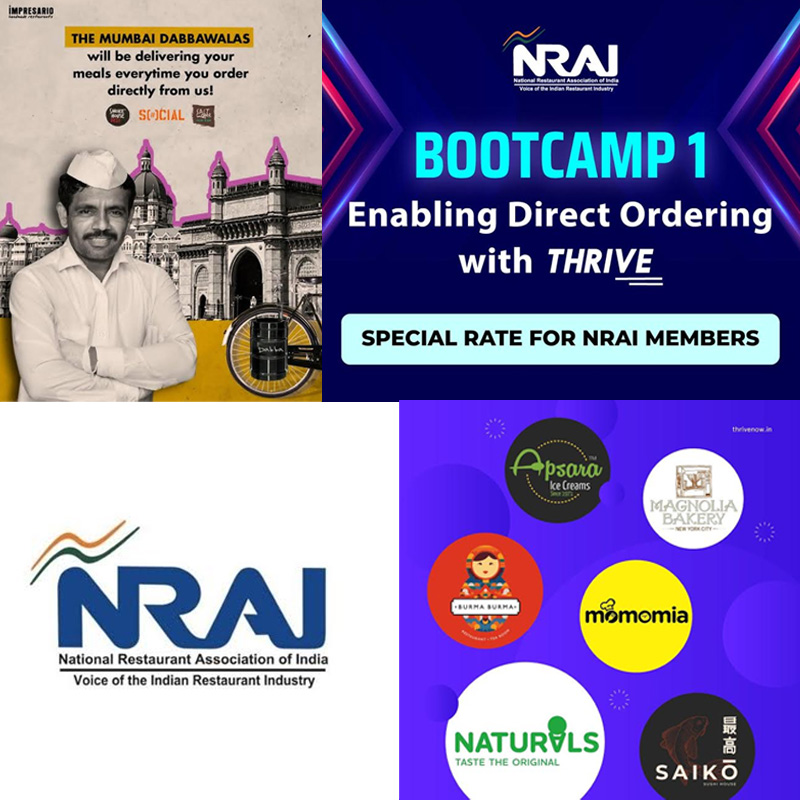
    The National Restaurant Association of India (NRAI) recently announced the #OrderDirect campaign to offer a democratized digital channel with low commissions, data ownership, control over policies, and an unbundled technology stack. NRAI president Anurag Katriar referred to the food aggregator apps as ‘virtual landlords’ last year highlighting the urgent need for the sector to reduce its dependence on such platforms. To safeguard their interest, restaurants are now collectively coming up with their loyalty scheme, bill settlement technology, and even a home delivery solution.  

    Riyaaz Amlani- CEO & MD, Impresario Entertainment and Hospitality, who operates a chain of restaurants in several cities- is among the key voices backing #OrderDirect in India. From this week onwards, in a first-of-its-kind pilot project, his hospitality portfolio has teamed up with Mumbai’s Dabbawala for home deliveries. Riyaaz Amlani posted on LinkedIn, “Thrilled to announce a partnership that just fits. Dabbawalas know a thing or two about getting you your meals on time. They are severely impacted by the pandemic. Working with this awesome group of people is a privilege and a natural extension of our D2C push. #orderdirect “.

    Impresario Handmade Restaurants is employing several dabbawalas in Mumbai who will service direct delivery orders received on Impresario’s tech-enabled platforms for their restaurant brands such as SOCIAL, Smoke House Deli, and Salt Water Cafe. Orders from these restaurants in the Lower Parel, Bandra, and BKC areas of Mumbai will be fulfilled by the dabbawalas starting this week in a seemingly win-win solution for both parties. The association will roll out in phases over the next few months, each employing more dabbawalas and strengthening the partnership.

    This association also takes away from delivery aggregators such as Swiggy and Zomato. According to Amlani, ordering directly from restaurants (and not through aggregators) empowers the company to have direct and deeper relationships with its customers and saves on prohibitive commissions paid to the aggregators. “We are then able to pass on these savings to our customers and allow them to benefit from ordering directly. Now, ordering directly is also helping to employ our dabbawalas, who have lost their livelihoods due to the pandemic. We need to support each other through these trying times, and this is Impresario’s way of meaningfully extending a helping hand. We are hopeful that this association will trigger the rest of the hospitality industry to employ them too,” he told a publication.

    While recognising the positive aspects of what the aggregators are offering the restaurants and customers, Food Matters’ founder and CEO India Gauri Devidayal, says “This relationship is no longer a partnership but rather is one built on dependency… This is not just about saving on commissions but also servicing an increased radius of delivery and therefore having the potential for higher revenues.”

    For restaurateurs looking to start their online ordering platform and reduce dependency on food aggregators DotPe, Thrive Now and Peppo are some of the tech partners supporting NRAI in this campaign. They are helping to build full-stack solutions and a sustainable hospitality ecosystem together with the restaurants.

    Whether these innovations are feasible and able to democratize the food industry, only time will tell.

  • ISSF signs deal with SPN India for rifle and pistol World Cup broadcast

    ISSF signs deal with SPN India for rifle and pistol World Cup broadcast

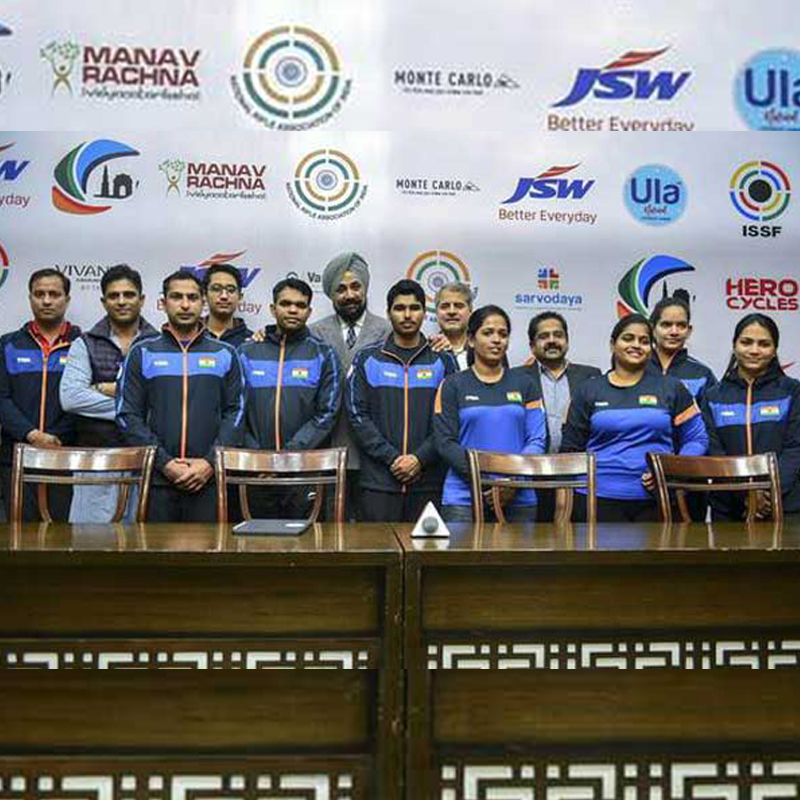
    MUMBAI: The International Shooting Sport Federation (ISSF) has signed a deal with Sony Pictures Network India to broadcast the World Cup, according to the Press Trust of India. The sport of shooting will have live television coverage of the World Cup Rifle/Pistol at Dr Karni Singh Range, Tughlakabad from 20-28 February 2019.

    The Indian shooting will have a great opportunity to project its bright image, with assured high-quality live television coverage of the tournament. Even though shooters from around the world will be eyeing the 16 Olympic quota places on offer, in eight events for men and women, for the 2020 Tokyo Olympics, it will be an ideal platform for the Indian shooters to show case their class and strike power.

    “Sony will be covering the World Cup. Doordarshan will also broadcast. Since the World Cup is an ISSF event, the world body has signed the deal with Sony Television not only for this World Cup but other World Cups as well,” The National Rifle Association of India president Raninder Singh said.

    The sport of shooting which rarely gets broadcast support will be seen once again on the main-stream sports broadcast platform like Sony. Earlier India had conducted the Asian Olympic qualifying event before the Rio Olympics which was broadcasted live on Star Sports network in 2015-16.

    “We are not taking any funds from the government for organising the event, and the ISSF is taking care of the production cost of the television coverage,” he said.

    During the press conference, the NRAI president also declared that a lot of national shooting associations will be coming with their presidents to watch the World Cup, including the ones from Gautemala, Mexico and Russia. Singh said the range was getting ready to host the World Cup, especially with a nice setting in the final hall.

    The NRAI president also expressed hope that in the long run, the national championships would have television coverage. He said there was considerable potential to take the sport forward as 7,000 athletes competed in the last national championships.

  • Sporty Solutionz wins NRAI bid for production, sponsorship consultation

    Sporty Solutionz wins NRAI bid for production, sponsorship consultation

    MUMBAI: Shooting is the most promising discipline for India at Rio Olympic Games. The young and dynamic President of the National Rifle Association of India, Raninder Singh, is determined to transform this potential into real glory. His approach to accomplish this mission is thoroughly professional.


    Singh is committed to add many more firsts to the sport that has given the Nation its first individual Olympic Gold. The NRAI has signed up a deal with Sporty Solutionz Private Limited to engage the sports company as its strategic partners.  Sporty Solutionz, as part of the agreement, will also produce and broadcast the forthcoming Asian Air-gun Shooting Championships, to be held at Delhi’s Dr Karni Singh Shooting Range from September 26 to 30.


    SSPL will also serve NRAI as consultants to make the sport more visible, enhance commercial monetization and work out sales and marketing strategies. The NRAI President is confident that the tie up will bolster the sport.


    “We are happy to form this partnership with Sporty Solutionz. With its rich Olympic history and achievements, shooting is on a constant upward surge in India and I am confident that this partnership will help boost the popularity of the sport, attract corporate interest and bring it closer to public,” says Singh.


    Sporty Solutionz CEO Ashish Chadha, believes the sport has tremendous potential, which with an enhanced reach and visibility can make shooting the next big thing in Indian Sports.


    “Sporty Solutionz is proud to partner NRAI as its consultant. Shooting has given India not only its maiden individual Olympic gold but several World Champions and is one of the few sports where Indians are world leaders. With better resources, we are confident India can bring more medals back from Rio Olympics. Sporty Solutionz is proud of being a partner towards making it happen. We look forward to contributing in making it popular with the public and bring them closer to their shooting heroes. I thank the NRAI from the core of my heart for giving us an opportunity to be a part of this big mission,” says Chadha.


    The aim of the tie-up is not just monetary conversions, but to also make shooting a mass sports in terms of participation and fan base.