Tag: Norway

  • Nordic households caught in the act: piracy up 16 per cent as illegal IPTV continues to boom

    Nordic households caught in the act: piracy up 16 per cent as illegal IPTV continues to boom

    MUMBAI: Piracy in the Nordics isn’t just about dodging subscription fees anymore—it’s now fuelling organised crime. New research by Mediavision reveals over 1.5 million households in the region are paying for illegal IPTV services, up 200,000 homes (16 per cent) from spring 2024. These services offer cut-price, unlawful access to premium TV channels and streaming content.

    While Finland lags slightly in pirate uptake, Denmark, Norway, and Sweden are sailing in the same leaky boat. Behind the scenes? A report in late 2024 had disclosed that the web of illegal operators had ties to trafficking and drug cartels.

    “Piracy continues to pose a serious threat to the industry,” said Mediavision.  senior analyst Adrian Grande. “As illegal IPTV keeps growing, it is encouraging that the issue is on the agenda, but it is also clear that action is needed to tackle the problem”.

    The reason: rising living costs and high OTT prices were pushing households into piracy’s arms.

    And it’s not just a fringe issue—25 per cent of 15–74-year-olds in the region streamed or downloaded content illegally in mid-2024 alone. The Nordic Content Protection (NCP) had in 2024 sounded the alarm, not just on copyright theft but its criminal underbelly. 

    To fight back, the NCP had teamed up with TV 2 Denmark, Viaplay Group, Warner Bros. Discovery, and Allente to launch high-impact anti-piracy campaigns, fronted by local TV personalities. These aired throughout 2024, hoping to shock users into realising that their dodgy stream might be bankrolling crime.

    In Norway, legislators are exploring a bold fix: a payment ban on IPTV services, similar to restrictions already placed on offshore gambling. Meanwhile, Sweden’s laws remain murky, with NCP pushing for stricter, clearer rules.

    As pirates loot the digital seas of Europe, Indian broadcasters and streamers would be wise to keep their periscopes up. How much of a revenue loss they are incurring on account of  the Nordic pilferage only a deeper inquiry can ascertain.

  • TCS  partners with DNB Bank to drive digital innovation

    TCS partners with DNB Bank to drive digital innovation

    MUMBAI: Tata Consultancy Services (TCS) is doubling down on its long-standing relationship with Norway’s DNB Bank ASA, securing a five-year extension as the bank’s strategic technology partner. This renewed alliance will fuel DNB’s digital modernisation, leveraging cutting-edge solutions in AI, quantum computing, and cybersecurity.

    For over 12 years, TCS has played a pivotal role in DNB’s digital evolution, helping launch peer-to-peer mobile payments and enhancing the bank’s operational resilience. Now, with this extended partnership, TCS will continue developing new applications, fortifying security measures, and driving next-generation innovations from its Sahyadri Park campus in Pune, India.

    “We already have a longstanding and proven relationship where TCS has helped enable some of our biggest transformations and innovations,” said DNB group EVP of technology & services Elin Sandnes. “We look forward to seeing what we can achieve together in the future.”

    “We are always looking for new ways to equip DNB in their efforts to be Norway’s most innovative bank,” said TCS president of banking & financial services Shankar Narayanan. “We are pleased to continue our collaboration and push the boundaries of banking technology.”

    TCS’ Machine First Delivery Model has already automated DNB’s operations, improving customer experience and productivity. As one of Norway’s top IT partners for over three decades, TCS remains a dominant player in the Nordic banking sector, supporting 20,000 plus employees across leading enterprises in financial services, telecom, and hi-tech industries.

  • Luxury gets a table at Bangalore’s new Sobé Decor store

    Luxury gets a table at Bangalore’s new Sobé Decor store

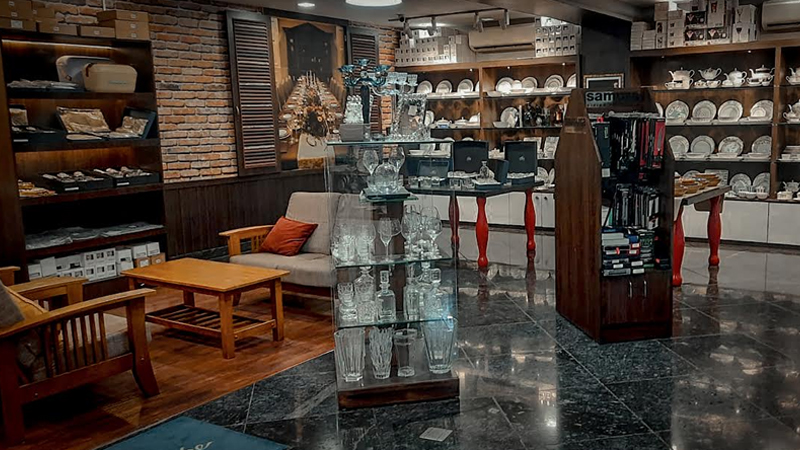
    MUMBAI: Bangalore just set the table for luxury, and it’s looking absolutely exquisite. Sobé Decor, the coveted name in premium home decor and tableware, has unveiled its latest store in Indiranagar, giving the city’s design aficionados a fresh reason to indulge. Nestled in the iconic Falaknuma building, this upscale destination promises an unparalleled shopping experience, blending elegance with world-class craftsmanship.

    Previously an exclusive Noritake showroom, the space has now been reimagined as Sobé Decor, expanding its repertoire to include a handpicked selection of premium brands. From the timeless charm of Chabby Chic to the refined aesthetics of Gloss from Norway, Copacabana, and Christina Oliver, the store offers a symphony of styles that elevate interiors to new heights.

    Bangalore, often celebrated for its cosmopolitan tastes, makes for the perfect setting for Sobé Decor’s expansion, says Sobé Decor founder, Nivedita Jegadeesh, further adding, “This city has always embraced a seamless blend of tradition and modernity. With our new store, we aim to provide a space where elegance meets functionality, offering homeowners an opportunity to curate interiors that reflect their unique personality.”  

    The store is more than just a retail space; it’s a destination designed to inspire. With India’s widest collection of Noritake under one roof, alongside other international luxury brands, it caters to those who appreciate the finer things in life. Whether you’re refreshing your dining space, adding a touch of sophistication to your living room, or seeking statement pieces for a personal retreat, Sobé Decor ensures every home tells a story of refinement and taste.

  • Tata Sky Kids’ Showcase service launched; features films from across globe

    Tata Sky Kids’ Showcase service launched; features films from across globe

    MUMBAI: Tata Sky, pioneer of innovative services in the DTH industry, will be launching an exclusive array of kids-based cinema from multiple countries with the launch of Tata Sky Kids’ Showcase service.

    Launched on 21 May, Kids’ Showcase features films from across the globe; including Denmark, Norway, France, Japan, Russia, Czech Republic, Finland, United Kingdom and United States of America apart from Indian movies. The bouquet of over 40 kids film on Kids’ Showcase will feature Indian, English, foreign feature & short films. 

    Tata Sky chief content and business development officer Paolo Agostinelli said, “With Kids’ Showcase, Tata Sky aims to create an opportunity for our kids to enjoy some unique, mostly unseen, high quality content, coming with different perspectives from India and around the world. Not just as some fun times, this could be an opportunity for them to share some quality time with their parents, hopefully stimulating reflections and discussions around a broad range of beautiful, diverse and meaningful stories.”

    Children can look forward to an exciting mix of award winning and nominated films, features and shorts from renowned studios such as Celluloid Dreams, Ghibli, Trust Nordisk, Folimage, Entertainment One and many more. Some of the movies acquired for the platform are The Nut Job, Labrinthus, Giraffada, Secret of Kells, Gattu, Jalpari, La Cage and many more.

    This new showcase service will air children’s films selected with the help of eminent children’s content curator, Monica Wahi, who is the founder of South Asian Children’s Cinema Forum and curated kids content at festivals such as The Mumbai Film Festival.

    Kids Showcase will run movies all day back-to-back and children can watch what they like on both the television and the Tata Sky Mobile App. With a bouquet of 21 kids channels, and 4 unique interactive services, Tata Sky has been continuously bolstering offerings for children.


  • Tata Sky Kids’ Showcase service launched; features films from across globe

    Tata Sky Kids’ Showcase service launched; features films from across globe

    MUMBAI: Tata Sky, pioneer of innovative services in the DTH industry, will be launching an exclusive array of kids-based cinema from multiple countries with the launch of Tata Sky Kids’ Showcase service.

    Launched on 21 May, Kids’ Showcase features films from across the globe; including Denmark, Norway, France, Japan, Russia, Czech Republic, Finland, United Kingdom and United States of America apart from Indian movies. The bouquet of over 40 kids film on Kids’ Showcase will feature Indian, English, foreign feature & short films. 

    Tata Sky chief content and business development officer Paolo Agostinelli said, “With Kids’ Showcase, Tata Sky aims to create an opportunity for our kids to enjoy some unique, mostly unseen, high quality content, coming with different perspectives from India and around the world. Not just as some fun times, this could be an opportunity for them to share some quality time with their parents, hopefully stimulating reflections and discussions around a broad range of beautiful, diverse and meaningful stories.”

    Children can look forward to an exciting mix of award winning and nominated films, features and shorts from renowned studios such as Celluloid Dreams, Ghibli, Trust Nordisk, Folimage, Entertainment One and many more. Some of the movies acquired for the platform are The Nut Job, Labrinthus, Giraffada, Secret of Kells, Gattu, Jalpari, La Cage and many more.

    This new showcase service will air children’s films selected with the help of eminent children’s content curator, Monica Wahi, who is the founder of South Asian Children’s Cinema Forum and curated kids content at festivals such as The Mumbai Film Festival.

    Kids Showcase will run movies all day back-to-back and children can watch what they like on both the television and the Tata Sky Mobile App. With a bouquet of 21 kids channels, and 4 unique interactive services, Tata Sky has been continuously bolstering offerings for children.


  • IPTV subscriptions in Western Europe to climb by 7 mn between 2015- 21, overtaking satellite TV

    IPTV subscriptions in Western Europe to climb by 7 mn between 2015- 21, overtaking satellite TV

    MUMBAI: The numbers of homes paying IPTV in Western Europe are expected to climb by nearly 7 million up by 27 per cent between 2015 and 2021, thus overtaking the pay satellite TV which is slated to fall by 300,000 between 2015 and 2021 for 18 countries in the region.  

    According to the Digital TV Western Europe Forecasts report, IPTV revenues will reach $5.77 billion in 2021 – up by $1.2 billion.

    The report indicates that this is due mainly to some operators, especially in Spain and Italy, converting their DTH subs to more lucrative bundles on their broadband networks.

    Satellite TV revenues will fall for every year from 2011 – and will decline by $1 billion between 2015 and 2021.

    Western European Pay TV is fast maturing, with penetration forecast to grow from 56.8% at end-2015 to 59.5 per cent in 2021. The number of pay TV subscribers will climb from 97.4 million in 2015 to 104.3 million in 2021.

    So, Pay TV subscriptions will only increase by 6.9 million which is 7 per cent between 2015 and 2021. However, the number of digital pay TV subs will increase by 19 per cent nearly 17 million over the same period. Digital cable subs will increase by almost 10 million.

    The 9.9 million analogue cable homes remaining at 2015-end will be the hardest to convert to digital as many of these subscribers pay for very basic packages as part of their rent.

    Digital TV Research principal analyst Simon Murray said, “The remaining analogue cable TV subs are the most obstinate. These homes have had several years to transfer to digital platforms – including those from their existing operators, but are still holding out. When conversion finally happens, these homes are more likely to convert to free-to-air platforms such as DTT or satellite than their predecessors.”

    In fact, only seven (Finland, France, Iceland, Italy, Norway, Spain and the United Kingdom) of the 18 countries covered in the report had fully converted to digital by 2015-end.

    By 2021, pay TV penetration will range from nearly 100 per cent in the Netherlands to 36 per cent in Italy. Eight countries will exceed 90 per cent pay TV penetration in 2021. However, pay TV penetration will fall in Germany, Netherlands, Norway, Sweden and Switzerland – countries with a large number of legacy analogue cable subscribers.

    Despite the number of pay TV homes increasing, pay TV revenues will remain flat at around $31 billion. The UK ($7,217 million) will remain the most lucrative pay TV market. Regardless of having the most pay TV subs by some distance, Germany’s pay TV revenues will remain a lot lower than the UK – at $4,183 million by 2021. In fact, France and Italy will not be too far behind Germany, despite having far fewer pay TV subscribers.

  • IPTV subscriptions in Western Europe to climb by 7 mn between 2015- 21, overtaking satellite TV

    IPTV subscriptions in Western Europe to climb by 7 mn between 2015- 21, overtaking satellite TV

    MUMBAI: The numbers of homes paying IPTV in Western Europe are expected to climb by nearly 7 million up by 27 per cent between 2015 and 2021, thus overtaking the pay satellite TV which is slated to fall by 300,000 between 2015 and 2021 for 18 countries in the region.  

    According to the Digital TV Western Europe Forecasts report, IPTV revenues will reach $5.77 billion in 2021 – up by $1.2 billion.

    The report indicates that this is due mainly to some operators, especially in Spain and Italy, converting their DTH subs to more lucrative bundles on their broadband networks.

    Satellite TV revenues will fall for every year from 2011 – and will decline by $1 billion between 2015 and 2021.

    Western European Pay TV is fast maturing, with penetration forecast to grow from 56.8% at end-2015 to 59.5 per cent in 2021. The number of pay TV subscribers will climb from 97.4 million in 2015 to 104.3 million in 2021.

    So, Pay TV subscriptions will only increase by 6.9 million which is 7 per cent between 2015 and 2021. However, the number of digital pay TV subs will increase by 19 per cent nearly 17 million over the same period. Digital cable subs will increase by almost 10 million.

    The 9.9 million analogue cable homes remaining at 2015-end will be the hardest to convert to digital as many of these subscribers pay for very basic packages as part of their rent.

    Digital TV Research principal analyst Simon Murray said, “The remaining analogue cable TV subs are the most obstinate. These homes have had several years to transfer to digital platforms – including those from their existing operators, but are still holding out. When conversion finally happens, these homes are more likely to convert to free-to-air platforms such as DTT or satellite than their predecessors.”

    In fact, only seven (Finland, France, Iceland, Italy, Norway, Spain and the United Kingdom) of the 18 countries covered in the report had fully converted to digital by 2015-end.

    By 2021, pay TV penetration will range from nearly 100 per cent in the Netherlands to 36 per cent in Italy. Eight countries will exceed 90 per cent pay TV penetration in 2021. However, pay TV penetration will fall in Germany, Netherlands, Norway, Sweden and Switzerland – countries with a large number of legacy analogue cable subscribers.

    Despite the number of pay TV homes increasing, pay TV revenues will remain flat at around $31 billion. The UK ($7,217 million) will remain the most lucrative pay TV market. Regardless of having the most pay TV subs by some distance, Germany’s pay TV revenues will remain a lot lower than the UK – at $4,183 million by 2021. In fact, France and Italy will not be too far behind Germany, despite having far fewer pay TV subscribers.

  • FX and FX HD to premiere Lilyhammer

    FX and FX HD to premiere Lilyhammer

    MUMBAI: FX, the English entertainment channel is all geared up to premiere the first episode of the series Lilyhammer. The series airs on 10 December 2015 at 10 pm and revolves around Frank, a New York mobster played by Steven Van Zandt.

    The lead is seen trying to start a new life in isolated Lillehammer, Norway as part of the Witness Protection Program after testifying against his former mafia associates. 


    Frank Tagliano (Van Zandt), a former underboss of the American Mafia, is placed in the Federal Witness Protection Program after testifying in a trial against Aldo Delucci (Thomas Grube), the new Mafia head who had ordered a hit on him after succeeding his recently deceased brother, Sally Boy Delucci. Frank requests that he be relocated to Lillehammer, where he believes no one will look for him. His new identity is Norwegian-American immigrant Giovanni “Johnny” Henriksen. On a train journey from Oslo to Lillehammer, Johnny impresses teacher Sigrid Haugli (Marian Saastad Ottesen), her son Jonas (Mikael Aksnes-Pehrson), and a man who later turns out to be a civil supervisor. However, soon he starts to feel lost in Lillehammer.

  • 79% Indians look for best deals while shopping

    79% Indians look for best deals while shopping

    MUMBAI: A majority (79 per cent) of Indians would rather ‘spend time looking for a good deal,’ while only 21 per cent would rather ‘pay more to make a quick/efficient purchase.’ The findings reflect a new poll of 18,503 online respondents conducted by Ipsos OTX.


    “Indian consumers lately show both impulsive and compulsive buying behaviour. But at the same time they are dealaholics and hardcore value for money seekers. No wonder why sale/ discount offer periods record the highest revenue both for online and offline retailers,” said Ipsos India head of marketing Biswarup Banerjee.


    Those with a lower household income (82 per cent) are most likely to spend time looking for a good deal. Even those with middle (80 per cent) and high (74 per cent) levels of income, however, would take the time to find a better price. Similarly, those with a low level of education (100 per cent) are more likely than those with a medium (80 per cent) or high (79 per cent) level. Women (80 per cent) are more likely than men (78 per cent) to go hunting for a sale.


    The countries with the highest proportions of those indicating they would rather spend time looking for good deals are from: Hungary (94 per cent), Spain (94 per cent), Great Britain (93 per cent), Argentina (92 per cent), Belgium (91 per cent), France (91 per cent) and Germany (91 per cent). This group of deal-chasers is followed by: Australia (90 per cent), Italy (90 per cent), Mexico (90 per cent), Japan (88 per cent), South Africa (87 per cent), Canada (86 per cent), Poland (86 per cent), the United States (85 per cent), China (81 per cent), Russia (81 per cent) and South Korea (81 per cent). The lower group includes: India (79 per cent), Brazil (76 per cent), Saudi Arabia (76 per cent), Norway (75 per cent), Sweden (75 per cent), Turkey (74 per cent) and Indonesia (58 per cent).