Tag: Non Fiction

  • KBC dominates non-fiction TV shows with top viewer engagement

    KBC dominates non-fiction TV shows with top viewer engagement

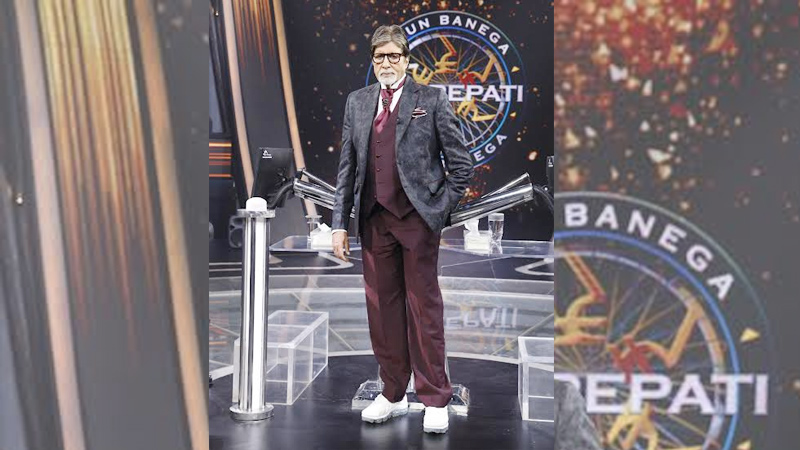
    Mumbai: Hosted by the iconic Amitabh Bachchan, Kaun Banega Crorepati (KBC) in its 16th edition continues to captivate audiences nationwide. According to BARC data (HSM Urban 15+, Week 37, 2024), KBC holds the top spot with an average viewing time of 37.8 TSV.

    In a time of short attention spans, KBC’s success in maintaining high engagement is a testament to its enduring appeal and compelling storytelling. The show’s ability to connect with viewers of all ages and demographics, along with its focus on personal stories and intellectual challenge, ensures that it consistently holds the audience’s attention longer than other non-fiction shows.

    In comparison, other shows such as India’s Best Dancer Season 4 and Fear Factor – Khatron Ke Khiladi have average viewing times of 31.2 TSV and 34.3 TSV, respectively.

  • Zeel promotes Kaushik Misra as Zee TV’s head of non-fiction

    Zeel promotes Kaushik Misra as Zee TV’s head of non-fiction

    Mumbai: Zee Entertainment Enterprises (Zeel) has elevated Kaushik Misra as head of non-fiction at Zee TV, the company’s Hindi general entertainment channel.

    Misra has been associated with Zeel for over 12 years. Earlier, he was director of programming – non-fiction for Zee TV. He has expertise in public relations, brand management, digital marketing and content development.

    Misra has played a key role in building iconic properties such as Dance India Dance and Sa Re Ga Ma Pa. He has also been a part of Zee TV’s refresh campaign ‘Aaj Likhenge Kal’.

    He is an alumnus of St. Xavier’s College and completed his MBA from Symbiosis Institute of Media and Communication, Pune.

  • #Throwback2020: Programming across OTT & television

    #Throwback2020: Programming across OTT & television

    MUMBAI/KOLKATA: Life coach and motivational speaker Tony Robbins once remarked that “we aren’t in an information age, we are in an entertainment age.” The past year has shown that Robbins' observation wasn’t far off the mark. As people were bombarded with information from all sides, most of it unpleasant (what with a global pandemic, wildfires, erupting city blocks and violent racial protests, just to name a few), and with cinemas shuttered and live sports cancelled, they retreated to the only safe space left – their television and mobile screens. In fact, 2020 was also remarkable for another fact; TV and OTT saw unprecedented rise in viewership and time spent on the platforms compared to preceding years.

    One of the biggest trends that we saw on OTT and television in 2020 was the re-emergence of the golden era of family viewing. A classic example of this was the reruns of Mahabharat and Ramayan on Doordarshan during the lockdown. IndiaToday touted Mahabharat as the “baap of all masala entertainers” and no wonder, everyone in the family – from grandparents to kids – tuned in to the decades-old show. And as streamers were – for a large part of the year –   were the only ones where fresh content was in supply, audiences signed up for the services in big numbers.

    Programming on television

    With people confined to their homes, TV took them to places where they could find some respite, whether in the form of a supernatural show, a murder mystery, Mills & boons romance thriller, an endearing fish-out-of-water comedy, or a very old daily soap. Some shows nailed tricky tones; others offered unforgettable concepts.

    The pandemic forced general entertainment channels to go for reruns initially as there was no fresh content production for nearly three months. DD emerged the frontrunner, as, besides Mahabharat and Ramayan, it brought many other iconic shows such as Dekh Bhai Dekh and Shriman Shrimati, thereby raking in massive viewership. Private broadcasters took the same route to entertain audiences. Programmes that had been relegated to sister FTA channels, such as Saath Nibhana Saathiya, Kumkum Bhagya and Ye Rishta Kya Kehlata Hai, made a comeback on the pay platform and attracted a lot of eyeballs.

    Daily soaps dominate

    A lot of shows focused on family bonding, women taking charge of the household, and the parent-child relationship. Most of these serials tend to have family drama as the core thread with a love story running through it.

    Naagin, Chotti Sardaarni, Barrister Babu and the recently launched Shubharambh delivered – and continue to –  the bounty for Colors. Zee TV’s Kundali Bhagya and Kumkum Bhagya (both produced by Ekta Kapoor’s Balaji Telefilms) and Guddan Tumse Na Ho Paayega garnered significant eyeballs. Sony TV’s Mere Dad Ki Dulhan, which recently went off air, was centered on the theme of a second chance at love for middle-aged parents.

    Audiences across markets opted for a slice of life and family dramas. The overall Hindi GEC (U+R) and the Hindi GEC (U) audiences preferred to watch recently launched shows like Anupama, Imlie, Ghum Hai Kisi ke Pyaar Mein on Star Plus, and Zee TV’s most popular long-running shows Kundali Bhagya and Kumkum Bhagya.

    Several experimental shows such as 9 Months Wali Love Story, Kaatelal & Sons also found takers, but there wasn’t much in the way of breakthrough content outside of Anupama. The latter is a regular family drama showcasing the taboo subject of extramarital affairs on Indian television.

    Ormax Media partner Keerat Grewal said, "I think the challenge with the category is that experiments with new story ideas are there, but we have not seen any paradigm shift, something that we saw with KBC and Balika Vadhu. Over the last few years non-fiction has had an uptake on HGECs due to the fiction cynicism that’s set in gradually as audiences have been seeing 'more of the same'. This year however non-fiction has struggled as well, with both KBC and Bigg Boss not being able to deliver. Bigg Boss is generally shows an upward trend after a few weeks, once contestant familiarity sets-in."

    With production budgets slashed across channels by almost 20-25%, extending this year's Bigg Boss season even with lower than expected ratings, could be a matter commercial feasibility for the channel, she said

    Star Plus also managed to get its regional shows successfully remade into Hindi with Anupama and Ghum Hai Kisi Ke Pyaar Mein. This urge to adapt and remake has been picked up by other channels as well.

    Non-fiction shows struggled to top the charts

    Kaun Banega Crorepati, Bigg Boss, and The Kapil Sharma Show were produced under strict Covid2019 precautions. The drastically smaller production teams innovated on the sets to adhere to protocol and ensure safety of the participants. For instance, there is a restaurant, a shopping mall, a theatre, and a spa inside the Bigg Boss house. In KBC 12, besides the crew, even those who accompany the contestants on the show have socially distanced seating. There was no live audience and the audience poll lifeline was replaced by video-a-friend. The Kapil Sharma Show introduced recorded audience applause, and cut-outs in the background to make the set look lively. The IPL also did the same.

    Unlike other years, Bigg Boss – while generating a lot of buzz – has had a relatively subdued season and has not picked up in ratings. The non-fiction show has always been known to pick up from the mid-season where it brings older participants to pump up nostalgia and drama. This year, Colors has decided to extend Bigg Boss 14 till February 2021, with the grand finale scheduled around Valentine's Day. Traditionally, non-fiction shows have always given fiction shows a run for their money.

    And while the IPL was a huge production and advertising success, buoying industry sentiment,  the same cannot be said for other marquee non-fiction properties, which compete with it.

     “I think the challenge is that they keep experimenting with new story ideas but we have not seen any paradigm shift, something that we saw with KBC,” noted Grewal.

    The year of OTT

    2020 was the year of OTT, as people sampled and adopted them in droves. Likewise, the investment in content has also increased manifold. As more people turned to premium online content, the platforms also experimented with the formats of their new shows.

    A new genre on the streaming horizon is musical. Amazon Prime Video’s Bandish Bandits gathered buzz with its music-themed plot depicting the clash between two different worlds of music. Although some viewers found the format cliched, the catchy tunes by composers Shankar-Ehsan-Loy made it extremely appealing. MX Player’s music reality show Times of Music was loved for its unique format – it's a crossover between reality and chat show. Bringing the best composers in the Indian film industry together on one stage, the series included recreations of many celebrated songs. Times of Music charmed Indian music lovers at a time when live musical events had come to a halt.

    Experimentation and innovation

    More than simply offering a library of content, OTT platforms in India are trying to establish a stronger connection with consumers through interactive content. The trend has not picked up for premium originals yet but broadcaster-led streaming platforms are experimenting with the format for their catch-up content. Zee5 launched Zee5 Super Family League where participants could  create their own family by selecting their favourite characters from the network’s popular primetime shows. Voot and SonyLIV also created avenues for immersive experience around tentpole content like Bigg Boss and KBC.

    2020 was a series of unusual, new experiments to face the challenges posed by the pandemic. OTTs led the field when it came to producing new shows while sitting at home. Voot devised an innovative content format with locked room murder mystery The Gone Game, shot in cast members' residences. Eros Now also premiered a show made in lockdown – A Viral Wedding. Amazon Prime Video unveiled CU Soon, a film shot entirely during quarantine.

    Sequels spell success

    For many people, the saving grace of 2020 was their favourite shows returning with new seasons. The hugely popular Mirzapur series generated tons of excitement. Among other much-awaited shows, MX Player’s Aashram, Disney+Hotstar’s Hostages, Amazon Prime Video’s Breathe: Into the Shadows wooed the audience with returning seasons. Other than Indian originals, viewers enjoyed new seasons of international series like Money Heist, Dark and The Mandalorian.

    The rise of K-love

    Indian audience’s watch list is no longer defined by local content or few American dramas anymore. All things ‘K’ (as in South Korean, not Ekta Kapoor’s defining alphabet) had a major breakthrough in India amid the pandemic. Netflix India witnessed a whopping 370 per cent growth in the viewership of Korean dramas, with The King: Eternal Monarch, Kingdom (S2), It’s Okay to Not Be Okay and Crash Landing on You dominating the trending list for weeks. MX Player also reported considerable growth of Korean drama in its international segment. Interestingly, the K-drama fad is not limited to millennials and gen Z anymore. Other than romances, older audiences also watched other complex genres like Korean historical dramas and thrillers.

    OTTs have moved on from male, metro, millennial demographic to an increasing number of female content consumers. As a result, platforms focused on women-centric content representing strong female characters. The shows ranged from comedy to thrillers, romance, and social drama. Pushpavali, Four More Shots Please, Arya, Bulbbul, Masaba Masaba, Churails, Code M were some programmes that appealed to and were loved by women viewers.

  • Will non-fiction shows witness growth post IPL?

    Will non-fiction shows witness growth post IPL?

    MUMBAI: IPL 2020 was the first major live sporting event since the lockdown began. Despite a delayed start owing to the pandemic, it proved to be a respite for Indian audiences who were wilting on a diet of TV news and reruns. Not to mention that it gave a new lease on life to advertisers to once again build a connect with consumers and attain the pre-Covid reach levels. BARC reported that the 13th edition of the league, which has an estimated brand value of $6.8 billion drew record television and digital viewership. The IPL opener was viewed by 200 million plus audiences and a staggering 31.57 million watched the tournament, clocking a 23 per cent rise in eyeballs.

    This year, marquee non-fiction properties Kaun Banega Crorepati (KBC) season 12, Bigg Boss season 14, Fear Factor-Khatron Ke Khiladi, India’s Best Dancer, The Kapil Sharma Sharma, Super Dancer were launched while the IPL was underway. Indian Idol season 12 started after IPL ended. The upcoming non-fiction shows are Taare Zameen Par and Dance Deewane 3. While the league may have gone relatively unscathed in terms of sponsors and revenue (BCCI being cagey about financials notwithstanding), several media experts had pointed out that the overlap of the tournament with the festive season and audience shift to OTT platforms would impact the revenues of television networks.

    By the by, both shows managed to rope in a sizeable number of sponsors and partners (KBC – 10, Bigg Boss – 15). But they failed to make a splash in their opening week – BARC data reflects that none of them broke into the top five shows in the Hindi GEC category. However, the report also stated that Bigg Boss clocked 3.9 billion minutes in the same period, the highest in the last three seasons.

    BARC is yet to release data on how these shows have performed since they premiered this season.

    But the question remains that with IPL over, viewers of the non-fiction genre need the next big thing for their daily dose of entertainment. Will this quest for serotonin give a boost to the genre and viewership? 

    The industry is divided, where some believe that now the IPL is over, things will get better for non-fiction shows in terms of ratings and revenue. Others think that overall market sentiment is low with the festive season behind us. Revival will come, but not before January 2021.

    The Media Ant CEO and founder Samir Chaudhary said, “Both KBC and Bigg Boss have not performed as compared to last year. IPL definitely has a role to play, given that both shows launched during the tournament, which is an unusual scenario. Diwali was the peak season for all advertisers, but now overall ad volumes have gone down. The volume was driven a lot by automobile and e-commerce companies, and both have now come out of their peaks. We are expecting the volumes to come back by mid-December when the second round of sale comes up."

    He further qualified this by saying that since the IPL is over, the shows may see traction and gain a new set of advertisers by mid-December, but that remains to be seen.

    Wavemaker India managing partner Mansi Datta echoed the sentiment and added, “Post IPL (data for four days post IPL), these programs have seen an increase in viewership across different cohorts by 5-15 per cent. This indicates that the audience viewership movement is to be further expected across both genders/age groups. This would also hold the case as momentum for these episodes gain, the viewership will climb.”

    Traditionally, Dussehra-Diwali is the reaping period for TV networks as they launch big-ticket fiction and non-fiction properties, helping them attract advertisers. Estimates are that marketers signed checks to the tune of Rs 24,000 crore during the festival period last year. The pandemic and the lockdowns over the past six months have resulted in Indian advertising expenditure shrinking by as much as 39 per cent since. Soothsayers predict that 2019’s festive season ad-ex will not be breached this year.

    Elara Capital vice president Karan Taurani observed that both ratings and ad volumes of non-fiction shows have gone up but the issue is pricing. Viewership ratings have increased by 10 to 15 per cent but compared to last year the rates are still low. “From October to November, the TV advertising segment grew by 10 to 12 per cent. But post festivities, the entire media plan was put on hold based on how the market functions in terms of consumption pattern. The growth was not sustainable.”

    Taurani projects December to be slightly down in terms of advertising. “But hopefully, January and February will see some relief and the market will bounce back,” he added.

    In terms of ad volumes, both properties have brought in a lot of advertisers, in fact the difference in the total number of advertisers onboard with the IPL and Bigg Boss was just 10 per cent. Others emphasise that these programmes got new sponsors, even those that stayed away from IPL, and the inventory level is almost full.

    Havas Media buying national head R Venkatasubramanian pointed out that now advertisers have the option to choose between HD and SD platforms separately. Hence, the number of advertisers are more in both properties, a win-win for brands and channels.

    During the pandemic, the lines have blurred between primetime and non-primetime. Content consumption patterns have also changed. In an average household, while women and family audiences have been glued to fiction serials, young viewers have taken either to the IPL or to online content that is slowly attracting Hindi-speaking viewers.

    Omnicom Media Group chief investment officer Mamatha Morvankar shared that initial trends post the closure of IPL 2020 are certainly encouraging. Both KBC and Bigg Boss, Sa Re Ga Ma Pa, have shown an uptick in TVRs. In the case of Bigg Boss, the increase was largely attributed to time spent by viewers, whereas for KBC the surge was both with regards to reach and time spent. KBC had its one crore winners in the weeks following IPL and that aspect would have had a positive impact on ratings.

    A media professional, on the condition of anonymity, mentioned that Bigg Boss – which is already on the verge of completing two months – is introducing new formats and twists to lure viewers. And while advertisers are coming on board, they’re doing so on discounted rates.

    But despite challenges, reality shows are slowly but steadily gaining the power to create an impact in the wake of IPL. Morvankar explained, “This is also showing in terms of the ad volumes. Both these reality programs are signing on new sponsors post the IPL 2020 season and going full-on their inventory. KBC has even gotten an extension of four weeks, now stretching to end in January, which should also extend the ratings momentum. These early signs are promising enough for us to anticipate that impact reality shows such as these are set to take the coming quarter by storm.”

    If reports are to be believed, the IPL has already eaten up a Rs 2,500-crore slice of the ad-ex pie. But some experts still hold that non-fiction shows are on a growth trajectory. It will be interesting to see if the genre will hit it out of the park in the coming months or if it’s samay samaapt for it.

  • Nikul Desai talks about his new show Taare Zameen Par

    Nikul Desai talks about his new show Taare Zameen Par

    MUMBAI: Nikul Desai is mainly known for directing non-fiction shows like Comedy Circus and Rising Star. Desai began his career under the supervision of his paternal uncle Vipul D Shah, the co-founder of Optimystix Entertainment. Starting off as an assistant director back in 2001, he has worked his way up to head of non-fiction content.

    But luck played its part too. Desai got to don the director's hat when the main director of a TV show fell ill – and that was his first break as a full-time television director. Fame quickly followed when he made a splash with the runaway success of Comedy Circus. The show aired for nine years with 18 seasons. Not only this, he brought various comedians like Kapil Sharma, Krushna Abhishek, Bharti Singh, Sudesh Lehri, and many more, into the limelight.

    Now, Desai is coming up with yet another singing reality show – Taare Zameen Par. Conceptualised as a platform for kids to showcase their signing talent, the show will be telecast on Star Plus from 2 November at 6.30 pm. The programme will not have judges, but mentors who will groom and train the kids. The makers have roped in Shankar Mahadevan, Tony Kakkar and Jonita Gandhi as mentors while popular comedian Sugandha Mishra and Aakriti Sharma (of Kullfi Kumarr Bajewala fame) will host the show.

    Desai revealed that this is the first time that any production house is attempting a non-fiction from a daily point of view. Said he: “Taare Zameen Par is a mammoth show that is keeping me and my team very busy. And then there are other projects in the pipeline, we are in conversation with Star Plus for a few other shows, which should hopefully get cleared by the end of October or November. We are also coming up with an original series, and a movie in partnership with Ashwin Varde.”

    Due to the Covid2019 pandemic, production houses have to come up with innovative ways to evolve and upgrade in the new normal. For instance, the studio has cut down on crew size – a measure that has generated its fair share of headaches.

    “A big non-fiction show has anywhere between 300 to 400 people, but now the studio is functioning with anywhere between 160 to 200 people while the work remains the same. Consequently, production has become considerably more difficult, and the team has to pre-plan a lot of stuff so there are no last minute requirements and scramble,” said Desai. This is because all the props which are coming from the market need to be sanitized and must be kept aside for 48 hours.

    In terms of the restrictions, only cameramen and technicians are allowed to go on the floor, otherwise access to the floor has been completely shut off. Further, there is zero physical contact with judges and hosts. Contact and communication has undergone a sea change.

    “Largely, the communication is completely killed from a security point of view, it's either from a pre-production point of view where we do phone calls or Zoom calls. We are shooting every day together, but we haven't really met each other. We are strictly adhering to safety and security protocols,” stated Desai.

    Child participants and their guardians, who came from all over India, went through a minimum of 14 days quarantine and it’s only recently that they have been brought out from their hotel rooms for band rehearsals, he added.

    Generally, the production control room (PCR) is a small, cluttered space. But this time to maintain social distancing. Optimystix has designed a bigger area for PCR. The studio has created a partition between technicians by putting acrylic sheets so that everybody can watch the monitors while shooting takes place. But only limited people are allowed in the room. For other crew members, the studio has made a viewing room where people who want to just watch the content can actually go to the viewing room and tune in.

    “We have given them the Zoom output off the whole master camera, so that they can watch what's happening on the floor at any point of time while sitting at their homes. And they can communicate with us over the call or Zoom chat. So, the way we function has completely changed. Earlier, a lot of people used to be there on standby to help the people present on the set but now 70 per cent of the crew is handling their own work,” Desai elaborated.

    The studio has also hired an external Covid2019 compliance company named the Covid Marshal. The set and other equipment are sanitised twice a day. No more than two episodes are shot in a day. Desai further mentioned that due to safety and security measures the productivity has comparatively been hampered.  

    Desai shared his view that audiences are now more keen than ever to watch light-hearted programmes, and in the long run non-fiction shows will fare better. 

  • Getting the “big” into Reliance Big Synergy

    Getting the “big” into Reliance Big Synergy

    MUMBAI: Leading Indian production house Reliance Big Synegry CEO Rajiv Bakshi has seen a lot over the score and more years he has spent in the corporate world.  His exposure has been quite expansive with stints in  TV, internet, media, telecom and consumer durable industries, which allowed him the luxury of  witnessing India’s media and entertainment industry's evolution from close quarters. Bakshi’s mandate, when he was given charge of  the TV producer in 2018, was to enhance its multi-platform reach, drive strategic partnerships and develop its original content portfolio. He had other challenges as well: Reliance Big Synergy was known to be a non-fiction powerhouse  thanks to its founder Siddharth Basu, but it did not have much of a  track record on the fiction front and in regional language show. Bakshi's remit was to aggresively scale it in these two areas.

    And he's quite pleased with what he has achieved. Says he:  “It’s been a remarkable 12 months where we have broad-based our offerings and become a formidable powerhouse for all forms of content – from fiction, non-fiction, web series, direct to digital films, biographies, mythology and more."

    Read more about Rajiv Bakshi

    Reliance Big Synergy currently has TV series running on Star Maa, Zee Punjabi, Dangal, ZEE5 and many more.  And Bakshi is aiming even higher: he'd like his charge to have  aiming for a 4:1 (fiction to non-fiction) split , that is 80 per cent of its portfolio will be  fiction, 20 percent non-fiction. It language repertoire has also swollen to cover Bangla, Telugu, Punjabi, Bhojpuri, from just Hindi earlier.

    “Due to the pandemic the appetite for fiction shows has gone up today. Also, it has been a tough journey to transform, we worked day and night to double up our offerings. In the past, we have never done a mythological series but now we are producing them,” he reveals.

    India is a very large and diverse market, and the lockdown has demonstrated that consumers will lap up all types of content that is dished out to them – no matter which country it originates from – as long as it is produced well and tells a engaging story. Bakshi believes the media and entertainment industry – domestically and internationally –  is undergoing a dramatic transformation on all counts   – platforms, scale, talent and, above all, storytelling. Hence, the company is looking to make shows for audiences worldwide. The more varied the market, greater the opportunity, he opines with a smile. 

    “Now it’s up to us to scale up the creative teams to build both a robust portfolio of content and the production ability to produce shows of scale for the global audience, not just Indian viewers,” says Bakshi.  Chances are high that there will be more collaborations between entities – and even competitors – if the opportunity is unique and scalable, given his stated ambition.

    CEO Rajiv Bakshi unveils transformational roadmap for Big Synergy

    There has been a huge spike in OTT engagement ever since the start of the Covid2019 pandemic that is holding steady for now.  A recent survey conducted by Flyx, a social network platform for OTT content, revealed that there has been a sizeable uptick in both purchase of OTT subscriptions and viewing hours amongst Indian users. More than 50 per cent respondents shared that they have purchased new subscriptions during the pandemic. Users also revealed that there has been a 5x increase in those spending 16+ hours weekly and a 4x increase in those spending 12-16 hours weekly on OTT platforms.

    Acknowledging that watch time, particularly for streaming services, increased during lockdown, Bakshi, however, maintains that the data from the Covid2019 period cannot be the base for decision making. One will have to look at trend lines and not use it as is. He explains: “Because of the OTT platforms you cannot serve the same content to everyone, you need to divide it, whether you are a broadcaster or a digital player. As a content creator, it’s music to my ears because more the variety, more is the opportunity to create. I can say this with confidence that the OTT industry will surpass everyone’s expectations. There will be some losers, but in contrast there will be big winners. I think three key growth triggers for the OTT industry will be – affordable subscriptions, regional content and low data cost.”

    Read more news on Reliance Big Synergy

    With theatres remaining closed for months on end, moviemakers began to divert their releases onto OTT platforms instead, bypassing the idiot box. Bakshi considers this an interesting shift that’s off-shot new directions for creators to explore outside the small screen. Does that mean it is a theatre vs OTT explosion waiting to happen?

    For Bakshi, there is no competition between sectors in the media and entertainment business; everything is complimentary. He opines that no platform can match the theatre experience. So far as demand is concerned, especially when OTT platforms have subscription models, movies do help attract viewers. Therefore, streaming giants continue to invest in movies. In the current environment where moviemakers are suffering losses, the most viable solution is to release movies on OTT platforms, he states.

    When it comes to differentiating between TV and OTT content, Bakshi seeks the help of consumer insight. The studio undertakes extensive research before entering into a new market.

    Apart from this, Bakshi didn't shy away from pointing out  the challeges that he is facing due to the rampaging virus.   He notes that there are several challenges ahead in terms of creating better content – pace of production has slowed, people run a  higher risk, casualties happen, and there is added costs on top due to the SOP measures. Bakshi quips: “My biggest challenge continues to be prioritisation since so much is happening, we have to take a measured decision and exercise smart choices.”

    For the most part, the company is still in work from home mode. However, filming has begun at various locations across India. Bakshi has hired a Covid2019 compliance firm to ensure safety and security of cast and crew members on the set. He highlights that the entire process of shooting is quite intense and puts a heavy toll in terms of cost, weather, technology etc.

    But he is not letting them weigh him down. He has his own solution for these tough times. In September, Bakshi had tweeted:  "What to do when ya meet a tough cookie?" His own response was: "You dip it in milk."

    That should hold him in good stead as he goes about sculpting his big vision for Reliance Big Synergy.

  • Zee Tamil to launch a bouquet of shows starting this September

    Zee Tamil to launch a bouquet of shows starting this September

    MUMBAI: Zee Tamil, has lined up an exciting array of new shows that are set to be launched this month. These include shows from both fiction and non-fiction genre. As the channel is able to create fresh content post easing down of restrictions on shooting and productions, Zee Tamil has emerged stronger and received an overwhelming response from its viewers, strengthening its resolve to serve the best in-class entertainment in Tamil Nadu.

    Zee Tamil’s string of new shows will be launched beginning in September. The Gautam Vasudev Menon directorial web series Queen will be aired on Television for the first time on Zee Tamil every Sunday starting 13 September. The channel also has new offerings for their fiction and non-fiction segment – Suryavamsam and Zee Super Family, respectively. After the phenomenal audience reception for shows Dr. Ambedkar and Kundali Bhagya in other Zee network channels, Zee Tamil has decided to bring these two shows to the eager Tamil audiences as well.

    Queen, inspired from true-life events, highlights the journey of an ambitious and fierce woman, through her journey from being a bright student to becoming an acting sensation in Tamil Cinema, to finally becoming a great political leader in Tamil Nadu. Directed by Gautam Menon, this web series stars Ramya Krishnan, Anjana Jayaprakash, and Anikha as Shakthi Seshadri. Starting 13 September, Queen will air every Sunday from 6:30 pm to 7.30 pm

    Suryavamsam is a contemporary family drama, which has a refreshing take on the conflict between a tradition and love between different cultures. It brings back nostalgia for the days when joint families were still predominant in society. It is the story of Samantha (played by Niktha Rajesh) who is on a mission to reunite her mother Kalyani (played by Sandhana) with her estranged family. The other lead actors in this show are Poornima Bhagyaraj, playing the grandmother Annammal, and Aashish Chakravarthy, playing Surya, the love interest of Samantha. Starting  21 September Suryavamsam will air from Monday – Saturday, at 7:00 pm.

    Coming soon to the Zee Tamil audience is Puratchiyalar Dr.Ambedkar,  a serial based on the real-life story of Dr Bhimrao Ambedkar. Due to the prevalence of regressive practices of untouchability and the caste system, Ambedkar and his family are treated poorly by the people belonging to the upper castes. Bhim, however, studies diligently and works hard to educate himself, ultimately becoming the bastion, flag bearer, and almost synonymous with ‘social justice’ in India. The promo of this show running currently on TV and social media has already created waves and a very high interest amongst Tamil viewers

    Among its non-fiction offerings, Zee Tamil will soon be launching a show called Zee Super Family– a reality game show hosted by Archana and RJ Vijay wherein artists of Zee Tamil shows will come together for this one of a kind game show to offer 120 minutes of non-stop entertainment through a series of fun filled tasks.

    Kundali Bhagya, a famous show which topped the viewer ratings for Zee TV is soon to be dubbed and launched for Zee Tamil. This fiction show tells the story of two sisters Preeta (Shraddha Arya) and Srishti (Anjum Fakih) in their attempt to reunite with their mother Sarla (Supriya Shukla). It shows their journey and how they ultimately find themselves entangled with the rich and famous Luthra family. This is a story of love, of friendship, of revenge – the ultimate emotional potpourri!

  • Flipkart Video strengthens focus on nonfiction interactive content

    Flipkart Video strengthens focus on nonfiction interactive content

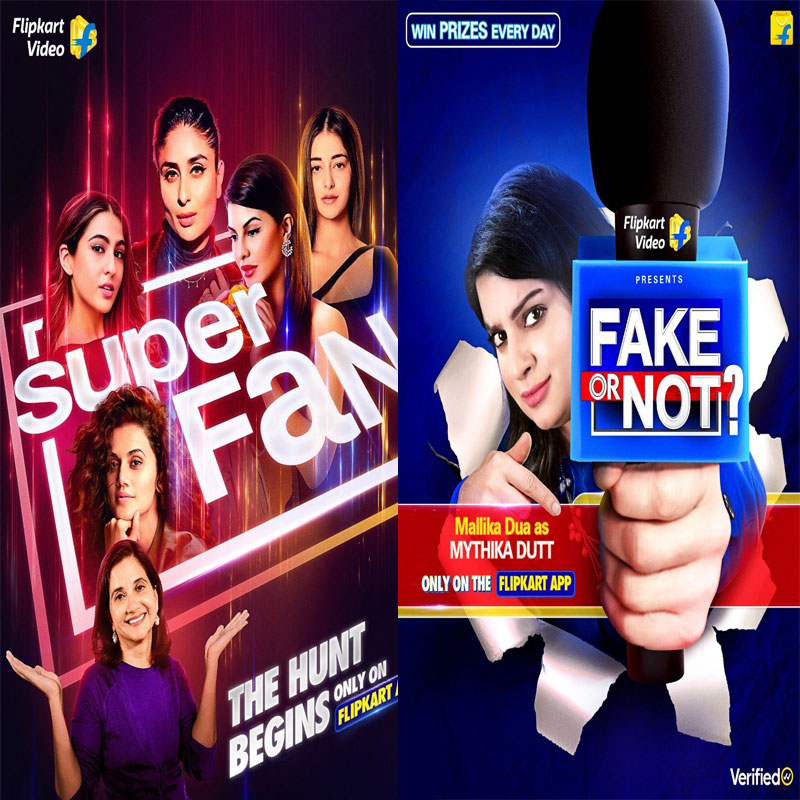
    KOLKATA: Flipkart Video, the in-app video platform on Flipkart is continuing to carve a niche in the nonfiction genre, offering differentiated, interactive content, which is mobile-first.  With a deep understanding of the consumer ecosystem and a focus on interactive, short-form original content tied with tangible rewards, it has now introduced two new quiz based shows, Super Fan and Fake or Not?.

    Both these shows will cater to diverse audiences. While Super Fan is a celebrity focused quiz show, Fake or Not? addresses the need to curb misinformation and identify real from fake in a fun and engaging manner. Hosted by renowned film critic Anupama Chopra, Super Fan will be the ultimate test for ardent Bollywood fans. It will bring forth the never-seen-before side of popular Bollywood celebrities and reveal details of their lives that only their inner circle has been privy to so far! The show has a star studded lineup of guests including Kareena Kapoor Khan, Sara Ali Khan, Ananya Pandey, Taapsee Pannu and Jacqueline Fernandez, to name a few.

    Flipkart Video in support of the United Nations’ ‘Verified’ campaign also recently launched Fake or Not? with actress, comedian and writer Mallika Dua who plays the role of news anchor ‘Mythika Dutt’, set out to quash fake news and beliefs. The show thoughtfully combines entertainment with a subtle touch of humor while still educating the audience to share and trust only verified information. Many questions that are part of the show address common misconceptions surrounding the Covid2019 pandemic.

    Flipkart growth and monetisation vice president  Prakash Sikaria said, “A large percentage of the content consumed on the Flipkart Video platform today is interactive content, where there is something new for the viewers every day. As the mobile screen continues to be the primary access point for personalized commerce, content, games and entertainment experience for most of the Indian population today, our focus is to introduce short-form and interactive content, that not only entertains audiences from across the country but also enables these users to participate and build a sense of community, no matter where they are located.  We have seen tremendous acceptance amongst users for the last few concepts and are ready to expand this portfolio, with two new interactive shows that further strengthen our offering, giving consumers a compelling reason to visit us everyday and spend more time on the app.”

  • SonyLIV launches House Proud Season 2

    SonyLIV launches House Proud Season 2

    MUMBAI: On popular demand, SonyLIV is thrilled to bring back its first non-fiction web-series, House Proud 2, co-produced by SonyLIV and Jossbox. The show is about using the art of spatial transformation to help homeowners realise the beauty of their own homes. With Godrej Appliances as the sponsor, ‘House Proud 2’ will bring to the fore, the stories, emotions, and desires people have towards their favourite areas in their homes.

    Focusing on smart space transformations, the show will feature 6 authentic home owners from across India, each with their unique stories and vision which they want reflected in the spaces they provide. This 6-episode series will go live every Friday and will feature young talented designers who with their unique aesthetic sense and chaotic work styles will reveal a certain method to the madness as they transform these spaces for the first time.

    This is also a great opportunity for viewers who are also home owners to get inspiration and ideas to do up their homes in their taste and style. House Proud 2, is about the process of rediscovery and transformations of homes and reimagining familiar spaces!

  • Windfall of fresh Utsab content on Colors Bangla

    Windfall of fresh Utsab content on Colors Bangla

    MUMBAI: This October, television viewers will have more than one reason to celebrate, as Colors Bangla announces a plethora of entertaining shows to keep them glued to their television screens.

    Starting 17 October, promising complete family entertainment with a line-up of five fresh new shows including three exciting game shows and two fictional dramas, Colors Bangla will become the destination for your favorite content. Extending the spirit of Durga Puja Utsab, the channel announced their fresh line-up through a specially created promo ‘Utsaber Natun Rong’ – A new color of celebration.

    Ravish Kumar, business head, Bangla, Kannada and Oriya, said, “Just as the festival of Durga Puja brings the family together to celebrate this auspicious occasion, similarly, Colors Bangla is all set to bolster its content offering with shows that appeal to the varying demographics in a family.”

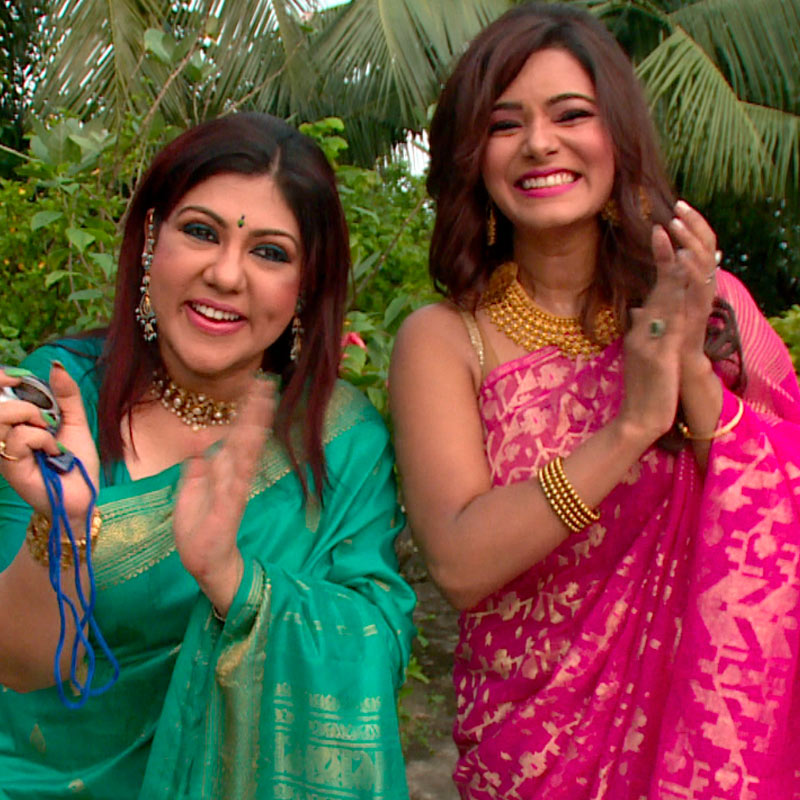
    The new non-fiction line up will include popular shows like Rojgere Ginni, Rannaghar e Rockstar and Gaaner Gnuto and the fiction slate includes Pita and Ki Kore Toke Bolbo.

    * Rojgere Ginni – Monday to Saturday at 5:30 PM

    Being the first-ever women-only game show on television, the show give the “Ginni” of the house an opportunity to become “Rojgere Ginni”, the gameshow promises not only exciting gifts but also zestful entertainment. Reprising her role as the host Paroma Banerjee returns to yet another exciting season of the show.

    * Rannaghar e Rockstar Season 2 – Thursday to Saturday at 8.30 PM

    A high octane unique food game show with most popular anchors Kanchan and Aparajita Addhya.

    * Gaaner Gnuto – Monday to Wednesday at 8.30 PM

    A unique game show that involves unadulterated fun with music. Rib tickling comedy and interactive games in four rounds will keep the audience at the edge of their seats.

    * Ki Kore Toke Bolbo – Monday to Saturday at 6.30 pm

    The show encompasses the lives of two teenagers Minu and Nilu who meets at a correctional home. Being an optimist, Minu tries to make a better life even while at the juvenile home and continues to encourage Nilu to see life in a positive light.

    * Pita – Monday to Saturday at 7:30 PM

    A story of a sculpting artist suffering from Alzheimer’s and disowned by his children in his old age. The story unfolds when one of his students comes back as his daughter in law and slowly changes his life.

    With five new shows, Colors Bangla promises five new reasons to enjoy watching television with your family again.

    A family entertainment channel that brought about a revolution in Bangla Television, Colors Bangla (erstwhile ETV Bangla) matches the distinctiveness of the rich Bangla culture with qualitative and contemporary programming.