Tag: Noida

  • Zee Sports joins hands with UPKL for 3 Years

    Zee Sports joins hands with UPKL for 3 Years

    MUMBAI: Zee Sports is making a power play in India’s sporting landscape. The network has entered into a three-year strategic partnership with Uttar Pradesh Kabaddi League (UPKL), becoming the exclusive broadcast and digital partner for the state’s flagship Kabaddi property.

    The collaboration, the first of its kind for a state-level sports IP, will bring the next three UPKL seasons to TV audiences on Zee Sports and to digital viewers via Zee5, expanding the league’s footprint across India.

    With the addition of four new franchises, UPKL now boasts 12 teams representing key cities across Uttar Pradesh. The partnership marks a pivotal step in UPKL’s evolution from a regional league to a nationally recognised sports enterprise focused on nurturing grassroots talent.

    “At Zee Sports, we believe in championing India’s own sporting heritage,” said Zee Sports business head Bavesh Janavlekar. “Through our vast TV network and Zee5’s digital ecosystem, this partnership will help Kabaddi get the scale and storytelling it truly deserves.”

    Echoing the sentiment, SJ Uplift Kabaddi founder and director Sambhav Jain said, “This collaboration transforms UPKL from a promising local initiative into a nationwide platform for players and fans alike. With season 2, we’re taking Kabaddi from local stadiums to living rooms across India.”

    The three-year deal will cover seasons 2, 3 and 4 of UPKL. The upcoming season 2 kicks off on December 25, 2025, in Noida, featuring 71 matches over 19 days, with live Hindi telecasts capturing the sport’s traditional spirit.

    With this move, Zee Sports and UPKL are set to turn a regional game into a national sensation, one raid at a time.


  • PR agency Adgcraft plants flag in India’s tech capital

    PR agency Adgcraft plants flag in India’s tech capital

    BENGALURU: Every PR agency in India eventually opens a Bengaluru office. Adgcraft has now joined the queue. The Noida-based communications firm, founded in 2021, launched its sixth office in the Karnataka capital, positioning itself to service clients from India’s sprawling startup and technology ecosystem.

    The new operation at Awfis, Samrah Plaza in Ashok Nagar targets startups, corporates, tech firms and artificial intelligence companies—basically anyone with a pulse and a communications budget in a city teeming with thousands of IT companies and global tech giants. Adgcraft already works with over 200 brands across banking, lifestyle, hospitality and emerging tech. The Bengaluru push aims to deepen that roster whilst building a 25-person team by 2026.

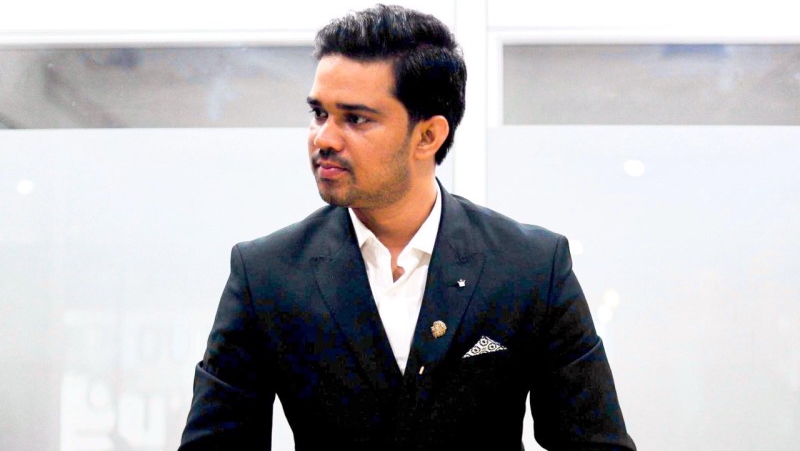
    Adgcraft managing director Abhinay Kumar Singh delivered the obligatory enthusiasm. “We are excited to open our new office in Bengaluru, the tech capital of India,” he said, calling the expansion a step towards “empowering brands by combining creativity with strategy.” The agency’s motto—”Your story is your strength, and communication is ours”—suggests it’s not shy about self-promotion.

    Adgcraft operates three verticals: Adgcraft Communications, Adgcraft AI and Adgcraft Global. The Bengaluru office will drive operations in social media, performance marketing, video production and event management, alongside traditional PR mandates like media relations, crisis communications and reputation management. The agency claims experience with international clients from the US, south Korea and other markets, though it didn’t name them.

    Four years is lightning speed in the agency world. Adgcraft has already spread across Noida, Lucknow, Mumbai and Gujarat before landing in Bengaluru. Whether that pace reflects genuine growth or overextension remains to be seen. India’s PR industry is fragmented and fiercely competitive, with established players like Adfactors, Genesis BCW and Weber Shandwick dominating corporate mandates whilst boutique agencies chase startups.
    Singh claims that Adgcraft is “one of India’s most trusted PR agencies.” Trust takes time to build, especially in an industry where reputation is currency; and he seems to have managed to gain it, going by the number of clients on the agency’s roster.

    Bengaluru offers plenty of opportunity, but also plenty of rivals who’ve been working the city’s startups and tech giants for decades. Adgcraft’s challenge is  going to be proving it can deliver results that justify the expansion into the tech gold mine.

  • Uber hits a six with free fan shuttles to Arun Jaitley Stadium

    Uber hits a six with free fan shuttles to Arun Jaitley Stadium

    MUMBAI: In a move that’s set to bowl fans over, Uber has launched a free Uber Shuttle Fan Bus service for Delhi NCR cricket lovers heading to the Arun Jaitley Stadium. Just in time for the peak of the cricket season, this initiative promises to hit the sweet spot between convenience and cricket mania.

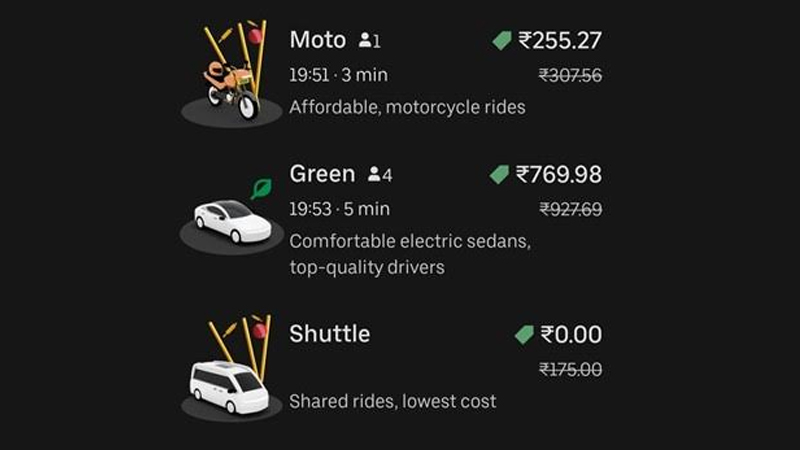
    From April 16, five specially curated Uber Shuttle routes will ferry cricket fans from across Delhi, Noida, and Gurugram straight to the stadium gates on match days i.e. 16, 27, 29 April  and 11 May. The service is Uber’s way of blending love for the game with seamless city travel.

    Speaking on the initiative, Uber Shuttle head of strategy Snehashish Nag said, “We’re turning up the game day experience with Uber Shuttle – fast, reliable, and with zero stress. Booking’s a breeze, rides are smooth, and getting to the match is effortless with drop-offs right in front of the stadium. In Delhi, this is the ride fans can count on. It’s our way of moving smarter while also helping decongest roads on match days.”

    To add to the cricketing spirit, the Uber app is also getting into match mode with vehicle icons sporting cricket-themed avatars for the duration of the tournament. Because, why should jerseys have all the fun?

    The Uber Shuttle programme aims to complement public transport, making travel safer, smarter, and more sustainable. Whether it’s airports, offices, or now stadiums, Uber is betting big on plug-and-play city mobility. And if you’re planning to ride in, here’s how to book your match-day magic:

    1.    Open the Uber app and enter Arun Jaitley Stadium as your pick-up or drop-off

    2.    Tap the Shuttle icon

    3.    Pick your preferred time and hit Confirm Shuttle

    4.    Reserve your seat early and carry valid match tickets

    With a drop that’s closer than the front row and a ride that’s easier than parking hassles, Uber’s cricket shuttle is turning transport into a team player. So, match-day plans? Sorted.

  • Ziox ropes in Sushant, also investing Rs 3 bn

    MUMBAI: Ziox Mobiles, under the aegis of Sun Air Voice, has roped in Sushant Singh Rajput, as its brand endorser. Both, the brand and its ambassador ride on the precepts of resilience, hard work and steady growth.

    Ziox has also chalked out a detailed expansion plan and the roadmap for FY 2017-2018 with the total investment of over Rs. 2 bn which shall span for a year.

    It announced its plan to set up two manufacturing units (in Sikkim and Noida) and R&D facilities apart from the existing New Delhi unit. With an additional investment of Rs. 1bn, Ziox aims to achieve an estimated revenue of Rs. 10 bn and a sale of 10 million product units.

    Ziox CEO Deepak Kabu said: “With Sushant on board, it will help augment sales and further its reach in the market.”

    Sushant said, “I love how this brand designs its products to suit every need of its customers and are constantly innovating.”

  • FreeDish aims to reach 150 channels, earned Rs 3 bn in a year

    NEW DELHI: Doordarshan earned revenue of Rs 2.5356 billion during 2016-17 from e-auctions of television slots on its free to air Free Dish direct-to-home platform. In comparison, DD had earned Rs 1.8034 billion in 2015-16, the minister of state for information and broadcasting Rajyavardhan Rathore told the Parliament.

    Rathore said the last e-auction – the 32nd e-Auction – on 14 February 2017 fetched Rs. 655 million. Despite the reserve price of Rs 48 million, the highest bid for a slot was Rs 73 million for Sony Pal.

    Meanwhile, Doordarshan sources told indiantelevision.com that FreeDish earned Rs 2.8665 billion through auction of 54 slots in six auctions from 30 March 2016 to 14 February 2017.

    Explaining the differential between the figure given by the Minister and that given by DD, these sources said as money was paid in installments within six months of the e-auction, the figure given in the Parliament was the money actually received.

    The reserve price in the first five auctions was Rs 43 million and was raised to Rs 48 million in the 32nd auction.

    A new era begun with the adoption of MPEG4 helping FreeDish take the first major step to mark towards its target of 104 television channels by March end with its 32nd e-auction which helped it cross the capacity of eighty channels. Having touched the figure of 104 with its 32nd Auction, DD is now holding another auction on 11 April in as part of its aim to reach the figure of 150 by the middle of the year.

    With this new leap, DD had also raised its reserve price to Rs 48 million per slot from the hitherto Rs 43 million for the mid-February auction. The reserve price had been Rs 37 million till 2015 but was raised to Rs 43 million for the 25th e-auction in January 2016.

    The e-Auctions are conducted by M/s. C1 India Pvt. Ltd., Noida which also conducted the FM Radio Phase III auctions on behalf of Prasar Bharati.

    Doordarshan had in October last year formally announced that FreeDish was capable of carrying 104 television channels and 24 channels would be added to the existing 80 channels after the launch of MPEG4 technology.

    In line with the ‘Digital India’ and ‘Make in India’, DD has decided to implement Indian CAS (iCAS) on DD FreeDish Platform. iCAS (which is an initiative of the central government) is being introduced in 24 MPEG-4 channels. The introduction of iCAS will provide enhanced viewing experience.

    DD officials said these additional 24 MPEG-4 SDTV channels will be available to viewers in FTA mode. The existing viewers will continue to get 80 SDTV channels, but will have to obtain iCAS-enabled authorised set-top boxes for accessing all 104 channels.

    Although FreeDish will remain free to air with no monthly or periodic fee, the viewers will be required to register with DD FreeDish on getting the new STB from Doordarshan authorised STB dealers. DD earned Rs 980 million in 2014-15, Rs 1800 million in 2015-16, and Rs 1040 million till September in 2016-17.

    FreeDish was launched with a modest bouquet of 33 channels in December 2004, and now carries eighty TV channels and 32 radio channels. This includes 22 Doordarshan channels and two parliamentary channels, seven general entertainment channels, 18 movie channels, 13 news channels, seven music channels, three religious channels and eight channels of other genres. All All India Radio stations also piggy-back on the platform.

  • FabAlley eyes Rs 100 cr in GMV by ’18

    FabAlley eyes Rs 100 cr in GMV by ’18

    MUMBAI: FabAlley has raised Series A round of funding of USD 2 million from India Quotient, angel investors namely, Tushar Singh, Ranjan Sharma, FAO Ventures along with the Indian Angel Network (IAN). This is FabAlley’s second round of funding, having raised their seed round from IAN in late 2013.

    “Indian fashion e-commerce has a lot of curators and aggregators but very few Indian brands. FabAlley is already a leading brand and we believe that with this investment they would be able to scale up rapidly. The founding team has executed with sharp focus on the right metrics and has shown great promise of building a premium online brand for women,” said India Quotient partner Madhukar Sinha.

    On course towards becoming India’s foremost leading fast fashion brand, the company is growing year on year at 100%. This growth trajectory has led FabAlley to a profitable H1 2016-17.

    FabAlley co-founder Shivani Poddar said, “For the coming year, we will focus on an effective execution strategy to expand FabAlley’s geographical footprint and capitalize on the large opportunities in the online space ahead of us. We are on track to hit Rs 100 crore in gross merchandise value (GMV) in 2017-18 and will continue to focus on building a profitable and sustainable business in the long term.”

    In July 2016, FabAlley ventured into the offline segment through a tie-up with Central chain – a multi-brand store operated by the Future Group. Currently, they have outlets in cities like Gurgaon, Noida, Mumbai, Hyderabad, Patna and Ahmedabad to give their customers a touch-and-feel experience through interactive shop-in-shops, displaying FabAlley’s newest and best-selling apparel.

  • FabAlley eyes Rs 100 cr in GMV by ’18

    FabAlley eyes Rs 100 cr in GMV by ’18

    MUMBAI: FabAlley has raised Series A round of funding of USD 2 million from India Quotient, angel investors namely, Tushar Singh, Ranjan Sharma, FAO Ventures along with the Indian Angel Network (IAN). This is FabAlley’s second round of funding, having raised their seed round from IAN in late 2013.

    “Indian fashion e-commerce has a lot of curators and aggregators but very few Indian brands. FabAlley is already a leading brand and we believe that with this investment they would be able to scale up rapidly. The founding team has executed with sharp focus on the right metrics and has shown great promise of building a premium online brand for women,” said India Quotient partner Madhukar Sinha.

    On course towards becoming India’s foremost leading fast fashion brand, the company is growing year on year at 100%. This growth trajectory has led FabAlley to a profitable H1 2016-17.

    FabAlley co-founder Shivani Poddar said, “For the coming year, we will focus on an effective execution strategy to expand FabAlley’s geographical footprint and capitalize on the large opportunities in the online space ahead of us. We are on track to hit Rs 100 crore in gross merchandise value (GMV) in 2017-18 and will continue to focus on building a profitable and sustainable business in the long term.”

    In July 2016, FabAlley ventured into the offline segment through a tie-up with Central chain – a multi-brand store operated by the Future Group. Currently, they have outlets in cities like Gurgaon, Noida, Mumbai, Hyderabad, Patna and Ahmedabad to give their customers a touch-and-feel experience through interactive shop-in-shops, displaying FabAlley’s newest and best-selling apparel.

  • Aastha, Swami Ramdev’s HD TV plans

    Aastha, Swami Ramdev’s HD TV plans

    MUMBAI: Most spiritual and devotional channels operating in India have a bagful of problems: limited revenues, low production budgets, which have led to very poor production values for their shows. Programmes and shows are shot with standard definition cameras with cheap sets as backdrops.

    This, at a time, when most of television land is moving to high definition and a select few towards 4k high dynamic range productions – both of which give better quality video – which can play out better on HD and 4K sets, making for a near realistic viewing experience.

    Swami Ramdev and Acharaya Balkrishna’s Patanjali Ayurveda has been giving FMCG multinationals in India a bit of a headache by eating away at their market shares in several product categories.

    Now the yoga guru-turned-entrepreneur is hoping to capture global audiences with his brand of yoga keeping in mind prime minister Narendra Modi’s penchant for it.

    Aastha – as is known to many – is among the leaders in the spiritual television space in India. And it is a channel that is part of Swami Ramdev’s empire.

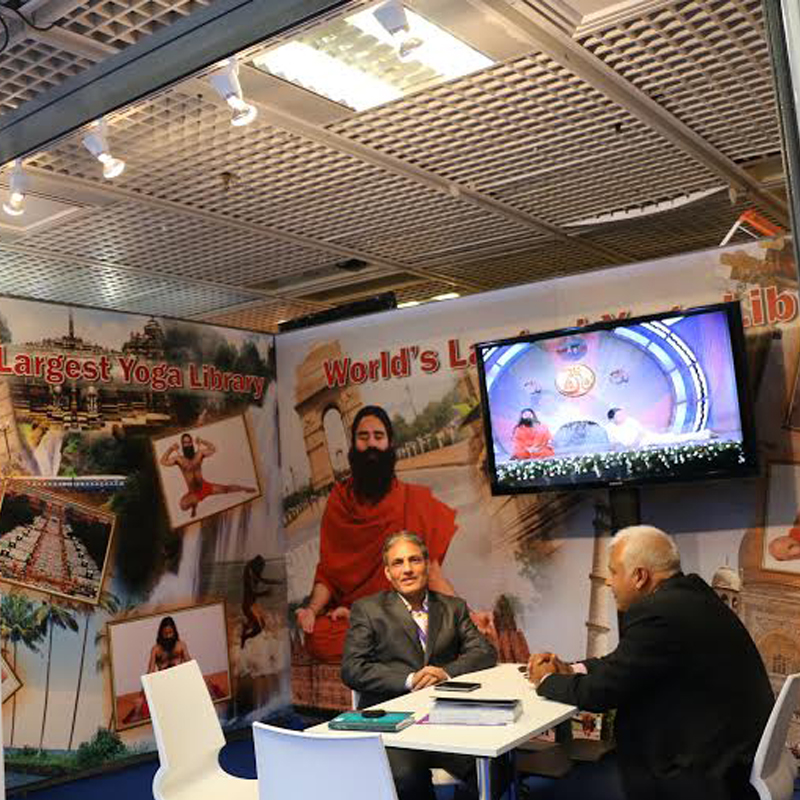
    Over the past year or so, an HD revolution has been taking place silently in Noida where Aastha TV’s studios, playout and uplinking hub are located. Swami Ramdev has pumped in more than Rs 50 lakh into infrastructure – including 10-12 Sony PMW 200 cameras and post production facilities – which has helped facilitate production of programmes featuring him in high definition.

    Two multi-camera teams have been trailing the yoga guru filming him at gatherings, camps and seminars where he has led his disciples in asanas. Almost 700 hours of Yoga have been filmed in HD so far.

    “We wanted to upgrade and keep pace with technology,” says Aastha Broadcasting Network CEO Pramod Joshi. “We were producing and transmitting in SD which has limited demand in international markets.”

    Joshi acknowledges that the shift to HD came at the urging of Reed Midem’s India, Pakistan, Bangladesh and Sri Lanka representative Anil Wanvari (also the founder of the indiantelevision.com group) when the company exhibited at annual trade show MipCom in Cannes, France.

    He points out that there here are no plans to roll out a HD channel for now, since the focus is on building a library first with Swami Ramdev’s yoga practice. Simultaneously, the channel’s programmers have been giving a nudge to other prime gurus who have taken slots on Aastha to upgrade their productions.

    “We know there is a lot of demand for Indian spirituality and yoga worldwide,” points out Joshi. “With this step up in quality, we believe many more networks will want our programming. We are also open to dubbing the content in other local languages.”

    Currently, Zee International airs programmes featuring Swami Ramdev practising and teaching yoga at his camps. Enquiries from other overseas networks have been coming in.

    In addition to yogic exercise and spiritual TV shows, Joshi says that Aastha is also looking at filming spiritual tourism documentaries by partnering with different state tourism boards. “There is a lot of India interest and these documentaries will go a long way in helping both Indian and international visitors understand India’s diverse belief systems and places of spiritual worship better and from a regional perspective.”

    Finally, Aastha, like other Indian networks which are looking at licensing and syndication revenues, is hopeful that its HD production will find cachet with international buyers. “Swamiji is known worldwide,” he says. “That’s to our advantage. We hope in the next year or so, licensing and syndication of our content will scale up. “

    When it does, Astha’s investment in HD will start paying off.

  • Aastha, Swami Ramdev’s HD TV plans

    Aastha, Swami Ramdev’s HD TV plans

    MUMBAI: Most spiritual and devotional channels operating in India have a bagful of problems: limited revenues, low production budgets, which have led to very poor production values for their shows. Programmes and shows are shot with standard definition cameras with cheap sets as backdrops.

    This, at a time, when most of television land is moving to high definition and a select few towards 4k high dynamic range productions – both of which give better quality video – which can play out better on HD and 4K sets, making for a near realistic viewing experience.

    Swami Ramdev and Acharaya Balkrishna’s Patanjali Ayurveda has been giving FMCG multinationals in India a bit of a headache by eating away at their market shares in several product categories.

    Now the yoga guru-turned-entrepreneur is hoping to capture global audiences with his brand of yoga keeping in mind prime minister Narendra Modi’s penchant for it.

    Aastha – as is known to many – is among the leaders in the spiritual television space in India. And it is a channel that is part of Swami Ramdev’s empire.

    Over the past year or so, an HD revolution has been taking place silently in Noida where Aastha TV’s studios, playout and uplinking hub are located. Swami Ramdev has pumped in more than Rs 50 lakh into infrastructure – including 10-12 Sony PMW 200 cameras and post production facilities – which has helped facilitate production of programmes featuring him in high definition.

    Two multi-camera teams have been trailing the yoga guru filming him at gatherings, camps and seminars where he has led his disciples in asanas. Almost 700 hours of Yoga have been filmed in HD so far.

    “We wanted to upgrade and keep pace with technology,” says Aastha Broadcasting Network CEO Pramod Joshi. “We were producing and transmitting in SD which has limited demand in international markets.”

    Joshi acknowledges that the shift to HD came at the urging of Reed Midem’s India, Pakistan, Bangladesh and Sri Lanka representative Anil Wanvari (also the founder of the indiantelevision.com group) when the company exhibited at annual trade show MipCom in Cannes, France.

    He points out that there here are no plans to roll out a HD channel for now, since the focus is on building a library first with Swami Ramdev’s yoga practice. Simultaneously, the channel’s programmers have been giving a nudge to other prime gurus who have taken slots on Aastha to upgrade their productions.

    “We know there is a lot of demand for Indian spirituality and yoga worldwide,” points out Joshi. “With this step up in quality, we believe many more networks will want our programming. We are also open to dubbing the content in other local languages.”

    Currently, Zee International airs programmes featuring Swami Ramdev practising and teaching yoga at his camps. Enquiries from other overseas networks have been coming in.

    In addition to yogic exercise and spiritual TV shows, Joshi says that Aastha is also looking at filming spiritual tourism documentaries by partnering with different state tourism boards. “There is a lot of India interest and these documentaries will go a long way in helping both Indian and international visitors understand India’s diverse belief systems and places of spiritual worship better and from a regional perspective.”

    Finally, Aastha, like other Indian networks which are looking at licensing and syndication revenues, is hopeful that its HD production will find cachet with international buyers. “Swamiji is known worldwide,” he says. “That’s to our advantage. We hope in the next year or so, licensing and syndication of our content will scale up. “

    When it does, Astha’s investment in HD will start paying off.

  • Timesaverz introduces experience cards

    Timesaverz introduces experience cards

    MUMBAI: Timesaverz, India’s first tech enabled services platform that takes care of everything from cleaning tasks to handymen jobs, laundry maintenance to at-home beauty services and appliances repairs to pest control has announced the launch of experience cards that signals the beginning of it selling services as a product.

    Timesaverz that works on both web and mobile interface, has been witnessing a 10X growth YoY operating across key metros – Mumbai, Navi Mumabi, Thane, Delhi, Gurgaon, Noida, Pune, Hyderabad and Bangalore. Now the customers will be able to purchase experience cards pre-loaded with a specific service or a certain amount of their choice. These experience cards will be valid for a period of three months from the date of purchase.

    Timesaverz is the first company in the on-demand services space that has made its foray into experience cards akin to gift cards that product oriented companies have. Speaking about the launch, this is what Debadutta Upadhyaya, Co-founder and CEO says,“As a company, most of our category and product launches have been driven by customer feedback and one of the things that emerged during these interactions was that people are increasingly becoming open to the idea of experiencing services to their friends and family, especially young men and women experiencing services to their old parents around festive time and special occasions like Diwali, Mother’s Day, shifting homes etc., to ease their life.”

    The experience cards are highly customizable with various templates and a space for adding a personalized message. The customer will be able to purchase these via the Timesaverz website and can pay for the same online through credit/debit cards or wallets.

    Timesaverz sees a great potential in adoption of these cards across both B2C and B2B clientele segment.

    Click on the below link to register now.

    Link – https://www.timesaverz.com/experience-cards