Tag: NOFN

  • GST Bill crucial for Start-Up India, Digital India success: IAMAI

    GST Bill crucial for Start-Up India, Digital India success: IAMAI

    MUMBAI: Industry body – Internet and Mobile Association of India (IAMAI) has urged the Parliament to pass the crucial GST (Goods & Services Tax) Bill in the forthcoming budget session. The industry body has said that the smooth passage of GST Bill is crucial for the success of mega economic and social projects, especially Digital India and Start-Up India.

    The GST Bill, which subsumes all indirect taxes to create one rate and integrate the country into a single market, is the biggest tax reform that is being undertaken since Independence, but is pending approval of the Rajya Sabha.

    The Digital India plan is about connecting, empowering and enabling citizens and encouraging local electronic manufacturing. Similarly, Start-Up India is focused on promoting entrepreneurship, and through small entrepreneurs, generating employment.

    Local manufacturing, NoFN, e-Gov, as a part of Digital India, where private sector is involved, crucially rests on the successful passage of GST Bill in Parliament, which seeks to create one market through one tax system. Similarly, start-ups, online market places, and other online service providers, all require a single market plan.

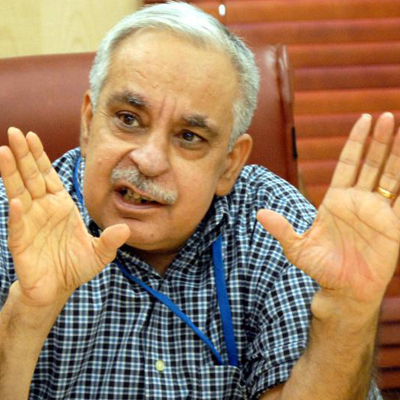
    IAMAI president Subho Ray said, “The extant tax structure of India is heavily fragmented, with multiple indirect taxes levied by different authorities at different stages of a transaction. Fiscal federalism has led to different procedures and rates of VAT and other forms of LBTs across the states. This creates logistical challenges for the industry, besides giving rise to compliance related complications. Conflict of interests between tax authorities in case of inter-state transaction is a major pain point for the industry today. GST will help the digital industry business model flourish by providing uniformity in tax rates and regulations across the country. This will help doing business in India easier, allow free-play to market dynamics and allow deeper penetration of these services.”

    Given that much of the developments in the digital industry are disruptive innovations, business models like online platforms, aggregators, etc are essentially services provided by intermediaries. Such services are revolutionising the existing markets of both goods and services. Thus, online ticketing services or e-tailing are providing newer modes of access for consumers to existing goods and services, said IAMAI.

    The digital industry unequivocally stands for the smooth passage of GST and hopes that the bill will be passed in the upcoming budget session, as any further delay will push back the transformative projects of the government.

  • GST Bill crucial for Start-Up India, Digital India success: IAMAI

    GST Bill crucial for Start-Up India, Digital India success: IAMAI

    MUMBAI: Industry body – Internet and Mobile Association of India (IAMAI) has urged the Parliament to pass the crucial GST (Goods & Services Tax) Bill in the forthcoming budget session. The industry body has said that the smooth passage of GST Bill is crucial for the success of mega economic and social projects, especially Digital India and Start-Up India.

    The GST Bill, which subsumes all indirect taxes to create one rate and integrate the country into a single market, is the biggest tax reform that is being undertaken since Independence, but is pending approval of the Rajya Sabha.

    The Digital India plan is about connecting, empowering and enabling citizens and encouraging local electronic manufacturing. Similarly, Start-Up India is focused on promoting entrepreneurship, and through small entrepreneurs, generating employment.

    Local manufacturing, NoFN, e-Gov, as a part of Digital India, where private sector is involved, crucially rests on the successful passage of GST Bill in Parliament, which seeks to create one market through one tax system. Similarly, start-ups, online market places, and other online service providers, all require a single market plan.

    IAMAI president Subho Ray said, “The extant tax structure of India is heavily fragmented, with multiple indirect taxes levied by different authorities at different stages of a transaction. Fiscal federalism has led to different procedures and rates of VAT and other forms of LBTs across the states. This creates logistical challenges for the industry, besides giving rise to compliance related complications. Conflict of interests between tax authorities in case of inter-state transaction is a major pain point for the industry today. GST will help the digital industry business model flourish by providing uniformity in tax rates and regulations across the country. This will help doing business in India easier, allow free-play to market dynamics and allow deeper penetration of these services.”

    Given that much of the developments in the digital industry are disruptive innovations, business models like online platforms, aggregators, etc are essentially services provided by intermediaries. Such services are revolutionising the existing markets of both goods and services. Thus, online ticketing services or e-tailing are providing newer modes of access for consumers to existing goods and services, said IAMAI.

    The digital industry unequivocally stands for the smooth passage of GST and hopes that the bill will be passed in the upcoming budget session, as any further delay will push back the transformative projects of the government.

  • NOFN being revamped to improve broadband connectivity, Rs 110,000 crore earned from spectrum auctions: Mukherjee

    NOFN being revamped to improve broadband connectivity, Rs 110,000 crore earned from spectrum auctions: Mukherjee

    NEW DELHI: President Pranab Mukherjee today said the architecture and design of the National Optical Fiber Network (NOFN) is being revamped to rapidly take broadband connectivity to Indian villages under Bharat Net.

    In his address to the joint sitting of both houses of Parliament on the first day of the Budget Session, the President said, “Transparent and efficient auction of spectrum has fetched highest ever price of about Rupees one lakh ten thousand crore.”

    He said policies like Spectrum trading and sharing have been finalised for optimum utilisation of resources.

    Mukherjee added that the recent interventions and subsequent rationalisation of duty structure in mobile handset manufacturing industry has led to near doubling of mobile handset production in the current year.

    According to Mukherjee, setting up world-class infrastructure for Electronics manufacturing across the country remains a priority for the Government. As many as 29 Electronic Manufacturing Clusters are under development.

    The country recorded the highest ever software exports during 2015. “By spreading the network of Common Service Centers and setting up BPOs in small towns and linking land record modernization with the use of space technology, my Government is taking the benefits of Digital India to common citizens. The Digital India Programme will give a big boost to citizen empowerment and knowledge economy,” the President added.

    Building upon the success over the past year, the Government’s endeavour is to scale new heights in Space. “Focus will be on completing the constellation of the Indian navigational satellites in 2016 to cater to indigenous navigation and location-based services,” Mukherjee said.

    Noting that “radio has once again emerged as the people’s medium,“ Mukherjee said the good response to the successful and transparent bidding for the first batch of private FM Radio for phase III “augurs well for the medium.”

    He noted that establishment of new radio stations has received a fresh impetus. The bidding of the first batch of private FM Radio for phase III comprised 135 channels in 69 cities.

    The Government had taken several measures to improve the quality of governance. People’s participation in policy making through initiatives like MyGov had taken firm roots, he said, adding that the Government had taken up an initiative for providing 500 e-governance services through Public Private-Partnership in 12 states of the country.

    Noting that youth are the future of the country, Mukherjee said ensuring Yuvaon ko Rojgaar through massive employment generation is a top goal for the Government. “We are driving job creation through an integrated set of initiatives including Make in India, Start up India, Mudra, Skill India, etc.”

    A series of reforms have been initiated to help convert job seekers into job creators. The Government has launched the Start-Up India campaign, which would deepen, expand and support the innovation eco system in the country.

    The Government’s innovative initiatives have helped India jump up 12 places in the latest rankings by the World Bank on Ease of Doing Business. “Notably, the Make in India initiative has achieved a 39 per cent increase in FDI inflow despite an adverse global investment climate.”

    Noting that sports is the best way to Swasth India, he said the Government “successfully hosted the 12th South Asian Games from 5 to 16 February, 2016 at Guwahati and Shillong in which more than 3500 sportspersons from all the SAARC countries participated. The games were the biggest ever sporting event in North East India.”

  • NOFN being revamped to improve broadband connectivity, Rs 110,000 crore earned from spectrum auctions: Mukherjee

    NOFN being revamped to improve broadband connectivity, Rs 110,000 crore earned from spectrum auctions: Mukherjee

    NEW DELHI: President Pranab Mukherjee today said the architecture and design of the National Optical Fiber Network (NOFN) is being revamped to rapidly take broadband connectivity to Indian villages under Bharat Net.

    In his address to the joint sitting of both houses of Parliament on the first day of the Budget Session, the President said, “Transparent and efficient auction of spectrum has fetched highest ever price of about Rupees one lakh ten thousand crore.”

    He said policies like Spectrum trading and sharing have been finalised for optimum utilisation of resources.

    Mukherjee added that the recent interventions and subsequent rationalisation of duty structure in mobile handset manufacturing industry has led to near doubling of mobile handset production in the current year.

    According to Mukherjee, setting up world-class infrastructure for Electronics manufacturing across the country remains a priority for the Government. As many as 29 Electronic Manufacturing Clusters are under development.

    The country recorded the highest ever software exports during 2015. “By spreading the network of Common Service Centers and setting up BPOs in small towns and linking land record modernization with the use of space technology, my Government is taking the benefits of Digital India to common citizens. The Digital India Programme will give a big boost to citizen empowerment and knowledge economy,” the President added.

    Building upon the success over the past year, the Government’s endeavour is to scale new heights in Space. “Focus will be on completing the constellation of the Indian navigational satellites in 2016 to cater to indigenous navigation and location-based services,” Mukherjee said.

    Noting that “radio has once again emerged as the people’s medium,“ Mukherjee said the good response to the successful and transparent bidding for the first batch of private FM Radio for phase III “augurs well for the medium.”

    He noted that establishment of new radio stations has received a fresh impetus. The bidding of the first batch of private FM Radio for phase III comprised 135 channels in 69 cities.

    The Government had taken several measures to improve the quality of governance. People’s participation in policy making through initiatives like MyGov had taken firm roots, he said, adding that the Government had taken up an initiative for providing 500 e-governance services through Public Private-Partnership in 12 states of the country.

    Noting that youth are the future of the country, Mukherjee said ensuring Yuvaon ko Rojgaar through massive employment generation is a top goal for the Government. “We are driving job creation through an integrated set of initiatives including Make in India, Start up India, Mudra, Skill India, etc.”

    A series of reforms have been initiated to help convert job seekers into job creators. The Government has launched the Start-Up India campaign, which would deepen, expand and support the innovation eco system in the country.

    The Government’s innovative initiatives have helped India jump up 12 places in the latest rankings by the World Bank on Ease of Doing Business. “Notably, the Make in India initiative has achieved a 39 per cent increase in FDI inflow despite an adverse global investment climate.”

    Noting that sports is the best way to Swasth India, he said the Government “successfully hosted the 12th South Asian Games from 5 to 16 February, 2016 at Guwahati and Shillong in which more than 3500 sportspersons from all the SAARC countries participated. The games were the biggest ever sporting event in North East India.”

  • TRAI sees role of local cable operators in helping broadband grow

    TRAI sees role of local cable operators in helping broadband grow

    NEW DELHI: The Telecom Regulatory Authority of India (TRAI) has called for an audit by an independent agency of all allocated spectrum, both commercial as well as spectrum allocated to various PSUs/Government organizations. Stressing the urgency, it has said this ought to be a national priority and must be undertaken within three months.


    In its recommendations on “Delivering Broadband Quickly: What do we need to do?” prepared after consultations with stakeholders, TRAI has noted that current availability of spectrum in local service areas (LSAs) is about 40 per cent of that available in comparable countries elsewhere. There is therefore ‘a crying need for assignment of additional spectrum for commercial telecom services.’ There is need to align spectrum bands with globally harmonized bands to achieve interference-free coexistence and economies of scale.


    There is a need to lay down a clear roadmap for spectrum management, which should state the requirement and availability of spectrum for each LSA as well as for the whole country. This roadmap should be made available publicly to ensure transparency.


    Wireless Planning Commission


    In a far reaching recommendation, it has said that Wireless Planning Commission (WPC) should be converted into an independent body by de-linking it from the present Department of Telecom ‘hierarchy and either converting it into a statutory body responsible to Parliament or transferring it to an existing statutory body.’ 


    ‘Even in a more limited role of assigning solely commercially available spectrum, there is a strong case for an institutional overhaul of WPC to realise goals of institutional efficiency, transparency in decision-making and full disclosure of decisions,’ it says.


    Right of Way


    There is a need for enunciating a National Right of Way Policy to ensure uniformity in costs and processes. 


    Role of Local Cable Operators (LCOs)


    In another major recommendation, it said cable television operators should be allowed to function as resellers of Internet Service Provider (ISP) license holders to enable them to take advantage of their cable network to provide broadband. Implementation of digitisation of cable services to Phase II and III cities should be done in a time-bound manner.


    Satellite Regulations


    There is need to separate Licensor, Regulator and Operator functions in the satellite space domain to conform to best international practices of free markets. The issue of coordination of additional spectrum in the 2500-2690 MHz band with the Department of Space needs to be addressed urgently, so that this band can be optimally utilised for commercial as well as strategic purposes.


    NOFN


    The ‘multi-layered structure for decision making’ for national project NOFN for laying optic fibre is ‘just not suitable for a project that needs to be executed in mission-mode’ and the structure needs immediate overhaul.


    There is need for Project implementation on Centre State Public-Private Partnership (CSPPP) mode by involving State Governments and the private sector. The award of EPC (turnkey) contracts by BBNL to private parties through international competitive bidding needs to be planned. Such contracts can be given region-wise with clear requirements for interconnection with other networks, as well as infrastructure sharing with other operators who would like to utilise this network. A commercial model around this will need to be suitably deployed.


    Telecom Towers


    Referring to towers, it said single-window, time-bound clearance should be encouraged for installation of towers to ensure the rapid development of national networks. Extensive consumer awareness and education programmes should be organised so that consumers fully understand the latest scientific information on EMF radiation and its potential impact on health.


    Referring to Right of Way, it said single-window clearance is an imperative for all Right of Way proposals at the level of the States and in the Central Government. All such clearances have to be time-bound so that Telecom Service Providers and infrastructure providers can move rapidly to project execution. Ideally, single-window clearance should be administered online with a defined turnaround time. The reasons for denial of RoW permission should be recorded in writing.


    To promote fixed line BB, the license fee on the revenues earned from fixed line broadband should be exempted for at least five years. The infrastructure of PSUs is lying unutilised and thus they should be mandated to unbundle their network and allow sharing of outside plant (OSP).


    The Government needs to encourage local and foreign companies to build ‘Data Centre Parks’ on the lines of industrial parks, SEZs etc. by providing them land, infrastructure and uninterrupted power supply at affordable rates.


    Both Central and State Governments will have to act as model users and anchor tenants through delivery of e-Government services including e-education, e-governance, m-health, m-banking and other such services. Schools are the ideal and convenient point for early initiation to broadband services. Government schools in the rural and remote areas can be provided subsidy from the USOF for broadband connectivity. The cost of CPE (desktop/laptop/tabs etc) is a major barrier to the adoption of broadband services. TSPs may be allowed to offer CPE bundled tariff schemes. Revenues from such offers ought to be exempted from the applicable license fee at least for a certain number of years (say for three years). 


    In addition, there are a large number of recommendations of the Authority on which decisions of the Government are still awaited. The Government needs to act quickly on these recommendations as we have already lost too much time. These include, inter alia, on Spectrum Trading, Spectrum Sharing, Open Sky Policy, Infrastructure Sharing, Microwave Access and Backbone Spectrum.


    The Authority had issued the Consultation Paper on “Delivering Broadband Quickly: What do we need to do?” on 24 September last year to discuss issues contributing to broadband penetration in India and to solicit stakeholders’ views on action required to be taken both by the Government and the private sector to accelerate the proliferation and use of broadband in the country. The comments and counter-comments received from the stakeholders were placed on the TRAI’s website. An Open House Discussion was held on 30 October 2014 in New Delhi with the stakeholders. 


    The Authority noted with serious concern the slow penetration and adoption of broadband in the country.  India ranks 125th in the world for fixed broadband penetration with only 1.2 per 100 inhabitants having access to fixed broadband; the global average is 9.4 per 100 inhabitants. In terms of household penetration within developing countries, India is ranked 75th with a penetration of 13 per cent. In the wireless broadband space too, India is ranked 113th with a penetration of 3.2 per 100 inhabitants. In terms of ‘ICT access, ICT use and ICT skills’, India ranks 129th out of total 166 countries. Indonesia (106), Sri Lanka (116), Sudan (122), Bhutan (123), Kenya (124) are ranked above India. India is categorised in the Least Connected Countries Group of 42 countries that fall within the low IDI group.


  • Broadband target by government needs to be evaluated, says Khullar

    Broadband target by government needs to be evaluated, says Khullar

    MUMBAI: Telecom Regulatory Authority of India (TRAI) chairman Rahul Khullar said the target set by the government for providing broadband network for all was unrealistic and called for evaluating it. He said it would be simpler to first connect the metros and then look at connecting cities and talukas in a gradual manner.

     “Right now we are sort of deluding ourselves by saying we will achieve 100 per cent and all of you know exactly what has been achieved,” said Khullar. “This can’t be an infrastructure project. Focus on just building the infrastructure is wrong. The entire ecosystem – from applications to services — needs to be developed. The approach should be more practical and realistic,” Khullar added.

     The government plans to link 2.5 lakh village panchayats across the country by December 2016 through the national optical fibre network (NOFN) programme, while promoting initiatives like e-governance, e-education and e-health. The project also aims to ensure that all villages in India have high speed internet.

     In an interview with the Economic Times in August this year, telecom minister Ravi Shankar Prasad had said the government of Prime Minister Narendra Modi wants to ensure a smartphone in the hands of every citizen by 2019. Currently, nearly 74 per cent of the population has mobile phones, most of which though are in the hands of urban Indians.


  • Facebook to join hands with Indian government

    Facebook to join hands with Indian government

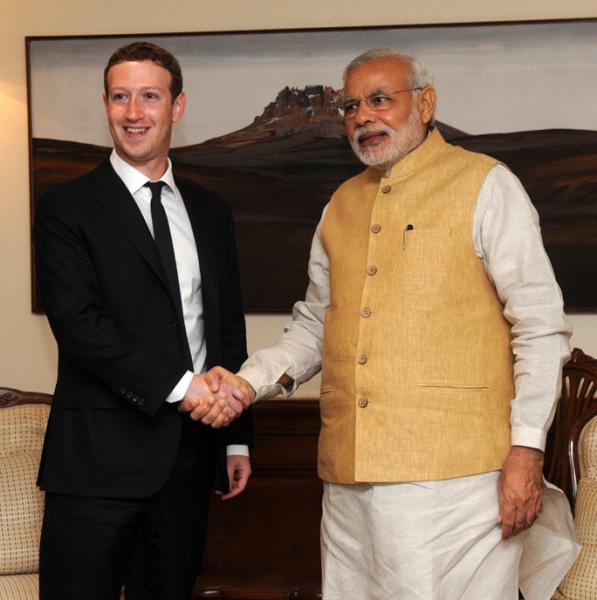
    MUMBAI: After swooning the nation with his ideas to enhance the internet connectivity in India in the Internet.org summit, Facebook founder Mark Zuckerberg, who was in the country on a two-day visit, met Prime Minister Narendra Modi on 10 October.

    Soon after the meeting, the PM tweeted, “It was wonderful meeting Facebook CEO Mark Zuckerberg. We discussed a wide range of issues.”

    The discussion included an array of topics revolving around the innovative use of Facebook as a platform to engage with a large audience in the service of humanity; from helping in the digital India campaign to fighting terrorism using social media.

    “I spoke to him about Swachh Bharat Mission. Zuckerberg shared that Facebook would assist the Government of India in the Clean India mobile application. This will surely give an impetus to Swachh Bharat Mission. “

    “Zuckerberg is excited about Digital India initiative. I requested him to identify certain areas where Facebook can help us in that. I also requested Zuckerberg to identify how Facebook can help promote India’s rich tourist potential across the world,” Modi posted on his Facebook page.

    They also talked about the Digital India initiative. A statement on Modi’s website said, “Zuckerberg said that he is extremely excited about the Digital India initiative of the Government of India. Prime Minister Shri Modi asked him to identify some domains of Digital India where Facebook can get involved and help.”

    The Prime Minister appealed to Facebook co-founder to look at how to enhance Internet literacy along with Internet connectivity.

    Adding to the same, Zuckerberg stated that Facebook wants to work with the Government of India in the fields of healthcare, education and provide a gamut of services to the people.

    He further added that Facebook will also help in the creation of the Clean India Mobile App and that it would be launched soon. This would give a strong impetus to the Swachh Bharat Mission.

    In the meeting, PM also pointed out that lots of terrorist elements are using social media platforms to recruit members, according to an official statement.
    “This is unfortunate and we need to think of the role the social media can play to stop terror,” Modi said.

    Earlier in the day, the Facebook co-founder also met Information Technology Minister Ravi Shankar Prasad as part of the Centre’s ambitious Digital India plan which seeks to expand internet access across the nation.

    “Mark’s interest in India impressed me. Facebook wants to work with the Digital India program and the Indian govt is happy to support them in their launch of internet.org,” Prasad said.

    “He has shown profound interest to involve Facebook in the Digital India program and in broadband distribution, e-Health, e-Education etc. Really there is a great scope to work together. His idea to promote entrepreneurship among Indians in the field of IT was truly remarkable,” he posted on his Facebook page.

    They also spoke about the National Optical Fiber Network (NOFN) project during their meeting which aims to connect 2.5 lakh village panchayats through high-speed broadband by 2017.

    Prasad said that he believes there exists a great opportunity for Facebook to harness the vast potential of Indian entrepreneurs in retailing of internet connectivity to the masses by involving local entrepreneurs. Government would extend all cooperation to Facebook in this endeavor.

    He proposed that Facebook could contribute to India’s Rs 21,000-crore NOFN project on last-mile connectivity.

    Zuckerberg also spoke of alternate technology such as drones and satellite communications playing a critical part in this last-mile linkage.

    “India could be the first country in which Facebook deploys drones to provide broadband connectivity in remote and inaccessible areas, with CEO Mark Zuckerberg proposing a pilot project to bridge this digital divide during his meeting,” the IT Minister added.

    Facebook’s Connectivity Lab is actively developing large, inexpensive, solar-powered drones that will be able to fly for years at a time, the division’s engineering director Yael Maguire announced earlier this year. These unmanned vehicles will be about the size of a Boeing 747 but weigh only as much as four car tyres while serving as large connectivity hubs.

    The drones would fly at a height of 60,000 to 90,000 feet above the ground, far above commercial jetliners and at a level where they wouldn’t be affected by the weather, effectively making them invisible.

    In order to continuously provide Wi-Fi coverage, they would be powered by the sun, Maguire had said, adding that these could be tested in the US as early as next year.

    On 9 October, while addressing media persons, Zuckerberg had said that Facebook is working extensively in rural India to enhance connectivity. “Internet.org  is an effort to bring basic Internet services to all”, he added. The pilot project of Facebook has already helped to connect more than 3 million people with this program.  “If we can connect people over here, we can help bring this rich Indian culture to the world.”

    Stressing on the importance of connectivity, Zuckerberg had said while India has about 243 million Internet users and have 100 million plus Facebook users, there are over a billion people in the country who do not have access to the net.

    The 30-year-old billionaire is the third high-profile head of a US-based tech firm to visit India in the last few weeks, after Satya Nadella of Microsoft and Jeff Bezos of Amazon.


  • Concerned at slow growth of broadband in India, TRAI wants stakeholders to give suggestions

    Concerned at slow growth of broadband in India, TRAI wants stakeholders to give suggestions

    NEW DELHI: Concerned that only 60.87 million broadband connections had been achieved against a target of 175 million connections by 2017, the Telecom Regulatory Authority of India (TRAI) has issued a Consultation Paper to probe the reasons for this slow growth.


    One of the questions posed in the 78-page paper is to know the specific reasons that Internet Service providers are proactively not connecting with the National Internet Exchange of India (NIXI) set up in 2002 and what measures are required to achieve this.


    TRAI wants to know if the hosting of content within the country helps in reduction of the cost of broadband to a subscriber and what measures are required to encourage content service providers to host content in the data centre situated within India.


    It has also sought to know if public sector undertakings are ideal choices for implementing the National Optical Fibre Network (NOFN) project.


    The regulator has asked the stakeholders to send their comments 14 October and counter comments by 21 October. TRAI has also said that no further extension will be given.


    In its initial remarks, the Paper noted that the country is nowhere near meeting the target for a service which is considered almost a basic necessity in many developed countries. Broadband is helping to deliver a wide range of services, from services directly related to the Millennium Development Goals set by the United Nations, to services in support of broader citizen participation or services leveraged across different sectors to bring more people into the formal economy. Therefore there is an urgent need to review the present policies and its implementation initiated to build infrastructure required for penetration of broadband in the country.


    The objective of the Paper is to discuss issues contributing to the poor broadband penetration in India and solicit stakeholders’ views on actions required to be taken both by the Government and the service providers to accelerate the proliferation and use of broadband in the country.


    It says India has the intrinsic strengths for an Internet transformation, but concerted efforts are required to address key gaps in the Internet ecosystem.


    Consumers, entrepreneurs, enterprises and the Government can play a pivotal role in building a strong Internet ecosystem driven by the country’s young Internet-savvy population and strong local consumption, entrepreneurship and innovation, and a large pool of technically trained human capital. Identification of the impediments to expansion of this ecosystem and addressing these impediments to create an environment to encourage broadband growth is the need of the hour.


    The Digital India project aims to offer a one-stop shop for Government services which would use the mobile phone as the backbone for its delivery mechanism. The Rs 1,13,000 crore initiative seeks to transform India into a connected knowledge economy offering world class services at the click of a mouse. Plans to digitally connect the country will be supported by modules on digital literacy in regional languages which the Government plans to run in the next few years.


    But to be successful, a broadband policy needs to reflect the requirements of different communities across the country. This means taking a holistic approach and leveraging the opportunities provided by wireline and wireless technology in each part of the network i.e. backbone, backhaul and local access. The implementation of broadband plans and strategies needs to be monitored. Monitoring should be an integral part of broadband plans and strategies – providing an information base for the initial development of plans and strategies as well as for checking the progress of particular policies and programs, and for the evaluation and reassessment of priorities and strategies.


    The regulator wants to know what immediate measures are required to promote wireline technologies in access networks and what is the cost per line for various wireline technologies and how can this cost be minimised.


    What are the impediments to the deployment of wireless technologies in the access network and how these deployments can be made faster, it wants to know.


    TRAI recently released recommendations on Microwave backhaul and it wants to know if some issues were left out to ensure availability of sufficient Microwave backhaul capacity for the growth of broadband in the country.


    The pricing of Domestic Leased Circuits (DLC) had been reviewed in July 2014. Apart from pricing, TRAI has asked if there are any other issues which can improve availability of DLC.


    Should the awarding of EPC turnkey contracts to private sector parties through International Competitive Bidding (ICB) be considered for the NOFN project, the regulator wants to know.


    It also asked if there are any ways in which infrastructure development costs can be reduced and is it possible to piggyback on the existing private sector access networks so as to minimize costs in reaching remote rural locations.


    It wonders if the private sector can do something to reduce delivery costs.


    It wants to know the major issues in obtaining right of way for laying optical fibre and the applicable charges/ constraints imposed by various bodies who grant permission of right of way.


    It wants to know if the Government should consider framing guidelines to mandate compulsory deployment of duct space for fibre/ telecommunications cables and space for telecommunication towers in all major physical infrastructure construction projects such as building or upgrading highways, inner-city metros, railways or sewer networks.  


    Do cable operators face impediments to the provision of Broadband by them, it wants to know.


    TRAI has asked what measures are required to reduce the cost and create a proper eco system for deployment of FTTH in the access network.


    It wonders if there are any regulatory issues in providing internet facility through Wi-Fi Hotspots and the business model for these.


    What other spectrum bands which can be unlicensed for usage of Wi-Fi technology or any other technology for provision of broadband, it seeks to know, also wondering how much spectrum will be required in the immediate future and in the long term to meet the target of broadband penetration and what initiatives are required to make available the required spectrum.


    How can Government agencies be encouraged to surrender spectrum occupied by them in IMT bands and what should be the time frame for auctioning the spectrum in 700 MHz band, it asks.

  • Govt identifies broadband and mobile networks as key growth pillars

    Govt identifies broadband and mobile networks as key growth pillars

    NEW DELHI: The government has identified broadband and mobile networks as the key growth pillars to achieve its targets under the digital India programmme.


    It identified two areas of growth: broadband and mobile in untapped areas where the Telecom Ministry wants to spend more funds. It started allocating more finance for the initiative and the government is trying to achieve its targets in advance.


    The government has enhanced expenditure on broadband network to connect all 2,50,000 village panchayats to Rs 32,000 crore against Rs 20,000 crore approved by the previous government, according to a PTI report.


    The BJP government is also trying to advance deadline to finish roll out of national optical fibre network (NOFN) to December 2016 from the earlier announced date of March 2017.


    Recently, TRAI chairman Rahul Khullar criticised the delay in executing NOFN project, saying private sector companies should be part of such large projects.


    The Indian government has earmarked Rs 16,000 crore to provide mobile connectivity to approximately 42,300 villages that still don’t have any network coverage. The deadline to offer mobile connectivity in these unconnected villages is 2018.


    The BJP government has decided to create national information infrastructure at a cost of Rs 15,686 crore. The project will include integration of existing programmes like the National Knowledge Network (NKN) and NOFN.


    Under the National Rural Internet Mission, government has earmarked fund of Rs 4750 crore to roll out common service centres (CSCs) across 2.5 lakh villages.


    Through CSCs, people in rural area get access to government services like birth certificate, train tickets, pay various fees etc without actually having to visit the concerned office. The CSCs are present at about 1.3 lakh locations.


    Besides this, the union government has earmarked Rs 200 crore to train one crore students in small towns and villages for IT sector jobs over period of next five years.


    UPA government had started NKN to connect 1,500 universities with high speed broadband network.


    The NDA government has decided to provide wi-fi at all universities in the country with an estimated cost of Rs 790 crore by the end of next year.


    Under digital India programme, government has decided to spend Rs 98 crore on secure email, which will now be the primary mode of communications, for official communications.


    At present 10 lakh government employees have been moved to secure email communication and by March 2015 around 50 lakh employees will be moved on to the new system.


    The union cabinet on Wednesday approved the digital India programme that deals with all projects involving IT and communication technology like e-governance and broadband connectivity. The initial cost of the project, to be implemented over the next five years, is estimated at Rs 1,13,000 crore.


    The Digital India programme has various other provisions which include wi-fi hotspots at public places, e-books for schools, national portal for lost and found children, biometric attendance at government offices for which funds are yet to be finalised.

  • We have done a terrible job in broadband penetration: Rahul Khullar

    We have done a terrible job in broadband penetration: Rahul Khullar

    MUMBAI: The chairman of the Telecom Regulatory Authority of India (TRAI) Rahul Khullar is known for being vocal. While earlier he has voiced his opinion on various things including bringing transparency in the way telcos function, delivering his keynote address at the India Digital Summit of the Internet and Mobile Association of India (IAMAI) in the capital, he candidly admitted that the rollout of National Optic Fibre Network (NOFN) was not-so successful. He said, “We have done a terrible job in broadband. We are nowhere near to meeting target of NOFN and unless it is done, internet penetration cannot happen at the desired pace.”


    Referring to the fact that 80 per cent of new internet users are coming through 2G network, Khullar said, “Access and speed will determine penetration of smart-phones and internet. Unless there is reasonable pricing of spectrum and making spectrum available, we will not succeed.” He opined that the next government has to take immediate action on spectrum availability to have successful internet penetration in India.


    IAMAI chairman and Google India managing director Rajan Anandan, talking at the inaugural ceremony said: “India is adding four million active internet users every month. At this rate we will overtake the United States by end of this year to become the second largest internet market.”


    According to Anandan, India’s e-Commerce industry will be around US $100 billion in the next decade. However, investments of upward of US $3 billion will be required to reach that stage. “And that can only happen if FDI in e-Commerce is allowed,” said Anandan.


    “Given the dire strait of our finances, e-Commerce industry should embrace itself for taxation,” remarked Khullar, who also raised the issue of data protection, privacy and internet governance and said that industry members should come forward along-with civil society in creation of internet governance laws.