Tag: Nivedita Basu

  • &TV’s new show ‘Tere Bin’ replaces ‘Meri Awaaz Hi Pechan Hai’ at 8pm time band

    &TV’s new show ‘Tere Bin’ replaces ‘Meri Awaaz Hi Pechan Hai’ at 8pm time band

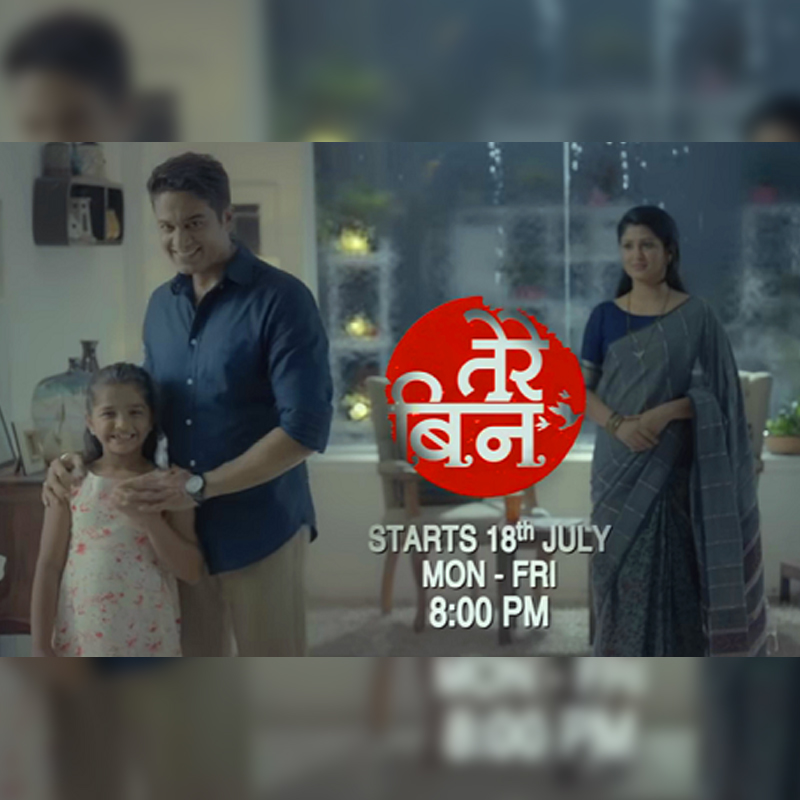
    MUMBAI: After launching new shows like Waaris, Life Ka Recharge and The Voice India, Zee Entertainment Enterprises Limited (ZEEL)’s other Hindi general entertainment channel (GEC) &TV is all set to launch a new show Tere Bin. Starting from 18 July, it will be aired from Monday – Friday at 8 pm.

    Produced by Shree Sidhivinayak Chitra, Tere Bin will replace the Nivedita Basu led House of Originals’ Meri Awaaz Hi Pechaan Hai at the primetime band. Launched on 7 March, 2016 the show is a finite series which marked the television debut of Bollywood actress Amrita Rao, who portrays the character of Kalyani, whereas Aditi Vasudev will be seen as her younger sister Ketaki will come to its logical end in July.

    The new show on &TV, is about a complex mature love story of two people. Tere Bin is based on love and separation. Gaurav Khanna and Shefali Sharma have been roped in as the lead actors of the show.

    &TV’s new offering Tere Bin will be pitched against Zee TV’s Tashan-e-ishq, Colors’ new offering Shakti- Astitva Ke Eshaas Ki, Star Plus’ mythological show Siya Ke Ram, Sony TV’s Sankatmochan Mahabali Hanuman, Life OK’s Bahu Hamari Rajnikant and Sab TV’s Bal Veer in the 8 pm time slot. &TV seems to be betting high with its new offering but only time will show how it will work for it.

  • How to get your story on screen?

    How to get your story on screen?

    MUMBAI: The key to survival in the cut-throat world of television programming is creativity and conviction. At a time when writers and good ones at that, are available nineteen to a dozen, television channels are picky-choosy about the scripts and scriptwriting talent that they hire. In such a scenario, many a scriptwriters with fire in their belly and the desire to be successful are left with no choice but to taken the route of becoming a producer by roping in investors.

    With a focus on how new age writers also have to don the hat of a producer not out of choice but out of compulsion, The Content Hub 2016’s session ‘The Age of Creative Producers’ set the ball rolling by focussing on issues of show-runners, C driving creativity as well as writers and directors turning producers.

    The session was attended by writers, producers, directors and broadcasters alike from the television industry. The session was chaired by Bodhi Tree Multimedia co-owner Sukesh Motwani and the panellists included Neela Telefilms owner Asit Modi, The House of Originals director Nivedita Basu, Sony SAB programming head Saeed Akhtar and Swastik Pictures founder Siddharth Tewary.

    Shedding light on the issue of writers and directors becoming producers, Tewary said, “Writers have no other option than to become producers because many a times, production houses don’t agree to produce their stories. So writers are left with no choice but to manage their funds and produce it on their own.”

    Basu opined, “The concept of writers and directors collaborating with production houses is nothing new. It already existed in the industry. Moreover, the collaboration between writer and production house as well as between the production house and channel has become a key factor.”

    For the smooth shooting for any television show, a ‘show-runner’ is a must. The show-runner is responsible for the show’s creative and financial aspects and also looks after the overall creative authority and management responsibility for television programs. Emphasising the importance of having an able ‘show-runner’ to helm the television show, Basu added, “Nowadays having a good concept is nothing. It’s all about how you build the characters. It is good to have a very experienced person as a show-runner by a channel.”

    Elaborating on the concept of show-runner, Modi opined, “It is important to have somebody who has knowledge about all aspects of creation rather than writing. Thus it is important to have a show-runner who has a better idea, vision and understanding about what the audience wants.”

    Broadcasters play a pivotal role in getting the content out on television and highlighting the criteria that broadcasters look for while choosing a show, Sony SAB programming head Saeed Akhtar opined, “An individual should have a vision on what they are creating. Today, a lot of shows on television are infinite, and thus it is very important to have a vision about the show as for broadcasters, the show is a product, which they need to sell to advertisers as well as the viewers. One should choose the right person internally to drive a particular kind of brand and maintain brand hygiene. If the channel identifies a person who has the capability to drive a particular idea into a good show and everyone’s conviction is on that show, then broadcasters helps in creating an ecosystem so that the essence of the core idea always stays.”

  • How to get your story on screen?

    How to get your story on screen?

    MUMBAI: The key to survival in the cut-throat world of television programming is creativity and conviction. At a time when writers and good ones at that, are available nineteen to a dozen, television channels are picky-choosy about the scripts and scriptwriting talent that they hire. In such a scenario, many a scriptwriters with fire in their belly and the desire to be successful are left with no choice but to taken the route of becoming a producer by roping in investors.

    With a focus on how new age writers also have to don the hat of a producer not out of choice but out of compulsion, The Content Hub 2016’s session ‘The Age of Creative Producers’ set the ball rolling by focussing on issues of show-runners, C driving creativity as well as writers and directors turning producers.

    The session was attended by writers, producers, directors and broadcasters alike from the television industry. The session was chaired by Bodhi Tree Multimedia co-owner Sukesh Motwani and the panellists included Neela Telefilms owner Asit Modi, The House of Originals director Nivedita Basu, Sony SAB programming head Saeed Akhtar and Swastik Pictures founder Siddharth Tewary.

    Shedding light on the issue of writers and directors becoming producers, Tewary said, “Writers have no other option than to become producers because many a times, production houses don’t agree to produce their stories. So writers are left with no choice but to manage their funds and produce it on their own.”

    Basu opined, “The concept of writers and directors collaborating with production houses is nothing new. It already existed in the industry. Moreover, the collaboration between writer and production house as well as between the production house and channel has become a key factor.”

    For the smooth shooting for any television show, a ‘show-runner’ is a must. The show-runner is responsible for the show’s creative and financial aspects and also looks after the overall creative authority and management responsibility for television programs. Emphasising the importance of having an able ‘show-runner’ to helm the television show, Basu added, “Nowadays having a good concept is nothing. It’s all about how you build the characters. It is good to have a very experienced person as a show-runner by a channel.”

    Elaborating on the concept of show-runner, Modi opined, “It is important to have somebody who has knowledge about all aspects of creation rather than writing. Thus it is important to have a show-runner who has a better idea, vision and understanding about what the audience wants.”

    Broadcasters play a pivotal role in getting the content out on television and highlighting the criteria that broadcasters look for while choosing a show, Sony SAB programming head Saeed Akhtar opined, “An individual should have a vision on what they are creating. Today, a lot of shows on television are infinite, and thus it is very important to have a vision about the show as for broadcasters, the show is a product, which they need to sell to advertisers as well as the viewers. One should choose the right person internally to drive a particular kind of brand and maintain brand hygiene. If the channel identifies a person who has the capability to drive a particular idea into a good show and everyone’s conviction is on that show, then broadcasters helps in creating an ecosystem so that the essence of the core idea always stays.”

  • AIB roast controversy exposes holes in Indian democracy

    AIB roast controversy exposes holes in Indian democracy

    W H Davis started his poem ‘Leisure’ by saying, “What is life if full of care, we have no time to stand and stare.” Is India today becoming too careful? Is satire losing its relevance in the nuclear dominated world? A caricature of a religious figure results in brutal decimation of creative journalists and an innocuous comical piece gets scrutinized by the entire law making fraternity. What’s next?        


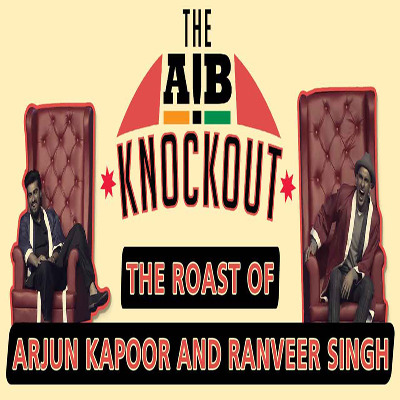
    All India Bakchod (AIB), India’s online comedy producers’ recent piece called ‘Knockout’ has irked the sentiments of many lawmakers and resulted in legal investigations. The entire performance was staged for a gathering of 4000 people in Mumbai, which included Bollywood celebrities like Soni Razdan, Deepika Padukone, Alia Bhatt, Sonakshi Sinha and Anurag Kashyap amongst others. All was well till the group uploaded the video on YouTube. In a span of hours the video went viral garnering millions of hits and started trending on social media.


    The video starts with a statutory warning, where it clearly defines itself to be an adult product, Karan Johar starts the video by saying, “It is going to be filthier and if you get easily offended or even hardly offended you should leave right now.” The content of the comedy orchestrated by the group was indeed derogatory; they were making fun of whoever they wanted to, irrespective of their status and position, cast and creed.


    Soon after the video went viral an unusual scenario developed on Twitter, wherein two hash tags started trending – ‘We stand for AIB’ and ‘AIB National Shame.’ Various dignitaries from different profession started tweeting their opinion.


    Maharashtra Chief Minister Devendra Fadnavis ensured an enquiry into the same even as series of FIRs were filed against filmmaker Karan Johar, actors Arjun Kapoor and Ranveer Singh, who participated in the show. Eventually the video was taken off YouTube by AIB. “Have taken down AIB Knockout for now. We will speak soon” is what AIB uploaded on its Twitter handle.


    Tweets and opinions from respectable public voices made the issue a substantial debate, supportive gesture came from journalist Barkha Dutt as she tweeted, “Show of AIB Roast (I am yet to see) pulled down. Shireen Dalvi hounded. Perumal silenced. Wah India. World’s largest democracy.”


    Film maker Pritish Nandy was also supportive of the comical presentation as he tweeted, “I support the AllIndiaBakchod roast. We need more such. Those who disapprove need not watch them.”


    Balaji creative director Nivedita Basu threw light on the issue of freedom crisis of a writer. Speaking to Indiantelevision.com, Basu said, “The freedom of a writer has gone for a toss in India. It was very sporting of Ranveer and Arjun to volunteer in something like this and also whoever they were digging at and making fun of were present in the audience. We keep comparing Indian comedy with the western roast where they make fun of one and all and at the end of the day, it’s all satire. Though I think a few extra abusive words could have been avoided, the fact that legal investigation has been called for even though the show was not aired on television where one has to practise censorship, is a bit of an exaggeration.”  


    If we have freedom of expression, can we express whatever we want, if not, then who draws the line? Are we getting overdriven by the thrive for popularity? Is YouTube safe to be left uncensored? Is India ready for toilet humour? These are the relevant counter questions that made the debate interesting.


    Among the flurry of tweets, prominent filmmaker and Censor Board of Film Certification (CBFC) member Ashoke Pandit’s tweet got a lot of brick backs. He tweeted saying, “Karan Johar could have easily shown his position while performing sex to his mom at home instead of making it public.#AIB Porn Show.” The tweet resulted in huge controversy and was criticized by all throughout.


    When questioned about his tweet, Pandit didn’t deny his words. Justifying his tweet he told Indiantelevision.com, “Insulting or hurting someone’s emotion cannot be a freedom of expression. We have huge admirers of Karan Johar and I am among them. He is someone who has always portrayed family unity and family drama on the big screen and people love him for that. How can he show his sex position in public? What if tomorrow all his followers start doing that on the middle of the road? I would have been least bothered if Karan, Ranveer or Arjun were not there, the fact that they were present the episode became a matter of public discussion.”


    He added, “I am against banning of things but abusing Farida Jalal or Reema Lagoo is not satire… satire is R K Laxman, satire is Sharad Joshi. And Maharashtra Government is equally responsible for what has happened. Before giving the auditorium they should have enquired what is going to happen there. Why are they proposing a probe now, when they didn’t do anything while it was happening?”


    Award winning writer Gajra Kottary opined, “We as a country are still not ready for such content. During award shows, we see hosts making fun of the audience present in the auditorium, they are humorous and they are understandable. But involving veterans like Farida Jalal, who gave a huge part of her life to the industry is highly derogatory and cannot be tolerated. And frankly speaking I am not a very big fan of toilet humour and we need to understand there is a big world beyond sex.”


    When raised the point of the content being available only on internet, she stated, “That’s the worst part, it’s not censorable and easily accessible. Youth admire Karan as a film maker and many idolize Ranveer and Arjun, hence the youth will repeat what they are doing.”


    “I won’t be surprised if actions are taken against them, they must not be jailed but a lesson needs to be taught, and intervention to the freedom of expression in these circumstances cannot be termed as a violation to Article 19 of Indian Constitution,” added Kottary.


    Celebrity writer Chetan Bhagat was found on a contradictory ground. While his first tweet read, “Frankly the potholes on Mumbai roads offend me more than the AIB roast.” This was followed by, “I don’t support hounding of people who make dirty jokes. But that doesn’t mean I find making dirty jokes cool. Clean humour is always greater than dirty humour.”


    Others on social media, came out in full support of AIB. Ship of Theseus director Anand Gandhi tweeted, “I hope our humour gets sharper, our dissent more rigorous, our satire more offensive — and till we arrive there, we stand by AIB Knockout!”


    Alia Bhatt, who was the butt of some of the jokes on the AIB Knockout roast, tweeted, “Some ‘not taking life so seriously’ lessons are needed. DESPERATELY!!!!”


    There were speculations if AIB removed the video by getting scared of the situation and if they did they should not have uploaded it on a public platform in the first place. But AIB in one of its official statement denied the speculation of being pressured. The statement read, “First things first; no one person or force forced us to take this video down. This is not something that’s happened because of a 3 am phone call or a morcha at our front door or a gunman on a grassy knoll. Under the circumstances, this is us being pragmatic.”


    AIB went on to say that their attempt to push the envelop of comedy in India backfired. “Things got to a point where people who have supported us, people who work hard to make what we do come to life, were put in a position where things could get deeply unpleasant for them. And that’s a problem. We can live with abuse, hate, anger, fury, rage, ignorance, bigotry and perhaps even bullying. But we don’t want anybody to get hurt because of us. And we do mean anybody,” AIB said.


    While one can understand these sentiments, the removal of the videos, however does announce the defeat of ‘We Stand by AIB Knockout’ supporters. Also a point to be noted here is that AIB’s decision to remove the videos came without any verdict or pressure from the judiciary. It seems as if moral policing has once again reared its ugly head in the country and this time round a bunch of celebrities and comedians have been the targets. In a way, it does mark the defeat of democracy and the victory of gunda raaj.


    Responding to the outrage over the AIB roast, Karan Johar tweeted, “Not your cup of tea…don’t drink it!!!” And that just about sums it all up.

     

  • The story of untold tales

    The story of untold tales

    MUMBAI: Storytelling is an art and many have mastered it. Television, which is the biggest platform after films, gives thousands of writers the perfect setting to tell a story. Some stories manage to touch a chord with the viewers and go on for hundreds of episodes while some are shelved within a few months itself.

    At a glance, television in India seems to have progressed in their storytelling efforts but unfortunately, there are still many tales that are lost in the industry.

    “Almost 15 years ago, I wrote a show called ‘Ab Ke Baras’. We had put in a lot of effort and almost all the paper work was done, but after three months of hard work, it got shelved,” says Balika Vadhu screenplay writer Gajra Kottary. She adds,
    “Another show of mine that got dropped was ‘Ek Admee’. It was directed by Ajai Sinha and was supposed to be aired on NDTV Imagine. We had already shot a year worth of episodes before it was put on hold.”

    Kottary is not alone. Balaji Telefilms creative director Nivedita Basu, who was involved in the remake of Sherlock Holmes which was slated to air on Life OK, tells us that despite having a great cast comprising film actors Arjun Rampal, Vivek Oberoi, Vir Das and Sharman Joshi, the show did not eventually take off. She explains, “We had a stellar cast and the series was going to be directed by Rohan Sippy. It was an expensive project and the show had a lot of potential. However, after doing a lot of back and forth with the channel, the show got shelved.”

    In 2001, film director Imtiaz Ali had directed a light-hearted series named ‘Yeh Jeevan Hain’. The show was produced by the existing creative head of Epic, Ravina Kohli, who recalls that the programme, which was expected to air on one of the leading GECs, was unfortunately shelved due to it being “too progressive”.

    She states, “We had spent almost six months shooting, editing and canned 13 episodes. At that time, however, the saas-bahu trend was on the rise so the channel shelved it.”
    There are many reasons for projects not making to television screens. Broadcasters need to be sure if the proposed show will generate the desired ratings. According to Basu, another reason for series being put on hold could be a channel’s incapacity to justify the expenses involved.

    Writer and producer, Ila Bedi Dutta agrees that a lot of money is involved and broadcasters need to analyse the content before giving the green signal. She asserts, “There is a lot of competition in the television industry. Channels today place a lot of emphasis on research.  Sometimes they have an annual programming plan where the pitched programmes do not fit.”

    Presenting another perspective to the story, Kottary reveals that more often than not television shows get held back due to a change in programming heads of a channel.  When there is a midstream change in the programming heads, producers are almost sure that stories, which are in process, will never see the light of the day and are left in a lurch.  

    Apart from these, the absence of creative elements also plays a role in shows getting shelved. Producer of Diya Aur Baati Hum, Sumeet H Mittal believes that sometimes what looks good on paper might not turn out to be that great when it is finally developed. He adds, “Although, normally it does not happen, but at times a show can even get shelved when the shoot is on, post approval. Nobody can predict TRPs, so generally channels go with their understanding and gut feeling.”

    There are also unpredictable instances that can cause a hindrance. Basu recalls, “My team and I worked on Kyunki Returns for almost four to five months. The whole idea was to get the old cast back together including Smriti Irani herself. We did not want to go with a new cast as the essence of the show lied in all the characters. They had a history. Smriti had even given her dates but then she became a cabinet minister. As a result, the show did not happen.”

    The amount of time that a channel takes to approve a show is in itself extensive. While Kottary explains that the entire approval process can take up to two to three months, Dutta informs that it took her nearly six to seven months to get the approval for Hitler Didi.  “The approval process is long. Some channels have an audio pilot, where the entire concept is narrated and played to a sample audience while other channels have a visual pilot. The pilot episode plays a crucial role in deciding the fate of the pitched show,” adds Dutta.   

    However, there is a silver lining as well. Mittal points out that the makers, who have a good rapport with a channel, get their shows approved very fast.  Emphasizing on the same point, Basu highlights that the approval process and time differs from producer to producer. She claims, “If you are an Ekta Kapoor pitching for a show, the programme is likely to get approved within a week as channels are aware that Ekta gives her heart and soul to the story. However for a new producer, it could take anywhere between three to six months.”

    So, what happens to all these untold stories? Are they chucked aside and never revived?

    Dutta, who remains hopeful that one day her shelved shows will see the daylight, frankly confesses that she is clueless as to what happens to all these lost stories. Kottary, on the other hand, admits that if she passionately feels about a story, she would look at other mediums.  “Sometimes, I could take the subject of the shelved serial and put it as track in an existing serial,” she states.  

    Mittal points out that if the channel is paying for the pilot episode, there is no way a producer can look at pitching to other mediums or channels. This is because the content becomes the rightful property of the channel and stays with them only till they decide to revive the show.  He, however, adds that if he shoots a pilot at his own cost and pitches it to a channel which then gets rejected; he can consider taking it other mediums such as online or making a short film out of it.

    Dutta discloses that she had recently shot a pilot for Zee and is currently waiting for the feedback. She shares, “Hitler Didi was something different and Zee supported me a lot. Zee, as a channel is very forward thinking. I feel they encourage fresh stories more than other channels do.”

    Well, much could be said about the television industry’s storytelling efforts. Although there are several untold stories, a show being shelved is just a part and parcel of the industry.

    “While there is a tremendous sense of wasted effort, one does get used to it over a period of time,” Kottary signs off.


  • The Content Hub: Broadcasters need to encourage new concepts

    The Content Hub: Broadcasters need to encourage new concepts

    MUMBAI: While the common consensus was that there is a lull in the content that we see on television today, a few freelance scriptwriters present at The Content Hub claimed that this was not due to a dearth of good writers. According to them, there, in fact, is a lack of good producers.

    Indiantelevision organized a three-day initiative that  brought together writers, creators, producers, artistes and broadcast executives to discuss, understand, educate and engage those involved in the content creation process – both for TV and digital.

    Putting forth the creator’s perspective, Balaji Telefilms creative director Nivedita Basu said, “Well, we need to be in the realms of what the Indian audience wants. When you talk about pushing the envelope so drastically, we need to be careful of not venturing too differently.”

    Basu, who has been working with Balaji since the late 90s, feels that the saas-bahu sagas are the ones that bring in the money. “I am a huge fan of daily soaps but I am ready to experiment with new concepts as long as the audience relates to it,” she said.

    A budding screenplay writer, Ilashree Goswami, on the other hand, feels that there is not enough support from the producers when it comes to fresh concepts. She stated, “There is a misconception that we lack good writers. Producers and channels need to support and encourage writers with fresh concepts.”  

    The Format People CCO and partner Justin Scroggie provided a different perspective when he said, “Broadcasters need to see if shows sell. Creators need to be clear about what kind of show it is, in terms of genre.”  

    Speaking on how channels can help in making a show popular, Basu explained, “Promotions matter a lot too. Kudos to Sony for promoting Itna Karo Na Mujhe Pyaar so well. I hope this show turns the channel around and becomes the next Bade Acche Lagte Hain.  We, as producers, also can’t experiment if the channel is not supportive.”


  • The Content Hub: Few breakaways from herd mentality

    The Content Hub: Few breakaways from herd mentality

     MUMBAI: The fiction show space in India is going through a changing scenario. While there is experimentation, several shows address similar themes. Discussing about the same at indiantelevision.com’s, ‘The Content Hub,’ were Hats Off Productions founder JD Majethia, Balaji Telefilms creative director Nivedita Basu, Epic Television Networks creative head Ravina Kohli, MTV programming head Vikas Gupta, writer and producer Ila Bedi Dutta and author and scriptwriter Gajra Kottary. The session was moderated by IPR Times Group head of content and operation Monisha Singh Katial.

    The discussion began with Katial questioning whether the fiction space was experiencing a lull period. Basu who joined Balaji after a sabbatical, said that the reason why she rejoined was because the fiction space was still evolving. However, Kottary felt that there is a lull in terms of the fact that everything looks the same.

     Kohli too agreed that there is a herd mentality, but Epic isn’t  competing in the GEC space, since it is a different channel. “Usually people evaluate shows by seeing if others will like it. We believe that if we can watch a show, we will go ahead with it rather than make it for an audience that we don’t even know,” she informed.

    Gupta said that due to age group differences, looking at a show from an age group perspective wasn’t easy. “I may be older but I am creating shows for the age group of 15 to 20. And research is showing us that 30 is the new 18,” he explained.

    Writers on board said that most of them have had unusual stories to tell, but broadcasters pick up shows depending on their research. “When a creative person comes up with a good show, which receives appreciation, but not the ratings, then the broadcaster pulls the plug on it. He loses conviction in experimenting and goes back to the tried and tested shows,” opined Majethia. He mentioned that Sarabhai vs Sarabhai which was telecast once a week never got the desired ratings and when Star One put it as a repeat daily, the ratings shot up.

     Through the discussion, Kohli added that it isn’t possible to sustain creativity day after day, which was agreed by Majethia, who said that the current shows are squeezing writers so much that they lose the creativity and passion that they began the show with.

    While Basu said that it was encouraging to see the type of content that Epic and MTV are creating, Balaji’s experience has been quite different. “Channels want success. We at Balaji have also tried doing mature shows such as Kehna Hai Kuch Mujhko but our experiments have failed miserably and so we were asked to go back to doing dailies,” she said.
     
    The issue with having a single episode a week shows is that the audience doesn’t usually come back like it does for a daily because it has been trained that way, said Majethia. According to him, the way to do this was to have Monday to Thursday shows and Friday to Sunday shows because it is easier to remember weekends than once a week.
     
    Gupta said that the audience looks forward to weekend shows being larger than life. He said that while experiments have happened such as MTV’s own show about a gay love story, not every viewer is ready. While earlier shows catered to urban settings, with increasing TV penetration shows have also gone backward.  He also highlighted a point saying, “There isn’t a lull in fiction, there is a lull in fiction success. Everyone tries something new in fiction almost every year.”

     Over the years, there has also been an increasing competition among GECs, unlike the limited channels earlier. Kottary also spoke about one of her shows which was broadcast on Zee TV in the early 2000s which was about a 34 year old lady doctor falling in love with a younger man. This according to her was much ahead of its time and yet worked for three years.

     Basu, who has also worked on the Indian adaptation of 24, said that though a lot of efforts went behind it, but it didn’t garner the expected ratings. She then proposed a question asking which of the two channels, Zindagi and Sony Pal that launched with different content,  could be called a success? Majethia to this said that Zindagi has spent little on buying the shows while Pal has invested heavily in producing original shows. “Zindagi is a success because it is a finance driven model,” he said.

    Basu with her bag full of ideas, said that channels have been typecast. So a comedy show will be sent to Sab, while a youth oriented show will be sent to MTV, to which Gupta said that this level of segmentation is healthy.

    Whether writers, producers and channels are really pushing the envelope was a question raised in the session, to which most people replied with a positive note, while Kottary said that she doesn’t feel they are really pushing it, but it was possible.