Tag: Nivea

  • Magic ‘dawakhana’ TV ads to be curbed

    Magic ‘dawakhana’ TV ads to be curbed

    MUMBAI: The central government has decided to communicate to all state governments asking them to initiate a crackdown on outdoor advertisements of traditional medicines that promise to “magically” cure cosmetic problems and various illnesses. The development comes after earlier bids to curb such advertisements failed.

    In the crackdown on ads that suggested remedies for chronic diseases by reportedly exaggerating the effects of unani and ayurvedic medicines, the government instructed administrative officials to take stern action under the Drugs and Magic Remedies (Objectionable Advertising) Act, 1954.

    Information and broadcasting ministry officials said letters were being sent out following a rap from the Union ministry of Ayurveda, Yoga and Naturopathy, Unani, Siddha and Homeopathy.

    Sometime back, the AYUSH ministry had made amendment in the Drugs and Cosmetic Rules making it illegitimate for traditional medicine manufacturers to advertise cures or treatments for over 35 medical disorders, such as baldness, infertility and short height.

    Manufacturers of Unani, Ayurvedic and Sidhdha drugs, under the new rules, cannot advertise diagnosis, cure, treatment or prevention for cancer, high blood pressure, diabetes, skin darkness, baldness, short height, and greying of hair, sexual performance, dark skin, and cataract, among other.

    In August 2014, the information and broadcasting ministry had recommended the TV channels asking them not to carry “dubious teleshopping advertisements that claimed “magical” cures for cosmetic and health problems, offering viewers “immediate weight loss” and “divine” benefits. However, such ads continued to be shown on cinema, general entertainment, and news channels, mostly in the afternoons between 11pm and 2am.

    Meanwhile, the ASCI banned 152 ads including Godfrey Phillips, Cadila, PepsiCo, ITC, Nivea, LeEco, HUL, Woodland, Shiksha.com, SpiceJet, Tata Value Homes, SBI, Magic Bricks, and Tata Sky in August 2016.

    The Consumer Complaints Council upheld complaints against the 152 out of 209 in for either misleading consumers or not able to substantiate their claim. Of the 152, 27 belonged to the healthcare category. The CCC found the claims of 27 to be either false or misleading or not adequately/ scientifically substantiated and hence violating ASCI’s Code, it said.

    Among the ASCI banned ads are:

    Rajvaidya Shital Prasad & Sons (Hempushpa)

    Chetanta (Get Diabetes cured by acupressure Spring)

    Olefia Biopharma Ltd (Votif Range of Products)

    DHI-Hair Restoration

    Jay Pranav Ayurvedic Pharmaceuticals (Body Plus Capsules)

    Chetan Clinic

    Shri Ram Hospital

    Anupama Ayurvedic Drug Co. (Arish Tanclear Range)

    Divine Care

    Nurture Health Care (Ayurex S Capsule)

    Zenlabs Ethics (Zenovit Soft Gel)

    Dr. Bhavana Shah Fitness Care Pvt. Ltd. (Fat Freeze):

    Jippo African Capsule and African Oil

    Kerni Fitness Pvt Ltd (Fitness Universe)

    Amba Health Clinic

    Rex Remedies Pvt Ltd (Rex Dimaghi Brain Tonic)

    Mohak Bariatrics and Robotics

    German Homeo Laboratories Pvt. Ltd. (German Homeo Laboratory)

    Women’s Centre

    Kudos Laboratories India Limited (Kudoos Range of Products)

    S. S. Hospital

    Pretti Slim Clinic

    Avion Biotech (K lor Free)

    Cadila Healthcare Ltd. (Zydus Acti Life)

    N.I Education Trust (NIMS Blacumin Tea)

    Dr. Dassan’s Ayurvedic Herbal (Body Walk Oil)

    Dr. Rana’s Health Care (Gaino Power Powder)

    Leeford Healthcare Ltd. (Meglow Fairness Cream for Women)

    Oshea Herbals (Oshea Sunblock Cream SPF 40)

    Earlier, in a letter to all district administrators, Uttar Pradesh principal secretary Anita Bhatnagar-Jain had stated that advertisements offering remedies for chronic diseases and magical sex cures were on rise in magazines, newspapers, through wall paintings at public places and even on TV.

    The Advertising Standards Council of India’s consumer complaints council had upheld complaints against 185 out of 230 advertisements last year, including Hashmi Dawakhana which, through its ads, promised to “nullify the fear of sex, increase the penis size by 1–2 inches, makes one more energetic with super sex power with the consumption of just one strip, with a guarantee.”

  • Magic ‘dawakhana’ TV ads to be curbed

    Magic ‘dawakhana’ TV ads to be curbed

    MUMBAI: The central government has decided to communicate to all state governments asking them to initiate a crackdown on outdoor advertisements of traditional medicines that promise to “magically” cure cosmetic problems and various illnesses. The development comes after earlier bids to curb such advertisements failed.

    In the crackdown on ads that suggested remedies for chronic diseases by reportedly exaggerating the effects of unani and ayurvedic medicines, the government instructed administrative officials to take stern action under the Drugs and Magic Remedies (Objectionable Advertising) Act, 1954.

    Information and broadcasting ministry officials said letters were being sent out following a rap from the Union ministry of Ayurveda, Yoga and Naturopathy, Unani, Siddha and Homeopathy.

    Sometime back, the AYUSH ministry had made amendment in the Drugs and Cosmetic Rules making it illegitimate for traditional medicine manufacturers to advertise cures or treatments for over 35 medical disorders, such as baldness, infertility and short height.

    Manufacturers of Unani, Ayurvedic and Sidhdha drugs, under the new rules, cannot advertise diagnosis, cure, treatment or prevention for cancer, high blood pressure, diabetes, skin darkness, baldness, short height, and greying of hair, sexual performance, dark skin, and cataract, among other.

    In August 2014, the information and broadcasting ministry had recommended the TV channels asking them not to carry “dubious teleshopping advertisements that claimed “magical” cures for cosmetic and health problems, offering viewers “immediate weight loss” and “divine” benefits. However, such ads continued to be shown on cinema, general entertainment, and news channels, mostly in the afternoons between 11pm and 2am.

    Meanwhile, the ASCI banned 152 ads including Godfrey Phillips, Cadila, PepsiCo, ITC, Nivea, LeEco, HUL, Woodland, Shiksha.com, SpiceJet, Tata Value Homes, SBI, Magic Bricks, and Tata Sky in August 2016.

    The Consumer Complaints Council upheld complaints against the 152 out of 209 in for either misleading consumers or not able to substantiate their claim. Of the 152, 27 belonged to the healthcare category. The CCC found the claims of 27 to be either false or misleading or not adequately/ scientifically substantiated and hence violating ASCI’s Code, it said.

    Among the ASCI banned ads are:

    Rajvaidya Shital Prasad & Sons (Hempushpa)

    Chetanta (Get Diabetes cured by acupressure Spring)

    Olefia Biopharma Ltd (Votif Range of Products)

    DHI-Hair Restoration

    Jay Pranav Ayurvedic Pharmaceuticals (Body Plus Capsules)

    Chetan Clinic

    Shri Ram Hospital

    Anupama Ayurvedic Drug Co. (Arish Tanclear Range)

    Divine Care

    Nurture Health Care (Ayurex S Capsule)

    Zenlabs Ethics (Zenovit Soft Gel)

    Dr. Bhavana Shah Fitness Care Pvt. Ltd. (Fat Freeze):

    Jippo African Capsule and African Oil

    Kerni Fitness Pvt Ltd (Fitness Universe)

    Amba Health Clinic

    Rex Remedies Pvt Ltd (Rex Dimaghi Brain Tonic)

    Mohak Bariatrics and Robotics

    German Homeo Laboratories Pvt. Ltd. (German Homeo Laboratory)

    Women’s Centre

    Kudos Laboratories India Limited (Kudoos Range of Products)

    S. S. Hospital

    Pretti Slim Clinic

    Avion Biotech (K lor Free)

    Cadila Healthcare Ltd. (Zydus Acti Life)

    N.I Education Trust (NIMS Blacumin Tea)

    Dr. Dassan’s Ayurvedic Herbal (Body Walk Oil)

    Dr. Rana’s Health Care (Gaino Power Powder)

    Leeford Healthcare Ltd. (Meglow Fairness Cream for Women)

    Oshea Herbals (Oshea Sunblock Cream SPF 40)

    Earlier, in a letter to all district administrators, Uttar Pradesh principal secretary Anita Bhatnagar-Jain had stated that advertisements offering remedies for chronic diseases and magical sex cures were on rise in magazines, newspapers, through wall paintings at public places and even on TV.

    The Advertising Standards Council of India’s consumer complaints council had upheld complaints against 185 out of 230 advertisements last year, including Hashmi Dawakhana which, through its ads, promised to “nullify the fear of sex, increase the penis size by 1–2 inches, makes one more energetic with super sex power with the consumption of just one strip, with a guarantee.”
  • #CoveringUpFails, Nivea Men confident

    #CoveringUpFails, Nivea Men confident

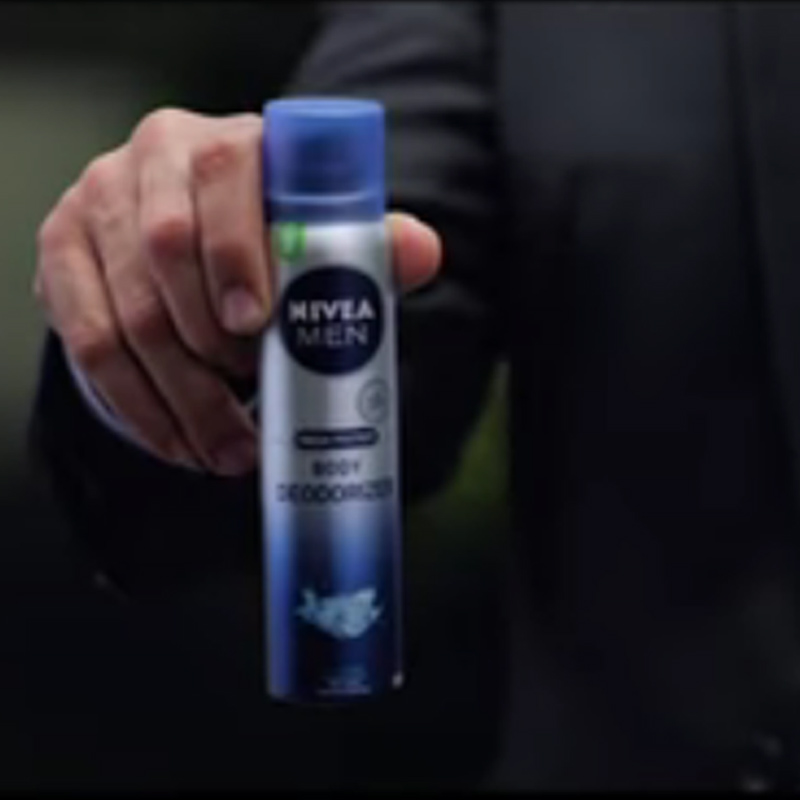
    MUMBAI: Nivea Men started its new campaign #CoveringUpFails with a humorous take on a spy’s undercover mission, to highlight the importance of solving the problem of body odour instead of just covering it up.

    In a category that’s cluttered with tales of the superficial strength of fragrances, Nivea Men continues to challenge norms and differentiate itself as an actual solution provider. The campaign hits on the problem of failing deodorants and the resulting emergence of body odour during the day. And in turn, establishes the product – Nivea Men body deodorizer as the real solution to the problem.

    Targeting men’s habit of relying on quick fixes and shortcuts to take care of all of their problems, including that of body odour, the campaign brings alive the reality of these ‘failing cover ups’. It also aims to educate men on the importance of solving issues at the root by not depending on deodorants, as they only cover up body odour.

    Nivea India marketing director Sunil Gadgil said, “The Indian consumers’ attitude towards body odour is ‘Not my problem’. The aim of this campaign is to create relevance of body odour for consumers without triggering their defence mechanism of ‘Not for me’. This film is part of a series of films created by Nivea India to seed the practice of ‘Odour control at the source’ aimed at consumers with the habit of spraying a fragrance on their shirt for masking the odour.”

    The objective has been approached by looking through Nivea’s lens of care and asking– Who would require a fail-proof cover the most? The answer – An undercover spy. A man on an extremely important mission, where his identity is of the utmost importance to his success. The culmination of these thoughts, the digital film by DigitasLBi – ‘An Epic Undercover Fail’ urges men to prepare better for every one of life’s important missions – at work, with family, in public, or when with a loved one, as covering up always fails.

    DigitasLBi, India creative director Akshat Bhardwaj said, “We had a powerful proposition in place –ordinary deodorants just cover up body odour and don’t get rid of it. So, we thought that it would be great fun to bring this out by riding on the image of a popular culture icon (Agent Double O Seven), and inserting a body odour situation into one of his undercover missions.”

    With over three million views in just a week, the film continues to gain popularity among the digital audience and drive conversations around the campaign #CoveringUpFails. The three-week long campaign engages consumers around topics of body odour, deodorants, and the epic fail of Agent Double O Seven. Moreover, the story of the Agent is being promoted with quirky posters across social media as the spy’s latest film release. It’s a campaign for men who look for solutions, for men who like to be in control, and for men who don’t take shortcuts, especially when it comes to body odour.

  • #CoveringUpFails, Nivea Men confident

    #CoveringUpFails, Nivea Men confident

    MUMBAI: Nivea Men started its new campaign #CoveringUpFails with a humorous take on a spy’s undercover mission, to highlight the importance of solving the problem of body odour instead of just covering it up.

    In a category that’s cluttered with tales of the superficial strength of fragrances, Nivea Men continues to challenge norms and differentiate itself as an actual solution provider. The campaign hits on the problem of failing deodorants and the resulting emergence of body odour during the day. And in turn, establishes the product – Nivea Men body deodorizer as the real solution to the problem.

    Targeting men’s habit of relying on quick fixes and shortcuts to take care of all of their problems, including that of body odour, the campaign brings alive the reality of these ‘failing cover ups’. It also aims to educate men on the importance of solving issues at the root by not depending on deodorants, as they only cover up body odour.

    Nivea India marketing director Sunil Gadgil said, “The Indian consumers’ attitude towards body odour is ‘Not my problem’. The aim of this campaign is to create relevance of body odour for consumers without triggering their defence mechanism of ‘Not for me’. This film is part of a series of films created by Nivea India to seed the practice of ‘Odour control at the source’ aimed at consumers with the habit of spraying a fragrance on their shirt for masking the odour.”

    The objective has been approached by looking through Nivea’s lens of care and asking– Who would require a fail-proof cover the most? The answer – An undercover spy. A man on an extremely important mission, where his identity is of the utmost importance to his success. The culmination of these thoughts, the digital film by DigitasLBi – ‘An Epic Undercover Fail’ urges men to prepare better for every one of life’s important missions – at work, with family, in public, or when with a loved one, as covering up always fails.

    DigitasLBi, India creative director Akshat Bhardwaj said, “We had a powerful proposition in place –ordinary deodorants just cover up body odour and don’t get rid of it. So, we thought that it would be great fun to bring this out by riding on the image of a popular culture icon (Agent Double O Seven), and inserting a body odour situation into one of his undercover missions.”

    With over three million views in just a week, the film continues to gain popularity among the digital audience and drive conversations around the campaign #CoveringUpFails. The three-week long campaign engages consumers around topics of body odour, deodorants, and the epic fail of Agent Double O Seven. Moreover, the story of the Agent is being promoted with quirky posters across social media as the spy’s latest film release. It’s a campaign for men who look for solutions, for men who like to be in control, and for men who don’t take shortcuts, especially when it comes to body odour.

  • Goafest 2016: Believe in instricts and data to keep up with change, feels Carter Murray

    Goafest 2016: Believe in instricts and data to keep up with change, feels Carter Murray

    GOA: “Around 90 per cent of the internet traffic will soon be video based. Quoting figures from Google US, he said there are 60 trillion web addresses in the world with 4 million applications with 3 billion web searches per day.

    Kick-starting the second session of the last day at Goafest, FCB worldwide CEO Carter Murray spoke on surviving and thriving in the times of intense change, replete with case studies and insights.

    The 40 year old CEO said Murray pointed out that 15 per cent of the searches are never seen before. “This means that there are 450 million searches every-day for something that’s never been asked before. If there is a 0.5 second delay on a Google search, there is a 20 per cent drop in traffic. While on Amazon, a 0.1 second delay will cause a 1 per cent drop in sales.”

    Speaking about what is happening at Silicon Valley and listening to some speakers at forums, clients and agencies, he said “We have to start being aware of fake prophets. You have to trust your own instincts. You should take what’s going on around the world and add it it to what you know. You don’t have to start fresh,” he noted.

    He started his talk with the cryptic example on the difference between ‘being involved’ and ‘being committed’. “Take for example a bacon-and-egg breakfast. Chicken is involved and bacon is committed. What we put in and how it comes out has changed.”

    He said marketers use only 6 per cent of data for decisions. “Data is waiting for its Scorsese. When are we going to use data to improve creative product not just improve sales?”

    With agencies and marketers trying to be ‘different’ in a changing and challenging environment, he said, “Different doesn’t always have value – better does. Steve Jobs did not invent the telephone; he made it ‘better’.”

    The CEO divided work into three buckets: Hero, Hub and Help. He explained the model in which Hero stands for what you want to say wrapped up in an emotional story which is memorable and invites further participation. Hub symbolizes a platform which is updated regularly or a social profile worth returning to. Help stands for what your target market are searching for.

    Explaining this model, he cited examples of a few brands like Hero, Nivea and Valspar Paint which amused the audience.

    He stressed on how important talent is when it comes to surviving and thriving. “This is an exciting time focus. Never think that an idea or brief is finished. You always learn and evolve. If you make a mistake, stand-up, and apologize. Do not try to hide it. Identify your micro-moments, deliver on needs in the moment and measure and optimize to connect the dots”.

    Change is happening but instead of freaking out and trying to incorporate every change, the marketing community needs to believe in their instincts and data, he stressed.

  • Goafest 2016: Believe in instricts and data to keep up with change, feels Carter Murray

    Goafest 2016: Believe in instricts and data to keep up with change, feels Carter Murray

    GOA: “Around 90 per cent of the internet traffic will soon be video based. Quoting figures from Google US, he said there are 60 trillion web addresses in the world with 4 million applications with 3 billion web searches per day.

    Kick-starting the second session of the last day at Goafest, FCB worldwide CEO Carter Murray spoke on surviving and thriving in the times of intense change, replete with case studies and insights.

    The 40 year old CEO said Murray pointed out that 15 per cent of the searches are never seen before. “This means that there are 450 million searches every-day for something that’s never been asked before. If there is a 0.5 second delay on a Google search, there is a 20 per cent drop in traffic. While on Amazon, a 0.1 second delay will cause a 1 per cent drop in sales.”

    Speaking about what is happening at Silicon Valley and listening to some speakers at forums, clients and agencies, he said “We have to start being aware of fake prophets. You have to trust your own instincts. You should take what’s going on around the world and add it it to what you know. You don’t have to start fresh,” he noted.

    He started his talk with the cryptic example on the difference between ‘being involved’ and ‘being committed’. “Take for example a bacon-and-egg breakfast. Chicken is involved and bacon is committed. What we put in and how it comes out has changed.”

    He said marketers use only 6 per cent of data for decisions. “Data is waiting for its Scorsese. When are we going to use data to improve creative product not just improve sales?”

    With agencies and marketers trying to be ‘different’ in a changing and challenging environment, he said, “Different doesn’t always have value – better does. Steve Jobs did not invent the telephone; he made it ‘better’.”

    The CEO divided work into three buckets: Hero, Hub and Help. He explained the model in which Hero stands for what you want to say wrapped up in an emotional story which is memorable and invites further participation. Hub symbolizes a platform which is updated regularly or a social profile worth returning to. Help stands for what your target market are searching for.

    Explaining this model, he cited examples of a few brands like Hero, Nivea and Valspar Paint which amused the audience.

    He stressed on how important talent is when it comes to surviving and thriving. “This is an exciting time focus. Never think that an idea or brief is finished. You always learn and evolve. If you make a mistake, stand-up, and apologize. Do not try to hide it. Identify your micro-moments, deliver on needs in the moment and measure and optimize to connect the dots”.

    Change is happening but instead of freaking out and trying to incorporate every change, the marketing community needs to believe in their instincts and data, he stressed.

  • MEC India wins GoDaddy media account

    MEC India wins GoDaddy media account

    MUMBAI: WPP’s MEC India has won the media mandate for GoDaddy, the technology provider dedicated to small businesses.


    With over 12 million customers, GoDaddy manages more than 57 million domains globally. The company’s stated ambition is to help people easily start, confidently grow and successfully run their own ventures.


    GoDaddy has identified India as a priority market for their global expansion. The company recently signed on Mithun Chakraborty with a view to democratise internet-enabled businesses in India.  


    MEC North head Roopam Garg added, “We are delighted to have the opportunity to partner GoDaddy on their exciting journey. GoDaddy is all about empowering people in their quest for success and we are happy to play a small role in this great endeavour.”


    The clientele list of the agency includes Colgate Palmolive, Britannia, NIVEA,  FlipKart, Citibank, Honda Motorcycles and Scooters, General Electric, Zee Network, Reliance Group, CavinKare, to name a few.