Tag: Nitin Vaidya

  • Content Hub 2021: Television – A Twist in the Tale

    Content Hub 2021: Television – A Twist in the Tale

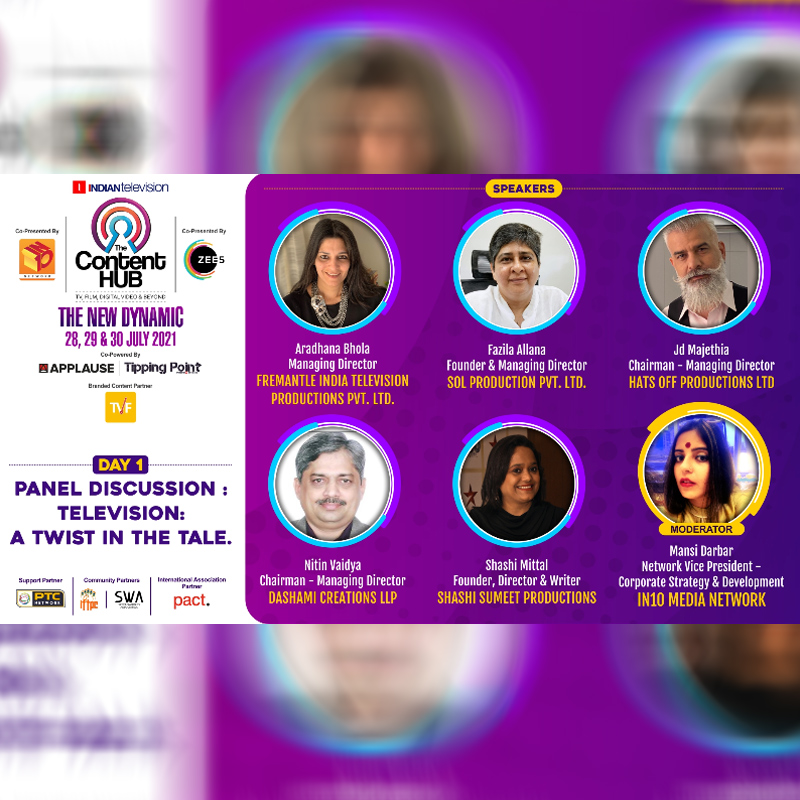
    Mumbai: At the fifth edition of the ‘Content Hub 2021 – TV, Film, Digital Video, and Beyond’ being organised by Indiantelevision.com, veteran producers from the media and entertainment industry delved into the state of television programming in the context of growing competition from OTT platforms.

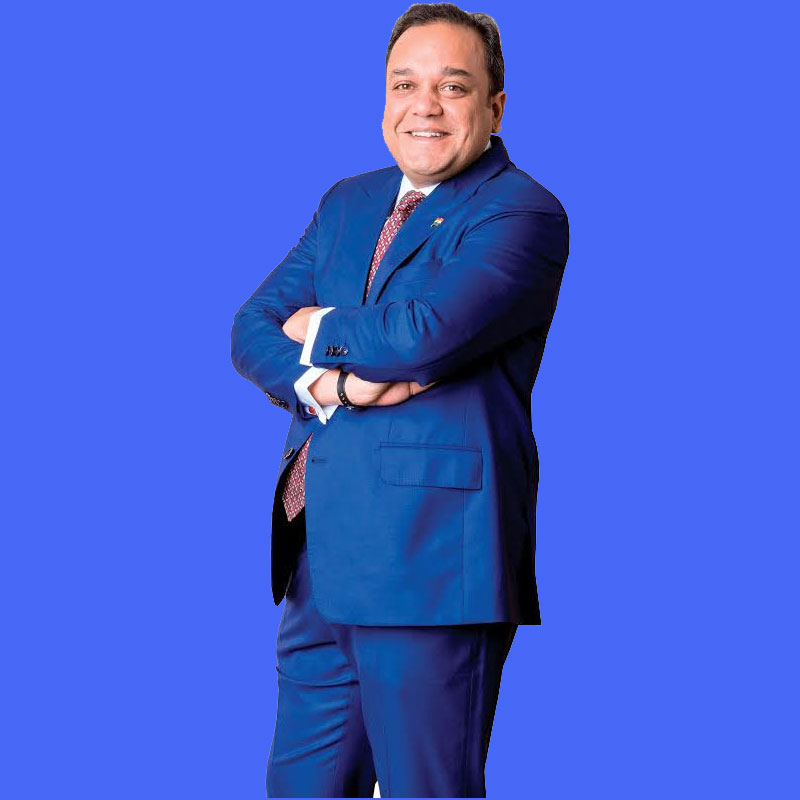
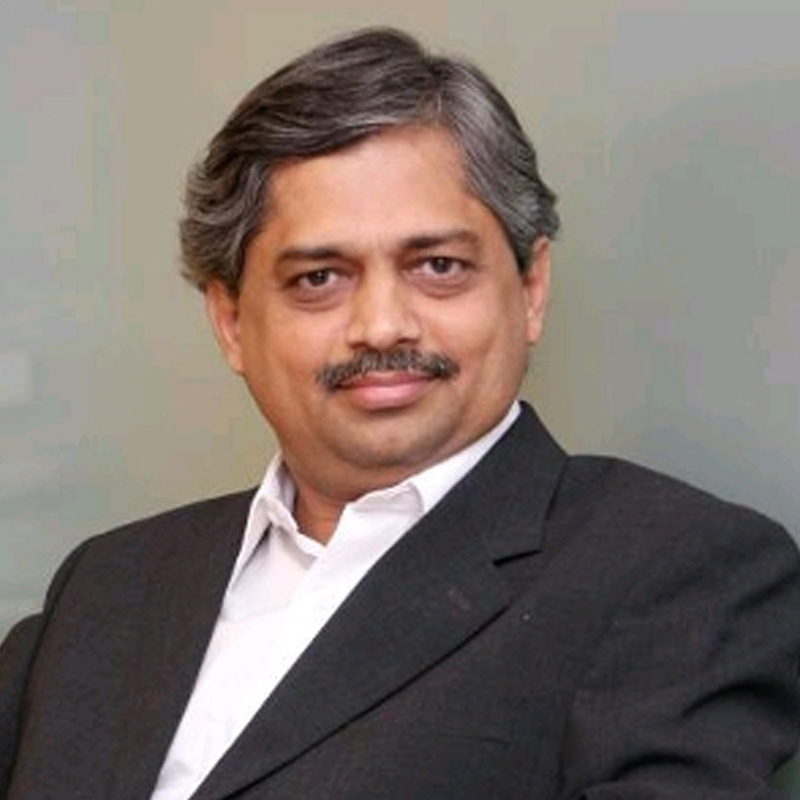
    Deliberating on the topic ‘Television – A Twist in the Tale’ were FremantleMedia, managing director – Aradhana Bhola, Sol Productions, founder and MD – Fazila Allana, Hats Off Productions, chairman and MD – JD Majethia, Dashami Creations, chairman and MD – Nitin Vaidya and Shashi Sumeet Productions, founder, director and writer – Shashi Mittal. The virtual session was moderated by IN10 Media Network, network vice president – corporate strategy and development, Mansi Darbar.

    Ever since the meteoric rise of OTT platforms, there have been apprehensions regarding the imminent cannibalisation of TV audiences. While industry watchers and experts have been debating it for long, the content creators seem confident about the two formats coexisting with each other. In fact, they are also excited about the possibilities that OTT opens up for them, especially in terms of experimenting with content and also the economics of it.

    Allaying apprehensions around the TV-OTT battle, Fazila Allana stated that even though there seems to be some differentiation of content, at present all the major OTT players are getting major traction from the catch-up TV. Likening their original programming to ‘exotic weekend dinners’, she added, “Most viewers log on to OTT platforms for staples or ‘daal chawal’ i.e. daily soaps. So, even if TV were to become obsolete as a medium of distribution, the content will not change drastically.”

    Agreeing with Fazila, Sol Production’s Aradhana Bhola remarked, “Given the socio- economic and cultural diversity in India, we have so many different consumption patterns that as content creators we are happy to be having a new platform for telling more and different stories. While some stories are better suited for a two or three-hour movie format, others are fit for a short series or a daily soap, but whatever the delivery mechanism, it is content, and ‘great content’ that matters.”

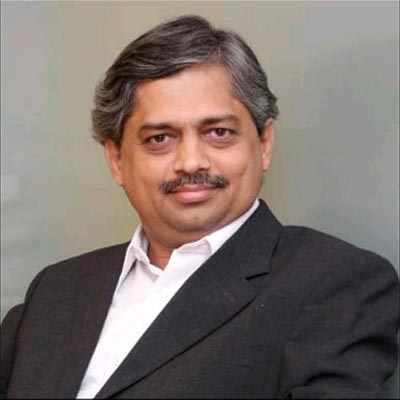
    Dashami Creations’ Nitin Vaidya concurred on the fact that audience choice is determined by economic conditions, and cultural and social values, but unlike Bhola, he cites them as factors that limit the scope of OTT in India. That being said he does agree that, “OTT has brought along with it disruptive subjects, narratives and scale, and this is where the challenge for TV lies. If the television industry doesn’t innovate and keeps on offering the same regressive content, it will lose its audience to other platforms.”

    JD Majethia believes that the familiarity and affordability of television gives it an edge over other mediums, yet “creative content will decide what survives in the long run”. Citing his ongoing show ‘Wagle ki Duniya’ as an example, he said, “We coined the term TWEB Series for it, because it is a particularly challenging format where each episode is a different story.”

    Talking of innovation, while TV programming has often been accused of being regressive and recycling the same content, Majethia contented that “stories and plot have broadly remained unchanged; it’s the storytelling which makes all the difference. The problem is that people think of TV as a perishable commodity. If the content is enjoyable, it’s relevant. We must also not forget the fact that TV is still a growing medium in India. So, when it comes to recycling or adapting content, we have to consider the segment, market, time slot and several other factors to determine relevance.”

    Chiming in, Shashi Mittal said, “The Indian market offers viewers with so many different types of mindsets that there’s room for all. What’s progressive for me could be regressive for my kids. It is these perceptions that we are in effect catering to.” “Ultimately, through every story told, we are addressing emotions and aspirations,” added Fazila Allana.

    Discussing the scope that television offers for creativity and experimentation, the panellists agreed that although the intention to innovate is ubiquitous among broadcasters and producers, ‘Thursday Ratings’ run the show. “…audience evolution is a slow process, and until they evolve, you have to give them what they want,” Allana explained. However, not all is gloomy. Despite the constraints there’s still enough headroom for innovation in television, Majethia’s ‘TWEB series’ being one such example.

    While it’s true that content producers find the OTT proposition to be more attractive, is it lucrative too? Web series or daily soap? Where are the monies? The resounding answer to this question from our panelists was that it’s a ‘volume game’, and despite all the criticism notwithstanding, daily soaps are the biggest drivers of volume.

    “OTT and TV have many lessons to learn from each other. Television channels can, for instance, think about serials with a limited number of episodes. Many TV viewers who don’t opt for OTT due to economic constraints could well be interested in short series format. Such time-bound storytelling will be in the interest of all – the audience, advertisers, channels and content creators,” said Nitin Vaidya.

    JD Majethia had a slightly differing opinion in this regard. According to him, a series on a big OTT platform may be more lucrative for production houses than a daily soap on television that runs for six to eight months. “TV shows are successful only if they are long running”, he remarked adding that with Covid changing the dynamics rapidly, the uncertainty will only grow further. “If you can match the strength of your ideas with that of the platform – movies, OTT or TV – you are home,” surmised a more hopeful Aradhana Bhola.

    Centred on the theme – ‘The New Dynamic’, the three-day event will witness several such insightful sessions with industry stakeholders deliberating on how the new forces are transforming the way content is created and stories are told. It will also delve upon the impact of these changes on the business models for the world of films, TV and OTT.

    The fifth edition of Content Hub 2021 is co-presented by IN10 Media Network and ZEE5, and co-powered by Applause Entertainment and Tipping Point, the digital content unit of Viacom18 Studios. PTC Network is the supporting partner.

    For more details, visit: https://www.thecontenthub.in/

  • Shooting in Mumbai, Thane likely to start by 23 June: IFTPC’s Nitin Vaidya

    Shooting in Mumbai, Thane likely to start by 23 June: IFTPC’s Nitin Vaidya

    MUMBAI: It will soon be lights, camera, action in the television industry. With permisisons being granted slowly, filmmakers and broadcasters will have to obtain permission from the police and district authorities before they can start shooting. Maraṭhi film and TV producer Nitin Vaidya, who is also a member of Indian Film and TV Producers Council (IFTPC), told indiantelevision.com that it is trying to seek permission from Film City to begin shooting in Mumbai and Thane from 23 or 25 June.

    He adds, “We producers, among ourselves, have decided a common date to start shooting between 23 to 25 June. We must put things in place like insurance and mediclaim for all cast, crew members and people on set. We are looking at bulk insurance deals from the IFTPC. Once that is done, we can start shooting. All the decisions have been conveyed to broadcasters also. We are hoping that all the permissions will be granted for Mumbai and Thane.”

    Marathi actor, TV host and Shiv Sena leader Aadesh Bandekar highlights that producers are waiting permission from Film City to begin shooting in Mumbai.  But district collectors in Thane, Sangli and Satara have already given permission to resume shooting.

    Vaidya also mentions that in other parts of Maharashtra permission has been given. But shooting has not yet started.  In the meantime, producers are prepping up for the post-pandemic return, in terms of fumigation, sanitisation, several other SOP measures and guidelines that need to be complied with.

    According to Vaidya, the association has requested broadcasters to telecast after 13 July 2020. So, producers can go ahead with immediate bank of episodes. As this is a new normal, Vaidya finds that it will be difficult to analyse what will happen on the set after shooting resumes.

    Earlier this month Maharashtra government allowed shoots across the state to resume. A list of SOPs and other guidelines too were issued, which also includes shooting only in non-containment zones. Producers will have to apply to managing director of the Maharashtra film, theatre, cultural development corporation, the Dadasaheb Phalke Chitranagari in Goregaon, Mumbai and district collectors outside Mumbai for resuming shootings.  

  • ZEEL to unveil new look of Zee TV on 15 Oct

    ZEEL to unveil new look of Zee TV on 15 Oct

    MUMBAI: Subhash Chandra-led ZEEL is all set to unveil a new look of  its Hindi general entertainment channel Zee TV, from 15 October.

    Sources close to the development confirmed to Indiantelevision.com that, on 15 October, the network will present Zee TV in the new avatar with a new orange logo and tag line — ‘Aaj Lihkenge Kal.’

    Indiantelevision.com tried to reach out to the Zee TV deputy business head Deepak Rajadhyaksha but did not get any response till the time of filing this story.  

    The network revealed the logo at Zee Rishtey Awards 2017 on the successful completion of 25 years. The awards show will be telecast on Zee TV on 15 October.

    As per Indiantelevision.com information, there will not be major changes in the programming line-up. The channel is soon to launch its new offering Dil Dhoonta Hai.

    Produced by Nitin Vaidya under Dashami Creations, Dil Dhoonta Hai  is a love story of a Maharashtrian boy and a Punjabi girl, who eventually get married. Shivya Pathania (the female lead) will now be seen playing a Punjabi housewife opposite the famous Marathi TV actor Stavan Shinde (the male lead), who is making his Hindi TV debut with this show.

    The show will be aired from 21 September from Monday to Friday at 1030pm. Also, the channel is all set to launch its flagship dance reality show Dance India Dance. 

  • ‘It’s not money but the idea that conquers’ -ZEEL COO & Zee TV business head Nitin Vaidya

    ‘It’s not money but the idea that conquers’ -ZEEL COO & Zee TV business head Nitin Vaidya

    MUMBAI: The beginning of the year 2009 was a huge challenge for us. We took up this challenge with great enthusiasm, confidence and a focused approach. Our aim was to achieve great heights with concentrated efforts without making any tall claims.

    Many of our shows gave us positive results in 2009. Two major properties by us last year were, ‘Choti Bahu‘ and ‘Lux Dance India Dance‘.

    ‘Choti Bahu‘ proved to be a phenomenal success, redefining the primetime band as 7.30 PM and reigning over it, ever since. But this is not the first time; we had also launched ‘Sindoor‘ at the same time in 2006.

    Another remarkable success in the non-fiction genre was ‘Lux Dance India Dance‘. Unlike other star-studded shows on competing channels, Lux Dance Indian Dance talks about excellence of talent and creates a platform for that talent.

    We always believed that television creates its own stars. For ‘Lux Dance India Dance‘ we adopted our 17-year old formula that stemmed from our longest running show – ‘SaReGaMaPa‘ which makes stars out of common people with exceptional talent. We began our journey to 11 cities, scouting talent, and came back with some fabulous dancers rather than encouraging celebrity participation in reality shows that look fabricated.

    The results were for all of us to see with ‘Lux Dance India Dance‘ becoming the biggest dance reality show growing in a profitable way rather than being an unviable business model. Our formats were copied and launched on other channels and we all know what happened to them.

    Indian television also saw an interesting turning point with a different kind of story-telling that emerged with newer shows. Our competition launched ‘Balika Vadhu‘ which has an excellent story and brought in an all-new flavour to the primetime. We also launched ‘Agle Janam Mohe Bitiyann Hi Kijo‘ which highlighted the social evil of women-trafficking very strongly and forcefully. This social cause backed up with effective story-telling made ‘Laali‘ a household name.

    Another of our shows from Balaji Telefilms, ‘Pavitra Rishta‘, was a great hit amongst the viewers, with the show now becoming the No. 1 fiction show across GECs. The first ever show on satellite television to be shot completely in Delhi, ‘12/24 Karol Bagh‘ was launched by us.

    Two other shows that immediately struck a chord with the viewers are ‘Jhansi Ki Rani‘ and ‘Aap Ki Antrara‘. Through ‘Aap Ki Antara‘, we have aimed at creating public awareness about autism & sensitizing the society towards this issue. More than the commercial success of the show, the kind of recognition and respect that it has garnered for itself and the channel, is what we take immense pride in.

    Similarly ‘Jhansi Ki Rani‘ was another path-breaker. In times where historical shows haven‘t really done well on television, ‘Jhansi Ki Rani‘ has created its own loyal audience and has been delivering consistently ever since its launch. The success of the show has taken it beyond HSM (Hindi speaking market) with the dubbed version being telecast on our regional channels.

    The pressure from the competitors was very high with the who‘s who of Bollywood anchoring some reality show or another across channels. During such times, we decided to introduce Afsha & Dhairya, the youngest hosts on any reality show thus far. Result? They became the most loved hosts on Indian television.

    Recession forced us to take some innovative decisions which surely opened up new avenues that went on to become great successes. Another show that got us directly connected to the audiences is ‘Ghar Ghar Mein‘, a low cost, simple game show with families that allowed cameras directly into their homes. ‘Ghar Ghar Mein‘ is the only show on television today which establishes a direct relationship with the viewers. So we see that it‘s not the money that matters but the idea that conquers!

    Hence with subjects ranging from those of historical importance to social awareness to differential talent, Zee TV‘s shows have been appreciated and acknowledged across the nation. Each of our new properties yielded results and there was no show that had to be withdrawn during the year. 

    Steps taken by Zee TV were consciously working towards not just being No. 1 on GRPs but also achieving high profitability. And to achieve profitability, we didn‘t want to compromise on our quality at any cost. We didn‘t succumb to unnecessary pressures of investing money in film stars or creating controversial content. We wanted to be on the top on our terms. It‘s a matter of great pride that the No. 1 fiction (Pavitra Rishta) and non-fiction show (Lux Dance India Dance) across GECs, belong to Zee TV.

    It was a year that started with great challenges that led to hope and thereby a promise to ourselves – to top the charts. The real joy and excitement came when we became No. 1 for a week after almost a decade. The challenge this year would be to maintain the high performance and offer exclusive content to our viewers.

    Another challenge that holds great value today is the digital scenario which is changing television consumption patterns. On one end of the spectrum is mass consumption pattern of television that is measured by GRPs and on the other is the evolving audience that is migrating from analogue to digital.

    Content and communication to match audiences‘ sensibilities is the emerging reality of the digital era. The growth of DTH is phenomenal. It has surpassed the number of declared analogue subscribers and will continue to grow further. Hence concentrating on the existing analogue viewers alongwith the ever-growing DTH viewers will be our core focus in the coming years.

  • ‘For the Zee Network, regional channels will be strong pillars’ : Nitin Vaidya – Zee Entertainment Enterprises Ltd. director regional channels

    ‘For the Zee Network, regional channels will be strong pillars’ : Nitin Vaidya – Zee Entertainment Enterprises Ltd. director regional channels

    As localized channels are gaining momentum on television, the Zee Network has been quick to grab untapped genres in regional markets. Spearheading four regional channels from the Zee bouquet, including Zee Marathi, Zee Bangla, Zee Gujarati and now Zee Talkies, is Zee Entertainment Enterprises Ltd director regional channels Nitin Vaidya.


    In a free flowing conversation with Indiantelevision.com’s Renelle Snelleksz, the Zee veteran outlines the growth trajectory of each region and the targets set for “regional channels to become the pillars of the Zee Network.”


    Excerpts:

    Zee has strengthened its position in Maharashtra with three channels – general entertainment, news and now movies. How has this market evolved and what is the growth story for Zee?
    In 1999 when we entered Maharasthra, there was a widespread belief that though Marathi audiences were bilingual, the market was largely Hindi skewed. It was expected that few viewers would be attracted to a Marathi channel.


    Till 2003, it was a real struggle but we were determined to provide value for the investors, for advertisers and for consumers.


    In 2003, the share of the Marathi television market was 8.3 per cent. Currently, the share of the market stands at 16.8 per cent (Tam data; January till Week 35, C&S 4+). Though Maharastra was believed to be Hindi dominated, the share of Hindi general entertainment channels dropped from 34.9 per cent in 2003 to 24.4 in 2007.


    Over the last four years, Zee Marathi has driven viewers to the genre through a very aggressive programming and marketing push.


    Evidence of that is seen in the channel share of Zee Marathi. In 2003, it stood at 40 per cent while ETV Marathi was at 35 and DD Sahyadri at 25. Although there was a decline in 2005, Zee Marathi has regained its leadership position in 2007 with a channel share of 45 per cent while ETV Marathi is at 36 and DD Sahyadri at 11.

    Can you identify the factors that contributed to Zee Marathi’s growth?
    We achieved two things in this market. Firstly, we were able to divert viewers from Hindi entertainment channels. In doing this we also changed the existing perception of the Marathi market being Hindi skewed. Secondly, the television universe as a whole has also grown considerably.


    This picture tells a story of how audiences are embracing local channels which they first try and then stick to. This gave us encouragement to invest monies behind this proposition.

    What is the growth that the Bengali market has witnessed?
    Bengal is far ahead of Maharasthra in terms of what has been accomplished as it consistently stayed ahead of Hindi GECs. In 2003, the Bangla market occupied a share of 28.6 as opposed to Hindi GEC which was at 22.9. The average for this year is 33.6 per cent share and Hindi GEC is 20.

    What were the differentiators used to combat competition and pull audiences from Hindi channels to Zee Marathi and Zee Bangla?
    We did not follow the set formula that is commonly used on Hindi GECs and replicate it for our regional audiences. We decided to take a different route and deliberately resisted the ‘saas-bahu’ dramas. Instead, we chose to focus on the interpersonal relationships that reflect the ethos of that particular region.


    These family dramas along with our popular musical format Sa Re Ga Ma Pa have been the major drivers of audiences for both these channels.


    Besides, we have not compromised on the production values for these channels and have attempted to extensively involve our viewers in daily programming through a host of interactive shows.


    This strategy even attracted urban viewers from Mumbai and Kolkata, areas considered too cosmopolitan for a regional channel. Both channels have surpassed Star Plus in C&S 15+ female SEC-A,B&C and while in C&S 4+ market Zee Bangla is far ahead of Star in Bengal, Zee Marathi is just 20 GRPs away from Star Plus in Maharashtra.

    But the growth witnessed by Marathi and Bengali has not been seen with Zee Gujarati – Why so? What was the setbacks that the channel encountered in this market?
    With Zee Gujarati we did have a problem. This too is a market strongly dominated by Hindi. With only three players in the game ETV, Zee and DD, the market has seen marginal growth over the last couple of years.


    Zee Gujarati requires the push that was given to Marathi and Bengali and going forward this is our plan. We will pump in more investments into the Gujarati market as well as rope in good talent and push our content more aggressively. One can expect to see a turnaround of Zee Gujarati.

    Zee Gujarati will see a turnaround in the next two years

    What is the time line that Zee has set for revamping Zee Gujarati?
    Within the next two years, Zee Gujarati will witness a complete turn around. In fact, the potential of this market is more than that of Marathi and Bangla due to the mere consumption of the State. Therefore, we are putting serious monies behind the channel.

    How much will you pumping into Zee Gujarati?
    I would not like on that at the moment.

    What is the current ad pie for each of the three markets and what growth is expected in these regions?
    The ad revenue of the Bangla language channels in the Bengali TV market is expected to touch Rs 280 crore (Rs 2.8 billion) in 2007 and grow to a category share of 35 per cent. Meanwhile, Marathi language channels will cross Rs 225 crores to occupy 25 per cent share of the Maharashtra TV market this year. However, the Gujarati market is presently a mere Rs 50 crores.

    The network recently made its foray into the Marathi movie segment with the launch of Zee Talkies in August, what has been the response thus far?
    Although, we were aware of the untapped Marathi movie genre, the response to Zee Talkies has been phenomenal as it touched 70 GRPs in its first week of launch. The was far beyond our expectations.


    This was supported by an extensive marketing push of Rs 80 million dedicated to the launch campaign. We consciously decided that for the first 20 days the channel will not have a single advertiser. We wanted them to first see the response before they put money on the table. The numbers speak for themselves!

    As part of the network’s attempt to boost Marathi cinema, you tied up with three production houses for a slate of 15 films across two years. When will these movies be released and what is the investment outlay for these films?
    The first film will be released by the end of this year in theatres, following which it will be telecast on Zee Talkies. Close to Rs 10 million will be spent on each film.

    Do you have plans to enter Bengali film production as well?
    We are currently in talks with a few production companies for Bengali movies. We plan to get into Bengali film production very soon.

    Which production companies are you in talks with and what is the budget allocation for Bengali films?
    We have not yet zeroed in on the production houses yet, so it would be premature to talk about it now. But we will definitely be spending more than Rs 10 million on each film.

    So, are you looking to launch a Bengali movie channel as well?
    (Laughs) No! Not at the moment.

    Going forward what are the growth opportunities that you foresee in the three regions?
    The addressable television environment will definitely provide a huge thrust in pushing these channels ahead. For the Zee Network, the regional channels will be strong pillars. This will help grow both subscription and ad revenues for the network.
  • Zee forays into Marathi feature film production

    Zee forays into Marathi feature film production

    MUMBAI: Zee Network’s chairman Subhash Chandra has announced its foray into Marathi feature films, by which the network will provide the financial backing to produce, market and distribute the movies in India and Internationally.

    “After the making of the film, the responsibility of its marketing, distribution, telecast etc (for Indian and overseas territories) shall be the responsibility of the Zee Group,” added Chandra.
    Zee executive vice president regional channels Nitin Vaidya told Indiantelevision.com that the network will attempt to raise the bar for financial investments in Marathi movies, by about 50 per cent depending upon the content requirements and production elements. The normal monies pumped in towards Marathi films varies between Rs 50,000,000 – 60,000,000.

    As a start up, the network has commissioned five production houses, namely Mahesh Manjrekar’s Ashvami Films, Gautam Joglekar’s SOC, Shrirang Godbole’s Indian Magic Eye, Smita Talwalkar’s Asmita Chitra and Rakesh Sarang’s Cams Club. In the next two years, these producers are to present the network with 15 Marathi films, three films each. Zee is also looking to tie-up with other production houses for the same.

    “With almost 60 -70 Marathi films produced this fiscal, we saw the strength of this market and decided to develop a business process to boost Marathi cinema,” added Vaidya.

    Chandra announced the latest Marathi film venture at the 8th Annual Parachute Jasmine Zee Gaurav Awards, where he also announced the launch of Zee 24 Hours, the first dedicated Marathi news channel.

    The Zee Gaurav Awards recognizes excellence in the Marathi film and theatre industry across 18 categories in films, 12 categories in commercial plays and five categories in experimental plays.

    This year in the films category Mission Champion bagged six awards for the best film, direction, story, screenplay, dialogue and child artist. In drama, Makdachya Hati Shampaign won five awards for music, script, actor, director and best drama, informs an official release.

    Zee Marathi also felicitated legendary actor Dr Shreeram Lagu and veteran music director Datta Davjekar for the lifetime achievement award – Zee Jeevan Gaurav Puraskar. While the Mee Marathi Award was given to Lage Raho Munnabhai lyrist Swanand Kirkire by Bollywood’s director Vidhu Vinod Chopra.

    The Zee Gaurav Awards will be telecast on Zee Marathi on 10 February at 7.30 pm.

  • Zee Bangla celebrates 7th birthday with a bang; Breaks TRP records with highest ever-recorded GRPs of 283

    Mumbai, September 15, 2006: Zee Bangla, the leading Bangla entertainment channel completes its seventh successful year today. As the channel turns seven, it has achieved its highest ever-recorded GRPs of 283. Zee Bangla’s two most popular shows are Khela & Ek Din Pratidin. Apart from these two serials, the popular stand up comedy show Mirakkel, anchored by the popular radio / television personality Mir is widely watched by audiences.

    Recently, the repeats telecast of Moner Manush, a tribute to the ultimate Bengali superstar Uttam Kumar, fetched the channel a rating of 4.7. The original was telecast in July.

    Mr.Nitin Vaidya, Senior Vice President Head, Zee Network said, “Zee Bangla has been growing from strength to strength in the past seven years. We have consistently improved our ratings and this GRP of 283 on our seventh anniversary is the best gift we could have wished for. We continue to strengthen our programming, constantly innovating to ensure that audiences stay glued.”

  • Zee takes ‘Sa Re Ga Ma Pa’ to regional markets; Marathi version set to launch

    Zee takes ‘Sa Re Ga Ma Pa’ to regional markets; Marathi version set to launch

    MUMBAI: Zee Telefilms is taking its successful music talent hunt property Sa Re Ga Ma Pa to the regional markets. To start with, Zee Marathi will launch Sa Re Ga Ma Pa on 18 September, while plans are getting formalised to launch the format in Zee Bangla later this year.

    “The original Sa Re Ga Ma Pa format will be re-launched in Marathi with some slight variations. The hunt, participated by 32 contestants, will run 39 episodes and the finals will be held on 26 January 2007. Zee Marathi will telecast the two-hour final episode live,” states Zee Marathi, Bangla & Gujarati business head Nitin Vaidya.

    The programme will run on Monday and Tuesday at 10 pm as half-hour episodes. The Monday episode will be a performance episode, while on Tuesdays it will deal with the elimination process.

    SMS interactivity will be introduced in the format from the 32nd episode. The popular vote will be clubbed with the jurys’ decision to decide the episode winners. The final winner will be decided entirely on the basis of viewer opinion.

    Out of 5000 applicants, 32 contestants have been shortlisted from auditions held in Mumbai, Pune, Nasik and Kolhapur.

    Popular television personality Pallavi Joshi will anchor the music show for Zee Marathi. The channel has opted for Marathi music director, an ex-Sa Re Ga Ma Pa winner Avdoot Gupte and the popular Marathi playback singer Devki Pandit to be the permanent judges in the contest.

    The show will have celebrity guest appearances as special jury in its advanced stages. “For example, the 16th and 17th episodes will have artists from popular Zee Marathi soaps entering the show as special jury members,” offers Vaidya.

    Zee has roped in Idea Cellular as the main sponsor of the property. According to Vaidya, the winner will not only get a chance to perform in the 2007 Zee Gaurav Puraskaar but will also get a flat in Talegaon from the associate sponsor, the real estate firm Disha Direct.

    Zee has already kicked off the on-air promotions of Sa Re Ga Ma Pa on its network channels. “The outdoors and other marketing activities will begin in a week’s time,” Vaidya says.

  • Shobha De: Bestselling author joins Tara Marathi

    Shobha De: Bestselling author joins Tara Marathi

    The regional language channel segment has seen a stampede of entrants. After Tamil, the next most competitive language category has been Marathi wherein close to half a dozen channels are jostling for a share of the relatively small advertising pie.

    The key therefore to survival and well-being is differentiation which offers value to viewers. Tara Marathi, promoted by Broadcast Worldwide has taken another step in that direction by hiring best selling pulp fiction writer Shobha De as creative director.

    “As the creative director of Tara Shobha De’ will be responsible for driving the channel and giving the channel a distinct identity and long term vision,” a press release from the company says. “Shobha has extended herself beyond the confines of being slotted as a conventional Maharashtrian woman and achieved success in several areas without losing touch with her roots. Being a proud and aware Maharashtrian herself, Shobha represents the mindset of the contemporary Maharashtrian, which is what makes her ideal for this profile.”

    De joined the channel on 1 July 2000 and she will be working closely with Rathikant Basu and the Tara Marathi team headed by Nitin Vaidya. “Giving TARA a contemporary Maharasthrian identity will be my main challenge here,” says De about her role at Tara. “Today’s Maharashtrian is not what he or she used to be. They are breaking away from stereotypes and are not confined to the conventional areas of achievement anymore. They are achievers in every field be it technology, cricket, theatre, Bollywood or literature.”