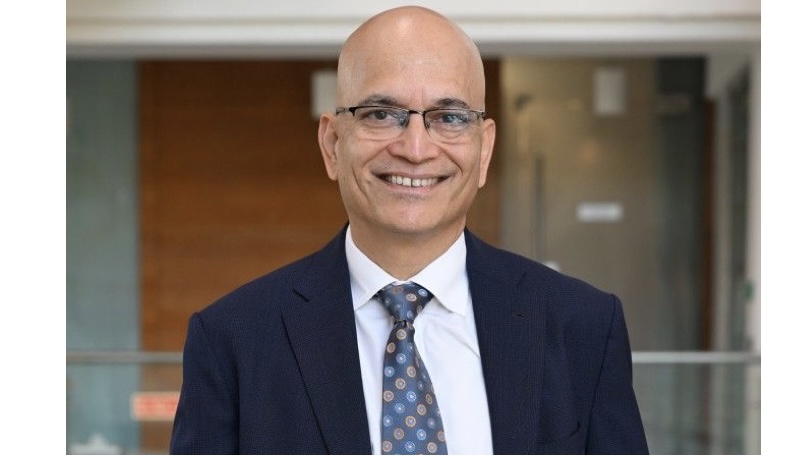
Tag: Nitin Paranjpe

  • Kedaara Capital ropes in Unilever veteran Nitin Paranjpe as chief mentor and operating partner

    Kedaara Capital ropes in Unilever veteran Nitin Paranjpe as chief mentor and operating partner

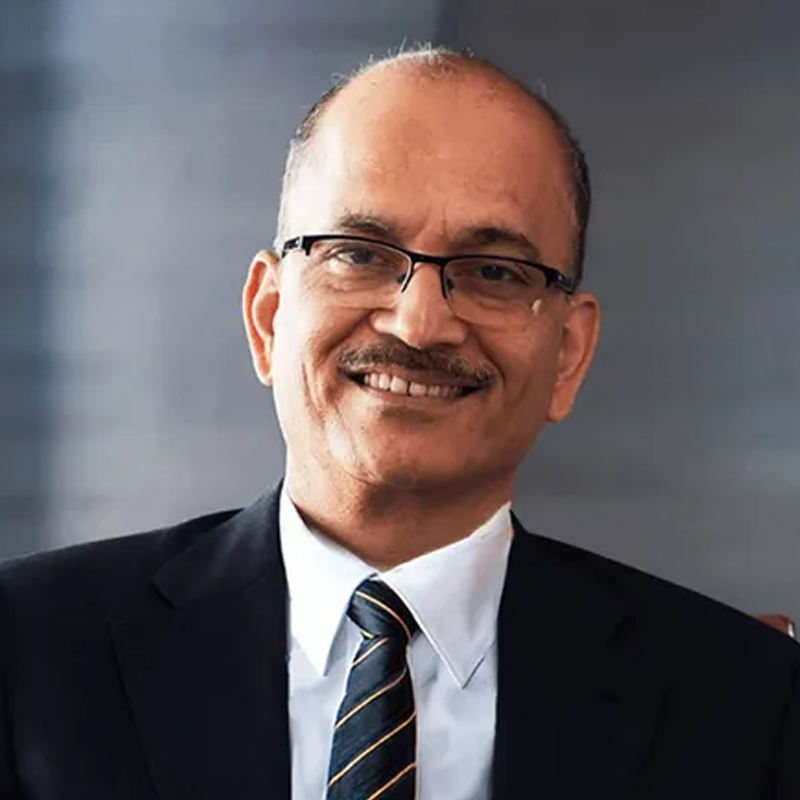
    MUMBAI: Private equity firm Kedaara Capital has appointed Nitin Paranjpe as chief mentor and operating partner, tapping into the expertise of one of the most seasoned executives in India’s consumer goods sector.
    Paranjpe, who spent nearly four decades at Unilever, brings formidable leadership experience across operations, transformation, and global category management. 

    He began his career at the Anglo-Dutch FMCG giant in 1987 and went on to serve as CEO of Hindustan Unilever from 2008 to 2013—one of its youngest ever—and later held senior global roles including president of home care, president of foods and refreshment, and chief operating officer.

    During his tenure, Paranjpe spearheaded multiple high-impact initiatives, from doubling business performance at HUL, to leading large-scale integrations and driving digitisation at Unilever globally. Most recently, he served as chief people and transformation officer at Unilever, where he led one of the group’s most ambitious restructurings in two decades.

    In his new role, Paranjpe will work closely with Kedaara’s sector teams—especially in consumer and allied verticals—providing operational insight on both existing and prospective investments. He will also advise Kedaara’s senior leadership on strategic initiatives across the firm.

    Paranjpe currently serves as non-executive chairman of HUL, and sits on the boards of global firms including Heineken and Infosys, further underlining the stature he brings to the table.

    His appointment signals Kedaara’s intent to deepen operational value creation as a key lever in its investment thesis across India’s high-growth consumer landscape.

  • Hindustan Unilever appoints Priya Nair as new CEO & MD

    Hindustan Unilever appoints Priya Nair as new CEO & MD

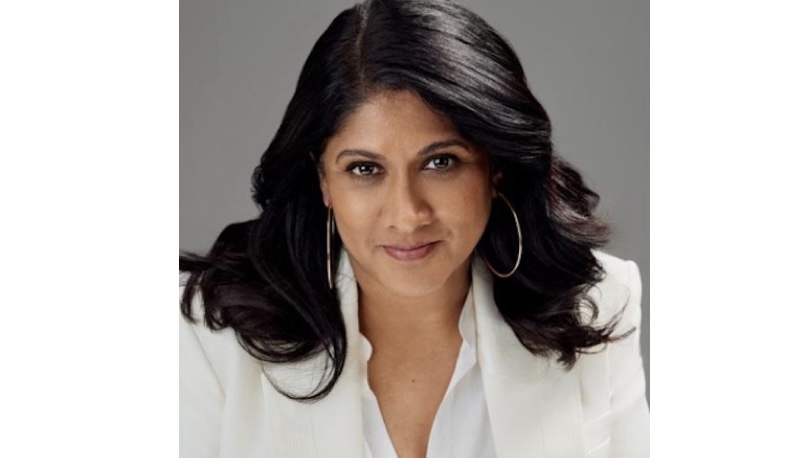
    Mumbai: Hindustan Unilever Limited (HUL) has announced the appointment of Priya Nair as its new chief executive officer & managing director, effective 1 August 2025. She will also join the HUL board and remain a member of the Unilever Leadership Executive.

    Nair brings nearly 30 years of experience with Unilever, having held various sales and marketing roles across home care, beauty & wellbeing, and personal care. Her previous roles include executive director, home care, HUL (2014-2020), executive director, beauty & personal care, HUL (2020-2022), and global chief marketing officer, beauty & wellbeing at Unilever. Since 2023, she has served as president of beauty & wellbeing, one of Unilever’s fastest-growing divisions.. She is credited with consistently delivering business transformation through brand building, premiumisation, digital commerce, and purpose-led innovation.

    Rohit Jawa will step down as CEO and MD on 31 July 2025, to pursue new personal and professional endeavours.  Jawa assumed the role in 2023, and during his tenure of over two years, HUL achieved volume-led competitive growth. He also introduced the ‘aspire’ strategy, aimed at transforming the portfolio and channels towards high-growth demand spaces. HUL chairman Nitin Paranjpe thanked  Jawa for his leadership in navigating challenging market conditions and strengthening the company’s foundations.

    The appointment of Nair is subject to shareholder and other necessary statutory approvals. The board meeting to approve these changes commenced at 5:30 pm IST and concluded at 6:25 pm IST on Thursday, 10 July 2025.

  • ISA concludes the global CEO conference 2022 on ‘VUCA 2.0: transforming organisations and brands’

    ISA concludes the global CEO conference 2022 on ‘VUCA 2.0: transforming organisations and brands’

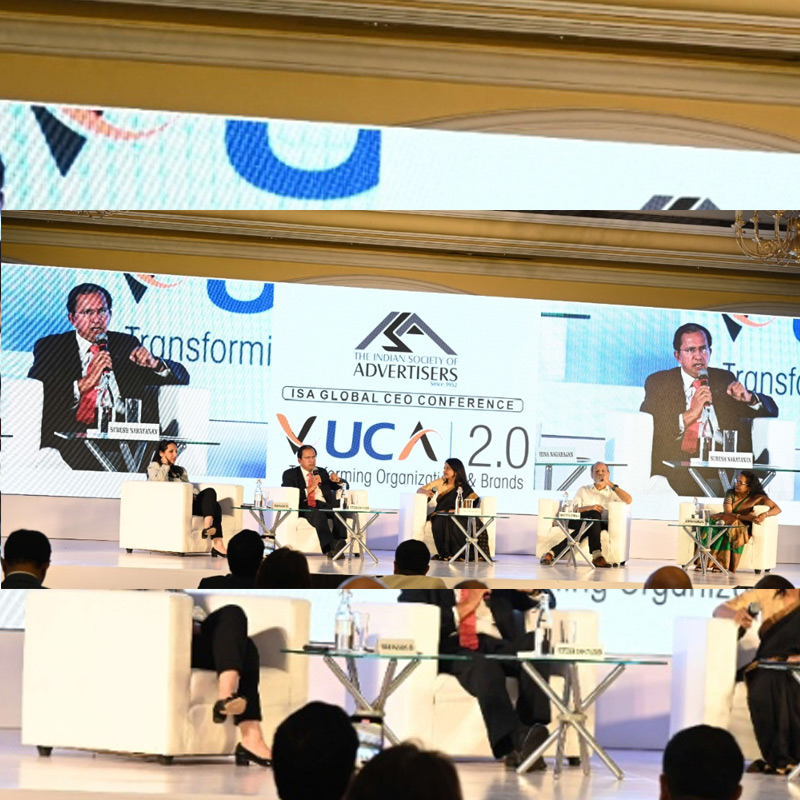
    Mumbai: The Indian Society of Advertisers (ISA) hosted the third annual Global CEO Conference on 22 August in Mumbai.

    Around 200 industry leaders gathered to discuss strategies that will enable them to triumph in today’s complex business environment.

    The conference’s theme this year was “VUCA 2.0: Transforming Organisations and Brands.”

    The event followed an engaging format that included keynote addresses, interesting presentations, and panel discussions by distinguished thought leaders from the industry, in line with the theme. 

    The keynote speakers included Hindustan Unilever chairman and chief people and transformation officer Nitin Paranjpe, who highlighted the role of technology and questioned whether organisations are ready for web 3.0.

    Nitin said, “Industries and devices must be responsibly governed with technology which is designed to allow rapid innovation. Some of the technologies developing the next iteration of the internet have larger challenges than just disruptions. Other than helping us understand what is happening in the world around us better, it will also help us prepare for and create a better future.”

    World Federation of Advertisers (WFA) president and Mastercard president-healthcare division, chief marketing and communications officer Raja Rajamannar said, “The whole field of content has become completely filtered and layered. The fact is that traditional marketers are assuming that people are aware. However, they need to develop a far better understanding of the subconscious processes that happen in the minds of their consumers and thereby develop new insights.” 

    Procter & Gamble Company chief operating officer Shailesh Jejurikar said, “Innovation is being spurred on by digital technology, and we combine innovation with human insight, so that our consumers are better off. Rapid change creates unique opportunities to drive market growth. All of these point to a positive future that can sustain people and the environment better, not only now but also for the generations to come.” 

    The panel discussion on VUCA 2.0 and its implications for Indian businesses saw leaders such as Diageo India managing director & CEO Hina Nagarajan, Multiples Alternate Asset Management MD & CEO Renuka Ramnath, Crompton Greaves Consumer Electricals managing director Shantanu Khosla, and Nestle India chairman & managing director Suresh Narayanan. The panel discussed various aspects, including strategies taken by companies during the pandemic, future-proofing brands, and creating a work environment that leads to optimising productivity.

    Speaking about the successful third edition of ISA Global CEO conference, ISA chairman and Raymond Lifestyle CEO – India & SAARC,  Sunil Kataria said, “Organisations and brands must adopt a radical and creative approach to navigate through this VUCA 2.0 world. As we have learnt during the course of this conference, the ultimate objective of transformation is to develop the capacity to swiftly change circumstances and opportunities in the market and reinvent business models to stay ahead of time.” 

    ISA chairman (events) Dr. R. Ramakrishnan said, “Each of the keynote speakers and panellists brought a wealth of insights, practical experience, and their case studies to add great value to the conference. The 200 industry leaders at the event have taken back a wealth of knowledge and wisdom to transform their organisations, brands and processes.”

    The third edition of ISA’s Global CEO conference was powered by presenting partner Google Cloud, and co-powered by partner Hindustan Unilever Limited.

    Sony Pictures Network is the exclusive gold partner, followed by Neutrogena as gold partner and P&G as co-gold partner. As associate partners, Prestige, ABP Network, Aditya Birla Group, Godrej Goodknight, and Centrum Wealth joined the list of sponsors; Adani Wilmar, Crompton, Kotak Mahindra Bank, Raymond, V Guard, Bajaj Electricals, and SugarFree Green were co-partners. Also, Storyboard 18 is the TV partner, Hindustan Times is the print partner, Adfactors PR is the PR partner, and Schbang is the social media partner.

  • HUL is working towards building brands with a purpose: Nitin Paranjpe

    HUL is working towards building brands with a purpose: Nitin Paranjpe

    Mumbai: Hindustan Unilever Limited (HUL) brands are transforming to serve the India of tomorrow. Speaking at the 89th annual general meeting recently, the company’s chairman Nitin Paranjpe said that the India growth journey, which began prior to the pandemic, continues to be strong. He mentioned that India needs growth that is not just transformative, but also inclusive – growth that is both productivity and employment led. Drawing attention to the paradoxical and fast changing world we live in, he highlighted the urgency for businesses to take the lead in addressing the environmental and societal challenges that the world faces.

    In his speech titled ‘Serving India, Today and Tomorrow’, Paranjpe said “HUL has been an integral part of India’s growth story over the years and has always believed that what is good for India is good for the company.” 

    He shared a glimpse of the company’s future-fit strategy. “Our belief that purpose-driven brands and business can indeed deliver sustainable growth and it has been further strengthened over the years.”

    He also mentioned that the company crossed the Rs 50,000 crore turnover mark and over the last decade, HUL has more than doubled its turnover, tripled the Ebitda and quadrupled the market cap.

    Paranjpe said, “At HUL, we are embedding sustainability across the value chain and beyond through what we call the ‘Compass’; our strategy to make sustainable living commonplace. We believe that ‘Compass’ will help us deliver superior performance and drive sustainable and responsible growth. We are building technology muscle to serve our customers and consumers even better. We are determined to showcase that there can never be a trade-off between purpose and performance.”

    HUL has the power to impact the lives of consumers

    Paranjpe highlighted that HUL is working towards building brands with a purpose. With more than 9 out of 10 Indian households using one or more of HUL brands. He said “HUL has the power to impact the lives of consumers. The company’s brands strive to bring about positive social change and break barriers to help build a more inclusive society through thoughtful marketing campaigns. Through several initiatives, the company has been addressing challenges like water scarcity, livelihood opportunities, employability, health and sanitation among others.”

    Moving towards a phygital journey

    As the world changes and moves towards digitalization, brands need to be present everywhere and communicate consistently to stay top of mind. On this, he said, “with an increased adoption of digital, the shopper journey has now become phygital.”

    He added that in a nation of paradoxes, critical to unlocking value is deaveraging – we need to win in rural and in urban, in mass as well as in premium, in traditional and on digital.

    HUL’s growth drivers

    He feels that the road ahead holds both challenges and opportunities. “In order to overcome the challenges and realise the enormous opportunities that exist, it is imperative to ensure that the next phase of growth for the nation is both sustainable and equitable. Businesses can play a key role in this transformative journey,” he concluded.

  • Unilever elevates Nitin Paranjpe as COO and Sanjiv Mehta as president, South Asia

    Unilever elevates Nitin Paranjpe as COO and Sanjiv Mehta as president, South Asia

    MUMBAI: Unilever recently promoted its president for foods and refreshment Nitin Paranjpe to the post of chief operating officer. In his new role, Paranjpe will be responsible for Unilever’s go-to-market organisations, driving and co-ordinating in-year performance across their countries in line with the company’s divisional strategies.

    Hanneke Faber will take up the role of president foods and refreshment post him. Faber was previously appointed as president for the Europe region.

    There have been several other key appointments and reshuffles in the top management of the global giant.

    Sanjiv Mehta, who was earlier the EVP South Asia, has now been elevated to the post of president for the same region. He will be joining the Unilever Leadership Executive, bringing emerging markets expertise to the executive team.

    Peter Ter Kulve, chief digital officer and EVP South East Asia and Australasia (SEAA), has been appointed president, home care. He will be replacing Kees Kruythoff who has decided to leave Unilever after 27 years of service.

    The roles of President Europe and EVP SEAA will not be replaced. The country organisations in these regions will report into the COO.

    All changes will be effective from 1 May.

  • HUL’s Paranjpe to move up, Sanjiv Mehta is the new CEO

    HUL’s Paranjpe to move up, Sanjiv Mehta is the new CEO

    MUMBAI: The Rs 25,000 crore FMCG major Hindustan Unilever has elevated its managing director and CEO Nitin Paranjpe as the global head of parent company Unilever‘s home care business.

    HUL MD and CEO Nitin Paranjpe

    From 1 October, company‘s current Middle-East and North Africa operation head Sanjiv Mehta will replace Paranjpe as HUL MD. Mehta will also be responsible for south Asia cluster which includes India, Pakistan, Sri Lanka, Bangladesh and Nepal. However, the appointment of Mehta will be subject to approval of shareholders.

    Paranjpe will join the leadership executive team and will report directly to global CEO Paul Polman.

    Announcing the management changes, HUL chairman Harish Manwani said “The changes reflect our strong commitment towards leadership development and our tradition of leveraging experiences and synergies of talent across markets.”

    HUL chairman Harish Manwani

    Welcoming Mehta as the new CEO, Manwani added, “Sanjiv brings with him rich experience of successfully leading businesses across developing and emerging markets. I am confident that he will further build on the growth momentum and drive the company‘s agenda of competitive, consistent, profitable and responsible growth.”

    HUL, which employs over 16,000 people in India, markets various brands including Lux, Lifebuoy, Surf Excel and Pepsodent. They contribute six-seven per cent to Unilever‘s turnover which recently pumped Rs 19,180 crore through an open offer to increase its stake to 67 per cent in the company.

  • Goafest’13: How to make client-agency relationships work

    VARCA,GOA: When Arvind Sharma was asked to kick off the Advertising Conclave at Goafest 2012, he said one line, which turned out to be more prophetic than he would have imagined. He started his speech saying “Some of the most meaningful conversations one has, are the ones he avoids the most.” He was referring to this year’s theme at the Advertising Conclave which was ‘Time to Listen’.

    The first day of the annual ad fest in Goa on 4 April witnessed advertisers across categories address an audience filled with the cr?me de la cr?me of the advertising world. They frankly shared their perceptions of the shortcoming of ad and media agencies and where the latter were not living up to their expectations.

    HUL MD Nitin Paranjpe delivered an insightful narration where he pointed out what in his experience are the kinks in the client and agency relationship. He started off admitting that it is not just the agency that should be held responsible; the entire marketing environment that needs to be looked at hard to find some answers.

    According to him, the biggest challenge today is the abundance of choice. There is an abundance of options for each product in the market and brands are vying for the TG’s attention in a heated environment. On the other hand, media itself is facing the tyranny of abundant choice where the audience is becoming increasingly fragmented and engaging it is very tough. “What we have is scenario where choice is abundant, but there is very little to choose between each,” Paranjpe explained.

    This has led to an urgent need for brands to differentiate themselves which in turn possibly leads to desperate measures. Tata Sky MD and CEO Harit Nagpal‘s view in this regard was that “in order to be different, it is necessary to actually be different rather than just standing different.” He supported this this statement with a picture of five zebras where the one in the middle had its rear facing the camera.

    Another point that was unanimously pointed out by all the advertisers was that the 30 second television commercial is becoming redundant and agencies need to strategise innovatively to factor in this change. The rise of social media also needs to be accounted for when planning in today’s environment.Amul MD RS Sodhi spoke from his experience with agencies – DaCunha Communications (outdoor), Draftfcb Ulka (creative) and Lodestar (media). He expressed that for any marketing strategy to work, there needs to be a long-standing relationship between the agency and the client. This builds the basis for trust and understanding that is required in any marketing relationship. It also offers consistency, which is paramount to maintaining a brand’s identity among the TG.

    “According to me, what agencies need to remember today, is that the goal of advertising is to sell the product and not the creator of the campaign. What the product stands for, what the audiences relate to with the product and the brand should be the first consideration,” he elucidated. “Accolades for the creator should not be the reason behind creating any campaign.”

    He also added that the whole concept of advertising awards should either be discontinued or be revisited and reworked upon. “These awards look at and honour work that is created by the industry and judge by the industry. What is the point? Either discontinue them or ask the clients and the audience to rate the ads,” he suggested. His suggestion was met with a thunderous applause fom the audience.

    SBI Capital Markets MD & CEO Arundhati Bhattacharya spoke about the importance of research. “It is important to understand both the brand personality and the TG profile in order to come up with a relevant campaign,” she said. She also feels that advertising should be done in order to further the business and it should be kept simple and short. It is the consumer whose minsdset has to be appealed to,she further said.

    Arunabh Das Gupta of BCCL feels that the death of planning as a practice in the industry has led to a lot of complications. Today one sees a gap in the marketing research done by agencies and this leads to a shortfall of breakthrough creatives. He also offered that creative agencies need to look at talent retention seriously since their employess are the touch points that the clients deal with and form the basis of building a relationship between the two.

    Tata Sky‘s Nagpal begged to differ from the rest on a couple of points. While most of the speakers felt that the fragmentation of the advertising agency into media, creative and account planning has led to a decrease in efficiency of client servicing, Nagpal feels that hiring specialised personnel for specialized work is the order of the day and if need be, this talent should be imported.

    He added that there should be clarity regarding wha the agency and the client expect from each other in order to have an efficient and fulfiiling working rapport. Suresh Bandi from Panasonic pointed out that what matters to a clients is the value that an agency gives them for a given price. “The way I see it, when an agency increases its fees, the value the agency brings to me decreases,” he said.

    Nagpal on the contrary feels that clients should not look at cost-cutting every time. Specialized work comes at a certain cost and while agencies in a bid to compete and win clients may lower their rates, it may lead to a lowering of quality. It is the basic princliple of “Itne mein sirf itna hi milega.”

    Another grievance recorded by each advertiser was that while the pitch process is spearheaded by a known senior agency executive/professional, once the pitch is won, the clients end up dealing with newbies who are not trained enough to handle the account or have no clue of the pitch in the first place. This creates a disjunct and gap in the dynamics and is often the reason why most client-agency relationships fail.

    In conclusion, the panel agreed that while agencies and clients needs to introsopect and make some changes, the key takeaway was that the relationship between the agency and the client is what decides the effecniency of a campaign. An integrated team will function much better than a fragemented one and a team that knows each other is the one that will take the brand all the way.