MUMBAI: As competition in the GEC space continues to intensify, Sony Sab has been consistently launching new shows to keep viewers engaged. The second GEC from Sony's stable, Sab TV maintains that it is the only dessert in a thali overflowing with saas-bahu sagas. But as OTTs emerge as the new challenger, channels can no longer remain complacent with the same old formulaic shows. On its part, Sab is banking on its latest offering Hero – Gayab Mode On, the channel’s take on the extremely popular and lucrative superhero genre, to cut through the clutter and draw in viewers.
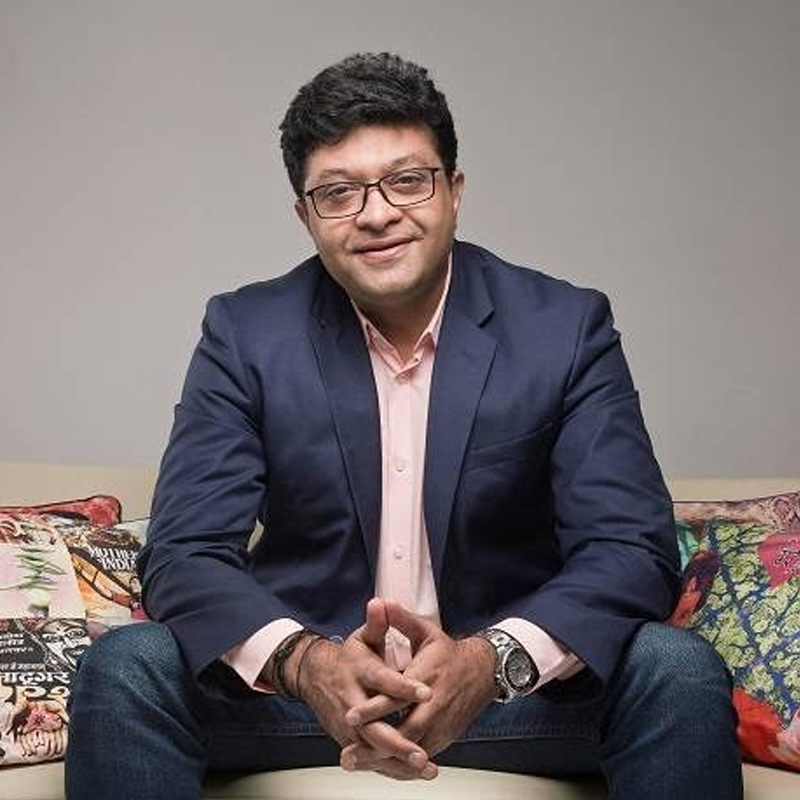
Sony Pictures Networks India channel Sab and Max cluster of channels senior EVP and head Neeraj Vyas revealed that it took almost eight months to conceptualise and create the show. Unaffected by the upheaval caused by the Covid2019 pandemic, Vyas believes that the lockdown period has in fact helped him to work on the show. It allowed the makers to work on graphics, VFX, CJI and the overall storyline.
Hero – Gayab Mode On is the journey of a common man, Veer, played by Abhishek Nigam, and his quest to find his father. Veer’s life takes an exciting turn when he chances upon a miraculous ring, which upon wearing gives him the power of invisibility. However, Veer’s prized possession is also desired by the evil aliens of the outer world and here begins the Hero’s real challenge to save humanity.
The show also stars Manish Wadhwa as Amal Nanda, Ajay Gehi as Shukracharya, Yesha Rughani as Zaara, Nitish Pandey as Mama and twins Surabhi and Samriddhi as sisters Sweety & Meethi, along with a host of supporting cast.
Sony Sab have ensured no stone is left unturned to impress the audience with its state-of-art graphics, elaborate costume designs, and visual effects. An entire alien spaceship interior was created on the set with hi-tech features like sliding doors, long spaceship corridors, round monitors and giant chairs, amongst other elements.
Peninsula Pictures producer Alind Srivastava shared that makers have used both VFX and live prosthetics on actors. After a lot of trial and error, the prosthetics were ordered from the US but it couldn’t reach India due to the pandemic. Finally, the production house decided to hire Prasoon Basu to create disposable prosthetics locally. Attention was paid to the minutest details – right from the skin texture, face, hair – while designing the prosthetics for actors. It takes almost three hours for the makeup and hair process.
Due to Covid2019 restrictions, the channel has had to cut down on the staff allowed on sets. As a result, it is extremely difficult to create a sci-fi show with limited crew members, said Srivastava. From 12 hours of shoot, the studio is able to extract only seven minutes of shot footage. The shooting is happening at Naigaon’s Mother Nature studio whereas editing and VFX is done in Peninsula Pictures’ own VFX studio in Andheri.
Vyas mentioned that the storyline of the show is very different from other TV shows. There is a backstory to all the characters. Said he: “If you see the show there are a lot of nuances which are unlike other daily programmes, where the only aim is to create footage and ensure that the episode is delivered regularly. The lockdown helped us to work on scripts, we casted much in advance and most importantly we worked on VFX and graphics.” Hero – Gayab Mode On is believed to be different from the channel’s existing roster in the same genre Tenali Rama, Aladdin and Baalveer Returns.
Sab has already roped in Amul Macho as the presenting sponsor.
As far as marketing and promotions are concerned, the channel is looking at a younger space. Hero – Gayab Mode On will be promoted through television, digital, print and OOH mediums.
Asked about competition in the space, as other channels have similar kinds of sci-fi shows, Vyas remains unfazed. He highlighted that Sony Sab is a living room brand where every member of the family is a vital decision-maker in this process. Unlike other channels, Sony Sab is not bound to create content only for housewives. A lot of its content is geared towards entertaining various segments of the audience. While it has programmes like Tarak Mehta ka Oolta, Katelal & Sons, Chashma and Bhakharwadi which appeal to the entire family, shows like Aladdin: Naam Toh Suna Hoga, Baal Veer and Jijaji Chhat Per Hai clearly targets a younger audience. He intends to keep the audience mix beautifully balanced and intact.
Sony Sab’s biggest viewer segment is the youth, aged between 15 to 21 years. This is followed by a huge chunk of audience in the age group of 21 to 30. The channel is actively looking at Hindi speaking market but it is not a rural-focused channel, the content is created keeping in mind the urban audience. Sony Sab clearly targets the one million-plus population market.
Vyas underlined that their current focus is on making audiences aware of the quality and variety that the channel is delivering to ensure that television survives from the competition faced by OTT content. Said he: “Online content is viewed by every category of the consumer across the country and it is not elite anymore. Today, it’s not unusual for the common man to have two to three OTT apps. It means that people are now seeing a huge amount of innovative, and very high-quality differentiated content which was not the case a few months back. If TV has to stay relevant, we absolutely can’t be just for the sake of ratings and keep putting out the same content.”
He opined that ratings are critical but now consumers have the right to choose. It is important to create a fine balance between rating and brand image in the long term. He believes that keeping a watchful eye on ratings and also managing to create a differentiated appeal for the brand in terms of production quality, content, packaging makes a lot of difference. The entertainment audience will now have to cater to a much larger audience. Innovation and variety are the need of the hour, he said.
With this philosophy in mind, Srivastava, who conceptualised Hero along with his partner Nissar Parvej, has derived his inspiration from Indian mythologies and Puranic stories. The makers have incorporated a distinct Indian silhouette along with the element of modernity while designing the set, head gears, weapons and costumes. They have made use of LED lights in the costumes which is further advanced by VFX and CCI. The show is directed by Maan Singh, and the sets designed by Vinod Bagh and Archana Shourey. The duo has recreated Mumbai streets inside the studio to shoot multiple fight sequences. Souvik Bhattacharyya is the music composer. Costumes are created by senior costume designer Vini Malhotra.
The studio has hired concept artist Harshvardhan Kadam to design the look of the spaceship and other characters. Apart from Srivastava and Parvej the show is developed and written by Shakti Sagar Chopra and Faisal Akhtar. Later, Utkarsh Mathane also joined the writers’ room.
The channel is all set to announce yet another show, but currently, Vyas refused to delve into further details about it.