Tag: Nirmala Sitharaman

  • Swiggy launches ‘She The Change’

    Swiggy launches ‘She The Change’

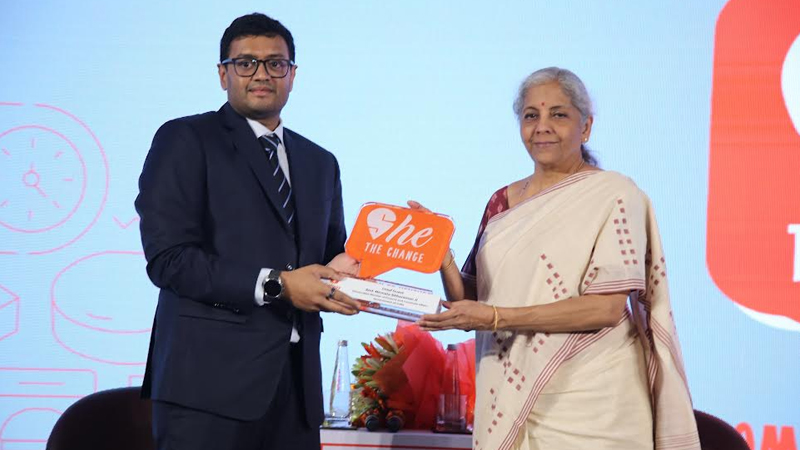
    Mumbai: In a tribute to India’s vibrant spirit of women entrepreneurship and their impact on the economic landscape, Swiggy, India’s leading on-demand convenience platform, launched a new initiative titled “She The Change- From Vision to Venture”. Inaugurated by the Minister of Finance and Corporate Affairs, Government of India, Smt. Nirmala Sitharaman, the initiative by Swiggy underscores the contribution of food delivery platforms in fostering and stimulating women’s entrepreneurship in the country.

    Commemorating nearly a decade of working with women entrepreneurs, Swiggy is shining the spotlight on their journey ‘from vision to venture’ for both budding and established women entrepreneurs in the Food & Beverage (F&B) industry. The launch event served as a platform for accomplished women entrepreneurs in F&B from across India, joined by distinguished figures from economics and academia, and Swiggy’s leadership including Swiggy group CEO Sriharsha Majety and Rohit Kapoor, Swiggy Food Marketplace CEO Rohit Kapoor.

    Swiggy has more than 50,000 women-run restaurants on its platform. It is estimated that these entrepreneurs are generating approximately three hundred thousand jobs, as each restaurant employs an average of six direct employees. Swiggy believes that this is merely the beginning of their contribution to the food and beverage sector, which accounts for around three per cent of the country’s GDP.

    The Honourable Minister of Finance and Corporate Affairs commended Swiggy’s role in encouraging and recognising the performance of women-led businesses, a move emphasizing the Honourable Prime Minister’s endorsement of women’s inclusion in the workforce, encapsulated in his vision of ‘Nari Shakti,’.

    Speaking at the occasion, Sitharaman said “From keeping women at the centre of policymaking to women-related budgets to discussing women in employment, we have come a long way. Today, I can see there is great vibrancy in women-led enterprises, where women are coming forth and taking up business challenges- whether small, medium or big, you find women everywhere, and programmes such as Swiggy’s “She the Change” are giving them the encouragement and a little push, and for other women to know this is possible. Swiggy deserves a special mention for encouraging women’s entrepreneurship nationwide.”

    Majety said, “’She The Change’ transcends being just an initiative; it stands as a platform, dedicated to honouring and amplifying the remarkable stories of women entrepreneurs and leaders in the F&B industry. They have not only set new benchmarks for success but also played a pivotal role in shaping India’s economic narrative. At Swiggy, we deeply acknowledge the dedication and perseverance they’ve poured into their ventures, and it’s our privilege to celebrate and recognize several of them in the presence of Smt. Nirmala Sitharaman Ji, Honourable Minister of Finance & Corporate Affairs.”

    Kapoor said “In the decade since Swiggy’s inception, we’ve had the honour to provide a platform for women entrepreneurs in the F&B space and witness their remarkable journeys first-hand. It’s inspiring to see the steady growth in both the number and scale of women-led businesses on Swiggy each year. ‘She the Change’ is dedicated to these entrepreneurial women. It’s more than just a celebration—it’s about empowering them with access to resources for sustained success, growth, and meaningful impact.”

    NOTO- Healthy Ice Cream co-founder Ashni Shah said, “The restaurant industry is highly competitive, and this is why it is encouraging to see women in the industry being celebrated by a platform like Swiggy with the “She the Change” initiative. Food delivery platforms like Swiggy make a significant contribution towards enhancing our visibility and increasing our order volumes by connecting us with a broader customer base. I am grateful for this recognition and hope that this initiative inspires more women to not only take the initial step but also pursue their aspirations with conviction.”

    Swiggy’s mission to offer unparalleled convenience to consumers through access to a wide variety of restaurants has empowered numerous restaurants, especially in smaller towns. Bonfire Pizza, Rishikesh, Priya Sharma said “From sharing homemade meals at the office to launching our restaurant, the journey has been a leap of faith. We faced many trials, including limited resources and no advertising budget, however, post our partnership with Swiggy in 2019, our business saw a transformative shift, reaching new heights. Today, Bonfire Pizza is not just a restaurant; it’s a testament to chasing your passion and embracing the opportunities that come your way. Is heartening to see Swiggy recognise and honour women entrepreneurship through stories of women-led businesses turning their vision into reality.”

    The event concluded with the facilitation of women entrepreneurs from across the country, celebrating their remarkable contributions and inspiring journeys in creating a difference through their ventures.

  • “We are confident, people have unstinted faith in PM Modi’s leadership”: Nirmala Sitharaman in her first interview post-budget

    “We are confident, people have unstinted faith in PM Modi’s leadership”: Nirmala Sitharaman in her first interview post-budget

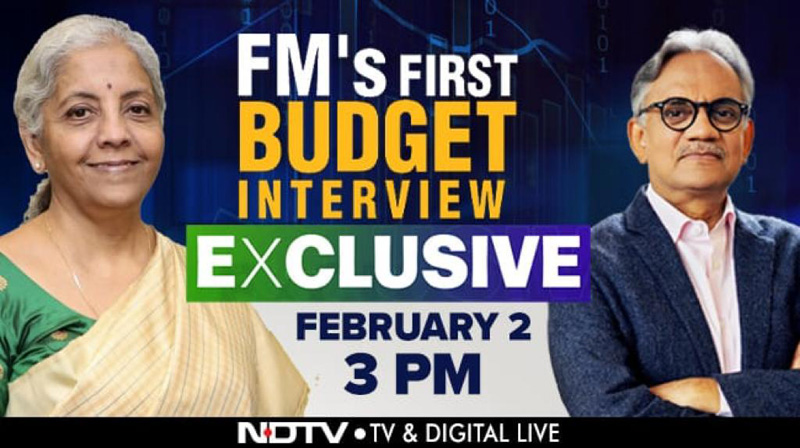
    Mumbai: In her first post-budget interview to any private network, finance minister Nirmala Sitharaman has highlighted what she called people’s unshakeable faith in prime minister Narendra Modi, emphasizing that this trust gave the government confidence to focus on empowerment instead of populism just before elections

    In an exclusive interview with NDTV’s editor-in-chief Sanjay Pugalia, Nirmala Sitharaman said the unflinching public faith in prime minister Modi empowered the government to prioritize long-term fiscal responsibility without compromising on the allocation to welfare schemes.

    “We are confident because, in the last 10 years, we have consistently launched schemes that benefit the people. And we don’t just launch the schemes, we ensure that the benefits reach the last person in the queue,” the finance minister said, to a question on the confidence on display with a budget that skipped any populist measure, including tax changes.

    “This is why we are confident that we have got the people’s blessings twice and will get it again. The people’s confidence in Prime Minister Modi is unshakeable and that gives us confidence.”

    Sitharaman, in the last budget before national polls, also trimmed the subsidy spend to Rs 3.81 lakh crore for FY25 compared to Rs 4.13 crore for FY24. Resisting the temptation of spending on schemes for the poor in the pre-election budget, the government stayed firm on fiscal consolidation to attract investors.

    “Our initiatives are not about populism or entitlement but of empowerment,” Sitharaman said, “We don’t believe in handholding people in a way which hampers their own decision-making. We will do welfare spending for healthcare and education.”

    Fiscal discipline and subsidies, she explained, are not substitutes to one another.

    To NDTV’s question on plans to raise capital expenditure, the finance minister said, “We will treat capex exhaustively in July (Union Budget).”


  • Modi ki development guarantee – Union Budget 2024

    Modi ki development guarantee – Union Budget 2024

    Mumbai: Highly speculated theories are now haywire to label it as a ‘Populist budget. In Modinomics, the last union budget session of the Modi government presented by finance minister Nirmala Sitharaman concluded her brief speech on the future aspirations of India in parliament and highlighted growth during the current government tenure.

    In a masterstroke, ‘Modi Ki Guarantee’ reflected a surprising budget for analysts. Most of the masses and even analysts expected a ‘ Populist Revadi Budget ‘ but in an unprecedented move, the Modi government decided to move further with a realistic budget. While considering the long-term plan ahead, the government is extremely focused on increasing the capex (capital expenditure) by the government to develop better infrastructure to encourage investors for sustainable development. Interestingly after the Ayodhya Ram Mandir ceremony, people anticipate a new cluster of ‘ Election Budget.’ Interestingly the government decided to not revise the tax structure which is also a game-changing factor for the government and the country. Due to a better collection of revenue, the government decided to put the same tax structure and improve the flow of the tax cycle.

    Speaking on tax announcements in the interim budget 24-25, Advantage Club CEO & founder Sourabh Deorah, said, “We welcome the government’s decision to extend tax benefits for startups until March 2025 and allocate 1 lakh crore loans for tech-savvy youth. The support provided by a fund of funds, startup India, and startup credit guarantee schemes exemplifies a comprehensive approach to fuelling growth. Overall, the budget presents a positive outlook for the future of India Inc.”

    However, the central government masterstroke paved the way for the ‘ New Indian Revolutionary Budget ‘ and went beyond vote politics. While considering all sections of society, Nirmala Sitharaman has spoken about the structural development of each and every sector of the country. Right from transgender, divyang to middle class, unprivileged community of the society.FM Nirmala Sitharaman mentioned the government’s plan to increase capex in the country. She also mentioned the government plan of’ Jai Jawan Jai Kisaan Jai Vigyan Jai Anusandhan’ in her crystal-clear speech. Her body language was merely speaking about being a populist budget without fear of any kind of general Lok Sabha election ahead. She emphasised the government’s plan to be fairly and truly ‘secular’ in terms of equal opportunity to all sections of society. Especially whether it is employment opportunities, self-employment or startup, or skill development programs for citizens. FM also explains the major government plan for infrastructure which is the first time in India. For the first time, the government announced major corridors i.e. port connectivity corridor, energy, mineral cement corridor, high high-density corridor. This categorised corridor classification is used for the concentration of improving infra development in India. 2.4 Lakh crore allocated by Modi government highest ever in India.

    In view of the union budget 2024, Careernet CEO and co-founder Anshuman Das commented, “As we witness the unprecedented pace of infrastructure development in all facets, be it digital, social, or physical, it is evident that the government’s commitment to progress is unwavering. The financial provisions outlined by the finance minister signal a paradigm shift, especially in the empowerment of women.With 300 million Mudra Yojana loans, the nation is fostering an entrepreneurial spirit, while the remarkable 28 per cent surge in female enrolment in higher education speaks volumes about the strides in education equality. Notably, our optimism is further fuelled by the impressive 43 per cent representation of girls and women in STEM courses, showcasing a commitment to diversity and inclusivity.

    At Careernet, we embrace this forward momentum, recognising the correlation between education, empowerment, and the rising participation of women in the workforce. This budget sets the stage for a more inclusive and vibrant employment landscape”. he added.

    While giving post- budget reaction on consumer durables segment, Veira Group managing director Sharan Maini, said, “As India charts its course towards ‘Viksit Bharat’ by 2047, the budget’s unwavering emphasis on ‘Atma Nirbharta’ in resource allocation holds the promise of a substantial boost for the electronics industry. The Skill, India Mission’s commitment to nurturing a skilled workforce lays a robust foundation for global competitiveness. While we acknowledge the government’s focus on technology and innovation, our concern persists regarding our dependence on semiconductor and display fab imports, which we had hoped would be specifically addressed in this budget.

    Nevertheless, the comprehensive attention given to technology and innovation is encouraging, presenting an opportunity to strengthen our manufacturing capabilities. To align the industry with national aspirations, a holistic approach that tackles import dependencies and reinforces domestic technological capabilities becomes imperative for sustained growth and competitiveness in the dynamic global electronics landscape.” he added.

    Expressing gratitude for women empowerment policies, ZebraLearn co-founder Radhika Sundarka, expressed, ‘ As we applaud the government’s pivotal strides in women empowerment, the bold measures such as reserving one-third legislative seats for women underscore a commitment to inclusivity. We strongly believe in translating policy into action, and this budget announcement aligns seamlessly with our ethos. By addressing social and legal issues, the government is paving the way for a more equitable society. Moreover, as a company, we actively promote a culture of inclusion and empowerment with a focus on providing a conducive environment for aspiring women entrepreneurs, offering mentorship, resources, and opportunities. This budget reinforces our shared vision for a progressive, gender equal future, and we are excited to contribute to the journey of women empowerment in the entrepreneurial landscape.’ she added.

    FM Nirmala Sitharaman also redefined GDP as governance, development, and performance to focus more comprehensively on developing a new Indian ecosystem. The manufacturing industry grows by 6.5 per cent in FY24 up from 1.3 per cent in FY23. As per the last data of the national statistical office, the economy is to grow 8.9 per cent compared to 16.1 per cent last financial year. agricultural, livestock, forestry, and relative business are contributing 15 per cent of GDP, unfortunately, it has come down in growth rate from 4 per cent in FY 23 to 1.8 per cent in FY 24. The technological advancements can be due to reforms in the Agricultural sector over the last few years. In this interim budget, FM announced the government would focus on new tech facilitation soon.

    Sharing happiness over budget, Rite Knowledge Labs co-founder & CEO Zahara Kanchwalla, said, ‘ This budget continues the government’s focus on development and infrastructure as crucial growth pillars, aiming to balance inflationary trends in parallel. Congratulations to the government for emphasizing women’s empowerment, particularly the lakhpati didi scheme. Additionally, the boost to entrepreneurship through Funds of funds and Mudra loans for small businesses is encouraging. The government’s vision of making India a developed nation requires participation from all tax-paying citizens and corporations for success.’

    Commented on the agriculture industry dynamics, Aroma Agrotech CEO and director Anshul Garg, welcomed the strides made in the agriculture sector by the latest budget, as he resonated with the sentiments made by the FM, saying, “Aroma Agrotech finds enormous inspiration in the ingenious and insightful evaluation in the interim budget 2024-25. The sentiment regarding the government’s commitment to the farmers, our ‘Annadata’. The PM-Kisan Samman Yojana and PM Fasal Bima Yojana sound like the highlight of the Agricultural budget and Aroma will extend its unwavering support to implement the scheme effectively. We feel that this budget extends farmer-centric policies, support of income, risk coverage, and the encouragement of developing technologies and innovative ideas through Agritech, which aligns perfectly with our core values and we are enthusiastic about building on the sector’s fast-paced growth by assisting these policies.”

    The Reserve Bank of India also plays an important role in cutting rates due to government-revised high growth indicators. Substantially, the government achieved a target of a Fiscal deficit of 5.1 per cent from last year’s 5.8 per cent in FY 23-24. Further, the government aims to lower it to 4.0 or 4.5 per cent in the next fiscal year. FM also spoke about giving equal attention to the service industry and a continuous growth approach for the service industry including hospitality, trade, communication services, telecom, media, and other related services. Despite that fact, the growth indicator slowed down from 14 per cent to 6.3 per cent in FY 24-25. Especially after the Ram Mandir ceremony PM Modi announced a solar energy scheme which was also emphasized by FM during a budget session. Under the rooftop solar scheme, 1 crore families get 300 units of free electricity.

    Giving hand-to-hand support to MSMEs and different flagship schemes for businesses like PM Vishwakarma Yojana, and PLI scheme, Nirmala Sitharaman also announced to cut down the burden by reducing corporate tax for industries. Sitharaman also spoke about ‘ Housing for all’, focusing on the middle-class housing problem in different cities.

    While expressing a reaction to the interim budget, Malodia Business Coaching founder & CEO Rahul Malodia said, “The budget’s focus on global competitiveness for MSMEs through training is a positive step towards viksit Bharat and the commitment to sustainable economic policies and next-gen reforms, in collaboration with states and stakeholders, signals a positive trajectory.

    He further added, ‘The vision for India’s development by 2047 aligns with the positive transformation witnessed in the last decade. The dedicated emphasis on all-round, all-inclusive development resonates with our mission. The priority to train MSMEs for global competition is a crucial step. This budget sets a promising tone for the entrepreneurial ecosystem, and we eagerly contribute to India’s journey towards becoming a developed nation by 2047.”

    After basic infrastructure development, the government also decided to give importance to the service industry and manufacturing sector. The government is aiming to build infrastructure for quality upgradation and research and development for providing futuristic services. The government aims to provide less interest or nil loans, as tech-savvy people get 50 years interest free loan or nominal interest loan facilities to improve tech infra development. This move of the government aims to boost the tech ecosystem in India. Rising manufacturing demands for semiconductors can get a boost in the country. FM’s speech also mentioned marketing and branding to get support for end-to-end solutions in the country. By procuring loan term loans tech giants get increasing R & D support. AI, the generative AI sector can leverage fruit out of it.

    Speaking exclusively on possible reflection of the interim budget on brands nationally and internationally, Aroma Agrotech CEO and director Anshul Garg expressed, ‘ Aroma Agrotech finds enormous inspiration in the ingenious and insightful evaluation in the interim budget 2024-25. The sentiment regarding the government’s commitment to the farmers, our ‘Annadata’. The PM-Kisan Samman Yojana and PM Fasal Bima Yojana sound like the highlight of the Agricultural budget and Aroma will extend its unwavering support to implement the scheme effectively. We feel that this budget extends farmer-centric policies, support of income, risk coverage, and the encouragement of developing technologies and innovative ideas through Agritech, which aligns perfectly with our core values and we are enthusiastic about building on the sector’s fast-paced growth by assisting these policies.”

    While speaking of the post-interim budget, larger numbers of analysts praised the professional approach of the government for fiscal 24-25. Continuing capex and simultaneously increasing revenue cycles is a win-win formula established in this budget.

    On the balanced approach of the union interim budget 2024, Edelweiss MF president & chief investment officer- equities Trideep Bhattacharya said, “In an election year, the budget adeptly strikes a balance, prioritising sensibility over populism. It showcases India’s unwavering commitment to infrastructure development, coupled with a steadfast adherence to fiscal prudence. This paves the way for sustained growth, steering the nation along the trajectory towards achieving a developed economy by 2047.”

    In this interim budget, FM declares a corpus fund of 50 50-year loans for entrepreneurs to fulfill research development finances. Expressing joy about tech industry reforms, Almond’s AI co-founder & CEO, Abhinav Jain said, “The government’s forward-looking budget aligns remarkably well with the impetus required for the AI and technology sectors. The focus on digital infrastructure lays a robust foundation for innovation, and the commitment to skill development among youth mirrors the mission to empower the next generation with AI capabilities.

    The support for electric vehicles and clean energy initiatives resonates with the Green Loyalty Program, reinforcing belief in sustainable technological advancement. This budget not only catalyses a tech-driven economy but also heralds a golden era for companies like ours at the intersection of AI and market technology. We are eager to contribute to this transformative journey and commend the government’s vision for a tech-empowered, inclusive growth trajectory.” he added.

    The government also focused on the welfare of the marginalised community, children, women, and small farmers’ businesses, and developing education for completing the skill development mission of India and making India developed by 2047 which was also mentioned specifically by FM Nirmala Sitharaman during her interim budget speech.

    Bal Raksha Bharat CEO Sudarshan Suchi commented on embarking on welfare policies, and the ‘Bachpan Surakshit, Desh Viksit ‘ approach, stating, ‘The government is working on an all-round, all-inclusive and all-pervasive development. Catalyst of change in child welfare recognises the interconnected facets of a child’s development. Bal Raksha Bharat supports this holistic approach by the Government of India which will undoubtedly accelerate efforts sustainably towards a Viksit Bharat by 2047.

    The allocation of a higher share of resources for children in the union budget will play a vital role in shaping the country’s developmental priorities and our goal of becoming the third-largest economy. We are hopeful that the union budget’s focus on development will significantly improve the nation’s progress and the well-being of its citizens. he added.

    Here are the union budget 2024 FM speech highlights –

    • No changes in direct, or indirect tax rates
    • To formulate a program to support dairy farmers
    • Efforts to control foot-on-mouth diseases
    • To empower existing dairy plants to up productivity
    • Largest milk producer in the world but low Milch productivity
    • The bond yield fell 8 bps after gross borrowing announcement
    • The GST tax base has doubled
    • Tax receipts estimated at Rs 26.02 lakh crore in FY25
    • FY25 fiscal deficit target set at 5.1 per cent of GDP
    • FY24 fiscal deficit revised down to 5.8 per cent of GDP
    • Projects for tourism to be taken up in islands including Lakshadweep
    • Metro Rail, Namo Bharat to be expanded to more cities
    • Govt to support EV manufacturing, and charging infrastructure
    • Ayushman Bharat cover extended to all Anganwadi and Asha workers
    • The golden era for tech-savvy youth, 50-year interest-free loans to be rolled out
    • The number of airports doubled to 149 in the last 10 years
    • Govt to help in providing housing for the middle class
    • Policy priority to provide training for MSMEs to compete globally.
    • Govt to adopt economic policies that sustain growth, Sitharaman says
    • The next 5 years will be of unprecedented development.
    • ‘New world order emerging after Covid’
    • ‘Proactive inflation management has helped keep inflation within the band’
    • ‘All forms of infrastructure – digital, social, physical – are being built in record time’
    • Our prosperity depends on equipping and empowering the youth.
    • Crop insurance has been given to 4 crore farmers under the PM
    • Fasal Bima Yojana, says FM Sitharaman
    • Garib Kalyan is desh ka kalyan.
    • Expect that our government with its stupendous work will again.
    • Our young country has high aspirations.
    • The Indian economy has witnessed a positive transformation in the last 10 years.

    Lastly, apart from all Modi ki Guarantee, this time the government enforced strict government measures for ‘Amritkaal‘ and decided to cut down rewadi culture to improve the efficiency of the overall economy.

     

  • Budget Buzz: E-commerce stakeholders share their reactions

    Budget Buzz: E-commerce stakeholders share their reactions

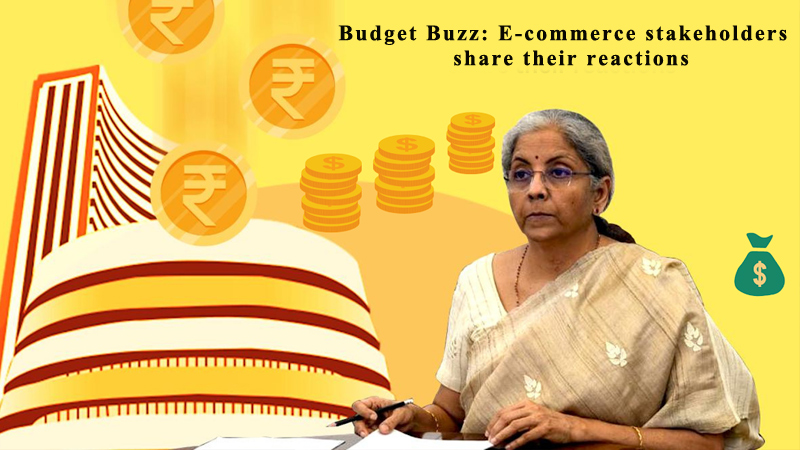
    Mumbai: The unveiling of the Union Budget 2024 offers a sneak peek into India’s financial trajectory. Acting as an interim measure leading up to the general elections, this budget provides significant insights into the government’s priorities and expenditure strategies, offering a snapshot of the nation’s fiscal future.

    Here are reactions from stakeholders in the e-commerce and e-retail sectors that reflect a spectrum of perspectives on the recent interim budget presented by minister of finance of India Nirmala Sitharaman. Overall, there is a sense of optimism and anticipation regarding the implications of the budget on business environments, innovation, and growth prospects.

    Recode Studios co-founder Dheeraj Bansal

    We find great optimism in the recent interim budget presented by Nirmala Sitharaman. The budget not only underscores India’s ambitious growth vision but also strongly emphasises inclusive growth and sustainable development, acknowledging our country’s position as a global economy. The Finance Minister’s statement regarding the significant improvement in the Indian economy over the past ten years strikes a deep connection with the spirit of entrepreneurship that propels the retail, MSME, and startup industries. The decision to maintain existing tax rates for both direct and indirect taxes in the retail sector is a welcome move, providing stability and predictability to businesses.  This not only creates a favourable atmosphere for new businesses but also stimulates the expansion of essential elements of our economy.  With revised estimates at 5.8 per cent of GDP, this budget sets the stage for a collaborative and thriving ecosystem. As we navigate these dynamic times, I believe that this budget will fuel the entrepreneurial spirit, driving our industries towards unprecedented growth and success. While the interim budget provided a broad overview, we eagerly anticipate the detailed budget’s insights into specific measures for the retail sectors.

    The Love co, founder & director Hemang Jain

    The recent budget announcement has ignited a wave of excitement and optimism within the startup community. Enhanced tax benefits, increased funding, and a deep focus on research and development are fueling entrepreneurial spirits. These measures are seen by startups as pivotal drivers for innovation and expansion, providing the essential financial backing and nurturing environment they need to flourish. The commitment to skill enhancement aligns perfectly with the demands of the startup landscape, heralding a future with a more capable and proficient workforce. As this budget unfolds, businesses are gearing up to seize these new prospects, paving the way for a vibrant and robust entrepreneurial ecosystem.

    MARS Cosmetics director  Rishabh Sethia

    The budget serves as a strategic Guideline for both the retail and startup industries, presenting a dual narrative of obstacles and opportunities. Retailers welcome the GST amendments as a possibility for higher consumer spending, while they navigate customs tariff modifications that may affect their global supply chains. Simultaneously, entrepreneurs are encouraged by longer tax breaks and expanded funding allocations, which align with a larger aim of supporting innovation and growth. The e-commerce business is at a crossroads, with new laws prompting online platforms to rethink their tactics, while traditional shops welcome the possibility of a more fair playing field. As these industries navigate the fiscal landscape, flexibility and strategic agility emerge as critical to thriving in a changing economic paradigm.

    French Essence founder & CMO Nidhi Gupta

    As a woman entrepreneur, the current budget reflects a genuine recognition of the critical role women play in both the startup and retail industries. Extended tax breaks and higher financial allocations not only encourage innovation but also pave the path for more diverse and inclusive business operations. The emphasis on skill development is especially empowering since it provides a platform for women to improve their capabilities and make important contributions to these dynamic industries. The budget’s regulatory focus on e-commerce is an important step toward building a more equitable and competitive environment for women-led enterprises in both traditional and online retail.

    This budget acts as a beacon, ushering in a transformative era for women entrepreneurs by creating an environment in which their abilities and efforts are recognised and promoted.”

    Winston India co-founder  Himanshu Adlakha

    Since this was an interim budget, there was not much regarding the e-retail sector, we anticipate much more in the upcoming budget in July. This budget reinforces India’s commitment to inclusive growth and sustainable development, establishing our country as a major player in the world economy. The prospect of monetary support for the Open Network for Digital Commerce (ONDC) program is particularly encouraging. This groundbreaking initiative can potentially revolutionise the landscape for micro, small, and medium-sized businesses (MSMEs) in the e-retail sector. The focus on standardizing data and processes through ONDC is a significant stride towards empowering e-retail entrepreneurs. This will not only enhance productivity but also foster a vibrant ecosystem for MSMEs to thrive on various e-retail platforms. In an era of technological advancement, a budget that supports online businesses reduces regulatory processes and provides financial incentives is instrumental in driving our ambitions and contributing to the expansion of the e-commerce industry. This budget lays the groundwork for a positive transformation in the Indian economy with revised estimates at 5.8 per cent of GDP.

  • Interim Budget 2024: Glimpses into technological boom!

    Interim Budget 2024: Glimpses into technological boom!

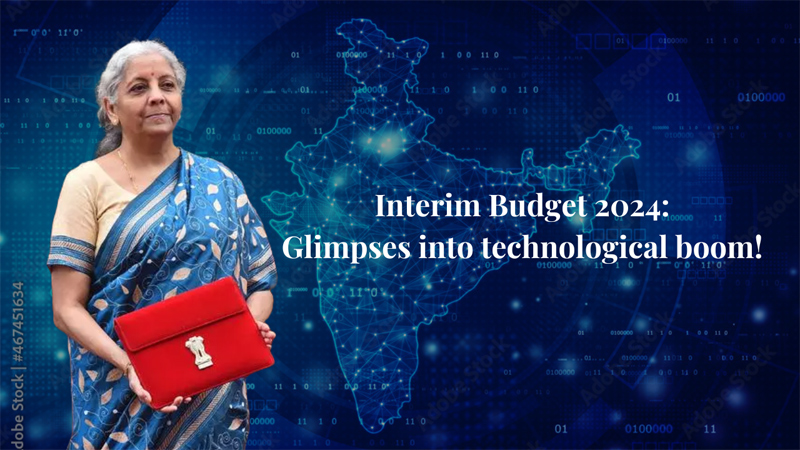
    Mumbai: With the unveiling of the Interim Budget 2024 by union minister of finance Nirmala Sitharaman, a wave of anticipation and excitement sweeps across industries. The budget unfolds a roadmap for India’s economic trajectory, emphasising technology, innovation, and skill development.

    Following are some of the key highlights and reactions from industry leaders, shedding light on the potential impacts on technological advancements.

    Beyond Key founder and CEO Piyush Goel

    In 2024, a transformative surge in technology is predicted, propelled by India’s unwavering commitment to skill development and innovation, as articulated by finance minister Nirmala Sitharaman. The Skill India Mission has actively educated 1.4 crore youths, imparting essential skills and upskilling 54 lakh youths, alongside establishing 3,000 new ITIs. The academic arena has witnessed remarkable growth with the establishment of seven IITs, sixteen IITs, seven IIMs, 15 AIIMSs, and 390 universities, fostering a strong atmosphere for technological advancement. Furthermore, the fiscal budget 2024 allocates resources to increase the number of airports, rail infrastructure, and other infrastructure, undoubtedly impacting mass lives. Artificial Intelligence (AI) would become a pivotal force, and stronger funding to harness its benefits is poised to elevate the technological landscape. Corporate sectors also stand to benefit from the decreased corporate tax of 22 per cent, fostering a greater favorable commercial enterprise environment and selling economic growth through accelerated investments and expansion opportunities. The budget’s strategic investments underscore India’s steadfast determination to a dynamic and tech-driven future.

    AdCounty Media CFO Abbhinav R Jain

    The Interim budget marks a significant move towards India’s digitisation. In the budget 2023-24, the government announced an outlay of 4795.24 crore for its Digital India program which ensured universal access to high-speed internet and digital literacy initiatives. This year, in a bid to bolster R&D in sunrise domains, Honourable FM, Nirmala Sitharaman, announced a corpus of one lakh crore with a 50-year interest-free loan. Dubbing this period as the golden era for innovation and entrepreneurship, she went on to say that the corpus will provide long-term financing or refinancing with long tenures and low or nil rates. The budget, undeniably, is leaving no stone unturned to bridge the gap between youth and technology to realise the aim of a fully developed India (“Viksit Bharat”) by 2047.

    Tagglabs founder Hariom Seth

    An innovative landmark statement was made by Nirmala Sitharaman, who announced A corpus of 1 lakh crore rupees 50-year interest-free loan with low or nill interest rates to encourage and scale up research and innovation. This marks a landmark in the history of tech startups and companies, providing a one-of-a-kind chance to explore distant shores and leave an indelible mark on the ‘Make in India’ dream.

    The provision of a corpus of 1 lakh crore rupees as 50-year interest-free loans with low or no interest rates is a significant move that can greatly benefit companies. This initiative increases liquidity, allowing companies to invest in research, development, and innovation without the burden of immediate repayment. It also mitigates financial risk associated with borrowing due to the long tenure of the loan and the low or nil interest rates. Furthermore, it encourages innovation as companies can focus more on creating innovative products and solutions with easier access to funds. The overall cost of the loan decreases due to lower interest rates, leading to savings that can be used for other business activities.

    Lastly, timely repayment of such loans can enhance a company’s credit profile, making it easier to secure future funding. However, while these benefits can provide a significant boost to companies, it’s also important for them to manage these funds wisely to avoid potential financial challenges.

    DashLoc CEO and co-founder Sumit Singh

    The budget has clearly exhibited that the government is extending full-fledged support towards adoption of technology across sectors. The special mention that deeptech in defence section gained in the speech truly indicates that the government is going to support emerging technologies in crucial sectors too. Alongside, it is a matter of pride that STEM courses have seen aggressive enrolment from women. We can expect a quality and skilled workforce in India that will keep the wheel running towards striking progress.

    Almonds AI co-founder & CEO Abhinav Jain

    Government’s forward-looking budget aligns remarkably well with the impetus required for the AI and technology sectors. The focus on digital infrastructure lays a robust foundation for innovation, and the commitment to skill development among youth mirrors the mission to empower the next generation with AI capabilities. The support for electric vehicles and clean energy initiatives resonate with the Green Loyalty Program, reinforcing belief in sustainable technological advancement. This budget not only catalyzes a tech-driven economy but also heralds a golden era for companies like ours at the intersection of AI and market technology. We are eager to contribute to this transformative journey and commend the government’s vision for a tech-empowered, inclusive growth trajectory.

    Superbot co-founder & director Sarvagya Mishra

    It’s encouraging that the government recognizes the importance of addressing skill development to meet the demand for a high-quality workforce in the emerging technology sector, crucial for India’s ambitious goal of a $5 trillion economy. All the initiatives mentioned in the Interim budget speech like establishment of more IITs, IIITs, STEM courses etc., are cementing the foundation of the growing India, which is youth. Commendably, the government’s embrace of deeptech in critical sectors like defense underscores our country’s progressive stance. Given that R&D is a capital-intensive step for businesses in deeptech, blockchain, machine learning, and generative AI, increased allocation towards MUDRA schemes and the announcement of a one-lakh crore corpus with 50-year interest-free support will undoubtedly fuel technological growth.

    NeuralGarage co-founder & CEO Mandar Natekar

    The interim budget presented today shall provide an impetus to an ecosystem of startups, technology companies and aspirants, providing them with ample opportunities to set-up, enhance technological offerings and bolster innovation. These are positive sentiments that will further strengthen India’s technology landscape through research and innovation. A corpus of Rupees One Lakh Crore will be established with a fifty-year interest-free loan. The corpus will provide long-term financing or refinancing with long tenors and low or nil interest rates. The private sector will witness a steep growth with innovation being at the forefront. Further, the government has extended tax benefits for start-ups to 31 March 2025 and withdrawn some outstanding direct tax demands. Deeptech and GenAI have the potential to revolutionize a variety of sectors. Ethical practices and its usage will lead to Indian brands and artists being recognised from local to global markets creating a seamless experience and put India on the global map for technological prowess.

    Yatiken Software Solutions founder and CEO Alok Kashyap

    In line with the government’s ambitious vision of technology contributing 20-25 per cent to the GDP by 2025, this forward-looking budget charts a promising course for the IT sector. The allocation for EV infrastructure development is particularly noteworthy as it opens avenues for software development in EV systems, IoT integration, and data analytics. The one-lakh crore corpus for long-term financing is another indispensable boon for the IT industry, fostering innovation and research. Moreover, the Skill India Mission’s initiatives and tax benefits for startups provide a robust foundation for skill development and entrepreneurial growth.

    icogz MD Amit Tripathi

    The budget allocated Rs 8,000 crore for the national mission on quantum technologies and applications, which aims to boost research and innovation in quantum computing, communication, cryptography, and artificial intelligence. This is as per expected lines and what I had predicted in my pre budget expectations.

    The budget also proposed to set up a Data Centre Economic Zone to attract investments and create employment opportunities in the data centre industry, which is expected to grow at a CAGR of 23 per cent by 2025. Again on expected lines.

    The budget increased the tax deduction at source (TDS) on e-commerce transactions from one per cent to two per cent, which may affect the profitability and cash flow of e-commerce platforms and sellers.

    E-Factor Experiences Ltd MD Samit Garg

    The emphasis on digital transformation across sectors could encourage the adoption of advanced technologies in event management, like virtual reality, augmented reality, and AI, enhancing the audience experience. More investment in R&D would result in more availability of local resources, thereby pushing the costs down and making the solutions more affordable.

  • Chinese smartphone brands Oppo, Vivo India & Xiaomi under tax sleuths’ lens

    Chinese smartphone brands Oppo, Vivo India & Xiaomi under tax sleuths’ lens

    Mumbai: Chinese smartphone makers have once again come under the scanner of Indian agencies for cases of alleged tax evasion. Notices have been issued to Oppo, Vivo India and Xiaomi, finance minister Nirmala Sitharaman informed Rajya Sabha recently. The three Chinese mobile phone companies, between them, hold a major share of the Indian smartphone market.

    The Finance Minister said that the department of revenue intelligence (DRI) has issued a notice to Oppo for a total customs duty of Rs 4,389 crore. This is on the grounds that misdeclaration of certain goods leads to a short payment in customs duty.

    The duty evasion is about Rs 2,981 crore, Sitharaman said replying to a question in the Upper House.

    “Undervaluation of imported goods for the purpose of payment of customs duty, that we think is an evasion of Rs 1,408 crore,” she said.

    She stated that they came voluntarily to deposit Rs 450 crore, much less than the demand of Rs 4,389 crore.

    Regarding the other companies, she said Xiaomi, which deals with assembling MI mobile phones, has been issued three show-cause notices.

    “The approximate duty liability there is about Rs 653 crore. For the three show cause notices that have been issued, they have deposited only Rs 46 lakh,” the minister said.

    She informed Rajya Sabha that a demand notice has been issued for Rs 2,217 crore for which they have deposited Rs 60 crore as a voluntary deposit.

    “Besides these, the ED is looking at 18 companies that were established by the same group as Vivo, and there they have voluntarily remitted Rs 62 crore as deposits, but the parent company outside of India has total sales of 1.25 lakh crore.

    “Of the Rs 1.25 lakh crore total sales, Vivo has transferred through these 18 companies huge amounts of funds, and it is believed that Vivo India has, in turn, remitted 0.62 lakh crore to its parent company, which is outside India,” Sitharaman said.

    In her written reply, the finance minister said a show cause notice demanding Rs 4,403.88 crore has been served on Oppo Mobiles India based on the investigation conducted by the directorate of revenue intelligence (DRI).

    Five cases of customs duty evasion have been booked against Xiaomi Technology India, she said.

    “During the period 2019 to 2022, in respect of the central board of indirect taxes & customs (CBIC), cases against 43 other such companies have been booked.”

    “‘As regards to the central board of direct taxes (CBDT), investigation directorates have undertaken search and seizure actions in cases of five groups pertaining to the telecom sector, in which tax evasion has been detected,” Sitharaman added.

    Meanwhile, the market share of these three brands, which make up the top five smartphone brands in India, has been steadily growing, despite the scrutiny. Xiaomi remained the market leader in 2022 with a share of 24 per cent, followed by Vivo with 18 per cent share and Oppo with a ten per cent share, according to a report by Cyber Media Research (CMR). The three brands, along with Realme and Korean smartphone major Samsung, account for nearly three quarters of India’s smartphone market.

  • RBI recommends banning cryptocurrencies, industry shows concern

    RBI recommends banning cryptocurrencies, industry shows concern

    Mumbai: The crypto ecosystem in the country has once again come under the scanner after finance minister Nirmala Sitharaman stated in Parliament recently that the Reserve Bank of India (RBI) has expressed concerns over cryptocurrencies and sought a ban on them from the government.

    “In view of the concerns expressed by RBI on the destabilising effect of cryptocurrencies on the monetary and fiscal stability of a country, RBI has recommended the framing of legislation on this sector. RBI is of the view that cryptocurrencies should be prohibited,” said the FM in reply to a question raised in Lok Sabha on the stance of the government and the RBI on Cryptocurrency.

    This is even as India recorded the second-highest number of cryptocurrency users in the world last year, and the crypto market in the country grew by over 600 per cent, as per a report released by industry research firm Chainanalysis in 2021. The cryptocurrency sector in the country can no longer be termed niche, as it catches the fancy of an increasing number of traditional-minded investors looking to diversify their investments.

    However, on whether the government has any immediate plans to legislate a law restricting the use of cryptocurrency in India, the FM clarified that while cryptocurrency by definition is borderless, it requires international collaboration to prevent regulatory arbitrage. “Therefore, any legislation for regulation or for banning can be effective only after significant international collaboration on evaluation of the risks and benefits & the evolution of common taxonomy and standards,” she said.

    Despite this clarification on the long-standing matter of regulation of the digital asset class, and notwithstanding the boom in adoption of the virtual currency just last year, uncertainty continues to plague the crypto industry in the country. The crypto market has been on a downward trend since the start of the year due to various macroeconomic factors, according to industry insiders.

    Even so, most of the industry stakeholders Indiantelevision.com spoke to were sceptical about the ban on crypto becoming a reality.

    According to Optiminastic Media founder Akshae Golekar, with several first world countries, such as the UK, Australia, Denmark, France, Germany, and Spain, to name a few, accepting and working towards adopting the technology and adapting to the new trend, it will be outright foolish to ban crypto altogether.

    Secondly, he points out, the core of crypto is blockchain, and blockchain is a public global ledger. “If a particular country bans it, it would have no effect on the functionality or the application of the technology. Instead, it will be the country that is left behind. “

    So while it would be sad for the entire crypto ecosystem, it wouldn’t come to a point where the crypto ecosystem is so affected that it breaks down or the technology is aborted, Golekar asserts. “Brands can still emerge successful by focusing their marketing and operations in other countries of the world. Thriving and sustaining in India, though, would be a grave issue. Crypto ban would simply mean there’s nothing left for such brands in India,” he added.

    Already, some crypto startup founders are moving out of the country in a bid to shift base to more crypto-friendly destinations. The co-founders of India’s largest cryptocurrency exchange, WazirX, Nischal Shetty and Siddharth Menon, recently moved to Dubai with their families for clearer policies around digital assets.

    This comes on the back of the hefty tax imposed on crypto, amid a progressive clampdown on the virtual currency, including action by enforcement agencies against some platforms, and the basic lack of clarity on policy in the long run.

    They can’t work in an uncertain environment, and this literally affects the country, its economy, and the present and coming generations. “It is a concerning thing when it comes to the growth and development of the nation with respect to technology,” said Golekar.

    “The RBI is voicing concerns about the ‘adverse effects’ of digital assets on the Indian economy, alternating between ‘legislation’ and ‘prohibition’ and the government adopting a wait-and-watch strategy, India is on the brink of losing the opportunity to become a world leader in the cryptosphere,” feels crypto banking platform CEO and director Abhijit Shukla.

    “The central bank digital currencies are known to palpably denounce private cryptocurrencies. While the government is finalising a concrete stance on this, there seems to be a lack of understanding between money and currency,” he says. “While the RBI could be over-critical of the crypto assets considering their volatile nature and the risks involved for its investors, it is always better to gauge both sides of the same coin, looking at the positive effects of utilising this technology,” says Shukla, adding that a blockchain-based payment system with sovereign backing can’t be a replacement for cryptocurrencies on the whole.

    Digital assets technology company, Atato’s co-founder and head of partnerships, Maxime Paul, echoes the sentiment when he says that centralised banks may feel a greater need to regulate products which they find it hard to control considering the decentralised nature of crypto. “As a regulated and licenced wallet provider, we do see increased sandboxes for crypto by regional regulatory authorities that welcome cryptocurrency,” he continues. While being supportive of legislative frameworks on crypto, Paul believes an outright ban would not be easy to enforce considering India is one of the largest demographics for cryptocurrency.

    Armoks Media founder Arun Prabhudesai agrees with the majority opinion that banning cryptocurrency is not the solution. “Around two crore Indians have cryptocurrencies right now, whose value is estimated to be Rs 45,000 crore. It’s a trillion-dollar market globally, and we cannot just shut it down. Since crypto is essentially decentralised money, there is no point in banning it, he adds.

    India will close the doors for FDI as well as next-gen technological innovations if we ban cryptocurrency, says Prabhudesai. “We will be clubbed with China, and essentially tell the world that hey, we cannot handle the future.” He adds that the government should consider cryptocurrencies as investment instruments and should impose transparent taxes on them (which right now is a bit ambiguous).

    Industry experts agree that there has to be a balanced approach. Regulation of crypto is the solution for the long run, most believe.

    “We believe that a collaborative approach towards crypto investment aligned with India’s positioning to be an upcoming superpower would be the right approach considering the global acceptance and adoption of crypto,” says BuyUcoin CEO Shivam Thakral.

    The challenges he foresees for the crypto industry in the country mainly come in the form of “mainstream acceptance,” as crypto needs support from a regulatory perspective to be culturally accepted by the masses, says Thakral.

    Notwithstanding the RBI’s concerns about cryptocurrencies affecting monetary stability, global crypto investment platform Mudrex CEO and co-founder Edul Patel believes cryptos can create a more transparent environment for transactions using blockchain.

    “India has over 20 million stakeholders holding crypto assets worth $5.3 billion. If the government decides to ban cryptos, the act would directly impact them,” says Patel. “And this would also hinder the growth and innovation in the sector to a great extent in this digital era, taking the country’s performance down.”

    Bhavan’s SPJIMR associate professor of finance, Dr. Hemant Manuj, sums up the discussion when he says that cryptos have several positive features, but the counterparties have no resort if there is any kind of breach in the transaction.

    Based on their optimal design, he says, they can serve as fast and efficient modes of payment and also ensure privacy. However, regulators should be questioning whether public trading should be allowed in a security with no tangible underlying asset. And if so, what safeguards are required?

    Ironically, the large-scale acceptance of cryptos can happen only at the cost of the existing currency systems. That would have monetary, economic, and nationalistic implications. So, the anti-crypto stance of the regulators like RBI can be understood as partly logical and partly protective of the existing systems, notes Manuj.

    Crypto brands were also some of the biggest spenders in advertising and marketing in the last couple of years. Crypto exchanges took out full-page ads in newspapers and signed up top Bollywood stars to promote their offerings during popular marketing properties.

    However, there has been a drastic dip in the promotional activities of late-this year’s IPL being a case in point where the brands were glaring by their absence. It’s a remarkable turnaround from last year, when the crypto platforms were some of the country’s hottest brands.

    It is likely that, given India’s huge demographic, sponsors shying away from the IPL would like to not be in the spotlight while regulations are not defined, says Atato’s Maxime Paul. Uncertainty will divert marketing resources to crypto-friendly markets. He adds that this is also something to consider for regulatory authorities as part of the ecosystem of crypto.

    Industry stakeholders also believe the reason behind the brands’ going “missing in action” could also be the recession. The roots of these crypto brands are finance and the economy. These players knew that the macroeconomic indicators were not looking good and hence paused investing in marketing, says Optiminastic Media Golekar. At times like these, marketing spending needs to take a back seat and brands focus on sustainability and developing and improving the product and service.

    Whenever markets go through a bear phase, as is the case currently, belts need to be tightened, agrees the Coinswitch Kuber spokesperson, adding that the crypto sector is no different. “Volumes in the Indian crypto market have been following global trends. We believe that the bear market is temporary and that crypto is here to stay,” said the spokesperson for the cryptocurrency exchange platform.

    There were also a lot of concerns raised about the advertisement blitzkrieg by crypto brands last year, with several of them being flagged for misleading claims. Other industry experts opined that it is likely that brands are working with recent advertising guidelines and standards to create new, acceptable creative means of promotion.

    Amid a bull market last year, cryptos were the clickbait of social media platforms with ever-engaging ads and well-tractioned branded promotions, says Tarality’s Abhijit Shukla. This year established an alternative crypto-perspective, he says. “The ads promoting cryptos were toeing a fine line between ‘puffery’ and ‘misinterpretation’—luring Indians into investing in notorious asset classes for fluctuating price swings without comprehending the real risks involved.”

    With the prime focus on driving awareness with crypto exchanges, ads with extensive disclosures and disclaimers for a layperson’s investing decisions are the need of the hour, marketers believe.

  • Budget 2022: A clear push towards a digital economy, start-ups

    Budget 2022: A clear push towards a digital economy, start-ups

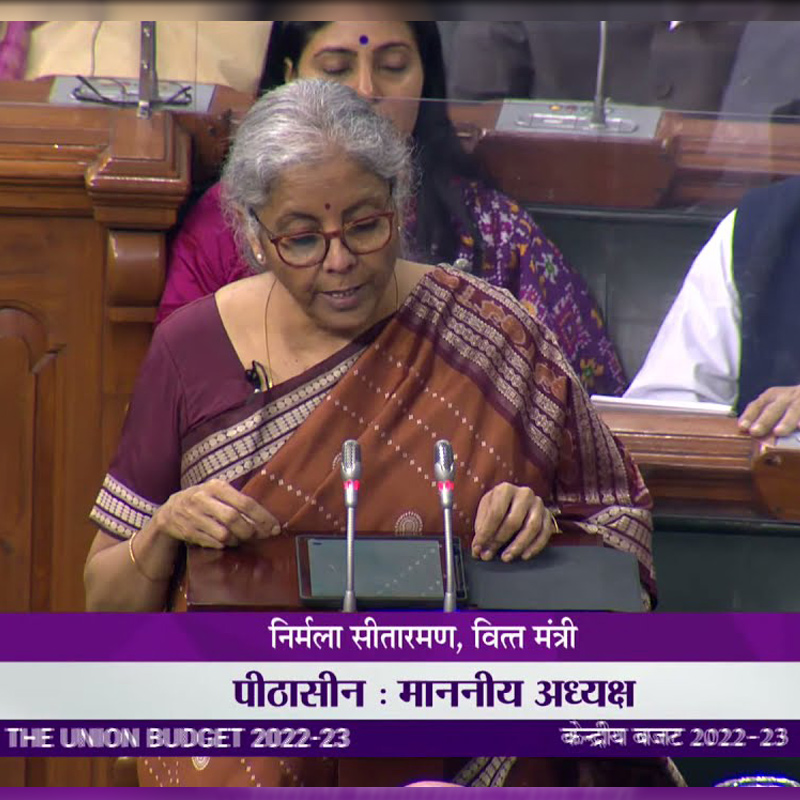
    Mumbai: Finance minister Nirmala Sitharaman on Tuesday presented the Union Budget 2022 in Parliament. The minister said that the country is set to clock an economic growth rate of 9.2 per cent in the current financial year, in what was her shortest Budget speech yet. While the budget made no tax concessions for the salaried class, some of the key areas it focussed on was a push towards a digital economy, and start-up ecosystem.

    The FM proposed a 30 per cent tax on income from transactions of cryptocurrencies and other virtual assets. Also, to bring such assets under the tax net, Sitharaman proposed a one per cent TDS (tax deducted at source) on transactions in such asset classes above a certain threshold, while also including gifts in crypto and digital assets in the to-be taxed list.

    Sitharam also said that the Reserve Bank of India (RBI) will launch a ‘Digital Rupee’ based on blockchain technology in 2022-23. The Central Bank Digital Currency (CBDC), according to the finance minister, will provide a significant boost to the digital economy and lead to a more efficient and cost-effective currency management system.

    The FM also announced the extension of the Emergency Credit Line Guarantee Scheme (ECLGS) that provided additional credit to over 1.3 crore MSMEs till March 2023. Additionally, its guarantee cover has been expanded by Rs 50,000 crore to Rs 5 lakh crore. Apart from this, in a year riddled with mental health well-being concerns amid the pandemic, FM Sitharaman announced the launch of a ‘National Tele Mental Health Programme’ for better access to quality mental health counselling and care services, in a move that signifies the normalising of mental health as a legitimate area of focus for us as a nation.

    Industry reactions on the Union Budget have been pouring in, and most of the industry stakeholders saw the twin announcements of the digital rupee and the taxation on “virtual digital assets” as a focused drive from the government to regulate the crypto space. Some felt that regulating a decentralised space is a paradox in itself, and took the cautious approach by saying how this plays out needs to be seen.

    Here is what the industry experts had to say:

    CoinSwitch founder and CEO Ashish Singhal who is also the co-chair of Blockchain and Crypto Assets Council (BACC) welcomed the government’s decision to introduce central bank digital currency (CBDC) to accelerate digitisation. Calling it the ‘the gateway to the future decentralised world, aka Web3.0’, he said, “The budget provides clarity on taxation and shows the government’s intent to take a business-friendly approach while protecting the interest of consumers and the exchequer. The regulatory guidance on tax from the government furthers the mainstreaming excitement of this emerging asset class with over $6bn worth of investments in India. Hopefully, this will induct more digital-savvy Indians into the financial ecosystem willing to explore newer forms of investing and wealth creation.”

    OKX.com CEO Jay Hao believes that India is slightly lagging in the digital currency race mainly due to the regulatory hurdles and reluctance in accepting the growing popularity of digital assets/digital currency around the world. “If we look at the global scenario, central banks around the globe have already launched or are about to launch their digital currency,” said Hao, adding that he hoped the announcement made regarding CBDC is implemented without any further delay as it will give a much-needed push to the blockchain industry in India. He also asserted that higher taxes may discourage investors from choosing crypto as an investment avenue and delay the mass adoption of crypto assets in India.

    CoinDCX co-founder and CEO Sumit Gupta hailed taxation of Virtual Digital Assets or Crypto as a step in the right direction. According to him, this will give a much-needed clarity and confidence to the industry. The introduction of CBDC sends a clear signal of India being a digital-first, efficiency-driven, and transparency-led system, he added.

    Mudrex CEO and co-founder Edul Patel also termed it as a progressive step towards boosting crypto adoption in the coming years. The sentiment was shared by other industry executives who felt the government legitimatised crypto assets in India in an indirect way by coming out to tax the same.

    Dentsu India chief client officer Narayan Devanathan said the budget is “future-focused, aiming at the distant vision of India@100”, instead of being focussed on the present. Expressing dismay over the omission of much-needed concessions in critical sectors like health, Devanathan said, “A punishing 2021 for the aam aadmi with more-than-usual expenditure on health and sustenance meant the general populace was looking for immediate relief that would place more cash in their household budgets. That did not happen. Nor was there any extraordinary investment in relieving the healthcare expenditure burden. Even the MSME sectors were only handed a slightly longer lease of life with the extension of the ECLGS, but there was no real move to stimulate consumption by placing more cash at consumers’ disposal, for example, extending LTA claims to restaurants (and not just accommodation).”

    According to Blink Digital co-founder and COO Rikki Agarwal the government sent mixed signals with its proposed announcement of a new digital rupee powered by blockchain technology and taxing digital assets. While the move has cleared the impending ambiguity around the cryptocurrencies in India, signifying its acceptance as an asset and legalising it to boost the economy, imposing heavy taxes on digital assets is an indication that the government intends to discourage the same, he says, adding, “We will wait for more clarity on the regulations.”

    Wunderman Thompson South Asia CEO Shams Jasani said the budget highlighted that government is finally recognising that digital is getting to be bigger and bigger. “With so much talk on digitisation I think the digital revolution has already come in India. And the sheer push on digital infrastructure in the country will help a lot more content consumption and a lot more content creation as well. Also, the reach of the medium is going to grow into the rural areas and smaller towns & cities,” he said, adding that, “Governments across the world are going to ultimately get into the digitalisation of currencies, backed by Crypto technology or blockchain technology, and that is the future of currencies. So that is going to take off and that will also legitimise the whole idea of cryptocurrencies in India.”

    DDB Mudra Group chief operating officer and chief financial officer Anurag Bansal opined that the Union Budget looks neutral, with no major changes in taxation, adding that the launch of digital Rupee based on blockchain technology is a big move to bring in official cryptocurrency in India. Managing the Fiscal deficit while pushing for growth and investments is a great balancing act taken on by the government, he feels; one that will give a boost to capital investments and infrastructure development.

    White Rivers Media CEO and co-founder Shrenik Gandhi termed the budget as ‘fairly balanced’ in that there is sufficient emphasis being laid on up-skilling, and making right investments in tech which is the need of the hour. Speaking of the expected benefits, he added, “Let’s not forget that this is India’s #Budget and not a Big Bazaar scheme announcement. So, the immediate benefit may not be seen right now but considering the long-term narrative, it is a fairly established budget.”

    According to Publicic Groupe South Asia CEO Anupriya Acharaya, the Budget was positive, growth-oriented and with reforms in the right direction. “The advent of 5G is sure to transform communications – for our industry it will help the creation of better AV, voice and AR/VR experiences. It will also fuel digital payments, streaming entertainment, gaming, e-commerce, tele-medicine etc which in turn will aid more Unicorns! From e-passports, to battery swapping for electric vehicles, setting up of optic fiber in villages, setting up of a digital university and skilling through an e-portal, the big push is for technology, digital infrastructure and empowerment,” she added.

    Parle Products senior category head Mayank Shah said putting money in the hands of consumers really helps, so they go out and buy products. “So that was more on the front of ensuring that the demand remained robust given that we have gone through two years of pandemic. That was something that industry expected, either by tax cut, or by increasing the slabs tax brackets or by probably increasing the standard deduction limit. Those were the things that we expected but not much has been done there.”

    Thomas Cook (India) MD Madhavan Menon said the budget was disappointing from a Travel & Tourism perspective. “The Budget made no reference to the industry’s recommendations to aid revival, including rationalisation of taxes (a complete GST holiday, exemption of TCS on outbound tours, reduction in indirect taxes), removal of SIES benefit capping of Rs 5 cr,” he said.

    Mad Over Donuts ED Tarak Bhattacharya also rued that the budget gave no attention to the hospitality industry in particular. “Our industry continues to bear the brunt of the pandemic, probably more than a lot of other sectors. We were hoping for some relief or some measures that would help the industry in the months and years to come,” he said.

    Food and Beverage startup Wat-a-Burger co-founder & CEO Farman Beig said the government has been supportive towards the F & B sector and did announce some steps to help the sector bounce back by shifting the GST compliance onto online food delivery partners on behalf of the restaurants. “However, some relief in terms of ITC (Input tax credit) would have further catalysed the recovery of the sector which otherwise is on the bleeding end. Currently, when the industry is struggling to manage the fixed cost with GST, it requires immediate boost, and cutting down ITC would have worked wonders,” he added.

    TCL India head of marketing Vijay Kumar Mikkilineni welcomed the FM’s increased focus on the consumer electronics industry and formation technology. “The 2022 Union Budget allocated 1.97 lakh crore ($26 billion) for PLI projects, notably electronic components, which are among the 13 vital sectors that would undoubtedly help our economy expand. Furthermore, reduced customs taxes will encourage electronics manufacture, which will benefit the electronics industry,” he said.

    CEO of SPPL – exclusive licensee of Thomson in India Avneet Singh Marwah said, “This budget has been more like announcements and slogans. I’m surprised how FM missed on health and education, which are two main pillars of the economy, despite the pandemic. On one hand the government talks about how electronics will contribute one trillion to the economy and on the other for consumer electronics no major announcements, no roadmaps have been given to the industry.”

  • Budget 2022: I&B ministry allocation slashed to Rs 3980.77 crore in FY23

    Budget 2022: I&B ministry allocation slashed to Rs 3980.77 crore in FY23

    Mumbai: The Union Budget 2022 has earmarked a total sum of Rs 3980.77 crore for the ministry of information and broadcasting in the fiscal year 2022-23. This amounts to a decrease of Rs 90 crore from last year.

    With the exception of the Press Council of India that saw an increase of Rs 7 crore, up from Rs 20 crore in FY22 to Rs 27 crore for FY 23, the budgets for all other autonomous bodies under the MIB were slashed.

    Allocation for Prasar Bharati’s declined to Rs 2,555.29 crore from Rs 2,640.11 crore in the last financial year. The same was the case with The Films and Television Institute of India (from Rs 58.48 crore last year to Rs 55.39 crore this year), the Indian Institute of Mass Communication (from Rs 65 crore to Rs 52 crore), Children’s Film Society of India and the Satyajit Ray Film and Television Institute.

    Allocation for broadcasting under the social services head has also gone down from Rs 2,921.11 crore to Rs 2,839.29 crore. There was also a reduction in the budget for ‘information and publicity’ from Rs 971.26 crore to Rs 942.04 crore.

    ‘Information and publicity’ covers establishment expenditure of media units in the country such as the Bureau of Outreach and Communication, Press Information Bureau, Publications Division, New Media Wing, Registrar of Newspapers for India (RNI), Films Division, National Film Archive of India, Electronic Media Monitoring Centre and others.

    Hailing the budget as “beneficial”, information and broadcasting minister Anurag Thakur said that it is a blueprint to fulfil the hopes and aspirations of a new India in the 100th year of its independence.

    The annual budget for 2022-23 was presented by finance minister Nirmala Sitharaman in Parliament on Tuesday.