Tag: Nina Elavia Jaipuria

  • Nickelodeon to inspire kids to save the planet through ‘The Big Help’

    Nickelodeon to inspire kids to save the planet through ‘The Big Help’

    MUMBAI: Nickelodeon’s ‘The Big Help’ is back to encourage kids to come forward and take steps towards a greener environment. An international initiative in its fifth year in India, The Big Help, has helped millions of kids across 27 countries make a difference to the planet with their efforts. The pro-socio movement aims at inspiring children to take real action to save the Mother Earth.

    As one of the leading kids’ franchise, Nickelodeon’s endeavor is to motivate kids to play an active role in saving the planet. Kids can log on to https://www.facebook.com/nickindia and take the BIG HELP PLEDGE for a greener environment. The pledge will reflect on the users’ profile page thereby encouraging their friends to come forward and participate in the movement. The month long initiative will culminate on Earth Hour on March 29th, with the city that has the maximum number of kids taking the pledge being honoured as ‘India’s Greenest City’.

    With the aim to address serious environmental issues in a manner that’s relatable to kids, Nickelodeon’s popular toonslike Ninja, MotuPatlu, Dora will come together to share some of their favourite ‘green tips’.What’s more? A ‘Green Facts’ tab on the Big Help page will give users fascinating facts about trees and the environment that one may have never heard before.

    Commenting on the channel’s latest undertaking, Nina Elavia Jaipuria, EVP & Business Head, Kids Cluster, Viacom18 Media Pvt. Ltd. said “The Big Help aims to make children the change agents of today in order to build a better tomorrow. . We at Nickelodeon truly believe that the future lies in the hands of today’s kids and hence as a responsible broadcaster, it’s extremely important to instill the values of environment conservation and protection from a young age. With The Big Help, we aim to provide kids with a platform where they not only can voice their opinion but also take charge and lead the way.”

    Rajneel Kumar, VP & Business Head- Digital Media, Viacom18 talks about the digital angle to the campaign- “Today’s kidsare online and what better way to involve them than on that platform.  We have reached out to them there by getting them to pledge online &help raise awareness about the global environmental issues affecting our world. The entire campaign is designed in amanner that ensures our young viewers are aware, take proactive steps towards a greener tomorrow& spread the word in their digital community.”

    This year, the entire Nickelodeon franchise – Nick, Sonic, Nick Jr. and Teen Nick is coming together to strengthen the movement and take it to the next level. Join Nickelodeon’sThe Big Help and let’s create a greener and a brighter future, together!


  • Nickelodeon partners UBQool to launch cricket contest

    MUMBAI: Nickelodeon has partnered education portal for children UBQool to launch ‘UBQool.com Cricket Mania‘ on Nickelodeon and Sonic channels. The winners of the contest will get an opportunity to greet and meet their favorite cricket stars from the Kolkata Knight Riders Team and catch all the action by watching them play live.

    An on-air contest that is on till May 10, 2013 will select fifty kids across 9 cities along with their moms to meet the Kolkata Knight Riders team and will give fifty more kids, VIP passes to watch the match live.

    All that viewers have to do is to watch their favorite channels Nick and Sonic everyday between 6 pm – 7pm and 2pm – 4pm respectively, spot simple questions and log on to Ubqool.com to answer the questions.

    In addition to the meet and greet cricket stars and passes to watch live cricket matches, few lucky winners will also receive T-Shirts hand autographed from their favourite cricketers.

    Viacom18 EVP and Business Head, Kids Cluster Nina Elavia Jaipuria says, “Cricket is nothing less than a religion for kids in this country. We have always delivered the best of entertainment and engagement to our audiences and this summer we take it a step further to give them a chance to be a part of the biggest craze that has hit the nation. We are happy to partner with UBQool to give kids an experience of a lifetime that allows kids not just to witness a KKR match, but also an opportunity to meet the KKR team.”

  • ‘Segmentation in kids TV genre makes biz sense in digital era’ : Viacom18 EVP & business head – Kids Cluster Nina Elavia Jaipuria

    ‘Segmentation in kids TV genre makes biz sense in digital era’ : Viacom18 EVP & business head – Kids Cluster Nina Elavia Jaipuria

    Kids channels, bogged down in an analogue cable TV environment, suddenly find space to grow. Segmented channels is the new mantra. After launching an action and adventure channel Sonic in 2011, Viacom18 has launched another dedicated offering in the form of Nick Junior, a preschool channel targeted at 2-6 years.


    Nickelodeon‘s move follows Disney‘s foray into the preschool space and Zee‘s entry into the kids broadcasting space with the launch of its edutainment channel ZeeQ. The common thread between the three channels is that they are pay-driven, unlike the earlier ad supported models.


    Nick Jr. makes its arrival at a time when India is moving towards mandatory digitisation of cable networks.


    In an interview with Indiantelevision.com‘s Javed Farooqui, Viacom18 EVP & business head – Kids Cluster Nina Elavia Jaipuria shares her enthusiasm about why she is bullish about the preschool segment and the impact that digitisation will have on the kids TV genre.


    Excerpts:


    Preschool blocks had existed on kids channels. Now we are seeing full-fledged channels being launched targeting preschoolers. How has the business climate changed?
    The biggest change is digitisation. We are seeing that happen now. The segmentation in the kids TV genre makes more business sense now because we will have transparency. Subscription revenues will also increase.


    Does digitisation make more sense for segmentation in the kids TV genre primarily because of carriage being corrected or you see a substantial gain in subscription revenue as well?
    It‘s both. It will allow us to try very focussed segmentation which we could have not done in analogue cable TV environment. Today in digital, we can segment as much as we can. Carriage payouts will no longer be a deterrent and pay revenues can only grow. So we are all riding the wave of digital right now and hoping that while we cater to need gaps, we also make business sense.


    That is not to say the launch of Nick Junior is a sudden development. Since I started working with Nickelodeon, I always wanted to bring Nick Jr. to India. But then it had to make business sense for everyone.


    Are we in a situation where full-run preschool programming on a channel is not yet commercially viable?
    I don‘t think so.


    Why then did BBC shut CBeebies in India despite knowing that digitisation of cable TV networks is happening?
    Actually, I am very suprised that it happened so abruptly. I am sure they have their reasons for moving out of the country.


    Why do you then have this dual slot (Nick Jr. and Teen Nick) on Nick Jr.?
    We could have gone either way — done a 24-hour channel or have the model of preschool content till 7 pm and teenage programming after that. We have the product and the content that is our own, so it‘s just a matter of dishing it out to them.


    But we seriously believe that towards the evening this channel will get switched off as most toddlers and their mothers are winding down for the day. So it‘s a good idea to use a frequency that is going to be switched off and wanting to keep them switched on. We are also assuming that in a one television household you always have younger siblings and older siblings and when the younger siblings go away, the older siblings take care of the remote.


     ‘We will see a lot of localised content as digitisation picks up. In all this, what will continue is animation. No matter how hard you try, live action can never help children to transport to their imaginary world. We will stick to animation‘

    How do you differentiate Teen Nick from Nickelodeon?
    Nick is hardcore animation and will run from 6 am to 7 pm. Teen Nick, on the other hand, is only live action and has all the sitcoms and dramas that are rocking internationally. Most of the kids in India are watching them on YouTube. So you will have Victorious and Unfabulous and those kind of shows which have made it really big in the West but haven‘t really got the chance to come to India. They are very teenager shows because they are based on college, music, internet, digital and a lot of comedy. So there are sitcoms and drama that are very different from Nick.


    Since Nick Jr. is targeting 2-6-year-olds, wouldn‘t the upper end of this age group want to watch television even after seven in the evening?
    We have seen that post 7 pm, kids are winding down; most of the remotes are also not in toddlers hands. Even at dinner time, it‘s not the toddler that has the remote. I don‘t think even the kids category has the remote post 7 because it‘s the GECs and News channels that take over. You have this trend in a single television household. That way the battle for remote will continue across every segment.


    What kind of research went into launching this channel?
    There was no rocket science really about the research. To me every parent would like to do what is best for their child and in today‘s competitive world you want your child to learn and develop fast. Therefore, parents are doing everything they possibly can to ensure that their kids are learning and developing and this (Nick Jr.) is filling that need gap to my mind. There certainly was a gap there and there was no offering. The research to that extent is that there is a need gap and parents are looking for this kind of learning and development. What happens in school is hardcore education. We are only complementing that with edutainment.


    What is researched is the content and we do this internationally. It‘s content that is made worldwide, so the curriculum is set in place. Every show, therefore, teaches a particular skill . So if you look at Team Umizoomi, it‘s really maths.


    And you must remember that we are getting our international content here. There is even research going on there before they produce any preschool content. We are very careful in keeping Nick Jr. a destination for safe viewing with no violent content.


    How important is the preschool segment within the kids genre?
    It‘s very important from perspectives. One is it allows you to cater to the entire range of kids right from zero to teenage which is what we are now looking at. This was the missing gap that we had in Viacom18. But it‘s also important from the consumer products business point of view. We all are trying to create ancillary revenue streams for ourselves outside of ad sales and outside of subscription. Nick Jr. will play a very large role in driving this part of the business.


    Will it be an ad-free channel?
    Currently it is an ad-free channel, but I don‘t think we can continue to be ad-free. Despite everything being said about digitisation, the ratio of subscription-to-ad sales is still skewed. In the Western world, subscription contributes about 65 per cent of the revenues and in India we are not even half of that. However being a responsible broadcaster, we will be very selective of how much and what ads we put.


    How much is the subscription revenue for kids channels?
    It is under-indexed, I don‘t think it will even hit Rs 200 crore (Rs 2 billion).


    What kind of an upside do you see with digitisation?
    Nobody has any answer to this question.


    Why is Nick Jr. only in English?
    It is inherent in India for every parent to learn English. This is an aspirational channel which teaches your child English. If we do this in regional languages, it will defeat the very purpose of being aspirational. The shows are very easy to understand. So when Dora teaches to say A for Apple, that is what causes the child to learn.


    So is Dora the link between Nick and Nick Jr.?
    Dora has been on Nick and we will keep her there as well because that is the driver show. It also help us from the consumer products perspective.


    Will you have local productions for Nick Jr.?
    No, because we believe that for this kind of a product there is no boundary. In fact, even as kids grow older it doesn‘t matter to them whether it‘s a Japanese show or an American show. Therefore you will see a lot of animation featuring on normal kids category. There is no need to create so much desi content and the pipeline we are creating for Nick where we have Keymon Ache and Motu Patlu for this audience is done after a lot of research. It takes a lot of time to make a show.


    Disney also launched its preschool channel. What impact will competition have on the genre?
    It will only grow the category as there will be more choice. It‘s the best thing that can happen to the category. It will only grow the preschool category that was almost non-existent until all of us launched.


    How do you see segmentation within Nick?
    Nick is the mother brand and it delivers a very core need of a child, which is humour. Nick will continue in that space. While we talk about Nickelodeon audience being very universal, I think it‘s 4-14 years, so I never like to box it at any level. I think the core really lies at 6-12 if you really ask me and we will continue to cater to them in humour and comedy.


    Within comedy, you have action comedy, family comedy, silent comedy and slapstick comedy. The character either becomes a role model or a superhero and it‘s the character that takes over after a point. As you move along, you will see newer episodes of Ninja coming in and that‘s how we drive our viewership. You will see the mother brand engaging on the television platform and outside the platform. The Keymon game had 3 million downloads on Nokia Ovi, so we are dealing with what I call the ‘screenagers‘. It‘s all about staying ahead of the curve and engaging with kids across various screens.


    Will Nick have more localised content?
    I see more localisation happening on that front. But that is also a chicken and egg situation and we have to look at the investment-to-revenue ratio. We don‘t know when the subscription revenues will start getting corrected. After that happens, you will see more focus on local content. But having said that, we have two shows and we have a third in the pipeline; you will see a lot more progress on that front. In all this, what will continue is animation. No matter how hard you try, live action can never help children to transport to their imaginary world. We will stick to animation.


    Will we see more movies coming out?
    We had Keymon Ache & Nani in Space Adventure movie
    and you will see movies from Motu Patlu because Bollywood and Hollywood have become not just kids but also family entertainment. As we move from kids to family, you will see more extensions happening.


    But till now Nick has not been airing movies?
    Series is the bread and butter for us. Kids like to watch, as Farah (Khan) was saying, repetitive content. They want to watch more of the same, so that‘s what we give in the weekend as well. We don‘t miss not having movies on the channel.


    Has ad growth stayed flat for the kids genre this year?
    Ad revenue will grow anywhere between 10 to 14 per cent. If you look at the last five years, the CAGR is 14 per cent.


    Isn‘t the space tough as we have 12 channels fighting for Rs 2.5-3 billion ad revenue market?
    It is a hugely under-indexed market. From viewership perspective, we have eight per cent genre share while ad revenue share is just two per cent. Correction is bound to happen. A few years back, this revenue share was just one per cent. So we are growing, although we don‘t get what we deserve.


    Do you see room for local players entering this space?
    We saw UTV launch Hungama years ago. Zee has already made an entry. Let digitisation complete, then only there will be space. In the current scenario, it will be a tough proposition for local players.
  • ‘We have been growing at 9-10 per cent every year’ : Viacom18 EVP and GM Sonic and Nickelodeon India Nina Elavia Jaipuria

    ‘We have been growing at 9-10 per cent every year’ : Viacom18 EVP and GM Sonic and Nickelodeon India Nina Elavia Jaipuria

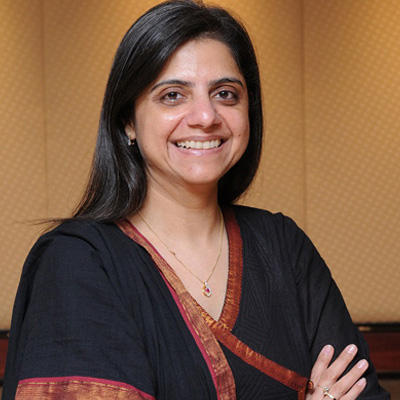
    Nina Jaipuria, the EVP and GM for Sonic and Nickelodeon India, is bullish about the kids genre despite the challenges that exist. Jaipuria, who has been at the helm of Nick for more than five years, is hopeful that the channel will bounce back to its 2009 position when it topped the genre.


    In an interview with Indiantelevision.com‘s Javed Farooqui, Jaipuria says that Sonic, the action and adventure channel that launched in December last year, will also witness growth. She sees the viewership of kids channels going up in the Southern market, where the local GECs still hold a stranglehold on family viewing.


    Excerpts:

    You have been at a GEC (Sony) and since last six years, you are handling kids channel. Which genre do you find more challenging?
    Both the genres are equally challenging. But to my mind, capturing the kids is more challenging as they get bored faster. Kids have shorter attention span. Saas-bahu serials can run for 10 years and you don’t get bored but try doing that with children. It’s impossible… which really means that you have to innovate that much more quickly and stay ahead of the curve.


    Unlike GEC where you need non-fiction to get the eyeballs and then the fiction takes care of your bread and butter, I think there is no such concept in kids genre. I think it’s a tougher category also because we have huge pipeline issues and the timelines. A GEC channel can produce a show in two months but for us it will take two years because it is animation. So the pipeline is so much tougher and therefore we have to plan that much in advance. Having said that, the GEC category is also difficult because we are talking about a scale that is very large and thanks to competition, the risk there only gets higher.


    However, if you build kids loyalty, then it is about how you keep them going. Your challenge is how you can bring them to the channel day after day.

    Despite being third in the pecking order, why does the kids genre not command the kind of ad revenues it should?
    It is hugely under-indexed and that has been going on for a long time. We were given for free and there is a CPRP benchmark that no advertiser is willing to pay that much.


    However, advertisers have started believing that kids have a lot of peer pressure, purchasing power and influence on family purchases. And, therefore, you see advertisers coming to the kids category. But it is growing slowly and steadily. Five years back, the market was Rs 1.4 billion and today it has grown to Rs 2.5 billion.

    Will slowdown have an impact on ad spends?
    In 2009, when there was a slowdown, we did not really witness it as much because a large portion of advertisers who advertise on kids channels are FMCGs, food & beverages and toys, which did not cut back that much compared to radio or print because they have more local advertisers and more of retail and finance.

    Coming to Nick, position wise the channel has slipped to No. 2 or 3. How do you plan to get back on top?
    We are the number two or number three player in the category. Summer has been good and thanks to all the new content that has gone on the channel, we will continue to retain our number there position.


    We retained the top position for two years and I think that is a long enough time. We hope to come back (to the top position). Everything that goes up has to come down, these are all cyclical vagaries of the business.

    ‘Sonic and Nick are two different brands. While Nick is humour and little of action, Sonic is a hardcore action and adventure brand‘

    Oggy and the Cockroaches was one of your tentpole properties. This has now shifted to Cartoon network. What do you think about your other properties?
    My tentpole property is Ninja Hattori and I would have also said Oggy and the Cockroaches but it has now moved to Turner (Cartoon Network). But Oggy gave us a good result for the three years that it was with us. So with all due respect, these are vagaries of the business and we are planning to build our own properties. We have Keymon Ache, of which we have already done 26 episodes and have greenlighted the second season of the show.


    We launched Power Rangers and now we have new Power Rangers coming back. Then after Samurai, we have Super Samurai. We have the third one as well in 2013. Thus, we will have a lot of Power Rangers as a property to build. Then there is Kung Fu Panda that we will build. So we will have a lot of solid shows post the Oggy also.

    What are the genres you are looking to build content for Nick?
    When we started, it was a mix of humour, comedy and various strands of it – slapstick comedy, silent comedy, family comedy shows and Keymon kind of shows.


    Kung Fu is a mix of comedy and action which according to me is the only show of its kind which had comedy and action put together. But slowly we realised that our kids are moving towards action even from a category point of view. Look at what’s happening with video games. So we believe that there is a little bit of action required on Nickelodeon. The only action show we are showing on Nick is Power Rangers Samurai so that those kids who want action don’t go anywhere.

    What about Sonic?
    Sonic and Nick are two different brands. While Nick is humour and little of action, Sonic is a hardcore action and adventure brand. So we have shows like Ultraman, Jackie Chan, Super Strikers, and Ghost at Schools.


    Sonic has done very well to get 8 per cent share in a difficult category as children are slow to changing habits. I think there was a gap in the market as no channel was offering 24X7 action and adventure as a proposition. So kids had to go to MTV Roadies, Fear Factor or once on a while they would go to play video games or watch movies like Dabangg. This gap we fixed with Sonic.


    When kids are growing up, they are shying away from watching kids’ channels. But they were not big enough to go to MTV or Vh1. So we found out a nice gap as well as target audience. In fact, Sonic is doing very well in Mumbai, Delhi and Kolkata. We have got an eight per cent market share within six months and 22 per cent reach in 85 minutes of time spent, as of last week.

    What are your revenue expectations from the two channels?
    We have been growing at 9-10 per cent every year and I hope that we continue to grow at that range. From revenue perspective, ad sales is the big brother. Subscription is not significant at this stage but should grow post digitisation. After that comes licensing and merchandising, but they are taking only baby steps.

    How are you growing the L&M biz?
    We are increasing our character base and with that we are increasing our product range. We have 55 licensees on board this year across categories. We can grow this with depth and width. What I mean by width is that we increase characters. Every single character grows into every single product category. When I talk about depth, we look at every single category in the life of a kid.


    We have launched footwear with Metro shoes, we also have toys of popular characters like Dora, Ninja and Spongebob. TI Cycles is going to offer co-branded Dora The Explorer and Ninja bicycles. We also have DVDs and VCDs coming for Keymon and Dora.

    Talking about content, still most of the content on your channel remains animation. Why is it so?
    Except Power Rangers and Ultraman, almost all of our content is animation. The reason we do so much animation is because kids come to the category for two reasons: one is to get rid of boredom and second is get rid of all pressures. And animation is the only alternate universe, which allows them to enter the fictionary and imaginary world which allows them to get rid of boredom. Try to do that with live action and you can never achieve it as it is as real as it can be. Because we are a tailor-made category for children, animation will always be the fulcrum.

    But kids’ channels are experimenting with Hindi movies also.
    Even I don’t understand that. I put movies on Sonic because I think adventure as a genre is served with movies. But we put on kids’ movies like Jurassic Park that are catering to that genre.

    But is it to prevent them from shifting to other genres?
    I think they are passive viewers. They are captive audiences to what they watch and, therefore despite fragmentation, the category continues to grow. The fact is that kids continue to come back to the category because the content is tailor-made for them. The only reason why the viewership hasn’t grown to the extent it should have is because India is largely a single television household.

    To what extent did the IPL impact the genre?
    Fortunately for us, we don’t have a fixed prime time slot. And it never had much of an impact because for us we have viewership throughout the day and IPL matches were at 4 pm and 8 pm. It’s not like a GEC where 8 pm is prime time.


    We do have 12-3 pm and 6-8 pm as primetime slots. And the best thing about the country is that in some cities, kids go to school in the morning and in some cities in the afternoon. So somebody is watching us at all hours of the day.

    While the kids genre is seeing growth in the HSM, the same cannot be said about the South market. Why?
    That is because all of us are late entrants to the South market. We launched our Tamil and Telugu feed for Nick one year back. Also, kids in those markets have been watching the local content for very long in their own language. But it’s picking up.

    How much do you focus on digital medium for connecting with your target audience?
    To me, digital is important because our TG is more digital savvy than you and me put together. Interactivity has become a large part in the kids’ space today because they have access to mobile and internet. They communicate with us on nickindia.com or sonicgang.com. We also have Power Rangers games on both these websites, besides downloads and wallpapers. There is a lot of interactivity that is happening there. Then we have contests happening on Facebook. The Keymon game on Nokia has got two million downloads. We have over 200,000 fans for Nick on Facebook and over 100,000 fans for Sonic.

    What are your plans for the year?
    We have two big shows coming up on Nick – Cedric and Tony and Alberto. Cedric is about a boy who is mischievous and wants his grandfather to help but normally they are more in trouble than out of it. Tony and Alberto is about the story of a boy and a dog. Both are very mischievous and funny shows talking about the 9-10-year-old boys. The shows will be coming on air in July. We have two new shows coming on Sonic as well – Ghost at Schools and Teenage Mutant Ninja Turtles.

  • ‘The kids market remains hugely under indexed’ : Nina Elavia Jaipuria – Nick India VP and GM

    ‘The kids market remains hugely under indexed’ : Nina Elavia Jaipuria – Nick India VP and GM

    It has been a phenomenal journey for Nick in India. From being a channel that was residing at the bottom of the heap, the nine-year-old player has finally emerged as the leader on top in the Hindi speaking market, edging out long-standing market leader Cartoon Network.


    And now, having captured the HSM space, the channel is readying to spread its wings across the southern-language market by 2009-end. The next in step is to challenge Cartoon Network which rules the all-India market.


    Nick has also made its foray into local content for the Indian market with Little Krishna, acquiring the show’s TV rights for two years for the South Asian territory.


    In an interview with Indiantelevision.com’s Anindita Sarkar, Nick India SVP and GM Nina Elavia Jaipuria reveals the strategies that have worked for the channel and how she plans to grow in a fiercely competitive marketplace.


    Excerpts:

    Nick has emerged as the number one kids channel in the Hindi speaking market. What contributed most towards this growth?
    There are a couple of differentiators and unique activities that the channel has done very consistently over a period of time. The biggest differentiator for the channel has been Nicktoons – characters that have helped Nick establish space and engagement with the kids leading to an increase in the stickiness of the channel.


    Secondly, we have managed to take Nick beyond television, thus making it more tangible. And I think we did that very successfully with our experimental 360 degree marketing philosophy – we wanted to be in every place where children are. So we were there promoting ourselves right from schools, cinema houses, malls, cable television to comic books, van activation and general entertainment channels.


    We also increased our consumer products activities – be it in the form of storyboards, storybooks, activity books, toys with Mattel, clothes with Weekender, linen with Portico, etc. And now that schools are opening, we will be soon coming out with stationary and back-to-school items.


    We also intensified our engagement and connection with children through constant promotions, polls, votes, contests and festivals including father’s day, mother’s day, Raksha Bandhan, Holi and so on. We celebrated every festival that was important to kids.

    Why did you choose GECs as a promotional platform?
    In a one-television household, it is but natural that kids are watching Hindi GECs along with their families. So, we know that today’s kids watch a Balika Vadhu or a Star Plus or Zee TV for that matter. So we decided on this medium as we would be able to capture the entire gambit of captive audience.

    But don’t you think that GECs today have actually emerged as contenders to the kids channels?
    If you see, even with the emergence of so many GECs, the kids’ category remained almost unaffected. This is because eventually kids come back to watch what is tailormade for them. And, no matter how hard a GEC tries, it cannot attract any child’s absolute attention. He/she at most will continue to remain only a passive viewer. GECs cater to the family as a whole and their content is not custom-made for kids unlike a kid’s category which targets only the kids.

    With Little Krishna you finally forayed into local animation. What took you so long to take this decision?
    Well, we had been looking for something that was built on a very strong narrative so that it carried not one single hint of boredom. This is because a kid’s attention span is very limited and you have to engage them within the first ten seconds. So, our hunt went real long. And then, finally we came up with Little Krishna, in both English and Hindi, which not only has a very compelling narrative, but is also supported by seven years of extensive authentic research (without any distortion) conducted by Iscon. The show has captured Krishna in various facets and every episode is a standalone. So, you don’t have to know what has happened before or after. Also, the script is extremely strong and tight and with the quality of animation that it has, the show is sure to make it to the overseas market.

    What was the need for localisation?
    Well, there was not really a need for localisation because as a broadcaster I want content that entertains children and also gets rid of two things – boredom and stress. Yes, I do agree that some amount of local character would surely add some local flavour. But in content, that is not at all a necessity to have. Its more about the localisation of the channel which comes with how you dub, the language you speak, and the promos that the channel lines up.

    Even though the kids segment contributes 7 per cent to the total television viewership, our revenue share is less than 2 per cent

    How has the co-viewing pattern helped the channel to grow?
    Today as a channel, we have the gatekeeper’s (parents) trust. We do not carry any form of content that could be harmful to the kids. We are responsible broadcasters and because of this parents allow their kids to watch our channel. In order to spend time with their kids, they also end up spending a lot of time on the channel. Also, animation as a category is today appealing to adults. Thus, a lot of co-viewing is taking place.

    Are advertisers taking advantage of this trend?
    Definitely! In fact, in the last one year, we have more than quadrupled our sales revenue as advertisers have found value in what Nick has to offer. We have done a lot of value addition and brand integration with all the categories that have come on board through sampling and on-ground activations. As a result, from 17 brands that we began with, we have now extended to over 75-80.

    Are brands confined to the kids’ category alone or is the base expanding?
    Absolutely! Two years ago, our reach was 13 per cent and today it is 32 per cent. With a lot of co-viewing happening, advertisers today understand that kids’ channels are also an effective medium to reach out to their target buyers. Also, the mere pressure of pester power that kids have on their parents decisions have pulled a lot of FMCG, insurance and telecom brands on board.

    With recession hitting hard, what kind of impact did it have on your advertising revenues?
    Look, television is the cheapest medium to reach out to the masses. For every other medium, there is an extra amount to be paid. Manufacturers understand this and they have also recognised our growth. And, thus, even during recession we have doubled our rates. Nick has performed all through and I did not want to succumb to this economic slowdown. Yes, instead of annual deals a lot of quarter deals were being cracked, but this could always be reviewed. As a broadcaster Nick did well and we surely deserved the revenues we generated.

    How has the backing from Viacom and Network18 helped in Nick’s growth in India?
    The network has been an absolute might. If you go through our tent pole projects in the last quarter, you will see that a lot of awareness and sampling has been created through Colors, IBN7, CNBC Awaaz and MTV amongst family and children outside of the kids’ category. All of them are passive viewers and, therefore, the network has only helped us promote ourselves.

    How well are you distributed across the country?
    We have got approximately 70-75 per cent all band connectivity wherein we are available in almost 26 million households. We are very well distributed all over the country in various town sizes. While 30 per cent of our ratings come in from metros, 35-40 per cent of the contribution comes in from the 1 million-plus cities and the remaining balance is attracted from the 1-10 million.

    So what are your plans going ahead?
    Well, until now our focus was to get a foothold in the Hindi speaking market. And now that we have done it, our first plan is surely to continue our growth and sustain our leadership position in this space. Our next plan now is to look South, which is certain to happen by the end of this year. We will head for all the southern markets – Tamil Nadu, Kerala, Karnataka and Andhra Pradesh. We will cater to them with the same content. We will initially begin with English and then move on to the regional languages with dubbed content as we get a foothold.


    However, the major challenge there is going to be distribution because unlike the HSM market, we are not distributed there at all.

    Is there any change in the ratio between advertising and subscription revenues?
    Advertising still remains the predominant one, contributing over 60 per cent to our revenues. Distribution, meanwhile, is a constant revenue stream that you get year after year, but it’s the biggest payout as well. We have also taken baby steps in consumer products. When we started off with 2-3 products in the consumer product business, it was only a marketing tool. But now I think its time that it will start paying off. We are already available across 17 categories and will soon be launching in stationary, plush and home DVD with Excel. This year, therefore, we will see revenues flowing in from this stream as well.

    Why do you think that even after witnessing a growth in viewership, the kids category has not grown in terms of revenue share?
    The kids market remains hugely under indexed. Even though the kids segment contributes 7 per cent to the total television viewership, our revenue share is less than 2 per cent. This is because of the baggage that the space has been carrying over the years where advertisers are used to paying to the GECs.


    But with a lot of co-viewing happening now along with integrated value addition to brands and the pester power of kids, I think we are ready to shed that baggage.

    How has the interactive media contributed towards Nick’s growth?
    Our website has about 10 per cent penetration with kids today – and this is growing. But I have to say that at the end of the day, everything feeds into one another. Therefore, it’s very essential for us to go multiplatform.
  • ‘We are the second stickiest channel in the category today’ : Nina Elavia Jaipuria – Nick India VP and GM

    ‘We are the second stickiest channel in the category today’ : Nina Elavia Jaipuria – Nick India VP and GM

    Driving Nick India from a market share of a mere 9 per cent to 18 per cent has been a phenomenal journey for Nick India VP and GM Nina Elavia Jaipuria. The eight-year old kids’ channel got its act together last year and since then there has been no looking back. After years of relative reticence, popular characters Spongebob, Ninja and Perman are lifting the channel up.


    In an interview with Indiantelevision.com’s Richa Dubey, Jaipuria reveals what strategy worked for Nick and how she plans to grow the kids’ channel in a fiercely competitive marketplace.


    Excerpts:

    Nick has taken its channel share from 9 per cent in January 2007 to 18 per cent by the year-end. What has led to this fast growth?
    There was no fixed mantra but just a few insights which helped us get to the position where we are now. To feel the pulse of the kids, we built a connect with them, Indianised the channel and went beyond traditional TV.


    Everything done on the channel was done in a fashion to connect with kids – right from the way we packaged our shows, to dubbing and selecting the content, and scripting them.


    We have been very innovative in marketing our channel. We add an Indian flavour to whatever we do. For example, we celebrated festivals like Janmashtami by putting slime in the handi. We did Holi with Holi flash.

    While every channel in the genre is trying to do the same, how did you ensure to look different?
    Our first effort was to Indianise the channel and that worked wonders for us. It helped us in building affinity with kids.


    We interacted with kids more and more. We were no more a passive channel that they used to watch. We became a regular destination for them. We built a bond with the child and at every point of time the kid could have a dialogue with us through IVRS, SMS or through our website. There were initiatives like “Bhoot Aya,” “Chaddhi Buddy,” etc. which kept the kids engaged.


    In 12 months, we did some 19 initiatives. This means that at any given point of time, a kid could actually interact with us.

    Nick was perceived to be a very western channel. Wasn’t that a hindrance in getting the kids’ eyeballs?
    Yes, for a while, Nick was thought of as a very western channel with shows that were international. We acquired shows from the Asian territory and Indianised them. Shows like Perman, Munnabhai, Ninja Hatori. were Asian and brought a lot of Indianness on the channel.

    How interactive was Nick with kids?
    Interactivity is not just about interacting but about having a lot of fun. A lot of ideas were out of the box. Through initiatives like “Chaddhi Buddy,” where we ran a contest, we took best friends Spongebob and Patrick to the winner. Several other initiatives like Lot Pot, Pakda Pakdi, Masti Dosti, Chak De Ninja wih Ajay Jadeja or Gift Mangta, etc. helped us build the connect. Fundoo Star was another very innovative initiative whereby we got the kids on the TV.


    Engagement is very important as it keeps kids away from the remote. Our programming was such that it made them not to surf in and out of the channel, and made it very sticky for the kids. Following this, channel stickiness grew by 40 per cent. We are the second stickiest channel in the category today.

    What was the 360-degree approach you adopted?
    The other thing was enhancing the connection with a 360-degree approach. We went to places where kids were present. If they were watching general entertainment channels (GEC), then we had our ads on the GECs so that we got noticed by our TG and their parents. We promoted ourselves on the channel which families and kids together watched. We had promotions running across shows like Sa Re Ga Ma Pa Lil Champs, Voice of India and Boogie Woogie, which are popular among kids and families.


    We also did a lot of activities in shopping malls and schools. Nick went beyond TV and made it tangible. Kids could touch and feel their favourite characters, and that is the ultimate thing for them.


    Today it is all about viral and word of mouth. We also went on to retail our properties across various categories – apparels, story boards, PC games, water bottles, etc. Nick characters also appeared in Diamond Comics.

    We would utilise our foreign library first and only then would we get into local content

    In terms of programming, how have you distinguished yourself from the other channels?
    As a kids’ broadcaster, it is important to realise that kids come to TV for relief. They want to be away from teachers and parents through Nick. We are a clean and responsible broadcaster. Within the genre, we offer a variety of programming. Our shows have slapstick comedy and silent humour, and even if there is a little action, it only adds to the humour.


    We realised that movies are a big source of entertainment for kids. So we launched “Nick Home Cinema” which has so far done very well.

    Could you please elaborate on your summer line-up?
    A new show Niender will kick off on 21 April. We also have a couple of new movies like Dinotopia and Under the Black Flag.


    We will show an entirely new series of Ninja Hatori and Perman which will be aired back to back. We are also planning interactive stuff around Mother’s Day which falls on 11 May.

    Like others in the genre, do you also have plans to foray into local content production?
    Kids’ content knows no boundaries. We have such a huge library worldwide and it has been popular. We would utilise it first and only then would we get into local content. It is just a matter of time. There is a lot of content still to be exploited. Until we have utilised all of that, I don’t think we will go ahead and manufacture it.

    Do you think that frequent channel launches are affecting the kids’ genre?
    No, not at all. In fact, the genre has grown and it’s all due to the offerings of the other channels. A kid does not want to watch a GEC. S/he needs to be given something different.


    There has been an increase in kids viewership. Kids are continuously getting enticed by the channel offerings. GECs do not focus on kids at all. The more focused and customised the offerings, the better is the growth of the category.


    Moreover, pester power is also influencing parents to let kids spend more time in front of TV.

    How much has passive viewership helped the channel?
    The trend is slowly changing. It’s now parents spending more time with kids on the kids’ channels. Kids’ programmes are very inclusive so the parents can also watch along with their kids. A lot of co-viewing is happening.

    Advertisers are taking advantage of that?
    Pester power and passive viewership have helped the channels in terms of advertisements. A lot of FMCGs, insurance and telecom brands have started advertising on kids’ channels. None of these directly target kids, but they obviously understand that co-viewing is happening.


    We ourselves started with 17 brands and now we have around 80 on board.

    Even GECs show kids’ programmes during weekends. Do you see that spoiling your Sunday line-up of shows?
    I would not deny that anything that is catering to a kid is a threat to us. Kids are not channel loyal; they are programme loyal. A kid watches a particular channel because of the show. The fact is that there is a lot of scope in kids, and so GECs are catering to them. Kids will watch a good film on any channel. But as a core kids’ broadcaster, we provide a complete 360-degree experience to the kids. We have our own set of marketing initiatives which make us stand apart.

    How do you ensure that Nick reaches to kids beyond TV in tier-2 cities?
    We normally try and reach cities in the Hindi speaking markets (HSM). We select key cities in UP, MP, Rajshthan and other parts in north India such as cities like Badodara, Surat, Ajmer, Jaipur, Allahabad, Varanasi and few others.


    We are available to around 24 million C&S homes.

    Do you have any plans to expand in the southern market?
    Our audio feed is available in English. We will consolidate our presence in HSM and only then explore the southern market. In Chennai, we are available in Cas (conditional accesss system) homes.


    We have syndicated some of our shows like Dora-the Explorer and Avtaar to Sun Network’s Chutti TV. We also have a tie-up with Jet Airways, who play our shows on the flights.

    Is there an increase in ad sales during vacations?
    Yes, there is but not much as it is seasonal. As far as viewership is concerned, vacation-watching contributes 20 per cent of the channel’s total audiences.
  • ‘The focus for Nick in 2007 is to drive reach’ : Nina Elavia Jaipuria – Nick India vice president & general manager

    ‘The focus for Nick in 2007 is to drive reach’ : Nina Elavia Jaipuria – Nick India vice president & general manager

    While Viacom’s smallest wonder, Nick India wants to be synonymous with fun and laughter, the network seems to have found the perfect fit in Nina Jaipura as a head for the channel. With ‘all smiles’ Jaipuria epitomizes the values that the channel stands for and bursts into sudden bouts of laughter as she describes her favourite shows on the channel like Bakkom, the funny bear, which she gladly advices her team to watch (even at work) to de-stress. Although, the channel entered the Indian terrain in 2000, there has been a singular lack of activity, but better late than never, the Nick team seems to have finally got their act together. In a free flowing conversation with Indiantelevsion.com’s Renelle Snelleksz, Jaipuria outlines the game plan for Nick in India, and the efforts to sprint ahead in 2007.

    Excerpts:

    On recently assuming the position to spearhead operations at Nick, what strategy have you outlined to up its presence in India this year?
    During the latter half of 2006, we made several programming and grid changes as well as modified content strategy to get our content right. We also made inroads into distribution and we are now No. 2 in distribution with about 42 per cent C&S connectivity in the country today. Following this we doubled our time spent by 110 minutes, similarly the market share of Nick also doubled from 6 to 12 per cent over 2006. Once all this fell into place we got a ‘sticky’ audience.

    Having said that, the focus for 2007 is to drive reach for the channel because just having a sticky audience is not good enough, you need to increase the ratings. We will use this year to establish our brand and characters. Basically, it is a year for consolidation since we now have the content right and with distribution and promotion in place, now it’s about driving reach.

    How does the channel plan to implement awareness building initiatives?
    The way we want to do this is through a 360 degree marketing approach and while we have our on-air presence and promotion we are also going to step outside the channel as well.

    In fact, we started our marketing activities last year with the ‘Masti Dosti’ contest and the marketing campaign we did around it. It was about consolidating all the pieces and putting it together for the kids, so while we did school contact programmes, we also did cross channel promotions and even painted school buses with Nick themes. In addition, we did a lot of meet and greet sessions for kids, because it involves getting kids to learn about the characters. We are planning to continue to extensively use school contact programmes with our brand ambassadors SpongeBob and Patrick. In fact, we are also looking at bring Dora from Dora The Explora to India this year for our pre-schoolers.

    By taking these characters into malls, multiplexes and getting them to run alongside kids during the Mumbai Marathon we wanted to give them a touch and feel experience as well as sample shows on the channel. That’s how we intend to look at Nick in the way forward.

    You will also see us across many other channels where kids are viewing other shows. We will have syndicated blocks and Nick advertising on Sony, Max, Zee and Zee Cinema. In addition, we are also into regional channels like an ETV Marathi or Zee Bangla. We are reaching out to kids through various means, as you have to touch them at their touch points.

    In the kid’s television space how will Nick differentiate itself from growing competition?
    As a channel we stand apart from the rest and what differentiates us is that everything on our channel today is something that is going to make you laugh. We are a comedy destination and this is the stand we want to take forward.

    The laughter quotient actually operates as a brand filter for all content that goes on our channel. The second aspect of our content is that it has to be appropriate in terms of being absolutely safe and completely non-violent. Therefore it goes through the gatekeeper, which is the mother and we have her trust as well. The content is also universal in terms of gender and is age appropriate catering to kids in the entire 4-14 age group.

    Apart from this, we do have a message for younger kids as well, with the Nick Jr. block which is a mix of education and entertainment. It’s about edutainment where you learn while you play and in which every story has a moral.

    Nick has been a leader in international markets especially US and UK. However, it hasn’t been able to deliver the same results in India despite its launch in 2000. Why so?
    Well it’s all about timing. The focus of the network is now on Nick which was not there earlier. We now have a core structure which is aligned to the business objectives of the channel. In fact we already saw it happening in the last quarter of 2006 and we will see more activity this year.

    We will continue to create a loyal audience and keep delivering on content that has been adopted globally, which has placed us in the first and second position in most countries.

    Why are Indian kids not yet hooked onto Nick, despite its seven year existence in India? Is it that they cannot relate to the content?
    It’s not about kids not liking the content on Nick, but more about kids not sampling the content on the channel because it’s not been out there for them. Once we spread awareness, we will get kids hooked as the content will speak for itself.

    It’s about how much we can do and how fast we can do it.

    Nickelodeon recently unveiled a virtual community playground ‘Nicktropolis’ – What about an interactive website for the channel in India?
    We are also looking at launching a grand website for ourselves as what you see today is a very small portion of it. It will be very comprehensive, telling kids about the initiatives at Nick, it will have all the shows and characters and of course it will host several contests and games. It will give kids a chance to interact and play around with these characters.

    In today’s digital environment, is there effectiveness in reaching out to kids via the mobile phone?
    I think this is a metro specific phenomena, as most kids have access to their parents’ phones, so its still too early to say now, but it will definitely grow. Therefore, all our websites have a mobile SMS function for contests and activities. Once we believe that kids have direct access to this medium we will get onto downloads, ring tones and wall papers. We have already started with digital based products with the SpongeBob PC game.

    Can we expect to see an expansion on the merchandise front?
    We tied up with Bombay Dyeing for bed linen, a SpongeBob PC game has been developed and is available at Planet M, Dora the Explora apparel range has been unveiled and can be found in Landmark and Pyramid and a whole collection of party products in Big Bazaar and Hypercity.

    We have also kicked off what is called a ‘Nicksters Club’ using a database, to send out monthly flyers via snail mail or email. Along with giving kids activities to do, it also announces their birthdays and sends out a little gift to them, which is nice gesture from the channel.

    Apart from International acquisitions, do you think it’s time to strengthen localized programming, a strategy that several other kids’ channels have also adopted?
    The strength of Nick lies in its pedigree and the of kind that has been produced for over 27 years in various countries. That content has proven itself across the world therefore we need to first optimize on the content that we already have. There is a lot of scope to bring that content to India, package it and give it an Indian flavour and then roll it out to kids.

    While we may look at local productions sometime in the future, currently there is a great opportunity to cash in on the pedigree that exists with us. Kids are not really very culture specific, they are so universal in nature that everything works for them, and it’s really how you deliver it.

    Will the channel introduce any new shows?
    Yes, in fact we will launch two acquired shows Tumoya Island and Meteor and The Mighty Monster Trucks on the pre- school block Nick Jr. this month.

    Any plans to bring to Indian initiatives like ‘Kids Lets Just Play’ that encourage children to go outdoors and play or the ‘Kids Choice Awards’?
    It is just a matter of time, as the focus currently is to create a presence that will connect with kid’s, activities such as these will then be a follow up. These are our own International properties and there is no reason why we will not bring them here. But there is still time for that, first we need to establish a larger viewer base.

    What is the time line that has been set to achieve this?
    My clock is already ticking! (She laughs) There is really no time line, it’s about how much we can do and how fast we can do it. Like I said, the intent is there we just have make it happen.

    Could you elaborate on the NDTV Media’s role and some of their activities? Which new advertisers have been roped in and by how much has ad sales increased?
    The last quarter has been good for us even in terms of ad sales, we put the infrastructure in place by outsourcing this to specialists like NDTV Media. They have helped us rope in four main new sponsors for SpongeBob Pakdra Pakdri contest including LIC as the main sponsors, co-presenting sponsors Maggi rice noodles Mania and associate sponsors Perfitti’s Big Babool and Tata Sky. Britannia, Liberty Shoes and Zapak.com are a few more advertisers that joined in, so we look forward to a happy year on that front with a lot more brands joining us.

    As for the ad sales increase, it would be an abnormal percentage to mention, as you could almost say we started from scratch, however we look forward to many more initiatives and NDTV is surely going to have its hands full.

    Currently, what’s the management structure like in terms of a marketing, content and creative team?
    Under my stewardship I have a programming director – Anu Sikka, a marketing director – Shalu Wadhwa, on air promotions – Shuchita and a research director – Shatrupa Thakar and a team of about 18 youngsters.

    What do you perceive as the way forward for a kid’s broadcaster in the highly competitive scenario in India? What is the biggest challenge in catering to kids?
    There is long way to go, we need to get to the top of the chain and that’s the intent right now. The kid’s category has always been dynamic and competition will continue to be there but there is definitely space for more players, giving more choice to the viewer.

    The challenge lies in the fact that kids have a short attention span so if you don’t capture them in the wink of an eye you might as well not at all. At any point of time if the child is surfing channels, you should be able to grab his attention, therefore everything that you put on your grid of the channel makes a huge difference.

  • Nick ramps up Feb-schedule with two new shows & SpongeBob ‘Pakda Pakdi’ contest

    Nick ramps up Feb-schedule with two new shows & SpongeBob ‘Pakda Pakdi’ contest

    MUMBAI: Nick India is in rejig mode and is set to make a lot of noise this February. Kicking off the month, the channel will launch two new acquired shows Tumoya Island and Meteor and The Mighty Monster Trucks on its pre- school block Nick Jr. from Monday to Friday at 9.30 am and 10.30 am respectively.

    Tumoya Island narrates the fun between three friends Mafi, Buddy and Mekki, while Meteor…. tells the story of an aspiring astronaut truck and his adventures with his friends.

    Close on the heels of the ‘Masti Dosti’ contest, Nick has yet another SpongeBob based initiative titled ‘Pakda Pakdi’ to be rolled out across the channel on 5 Feburary.

    During the four week watch and win contest, kids will have to spot SpongeBob zooming across the screen on either a skateboard, a rope or a scooter during primetime (6-8 pm) from Monday to Friday and report it back to the channel.

    The idea behind the contest, Nick India vice president and general manager Nina Elavia Jaipuria explains that the theme is centered around the fact that SpongeBob is fatigued after a whole year’s work and is planning a holiday get away to theme park Nick Central in Australia. Unfortunately, his best buddy Patrick refuses to let him go and it is here that the viewers get involved to help SpongeBob in his efforts to escape from Patrick only to be rewarded with a free trip for one lucky winner and his family to Nick Central. Thus the tagline “SpongeBob Pakro Australia Jao.”

    What’s more, kids can also win television sets, discmans, mobile phones remote controlled cars and MP3 players everyday for spotting SpongeBob getting away from Patrick.

    To promote the contest, Nick has adopted a 360 degree approach and has tied up for cross channel promotions with Sony, SAB, MAX, Zee, Zee Cinema and Sahara as well as regional channels like ETV Marathi or Zee Bangla.

    Additionally, the campaign will be supported with a school contact programme which will be conducted across 350 schools in Mumbai, Delhi and Kolkata reaching out to almost 3, 00,000 kids. “We will distribute activity sheets, stickers, small quizzes to create a very comprehensive programme at schools. Nick will also have ‘meet and greet’ events with SpongeBob and Patrick in malls and multiplexes during the weekends when the footfalls are high,” says Jaipuria.

    Members of the ‘Nicksters Club’ will also be intimated via direct mailers or post so as to reach out to every Nick fan giving them an opportunity to compete for the grand prize.

    The contest has roped in four key sponsors including LIC as the main sponsors, co-presenting sponsors Maggi rice noodles Mania and associate sponsors Perfitti’s Big Babool and Tata Sky.

    The SpongeBob themed initiative follows as a continues and concerted effort by the channel to build a bond between the character and kids, so as to make SpongeBob synonymous with Nick. At the same time this will drive kids to sample the show and up the presence of the channel in India.

    By way of on-ground events Nick is going to bring other characters to Indian shores so kids can better relate to them. “In a similar manner, we will bring Dora The Explora for our juniors in India sometime later this year,” adds Jaipuria.