Tag: Nimbus

  • Neo Sports’ Mautik Tolia opens up on the Impact of DAS

    Neo Sports’ Mautik Tolia opens up on the Impact of DAS

    DAS (digital addressable system) is here to stay. Despite the shortcomings, the hiccups in the implementation of the first two phases, the government has announced that it will not extend the deadlines of December 31, 2015 for phase III areas and December 31, 2016 for phase IV, when the entire country is expected to be digitised. After complete switchover, cable TV services will be available only through set top boxes in India.

     
    We, at the Indiantelevision.com are starting a new section – ‘The Impact of DAS’ through which thought leaders, experts from the television ecosystem will share their thoughts, ideas, and say their piece on the subject. We are beginning with the impact of DAS on the sports broadcasting ecosystem. 

     
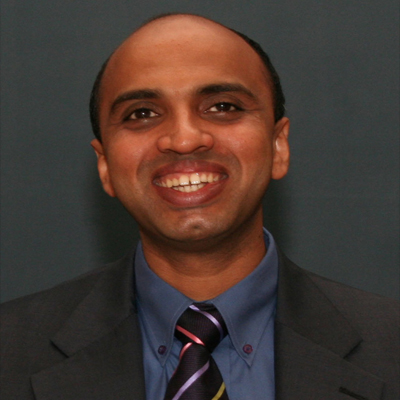
    Our expert for the section is Neo Sports EVP programming Mautik Tolia.


    Excerpts:


    How big an impact has phase I and II digitization made when it comes to subscription revenue?


    Digitization has been a big step forward not just in terms of revenue but in providing secular access to viewers to more sports events, apart from just cricket. As India moves more and more to a multi-sport fan universe, digitization will continue to play in important role in increasing the popularity of all sports. Combined with the increasing market share of DTH platforms, which in turn enhances the reach of sports networks without whimsical interruptions (which were a constant feature in the analog domain) we at neo sports see other sports climbing to a 40 per cent share of revenue universe in 3 years time.


    From sports broadcaster’s point of view are you happy with the two phases of digitization?


    Doubtless there have been roll out issues and delays in implementation but on balance digitization has been a positive. It will be some time before more sophistication is achieved in packages and tiers, which will steadily take us to a CPS billing norm. Transparency in billing remains a challenge but we believe that too will be resolved in the next 2-3 years.


    Is the sports broadcasting industry in a subscription positive scenario? Or we are still ad dependent?


    From a 90:10 ad: subscription ratio 10 years back, the sports broadcast industry has probably moved to a 70:30 maybe even 65:35 ratio. This may even be 60:40 or 55:45 in the case of some networks. Due to significant ad spend on cricket, especially IPL this ratio will inch its way to maybe 50:50 in 3 years for the industry as a whole.


    Are sports like Football, Badminton which are hugely popular but have very little room for advertisement profitable assets for broadcasters?


    Aside of Cricket, the dominant sports are football, tennis, golf, hockey, badminton and motor sport. Except for Football and Badmnton, others have adequate ad break potential. At Neo Sports we believe that it is more a question of focus, ability and experience when it comes to monetizing sports other than cricket.


    With phase III and IV scheduled do you see a substantial inclination in subscription revenue?


    We see further momentum in subscription revenues, reach and secular access for all sports in phase 3 and 4.


    How can a non cricket sport or a sport with least ad room turn profitable for broadcasters in India?


    The profitability conundrum is more a function of irrational acquisition prices and lack of focus on monetizing all sports. We have seen at least one sports broadcaster recently pay over the top for rights that were being jettisoned by another and for which there may well have been no other takers. Ill informed and panic buying has resulted in lack of profitability for some. At Neo Sports we believe that intense discipline is required both with acquisitions as well as in monetizing assets. Wise spending may not make a sports broadcaster no 1 but there are plenty of sports rights constantly available, the universe of sports fans is rapidly expanding, advertisers are increasingly willing to spend on sports other than cricket and affiliate platforms understand that tens of millions of viewers are tuning into other sports – hence there is room for multiple sports networks and increasing opportunity for revenue and viewership expansion.

  • BCCI loses second arbitration case, to pay Nimbus Rs 12 crore

    BCCI loses second arbitration case, to pay Nimbus Rs 12 crore

    MUMBAI: Sports broadcaster and media and entertainment company Nimbus Communications has won its second arbitration against the Board of Control for Cricket in India (BCCI) regarding dispute over a television production agreement.


    As a result of this, BCCI will have to pay Nimbus a sum of Rs 11.88 crore as on 31 August, 2015.


    Dispute between Nimbus and BCCI arose in late 2011 on three separate contracts post, which the matter was taken to the Arbitral Tribunal.


    Headed by Justice S. H. Kapadia, the Arbitral Tribunal ruled in favour of Nimbus and upheld and allowed the claim of Nimbus in two parts with interest and costs.


    The claim of Nimbus for principal amount along with interest (on principal amount from the date of invoices till 28 October, 2013, being date of filing statement of claim by Nimbus) amounting to total of Rs 9.81 crore and further interest at nine per cent per annum on principal amount from 28 October, 2013 till date of payment.


    Additionally, the Tribunal awarded Rs 20.47 lakh claim of Nimbus for reimbursement of Bank Guarantee Commission charges with interest at nine per cent per annum from 28 October, 2013 till date of payment.


    Lastly, costs quantified at Rs 55.73 lakh have also been awarded to Nimbus. The total of these costs amount to a sum of Rs 11.88 crore.


    The arbitral proceedings had commenced on 22 October, 2013 arising out of disputes pertaining to the TV production agreement between the two parties and BCCI dated 29 September, 2010 which was terminated by BCCI on 20 April, 2012.


    Nimbus had also won the first arbitration in August 2014, which was in relation to supply of equipment and technical services. The total amount including principal amount, interest and costs was approximately Rs 10 crore. BCCI’s appeal in that regard was dismissed by the Bombay High Court and no further appeal is now possible due to the period allowed for further appeal now having expired. 


    With this, Nimbus has now won both its completed arbitrations versus BCCI. The third arbitration, relating to media rights is underway and expected to conclude over the next few months. Nimbus’ claim in the same is in excess of Rs 4000 crore plus interest.

  • BBC Worldwide appoints Akhauri Sinha as the COO of Content and Production

    BBC Worldwide appoints Akhauri Sinha as the COO of Content and Production

    MUMBAI: BBC Worldwide India has appointed Akhauri Sinha as the COO of Content and Production. Based in Mumbai, Akhauri will report to Myleeta Aga, SVP and General Manager India and Content Head for Asia, and will oversee BBC Worldwide’s production business in the country.


    Akhauri will head the production of BBC Worldwide formats and local originally developed concepts in both fiction and non-fiction genres, for the Indian market. He is also tasked to formulate and implement local development strategies to maximise commissioning opportunities within the territory.


    Akhauri joins BBC Worldwide from Moving Picture Company (MPC) in Bangalore where he headed the India studio for the global visual effects giant. Prior to that, Akhauri worked with Nimbus and UTV, managing the film entertainment division and business development, respectively.


    “I am very pleased to have Akhauri join the BBC Worldwide family,” said Myleeta Aga. “Akhauri has a wealth of knowledge and experience in the media industry and has managed major production and other media businesses. With him working closely with our team on the ground, I am confident that BBC Worldwide in India will continue to produce quality formats and local productions that will appeal to our growing audience.”


    Last month, BBC Worldwide India was recognised at the 2013 Asian Television Awards when Disney Q Family Mastermind (India) was awarded with the Best Game/Quiz Programme. The format was adapted from the classic BBC format, Mastermind, which was revised to include families as participants. It airs on Disney Channel India.


    The sixth and latest season of the Hindi version of Dancing with the Stars, Jhalak Dikhhla Jaa, which aired on Colors, achieved its best audience figures to date – the grand finale, on 14th September 2013, pushed the show to the top of weekend programming nearly doubling the ratings from 2012.  There is also a regional Bengali version of the show.


    Source: BBC Worldwide India

  • Sony Six appoints Neo’s Prasana Krishnan as Business Head

    Sony Six appoints Neo’s Prasana Krishnan as Business Head

    MUMBAI: In an early morning announcement, former COO of Neo Sports Broadcast Prasana Krishnan has been brought into MSM’s sports channel Sony Six as their new Business Head. Krishnan was also previously associated with Nimbus Media, Times of India and Arthur Andersen.

    Talking about this new development MSM India COO N P Singh says, “We are optimistic that Prasana’s appointment will further strengthen and grow Sony Six’s position in what can be called as one of the most competitive broadcasting markets in the world. We look forward to a long and fruitful working association with him.”
    Prasanna Krishnan is confident that the channel will grow consistently to the leadership position in this space

    Prasana, who is delighted about his new role with Sony Six, says “I look forward to take up this challenging role and work towards ensuring that the channel grows consistently to the leadership position in this space.” Krishnan has over 17 years of experience in the media and consulting sectors.

    In 2006, Krishnan joined Neo Sports and in 2009 was elevated to chief operating officer.

  • ‘BCCI rights great opportunity to build Star’s sports biz’ : Star India CEO Uday Shankar

    ‘BCCI rights great opportunity to build Star’s sports biz’ : Star India CEO Uday Shankar

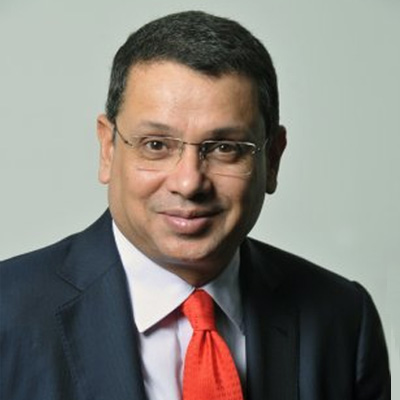
    Star India CEO Uday Shankar, conqueror of TV news and entertainment business, is ready to wage a new battle in sports broadcasting.

    When the BCCI rights came up for grabs after the abrupt termination of contract with Nimbus, Shankar quickly pounced upon it. He tiptoed in, surprising hot contender Sony to pocket the prized rights to telecast international cricket in India from 2012 through 2018. His winning bid: a whopping Rs 38.5 billion.

    “We believe in the power and value of cricket as content in India. By acquiring the BCCI rights for telecast, we think it is a great opportunity to create a new business,” he says.

    Shankar‘s timing couldn‘t have been better. A couple of months later, joint venture partner Disney agreed to sell its 50 per cent stake in ESPN Star Sports, allowing Star to aggressively build and expand the sports broadcasting business in India.

    “Drama and cricket are the two big pools of content that the masses love to watch in India. We are already a key player in entertainment. Now we can have independent charge over the sports broadcasting business,” he says.

    Shankar has placed huge bets on digitisation that would plug leakages in subscription revenue and dramatically increase the paying subscribers to broadcasters. “In the current construct, those rights are not profitable. The market is primarily so unattractive because of the theft and leakage in subscription revenues. Digitisation would enable content owners to get a better share of the subscription revenue,” he avers.

    In the first part of the interview with Indiantelevision.com‘s Sibabrata Das, Shankar talks about Star‘s game plan in sports broadcasting, the rise in acquisition costs, the huge opportunity that digitisation would throw open and the need to build a robust subscription income.

    Excerpts:

    Q. Why did News Corp. and Disney end their 16-year-old joint venture partnership in ESPN Star Sports (ESS) when it allowed them to lead the sports broadcasting business in Asia?
    When the discussions started two years back, it was not on a buyout proposal but on how to take ESS forward in a changed market environment. The sports business was under financial pressure and both partners were worried. The Champions League T20 rights (for $975 million) did not bring much value. Acquisition prices were rising and competition was not helping stem it. This later turned into the need to go separate ways but the possession of the rights over sporting events made a split in the properties complex and impossible.

    The obvious course was to acquire the entire 50 per cent stake of the joint venture partner and be the sole owner. The deal took time because Disney had to take the final call on whether it wanted ESPN to exit from Asia.

    Q. When Star bid for the BCCI rights on its own, had Disney agreed to sell or it was an act of defiance to build a sports broadcasting business outside the JV?
    We were still discussing the future of ESS when the BCCI rights came up for renewal. And because there was no clarity on the future of ESS, we could not come to an understanding on what its position would be on BCCI. We at Star knew the strategic value this property would add to our thriving entertainment business. We expressed an interest that in case ESS was not clear and since the bid had a final deadline which was approaching fast, Star would go ahead and bid for the rights as a one-off.

    Even in the JV agreement, this kind of provision was there that either party (ESPN or Star) could go and bid for the rights. However, they could not use the rights on their own without the approval of the other party. So we agreed that instead of letting BCCI go away to a competitor, Star would bid for it as a one-off and then assign the rights to ESS in case they wanted it. If ESS didn‘t want, Star could go ahead and broadcast it. So that‘s how it happened.

    Q. Did the BCCI rights tilt the deal in your favour as we understand that even Disney had expressed an intent to acquire News Corp‘s stake in ESS (though they had made heavy investments in UTV and were looking at consolidating that business)?
    The two are not linked. We were very clear that it would be a one-off bid (for rights). Now let‘s assume that Disney had bought out ESS. Then they would have definitely insisted on a non-compete agreement and we would have had to find a way of handing over BCCI. I don‘t know what would have happened; that‘s a conversation one can only speculate on. But if Disney had chosen to play in the sports market here, then they would have definitely tried to also get a piece of the BCCI.

    Q. When you realised the strategic value of the BCCI rights, did the fear of Sony haunt you as it had the lucrative IPL (Indian Premier League) rights and its entertainment business was on the upswing?
    Of course, it was an important consideration. It would have made Sony a very formidable player in the sports space. And we were then not present in that space; we were only an entertainment company.

    We also knew that there were a few others like Ten Sports and BCCL (Benett Coleman and Company Ltd) who had bought the tender documents. All of them were key competitors. And anybody who had the cricket rights would have a serious strategic weapon.

    But that wasn‘t why we decided to go for the BCCI rights. We definitely believe in the power and value of cricket as content. It gets the largest number of viewers across all target groups. We also genuinely believe that there is an opportunity to improve the quality of cricket on TV. And we thought the best place to start that would be the BCCI rights.

    ‘In the current construct, those rights are not profitable. Our big punt is in digitisation‘ 

    Q. Was the bid of Rs 38.51 billion on the higher side?
    You would bid only what is the rational value of the tournament and not beyond reasonable limits. In fact, Sony and our bids were pretty close; it clearly tells you that there was a consistent logic that both of us were applying.

    You must appreciate that nobody had the time to plan for it because it happened suddenly. BCCI (rights) wasn‘t on Sony‘s or anybody‘s horizon. It was comfortably settled with Nimbus; they were holding the rights for almost six years and they were going to have it for several years more. If anybody says it was part of their serious strategic consideration, that wouldn‘t be correct. How can you plan for something that is not available in the market? But when it came up for grabs, everybody thought it was a great opportunity. And we definitely thought of it is as a great opportunity to create a new business.

    Q. But since it was unplanned, you could have overestimated the value of the property? Or how did you arrive at a right value?
    There was a reserve price that BCCI had indicated and based on that we did the mathematical calculations. The ad rates for India cricket matches per 10 seconds and the kind of distribution revenues that can be earned are available in the market. So based on that we did our calculations.

    Q. Media analysts say those numbers wouldn‘t make up for the bid amount unless digitisation happens. Did you bet too heavily on digitisation when you did the calculations?
    In the current construct, those rights are not profitable. The market is primarily so unattractive because of the theft and leakage in subscription revenues. More than Rs 150 billion gets collected from the ground in form of subscription income. But the net off carriage fees that comes to the broadcasters and content owners is a small fraction of that.

    Our big punt is that in the next couple of years when digitisation moves significantly forward, a lot of that would change. The leakages would have been plugged, there would be more fair and transparent business processes. And that would enable content owners to get a better share of the subscription revenue.

    Sports nowhere in the world has sustained on advertising revenue; that is a small part of it. Wherever it makes money, it makes it on the back of subscription income. And that is what we are hoping would happen in India as well.

    Q. Since Star has a very strong entertainment broadcasting business, will the network power not enable you to push up advertising rates for your sports properties?
    You can‘t move that synergy to up the ad rates much just because you have more properties under your belt. The target audiences and the set of advertisers are different. The big advertisers on sports, for instance, are telecom and auto companies. General entertainment channels primarily address a female TG.

    So you can‘t play much on network strength. We have not factored in any dramatic upside in advertising revenues. Let‘s face it; ad rates can‘t go beyond a certain level of elasticity.

    Q. Are you expecting ARPUs (average revenue per subscriber) to climb with digitisation of cable networks?
    No, I am not factoring in a tremendous increase in ARPUs. India is always a value conscious market and cricket is a mass market product. There would, of course, be some people who have the ability to pay higher value. But most people won‘t pay that kind of money.

    There is also enough competition in the market which would ensure that the ARPUs don‘t go beyond a certain limit. What we are looking at is the big shift in cable that should happen. In case of transparency, we clearly see a visible link between the subscriber base and the payouts. 

    Q. What sort of paying subscribers would sports broadcasters attract?
    If the whole country goes digital, you are talking about 120-130 million C&S homes in the next few years. Even if you say 60 per cent of the entire universe goes cable, you are talking about 70-75 million C&S homes.

    The 8-9 million paying subscribers for sports currently under analogue cable would go up significantly. Sports is driven by events. But at any time, the genre would be attracting 60-70 per cent of the total subscriber base. I think that is the ratio that DTH (direct-to-home) gets.

    ‘Sports had been relatively less competitive in India because the two big players were together. Now since ESPN and Star have parted ways, the next 5-10 years, will see a new round of competitiveness and aggression in the sports market‘

    Q. After having acquired the BCCI rights for such an aggressive price, will Star match that aggression for the upcoming cricket boards that will be up for grabs within a year?
    We neither choose to nor can afford to be over aggressive. If we are also aggressive, then rights prices would shoot up. Now it is Sony‘s and Ten Sports‘ turn to be aggressive.

    Q. Do you see acquisition prices climbing further?
    If the competitive norm stays, then there will definitely be a tendency for the acquisition prices to go up. A lot, however, depends on how the distribution market pans out. If the distribution market continues to be so leaky and porous and cable stays largely analogue, then even the current prices will be unsustainable. However, if the digital transformation happens and if there is a matured digital distribution market that comes up, then definitely the prices will go up.

    Q. Even if Disney decides to come back after the two-year non-compete period is over and India continues to have analogue cable?
    I am not too sure if it continues to be analogue, how many players would be interest. That is the biggest stumbling block. But on the other hand, I also think analogue cable will not survive even if the current digital initiatives fail to go through; analogue will dies on its own. This is a funny market. The analogue experience is poor and the number of channels that the consumers can watch is very few. The cable operator doesn‘t pay taxes; nor does he pay fair value to the content owner. How long will the society tolerate this kind of a distorted model?

    Q. Consumers are probably tolerating analogue cable because the ARPUs are low?
    The ARPUs are not that low. How much does DTH charge? You can‘t charge beyond a certain reasonable price. What you can charge consumers also depends on affordability and the kind of value that they attach to it. Price doesn‘t escalate in isolation; there has to be a realistic basis.

    In certain areas of Mumbai, cable subscription is Rs 300-350 per month. In low income areas, people are paying less. ARPUs are not uniformly low. That will happen in a digital environment also.

    Q. Can‘t acquisition prices for cricket rights go up because of strategic value that the property brings?
    No mature media company will pay irrationally high for strategic reasons unless this can translate into business value. If they do that, they will go bankrupt. There are a couple of media companies who are prime examples of that. There is a company that launched an entertainment channel and decided to go completely crazy for what they thought was the strategic value. The strategic value worked so well for them that they had to sell out. The news companies have gone ahead and spent so much money on all kinds of distribution, etc. We know the financial mess they are all in.

    You think anybody would pay obscenely high just because it has strategic value. Star would not do that; nor would Sony and Zee. If BCCI prices were double this and tomorrow if IPL is available for three times more, would I go and buy those rights? No way. I don‘t want to go and acquire rights and be sacked or drive my company bankrupt.

    Q. With the current distribution of cricket properties across sports broadcasters, what sort of dominance will Star have?
    It is very difficult for anyone to have any kind of very big position in market share, let alone dominance. In this market, every sector of broadcasting and media is so competitive. Whether it is entertainment, news or regional, one thing that we have seen is that there is new competition coming in every day.

    If anything, sports all these years has seen less and less of competition in India primarily because there was a JV between ESPN and Star. Until IPL came, it was just ESPN-Star. Sony had a game only because it got the IPL; without it, it would have been a marginal player. Ten Sports continues to be a marginal player except for a few rights they have like the South Africa and the Sri Lanka boards.

    Sports broadcasting requires heavy investments. And not everybody may have the appetite to take big risks unless you are a Zee or Sony, specially because the distribution deals are so uncertain.

    Since ESPN and Star have parted ways, it is only a matter of time that Disney and ESPN will come back to India. So I think over the next 5-10 years, you will see a new round of competitiveness and aggression in the sports market. Sony has launched a sports channel; they will have to really work hard to build that and will need more rights. I am sure they will surely bid aggressive for whatever rights come up. Ten Sports will also be forced to bid for a few more rights if they want to stay competitive in the game. You saw how expensive their bid was for the South Africa rights. The price they paid was pretty high and they got it.

    Sports had been relatively less competitive in this country because the two big players were together. That phenomena is set to change.

    Q. But in UK you have News Corp as a big player and ESPN as a much smaller player. Wouldn‘t India replicate that market?
    Those are very settled markets and even there that is not quite the case. In India tell me one sector of media where one single player sits with 50 per cent share. When it started, that may have been the case. About 20 years ago, Zee had a large share. Then Star came and build a large share in Hindi entertainment. See how competitive the market is today.

    Take regional. The only market where one player continues to build a very big share is Sun network in Tamil Nadu. And we all know the reasons behind that. But if it‘s a freee market, then it is difficult for anybody to take a 50 per cent or a 40 per cent share. Very, very difficult.

    India is an emerging market. So global attention is on this market. Media, despite all the softening, is still delivering the second largest growth rate in the world year-on-year. And that will continue to be the case for a long time. The most attractive growth rate market is not available so easily for media. China does not allow media that easily. So where can you dominate ? India has a huge consumer base; you are talking of 120-130 million C&S homes. Incomes are going up. I think there will be more and more people coming in.

    Western media companies are looking at India primarily because they are not getting growth in their own markets. More and more large Indian companies are stepping in. You have seen what has happened in the last 2-3 years. Big Indian corporates have made their foray into media. Reliance Industries Ltd (RIL) and Aditya Birla have come into media. I think media is going to get more and more competitive. And no matter how much money you might have, no matter how aggressive you might be, I don‘t see a situation where anybody will be able to build a 50 per cent share in any vertical.

    Q. Since Rupert Murdoch had said that IPL was a big miss, would Star‘s next big stretch be on acquiring its rights when it becomes available in future?
    Of course, it was a big miss. I don‘t even know what the contractual agreement between Sony and BCCI is. They may have a preferred access to renew it. But if it comes up and continues to be a strong property, then we will surely be interested. We have seen a little bit of softening in IPL and hopefully that‘s temporary. But the renewal is long away and it would depend on what BCCI‘s price expectation is at that stage.

    Q. Do you see cricket viewership plateauing?
    Cricket viewership depends on a variety of things. First and foremost is the nature of the tournament. Following immediately afterwards is the performance of India. I think there is a value to be obtained from that.

    The quality of TV broadcast can make a big difference to how much the viewership can grow. Sports broadcasters generally have done a very good job of providing a professional cricket experience to the viewers. But it seems to have plateaued.

    The only rule of content – and that applies to drama, sports, news, anything – is that the sameness brings in fatigue. And there is a certain amount of sameness that seems to have settled in sports. That is the reason why cricket viewership might be peaking. If we can disrupt that sameness, bring in innovation and fresh approach to connectivity, to visual and to graphics, I think given the passion that cricket generates in this country only sky is the limit for viewership. When cricket is played in every nook and corner literally, how can you say that the viewership has peaked. I think the viewership can grow a great deal more provided we continue to grow and build on the experience that we can provide. And there the broadcasters and the boards can do a lot more together.

    Q. Are you talking of introducing doses of entertainment?
    No, I am not suggesting that. You can‘t turn cricket into soaps; you have to stay true to the sport. But within that, you have to innovate. And there is so much of technology to be used – you see what has happened in the last 10-15 years! New graphic technology has come in and the kind of replays that we get to see only can enhance the viewing experience. You can further enhance that experience a great deal more.

  • Nimbus ropes in Vodafone, Imperial Blue as WSH sponsors

    Nimbus ropes in Vodafone, Imperial Blue as WSH sponsors

    MUMBAI: Nimbus Sport, the marketing partner of Indian Hockey Federation promoted World Series Hockey, has roped in Vodafone and Imperial Blue as associate sponsors for the tournament which went underway Thursday.

    Nimbus Sport COO Yannick Colaco said the organisers are talking to two more companies for sponsorship. The company had recently signed Japanese tyre manufacturer Bridgestone as the title sponsor of the tournament for the first season.

    “We have done one year deals with our sponsors and partners. They will have the first right to renew the deal for four more years. Once people see the proof in the pudding, they will see value in associating with the event,” Colaco said, adding that the aim is build associations with premium brands.

    The organisers are targeting a viewership of 1 TVR in the first year and are hopeful that Indian team’s recent win in Olympic Qualifiers will boost interest in the tournament. He draws a parallel to the Indian Premier League (IPL) which benefitted after India won the first edition of the Twenty20 World Cup.

    “In terms of television viewership we are targeting a TVR of 1. India‘s performance in the Olympics qualifiers has created interest in the sport,” Colaco asserted.

    Colaco adds that advertisers associate with the event as they believe in the project. At the same time they look for ROI. He adds that the big challenge for the agency has been the politics that has been going on while issues like logistics have been taken care of.

    Stated Vodafone India Sr. VP Consumer Insights and Communications Anuradha Aggarwal, “We have been associated with marquee sporting properties like IPL and F1. There is a definite upswing in terms of awareness and sentiments for our national game (Hockey). WSH has tremendous long term potential and we would like to create interesting and engaging outreach programmes for our subscribers around this property.”

    Offering a media buyer‘s take, Lodestar UN COO Anamika Mehta says that the league is a good idea. At the same time over the years there has been little effort to grow the sport at the grassroots level. Mehta feels that the older TG will tune in who have watched Indian hockey in its glory days. The challenge is that youth don‘t have an emotional connect with hockey unlike leagues like the EPL in soccer.

    “A lot of work has to be done to bring the youth into the game. The parties in this initiative have to be in it for the long haul. At the same time the negative publicity around the event hasn‘t helped. While clients haven‘t been extremely enthusiastic, it is the first time that the event is being held,” she says.

    Mehta adds that WSH cannot be just about the event taking place once a year, contending if that happens then the buzz will die down. It is important that franchises do marketing and promotional activities regularly across the year.

  • TDSAT adjourns hearing as Nimbus approaches SC

    TDSAT adjourns hearing as Nimbus approaches SC

    NEW DELHI: The Telecom Disputes Settlement and Appellate Tribunal (TDSAT) today adjourned its hearing in the case by sports broadcaster Nimbus challenging the Telecom Regulatory Authority of India (Trai) direction to its channels Neo Sports and Neo Sports Plus to reduce their subscriber price.

    The adjournment till the second week of next month came after TDSAT was informed that Nimbus had filed a petition in the Supreme Court challenging the Delhi High Court order fixing Rs 37.25 as bouquet price for the two channels.

    Earlier on 22 January, the High Court had dismissed an application by Nimbus and upheld the Trai order of 11 January fixing Rs 37.25 as bouquet price for the two channels. The order of the High Court had also made it clear that Nimbus could recover its cost at the rate of Rs 58.50 if its appeal before the TDSAT was accepted. The Trai order had also asked Nimbus to charge Rs 5 per channel in the areas covered by Conditional Access System (Cas).

    Nimbus contended that Trai can fix the rates only under Section 11(2) of the Trai Act after due hearing to the concerned broadcaster, and not arbitrarily under Section 13 (2).

  • Neo Sports to give live feed to DD for 17 Feb ODI; no action against Nimbus

    Neo Sports to give live feed to DD for 17 Feb ODI; no action against Nimbus

    NEW DELHI: Following an assurance that it was prepared to give live feed to Prasar Bharati and action against it was unwarranted, Nimbus was today directed by the Delhi High Court to provide live feed for the cricket match between India and Sri Lanka to be played on 17 February in Visakhapatnam.

    The bench comprising Justice Vikramjit Sen and Justice JP Singh passed the order after Nimbus counsel Gopal Jain mentioned the matter before the bench seeking protection against the showcause notice issued by the information and broadcasting ministry alleging there had been violation of the provisions of the Sports Broadcasting (Mandatory Sharing with Prasar Bharati) Ordinance 2007.
    Nimbus wanted the court to direct the Centre not to take action against it as it had offered to provide live feed of the match to the Prasar Bharati. Under the ordinance, the licence given to Neo Sports owned by Nimbus can be suspended.

    The court directed the government not to take any decision or action till 9 March, the next date of hearing.

    The court also issued notices to the Centre and Prasar Bharati on a petition filed by Nimbus challenging the ordinance, which makes it mandatory for private broadcaster to share live feed with the pubcaster.

    Earlier in the day, Nimbus had approached another Bench of the Delhi High Court presided over by Justice BD Ahmed seeking protection from the Centre’s threat to cancel its licence if it did not respond to the government’s show cause notice by today.

    However, Justice Ahmed had said then that the broadcaster should raise the issue before the Division Bench that was already hearing two cases on the issue – Nimbus’ challenge of the ordinance and the appeal by Prasar Bharati against a single bench’s order permitting a seven-minute deferred telecast of the cricket matches.

  • Nimbus seeks court protection on showcause notice

    Nimbus seeks court protection on showcause notice

    NEW DELHI: Following the issuance of a showcause notice by the information and broadcasting ministry to Nimbus Communications for failing to give live feed of cricket matches to Prasar Bharati, the broadcaster today urged the Delhi High Court to provide it protection from a possible cancellation of licence.

    However, Justice BD Ahmed, before whom the matter was mentioned this morning, said the broadcaster should raise the issue before the Division Bench that is already hearing two cases on the issue – one by Nimbus who own Neo Sports, challenging the Sports Broadcasting (Mandatory Sharing with Prasar Bharati) Ordinance 2007 and an appeal by Prasar Bharati against a single bench order permitting a seven-minute deferred telecast of the cricket matches.
    Justice Ahmed said: “It is improper for the single bench to pass any order when the matter is being heard by a Division Bench (headed by Justice Vikramajit Sen).”

    The ministry, in its notice issued on 13 February, had asked Nimbus to file its reply by this evening. Under the Ordinance, which was promulgated with retrospective effect, the Neo Sports channel can face cancellation of licence for violation of the Uplink and Downlink Guidelines issued in November 2005 and / or a fine up to Rs 10 million.

  • Delayed feed: I&B issues showcause to Nimbus

    Delayed feed: I&B issues showcause to Nimbus

    NEW DELHI: The information & broadcasting ministry has issued a notice to Nimbus Communications to show cause why Neo Sports owned by it has failed to comply with the provisions of the ordinance issued recently for mandatory sharing of live sports feed with Prasar Bharati.

    Nimbus Communications has been given time till tomorrow to reply to the notice, which was issued yesterday, failing which the government is “free to take action as permissible under the ordinance”. The showcause was issued on the orders of I&B minister Priya Ranjan Dasmunsi.

    What has irked the mandarins in the ministry is that for the ongoing One-Day International series involving Sri Lanka, as well as the earlier one that pitted the Boys in Blue against the West Indies, DD has been forced to telecast the matches with a seven minute delayed feed.

    The Sports Broadcasting Signals (Mandatory Sharing with Prasar Bharati) Ordinance 2007 has a clause embedded in it that states that television channels that fail to comply with the terms of the ordinance for compulsory sharing of live feeds with the national broadcaster Prasar Bharati would have to pay a penalty up to Rs 10 million and also face possible revocation or suspension of license.

    The ordinance promulgated on 3 February has retrospective affect from 11 November, 2005, which was when the government had issued its guidelines for downlinking of TV channels. The Uplinking Guidelines had been issued on 12 December, 2005. It has also been stipulated that no action of the government could be challenged in any court of law.

    With the Guidelines coming in the ambit of the Ordinance which is expected to be replaced by an Act of Parliament in the ensuing Budget session, the government has taken upon itself the powers to enforce them with retrospective effect. The guidelines are already the subject matter of two petitions in the Delhi High Court.

    It may be recalled that the Delhi High Court had on 12 February refused to stay the operation of the ordinance asking private sports channels to share live feed of cricket and other sports events with the pubcaster.

    A High Court division bench headed by Justice Vikramajit Sen has posted the matter for further hearing tomorrow.