Tag: Nikhil Wagle

  • Nikhil Wagle exits ‘Maharashtra One’

    Nikhil Wagle exits ‘Maharashtra One’

    MUMBAI: The game of musical chairs in the Indian TV news channel business continues. Over the last couple of months there have been many a high-profile exits and reshuffles such as Arnab Goswami, Vikram Chandra, and now Rahul Shivshankar, etc.

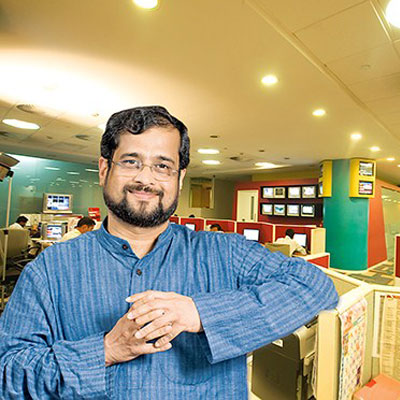
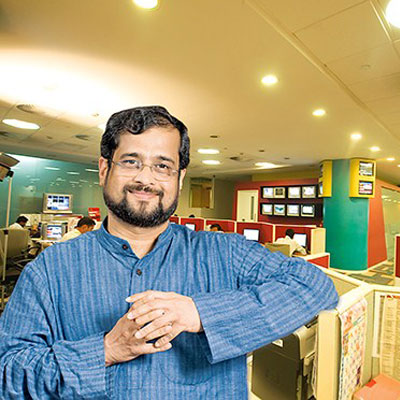
    It has come to our knowledge that the renowned journalist Nikhil Wagle has exited from Marathi news channel, Maharahtra One. After serving the channel as its editor-in-chief for almost a year, Wagle is out of the channel.

    The channel is a part of Sadhna Group subsidiary Sharp Eye Advertising, which owns and operates Sadhna News, Sadhna Bihar/Jharkhand, and Sadhna Madhya Pradesh/Chhattisgarh.

    Replacing Wagle as the executive editor is Ashish Jadhav who was the channel’s political editor. According to a source from the channel, Jadhav’s name was recommended by Wagle.

    It is rumoured that Wagle was asked to leave after he asked Hindu Sanatan Sanstha’s office-bearer Abhay Vartak to get out of his show, Aajcha Sawaal. Wagle had received several threats from the Sanathan Sanstha last year.

    Another source from the channel however rubbished sacking information, “There were differences between Nikhil and the management owing to which he decided to resign. The decision of parting ways was taken with mutual understanding.”

    Wagle’s next move is not yet clear but people close to him said he will concentrate on writing a book which has been pending from sometime.

  • Nikhil Wagle exits ‘Maharashtra One’

    Nikhil Wagle exits ‘Maharashtra One’

    MUMBAI: The game of musical chairs in the Indian TV news channel business continues. Over the last couple of months there have been many a high-profile exits and reshuffles such as Arnab Goswami, Vikram Chandra, and now Rahul Shivshankar, etc.

    It has come to our knowledge that the renowned journalist Nikhil Wagle has exited from Marathi news channel, Maharahtra One. After serving the channel as its editor-in-chief for almost a year, Wagle is out of the channel.

    The channel is a part of Sadhna Group subsidiary Sharp Eye Advertising, which owns and operates Sadhna News, Sadhna Bihar/Jharkhand, and Sadhna Madhya Pradesh/Chhattisgarh.

    Replacing Wagle as the executive editor is Ashish Jadhav who was the channel’s political editor. According to a source from the channel, Jadhav’s name was recommended by Wagle.

    It is rumoured that Wagle was asked to leave after he asked Hindu Sanatan Sanstha’s office-bearer Abhay Vartak to get out of his show, Aajcha Sawaal. Wagle had received several threats from the Sanathan Sanstha last year.

    Another source from the channel however rubbished sacking information, “There were differences between Nikhil and the management owing to which he decided to resign. The decision of parting ways was taken with mutual understanding.”

    Wagle’s next move is not yet clear but people close to him said he will concentrate on writing a book which has been pending from sometime.

  • Nikhil Wagle to helm new Marathi news channel Maharashtra One

    Nikhil Wagle to helm new Marathi news channel Maharashtra One

    MUMBAI: The Marathi news industry is soon going to see a new addition with the launch of a 24×7 news channel called Maharashtra One. The national news channel operating in Marathi is speculated to launch within the next two months.


    Veteran journalist renowned for his brave and flawless journalism Nikhil Wagle has been roped in as the editor-in-chief of the channel.


    Speaking exclusively to Indiantelevision.com Wagle says, “I will join the channel on 1st September, and then eventually we will form a team which will have both young and experienced minds. My role will be to make sure that we are presenting quality, credible and timely content to our consumers.”


    Sources in the industry inform that there have been a series of resignations in IBN Lokmat recently. It is speculated that many of them are slated to join Maharashtra One. Eminent journalists from ABP Majha and Zee 24 Taas are also said to be linked with the new channel.


    “There are many senior journalists who have shown interest and will join the team but it’s too early to take names. There are a few who I have worked with before in past organisations who will be joining the team,” asserts Wagle. 


    The channel will also have a bureau office in Delhi as well as in other parts of the country informs Wagle.

  • “There is no creativity or innovation in the Marathi news channels’ space:” Nikhil Wagle

    “There is no creativity or innovation in the Marathi news channels’ space:” Nikhil Wagle

    At the age of 19 he became the editor-in-chief of a regional daily and today has journalism experience of more than 35 years. Besides being on top of each and every beat, he was keenly focused on investigative journalism. 


    In August 2004, he became a victim of aggressive Shiv Sena supporters who were irked by his belligerence and brave journalism. He is the inspiration for many igniting minds who are keen to peruse a career in journalism; he is none other than veteran Marathi pressman Nikhil Wagle.


    Speaking exclusively to Indiantelevision.com’s Sagar Shere, Wagle shares his vision on the Marathi news space, where he feels there is huge room for creative experimentation.


    Excerpts:


    How has your stint with Mi Marathi been so far? What was the reason behind choosing the channel when you switched from IBN Lokmat?


    It’s just been nine months since I joined Mi Marathi and I am not working full time here. I only do one show for them which is Point Blank. The reason behind switching from IBN Lokmat was that the entire IBN network was taken over by Mukesh Ambani. We had conflicts on policies and ideology with them. We worked under Rajdeep Sardesai as a team and resigned because we thought Ambani will not give us the freedom to work as a journalist. 


    I liked the policies of Mi Marathi and their ideation behind news so I thought of coming to Mi Marathi. 


    There has been a drastic growth in the Marathi news channel space. What do you think is the pulling point for audiences and what does the Marathi news channel genre needs to work on to get in more viewers?


    Marathi news channel is growing and it was always better than Hindi news channel on the basis of content. When IBN Lokmat and ABP Mazha were newly born, they infused young blood and were ready to experiment. However now they seem to have faced a setback. These days Marathi news channels have started following a set pattern for everything, be it for news gathering, news visualizing, programming or debate. There is no innovation in Marathi news space. 


    From your perspective, what are the changes that you have seen over the years in the genre? In terms of approach for news, do you think there is a different strategy that Marathi channels are adopting now? 


    We need more creativity, more ideas and more experimentation in Marathi news channels. We should infuse young blood so that we can experiment and create good content. We need to concentrate on investigative journalism. These days all news channels thrive on byte journalism and feature programmes. However the need of the hour is investigative journalism. Over the past seven years, news channels have turned stale. We need fresh outlook. Moreover, new perceptions and innovation is always accepted by the audience. 


    Do you think there is scope for more news channels in the Marathi space?


    There is ample scope for Marathi news channels because IBM Lokmat has gone down in TRP and advertising. There was competition between IBN Lokmat, ABP Mazha and Zee 24tass. However, over the last one year there is no competition between these news channels. Also there is no quality news gathering, quality of format and quality programmes.


    If there is no competition you lose the passion and that is what has happened with Marathi news channels. At this point in time, if someone tries to break the format and comes up with something new, it will be great and viewers will definitely like it.


    What is the target group for regional news channels?


    Target audience for Marathi regional channels are all Marathi speaking audiences. They cater to middle class, higher middle class, rural and urban audience. Everyone has a different taste and a news channel should look after all its target audiences but sometimes you don’t need to look for a TG because some stories are important for the nation news wise and at that time you don’t look for TG. Stories like farmers’ suicide, terrorist attacks and natural calamities are serious issues and you can’t look at the TG before showcasing them.

  • “Media today is suffering from ideological corruption”: Tulsidas Bhoite

    “Media today is suffering from ideological corruption”: Tulsidas Bhoite

    Mi Marathi, a Marathi news channel has been working hard to gain cognizance since its revamp from an entertainment channel to a news channel in March 2014. The channel, after a year of constant endeavour to connect with the viewers, has become the chart topper in the Marathi news space.

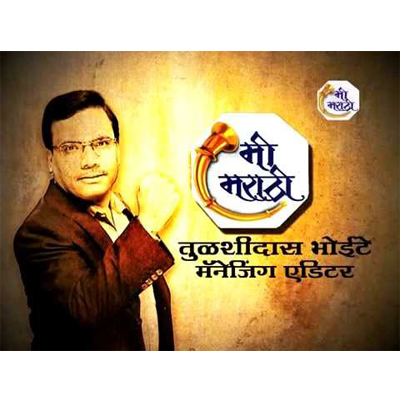
    At the forefront of Mi Marathi is a team of veteran journalists and among them is the channel’s managing editor Tulsidas Bhoite.  

    Bhoite started his career in 1992 in print media. It was in 2000 that he moved to electronic media with his debut stint at ETV. He has worked with leading channels like Zee Marathi, IBN7, Star Majha, Zee 24 Taas, TV 9 and Jai Maharashtra.

    Indiantelevision.com’s Seema Singh spoke to Bhoite about the transition of Mi Marathi from an entertainment channel to a news channel, the challenges and much more.

    Excerpts:

    What was the reason behind converting the entertainment channel Mi Marathi to a news channel?

    I think it was a wise decision by the management. I travel a lot with all segments of people, be it with commoners or professionals from different field. As per my analysis, there is space for more than 10 news channels in Maharashtra. The market here is quite weak in terms of both revenue and TRP, and so far, not a single channel has tapped the market fully. Currently with seven players in the region, we have only just managed to tap 50 per cent of the market.

    How did the transition take place? What happened to the GEC employees?

    We haven’t removed a single employee from any department because we didn’t want to write-off any people. Everyone has their own talent, and it was our duty to cultivate that talent for the betterment of the channel. We decided to use GEC talent for news and fortunately the management allowed us to do that. As the pace of work in a news channel differs from that of a GEC, we do face the problem of speed but our employees are coping and trying to change their functioning style.

    When the management decided to relaunch the channel as a news channel, they started hiring best professionals from the industry. The hiring process is still on and we have on board the three best faces from the industry in Kumar Ketkar, Nikhil Wagle and Bharatkumar Raut.

    We are hiring more talent from the news industry now. Even today, we do not have any technical backup like the other news channels, because of the space crunch. Plans are also afoot to shift to a new office and buy more technical equipments. With no technical support and just 60 per cent workforce as compared to the other news channels, I think we have been doing a fairly good job.

    How is the management-employee relationship in the company? Are employees involved while taking decisions?

    We ask our employees to give ideas. We may or may not accept the ideas, but we always ask people to participate in the ideation process. In fact, Jhingroo, the icon created by the channel during elections, was the idea of our creative team, which is still being appreciated by many.

    Being the seventh player in the market, what was the strategy to attract viewers? 

    Yes, we entered the market as the seventh player in the regional news space in March 2014. In order to remain relevant in the space, we had to create a new market for ourselves. As I mentioned, there is a large part of Maharashtra, which is still uncovered by news channels. So our strategy was to create a new segment for ourselves in the news market and also grab existing viewers of other news channels.

    We decided to cover news differently. For example in Mumbai, channels generally cover Mantralaya when it comes to politics, stock market for financial and a select two or three theatres or multiplexes when it comes to entertainment news. We changed this. We sent our cameras to that part of the society, where others hesitated. The news industry generally works on a myth of the up market and down market. But if you see, only 10 per cent of the news channel viewer comes from the so called up market strata.

    Even in the rural parts of Maharashtra, channels focus on the sugar belt of Pune or Nasik. We completely changed that. We always cover every news right from rural to urban, from upper to middle to lower middle class. And I’m not saying this because I’m a journalist, but this is the most practical approach. Even advertisers want to cater to the rural markets these days.

    What were the challenges you faced when you entered the market?

    The first challenge that came our way was that no one wanted to accept us as we weren’t big faces, when we launched. Traditional leaders thought we could not carry on the channel. But when we applied our strategies to run the channel, after four months they started taking cognizance of the channel.

    What did you do right to get to the number one position?

    Firstly, the selection of issues and subjects to cover. Secondly, we consider the opinion of each person in the team as important. Thirdly, when others are trying to think on an issue, we have already acted on it. We connect our channel directly to viewers, from all segments. We are always trying to give them a say in each and every programme. To understand the pulse of the audience, we never forcefully apply our views on the audience. We give the audience a chance to express their opinion.

    What’s your Target Group?

    While we don’t focus on one TG, we look at targeting the 15-45 year olds. For example, our character Jhigroo, resonates not just with politicians, but also the younger generation, who while are not too interested in politics or the news, but like the animated character. We want to catch the young audiences.

    How did you ensure that you did not lose out on your viewers from the entertainment channel, while making new ones in the transition?

    Most channels apply the ‘Hot Cut’ policy. But during the relaunch, we did not make the mistake of ‘Hot Cut.’ So while a show was on air, we did not cut the programme to go on air on something that was happening now because that could have harmed us. So we used the phase out process. We kept 50 per cent programming and 50 per cent news from September 2013 to March 2014. And from March, we relaunched fully as a news channel and we continue treating news in a different way. A lot of emphasis is being given to the presentation of the news, despite lacking on the technical front.

    How do you plan to maintain the number one position?

    When we announced the relaunch in the newsroom, I had said ‘our struggle is man vs machine.’ While content is the king, distribution plays a crucial role and we are hoping to expand our reach.

    My aim is to not just get good numbers. My ultimate goal is that the channel should be cognizable, right from the top person to someone sitting in the rural area. People should know the channel and the content. Number one, two doesn’t really matter.

    We would like to capture 50 per cent of the market to be able to do more experiments with the content.

    What are the challenges in the Marathi news space?

    In Maharashtra, people are open to other languages, and so we have to compete with Hindi news channels as well. Our strategy is to go to people, pick up their issues and give them a voice.

    Do you think advertisers should put in more money in regional channels? Is there scope?

    There is an untapped market in Maharashtra. However, when it comes to news genre, I don’t think any sales team in any of the channels has the potential to tap that huge market, and this includes my channel. There is a need to set up that team. We need to look at people with good ideas, who can tap that market.

    The logo has remained the same even after the relaunch. Any plans to change that?

    We thought on that. The creative team has created a different logo as well, but for now we will stick to the current logo. Our communication from class to mass shows that they like our current logo.

    Are you looking at revamping the channel?

    My team is currently struggling with the limited resource. But we need to move to a new space and as soon as we find that space, we will have two studios and better equipment and lighting. The revamp will be in the next six months.

    We are also working towards bringing in more graphics in the next 15 days. We will not stick to a single rule of programming. Adding more content to the channel is an unending process. We are making rules, only to break them.

    How has Nikhil Wagle’s presence helped the channel?

    If you study our viewership pattern, we are equally distributed throughout the day, from 3 pm to 11 pm. We wanted to strengthen our 9 – 10 pm time band and so when Nikhil Wagle agreed to join our channel, we offered him that time band. He has his own followers in Maharashtra, and that cannot be denied. Our mood and his is the same and that helps the channel a lot.

    How many journalists and bureaus do you currently have?

    In all over Maharashtra, we have nine bureaus and we will increase that to 12 in the next three months.

    Of the nine, seven are connected by lease lines. We will also start our studios in the next three months. We want to give our correspondents in these studios an opportunity to handle their own small shows on regional basis.

    In Mumbai, we have a team of 12 reporters and 20 camerapersons and out of Mumbai we have 60 reporters and 30 camerapersons.

    What’s your take on prime time debate?

    When deciding the strategy for the channel, I think like a viewer and not like a journalist. People are fed up of debates and that’s a fact. Fortunately, we only have one debate showPoint Blank hosted by Wagle, who is a man of content.

    We take only four people on the panel in order to give proper time to each one to represent their point of view. Media is suffering from ideological corruption. We are media, we are supposed to give equal opportunity for people to give their opinion. There should be discussion and not debate.

    Vir Sanghvi had once said, “We don’t have news channels, we have low cost entertainment channels.” But I think people are fed up of such low cost entertainment and so we are trying to deliver hard core news.

    If you check our ratings, we aren’t getting good ratings for any of our entertainment shows.

    Have you subscribed to BARC? Will you be discontinuing your TAM subscription? 

    We haven’t yet subscribed to BARC, but we will. We haven’t taken a decision on whether we will continue with TAM or not. We may continue with both TAM and BARC.

  • Mi Marathi’s secret recipe for success in regional news space

    Mi Marathi’s secret recipe for success in regional news space

    MUMBAI: Marathi news channel Mi Marathi, which was eyeing the number one spot on the ratings chart after its late entry a year back, has finally hit bull’s eye.  


    In order to stay above the rest, Mi Marathi has designed a content strategy different than the other Marathi news channels. “We have never had a regional approach towards the channel. Mi Marathi has always been shaped as a global Marathi channel,” Mi Marathi editor in chief Ravindra Ambekar tells Indiantelevision.com in an exclusive chat.


    The differentiating factor for the channel when it launched, according to Ambekar, was that while other Marathi news channels were only catering to the Maharashtrains in Maharashtra, Mi Marathi took to representing the non-Marathis. “So while others were idolizing Raj Thackeray, we went against him. The programming of Mi Marathi has always revolved around people’s agenda,” says Ambekar.


    Ask Ambekar the recipe of reaching the top, and he proudly says, “We have never stuck to the studios. We believe in reporting from the ground and that’s how we connect to the viewers. People like to know the news from the ground and that is what has helped us reach the number one position.”


    The channel, which is working on a whole new look that it will soon be launching, is also concentrating on differentiated programming to attract more viewers and retain its number one position.


    Programming strategy


    Mi Marathi has roped in some big names… right from Kumar Ketkar to Nikhil Wagle, the channel has some of the top guns of journalism on its side.


    With its programming, the channel is also trying to bring a perceptional change that Marathi channels cannot cater to international news. It recently launched World News hosted by Kumar Ketkar, where he analyses major international news. “We must come out of the regional identity and boundaries,” opines Ambekar.


    That apart, it also has a show Local to Global hosted by newly appointed Nilesh Khare along with Shreerang Khare and Mayank Bhagwat. The show currently is the highest rated for the channel.


    Mi Marathi, through its content, is trying to connect to the new generation and that explains the English titles for most of its shows. “If we want to connect with the new generation, we will have to speak in their language,” says Ambekar, adding that the channel also does bulletins in languages spoken in the interior part of Maharashtra like a Malwani bulletin, all this to form a connect with the audience. 


    According to Ambekar, in Mumbai, Mi Marathi faces stiff competition from Hindi news channels. “The issue here is that when there is big news, people shift to Hindi news channels,” he says, adding that regional channels too need to come up with shows, which are at par with the quality of an English news channel.


    The channel is focusing on strengthening its morning primetime band, which currently airs half an hour recorded bulletins and shows. It will soon be launching a 7 am to 8:30 am non-stop super fast news bulletin catering to local and global news. “We have realised that people don’t have the luxury of sitting and watching news early in the morning and so we will be launching speed news in the morning band with the theme: ‘Don’t read newspapers, listen to them’,” informs Ambekar.


    Mi Marathi also has had a different approach for the afternoon band compared to the others in the space. While others prefer airing cooking shows in the afternoon band, this Marathi news channel chooses to air shows, which caters to social and health issues. “We understand that women would not want to watch a cooking show in their free time and so we air shows, which cater to issues relating to commuting, heath, government etc,” he says.  


    The evening band on the channel caters to remote areas of the state. Called the Zilla Parishad News, the programme covers issues at the zilla level. “We have total nine live bureaus and two – three  correspondents in every district of the state. This adds to the depth of stories we do,” informs Ambekar.


    Realising a void of business programmes in the Marathi news channel space, Mi Marathi has launched two business related shows: Khisa Pakit by Bharat Kumar Raut, which was a pre-budget show and will now continue featuring interviews of CEOs and Mi Marathi Bigg Boss by Nilesh Khare, which will go on floors next month. 


    The channel is also in discussion with Wagle for another show, after the successful Point Blank


    “We need to go above the competition and only then will we succeed,” opines Ambekar, who is hoping to financially stabilise the company in the next one year.


    “We are currently mostly dependent on corporate advertising currently. However, we are now moving towards retail marketing and events,” he informs.


    Events in the pipeline


    The channel is planning mega events like Agricultural Awards and educational seminars to boost its revenues. “We are focusing on revenue from events and retail client. There is limited space for advertising on television, since we need to concentrate on content and so we are focusing on events,” he says.


    While the Agricultural Awards will take place in October, the first educational seminar will be held in May at Kolhapur. 


  • It was Modi vs. the rest in Maharashtra: Nikhil Wagle

    It was Modi vs. the rest in Maharashtra: Nikhil Wagle

    My 10 takeaways from Maharashta Assembly election:


    1) The just concluded 2014 Assembly Elections in Maharashtra will go down as a historic development in the state’s politics, which has the potential to transform the face of Maharashtra. For the first time, a non-Congress party has reached a near majority. Since the inception of Maharashtra, BJP had never managed to reach the three-digit figure. Their highest number was 65 in 1995 when they formed the government with the help of their elder brother, Shiv Sena. But this time around, with 123 seats, BJP has inspired a tectonic change.


    2) The anger against the 15 years regime of Congress and NCP was palpable among the electorate. Serious corruption charges were labeled against the government, which they were unable to refute. Voters desperately wanted a change. The alternative was offered not by BJP, but by Prime Minister Narendra Modi whose impact was experienced during the Lok Sabha elections. Modi filled the credibility vacuum created by local leaders like Sharad Pawar, Prithviraj Chavan, Ajit Pawar and so on. Voters believed in Modi and decided to give him a chance. This is not a verdict for BJP, but Modi. It was Modi verses the rest.


    3) In spite of Modi’s popularity, BJP could not reach the magic figure of 144 in the assembly of 288 members. BJP’s national president Amit Shah tried his best with his electoral arithmetic. But Shiv Sena was able to stop them in regions like Kokan. In Vidarbha, BJP won 44 out of 62 seats. It is a big achievement, but the expectations were higher. The last minute decision of dropping the demand of separate Vidarbha from their manifesto could have damaged BJP here. In north Maharashta too, BJP could not live up to the expectations due to their weak party machinery. The lack of credible indigenous leaders and fragile cadres at remote places are the reasons behind BJP not crossing the halfway mark.


    4) Political pundits are blaming Uddhav Thackeray for Shiv Sena’s debacle. But I don’t agree with them. In fact, this is the best performance of Shivsena after 1995 when they got 70 seats. This time around, they were able to win 63 in spite of Modi onslaught. Many thought that Shivsena would be swallowed by the Modi-juggernaut but it did not only survive the storm but came out with their self respect intact. Credit goes to aggressive campaigning by Uddhav and grassroot machinery of party.


    5) Was it development verses Marathi pride, where the emotional issue took a back seat? I again disagree. Development was never ever a focus in this campaign. It was about clean and trustworthy leadership, where Modi won the battle. But along with this, the issue of Marathi pride helped Shivsena to protect their strongholds in Mumbai, Thane and Kokan. In fact, they totally snatched this plank from Raj Thackeray’s MNS.


    6) As far as MNS is concerned, this election has been a big blow to them. Raj is more charismatic than Uddhav. His oratory skills are as good as his uncle. But elections are never conquered on charisma. Due to wrong policies and frivolous politics, Raj has reached this stage. He started well in 2006, but was not able to build the party. In 2009 assembly elections, he had 13 MLAs, now he is decimated to just one. It is time for him to introspect.


    7) Raj should introspect but if there is anyone who needs utmost introspection, it is Congress and NCP. They have reached their lowest ever number in assembly elections. Congress is a house divided and NCP is totally engrossed in their politics of money and muscle power.


    By declaring unconditional support to BJP, Sharad Pawar once again proved his ‘Pawar Power’, which a common voter will only perceive as shameless opportunistic politics.


    8) This election could possibly write another chapter in the history of criminalisation of politics in Maharashtra. 165 of 288 newly elected MLAs have serious criminal charges against them and most of them are crorepatis.


     9) The participation of women candidates has been disappointing. Only 20 women candidates will be seen in the assembly, which is 7 per cent of the total assembly strength of 288. One wonders if it is still appropriate to call Maharashtra a progressive state.


    10) This election will also mark a black chapter for media, which witnessed unprecedented ‘Paid News’. In spite of the monitoring by the Election Commission, nobody could nail this cancer. Political parties sniffed the opportunity and took maximum advantage of the situation. It has set a dangerous precedent and the credibility of the media suffered like never before.


    (These are purely personal views of Mi Marathi consultant and veteran journalist, Nikhil Wagle and indiantelevision.com does not subscribe to these views.)

  • Nikhil Wagle joins Mi Marathi as consultant

    Nikhil Wagle joins Mi Marathi as consultant

    MUMBAI: After a brief hiatus of a month, former IBN Lokmat editor in chief Nikhil Wagle has now assumed the role of a consultant with Mi Marathi. He will host a new show called Point Blank at 9pm from Monday to Friday.


    Wagle’s expertise in political news will be leveraged by the channel for the upcoming state elections in Maharashtra. He will also be anchoring an interview based show very soon. In his new capacity, Wagle is free to appear on other Hindi and English news channels but not on any competing Marathi channel.


    Recently, the Marathi news channel underwent a few changes. It got on board Ravindra Ambekar as chief editor, veteran journalist Kumar Ketkar as media consultant and Bharat Kumar Raut as consulting editor.


    Wagle has worked with Doordarshan as well as newspaper Aapla Mahanagar and has been with IBN Lokmat since its launch in 2008.

  • Nikhil Wagle quits IBN Lokmat

    Nikhil Wagle quits IBN Lokmat

    MUMBAI: Following his counterparts in the Network18 group, IBN Lokmat editor in chief Nikhil Wagle has also decided to part ways with the company.


    Announcing the decision through Twitter, Wagle said, “Just resigned from IBN LOKMAT.  Will continue journalism without fear or favour!”


    On his decision, former IBN18 editor in chief Rajdeep Sardesai tweeted, “@waglenikhil salute you for building India’s finest regional language channel.”


    Indiantelevision.com was first to report about Wagle considering to move on from the company which is now under the control of Reliance Industries.


    His next move is yet unknown.


    Wagle has worked with Doordarshan as well as newspaper Aapla Mahanagar and has been with IBN Lokmat since its launch in 2008.


    Network18 has seen a spur of resignations right from founder Raghav Bahl relinquishing hold over the company, but staying on as non executive director of Network 18, to group CEO B Saikumar, COO Ajay Chacko, CFO RDS Binni Bawa, IBN18 editor in chief Rajdeep Sardesai, CNN-IBN deputy editor Sagarika Ghose, Web18 CEO Durga Raghunath and several others who within a span of a few weeks, left the company.

  • Nikhil Wagle: Another one bites the dust at Network18?

    Nikhil Wagle: Another one bites the dust at Network18?

    MUMBAI: Is senior journo Nikhil Wagle going to end up as another casualty at the Network18 group? 


    What has got tongues wagging is a tweet which Wagle sent out this morning in which he stated: “My decision to leave Mum (read Mumbai) is final. Need to get away from crowds and madness! Want ultimate peace.”


    Wagle is editor in chief at IBN Lokmat which is part of IBN18 which itself is part of the Network18 group. Apparently, he has been on leave for some time now.


    RTI activist and senior journalist Vinita Deshmukh questioned him on his tweet, “What are u saying? Where are you going? Will you be the next TV star to desert us?” Wagle responded by saying: “Will always be with people n activists like u! Don’t know about TV!”

    So we at indiantelevision.com also got into the twitter game and messaged him asking him what was going on. He responded after some time, saying he was on leave. And when questioned whether his leave was permanent or just a short break, his quick repartee was “Wait and watch!”


    Wagle tweeted later at close to midnight: “Please don’t spread rumors. I am with@ibnlokmattv. Not resigned. On leave.Was hospitalized n adviced rest. (updated at 11:23 pm, 28 June 2014).

    Wagle has worked with Doordarshan as well as newspaper Aapla Mahanagar and has been with IBN Lokmat since its launch in 2008.


    Currently, IBN18 editor in chief Rajdeep Sardesai and CNN-IBN deputy editor Sagarika Ghose are on leave. Though Rajdeep has calmed his team by saying that he would be back in July before he went on leave earlier this month, the rumour is that he is not returning.


    After Reliance announced its acquisition of the network last month from founder Raghav Bahl, group CEO B Saikumar, COO Ajay Chacko, CFO RDS Binni Bawa and several others put in their papers. It is unknown who will be taking their positions. Meanwhile, the open offer for Network18 is slated to go on till August.