Tag: Nikhil Madhok

  • Star Plus to air Mahabharat in a film format – Draupadi – Ek Agnipariksha

    Star Plus to air Mahabharat in a film format – Draupadi – Ek Agnipariksha

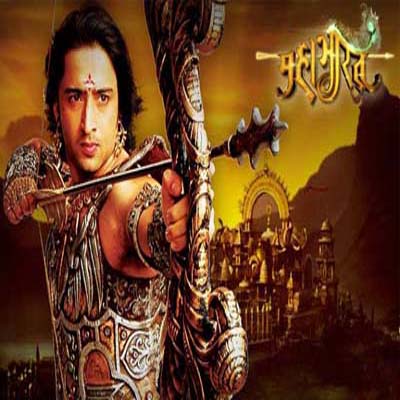
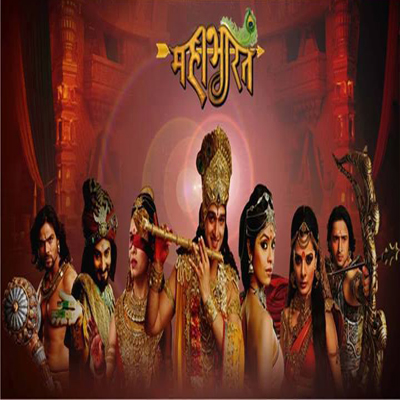
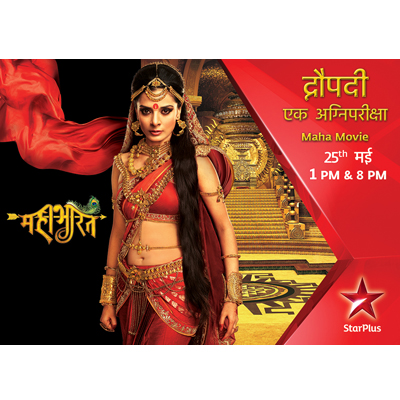
    MUMBAI: Given the immense popularity of the epic – Mahabharat, Star Plus is all set to showcase the great story once again on television. However this time as a film showcased through the lens of one of its greatest characters and perhaps the raison d’etre of Mahabharat – Draupadi. The Maha-movie ‘Draupadi – Ek Agnipariksha’ will narrate Draupadi’s journey of love, sacrifice and dishonour in a three hour film that will air on May 25th at 1.00 PM and 8.00 PM on Star Plus.


    Mahabharat, the iconic tale has no dearth of powerful characters! Be it Krishna who acts as the advisor, the legendary warrior Arjun, the cunning Shakuni, the powerful Yudhisthir and many more. But in a story dominated by males is a strong character of Draupadi that symbolizes beauty and grit, she faces the severest humiliation and yet manages to maintain her dignity. Audiences have loved this facet of Draupadi and empathised with her situation thus making it an apt reason for the film to be presented from her perspective prior to the grand war of Kurukshetra.


    Talking about the initiative, Nikhil Madhok, Senior Vice President, Marketing & Programming Strategy, Star Plus said, “Mahabharat has a massive fan-following across all age groups, especially the youth. Draupadi has emerged as one of the most loved and followed characters. Since the series is at the commencement of the great Kurukshetra war, we believed it would be a good refresher to take the viewers through Draupadi’s journey and how she was a catalyst for the war. We are positive that the audience will appreciate the film as much as they have enjoyed watching the show. ”


    Launched in September last year, Mahabharat produced by Swastik Pictures has aired approximately 193 episodes. The show is consistently ranked among the top shows on Indian television and has garnered positive feedback from all quarters.


    Watch the film this May 25th, Sunday at 1.00 PM & 8.00 PM only on Star Plus.

  • Star Plus and Zee TV’s election mantra

    Star Plus and Zee TV’s election mantra

    MUMBAI: In today’s time, elections are not limited to open ground speeches. Political parties are finding innovative ways to persuade the voter; from TV to social media, nothing has been spared.


    If one takes the general entertainment channels (GECs) into account, one can see hundreds of ad spots being bought by the political parties to showcase their agenda to the common man.  However, the leaders in the GEC space i.e. Star Plus and Zee TV have taken a step further and have incorporated the message of voting in their programmes.


    The two channels want their viewers to go out and vote for the 16th Lok Sabha elections and in order to spread the word, they have dedicated special tracks on the matter.


    Talking about Zee TV, three of its shows have integrated the ‘Power of 49’ in their storyline. The channel has leveraged some of its protagonists like Shilpa Shirodkar from Ek Mutthi Aasman, Roopal Tyagi from Sapne Suhane Ladakpan Ke and Neha Marda from Doli Armaanon Ki to drive in the message of how precious every woman’s vote is.


    For instance, in Doli Armaanon Ki the lead Urmi drags eve teasers, who were harassing her sister-in-law in a mall, to the jail. Just as Urmi files a FIR against them, a politician walks in commanding the release of the eve teasers since they are related to him. Urmi then drags the politician to the court and gives out the message of ‘Power of 49’.


    “As one of India’s most responsible broadcasters, Zee has constantly mirrored the emerging realities of the society we live in, highlighting a variety of burning issues that merit public mind space,” points out Zee TV programming head Namit Sharma.


    Sharma adds: “Just like our festivals, in today’s time, elections are more of a celebration with all the fanfare around the campaigns. We will also be integrating this aspect of the election campaigns in our shows in the coming episodes.”


    Similarly, in Ek Mutthi Aasman, the track was designed in a way that spreads the message that women play an important role in deciding who will be the next ruling party of India and that they should utilise this power in a right way.


    The plot was altered to convey the message. In the show, Kamla Bai, comes to know that a girl in the neighbourhood has been stopped by her mother to attend school because she thinks that it is not an appropriate place for girls, she immediately makes the mother understand the strength of women in today’s society. She states many examples of how women run the society.


    Similarly, in Sapne Suhane Ladakpan Ke, the protagonist Gunjan was seen giving out the information on ‘Power of 49’ conveying the helpline number and urging women to call and address their grievances to the government through the helpline.


    Chart topper, Star Plus, is also leaving no stone unturned to spread the word. The channel believes in the philosophy – ‘Youth karega apne vote ki value… Tabhi badhegi Desh ki value!’


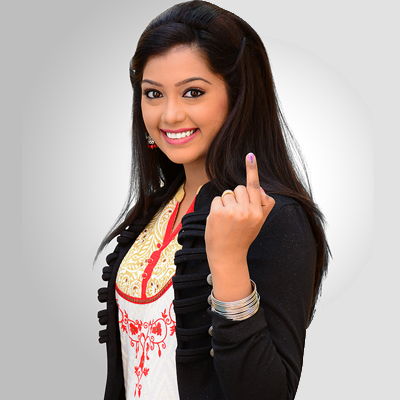
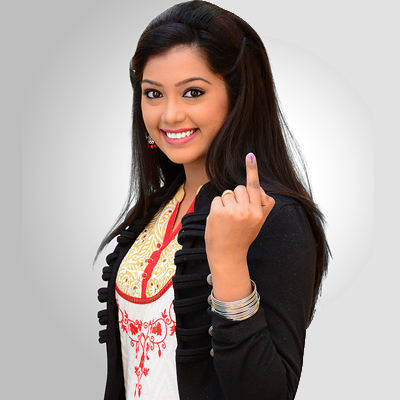
    With the thought of mobilising the youth and taking its Nayi Soch agenda forward, the channel has introduced an initiative to encourage first time voters to register for the upcoming general elections. Led by its popular face and youth icon, Veera, the campaign started in February and has created series of public service messages, prompting young viewers to register, vote and make a difference.


    This year, with the number of potential first time voters being estimated to be 12 crore, the channel wants to spread the awareness about the voting rights through the campaign. 


    “We want to encourage them to exercise their vote and contribute to the country’s progress. However, a lot of them are still not aware that the registration is an important prerequisite to voting. This first phase of our campaign aims to address that,” Star Plus senior vice-president marketing and content strategy Nikhil Madhok.   


    Moreover, Star network, this month also brought back the righteous popular talk show, Satyamev Jayate. It’s no coincidence that the show came back at a time when the country is gearing up for the general election to be held in April-May.


    With passions riding high and everyone out to prove their political credentials and concern for the country, the new season was aptly themed ‘Jinhe desh ki fikr hai’ (those who are concerned about India).


    The channels are doing their bit, now will have to wait and watch how many will go out and vote.

  • STAR Plus Veera campaign encourages first time voters to make a difference

    STAR Plus Veera campaign encourages first time voters to make a difference

    MUMBAI: We all know that we cross a major landmark in life when we turn 18 years old. You are bestowed upon with many privileges – you get a license to drive, can rightfully enter a disco and even choose your life partner! But what about the fundamental privilege of the right to VOTE? How many of us exercise this?
     

    A government by the people, for the people just can’t work without its people. With the thought of mobilizing the youth and taking its’ Nayi Soch agenda forward, STAR PLUS has introduced an initiative to encourage first time voters to register for the upcoming General Elections. Led by its  popular face & youth icon – Veera. The campaign will see a series of public service messages, prompting young viewers to register, vote and make a difference.
     

    “In India, the number of potential first time voters during this election,  is estimated at a massive 12 crores. In light of this, we at Star Plus, wanted to spread awareness about voting rights amongst first time voters and mobilize the youth. We want to encourage them to exercise their vote and contribute to the country’s progress. However a lot of them are still not aware the registration is an important prerequisite to voting. This first phase of our campaign aims to address that, “said Nikhil Madhok, Senior Vice-President Marketing & Content Strategy, Star Plus.

    Veera is one of the most influential young protagonists on television currently, as her progressive outlook to life is inspiring young viewers all over the country.  “Voting is a very important right of every citizen of India, and we must all exercise our right. The youth of this country are the ones who are the most impacted by decisions taken by the government. So it becomes important that they play a key role in the election process, to provide a better future for themselves and their country,” says Veera.


  • Nach Baliye 6 partners with Twitter to engage audience

    Nach Baliye 6 partners with Twitter to engage audience

    MUMBAI: Keeping up with its legacy of introducing innovative digital initiatives, Star Plus has got into an exclusive association with Twitter India to introduce the Nach Baliye Twitter Mirror.

    The Twitter Mirror is a high engagement tool which has been used for some of the biggest global television events like the Academy Awards and the Grammys. Now, Nach Baliye will become the first ever TV show for which the Twitter Mirror will be used.

    The Nach Baliye Twitter Mirror is going to be a permanent installation on the sets of Nach Baliye that will be aired from tomorrow on Saturday and Sunday at 9 pm on Star Plus, and will give all the celebrities of the show a chance to get clicked through the Twitter Mirror, and then automatically tweet that picture. 

    With this, the fans will get a chance to sneak in to the lives of the celebrity contestants who are participating in the show. The Mirror will capture some of the candid and interesting moments between the real life celebrity couples and also the judges on the show. In order to make the entire experience seamless and complete, the celebrities will also be shown getting them clicked on the Mirror during few episodes of the show Nach Baliye – Parde Ke Peechey.

    Talking about this initiative, Star India SVP marketing and programming strategy Nikhil Madhok said: “Over the last couple of years one has seen the emergence of the second screen as an important platform for television content. Star Plus realises the great engagement possibilities this offers, and also understands how a differentiated offering for the second screen can help deepen bonds with our viewers. The Nach Baliye Twitter Mirror comes from this philosophy, and we are extremely happy to work with Twitter India to bring this great innovation for the first time for a television show.”

    India market for Twitter head Rishi Jaitly added: “Twitter is the world’s leading real-time information network where users follow, share and experience content that is live, public and conversational. In India, Twitter brings audiences closer to the people and organisations they care about, including television shows, stars and moments. We are pleased to see Star Plus embracing Twitter and the Twitter Mirror during Nach Baliye to engage and grow its audience in authentic ways.”

    Produced by Frames Productions, Nach Baliye 6 is hosted by Gautam Rode and Karan Wahi. It brings together 11 celebrity jodis in a season that is touted to be the boldest and edgiest ever.

  • Star Plus and Sony gain big in TAM week 38

    Star Plus and Sony gain big in TAM week 38

    MUMBAI: The war for ‘the best among the rest’ continues even as the top three positions see no change in week 38 of TAM TV ratings. The week has worked wonders for Star Plus and Colors with its high properties Mahabharat and Bigg Boss seven respectively hitting the TV screens.

    Star Plus is the highest gainer this week with 534,590 GVTs (477,029), holding the number one slot. Well! the reason is quite clear, Mahabharat opened up with commendable 8,445 TVTs taking it way ahead of competition.

    Talking about Mahabharat’s grand opening, Star Plus, senior vice-president, marketing, Nikhil Madhok exults: “We are extremely happy with the grand welcome it has received. There is very encouraging positive feedback pouring in from all quarters. We are now looking at building further from here on.”

    On the other hand, Bigg Boss seven too saw a healthy start scoring 7,711 TVTs on the grand premier that was held on 15 September, taking Colors score to 479,892 GVTs (463,869).

    Sony Entertainment Television was the next highest gainer this week with 327,089 GVTs (292,852), occupying the number four position.

    Zee TV too saw a rise this week and holds its number three spot with 413,707 GVTs (398,993). Life OK, the sister channel of Star Plus is at number five position with 313,138 GVTs (322,364). Sab takes a back seat at number six with 289,471 GVTs (312,053). Sahara One continues to be at the bottom scoring 26,495 GVTs (28,749).

    All Star Plus’ shows witnessed a rise in the ratings this week. Its popular show Diya aur Baati Hum saw a massive rise in its ratings and rated 9,819 TVTs (8,803). Another prime time show, Yeh Rishta Kya Kehlata Hai scored 6,587 TVTs (6,144). Pyar Ka Dard Hai reported 7,342 TVTs (6,930) and Saathiya registered 6,456 TVTs (6,002). New epic series Mahabharat witnessed a good week with 6,356 TVTs.

    Second placed, Color’s much hyped reality show Bigg Boss seven witnessed 5,080 TVTs this week. Long running fiction series Balika Vadhu saw a marginal rise and rated 6,551 TVTs (6,278), Madhubala – Ek Ishq Ek Junoon scored 4,990 (4442) and Uttaran reported 4,140 TVTs (4,154). Comedy Nights with Kapil garnered 7,244 TVTs (7,215).

    Zee TV’s fictional offering Qubool Hai saw a hike recording 6,340 TVTs (5,956). Pavitra Rishta generated 4,733 TVTs (4,280). Sapne Suhane Ladakpan Ke notched up and scored 5,035 TVTs (4,643). The channel’s historical show Jodha Akbar seems to attract audiences by its interesting track taking its tally to 8,025 TVTs (6,981). Drama series Do Dil Bandhe Ek Dori Se registered 4,612 TVTs (5,047). Its new offering Buddha took its tally to 1,537 TVTs (1,450).

    Fourth placed, Sony’s long running crime series CID witnessed a drop recording 5,070 TVTs (5,391) and Crime Petrol saw a high rise and rated 6,415 TVTs (3,739). The channel’s historical show Maharana Pratap generated 3,266 TVTs (3,151). KBC notched up taking its score to 6,134 TVTs (5,925). Comedy Circus garnered 3,092 TVTs (3,409). Other fiction shows either held on to their viewership or dipped marginally during the week.

    Fifth placed, Life OK’s top series Mahadev has propped up this week as it scored 3,588 TVTs (2,585). Do Dil Ek Jaan stood at 1,801 TVTs (1,666), Savdhan India rated 2,300 TVTs (2,734), whereas Shapath generated 3,988 TVTs (3,410).

    Sixth placed, Sab’s fiction show Taarak Mehta Ka Ooltah Chashmah continues to be the channel leader with 7,276 TVTs (6,816). Chidiya Ghar saw a downfall as it rated 3,045 TVTs (3,430). Lapataganj reported 2,066 TVTs (2,347). Baalveer registered 2,605 TVTs (2,057). Other fictional shows witnessed marginal rise and fall as well.

    In the movie channel genre, Zee Cinema reported 187,397 GVTs (191,359); Star Gold witnessed a slight fall to 177,380 GVTs (182,350) and Movies OK rated 96,047 GVTs (100,401). On the other hand, new entrant &pictures garnered 67,480 GVTs (67,774). Max saw a healthy rise when it scored 210,021 GVTs (192,416).

    Well, it seems the GECs are having a roller coaster ride. Let’s see what’s in store for the channels in the coming weeks.

  • Afternoon slot: Siesta time for GECs?

    Afternoon slot: Siesta time for GECs?

    Back in the nineties, afternoon shows enjoyed their heyday when women, once done with household chores, settled down, lunch in hand, sometimes maid in tow, to watch their favourite serials including Shanti and Itihaas.  

    Two decades later, the once-popular afternoon slot seems to have lost its relevance, with a majority of broadcasters choosing to air re-runs of prime-time shows rather than focus on fresh content.

    The decline of this slot can be attributed to a number of reasons. Firstly, while there’s now a rash of channels, there seems to be precious little to excite a large section of women post their morning routine. Secondly, many more women are now at their workplace at this time of the day. Thirdly, several news channels may be airing more interesting shows at the same time.

    While this is broadly it, indiantelevision.com decided to look closer at the changing trends of the past two decades to get a better idea whether it’s really curtains for the afternoon slot.

    Popularity graph

    It is not that there is no potential in the afternoon slot. But, its about priority. There is more scope for improvement if we try to capture viewers in the prime time slot, says Nikhil

    Madhok

    In 1994, Shanti and Swabhimaan – two serials aired on Doordarshan – captured a nation’s imagination, catapulting the afternoon slot into the limelight. This was when cable television had just arrived on Indian shores and private satellite channels were focused on building their primetime band as also building viewership in the afternoons.

    In 2000, Sony tried to dominate the afternoon turf with Ghar Ek Mandir, which lasted for a good two years. Meanwhile, most other channels stuck to re-runs during that time band.

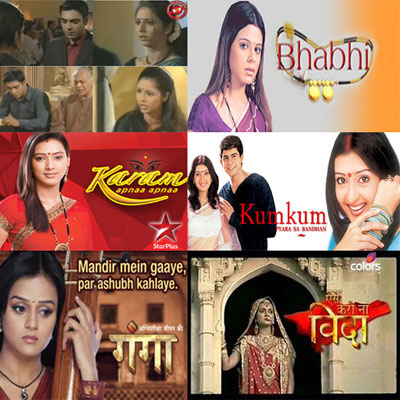
    The channels however soon woke up to the fact that it was the homemaker who had the potential to draw advertisers. With this realisation came the game of one-upmanship among Hindi GECs. Around the same time, a slew of shows mushroomed including Kumkum – Ek pyaara sa bandhan (2002 – 2009), Bhabhi (2002 – 2008), Karam apna apna (2006 – 2009) and Humari Devrani (2008 – 2012). They came to be known as the K shows and saw a long innings with increasing visibility year-on-year.

    Another landmark came in the form of Zee Woman, Zee’s pioneering effort to bring a women’s magazine on television. Launched on 12 July, 2004, Zee Woman revolved around the homemaker and occupied the 12:30 pm to 3:00 pm slot. It offered everything a women’s magazine does – features and tips on beauty, interiors, cookery, good house-keeping and the latest fashion trends.

    We are the service providers. If broadcasters need that service, we will be happy to bring alive that slot, says Sudhir Sharma

    Three years later, Zee Woman suffered a blow from two shows – Meri Doli Tere Angana (2:00 pm) and Rakhi (1:30 pm) – both having fresh content. By contrast, GECs like SAB and Life OK preferred to play re-runs of their most popular shows.

    In February 2010, Colors too jumped onto the bandwagon. The channel produced two shows – Agnipareeksha Jeevan Ki… Ganga (1:30 pm) followed by Aise Na Karo Vida (2:00 pm), packaging the duo as Saanjhi Dopahar. While the shows got a good viewership in the first week, there was a dip in viewership, second week onward.

    All say, the afternoon slot was created mostly for women, especially homemakers. With a majority of soaps revolving around women and their issues, the shows found instant connect. In fact, some of the afternoon shows fared better than their prime-time counterparts. For example, Kumkum which ranked fourth among Star Plus’s top ten shows of all time and was the country’s fourth-longest running serial as well.

    It was sometime after 2010 that Hindi GECs started losing interest in making new shows for the afternoon slot. Television channels including Sab, Sahara One, Life OK and Zee went back to airing re-runs of prime-time soaps in the afternoon.

    Why did the afternoon slot die?

    Today, we dont have enough good writers and ideas for us to put content for the afternoon slot, says Ajit Thakur

    The reason, according to Colors weekday programming head Prashant Bhatt is: “Afternoon slots were extremely popular when there were not many GECs. Fewer channels meant fewer options for people to choose from the available shows aired across channels. This gave channels an opportunity to air fresh content in the afternoon slot. But the scenario has changed now.

    Viewers have an option to watch eight programs during prime time but end up watching only one. So channels telecast re-runs of their prime time shows in the afternoon, so viewers can catch up on them.”

    Examples of this are Balika Vadhu on Colors, which is repeated five times in a day and accounts for 25 per cent of the channel’s viewership and Sony, which aired re-runs of its crime fiction series CID (1998 till the present) for four to five hours in the afternoon slot.

    According to Bhatt, there’s so much original programming in terms of prime time shows that there’s no need for original programs in the afternoon. With re-runs of prime time shows during the afternoon, audiences get to catch up with what they haven’t been able to watch.

    With too many GECs comes growing competition among them. This means they might focus on the marketing and promotion of evening prime time shows that bring more viewership and consequently, more money.

    The afternoon slot should have more dramas that appeal to women. The content should include more of romance and cast eye candy men, says JD Majethia

    So have producers and directors lost interest in producing shows for the afternoon slot?

    “Definitely not,” shoots back Sunshine Productions owner Sudhir Sharma, adding: “If broadcasters see the need, if broadcasters do any business henceforth, then we will be ready to do it. We are the service providers. If they need that service, we will be happy to bring alive that slot.”

    According to Star India vice president marketing Nikhil Madhok, the channel is first trying to strengthen its evening slot rather than bring fresh content in the afternoon. “In Star Plus, we have initiated expansion of our programming time with the launch of Ek Ghar Banaunga during early prime time at 6:30 pm,” he says. : “It is not that there is no potential in the afternoon slot. But, it’s about priority. There is more scope for improvement if we try to capture viewers in the prime time slot. Also, it is more important from a financial perspective and viewership availability,” he adds.

    Afternoon slots still hold promise, but it is a bit risky proposition as the shows need to generate sizably better ratings than the repeat ones, says Navin Khemka

    Madhok is also quick to point out that the channel is open to innovative ideas and experiments with different time slots. “We had filmed Satyamev Jayate at the 11:00 am slot when we found potential in that. It was followed by Lakhon Mein Ek, which ran for certain number of weeks and then we didn’t follow up. We have also opened up the weekend 7:00 pm slot, where we air content related to our reality shows,” he says.

    For a newly launched channel like Life OK however, fresh programming in the afternoon slot does sound interesting. “Yes! Definitely! But, it is about funding.  And if there is already enough good content that can be picked up from the prime time and aired in the afternoon, there is no point in airing fresh content. Also today, we don’t have enough good writers and ideas for us to put content for the afternoon slot,” says Life OK general manager Ajit Thakur.
    Thakur though did say it was an important slot and it was just a matter of time before it would come back.

    What about DD, which in a sense, pioneered the afternoon slot? Says Doordarshan director general (programming) Mukesh Sharma: “In DD National, our afternoon slot is flooded with strong Hindi programming. Though we air repeats, it is doing extremely well for us. To be practical, viewers don’t watch all the shows that are aired on television during prime time. Taking that into consideration during afternoon, mostly women who have missed out on their favourite shows have an option of watching it in the afternoon. And this works perfectly for us.”

    Afternoon slots were extremely popular when there were not many GECs. Fewer channels meant fewer options for people to choose from the available shows aired across channels, says Prashant Bhatt
    Speaking about DD’s big properties like Saraswatichandra, Tum Dena Saath Mera, Aur Ek Kahani and Hari Mirchi Lal Mirchi that are well adapted by the audiences in the afternoon, Sharma says:

    “These soaps are doing well on the track as the target audience is women (housewives).”

    ZenithOptimedia senior vice president Navin Khemka has a different view. “If any Hindi GEC launches afternoon show/s, it will definitely work as there is a good chunk of audience sitting there and FMCG advertisers want to dominate this slot and would like to invest in full force.

    Afternoon space should focus more on family and drama series that adds value to the content.

    Afternoon slots still hold promise, but it is a bit risky proposition as the shows need to generate sizably better ratings than the repeat ones,” he says.

    So if the afternoon slot were to be reconsidered by broadcasters, what kind of content would work? Says Hats Off Productions owner and actor/director JD Majethia: “The show’s topic, subject, and the small aspects should all be women-oriented. The afternoon slot should have more drama that appeals to women. The content should include more of romance and cast eye candy men. These are things women cannot watch during the evening time with their family. The content can also be inspirational and designed differently to attract the audience during the afternoon slot.”

    In most cases women who have missed out on their favourite shows have an option of watching it in the afternoon, says Mukesh Sharma

    Apart from broadcasters not giving enough importance to the afternoon slot, the other reasons for its decline include the rise of shows like Saas Bahu Saazish on news channels. While the then Star News (now ABP News) started the trend of airing ‘behind the screen’ gossip from various shows, other news channels too caught on. Soon enough, women were glued onto these shows, many a times preferring these to daily soaps.

    While there are different views on the relevance of the afternoon slot and whether broadcasters should reconsider fresh content during afternoons, whether channels will ever get back to brand new content in this time slot, only time will tell.
  • Star Network and MSN’s television offering ‘What’s On Star’ soars high

    Star Network and MSN’s television offering ‘What’s On Star’ soars high

    MUMBAI: Star Network and MSN recently collaborated to introduce a new offering for television fans online – What’s On Star. The offering gives netizens access into exclusive content, picture, videos, previews on Star Plus, Life Ok, and Star Sports through msn.com.

    Star Plus, India’s leading Hindi general entertainment channel was the first to be introduced on ‘What’s On Star’, hosted on the MSN platform, to be soon followed by Star Sports and Life OK. In a span of just three months, the offerings have witnessed a huge number of 3.9 million views while the videos have been watched over 700,000 times. Amongst the popular downloads for Star Plus were Mahabharat, Master Chef Junior and Saraswatichandra. For Life Ok, Devon Ke Dev Mahadev took the lead with five out of 10 most views.

    Talking about the association, Star Plus Sr VP marketing Nikhil Madhok said, “Our partnership with MSN has worked towards satiating the need of audiences to access Star Plus’s popular content at their own convenience, for viewers, who want to engage more deeply with the content, there is also some behind the scenes footage not seen on TV. This further strengthens their engagement with our shows and creates a virtual loop.  The large fan following of the channel is pretty evident with the enthusiasm with which people have been viewing the content.”
    “Our partnership with the Star Network brings a holistic experience for digitally connected consumers who want to watch their favourite TV programs at home, at work or on the move. Viewing of content online provides freedom and engages consumers consistently across devices and destinations on their terms. On the MSN platform, the Star Network content provides original video and high-performance solutions through a consistent strategy for connected platforms,” said Microsoft Corporation India, Head – MSN Sanjay Trehan.

  • Mahabharat Redux on Star Plus

    Mahabharat Redux on Star Plus

    NEW DELHI: The last time television audiences were treated to a telling of the Hindu epic Mahabharat was BR Chopra’s hit serial of the same name, which aired on DD National between 1988 and 1990.

    More than two decades later, Star Plus is bringing back to Indian drawing rooms the mythological battle between good and evil, albeit with a contemporary twist.

    Starting 16 September, the new age 128-episode Mahabharat will premiere on the channel, to be telecast Monday to Friday 8:30 pm onward.

    So what’s in it for today’s viewers? For starters, unlike in the earlier version, Lord Krishna comes to your homes not as the Sutradhar/preacher but as someone who throws questions at the audience leaving them to ponder over.

    Excited about the series, Star Plus senior VP, marketing head Nikhil Madhok says: “The Mahabharat is a very important part of our culture and history, and we felt that this is what Star Plus should bring to the country. While other great epics like the Ramayan are simpler to narrate, the Mahabharat is more complex. Also, the points of view differ and depending on which point of view you take, one lands up presenting the story differently.”

    Bringing us to other differences in this avatar of Mahabharat – Not only is it presented from Lord Krishna’s point of view, other characters too are presented differently in the promotional campaign. “For example, Shakuni, who has always been seen as an instigator, this time round, will demonstrate his point of view. Our concept is to understand his actions. He is a possessive brother, who is concerned about his sister, who has been forcefully married to a blind man (King Dhritarashtra). The characters are a tad provocative and edgy, and this will attract youngsters to the story,” explains Madhok.

    There’s no undermining how difficult a story the Mahabharat is to communicate to audiences, Madhok points out. Referring to the fact that the epic initially comprised 8800 verses and was called Jaya but later came to be known as Bharata with up to 24,000 verses, Madhok says: “This makes it difficult to both believe and communicate. This is a story which someone has to really explain.”

    Proud of Star Plus’ grand offering and the kind of research that has gone into it he says, “The product is our work of over three years as compared to other daily soaps, which go on air with just five to six months of background research.”.

    Madhok goes on to explain that the first two years were spent just in getting the team and the detailing – right from weapons, costumes, jewellery and how people lived in those times – right. They met up with a number of experts to understand the era though they did take a few creative liberties. “The shoot has been on for eight months now. We wanted to create a bank so that when we launch, the final episodes would be in the process of being put together and everything would be of top-notch quality,” he adds.

    The series will showcase the era starting with king Shantanu and Satyawati, going on to show the war and the period beyond it. With the 10+2 ad cap regime coming into place October onward, the show, which currently has 22 minutes of content per episode, will go up to 24 minutes. “Though we had to re-edit a lot of episodes, but we decided to limit the series to 128 episodes,” says Madhok.

    Asked why the 8:30 pm time slot, he says: “Prime time is shifting. People in LC1 markets today are hooked to the TV from 8:30 pm onward. So what was earlier 9:30 pm and 10:00 pm, now peaks at 8:30 pm. For us, our core point of prime time where most audiences are available is 8:30, and hence this slot. It is a rich and a high TVT slot and gives us the opportunity to reach out to as many people as possible.”

    Needless to say, Star Plus has pinned its hopes on this epic saga. “About 50 per cent of the show has been shot outdoors, unlike other daily soaps, where 95 per cent is shot in studios. Also, we have got both Indian and international companies to work on our visual effects, leading to substantial VFX cost. The show is a fairly expensive proposition for us, and hence, ad rates are also at a substantial premium,” Madhok informs.

    Produced by Siddharth Kumar Tewary’s Swastik Production, with dialogues penned by Mihir Bhutia, set designing by Omung Kumar, costume designing by Bhanu Athaiya and Nidhi Yash and action directed by Ram Shetty, Mahabharat’s presenting sponsor is Fortune Oil, powered by sponsor is Ghadi Detergent, with six to seven associate sponsors on the show.
       

    Marketing Mahabharat

    The buzz word for the marketing campaign is ‘disruption’.

    Star Plus plans to cover 100 plus cities, including metros and LC1 markets with the aim of shaking people and grabbing their attention. The objective of the campaign is to display the visual splendor of the show and portray the characters in a really unusual light.

    As part of the promotional initiative, a Mahabharat museum has been set up in eight cities, which showcases all the weapons, costumes and jewellery used in the making of the show. The museum also shares facts about the show’s making.

    For rural penetration, the museum has been converted into a canter. Which means those in smaller cities can take a tour of the sets and get a feel of the visuals using Glasstrons, which are somewhat similar to sci-fi glasses that give people a feel of the Mahabharat. On the day of the launch, the channel has planned a clutter-breaking print campaign.

    For kids, a virtual 3D set tour has been arranged where they can wear 3D glasses and experience the set of Hastinapur, visit Vrindavan and also the battleground of Kurukshetra where the battle was fought.

    To draw youngsters, a virtual wardrobe has been set up in colleges of seven cities where they can visit the virtual screen created using Kinect Mirror technology and with a click of the button, can get dressed up as some of the characters including Shakuni, Draupadi, Gandhari and so on. They also have the option of carrying a bow like Arjun and clicking a photograph which they can post on social networking websites.

    The production cost is being estimated at approximately Rs 100 crore. “In terms of the overall cost of project, the marketing cost would be 20 per cent of the cost of production,” informs Madhok.

    While promotions for the show have started in May, the channel will also have several tentpole activities for the next six months. “This will happen as there are going to be lot of signature moments over the next six months as the story unfolds,” Madhok adds.

    Five promos are already on air not only across the Star Network but also 25 other channels. And another piece called the ‘Making of Mahabharat’ has been created, which is being aired at prime time at 8:57 pm every day for the past one week. This was uploaded on YouTube five days ago and has so far received 50,000 hits.

    Another interesting innovation in Mumbai and Delhi is the life size mannequin of Arjun firing an arrow in the air and a fish rotating above the hoarding that will be put up. On similar lines, there is one with Shakuni throwing the dice, which is suspended in mid-air. “The hoardings will be out by Monday. While some hoardings are already up, the innovations will launch on Monday,” rounds off Madhok.

    Digitally speaking

    The channel currently doesn’t plan to use YouTube for putting up the full episodes. Though some cut downs will be made available on YouTube, the major viewing will happen on-air. “The content is expensive and we want people to value this content. Though we may at a little later stage put it on YouTube as well,” says Madhok.

    On Facebook, the channel is creating individual pages for various characters rather than having one big Mahabharat page. “This is to help them identify each character.” Some facebook applications will also be developed which will help engage viewers.

    There will also be a mobile application which will help users listen to Mahabharat shlokas, participate in daily contests, pose with different weapons and jewellery from the show and even go through the entire family tree of the Mahabharat characters.

  • Diya aur Baati hum: Two years on, the flame continues to burn bright

    Diya aur Baati hum: Two years on, the flame continues to burn bright

    MUMBAI: An educated girl with big aspirations is married off to an illiterate boy from an orthodox family is not something out-of-the box. We all have heard, read or seen such stories year after year. But what is it about Star’s primetime show – Diya aur Baati hum – that has caught everyone’s fancy?
     

    Prompt comes the reply from Star’s programming head (fiction) Danish Khan that there are various aspects which have led to the success of the show that completes two years on 29 August. “The most important thing about the show is that even though it is set in a small town, it has broken the stereotype that one cannot pursue his/her dreams after marriage.”


    Khan goes on to give the credit to the strong and evolving story and the actors for integrating well with all the elements, “The writers and producers have been able to keep the horse running for us. The story is so simple yet day-after-day it has been able to connect with its audience. Even the actors have portrayed the characters so well. They are reliving their lives as those characters.”


    Agreeing with Khan, Shashi Sumeet Productions (which is producing the show) founder director Sumeet Mittal adds, “As an inspirational story of a halwai (sweet shop owner) wanting to make sure his wife becomes an IPS officer, it was amazing how the audience accepted our show. Furthermore, the extremely relatable characters have helped give this show a sense of realism to which our audiences can connect.”


    And the numbers are proof enough of that. The drama series, which is based in Pushkar (Rajasthan), has been a consistent No 1 for nearly a year and a half for Star Plus. Its launch ratings of 1.9 TVRs (the metric used nowdays is TVTs) were not oo impressive. But it grew on its audience which took a fancy to it as reflected in the ratings climb to 6.7 TVR (week 34 of last year). A year later in 2013 in week 33, Diya aur Baati has reported TVTs of 11,166 TVT, which is way higher than any other primetime show on the competition. Rival Zee TV’s Pavitra Rishta which airs at the same time slot has a relatively leaner TVT of 4,959 TVTs for the same week, while ratings of shows on other channels don’t even merit a mention.


    Industry sources say that adverising commercial air time on Diya aur Baati comes at a high sticker price thanks to its continuing stellar performance and connect with its loyal viewers. “The premium attached to the show is almost 30-40 per cent more than the second ranking show, as per ratings,” says a source.


    Any other channel worth its salt would love to replicate the prime time series success. What is that makes Diya aur Baati tick? It’s all about staying true to your roots and understanding why you are making a show and for whom, feels Mittal.  “Having an audience connect doesn’t just mean making a show with good television ratings, but also creating a beautiful amalgamation of what we want and what the audience wants,” he elaborates.


    Star Plus vice president (marketing) Nikhil Madhok avers that effective marketing during the show’s high points and brand integrations are something that have worked well for it. “When Suraj went for the ‘Top Chef Competition,’ we got the entire nation to give their best wishes to him. If you look at the recent activation, we got Shahrukh Khan to the show in the ‘Master Quiz’ episode. We do such activities regularly to connect to people,” states Madhok.


    The producer of the show doesn’t think retaining stickiness is a cakewalk . “Today, people are spoilt for choice and one has to maintain the connect with audiences for them to keep coming back every day,” says Mittal.


    Fiction show audiences on GECs expect high drama. Some of the tools programming and creative folks in channels have been using to keep viewers hooked are generation leaps and unexpected twists and turns in the story plot. “The idea is to the audience guessing and looped-in otherwise there is always another show where they can find drama. Also, it helps the show to stay fresh, all the time,” says a media observer.


    To keep freshness going after 500-plus episodes isn’t a difficult task if the entire team is driven to make each episode work, believes Mittal. “We have to treat every episode as a whole and give it equal importance. Each department, from writing to direction to actors, to camera persons each and every member of the crew has to work with the same amount of passion and that’s what will translate into a beautiful episode on screen. I strongly believe that in a daily soap, where your interface with the audience happens every single day, the philosophy that small parts make a whole applies aptly here. We have to see that imagination and execution go hand in hand.”


    Lodestar UM’s general manager Hema Malik agrees but adds that it is impossible for a show to keep reigning forever; unless of course the team is able to continually come up with interesting and entertaining elements. “Overall, if a show has been getting good ratings, it means it has a strong storyline and characters which one can relate to. And if at a certain stage the storyline becomes boring or predictable, people will take even less time to get off it than they took to get hooked on to it. It is here that one needs to take up the challenge and bounce back.”


    Malik goes on to say that the show portrays the channel’s philosophy Rishta Wahi Soch Nayi perfectly. “Star’s values are very much in the storyline of the show. Hence, it’s a perfect match.”

  • Who will be India’s Junior MasterChef?

    Who will be India’s Junior MasterChef?

    MUMBAI: If you thought children’s reality shows on the small screen were only about singing, dancing or acting, think again. Riding on the success of MasterChef India, Star Plus is gearing up for a brand new show that will see kids aged eight to twelve years cooking up a storm in the kitchen. Indeed, the show titled Junior MasterChef – Swaad Ke Ustaad and produced by Colosceum Media, will be the first such in the history of Indian television.

    It is not a singing or dancing show. Nobody has ever seen kids cooking, I am sure in my head and heart that the show will do well, says Ashish Golwalkar

    But why children? clarifies Star India senior VP – marketing Nikhil Madhok: “Kids have a universal appeal. Everybody, including adults and kids themselves, will be interested in what these small wonders cook up. Most importantly, we are giving young cooking enthusiasts a platform.”

    While the format is modeled on the lines of Junior MasterChef Australia, which has already completed one season, the show will adapt to Indian sensibilities. Explains Star India senior vice president – programming, Ashish Golwalkar: “What they cook there, we cannot cook here because many of the ingredients are not available. The basic essence will be similar to Junior Masterchef Australia, but we have changed it a lot to suit the Indian palate.”

    Auditions have been conducted in three cities including Mumbai, Delhi and Kolkata and ten kids have been finalised. What’s more, four to five episodes have already been shot at RK Studios in Chembur.

    Chefs Jolly, Kunal and Vikas will expect nothing less than perfect, well-executed and delicious dishes

    Talking about the response at the auditions, Golwalkar says: “To be frank, before conducting the auditions, we were not sure whether the kids would be able to do this or not. And if so, then what kind of kids we were going to take. But the response we received was overwhelming. Around 8,000 kids turned up for the auditions. Some even travelled from smaller towns to showcase their skills.”

    But will it work? Madhok sounds confident: “We want to capture the innocence of the children and showcase their skills in an area usually associated with adults. Eight to twelve years is perfect for us because the kids are cute, eager to learn and the way they will demonstrate their talent will amaze people worldwide.”

    Adds Golwalkar: “It is not a singing or dancing show. Nobody has ever seen kids cooking, I am sure in my head and heart that the show will do well. So, by the sheer nature of its content, it will be different from the others. It’s prime time and we are ready to take a fight, and as a channel, we are ready to take up any challenge. As leaders, if we don’t take risks and push the envelope, then who else will.”

    The first season of Junior MasterChef – Swaad Ke Ustaad will be begin to air from today, for 12 weeks every Saturday and Sunday at 9 p.m.

    And it’s not just about giving other reality shows a run for their money.

    We are giving young cooking enthusiasts a reality show platform but in a whole new avatar says Nikhil Madhok

    “One child will win, that is the nature of the competition, but our attitude and endeavour is to encourage all the children who participate in the show,” says Madhok.
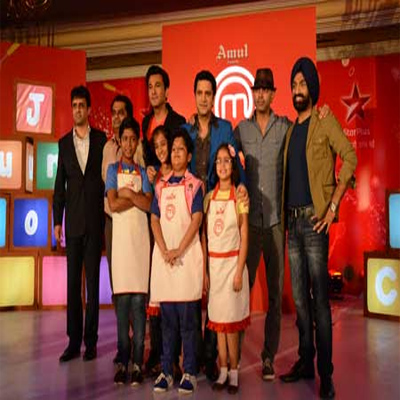
    Chefs Vikas Khanna, Kunal Kapoor and Surjan Singh Jolly will be the celebrity judges on the show. With kids involved, won’t they be lenient as compared to the adults’ version?

    Nothing will be made easy for the li’l chefs, clarifies Golwalkar. Every week, different tasks will be assigned to them and they will have to live up to the judges’ expectations.
    What about the kids’ safety?

    Four contestant managers will take care of the children while they chop or cook, says Golwalkar, adding: “Nobody needs to worry about safety. We have followed enough precautions as per the international format.”

    The show will be replacing the dance reality show India’s Dancing Superstar on Star Plus. Amul is the presenting sponsor and Pigeon, Fiona and Yippee noodles are its associate sponsors.

    Marketing and promotions

    Star Plus has adopted a three-pronged approach toward promoting Junior MasterChef – Swaad Ke Ustaad; television, digital and on-ground.


    On the television front, promos are already being aired on the entire Star network as well as 22 channels outside the network to communicate that JMC is not just a show for kids but for the entire family.

    Digitally, Star Plus has tied-up with MSN India and Yahoo! to make available exclusive behind-the-scenes content of the show. A digital application is on the cards which will help download recipes one sees on the show or indulge in a live chat with the judges and kids. A Facebook application has also been created where the young guns will test the audience’s knowledge about food.

    As far as on-ground activity is concerned, various competitions will be held between adults and children in ten cities including Delhi, Mumbai, Ahmedabad, Indore, Pune, Chandigarh and Lucknow. The intent is to demonstrate how talented kids can be, sometimes surpassing adults as well.

    Viewers will witness a perfect amalgamation of great food stirred up with a riot of laughter and fun

    Apart from the three important legs of the campaign, Star Plus has teamed up with Hindustan Times for a novel print idea. On the day of the launch of JMC, HT Cafe and HT City will appear half their usual size as a tribute to the “Junior Master Chefs” debuting the same night.

    Secondly, in a unique contest on Radio City, listeners who believe they have carried the most boring dabba that day will be encouraged to interact with the RJ. If the listener manages to convince the RJ that he/she does have ‘the most boring dabba’, he/she will win a treat from The Junior MasterChef Kitchen – the very same day.

    Thirdly, selected cinema halls will have a special ‘Junior Master Chef seat’. The lucky viewer who happens to get that seat will be treated to a delicious surprise from the JMC kitchen during the interval.

    While season one of the Australian version was won by one Isabella, we eagerly await to see who will win the show’s Indian counterpart.