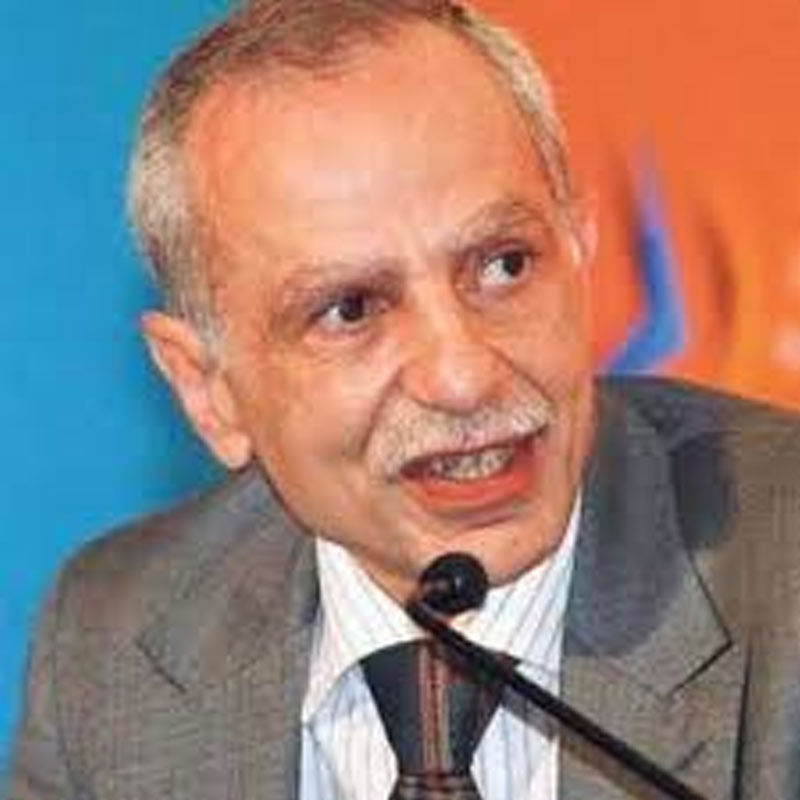
Tag: Nigel Chapman

  • BBC World Service weekly audiences in India grow by one million

    BBC World Service weekly audiences in India grow by one million

    MUMBAI: BBC World Service’s weekly radio audience estimate is 182 million listeners a week across its 33 language services – down one million on last year’s record 183 million total.

    However the English language service attracted 40 million weekly listeners – up two million on last year. BBC World Service weekly audiences in Indian and Nigerian radio markets each grew by around a million or more during the year. BBC World Service is now available on FM in 154 capital cities, up from 152 last year.

    The BBC World Service has published its annual review. In his foreword, BBC World Service director Nigel Chapman said, “It was a broadcasting year that saw the launch of the first BBC television news channel for a decade, improvements to our future media services, and the retention of our global radio listenership after the large increase of the previous 12 months.

    “In these ways, 2007/08 can be seen as a defining year; we demonstrated our ability to innovate while retaining the affection of audiences, who have been loyal to us for a large part of our history.”

    BBC World Service is further developing its multimedia strategy, including the launch of BBC Arabic television. Independent research indicates that BBC World Service’s reputation for providing unbiased and objective news and information is stronger than that of any other international radio competitor in virtually all markets surveyed.

    BBC World Service’s online sites attracted a record 259.6 million page impressions in March 2008, compared to 189.8 million in March 2007, an increase of 37 per cent.

    BBC Global News services – which include BBC World Service, BBC World News television and bbc.com/news (the BBC’s international-facing online news site) – maintained its record global weekly audience of over 233 million during 2007/08.

    BBC World Service’s Grant-in-aid funding for 2007/08 was £255 million.

  • Alan Johnston awarded on anniversary of his kidnap

    Alan Johnston awarded on anniversary of his kidnap

    MUMBAI: BBC correspondent Alan Johnston was given an award by BBC World Service for his outstanding contribution to the international broadcaster.

    The award coincided with the first anniversary of Alan’s kidnap in Gaza. He spent 114 days in captivity and was released on Wednesday 4 July last year.

    The award was presented by BBC television documentary presenter Michael Palin in Central London at a ceremony to celebrate excellence, innovation and creativity in BBC World Service.

    BBC World Service director Nigel Chapman said, “Alan Johnston has worked across the range of BBC World Service output, both as an editor and a correspondent. He is a skilled all-round journalist with a talent for words; he has never shied away from the toughest assignments. His passport has stamps in it from Tashkent, Kabul and many parts of the Middle East.

    “He has extraordinary personal qualities. After his release from captivity in Gaza, he was calm and focused enough to report his own story in an unforgettable way. He later wrote a memorable and beautifully crafted essay for our programme, From Our Own Correspondent. His reporting is always of the highest class.”

  • BBC World Service receives £70 million fund increase

    MUMBAI: BBC World Service will receive a £70 million funding increase from the UK government for the three-year period from 2008-2009 to 2010-2011.

    The announcement was made by Chancellor of the Exchequer Alistair Darling during his Comprehensive Spending Review announcement in Parliament.

    The announcement formally confirmed £15 million per annum funding for a BBC news and information television channel in the Farsi (Persian) language for Iran which will be launched next year.

    The go-ahead for the service was announced in October 2006 by then Chancellor of the Exchequer Gordon Brown. BBC World Service also received funding to enhance its forthcoming Arabic language television news and information channel.

    The services in Arabic and Farsi will be the first television news services to be launched by the BBC in a decade. They will be the first television services to be publicly-funded by Grant-in-aid from the UK Foreign & Commonwealth Office. The new BBC Arabic Television Service is due to launch around the turn of the year, initially as a 12-hour a day news and information service, at a cost of £19 million per annum.

    This initial service was funded through reprioritisation of the BBC World Service’s language portfolio and self-help efficiencies. The extra funding announced means the new channel would be able to broadcast 24 hours a day from an appropriate point during the next financial year. A full year’s operational cost of the additional 12 hours of television broadcasting in Arabic will be an extra £6m per annum.

    The overall settlement also includes £1m per annum from 2009-10 to enhance BBC World Service’s multi-media operations in languages relevant to ethnic communities resident in the UK. In common with other public organisations, BBC World Service plans to meet its rising costs from within its existing budget through a vigorous programme of efficiency savings.

    BBC World Service director Nigel Chapman said, “As we mark the 75th birthday of the BBC’s service to the world this December, this settlement strengthens BBC World Service’s future as a multi-media provider of high quality independent and impartial news and information around the world.

    “It specifically means that audiences in the Middle East and Iran will have multi-media access – through television, radio, and online – to trusted journalism of the highest standing and increased opportunity for dialogue and debate. We believe this will be a popular and valuable asset for audiences in this troubled region.

    “This is a good settlement for BBC World Service. We are grateful for the support we have received from our stakeholders in Parliament and across Whitehall in these discussions and, in particular, the Foreign & Commonwealth Office and the Treasury.”

    The new investment means that BBC World Service’s overall funding level would rise from £246m in 2007-8 to £271m by 2010-11. BBC World Service would receive an extra £19m in 2008-9; £26m in 2009-10; and £25m in 2010-11.

    In common with other public organisations and the domestic BBC, BBC World Service plans to meet its rising costs from within its existing budget through a vigorous programme of efficiency savings.

  • BBC World Service audience touches 183 million

    MUMBAI: BBC World Service now claims to have more listeners than any other international radio broadcaster, with an increase in its audience to a record 183 million, a rise of 20 million on the previous year.

    According to the annual review for BBC World Service, audiences rose in the Middle East, the wider Islamic world and Africa.

    BBC World Service on FM is available in 152 capital cities, up from 150 last year. The report says BBC’s international news websites attracted a record 763 million page impressions in March 2007, up from 546 million compared to March 2006. Around the world, there were a record 38.5 million online users in March 2007, up from 32.8 million a year ago.

    BBC Global News services – which include BBC World Service, the BBC World television channel and BBC international online news sites – attracted a record global weekly audience of over 233 million during 2006 – 2007.

    BBC World Service director Nigel Chapman says, “Audiences overall are going up in some of our biggest markets in Africa and Asia, including India, Pakistan and Nigeria. This is a significant achievement because these markets too are highly competitive and such large numbers are always vulnerable to rapid falls. But English language audiences for radio dropped back in parts of Africa, contributing to a decline from 42 million to 38 million in the global English radio total. Official discouragement of partnerships which would enable us to broadcast English programme material on any scale in Nigeria is a major obstacle.

    “In Bangladesh, troubled by political unrest, the weekly audience figure almost doubled in a year, demonstrating once again how listeners return to the BBC at times of crisis. In Afghanistan, the first nationwide survey showed that there were 10 million listeners a week, 60 per cent of the adult population.

    “The work of our technical teams enables BBC World Service to compete effectively in some of the world’s toughest environments. Five sites are now solar powered to keep them on the air independently of local supplies”.

    “It is clear that a tri-media approach, combining radio, television and online is essential if BBC World Service is to compete in the multi-platform digital age.” But it is a more mixed picture in other regions. The difficulties we can face as markets develop are apparent in Latin America and parts of Eastern Europe, such as Romania and Ukraine, where burgeoning choice has led to a decline in our audiences. In Russia, distribution problems in a difficult political climate have been a further setback, leading to the loss of FM services in Moscow and St Petersburg and a decline in listening to under one million. In China, poor access to BBC news content in what is now a bustling aggressively competitive market has resulted in a further loss of audience.

    “The silver lining is the success of new online partnerships in China, including one deal with a key national portal. They offer access to BBC educational material and 90 per cent of the traffic to BBC content in China now comes from these partner deals.

    “The worldwide growth in online audiences, led by the BBC’s international news site bbcnews.com, has steadied and it is recognised we need to build this audience further in the coming years. The spectacular growth rate of the early days of the internet is much harder to achieve now that most initial adopters of the technology have found us. As in China, we are building partnerships with major portals to showcase our work better and increase traffic.

    “Continued investment in technology will be necessary for us to compete in a world where the ability to find and share information and content is fundamental. In the most sophisticated markets, the generation growing up with social networking sites such as YouTube and MySpace takes sharing video content for granted. We have taken significant steps this year with the launch of broadband video news in six languages and new sites for downloading content to mobile devices.”

    He added, “Everything from audio and video technology for reporters in the field to the way programmes are put together and distributed is now being digitised, giving us the flexibility to deliver programmes in new ways. The opening of the Production House of the Future at Bush House which is a digital production space is a first, showing the way forward for the whole of the BBC and other media organisations. Investment in production centres overseas has brought us closer to audiences. More than 30 per cent of BBC World Service’s production staff is now based in the countries to which it broadcasts.

    Preparations to launch BBC Arabic Television in the autumn of 2007 were on track and its staff will be the first part of BBC World Service to occupy the new Broadcasting House centre that we will eventually share with all the BBC’s domestic news operations. The go-ahead for a Farsi television service announced in October 2006, was very welcome, he said.

    “In this far-reaching transformation of our activities, one thing which is not changing is our commitment to traditional BBC values, starting with the quality of programmes. The past year has been one of further innovation in programme making, helping audiences to make sense of a world that is increasingly globalised and interconnected. Generation Next gave a voice to the under-18s who are often neglected in the mainstream media. India Rising offered a deep insight into winners and losers in this booming Asian economy. Business Daily shed new light on long-term trends taking place behind the world of work”.

  • Gwyneth Williams is BBC World Service director of English networks, news

    MUMBAI: Gwyneth Williams has been appointed director of BBC World Service’s English networks and news.

    She will be responsible for all the BBC’s international radio programmes in English and for the nine streams that deliver that output to its 42 million listeners around the globe.

    She is currently head of Radio Current Affairs and editor of the BBC Reith Lectures.

    She has worked closely with Reith Lecturers such as Daniel Barenboim last year and the well-known development economist, Jeff Sachs, whose series, Bursting At The Seams, is currently being broadcast.

    Her department produces BBC Radio programmes such as File On 4, Analysis, From Our Own Correspondent and In Business.

    Gwyneth herself edits a number of special programmes and series for BBC Radio 4 and BBC World Service.

    She will join in June, taking over from Phil Harding who is retiring from the BBC after 38 years with the corporation.

    BBC World Service director Nigel Chapman said: “Gwyneth brings a wealth of experience in radio journalism to this very important global role. She has the energy and credibility to head up our English language proposition, ensuring it makes maximum possible impact across all available platforms with original, creative programmes and news services always underpinned by the BBC’s core values of independence, trust and creativity.”

  • BBC World Service to launch a television channel for Iran

    BBC World Service to launch a television channel for Iran

    MUMBAI: BBC World Service will launch a television news and information service in the Farsi (Persian) language for Iran, it was announced today. The service will complement the BBC’s existing Persian radio and online services for Iran. The service is expected to launch early in 2008 and will be based in London.

    It will initially broadcast for eight hours a day, seven days a week. It will be freely available to anyone with a satellite dish or cable connection in the region. This follows BBC proposals for the service drawn up by senior BBC management.

    These were approved by the BBC Governors and submitted to the Foreign and Commonwealth Office (FCO) for their consent as the BBC is obliged to do under the agreement with the FCO.

    The operating cost of £15m a year will be funded by the UK Government. This funding will be in addition to BBC World Service’s existing grant-in-aid funding from the UK Government and will have no impact on the current BBC World Service portfolio of services.

    BBC World Service director Nigel Chapman said: “The BBC’s Persian radio and online services are well-respected by Iranians, especially by opinion formers. In Iran we are regarded as the most trusted and objective of all international broadcasters for the way we provide impartial news and information about the wider world and the crucial part Iran is playing on the regional and global stage.

    “But television is increasingly dominating the way that millions of Iranian people receive their news. Therefore the BBC proposed to the Foreign Office that we launch a television service in Farsi to complement our existing independent news and information services for Iran on radio and online. Like all BBC services, the new television service will be editorially independent of the UK Government. I am delighted the BBC Farsi television service proposal has been given the go-ahead.

    The BBC’s Farsi television service will draw upon the BBC’s un-matched newsgathering resources. Broadcast at primetime in Iran, it will showcase accurate, impartial, balanced news and analysis from a global perspective.

    It will also show investigative current affairs programmes, alongside quality BBC factual, cultural and educational documentaries. The channel will cover international and major regional issues.

    It will also carry multi-media discussion programmes and debates in conjunction with the BBC’s well-established and trusted Farsi radio and online services.

    The new BBC Farsi television service will:

    Be completely editorially independent in line with BBC’s long-held reputation for impartial, trustworthy news reporting and analysis

    Meet the strong demand for a BBC Farsi television service expressed in recent surveys where 73% of Iranians with satellite access say they will definitely or are fairly likely to watch a BBC Farsi television service

    Make the BBC the only tri-media international news provider offering Farsi language news and current affairs on television, radio and online

    Draw on 66 years of BBC experience covering the region in Farsi – supported by the world’s most extensive newsgathering operation: 250 news correspondents reporting from 50 bureaux allowing a global rather than purely regional perspective.

  • Uduak Amimo is BBC World Service senior editorial adviser

    Uduak Amimo is BBC World Service senior editorial adviser

    MUMBAI: BBC World Service has appointed Uduak Amimo as its senior editorial adviser, supporting the Director of the BBC World Service, Nigel Chapman. Uduak advises on the editorial leadership and management of the world’s leading international radio broadcaster and its New Media operations. Her role also includes facilitating editorial collaborations between the World Service and the BBC’s international news services.

    Chapman said, “I am very pleased that Uduak is taking on this new role. The World Service has 163m weekly global listeners, of which a huge proportion is from Africa. Uduak’s knowledge of Africa will ensure we keep a close focus on the continent and her production experience will help us raise standards across the board.”

    Uduak first joined the BBC in 2002, as a producer and presenter with the English-language BBC African news and current affairs programmes, Network Africa and Focus on Africa.

    She says: “I am delighted to be given an opportunity to help shape the BBC’s global agenda. I will also bring my strong links with Africa and my special interest in the region to this role but I am also looking forward to developing my experiences beyond the continent.”

  • BBC World Service’s annual review indicates trust on a high

    BBC World Service’s annual review indicates trust on a high

    MUMBAI: BBC World Service has published its annual review. It notes that it managed to enhance its reputation as the world’s leading international broadcaster throughout a “year of change, achievement and innovation.”

    Independent research evidence published in the Review indicates that BBC World Service’s reputation for trust and objectivity is higher than for any other international broadcasters in virtually all markets surveyed – including India, Nigeria, Pakistan, and USA.

    BBC World Service director Nigel Chapman says, “It was a year of major achievements and innovation: a record-breaking audience figure; a step change in our interactive services; and the biggest strategic shift in priorities in BBC World Service’s 70-year history. These welcome developments took place against a backdrop of ever more rapid technological change and the emergence of powerful and often divisive global forces.”

    “It is particularly pleasing to see how our programmes command the highest scores for reputation, trust, and objectivity in most markets when compared to our international competitors.”

    The new weekly audience figure of 163 million, compiled from independent surveys around the globe, is an increase of 14 million on last year’s figure of 149 million. This new figure breaks the previous BBC World Service record audience of 153 million in 2001. The new figure equates to around 50 per cent more listeners than any comparable international broadcaster.

    BBC World Service is now available on high quality FM sound in a record 150 capital cities out of a total of around 190 – up from 145 last year. This higher quality of audibility is vital to retain audiences.

    Online audiences to the BBC’s international facing news sites have also shown significant rises. The sites attracted around 500 million page impressions a month in March 2006 compared to 324 million page impressions in March 2005.

    This is a rise of over 50 per cent over the year. The site now attracts around 33 million unique users each month; up from around 21 million unique users a year ago. BBC World Service achieved efficiency savings of £7.1 million in 2005/06.

  • BBC World Service audiences hit record levels

    BBC World Service audiences hit record levels

    MUMBAI: BBC World Service now attracts 163 million weekly radio listeners to its 33 language services – a record audience for the world’s best-known and most respected international broadcaster, according to figures announced today.

    The new weekly audience figure, compiled from independent surveys around the globe, is an increase of 14 million on last year’s figure of 149 million. In India there are now 17.6 million listeners – a rise of 1.2 million. This continues the trend of increasing audiences in the country and follows a rise of 4.8 million last year. This is the second annual increase in the country and follows a dramatic drop in overall radio listening in India and a ban by Indian regulators on local FM stations carrying news from foreign broadcasters. This resulted in a drop of over 12 million listeners between 1995 and 2002.

    The new figure equates to around 50 per cent more listeners than any comparable international broadcaster. This new figure breaks the previous BBC World Service record audience of 153 million in 2001.

    BBC World Service director Nigel Chapman says, “This record-breaking audience is an outstanding achievement against the background of fierce competition, fast-developing technology and rapidly changing audience demands in many media markets. The challenges ahead for BBC World Service remain formidable, as they do for all broadcasters, but this is a strong and welcome indication that we are not only strengthening our impact in priority areas but are flourishing in the multimedia age.”

    More than 10 million extra listeners are listening on the higher quality audibility of FM through partner stations and the BBC’s own relays around the world. BBC World Service is now available on high quality FM sound in a record 150 capital cities out of a total of around 190 – up from 145 last year.

    Shortwave and medium wave listening also showed an increase of around five million, particularly in rural areas in parts of East Africa and SE Asia (Burma, India and Nepal), which are among priority areas for BBC World Service.

    The BBC World Service audience figure contributes to a combined record global weekly audience of more than 210 million individuals to all the BBC’s international news services – BBC World Service radio, BBC World television and the international-facing online news service bbcnews.com; some of whom are using all three media.

    This combined figure includes a record 65 million weekly viewers for BBC World – the commercially-funded international television news channel. Online audiences to the BBC’s international facing news sites have also shown significant rises.

    The sites attracted around 500 million page impressions a month in March 2006 compared to 324 million page impressions in March 2005. This is a rise of over 50 per cent over the year. The site now attracts around 33 million unique users each month, up from around 21 million unique users a year ago.

    Global audiences to BBC World Service English language broadcasts have risen to 42 million, up from 39 million last year. BBC World Service’s audiences in Africa and the Middle East are now 73.6 million – up 7.6 million. An even bigger increase of 7.9 million BBC radio listeners was recorded in the Asia and Pacific Region of the world which now has 61.1 million in total.

    Burma – Measured audiences in Burma rose by 6.7 million listeners to 7.1 million. This rise is as a result of improved access for the independent survey takers, who are now able to measure audiences nationwide rather than sample cities.

    Nigeria – BBC services in Nigeria gained 3.6 million listeners, raising the total to 23.8 million. This figure means the BBC has more than regained the 1.5 million listeners it lost last year after a Government ban on local FM stations rebroadcasting news programmes from foreign broadcasters in 2004. Listeners have turned to shortwave broadcasts, as the ban is still in place.

    Tanzania – Listeners to the Swahili Service in Tanzania rose by 2.7 million to 12.9 million. This follows a drop of 1.3 million last year.

    Nepal – There was an increase in listeners to the BBC Nepalese service of 2.6 million to 3.7 million, fueled by recent events.

    Indonesia – Audiences in Indonesia rose again. There are now 6.4 million listeners – a rise of two million. This follows a rise of 1.2 million listeners last year.

    Bangladesh – Audiences fell in Bangladesh by 4.4 million to 8.6 million. This follows a rise of 2.6 million last year. The BBC is working with Bangladesh National Radio to develop FM distribution in Bangladesh.

    Pakistan – Audiences in Pakistan fell by 0.9 million to 8.5 million. BBC World Service is looking to develop local FM partnerships to mitigate this loss.

    The new World Service global audience estimate is derived from a programme of independent audience research over a four year cycle. This year’s figure incorporates new data from 26 countries – some 71 per cent of this year’s audience (some 66 per cent of last year’s audience).

    It includes data on people listening to World Service directly via short wave, MW, FM satellite, cable and the internet or via local broadcasting partners on MW and FM. The surveys are carried out by independent market research groups and comply with international standards of audience research.

    There is some crossover of audiences who use both shortwave/medium wave and FM methods of listening. But listeners who use more than one method of listening are only counted once.

    BBC World Service is funded through Grant-in-Aid from the Foreign Office. The grant for 2006/7 is £245 million.

  • Salah Negm is BBC Arabic TV editor

    Salah Negm is BBC Arabic TV editor

    MUMBAI: UK pubcaster BBC’s division BBC World Service has appointed Salah Negm as news editor for its Arabic television service which will be launched next year.

    He was a BBC programme editor, and is currently Middle East Broadcasting Corporation (MBC) GM in Dubai. His wide editorial and management experience in the region also includes working as director of news after the launch of the Al Arabiyah satellite channel and roles with the satellite broadcaster, Al Jazeera.

    He says, “I am very excited about re-joining the BBC to help launch and run its Arabic TV service. It is the best job in broadcasting for me – a chance to use my experience as a journalist to offer a television audience throughout the Middle East, a news and information service in Arabic informed by the BBC values of accuracy, independence and impartiality. I don’t underestimate the challenge – or the competition in a crowded media market-place.

    “But BBC Arabic will be the only major international news provider in the Middle East offering a service in Arabic across television, radio and online – sharing views and perspectives across the region and the wider world with access to unrivalled resources for gathering and analysing news which will have wide appeal.”

    BBC World Service head of Africa and the Middle East Jerry Timmins said, “Salah Negm is a well known journalist with a long and distinguished track record. He is committed to the values which have won the BBC huge respect in the Middle East.”

    BBC World Service director Nigel Chapman says, “Salah is joining a powerful team who will lead this channel to success. We are fortunate to have someone of his calibre and track record who understands both the competitive market in which our Arabic TV service will operate – and the core BBC values which will underpin the new service.”

    The BBC World Service Arabic TV service will be the first publicly-funded international television service launched by the BBC. International and major regional issues will be covered along with multi-media discussion programmes and debates in conjunction with the BBC’s Arabic radio and online services.

    BBC Arabic will be the only major international news provider in the Middle East offering a service in Arabic across television, radio and online – sharing views and perspectives across the region and the wider world. Recent research from seven capital cities across the Middle East indicates that between 80 and 90 per cent of those surveyed are likely to watch an Arabic Television service from the BBC.

    It will draw on 68 years of BBC experience covering the Middle East in Arabic – supported by its global newsgathering operation: 250 news correspondents reporting from 50 bureaux allowing a global rather than purely regional perspective.