Tag: nielson

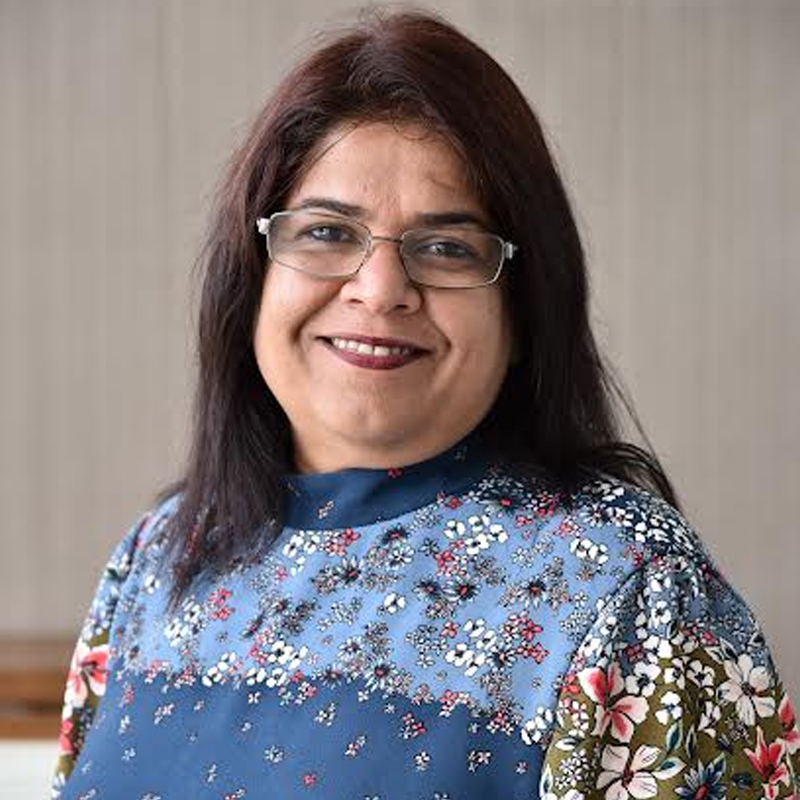
  • Ad spends are likely to get impacted if consumption reduces: Carat India CEO Anita Kotwani

    Ad spends are likely to get impacted if consumption reduces: Carat India CEO Anita Kotwani

    Mumbai: In March this year, India completed a year of double-digit wholesale price inflation (WPI inflation). This is the sixth occasion when inflation has remained over 10 per cent for a year or longer, and it came more than a quarter of a century after the last such episode — between March 1994 and May 1995.

    In an exclusive interaction with IndianTelevision.com, Carat India CEO Anita Kotwani noted that inflation is already impacting FMCG which is the broadcast industry’s highest ad spender. She offers her take on the impact of inflation noting that right now ad spend patterns are unlikely to be impacted and the market is recovering from Covid-19. But she warns that if the price of commodities significantly goes up, then that could impact consumption negatively. And ad spends are the easiest to cut back on when commodity prices rise. She offers the example of domestic aviation cutting back on TV ad spends in a significant manner so far this year. On a more positive note, she sheds light on the resilience of TV as an ad medium.

    Edited excerpts:

    There is talk about high inflation. How is this impacting companies especially FMCG?

    High inflation is likely to bite into the FMCG sector’s volume growth in 2022. Retail inflation in India rose to a seven-month high from 6.01 per cent in January, breaching the upper tolerance level. The rise was mainly on account of high food inflation, which jumped to a 14-month high of 5.43 per cent, along with a high base.

    A majority of FMCG companies have already reported a decline in volume growth in the third quarter of FY22. At this juncture, FMCG firms face the dilemma of choosing between margins and volumes. However, the analysts believe that protecting the margins will further impact volumes as consumers will hold back consumption.

    A recent Nielson IQ report suggests that demand in the rural segment has taken a hit, with volume growth declining by 2.9 per cent. Inflation in the price of fertiliser and diesel has impacted the disposable income of the farmers, thus, impacting the consumption in the rural regions.

    Some of the recent reports also suggest that consumers may have to pay more for their daily essential items. Since the FMCG companies are mulling over another round of price hikes, to offset the impact of an unprecedented level of inflation in commodity prices such as wheat, palm oil and packaging materials. A 10-15 per cent hike is expected across industries. The market is volatile as of now, therefore, brands will consider multiple factors before finalising the incremental in the price for their product.

    Do you see clients’ ad spending getting impacted in the coming quarters as consumer sentiment turns negative and spending slows down?

    Currently, the negative sentiments are not very strong and things are still volatile. Ad spends are likely to get impacted if consumption reduces. However, the impact on consumption will be determined by the increase in the cost of the product. Yes, the essentials are getting a bit expensive but that is largely due to the increased fuel cost led by the Russia-Ukraine conflict. Apart from that, the market has been steadily recovering from Covid and the advertiser spend patterns are unlikely to see any impact. Only if the price of commodities significantly goes up, then that could impact consumption negatively.

    Which are the sectors that you see coming under stress due to inflation?

    As per the Consumer Price Index (CPI) of March 2022, India stood at an inflation rate of 6.95 per cent.

    Amidst the hardening of fuel prices, India’s wholesale price-based inflation quickened to 14.55 percent in March from 13.11 percent in February. Retail inflation for March has also climbed to 6.95 per cent, a 17-month high. According to the country’s CPI-based inflation report, the spike in prices was led by food items.

    A continuous rise in fuel prices since March 22 has not been completely captured in the latest data, suggesting that inflation may remain elevated in the coming months. A surge in crude oil prices to a 14-year high has resulted in broad price pressures on Indian households.

    Among food items, the index for oil and fats recorded the largest sequential price hike, by 5.3 per cent in March. This may raise pressure on the government to make edible oils cheaper.

    The worst affected sectors include food (+1.4 percent over February), clothing and footwear (+0.9 percent over February), and fuel and light (+0.9 percent over February).

    Do you see urban and rural India both being equally affected?

    Since the beginning of 2021, inflation has started to see a gap between urban and rural geographies. For rural consumers, their basket has a higher weightage on food and essentials. Whereas, for urban consumers, the non-food items dominate their shopping baskets as well. Recreation (malls/cinemas) also impact urban consumers more than rural.

    While the inflation gap between urban and rural audiences is always going to remain, rural is also likely to see an impact in consumption due to increased prices of fertilisers and diesel. This impacts the disposable income of people in the rural region.

    The people who are most affected by rising inflation are the final consumers of goods. The prices of goods and services are constantly rising. However, the salaries and income of consumers do not rise proportionately. Hence, there is a lag leading to goods and services becoming less affordable to the final consumers. The CPI inflation witnessed significant and sustained moderation during 2012-13 to 2018-19, before rising thereafter.

    Rural and urban inflation exhibited a similar trend; the only difference witnessed was that urban inflation started rising from 2018 to 2019.

    Moreover, the annual average urban inflation which was ruling below rural inflation till 2017-18, moved above it during 2018-19 and 2019-20 (Chart 1a). Food and non-food inflation contributed to the divergence between urban and rural inflation (Chart 1b).

    The consumer food price inflation for rural areas was 3.94 per cent in March 2021. It went up to 8.04 per cent in March 2022. Similarly, the CPI for rural India has also gone up to 7.66 per cent in 2022, from 4.61 per cent in March 2021.

    The rural food inflation in March has also registered a steep hike in comparison to February 2022. It has gone up to 8.04 per cent in March, from 5.81 per cent in February.

    The Consumer food price inflation for India as a whole, including rural and urban, has gone up to 7.68 per cent in March 2022, from 4.87 per cent in March 2021. Given this understanding, yes, inflation will impact rural and urban consumers equally.

    What does the media industry need to do to prepare for growth potentially not being as smooth?

    Ad spends are the first and the easiest way to cut costs during times of high commodity prices. It is already evident. Hit by high aviation fuel prices, domestic airlines in the country have cut television advertising by as much as 27 per cent , during the first five months of the year.

    When companies try to reduce the ‘extra’ spending, the packages provided by marketers for consolidated marketing become way more lucrative for the brands concerned.
    It is imperative for brands to understand that the focus of cost-cutting should be on reducing wastages and not reducing activity that can generate future sales or build a brand.

    When a brand is in its growth phase, a reduction in ad spends is unadvisable, even during times of inflation. If a brand is sensitive to media ad spends, which consequently drives movement in business impact, then they too should not cut ad costs. This education to brands by media agencies and partners is imperative.

    360-degree media campaigns are the most lucrative campaigns. They combine the most effective and efficient mediums that drive business impact for the brand and further boost media outcomes to the best possible, depending on the category.

    Exploring newer advertising options like addressable TV, geo-fencing on digital, digital OOH and interactive print is not only more efficient but far much more sharp-targeted to the audience, avoiding spillage and minimizing costs.

    Is there a likelihood of revising the projected ad spend growth of  Rs 82,500 crore?

    As an industry we are keeping a close watch on how the media spends are progressing, advertisers and agencies have come to terms that things need to normalise despite rising in covid cases, we will have to co-exist with the virus and continue business as usual. We are hopeful that the situation will not deteriorate, and growth projections if needed will be upward only.

    It is a bit unclear right now if the projection for the ad spends will get changed. There has to be a situation as major as the 2020 Covid crisis for the ad spend projections to change significantly.

    Will print be the first medium to suffer if clients cut back on spends? What is your take?

    In a world wherein all media inputs are determined by ROI, print is the low-hanging fruit. It always witnesses cuts whenever there are budget cuts. A lot of marketing mix modeling (MMM studies) show that for a lot of FMCG brands, print has the lowest ROI, and hence print is always under the scanner.

    Dentsu’s ad forecast report mentioned TV being the most resilient. What is the reason for this?

    Linear television remains to be the most popular and resilient media in India with a 40 per cent share of spend. Linear television ad volumes continued to post a healthy growth starting H2 2021, as marketers leveraged the reach and power of TV to raise the profile of their brands.

    We have seen this in the past as well. In 2021, the TV spends were fully recovered and since TV is still the highest reach building media, brands must leverage TV for building equity and for the movement in top-funnel metrics. While there has been a shift in content viewing with some audiences moving from TV to OTTs and demand for OTT advertising is rising, the impact on TV spends is minimal.

    On TV which are the top five properties for an advertiser?

    The properties are bucketed under different genres and are listed below:

    ⦁ Cricket – IPL & CWC
    ⦁ Dance Reality Shows (“Dance India Dance,” “Dance+”)
    ⦁ Singing Reality Shows (“Indian Idol,” “SaReGaMaPa”)
    ⦁ Unscripted Shows (“Bigg Boss,” “Fear Factor”)
    ⦁ Fictions/Scripted Shows (“Anupama,” “Imli,” “KumKum Bhagya”)

    Will smaller genres like music continue to find the going difficult?

    Over the last couple of years, there has been a drop in the viewership of the music genre. A major reason is the movement of audiences from music to news and film genres, especially post Covid. Additionally, music listeners who also like to watch music videos have moved to YouTube to watch the videos of their choice. While the viewership for smaller genres will continue to remain low, relevant brands can still look at these genres for the right targeting. Brands targeting youth and females can look at this genre to build frequency.

  • Media and Disability: How inclusive are our TV ads?

    Media and Disability: How inclusive are our TV ads?

    Mumbai: In yet another reminder of why we need to look beyond the label of ‘differently abled’, Indian athletes created history, by hauling 19 medals- their best ever- including five gold, eight silver and six bronze at the recently concluded Tokyo Paralympics. In a remarkable display of bravado, the Indian Paralympic athletes contingent even surpassed their Olympian counterparts, who also had their best outing this year.

    Perhaps this is the cue we need, to stop slotting people into the ‘disabled’ box, conveniently forgetting there’s a person behind the label. While this is true for all spheres of our lives, there is no dismissing the fact that mass media, such as advertising, wields the power to shift narratives around disability at a much wider and deeper level than other tools of communication. However, advertising featuring people with disabilities lags far behind, found a recently conducted study by the US-based data measurement firm, Nielson. An analysis of the firm’s Ad Intel data, that looked at nearly 4.5 lakh primetime ads on broadcast and cable TV in February 2021 found that only one per cent ads included representation of disability-related themes, visuals, or topics.

    Just three per cent of ad spend went to ads featuring disabled people or that were inclusive of disability themes in the creative, the study further noted. Most of the time, disability is absent from advertising, except when it’s focused on products that treat disabilities. Rarely do ads show disabled people in everyday life, such as working, parenting, household chores or enjoying activities, said the August 2021 report titled ‘Visibility of Disability: Portrayals Of Disability In Advertising’.  Pharmaceuticals, health care treatments, devices and similar categories made up nearly 50 per cent of the total dollars spent in disability-inclusive ads, the study found.

    While they study is primarly based in the US, the scenario would not be very different in the Indian advertising landscape. Today, as the world takes baby steps towards a more inclusive, diverse and woke representation everywhere, advertisers have the opportunity to showcase people with disabilities in everyday life, engaging with the products and services brands offer. And it can do this simply by better reflecting the real lived experience of people with disabilities.

    Some brands have managed to strike the right chord of empathy, without over-dramatising or trying to emotionally manipulate the audience. Google Photos had come out with a heartwarming real-life narrative of a visually disabled young man in 2016, who was about to undergo a corneal transplant and regain his vision after almost 15 years. The five minute film, created by Lowe Lintas, chronicled the journey of Amit Tiwari, a resident of Jhansi, who suffered from severe corneal dystrophy in both eyes, which left him almost completely blind when he was in high school. The film showed how with a little help from Google Photos’ image search and organisation features, Amit was able to rediscover all those memories he had been a part of, but missed out on seeing.

    Inclusivity, however, does not mean just an increase in representation in pharmaceuticals ads but across the category spectrum. While treatment and managing care are important aspects of living with a disability, an overabundance of these types of representations can reinforce stereotypes of people with disabilities. Hence, it’s important that life with a disability is portrayed as more than just prescriptions in creatives, by showing it as more relatable, while being realistic.

    The 2016 ad by KFC for the fast food company’s ‘Friendship Bucket’ managed to tick all the right boxes on this count. The ad for its Friendship Bucket, featuring a differently disabled person shows two friends sitting in a KFC restaurant communicating in sign language. The ad celebrates all ‘unique friendships’ in an adorably regular manner without much ado and with all the cheeky warmth of a true buddy, ending with a voice-over saying ‘Dost jitney alag hote hain, Friendship utni kamal ki hoti hai!

    Nestle too came up with an endearing ad for Nescafe coffee featuring a stand-up comedian who stammers in 2015, while an ad for Birla Sun Life had woven a story around a father and his autistic son. These are people who had, till almost a few years ago, seen no representation in mainstream advertising.

    When brands from a broader range of industries are more inclusive of disabilities in their creative, they help balance the narrative and normalise living with a disability. And when the ad gets it right with its intent and execution, it has an impact on all audiences, not just those living with a disability.  

    In recent times, JK Cement’s digital social media campaign titled ‘Yeh Yaarana Pucca Hai‘ comes to mind. The six-minute-long film takes an emotional route to deliver a strong message on the need to create an inclusive infrastructure for differently-enabled students and access quality education to all children by providing them with equal opportunities. Through this campaign, the cement brand makes an effective pitch to society that every child has the right to education and how each one of us, as responsible citizens, can ensure the same.

    The campaign was launched as part of a bigger initiative ‘Banaye Har Raah Aasaan’, where JK Cement built 251 ramps in one single day in schools across Jaipur, Rajasthan on 5 August.

    Hopefully, the next few years will see a much more varied and diverse representation of people belonging to all sections and from different walks of lives, so that these ads will no longer be seen as niche or exclusive, but as a part of life. However, for any communication to connect with its audience, it should either be relatable, tug at our heartstrings, jolt us from our cocooned lives, or at the least hit a chord somewhere within us. If not, it could come across as contrived or worse, as an attempt at commercialisation of a social cause.

  • ABP news Nielson opinion poll- Kaun Banega Pradhanmantri

    ABP news Nielson opinion poll- Kaun Banega Pradhanmantri

    MUMBAI: BJP set to emerge as the single-largest party with the highest-ever score of 210 seats in the 2014 Lok Sabha polls; Congress to hit the lowest-ever mark with 81 seats: ABP News-Nielsen National Opinion Poll.

    BJP likely to emerge as the largest party with around 210 seats in General Elections in 2014, predicts the opinion poll conducted by ABP News-Nielsen across the nation. Congress likely to suffer a major setback with lowest-ever figure of 81 seats in the 543-seat House. Kejriwal’s AAP predicted to get around 11 seats.

    According to the ABP News-Nielsen national opinion poll, NDA predicted to form the government at the Centre with an overall 226 seats.

    Narendra Modi most preferred PM, widens lead over Rahul Gandhi with 53%

    As per the ABP News-Nielsen national opinion poll, Narendra Modi seems to be the clear choice of people for the position of Prime Minister of India, with 53 per cent respondents voting for him. Rahul Gandhi is the choice of 15% respondents. Delhi CM Arvind Kejriwal gets a nod from 5 per cent.

     47% respondents do not think that snoopgate allegations against Modi are true

    As per the ABP News-Nielsen national opinion poll, majority (47%) of respondents do not think that the allegations leveled against Narendra Modi regarding illegal surveillance of a young woman are true. 36 per cent respondents feel that the Central government’s decision to probe the snoopgate is not right.

    61% do not want to give another chance to UPA government

    According to the ABP News-Nielsen national opinion poll, there is an anti-incumbent mood with majority (61%) saying that the UPA government should not get another chance. As per the opinion poll conducted across the nation, 43% respondents have rated UPA government performance as ‘poor’ or ‘very poor’ with a mean score of 2.69.

     According to the ABP News-Nielsen national opinion poll, at an overall level, half (52%) of the respondents feel that previous NDA government was better than the present UPA government at the Centre. As per the national opinion poll, 38% respondents have rated PM Manmohan Singh’s performance as ‘poor’ or ‘very poor’, and he has a mean score of 2.85.

    BJP-led NDA will form the government at the Centre in 2014

    As per the ABP News-Nielsen national opinion poll, if elections were held now, at an overall level, half (52%) respondents feel that BJP-led NDA will form the government at the Centre in 2014.

    Price control main reason for voting in 2014 LS polls

    According to the ABP News-Nielsen national opinion poll, BJP is more associated with an image of a party which can reduce Inflation.

    AAP gets awareness but 49 per cent not to vote for the party

    According to the ABP News-Nielsen national opinion poll, little less than two-third (63%) of respondents at an overall level are aware of Aam Aadmi Party. In Delhi almost all (99%) are aware of AAP as expected. But at the same time, 49% respondents saying that they will not vote for AAP. Majority of the respondents feel that it is good to replicate Gujarat development model to other States

    Only 10% welcome RTI, RTE, RTF as right s in UPA tenure

    According to the ABP News-Nielsen national opinion poll, only 10 per cent respondents welcomed the right to education, right to information, right to food has become rights, in UPA tenure. 33 per cent feel that these are political gimmicks to woo people.


    According to the ABP News-Nielsen national opinion poll, 58% of the respondents in Gujarat feel that it is good to replicate Gujarat development model to other States.

    In Maharashtra, as per the ABP News-Nielsen national opinion poll, 61% respondents feel that Raj Thackrey should get into an alliance with Shivsena and BJP.

    In Uttar Pradesh, as per the ABP News-Nielsen national opinion poll, Majority (51%) has rated overall performance of Akhilesh Yadav as ‘slightly poor’/’very poor’, and his mean score is 2.43 which is below average. 42% respondents feel that BJP has benefitted the most from the Muzzarfarnagar riots.

    In Bihar, as per the ABP News-Nielsen national opinion poll, according to 72 per cent respondents in Bihar feel that Nitish Kumar committed mistake by snapping ties with BJP.

    In West Bengal, as per the ABP News-Nielsen national opinion poll, almost half (49%) of the respondents surveyed in the state feel that Narendra Modi’s image will help BJP to gain more votes in West Bengal in 2014 general elections.

    The opinion poll was conducted by ABP News-Nielsen across the nation between 28th December, 2013 to 12th January, 2014 with 64,006 respondents. The confidence interval (margin of error) assumed for vote share prediction lies in the ranges of 5%.

  • Dwight ‘Mitch’ Barns will be new Nielson CEO

    Dwight ‘Mitch’ Barns will be new Nielson CEO

    MUMBAI: World known media measurements and ratings company Nielson has found a replacement for current CEO David Calhoun who is set to step down on 1 January 2014. Dwight ‘Mitch’ Barns will take over the reins from Calhoun who will take the role of executive chairman. Barns is currently global client service president.

    Barns has been in the company from the past 16 years while Calhoun has been CEO since 2006 when he joined the company. Prior to this Calhoun had been with General Electric for 26 years. As exec chairman he will be a guide to Barns and other executives. He will also remain a substantial owner of Nielson equity purchased and earned by him while he was the CEO.


    Barns has held positions of Nielson’s US TV ratings business and president of greater China region. Before Nielson, he was with Proctor & Gamble for 12 years. Calhoun helped Nielson turn from a privately held firm to a publicly traded company overseeing its IPO (Initial Public Offer) in 2011.

  • Dwight Mitch Barns will be new Nielson CEO

    Dwight Mitch Barns will be new Nielson CEO

    MUMBAI: World known media measurements and ratings company Nielson has found a replacement for current CEO David Calhoun who is set to step down on 1 January 2014. Dwight ‘Mitch’ Barns will take over the reins from Calhoun who will take the role of executive chairman. Barns is currently global client service president.


    Barns has been in the company from the past 16 years while Calhoun has been CEO since 2006 when he joined the company. Prior to this Calhoun had been with General Electric for 26 years. As exec chairman he will be a guide to Barns and other executives. He will also remain a substantial owner of Nielson equity purchased and earned by him while he was the CEO.


    Barns has held positions of Nielson’s US TV ratings business and president of greater China region. Before Nielson, he was with Proctor & Gamble for 12 years. Calhoun helped Nielson turn from a privately held firm to a publicly traded company overseeing its IPO (Initial Public Offer) in 2011.

  • Telecom innovation in the US being led by broadband deployment: FCC

    Telecom innovation in the US being led by broadband deployment: FCC

     MUMBAI: In a statemjent before the Senate Committee on Commerce, Science and Transportation, US media watchdog Federal Communications Commission (FCC) chairman Kevin Martin notes that almost all of today’s innovation is enabled by broadband deployment.

    “Broadband technology is a key driver of economic growth. The ability to share increasing amounts of information, at greater and greater speeds, increases productivity, facilitates interstate commerce, and helps drive innovation. But perhaps most important, broadband has the potential to affect almost every aspect of our lives.

    In 2005, the FCC created a deregulatory environment that fueled private sector investment. Since then, companies have begun racing to lay fiber to homes in the US. From March of 2005 to the end of last year, the number of homes passed by fiber increased from 1.6 million to 6.1 million, he notes.

    Just as significant for consumers, the average price of broadband has dropped in the past two years. The Pew Internet and American Life Project (Pew) found that, from February 2004 to December 2005, the average price for home broadband access fell from $39 per month to $36 per month. For DSL, monthly bills fell from $38 to $32 (almost 20 per cent), while cable modem users reported no change from $41 during the same period.

    The decline in price was accompanied by an increase in the number of Americans subscribing to high speed connections to the Internet. Such connections have grown by nearly 600 per cent since 2001. And according to the Commission’s most recent data, high-speed connections increased by 26 per cent in the first half of 2006 and by 52 per cent for the year ending 30 June, 2006.

    The FCC, he says, is making available as much spectrum as possible to put the next generation of advanced wireless devices into the hands and homes of consumers. In September the FCC closed its largest and most successful spectrum auction, raising almost $14 billion. The spectrum offered was the largest amount of spectrum suitable for deploying wireless broadband ever made available in a single FCC auction. “And we are currently preparing to auction 60 MHz in the 700 MHz band, spectrum that is also well-suited for the provision of wireless broadband” he adds

    Moreover, the number of consumers who receive their broadband connection through satellite or wireless will continue to increase, as new satellite services are launched, rural wireless Internet service providers continue to grow, and Wi-Fi hotspots continue to sprout up across the country. “Indeed, there are nearly 50,000 Wi-Fi hotspots throughout the US, more than three times the number of any other country”.

    Media: He notes that as has been the case with the telecom sector, consumers and companies are benefiting from technological developments and innovation in media. DVR’s, Vod and HD programming offer them more programming to watch at any given time then ever before. Thanks largely to new services like these, cable operators’ total revenue grew from $65.7 billion to approximately $73 billion last year.

    At the same time while consumers have enormous choice among channels, they have little control over how many channels they are able to buy. For those who want to receive 100 channels or more, today’s most popular cable packages may be a good value. But according to Nielson, most viewers watch fewer then two dozen channels. For them, the deal isn’t as good.

    The cost of basic cable services have gone up at a disproportionate rate – 38 per cent between 2000 and 2005 – when compared against other communications sectors. The average price of the expanded basic cable package, the standard cable package, almost doubled between 1995 and 2005, increasing by 93 per cent.

    Martin notes that the increase in cable prices appears even more dramatic when viewed relative to the prices for a number of other communications services: prices for long distance, international, and wireless telephone service have all decreased dramatically during this same timeframe.

    Progress in satellite: 10 years ago the satellite industry was nascent. Today, Direct Broadcast Satellite (DBS) provides consumers an important competitive choice. And satellite offerings are sometimes the only multi-channel video option for rural Americans. Between 2000 and 2006, DBS subscribership grew 100 per centand average revenue per user grew 32 per cent. Like DBS, satellite radio also has experienced significant growth. Subscriptions have increased from 1.6 million in 2003 to 13.6 million subscribers in 2006.

    “The transition from analog to digital technology poses both opportunities and challenges for the broadcast sector. The new and better services that digital technology enables are great for consumers, who will have access to more free news, information and entertainment.

    The way forward: Martin notes that there are four areas that deserve particular attention.

    “First, we must continue to increase access to communications services. I will continue to make broadband deployment the Commission’s top priority.

    “As wireless technologies become an increasingly important platform for broadband access, it is critical to ensure that there is adequate spectrum available for providing broadband service.

    “Second, we must continue to promote real choice for consumers. Competition and choice in the video services market will benefit the consumer by resulting in lower prices, higher quality of services, and generally enhancing the consumers’ experience by giving them greater control over the purchased video programming.

    “We need to continue our efforts to create a regulatory environment that encourages entry into this market and more choice for consumers. This includes making sure that competitive providers have access to “must-have” programming that is vertically integrated with a cable operator.”

    Martin says that the FCC also needs to ensure that existing service providers are not standing in the way of the innovations currently occurring in the consumer electronics space. Consumers want to be able to walk into a store, buy a new television set or Tivo, take it home, and plug it in as easily as they do with a telephone.

    Third, he says that the FCC must continue to protect consumers. “We must always be on alert for companies intentionally or unintentionally harming consumers.

    Martin says that perhaps no other issue before the Commission garners more public interest then its quadrennial review of media ownership rules. This attention according to him is understandable given that the media touches almost every aspect of American lives. “We must make sure that consumers have the benefit of a competitive and diverse media marketplace. At our public hearings, the Commission has heard a consistent concern that there are too few local and diverse voices in the community. Certainly, we need to protect localism and diversity in the media. We must balance concerns about too much consolidation and too little choice, however, with appropriate consideration of the changes and innovation that are taking place in the media marketplace.”

    Fourth and finally he notes that the FCC must work towards enhancing public safety.