Tag: Nielsen

  • Nielsen adds Big Data muscle to new weekly TV rankings with sports flair

    Nielsen adds Big Data muscle to new weekly TV rankings with sports flair

    MUMBAI: Nielsen is giving TV viewership a fresh scoreboard with the launch of its revamped weekly ranking reports, now supercharged by Big Data plus Panel measurement.

    Unveiled for the first official week of the new broadcast season (starting 22 September), the reports don’t just track traditional programming anymore. Two new lists are in play:Top 25 Live Sports Events and the Top 250 Total Scheduled Programmes across broadcast, cable, streaming and syndication.

    Sports wasted no time making a splash in the inaugural rankings, with college football, Major League Baseball, the NFL, Ryder Cup and the WNBA all scoring spots in the Top 25.

    The refreshed Nielsen rankers now span broadcast, cable, syndication and streaming, giving a more holistic view of evolving TV habits. The reports shift to total day viewing and cover demographics from households to coveted age brackets like 18–49 and 25–54.

    At the heart of this is Nielsen’s Big Data plus Panel system, which blends the company’s long-standing representative panel with viewing data from 45 million households and 75 million devices, including set-top boxes, smart TVs and first-party streaming data. The result? A richer, more precise picture of who’s watching what, when and where.

    Beyond advertising, these insights can influence content programming, licensing, and TV distribution deals. Nielsen is also folding the new rankings into its website’s Top 10 lists, while continuing to flex its lead in streaming measurement through tools like streaming content ratings and The Gauge.

    With Big Data now in play, Nielsen isn’t just reporting on TV, it’s rewriting the playbook for how viewing is measured. 

  • Nielsen tunes in as Podscribe maps podcast ads with DMA precision

    Nielsen tunes in as Podscribe maps podcast ads with DMA precision

    MUMBAI: When it comes to podcasts, location isn’t just about where you hit play, it’s about where the ads land. In a move set to fine-tune the fast-growing digital audio space, Nielsen has struck a deal with Podscribe, an independent measurement and verification platform for podcast and audio advertising, to integrate its proprietary Designated Market Area (DMA) data into Podscribe’s reporting suite.

    The partnership gives Podscribe access to Nielsen’s standardised DMA® information spanning 210 media markets across the US, arming advertisers and publishers with sharper geographical audience insights. For buyers, it means laser-focused geo-targeted ads; for sellers, it translates into proving the true reach and value of their inventory with trusted, industry-wide benchmarks.

    Long considered the gold standard for audience geography, Nielsen’s DMA data is already widely embedded in media planning and buying. Its application in podcasting promises to bring the same consistency and comparability enjoyed in television and radio to the digital audio frontier.

    With the integration, Podscribe users will be able to:

    ●    Access localized ad targeting and reporting at the media market level.

    ●    Segment data internally or with third-party partners by geographic market.

    ●    Standardize audience mapping across campaigns for more transparency.

    Calling it “a significant step forward,” Podscribe CEO/founder Pete Birsinger said the move would strengthen trust and accuracy: “This partnership ensures that our buyers and sellers have access to standardized and trusted geographic market definitions, enabling more effective localized ad targeting and streamlined reporting across the board.”

    Nielsen managing audio director Rich Tunkel stressed the importance of a common language for measurement: “Podscribe’s collaboration with Nielsen emphasizes the importance of industry-wide standardization across all digital audio impressions. Using the most up-to-date Nielsen local market data will allow for consistent evaluation and comparability across all media platforms, with effective and efficient results.”

    Podcast advertising is booming but without consistent definitions of who’s listening and where, the industry has risked fragmentation. By baking in Nielsen’s DMA insights, Podscribe positions itself at the intersection of innovation and standardisation, offering buyers confidence in reach and sellers a stronger pitch for their ad slots.

    In other words, in the battle for ears and ad dollars, geography just found its groove.

  • Nielsen pushes case for independent audience measurement at India Brand Summit India ’25

    Nielsen pushes case for independent audience measurement at India Brand Summit India ’25

    MUMBAI: When brands can’t measure right, they can’t spend smart. That was the blunt message from Nielsen at the third India Brand Summit 2025, organised by Indian Television dot com, on 19 September.

    The summit brought together a heavyweight mix of marketers from leading FMCG firms, advertising agencies, media buyers, policymakers and digital innovators: all focused on rewriting India’s branding playbook with sharper, more cost-effective strategies.

    Speaking on the theme “The need for an independent audience measurement system for enhanced reach analysis,” Nielsen, senior director, Mridul Verma  made the case for breaking out of siloed metrics. He argued that platform-specific data clouds the true picture of audience reach, causing wasted ad spend and missed opportunities.

    To illustrate, he cited a Samsonite campaign that tapped Nielsen one ads to fine-tune in-flight advertising. By applying unified, cross-platform measurement, the brand was able to optimise outcomes across connected TV, mobile and desktop.

    Verma noted that such cross-channel clarity is critical in today’s fragmented media environment, adding that independent measurement is no longer a nice-to-have but a necessity for marketers seeking efficient and accountable growth.

    With digital advertising spend soaring in India, Nielsen’s pitch for a single yardstick was clear: only a unified view can keep campaigns efficient and effective in a crowded media landscape.


  • Truecaller names Athul Prabhu product director for ads business

    Truecaller names Athul Prabhu product director for ads business

    MUMBAI: Truecaller has tapped Athul Prabhu as product director for its advertising arm, a move aimed at supercharging the company’s biggest growth engine.

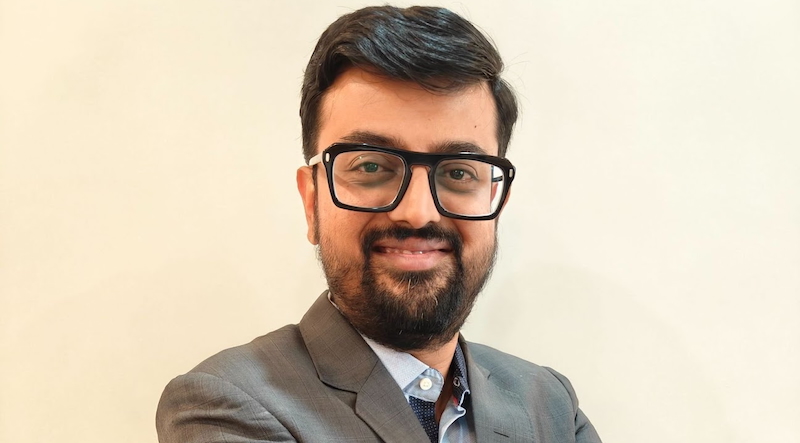
    Prabhu, an ad-tech veteran with stints at Glance, TikTok, Viacom18 and Nielsen, will shape the product vision and strategy for Truecaller Ads. At Glance, he built the lock-screen app’s ad-tech infrastructure from scratch, enabling global monetisation through programmatic and direct sales.

    The appointment comes as Truecaller Ads, delivering more than 5 billion daily impressions and used by over 10,000 brands, cements its reputation as one of the world’s largest mobile advertising platforms. Hemant Arora, vice-president of the global ads business, said Prabhu’s remit will be to design a diversified suite of AI- and data-led products tuned to local markets.

    Prabhu, an IIT Kanpur graduate with an MBA from ISB Hyderabad, called the platform “uniquely positioned to redefine the future of trusted communication and digital advertising”, citing its reach and user trust as rare assets for brands.

    Advertising accounts for the lion’s share of Truecaller’s growth, and the company is betting Prabhu can turn scale into sharper monetisation.

  • Fast channels surge 14 per cent this year as news and horror fuel boom

    Fast channels surge 14 per cent this year as news and horror fuel boom

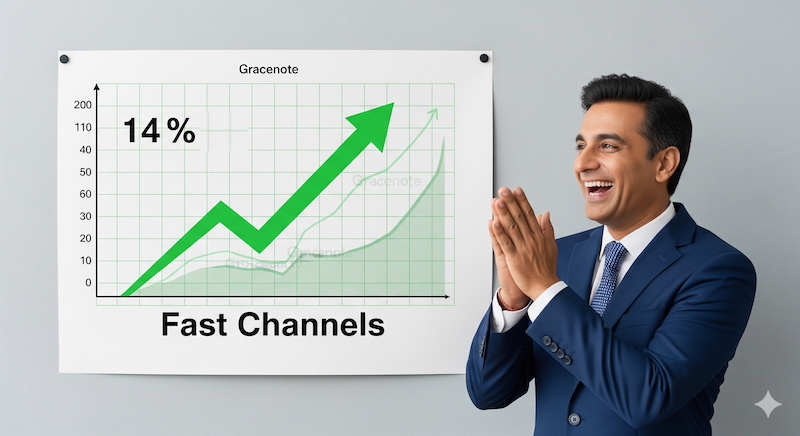
    MUMBAI: Free ad-supported television (Fast) is enjoying a blistering run. The number of Fast channels worldwide has climbed nearly 14 per cent since the start of 2025 and 76 per cent since 2023, according to fresh analysis from Gracenote, the content data arm of Nielsen.

    The firm has expanded its Data Hub to track nearly 1,850 active Fast channels, enabling direct comparisons with subscription video-on-demand (SVOD) catalogues from the likes of Amazon Prime Video, Apple TV+, Disney+, Netflix and Paramount+. The enhanced tool now covers more than 645,000 TV shows, films and sports programmes across SVOD and a further 197,000 across Fast.

    Fast is skewing younger than its subscription rivals. Almost half of its content has been produced in the past five years, compared with only a third for SVOD. Stretching the timeframe to 15 years, Fast jumps to nearly 80 per cent of programming, versus 68.5 per cent for SVOD.

    Television dominates both formats, but especially Fast: 93.1 per cent of its content comprises TV programming by episode count, compared with 88.8 per cent on SVOD platforms.

    Genre trends are diverging. Documentaries make up the largest Fast slice at 16.1 per cent, followed by drama (10.6 per cent) and news (9.9 per cent). Yet it is news and horror that are powering growth, up 37 per cent and 30 per cent respectively. On SVOD, sports led the charge in the past quarter with a 13.2 per cent bump, ahead of films (10 per cent) and TV (9.2 per cent). Sports on Fast dipped 3.7 per cent in the last three months but remain up 14 per cent year to date.

    Among the big streamers, Amazon bulked up most aggressively, expanding its catalogue by 12.6 per cent quarter on quarter. Paramount+ followed with a 6.4 per cent increase. Overall, SVOD offerings grew 9.8 per cent in the same period.

    Gracenote, which covers video content in more than 70 languages and 80 countries, is pitching its Data Hub as a strategic compass for distributors, producers and advertisers eager to map where audiences are headed.

  • Raghu Ramanujam takes charge as vp of product at Nielsen’s Gracenote

    Raghu Ramanujam takes charge as vp of product at Nielsen’s Gracenote

    MUMBAI: Raghu Ramanujam, a seasoned product executive with stints at Flipkart, InMobi and Zoho, has joined Nielsen-owned Gracenote as vice president of product management.

    At Flipkart, Ramanujam steered the payments and fintech strategy, shaping products that sought to democratise access to credit and scale digital transactions for India’s 1.4bn people. He previously founded PoolCircle, once Bengaluru’s largest carpool network, with the mission of taking a million cars off the road.

    At InMobi, he oversaw SmartPay, expanding its reach across nine countries, and built products that propelled the firm from 200m to 100bn ads served per month. Earlier, at Zoho, his NetFlow Analyzer became the company’s fastest product to notch $1m in revenue.

    Ramanujam has also led the product division at Tambora Systems, Embibe and Microsoft Accelerator, and began his career in sales and engineering before moving into software and digital platforms.


  • Netflix schools rivals as streamers ace June TV viewership charts

    Netflix schools rivals as streamers ace June TV viewership charts

    MUMBAI: Class is in session and Netflix is teaching everyone a lesson in domination. In Nielsen’s 50th The Gauge report for June 2025, streaming flexed its muscle once again, accounting for a record 46.0 per cent of total TV usage in the US. Leading the binge brigade was Netflix, which saw a 13.5 per cent surge in viewership over May, grabbing an 8.3 per cent share of total television minutes. That’s 0.8 points up month-on-month and enough to account for 42 per cent of streaming’s total gain in June.

    The platform’s winning streak was powered by its usual bag of tricks: original series Ginny & Georgia was crowned the most-streamed title of the month with a jaw-dropping 8.7 billion viewing minutes, while acquired shows Animal Kingdom and Blindspot together clocked 11.4 billion minutes. And just to put a cherry on top, Squid Game Season 3 dropped in the final three days of the month and still managed nearly a billion viewing minutes per day.

    Peacock wasn’t far behind on the podium, notching a 13.4 per cent usage rise fuelled largely by the new season of Love Island USA, which bagged 4.4 billion viewing minutes and ranked fourth overall. The streamer finished June with a 1.5 per cent TV share, up from 1.2 per cent in May.

    Much of the streaming spike can be chalked up to school being out. Kids and teens (aged 6–17) increased their TV usage by 27 per cent in June, with streaming accounting for 66 per cent of their total watch time. Netflix and Peacock saw viewership from this age group climb 32 per cent and 37 per cent, respectively.

    This cohort also powered up consoles and cable boxes, leading to a 41 per cent jump in the “Other” category home to video games and set-top box viewing far above the overall 14 per cent gain in that segment.

    Meanwhile, traditional TV continued its summer slump. Broadcast viewership dipped 5 per cent to an all-time low share of 18.5 per cent, slipping below the 20 per cent mark for the first time. Cable remained mostly flat but still ceded 0.7 share points to end at 23.4 per cent. Combined, cable and broadcast dropped from 44.2 per cent in May to 41.9 per cent in June.

    That said, the NBA Finals threw broadcasters a lifeline, ABC aired all seven of the month’s most-watched telecasts, including the NBA Trophy Presentation. On cable, Conference Finals on ESPN and TNT scored big, while news and special programming like Fox News’ Army 250 Parade and CNN’s Goodnight and Good Luck helped shore up ratings.

    With summer holidays in full swing and streamers rolling out irresistible content, one thing is clear: viewers are switching channels literally and figuratively. And if June is any indication, traditional TV might need more than just a timeout to catch up.

  • Screen time gets smarter as Nielsen extends Inscape data pact

    Screen time gets smarter as Nielsen extends Inscape data pact

    MUMBAI:  As audiences juggle remotes across streaming, cable, and broadcast, Nielsen and Vizio’s Inscape have hit play on an extended multi-year partnership to keep a sharper eye on what viewers are actually tuning into. The duo first teamed up in 2022, and their renewed collaboration now promises even deeper insights powered by Automatic Content Recognition (ACR) tech from over 24 million Smart TVs.

    With media consumption growing more fragmented than ever, the new agreement helps Nielsen tap Inscape’s screen-level ACR data to track viewership irrespective of the source whether it’s a binge-worthy series on a streaming app, a late-night news bulletin, or that weekend movie on linear TV.

    “Consumers are watching content in more ways than ever before,” said Nielsen global head of content and syndicated products Michelle Gelman. “Inscape’s ACR data adds vital scale and granularity to help our clients reach audiences and measure ROI more effectively.”

    Inscape, the data division of Vizio, hasn’t been idle either. Over the past year, it has rolled out fresh capabilities like Tuner Data Solution, which brings big data insights to Over-the-Air (OTA) broadcasts, and Commercial Feed+, which integrates ad-level intelligence from streaming platforms. These upgrades are helping make sense of the ever-blurring lines between traditional and digital TV.

    Inscape, VP of data licensing and strategy Ken Norcross said the extended partnership reflects the market’s growing confidence in ACR-based insights. “This is a huge validation of the scale and sophistication of our dataset. Nielsen’s continued investment shows just how critical this kind of real-time, cross-platform intelligence has become,” he noted.

    With Nielsen’s measurement ecosystem now covering 75 million devices across CTV, digital, linear, and streaming this alliance with Inscape positions it to deliver more accurate cross-platform audience metrics in real-time.

    As the race to measure eyeballs evolves from channel ratings to content journeys, the Nielsen-Inscape tie-up ensures that media buyers, creators, and advertisers aren’t left in the dark no matter what screen viewers are glued to.

  • US Streaming platforms achieve record share of television viewing in Nielsen Report

    US Streaming platforms achieve record share of television viewing in Nielsen Report

    MUMBAI: Nielsen’s March 2025 report on The Gauge indicates a shift towards more seasonal television viewing patterns in the US. Overall television viewing declined by six per cent compared to February, influenced by seasonal changes. However, the streaming category continued its growth, capturing 43.8 per cent of total TV usage in March, a 0.3 percentage point increase from February.

    NIELSEN'S VIEWING

    A notable finding is that for the first time in a monthly Gauge report, the top ten most-watched streaming programmes originated from seven different platforms: Prime Video, Hulu, Disney+, Max, Paramount+, Netflix, and Apple TV+. Max experienced the largest month-over-month growth among streaming services, increasing by six per cent, primarily driven by viewership of The White Lotus. YouTube also achieved a new platform record for the second consecutive month, accounting for 12 per cent of total TV watch time, despite a slight decrease in viewing hours compared to the previous month.

    Cable television benefited from the NCAA men’s basketball tournament in March. Cable’s share of viewing rose to 24 per cent, a 0.8 percentage point increase, supported by a 29 per cent rise in cable sports viewing and consistent viewership for cable news. The most-watched cable sports broadcasts included NCAA Elite Eight games on TBS. Cable news programmes represented seven of the top ten cable telecasts, with Fox News Channel’s coverage of the presidential address on 4 March  attracting 11 million viewers on the network and over 36 million viewers in total.

    TOP STREAMING SHOWS

    The broadcast category saw strong performance with ABC’s broadcast of The Oscars on 2 March, which was the most-watched programme in March with 20.3 million viewers across ABC and Hulu. Data indicated that viewers streaming the Oscars on Hulu were significantly younger compared to those watching via traditional broadcast. Scripted dramas accounted for 28 per cent of total broadcast viewing in March, with Tracker on CBS having five of the top ten broadcasts, each averaging over 10 million viewers. However, the absence of football contributed to an overall nine per cent decrease in broadcast viewership from February, resulting in a 20.5 per cent share of total TV viewing for the month.

  • Uday Shankar & Ishan Chatterjee’s masterplan to disrupt the sports ecosystem

    Uday Shankar & Ishan Chatterjee’s masterplan to disrupt the sports ecosystem

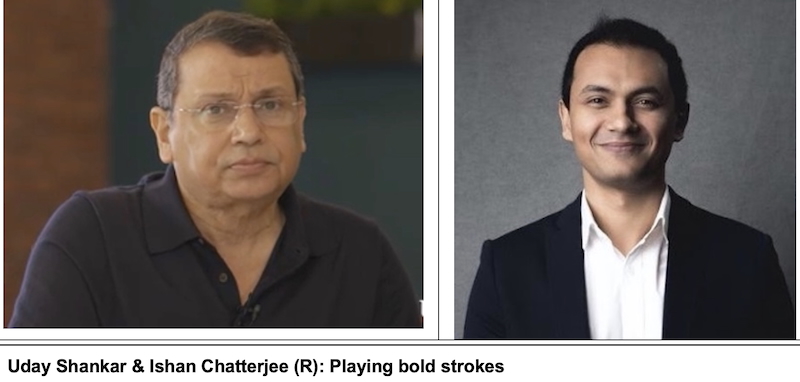
    MUMBAI: By partnering with Nielsen, Uday Shankar and Ishan Chatterjee have revolutionised the way advertising revenue is allocated in media. With all relevant consumption metrics now accessible, brands and managers can accurately measure the return on investment for ads on the JioHotstar platform.     

    Previously, advertisers relied on distributor and retailer feedback to gauge the impact of TV or OTT ad campaigns or simply trusted platform-provided figures on watch times and engagement. This lack of transparency led many senior marketing executives to lament that half their advertising budget was wasted—without knowing which half.     

    Now, with JioHotstar exposing detailed consumer engagement data, transparency is paramount. Competitors such as Sony, Zee5, and MX Player will face pressure to disclose their own engagement metrics, which are likely to fall far short of JioHotstar’s. With 50 million subscribers, JioHotstar’s numbers will set a new benchmark, challenging the credibility of figures previously reported by other streaming services.     

    Will Nielsen’s dashboards validate or debunk existing industry claims? Will this new transparency drive up unit pricing for OTT ad spots or cause a market correction?

    sports watcher     

    Some believe smaller OTT platforms could benefit from JioHotstar’s initiative, as advertisers gain confidence in exploring alternative options.     

    “The battle for advertising video revenue is primarily between Alphabet, Meta, and other players, while retail commerce giants such as Amazon, Flipkart, and Swiggy are evolving into media powerhouses, attracting thousands of crores in ad spending. The first two dominate 70 per cent of India’s digital ad spend. Transparency measures like JioStar’s could shift investment from Alphabet and Meta to other video platforms as the ad market expands,” observes an industry expert.     

    To capitalise on this shift, Uday Shankar has launched sports channels in multiple languages in both standard and high definition. The true impact of JioStar’s transformation of the sports vertical will likely become evident later this year, as marketers, agencies, cable operators, aggregators, and DTH platforms assess the platform’s potential. Subscription and advertising revenue are expected to surge.

    Digital advertising has long been a black box, with advertisers investing heavily in Meta and Alphabet despite knowing there’s wastage—largely because of the strength of their data, even though it’s self-reported.

    In an effort to bring more transparency, Google has been encouraging third-party tech solution providers outside its ecosystem through programs like YTMP, where Channel Factory plays a role, particularly for YouTube advertisers.

    The recent Jio-Hotstar collaboration with Nielsen aims to shed light on consumption data, providing advertisers with third-party insights. However, since the study is commissioned by the media company itself, its credibility will be met with some skepticism—much like the trust advertisers place in Meta and Alphabet’s data. That said, it still offers a level of validation that could make investment decisions more confident.

    More importantly, this move could push other players to enhance transparency in their own data reporting, ultimately fostering a more accountable digital ecosystem

    Yesudas Pillai   
    Founder Y&A Transformation and Strategic Advisor, Channel Factory

    The BCCI has thrived on the IPL’s ever-increasing media rights value, pocketing Rs 48,000 crore in the 2022–27 cycle. However, the IPL has been a loss leader for JioStar, with revenue projections of Rs 4,000–4,500 crore for the 2025 season, meaning profitability remains elusive.     

    The recent merger aims to stabilise rights acquisition costs. Previously, Disney Star and Viacom18 engaged in aggressive bidding wars, inflating prices. With one less competitor, prices may better reflect market realities—unless Netflix, Eurosport, Prime Video, YouTube, Zee, or Sony enter the fray, not just for the IPL but for other sports properties, as India’s sporting interests expand beyond cricket.     

    (Sources suggest sports administrators are privately expressing concerns about the impending disruption, while smaller sports associations are eager for new opportunities.)     

    If rights prices fall to more realistic levels, the entire ecosystem will feel the effects. BCCI and ICC will have less revenue from central media and broadcast rights pools, reducing payouts to team owners. Consequently, player salaries will also decline as team owners rationalise spending. The days of cricketers commanding double-digit crore salaries, as Virat Kohli, Rohit Sharma, and Hardik Pandya have, may be numbered.     

    The sports sector is on the brink of a transformation. On the infrastructure side, on the broadcast side, on the talent side – it is all waiting to explode. Production quality, engagement, and interactivity will reach unprecedented levels. It only took a nudge from the likes of Uday Shankar, Akash Ambani, and Nita Ambani. As the saying goes, the match isn’t over until it’s won—or lost.