Tag: Nick Seckold

  • InMobi and Microsoft collaborate on a festive trends guide for marketers

    InMobi and Microsoft collaborate on a festive trends guide for marketers

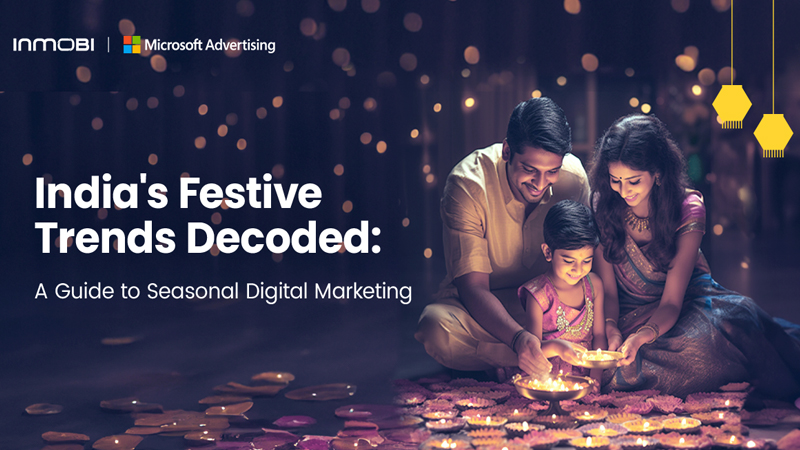
    Mumbai: In line with the ongoing festive season, InMobi, a leading provider of marketing and monetisation technologies in collaboration with Microsoft Advertising (https://www.MicrosoftAdvertising.com) has unveiled key insights from its annual guide to seasonal digital marketing. The study, India’s 2023 Festive Trends Decoded revealed how brands can leverage the power of search and omnichannel solutions to create a unique marketing strategy and maximise their impact by better connecting with their audiences. The report also highlights the consumer’s interests across various categories.

    In 2022, a significant trend emerged in festive shopping: a dramatic surge in keyword searches for sale, discounts, offers, cheap, deals, and near me. Across categories like consumer electronics, groceries, food, personal care, gifting, and automobiles, these searches experienced an average Month-over-Month (MoM) increase of 19 per cent.

    “Brands play a significant role in amplifying the emotions of festivities among people, and it is vital for a brand to have a presence while catering to the needs of their consumers. By leveraging smart solutions and implementing an effective marketing strategy, they will not only enable themselves to reach their target audience effectively but also stay ahead of their competitors,” said Rohit Dosi, Vice President and general manager – Microsoft Advertising at InMobi. “The months leading up to the festivities around Dussehra, Diwali, and Christmas are important seasons for brands to leverage smart solutions, as consumer interest is piqued at this time,” added Rohit.

    The study highlights that brands can prepare for pre-festive excitement and beyond by tapping into category-specific user insights to craft tailored experiences like special offers and engaging content. In line with InMobi’s 2023 report, The Marketers Guide to India’s Festive Season, 54 per cent of consumers are expected to engage in hybrid shopping. To maximize their presence throughout the customer journey, brands should connect with high-intent audiences early on through a multi-channel, full-funnel approach, rather than solely focusing on the final purchase stage. Additionally, fostering trust is crucial during festive periods when consumers explore numerous brands. By offering accurate and relevant information during product searches and discovery, brands can establish credibility and reliability, ultimately standing out in the competitive festive market.

    “Our insights report comes at the opportune time owing to its valuable insights into evolving consumer trends. The shopping landscape has seen a great evolution with omnichannel marketing taking centre stage,” said, Microsoft Advertising, regional vice president APAC Nick Seckold. “The omnichannel experience will enable the brands to maximize their presence throughout the entire customer journey and provide a seamless overall customer experience. Additionally, by using Microsoft Advertising’s In-Market Audiences and omnichannel solutions, brands can effectively leverage these intent signals to connect with their target audience across diverse platforms and devices,” he added.

    InMobi and Microsoft Advertising have been in a strategic relationship since July 2018 to help enterprises accelerate their digital transformation by providing them with insights, audience, and engagement platforms for a connected world. The relationship was expanded in 2019 as InMobi added Microsoft Advertising products and solutions to its offerings in India. Today the partnership covers over 75 regions across India, Southeast Asia and META.

    Additional findings from the study include

    Apparel and Jewellery: In October 2022, searches for apparel, accessories, and jewellery increased by eight per cent MoM, while clicks grew by three per cent. During Dussehra the previous year, searches surged by +16 per cent WoW, but clicks decreased by eight per cent WoW. Conversely, during Diwali week, there was a six per cent WoW increase in searches and a 20 per cent WoW rise in clicks.

    Beauty and Personal Care: Beauty and Personal Care items in India experienced a 21 per cent rise in searches and a 13 per cent increase in clicks, aligning with the shopping and festive periods.

    Consumer electronics: Witnessed a 30 per cent increase in searches and a 13 per cent rise in clicks, driven by festive season deals, reflecting heightened consumer interest in October 2022.

    Groceries and Household Supplies: The festive season led to a 20 per cent rise in searches for groceries and household supplies, driven by the need to prepare meals and treats.

    Food and Beverages: The food category saw an eight per cent rise in searches and a four per cent increase in clicks, highlighting the enduring appeal of festive culinary experiences in October.

    Home Furnishings: During the festive season, consumers sought novelty by revamping home décor and furnishings, resulting in a 19 per cent rise in searches and a 37 per cent increase in clicks month-on-month.

    Home Appliances: High demand for home appliances and sales contributed to significant online interest, with the category experiencing a remarkable 29 per cent surge in searches and an impressive 59 per cent increase in clicks in October 2022.

    Gifting: During the festive season, there was a 35 per cent increase in searches and a 42 per cent rise in clicks for gifting and flowers in October 2022, a trend that continued until December.

    Cars and Automobiles: Interest in new cars and motorbikes peaked in October with a 12 per cent increase in searches, driven by festive and year-end sales, and this trend continued until December 2022.

    To learn about other unique festive consumer trends and uncover the strategies for your brand, download your copy of 2023 Festive Trends Decoded by InMobi and Microsoft Advertising.

  • Mobile marketing should be more interactive: Media experts

    MUMBAI: In an expanding digital universe, media agencies have to make the organisational shift to tailor to the diverse consumer needs.

    Mindshare, WPP‘s leading media agency, has consciously made this shift as it lives online, offline and on mobile.

    Mindshare‘s Asia Pacific Digital Lead Nick Seckold believes the nature of new age audience demands a new approach to mobile marketing communication. “In the past, advertisers merely wanted a mobile presence but at Mindshare, our mantra is to adapt to consumers‘ needs, making the campaigns memorable and hard-hitting. Here the missing piece to the puzzle is not “why” advertisers should use mobile but “how” they should use.”

    This sentiment is echoed by senior executives of other media agencies. Says Vivaki Exchange CEO Mona Jain, “Mobile marketing can‘t be generalised. There should be different proposition, different ideas and different formats; one should tailor the campaign for different categories. It is very important that mobile marketing campaign should be targeted to relevant audience and should be engaging. Also, the purpose for which the brand wants to use the medium should be solved.”

    The demand for media agency professionals to change their mindsets is growing as mobile is slated to stay on the uptrend. According to Portio Research‘s latest report, there will be 6.5 billion mobile subscribers worldwide by end-2012, while annual handset shipments will reach 2.15 billion by 2016. So as mobile technology continues to evolve and significantly influence culture and the lifestyles of consumers, the impact mobile devices are having on daily life is almost unfathomable.

    Says Seckold, “In an age of ‘always on‘, people are always on the move and are socially connected through their mobiles 24/7. Hence, there is no doubt that mobile represents a growing opportunity for brands, but penetration alone is not the best reason to convince advertisers to use mobile. The engagement portion through seamless, fun and addictive user interface is key to the success of a mobile campaign.”

    Seckold, thus, urges marketers to put themselves in their target audience‘s shoes and truly understand where they live – online, offline and on mobile.

    Carat Media SVP West Himanka Das believes mobile marketing has to be integrated with the digital campaign. Nothing works in isolation. Also, the companies should develop WAP enabled websites and there should be some form of interactivity so that people can give their feedback.

    “In mobile marketing what is being seen is that professionals need to segment the database to get the right audience. That should be done so that the campaign reaches to the relevant audience,” says Das.

    There are examples across the globe reflecting the gains brands have made through mobile application campaigns. Seckold narrates the example of Ford‘s “Drive Smart” mobile application campaign in India to advertise the new Ford Fiesta this January. The application launch was in sync with the Auto expo, providing the car manufacturer a unique platform to catch auto enthusiasts at the expo. While every car manufacturer was distributing freebies in form of physical product catalogues, merchandise, calendars, Ford distributed this utility cum entertainment application to its users at the expo via handy QR code cards.

    “Through social integration (Facebook and check-in), conversations around Ford increased to 2.5 times more than its competitors. An app called “Drive Smart” was developed to engage prospects and customers, with a popular maps feature and traffic updates. The app has had 43,000 downloads and is still counting,” says Seckold.