Tag: NFTS

  • Music industry to hit $184.69 billion by 2029, riding the digital wave

    Music industry to hit $184.69 billion by 2029, riding the digital wave

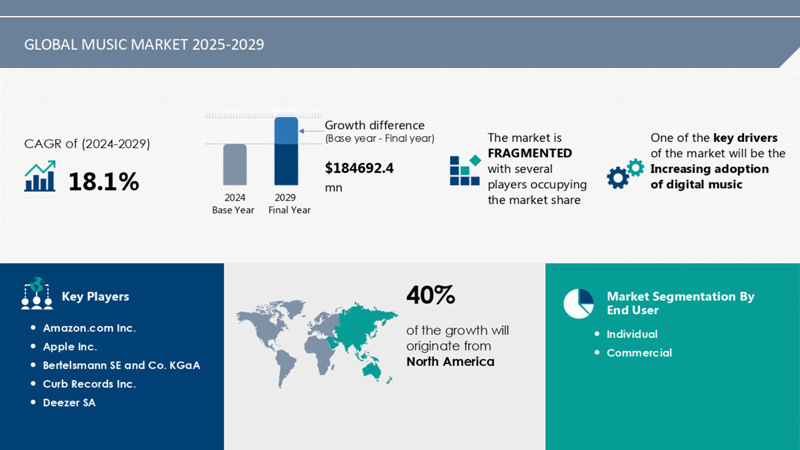
    MUMBAI: The music industry is tuning up for a record-breaking encore, with projections forecasting a $184.69 billion leap in market value between 2025 and 2029. According to Technavio, the industry’s setlist for success includes digital music adoption, AI-driven innovation, and the ever-growing streaming revolution. With a CAGR of 18.1 per cent, the industry is not just keeping up with the beat—it’s rewriting the entire score for how we consume music in the digital age.

    Streaming services and AI

    Gone are the days of cassette tapes and MP3 downloads. The streaming era is in full swing, with platforms like Spotify, Apple Music, Tencent Music, and YouTube Music leading the charge. In 2024, streaming contributed to a significant chunk of the industry’s revenue, with consumers increasingly opting for on-demand access to their favourite artists rather than owning physical copies or digital files.

    AI is also playing maestro, transforming music discovery, personalisation, and even composition. From playlist curation to predictive analytics for record labels, AI-driven models are rewriting the rules of engagement between artists and audiences. As businesses fine-tune algorithms to keep listeners hooked, the industry continues its transition towards a more data-driven, user-centric model. AI is even entering the creative process, with some companies experimenting with AI-generated music compositions, raising both excitement and concerns about the future of human artistry in the industry.

    Where is the music industry humming the loudest? North America leads the symphony, contributing 40 per cent of the global market share, thanks to a massive subscriber base and an appetite for premium content. Europe, APAC, south America, and the middle east & Africa follow suit, each playing a crucial role in the global expansion of streaming services.

    Key markets driving growth include the United States, Germany, Canada, the United Kingdom, China, France, Japan, South Korea, Italy, and the Netherlands. These regions are witnessing a spike in digital music consumption, boosted by faster broadband speeds, affordable smartphones, and a younger, tech-savvy audience. The rise of smart speakers and voice-assisted technologies like Amazon Alexa and Google Home has also contributed to the seamless integration of music into daily life.

    Music Market Scope
    Report Coverage Details
    Base year 2024
    Historic period 2019 – 2023
    Forecast period 2025-2029
    Growth momentum & CAGR Accelerate at a CAGR of 18.1 per cent
    Market growth 2025-2029 $ 184692.4 million
    Market structure Fragmented
    YoY growth 2022-2023 ( per cent) 15.6
    Regional analysis North America, Europe, APAC, South America, and Middle East and Africa
    Performing market contribution North America at 40 per cent
    Key countries US, Germany, Canada, UK, China, France, Japan, South Korea, Italy, and The Netherlands
    Key companies profiled Amazon.com Inc., Apple Inc., Bertelsmann SE and Co. KGaA, Curb Records Inc., Deezer SA, Kobalt Music Group Ltd., NORTHERN MUSIC Co. Ltd., Pioneer Music Co., Sirius XM Holdings Inc., Sony Group Corp., Spotify Technology SA, Tencent Music Entertainment Group, THEME MUSIC Co. Pvt. Ltd., TIDAL, Universal Music Group N.V., Vivendi SE, Warner Music Group Corp., Yamaha Corp., YouTube, and Zee Entertainment Enterprises Ltd.

    Industry heavyweights? The music industry is no longer just about record labels. Today, it’s a battlefield where tech giants and traditional players are battling for dominance. Key industry movers include Amazon, Apple, Warner Music, Universal Music Group, Spotify, Tencent Music Entertainment, and YouTube, among others.

    Strategic alliances, mergers, and acquisitions have become the name of the game, with companies aggressively expanding their footprint. Whether it’s Amazon Music integrating voice-activated streaming with Alexa or Spotify’s push into podcasting, innovation is at the heart of market competition. Additionally, artists are increasingly taking control of their own music distribution, bypassing traditional labels in favor of independent digital distribution platforms, enabling them to retain a larger share of their revenue.

    Now despite the roaring success of digital music, challenges persist. Piracy remains a major headache, especially in regions where copyright enforcement is weak. Countries like Portugal, Spain, and the Netherlands are grappling with rampant illegal downloads, impacting revenue streams for artists and labels alike. Efforts to combat this include advanced watermarking technologies and blockchain-based rights management systems, which help trace music usage and ensure fair compensation.

    Another hurdle is the intensifying battle between traditional record companies and digital platforms. While streaming services provide unparalleled reach for artists, they also disrupt conventional revenue models, raising concerns over fair compensation and artist royalties. Some artists have voiced frustrations over the paltry earnings from streaming platforms, prompting new discussions around fairer pay structures and potential regulatory intervention.

    Future trajectory? 

    Looking ahead, the music industry is expected to lean further into AI, metaverse concerts, and blockchain-powered rights management. Live performances and immersive digital experiences are set to be the next frontier, allowing fans to engage with their favourite artists in new and exciting ways. Some companies are already developing virtual concert venues in the metaverse, enabling artists to perform for global audiences without the need for physical tours.

    Additionally, NFTs (non-fungible tokens) are emerging as a revolutionary way for artists to monetise their music, offering exclusive digital collectibles, album releases, and even fractional ownership of song royalties. These blockchain-based assets provide a new revenue stream, reducing reliance on traditional streaming platforms and giving fans unique ways to engage with their favorite musicians.

    As the industry dances to the rhythm of digital transformation, one thing is certain: music consumption will never be the same again. Whether through AI-generated beats, VR-powered gigs, or hyper-personalised playlists, the future of music is as thrilling as its past. With constant innovation, the industry is ensuring that music remains an integral part of people’s lives, adapting to changing consumer behaviors and technological advancements at an unprecedented pace.

  • PepsiCo India to release NFT collection for Pepsi Black with Timea Balo 

    PepsiCo India to release NFT collection for Pepsi Black with Timea Balo 

    Mumbai: Soft drink giant Pepsi has announced the launch of its first-ever non-fungible tokens (NFTs) collection for Indian consumers. The NFT collection is an ode to the younger generation, which believes in self-expression and is deeply entrenched in technology.

    PepsiCo India Design Team has inked an exclusive partnership with illustrator Timea Balo to curate the NFT collection for Pepsi Black, which is anchored on the brand’s pillars of innovation, self-expression, and evolution. Pepsi will release a set of 20 NFTs minted on the Polygon blockchain.

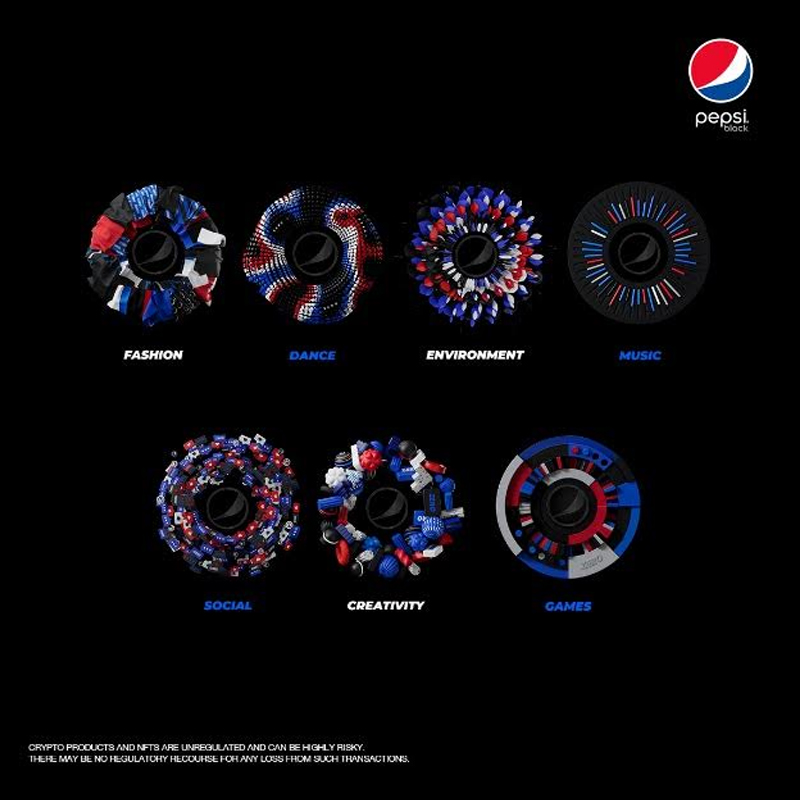
    The NFT art collectibles are centred on the alterations to the classic Pepsi® Black™ ‘Zero’ visual, inspired by the brand’s passion points to portray poignant nuances such as sustainability, rhythm, movement, creativity, art, the progressing world of social media, and gamification. With three variations of each theme and four variations inspired by music, the “Pepsi Black Zero Sugar” collection will be listed on Open Sea, the world’s first and largest web3 marketplace for NFTs and crypto collectibles.

    The NFTs will be given away to the winners of the “#PepsiBlackeffect” challenge conducted on the Indian homegrown social media platform, Moj. Consumers can enter the contest using the quirky Pepsi® Black lens and flaunt their max swag personas to get a chance to win Pepsi® Black’s maiden NFTs.

    Speaking on the NFT collection, PepsiCo India category lead Saumya Rathor said, “Pepsi has always been at the forefront of cultural evolutions, globally as well as in India. Our endeavour is to transform our product as well as our narratives to align with the evolving youth. Our foray into the world of non-fungible tokens (NFTs) for Indian consumers is a testimony to the same belief. The “Pepsi Black Zero Sugar” NFT collection will personify and bring alive the world of Pepsi Black by leveraging passion points that resonate the most with youngsters today, such as fashion, gaming, music, social media, dance, creativity, and environment. To present an accessible opportunity to our consumers, these NFTs will be given through an engaging “#PepsiBlackeffect” challenge on India’s homegrown social media platform, Moj.”

    Commenting on the NFTs, PepsiCo India design director Tanu Sinha said, “Pepsi has strongly associated popular culture and passion points such as music, dance, art, and the environment with its legacy of disruptive narratives over the years. Pepsi’s design strategy has also, over the years, witnessed a significant shift with the acceleration of a digital-forward and social-media-savvy world. We have evolved our design sensibilities to connect with the younger generation to further Pepsi’s mission to create a culture that propagates innovation. The launch of Pepsi’s first-ever “Pepsi Black Zero Sugar” NFT collection is another step in this direction. With Pepsi Black’s “Zero” sugar philosophy at its core, these collectible art NFTs have been designed keeping in mind the passion points those youngsters can connect and relate to.”

  • We aim to help the creator economy touch new heights in India and around the globe, shares GSharp Media’s Meghna Mittal

    We aim to help the creator economy touch new heights in India and around the globe, shares GSharp Media’s Meghna Mittal

    Mumbai: Meghna Mittal is GSharp Media’s co-founder and chief marketing officer; the company has two brands under its umbrella: Songfest India and Hoopr. Songfest focuses on giving musicians the creative freedom to explore new sonic avenues; Hoopr is India’s first music licensing marketplace that intends to offer cutting-edge solutions to both musicians and content creators alike.

    Ever since its inception, GSharp Media has been focused on building creator-centric products. Mittal has led these initiatives and focuses extensively on crafting innovative marketing strategies while also playing a key role in scaling up products. Her strengths lie in staying close to the consumer, understanding the market requirements, and creating the right product that solves the customer’s pain point. She was pivotal in steering several viral marketing campaigns for Songfest, which accumulated more than 100 million views for its YouTube channel.

    Her latest venture is Hoopr.ai, a music licensing marketplace that offers cutting-edge viral solutions to brands and video creators in collaboration with some of the most popular artists. The idea behind it is to offer a multitude of songs, background scores, and sound effects to creators regardless of the kind of content they create and showcase some innovative music from India’s best musicians and composers. Mittal and her team aim to help the creator economy reach new heights in India and around the globe with the platform.

    Prior to joining GSharp Media, Mittal led the marketing initiatives for Hubilo and YesssWorks for more than seven years. A music lover herself and a people person, her interests include designing and building consumer-centric products, creating exciting content, and crafting unique music solutions for brands. She also has a huge, self-cultivated network of influencers across the country and believes that every creator deserves to have the best tools at their disposal for creating invigorating content.

    On the personal front, she is extremely passionate about cooking and loves feeding her guests different delicacies. Indiantelevision.com caught up with Mittal to find out the growth strategy of the company.

    Excerpts:

    On Hoopr.ai

    Most founders create products that solve a certain pain point they themselves have experienced and for which there is a large market but no clear solution. A few months into the pandemic, Gaurav Dagaonkar (GSharp Media founder) and I were running the content production studio Songfest and realised that costs and means of video production had come down heavily due to the lockdown. Most clients of Songfest and Songfest itself heavily use stock video & music to complete productions and save costs. It was at this stage that we realised how limited the availability of Indian stock music was.

    It was this particular project for which we needed a Hindi hip-hop, street rap kind of track, and we couldn’t find even one across all platforms in the world. The international music licensing platforms didn’t carry Indian music, and we didn’t have any of our own. I mean, we’re talking about a country with a combined value of $15 billion if you put together the film, television, advertising, and music industries, and strangely, not one music licensing marketplace existed before Hoopr. We ultimately had to get the track created, which cost us a lot more time and money than the budget permitted.

    So we started thinking about the millions of Indian vloggers, podcasters, live streamers, and digital content creators, including startups, who create daily video content for their Indian audiences and would be requiring relevant Indian music. On the one hand, using music without a licence results in a copyright or content ID claim, which takes away a creator’s monetisation rights for that video, while on the other, there is hardly any Indian music available to licence. That got us to start thinking seriously about building Hoopr.

    But the final catalyst in this decision turned out to be a unique one. Anushka Sen is an Indian influencer with over 35 million followers on Instagram and two million on YouTube. She received a copyright claim for using a song belonging to Songfest and asked for a micro licence that could be purchased. I remember this one day when we came across a report that projected India having more than 100 million content creators by 2025, and Sen also wanted to buy a micro licence from us. We started building Hoopr from that day on.

    On Hoopr.ai’ revenue model

    We offer subscriptions to individual creators and businesses. Apart from that, we also offer custom plans for enterprises.

    On the growth

    We’re proud of the fact that we have received traction from customers all over India. It’s a testament to the power of the creator economy that we’ve seen traction from not only individual creators but also interest from brands and businesses across India.

    On the challenges for monetisation of content including music

    Let’s look at the content—music and video—separately. YouTube is currently the most important source of content monetization, at least for Indian creators.However, in order for this monetization to begin on YouTube, one must have more than 1,000 subscribers and 4,000 hours of watch time. Post that too, it requires millions of views to make a reasonable amount of income. Typically, if YouTube pays 2-3 paisa per view in India, a typical YouTuber ends up earning somewhere close to 15 to 30 thousand for a million views.

    But the million views are hard to get, so the challenge for the Indian content creator is to be regular, attract a large audience, and create content in a sustained manner. Also, a small fraction of video creators end up making substantial money from platforms such as YouTube. A lot of the other short-form platforms do not allow monetization similar to YouTube, although it is likely that this may change in the future. Aside from this, content creators face a number of other challenges that limit their ability to monetize. Sometimes there could be licensing issues, creators may end up using music tracks that might get muted, or there could be a copyright claim or a takedown.

    For musicians, it can be relatively easier as one can create music tracks and distribute them to multiple streaming platforms, and typically there is a pay-out associated with each stream. However, the challenge in this case is to get discovered, heard, and seen when the competition is cutthroat and there are thousands of tracks uploaded every single day.

    On how covid impacted this area

    The covid pandemic fuelled the digital revolution and accelerated the growth of content creators, social media community engagers, and even curators. During this time, both Dagaonkar and I realised that our agency and brand clients were actively looking to licence Indian music but were not able to find relevant content. We experienced this difficulty while creating promos and marketing videos for Songfest. But the turning point came when one of India’s leading content creators, Anushka Sen, got a content ID claim on YouTube and called me to buy a licence. A subsequent deep dive into the numbers of the creator economy revealed that millions of creators in India require music for their content and are willing to buy licences to avoid copyright claims.

    Having launched the platform now, the industry envisages Hoopr as a potential go-to platform to find the right music for video content.

    On the products like Songfest that GSharp Media operates

    GSharp Media is a music tech and content company, and the idea has been to create and operate brands and products in the music domain that are interconnected and have synergies with one another. With Songfest and Hoopr, we have these synergies. Songfest is a brand that creates customised brand solutions. We create branded content, such as music videos, television commercials, and so on. Songfest also operates a YouTube channel with over half a million subscribers. The biggest asset of the company is the network of 3000+ music creators that we have.

    On the latest campaign

    We have launched a new campaign called “#HarGharCreator” with an ad to celebrate and empower creators across India. Hoopr.ai is solving a billion-dollar problem faced by content creators and businesses every day: that of discovering and licensing the right music for their videos. India’s 80 million+ creator community comprises vloggers, podcasters, gamers, filmmakers, live-streamers, and influencers who create audio-visual content on a variety of topics. With over 25,000 tracks and sound effects, Hoopr.ai is not only enabling these creators to get specific music for their needs but also helping them avoid copyright strikes and legal issues.

    Furthermore, what’s also changing is the mindset with regard to content creation, with more people embracing it as a career choice. And that is exactly what the ad captures. In the ad, a young college student can be seen telling his strict father that he doesn’t want to be an engineer but rather a content creator. The reaction of the father makes the ad a must-watch for all content creators and their families.

    A creator is now emerging in nearly every home across India, and we want to help them find phenomenal Indian music for their videos. Apart from individual creators, the music on Hoopr is also being used by brands, enterprises, and OTT platforms, as it is cleared for use and free from any copyright strikes or takedowns.

    On trends being seen when it comes to music tech

    There are a lot of developments happening in music technology. Right from production to distribution and consumption, to areas like licensing, building communities, and fan funding of collectibles, music tech has seen a lot of developments and interesting start-ups over the last couple of years. When it comes to music production, we are seeing tools that allow people to collaborate. There are multiple music distribution services that have evolved over the last four to five years that allow artists to distribute music across different streaming platforms. We are also in an era where the majority of music is consumed through streaming platforms. As a result, apps such as Spotify are continuously evolving their algorithms and recommendation engines to contribute to a better user experience. We have also seen the emergence of licensing platforms that have opened up new doors of income for musicians.

    Two areas that are still in their nascent stage but will only continue to grow are AI-generated music and the ability of artists to create and distribute NFTs. These could unlock new doors as far as the music industry is concerned and could bring with them new opportunities for artists, new sources of funding, etc., all on the back of technological development.

    On the future of the podcast format in India

    Any kind of individualised content creation is here to stay, whether the creator makes a living out of it or does it out of passion and knowledge sharing. Any kind of content creation is going to grow from here, mainly because there are so many new tools that are coming up that help creators create content. In the case of podcasts, it’s a bit easier, as one can create podcasts in the comfort of their homes. They are able to record using microphones, which have become cheaper using workstations. Distributing podcasts has become easier too. The biggest driver is the fact that people want to share their knowledge, experience, and learnings, in addition to the huge appetite of the digital audience to consume this content.

    India still has the potential to grow multifold in the domain of podcasts and some related fields too. Companies like Pocket FM do well in India, along with regional companies like Kuku FM, which are also producing a large number of audio books. Very soon, it will translate into individuals creating systematic podcasts. The future of podcasts in India is promising, and one of the biggest drivers will be regional content or regional podcasts, as 70 per cent of India’s population consumes regional content

  • GUEST ARTICLE: The future of NFTs: Digital Property Rights

    GUEST ARTICLE: The future of NFTs: Digital Property Rights

    Mumbai: NFTs have revolutionised the internet market, ushering in a new budding world of creator empowerment. But very few people understand the underlying technology and cultural momentum that make NFTs and web3.0 so exciting for, and disruptive to, the traditional entertainment sector. With this technology, creators have a secure and infinitely distributable way to create value around and in their creative endeavours.

    But let’s start with the basics: NFTs possess scalable capabilities that we haven’t seen earlier in the creative sector. 

    1) NFTs are secure–meaning that the age-old issues of piracy and illegal exploitation of one’s creative work are dramatically reduced. 

    2) NFTs are portable at the click of a button; an artist can not only create and share directly with their audience, but the audience can now share and promote that work to the global community as well.

    3) NFTs are dynamic and programmable in any way the creator sees fit; from a simple piece of art to a benefits-packed loyalty club, to a certificate of achievement, NFTs can be created to address a variety of use cases, and the technology’s possibilities continue to evolve to this day.

    NFTs disrupt gaming industry

    Gamification acts as a catalyst for community building, thereby making communities cutting-edge and dynamic. Within communities, managers can provide tangible incentives to their consumers. On accomplishing a milestone in the community, members can be rewarded with a certain NFT that has attached benefits to it. This not only spearheads community participation and community building but evokes the interest of the community members and keeps them hooked.

    The future of businesses and brands

    Even for businesses and brands, NFT communities help in more ways than one; the former get the opportunity to learn more about NFTs and obtain tangible outcomes. Furthermore, brands and marketers are utilising this technology to communicate directly with consumers and potential customers, primarily gen-z and millennials.

    Apart from brands, artists themselves have also begun to experiment with creating NFTs & venture out in this space. The amount of money that some artists make is enough to not only maintain their projects but also fund new projects, pay for education, or even donate some of the earnings to charities and causes of interest. Also, organisations can develop NFT art as a standalone fundraiser, and in exchange, the artists can shower their fans with a range of benefits.

    Additionally, NFTs themselves can be utilised in the metaverse. Online trades in traditional art and collectibles are fairly common, but allowing artists to take their creative works of art worth millions of dollars around the world into the metaverse is a huge win for the creator.

    How NFT artists can actually get digital property rights

    The biggest advantage that artists get as NFT artists is digital property rights. When an NFT artist designs or produces an original piece, the artist automatically gets its digital property rights, which ensures its safety from fraudulent claims by another artist trying to get credit for their piece.

    This, however, is primarily only eligible when the piece is unique, the first and only of its kind. If it becomes a recreation or a digital representation of an already existing masterpiece, it does not give the artist any digital property rights, as the intellectual property rights belong to the original creator. Some of the important aspects of intellectual property that should be taken into consideration include trademarks and copyright. Another big advantage of the blockchain is that NFTs also include restrictions which prevent buyers from reverse engineering the technology and reselling it as their own. Thus, without a valid agreement, a creator may forfeit all ownership rights. Because anyone can create NFTs, both buyers and sellers should be cautious about how IP rights are addressed with NFTs.

    As the NFT industry continues to grow and evolve, artists are known to have more liberty and independence. With being able to decide their royalty fees and getting all sorts of control with the rights for their art, many traditional and digital artists are choosing independence as a means of prospect in their line of work.

    NFTs have the potential to decentralise, providing doors to a new economy and building a large and loyal community. And perhaps, this is one of the many reasons why both digital and traditional artists that are established & emerging have been switching their plans to be a part of the web3.0 space, building their own fanverse.

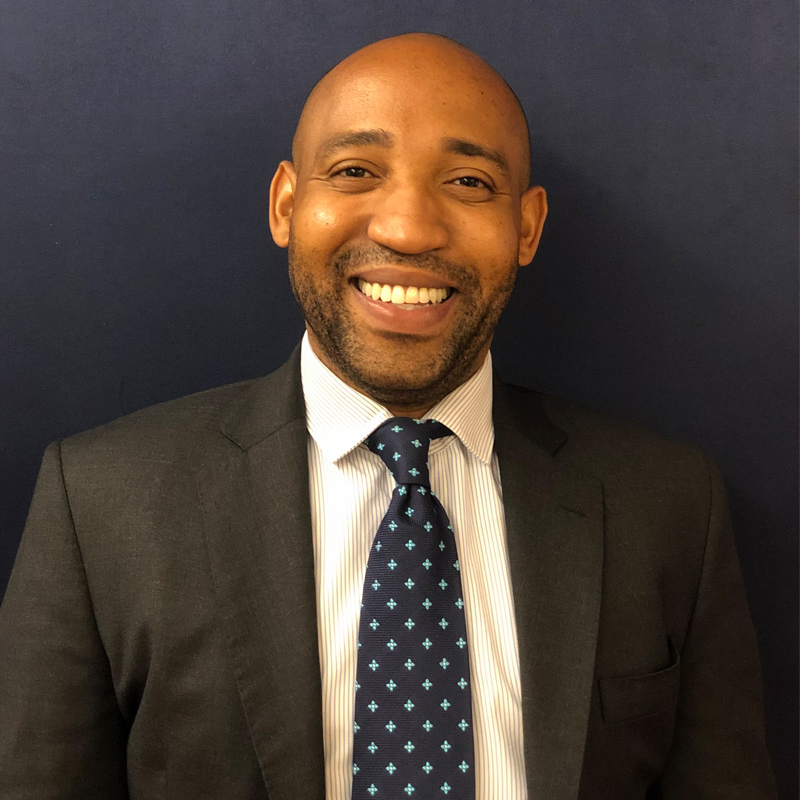
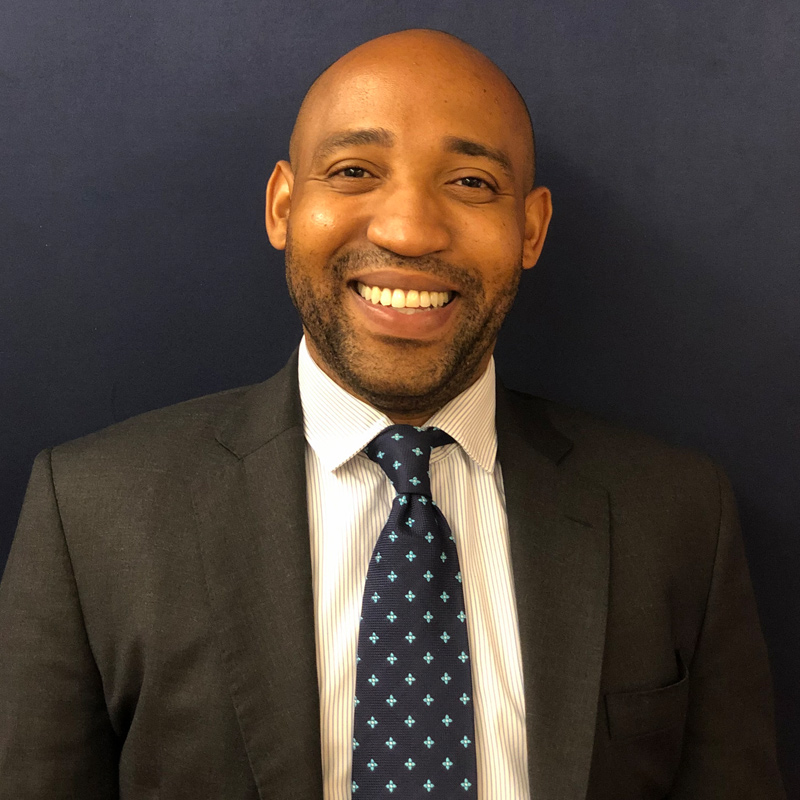
    The author of this article is HeyHey CEO & founder Caleb Franklin.

  • Indian speedsters Arshdeep Singh, Prasidh Krishna, Chetan Sakariya partner with Rario to launch their cricket NFTs

    Indian speedsters Arshdeep Singh, Prasidh Krishna, Chetan Sakariya partner with Rario to launch their cricket NFTs

    Mumbai: Indian speedsters Arshdeep Singh, Prasidh Krishna, and Chetan Sakariya have partnered with Rario, which claims to be the world’s first officially licenced cricket digital collectibles platform. The exclusive partnership with the platform will help launch their own non-fungible tokens (NFTs). The pacers join Rishabh Pant, Virender Sehwag, Zaheer Khan, Cheteshwar Pujara, Rashid Khan, Jason Holder, Quinton De Kock, and many others as player partners on the platform.

    Singh said, “This is a great marriage between sports and technology, and a wonderful opportunity for me to be closer to my fans, who continue to give me so much love and support. I look forward to sharing some of my most cherished possessions and connecting with my fans in the biggest community of cricket fans, Rario.”

    “With this brand-new partnership for my NFTs with Rario, I am thrilled at the opportunity to engage with the fans at a much deeper level. Cutting edge technology, combined with the fervour for one of the most loved sports in the world, will surely add to the experience of the cricket fans,” Krishna said.

    Sakariya said, “I am thrilled at the opportunity to engage with the fans at a much deeper level. I am looking forward to sharing some of my most cherished possessions and connecting with my fans in the biggest community of cricket fans, Rario.”

    Rario co-founder, CEO Ankit Wadhwa said, “I am excited to have Arshdeep Singh, Prasidh Krishna, and Chetan Sakariya on board. In just the last year and a half, they have become the most talked about bowlers. They have consistently delivered consistent performances for me. From a strategy gaming point of view, anyone with an eye for talent will know that Prasidh, Arshdeep, and Chetan’s Player Cards will be highly sought-after in Rario’s utility ecosystem.”

    Fairplay Sports co-founder Bandana Chhetri, who manages Arshdeep Singh, Prasidh Krishna, and Chetan Sakariya said, “We are excited about Prasidh, Arshdeep, and Chetan’s partnerships with Rario. Rario is the best when it comes to licenced cricket digital collectibles platforms, and we are proud that we could get the partnership done.”

    Rario marketing head Shubham Agarwal said, “We are excited to have Arshdeep, Chetan, and Prasidh onboard. They are rising young bowlers who have proved their mettle at a young age and with their skills would bring great value to Rario’s NFT utilities.”

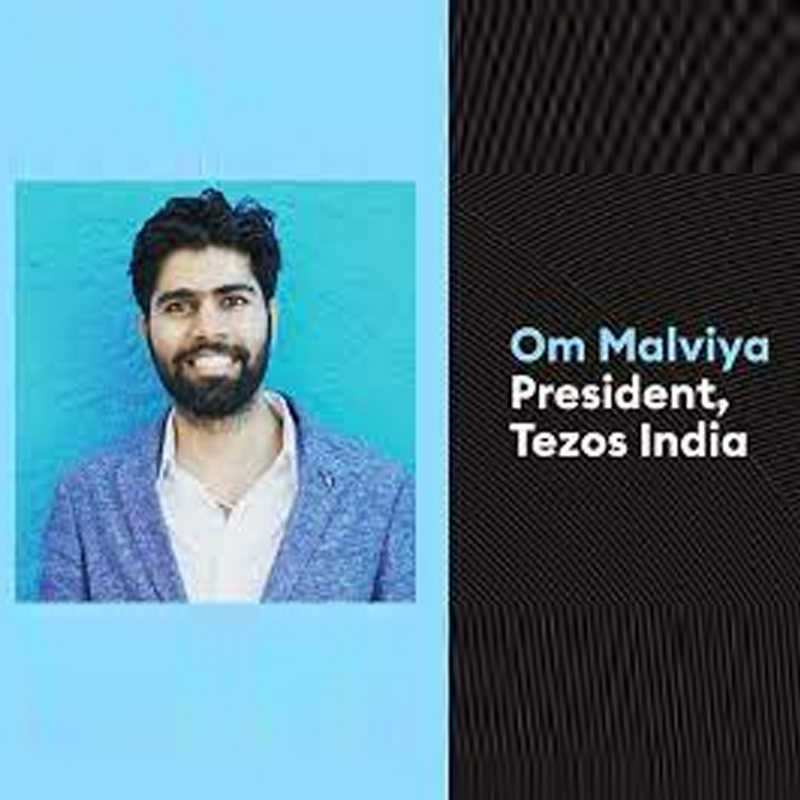
  • “The media and entertainment industries are particularly primed for a blockchain revolution”: Tezos India founder & president Om Malviya

    “The media and entertainment industries are particularly primed for a blockchain revolution”: Tezos India founder & president Om Malviya

    Mumbai: Tezos India is a blockchain adoption entity in India. As innovation in the blockchain space advances in India, Tezos constantly strives to address key barriers facing blockchain adoption to date in India: developer, education and training, and ecosystem development. Tezos is a self-upgradable blockchain that enables forkless upgrades with its on-chain governance system, improving accessibility and longevity for solutions built and utilised by the Tezos community.

    As part of Tezos’ ambitious plan to spread awareness regarding the positive use of blockchain technology across India, a new initiative titled “Tezos India Game Launchpad (TIGL)” has been rolled out, which will be a platform that will assist developers with grants, technical support, game publishing, fundraising and shall support them to launch their games on the Tezos blockchain.

    TIGL is intended to tap the potential of Indian developers by imparting knowledge about learning, creating, and marketing their games on the web. Through the active participation of developers and publishers, Tezos’ novel initiative sets the ball rolling for harnessing the power of blockchain technology. TIGL will start its operations in India, but at the same time, it will look to expand in other emerging markets for play-to-earn gaming. Tezos India is also a grantee of the Tezos Foundation.

    Indiantelevision.com caught up with Tezos India founder and president Om Malviya. He is extremely bullish about the future of bitcoin, decentralised finance, fintech, Tezos and decentralisation (powered by blockchain).

    Back in his college years in 2015, Malviya’s elder brother—who is an entrepreneur and engineer by profession—told him to check out bitcoin and blockchain technology. Ever since there’s no looking back! Over the next few years, Om researched, delved deep, and gained invaluable hands-on experience in this space. He then started the portal “ItsBlockchain” to educate people about bitcoin and blockchain technology, as at that time no other medium/platform existed where people could learn about the technology and latest developments in the crypto and blockchain space.

    A few years later, Malviya wanted to switch from the media space to a more tech-centric, product-based domain. With that in mind, he attended Draper University in 2018, where he eventually met his co-founder, Bernd Oostrum. Both Malviya and Oostrum were die-hard Tezos fans, and hence they started building actively on Tezos with multiple experiments and innovations. Over the years, they have built plentydefi.com, naanwallet.com, and several other Tezos tools. One of the duo’s products, Tezsure, is dedicated to developing DeFi instruments and tools for onboarding the masses onto the Tezos blockchain.

    Despite facing initial challenges like lack of adoption of web3, crypto and Tezos itself, Malviya firmly believes that Tezos is bound to grow significantly in the years to come. Eventually, he was proven right! The space grew as did the users, and hence Om and his co-founder were able to find their perfect product-market fit.

    In 2019, Malviya added another feather to his cap by founding Tezos India to create a well-rounded Tezos ecosystem in the country. As Tezos India founder and president, Malviya’s work encompasses defining the budget, hiring for key roles, defining strategy, streamlining internal organisational processes and using his network to get business development leads to onboard startups, companies, and other organisations.

    Edited Excerpts:

    On the market gap

    Om: Tezos India was launched in late 2019 before Covid hit the country. Things became extremely intricate for the initial month, but awareness and acceptance have increased since then, and it’s still growing. To educate and support these prospective creative communities, Tezos created its arts and culture vertical as a result of the significant growth of NFT artists and communities.

    There has been significant overall growth in the market as the number of NFT users and crypto holders have increased. Developers are recognised for their potential, and are joining this market with innovative ideas and projects, and are working on cases in a way that has never been done before. Now there are many jobs and financing options for them.

    On Tezos India’s projects

    Om: Tezos India envisions making blockchain technology freely accessible to the Indian populace because it can help a variety of business profiles operate more efficiently. The Tezos blockchain is thus being promoted in India through a variety of events: meetups, hackathons, panel talks, and gaming tournaments. We recently held the TezAsia Hackathon, one of the biggest hackathons, by Tezos India in partnership with TZ APAC, with enormous cash prizes, internship opportunities, and PPO offers to not only promote blockchain but also to support the developer community by giving them career opportunities and enlightening them with the offerings of this revolutionary technology.

    Similarly, the “She-Crypt” campaign was designed to encourage women in crypto and blockchain to increase overall women’s participation in the domain. Many of these projects have been implemented throughout time to inform and inspire individuals to make the most of the blockchain environment.

    On Covid-19 challenges

    Om: Since we function as a non-profit organisation rather than a business, it didn’t affect us. But in general, one could argue that a lot of people who entered this field discovered prospects for blockchain businesses.

    On the rising demand for blockchain

    Om: With the introduction of blockchain, the underlying technology that provides transparency and immutability, the “fad” is catching up with the currencies that are emerging from it. According to publicly available information, Indians have invested more than $10 billion (Rs 1,000 crore) in blockchain alone. Apart from that, we also see that the use of the underlying blockchain technology has found the most takers in the banking and financial sector.

    Furthermore, the fact that the Indian government is actively utilising this for land title registry, vehicle lifecycle management, farm insurance, and electronic health record management speaks volumes about the awareness, willingness, and pace at which blockchain is intended to be ingrained into the social and economic fabric of the nation.

    On scepticism that crypto is a “fad”

    Om: For logical reasons, cryptocurrencies have been grabbing the investors’ and media’s interest. According to some reports, cryptocurrencies are merely a craze. Cryptocurrency values had plummeted by early 2022 compared to their peak in late 2021. According to analysts, the present value of a risk asset would decline due to the increase in interest rates. Additionally, cryptocurrency dealers and investors in India are currently becoming cautious, and a noticeable decline in cryptocurrency purchases has been noted.

    On blockchain impacting M&E industry

    Om: Major industries, including finance, telecom, healthcare, automotive, supply chain, and retail, are studying the potential benefits of blockchain technology as it quickly spreads throughout society. When it comes to the use of distributed shared technology, the media and entertainment industries are often the most underappreciated. The intriguing thing is that the media and entertainment industries are particularly primed for a blockchain revolution and stand to benefit greatly from the myriad benefits that the technology provides.

    The decentralised approach has already had a significant influence on startups in the entertainment industry, content producers, and music businesses. Although blockchain-based smart contracts have not yet significantly changed the entertainment industry, they may affect contracts and open the door to a safe, secure alternative to conventional discussions. Additionally, the use of blockchain networks can prepare the entertainment industry for better and more reliable payment methods for creators and promote smooth crew participation methods on international projects, removing the barriers that limit entertainment players’ prospects.

    Salman Khan, Sonu Nigam, Kamal Haasan, and Amitabh Bachchan were some of the first actors in Bollywood to adopt NFTs (non-fungible tokens). Making NFTs and digital collectibles based on a large fanbase and following not only provides business for these celebrities, but also provides a significant boost to India’s NFT and blockchain industries. These are digital assets that are shown as tokens on a blockchain, each of which is distinct and has its worth. Duplication is uncommon even when the assets are intangible since buyers are aware that it would “lower the value of the property.”

    On blockchain boosting operational efficiencies

    Om: Business operations involving several organisations (businesses or partners) frequently struggle with inefficiency and poor data quality. Imagine a small portion of an entire business process that is distributed across several parties, fully secured, auditable, and free from the requirement for data duplication or centralised “governor” oversight. This is one way to conceptualise blockchain.

    Blockchain technology enables the flow of transactions between numerous parties while maintaining data security at all times and making transaction auditing simple.

    This technology involves distributing a shared ledger of data to numerous parties. Without the need for a central governor, this information is distributed among all stakeholders via a distributed network.

    Due to the way blockchains are developed, anyone messing with the blockchain will be discovered by users. A central controller doesn’t need to perform any reconciliation because the blockchain makes sure that transactions are validated according to the business rules themselves. Each participant completes this validation in parallel to one another.

    Since every transaction is documented and immutable (cannot be modified), it is very simple to audit to determine who performed which activities. Therefore, we can say that blockchain technology is full of miracles if used constructively.

    On Tezos India Game Launchpad (TIGL)

    Om: Web3 gaming is flourishing, with over $2.5 billion (Rs 250 crore) invested in just the second quarter of 2022. With a base of more than 400 million gamers that is only going to grow in the coming years, the groundwork has been laid for a web3 gaming revolution in India.

    Thousands of well-known web2 games are already making headway in this market. But it can be difficult for game makers to grasp the complexities of blockchain and know where to begin.

    Tezos India has introduced the TIGL, a platform that will facilitate game developers in raising money, releasing their games on the Tezos blockchain, and receiving funding and technical support.

    Web3 gaming is going to explode since it’s giving players and game creators new business and creative opportunities. Accessing the $100 billion gaming market is possible. With this endeavour, Tezos India is laying the groundwork for a decentralised gaming future in which widespread adoption is anticipated shortly. The game makers will be able to work together internationally through strategic relationships with TIGL’s international partners, including Tezotopia, IndiGG, and others. The finest game launchpads will also be made available to selected developers, and they will have the opportunity to collaborate with TIGL’s partner VCs for investment support.

    This is because industry executives have concluded that the blockchain is where gaming will go in the future. Games are migrating from web2.0 to web3.0. To give the coaching and direction required to create top-notch blockchain games, TIGL has partnered with leading blockchain games, gaming guilds, and venture capital companies.

    On web3 and the gaming industry

    Om: Blockchain gaming has the potential to monetize a bigger player base than the free-to-play model, where, on average, less than two per cent of players buy in-game goods. Due to the advantages for players outlined in the section above, there is a greater propensity to spend money, which makes it possible to monetise users. In traditional gaming, all transactions take place within a closed ecosystem, making it possible to capture value across ecosystems. With blockchain technology making interoperability possible, interaction with other ecosystems and games would open up a new revenue source in the form of on-chain royalties.

    On the shift to Play-2-Earn (P2E)

    Om: The Play-2-Earn (P2E) idea, in which players get compensated for their time, effort, and skills, is made possible by blockchain technology.

    The concept of P2E has seen a sharp increase in attention since the beginning of last year. Web3 gaming players climbed 24 times between January 2021 and January 2022, from 3,43,000 to 8.51 million, according to DappRadar.

    The blockchain gaming industry is still in its infancy, though. Though some significant gaming companies, such as Ubisoft, EA Sports, and Zynga, have begun experimenting with blockchain-based games, the majority of the development has been driven by crypto-native businesses.

    On NFTs as a monetisation tool

    Om: Content creators now have easier access to the web3 world thanks to blockchain technology, particularly NFTs. Future creator economies are being driven by these tokens. NFTs are granting content producers more control over monetisation and content rights, allowing them to increase their income. Over the past year, NFTs have expanded at an explosive rate. The cumulative NFT 30-day trading volume for the top five markets exceeded $2.8 billion (Rs 280 crore) in 2021, according to DappRadar’s NFT marketplace tracker.

    Despite the fact that these tokens have been popular for a while, the fashion has been changing frequently. Sports highlights, trade cards, and GIF-animated artwork initially dominated NFTs. After that, the craze for digital treasures began, and this year, NFT-related crazes have begun with movies, music, fashion, virtual property, gaming assets, avatars, and virtual pets.

    Even though the ecosystem has produced some extraordinary discoveries, one application of NFT utilities—the creator economy—is just starting to gain traction. The new audience using NFTs to generate and advertise their abilities is made up of content creators. These niche content producers use NFTs in their content strategies for everything from music to video.

    On smart contracts in blockchain

    Om: A smart contract on the blockchain aims to make business and trading between identified and unidentified parties easier, sometimes without the need for a middleman. A smart contract reduces the formality and expenses linked to conventional approaches without sacrificing reliability and trustworthiness. By accelerating transactions, minimising bureaucracy, and fostering cost-efficiency, smart contracts can bring about a fundamental shift in how international trade and business are conducted.

    Smart contracts might have a big impact on a variety of industries, including the arts, music, real estate, banking, manufacturing, retail, supply chain, and telecommunications. If the platforms that host them accepted payments in all currencies rather than just cryptocurrencies and brought them under the jurisdiction of the present judicial system, the adoption of smart contracts would be sped up.

    On regulatory framework

    Om: Indians are free to trade cryptocurrencies at the top exchanges because there isn’t a strong regulatory framework in place. Investing in cryptocurrencies, as well as any other “virtual digital asset,” such as non-fungible tokens, is now subject to a 30 per cent government tax (NFTs). Additionally, cryptocurrency intraday traders would be subject to a one per cent tax deduction at source (TDS) on trades that exceed a predetermined level.

    Although some people may view this as a punitive step, it’s good news for Indian cryptocurrency fans. Those in India who are optimistic about the potential of cryptocurrencies and blockchain technology see these levies as an official government endorsement of crypto assets as an alternate form of investment.

    On opportunities in the blockchain & crypto space

    Om: The money aspect of crypto is going to be a massive hit in the near future. Being able to send $10,000 (Rs 7,96,985) within one minute from one country to another has huge implications. Stablecoins are already big and are going to be even bigger in the years to come.

    Increased institutional adoption will accelerate the adoption of bitcoin and cryptocurrency in general.

    DeFi is one of the least frictionless ways to get access to financial products. A lot of users do not have easy access to structured products, perpetual and derivatives trading, lending and borrowing, etc. DeFi removes that and makes it easier for everyone.

  • GUEST ARTICLE: How blockchain and the metaverse are revolutionising esports and boosting fan engagement

    GUEST ARTICLE: How blockchain and the metaverse are revolutionising esports and boosting fan engagement

    Mumbai: The gaming and esports industries, both in India and worldwide, have come a long way since their humble beginnings. From physical world cardboard games to playing Super Mario on 16-bit gaming consoles to the era of PlayStation and XBox to now playing e-games, fantasy, and multiplayer esports battle tournaments on smartphones, gaming has really evolved and become more organised and interactive with time. What is the next stage of evolution for the esports and gaming industries?

    To answer that, the next big growth frontier for the esports domain will be based on the dual wonders of metaverse and blockchain-based gaming, which are bound to transform the industry and take fan engagement to a whole new level. But the questions are how and why? Let’s delve deep to find out.

    The market and the promise

    Blockchain technology is already positively transforming the esports industry as we know it. If there is a time for blockchain-based gaming, then it is now. Today, global investors, brands, media outlets, and consumers are nothing but immensely bullish about the possibility of esports and blockchain-based gaming in the metaverse. As per insider intelligence estimates, the total viewership of esports is expected to grow at a 9 per cent compound annual growth rate (CAGR) between 2019 and 2023. A report by the Federation of Electronic Sports Associations of India (FEAI) predicts that the total size of India’s esports industry will be more than Rs 1,000 crore by 2025. In another latest report published by Finder, India has gained the top spot in terms of the adoption of NFT gaming and play-to-earn games, with 34 per cent of the surveyed reporting having played P2E games, and an additional 11 per cent of them willing to play such games in the near future.

    What do all of these statistics tell us? It tells us that a gaming revolution is on the horizon, and furthermore, esports within the metaverse and blockchain technology’s applications in esports are poised to be big in the coming decade. The concept of metaverse and blockchain, coupled with augmented reality and NFTs, are inter-related, with critics now arguing that blockchain, with its decentralised architecture, can help esports and games thrive both in the real-world as well as in the metaverse, by overcoming the shortcomings of centralised data storage.

    Blockchain – the disruption driver in esports arena

    The biggest advantage of blockchain is its decentralisation, which removes intermediaries and empowers players to be the decision-making authorities while adding real-world value to their virtual assets, including in-game ones. The decentralised structure of blockchain helps to bring all the stakeholders of esports like players, sponsors, media, team managers, and advertisers under one roof, thus enabling easy management and distribution of prize money, media rights, sponsorship, and fan engagement.

    With the rise of blockchain-based esports and non-fungible tokens (NFTs) in esports, a new gaming model is emerging based around real asset ownership. And thereby, the new “play-to-earn” model is enabling esports to move away from free-to-play and pay-to-play models. In addition, through blockchain applications, players can get rewarded with cryptocurrencies for playing—which will be another advantage along with the emergence of the ‘metaverse’.

    Furthermore, blockchain addresses two of the industry’s major concerns: security and vulnerability, by making transactions safe, transparent, and fair by providing a decentralised, transparent ledger where no single entity controls the network, making attack or hacking nearly impossible. Also, due to low transactional costs, it is easier to transfer money or any other tokenized asset across the globe, thus democratising the sector and improving accessibility for stakeholders.

    Fan engagement 2.0: blockchain and the metaverse 

    Blockchain gaming can take fan engagement to the next level by placing players and the fans at the heart of everything they do – from the creation of fan-centric ecosystems that will enable greater interaction between fans and teams, improving relationships with sponsors, unlocking new revenue streams and much more! To begin with, fan loyalty solutions can be created through blockchain technology, which provides a frictionless way for sponsors, partners, and fans to utilise loyalty tokens across the ecosystem. Fans can also be rewarded for taking certain actions, such as interacting with the team, making purchases from sponsors, or watching advertisements.

    NFTs, for example, can be viewed as the digital equivalent of trading cards in the future, with entire leagues, teams, and individuals licencing them today. Harnessing NFTs can unlock multiple opportunities for esports fans, who can use NFTs to unlock access to VIP spaces, clubs, and channels hosted by leading esports teams, which will allow fans to get closer to their favourite teams and gain a sense of camaraderie. Teams could also build a virtual version of their stadium in the metaverse and sell NFTs as tickets to fans for tours. Over time, NFTs can additionally become the digital tool for membership, rewards, access, and other aspects of ongoing fandom.

    Also, blockchain technology can be used to create and develop tokenized membership or fan tokens that may be purchased by fans and used to unlock discounts, rewards, exclusive content, etc. It can also unlock ways of interacting with pro teams/orgs wherein fans can use their token to get exclusive content, digital collectibles, merchandise, or behind-the-scenes sessions. Fans can even use their token to gain voting rights for their favourite epsorts teams and players, giving them a greater sense of belonging to their favourite epsorts teams and players. Moreover, given that blockchain-based platforms are extremely secure, flexible, and easy-to-scale, fans can make use of digital wallets to store and redeem tokens with ease, make transactions incredibly fast, and earn their rewards quicker than traditional loyalty platforms.

    On the other hand, esports in the metaverse will evolve to be a close-to-reality experience. What are the ways that the metaverse will make gaming more immersive and boost fan engagement? To start with, we will move from a physical event to an immersive hybrid model where instead of attending a tournament arena to watch the players, one could enter a virtual environment that places one within the play environment itself. Thus, esports tournaments in the metaverse could virtualize the entire experience for fans in a never-seen-before manner.

    In conclusion

    While metaverse is still in its early stages as of today, there is a growing interest in the Indian start-up ecosystem in the adoption of web 3.0 and blockchain in this sector. No wonder we are witnessing a revolution in gaming with blockchain. The intersection of blockchain, metaverse, and esports is certain to make gaming more integrated with our real-world experiences and will also make fan engagement more deeply personal, unique, and innovative. Together, blockchain and esports will create an ecosystem that will work seamlessly and make gaming more immersive, fun, and engaging for players.

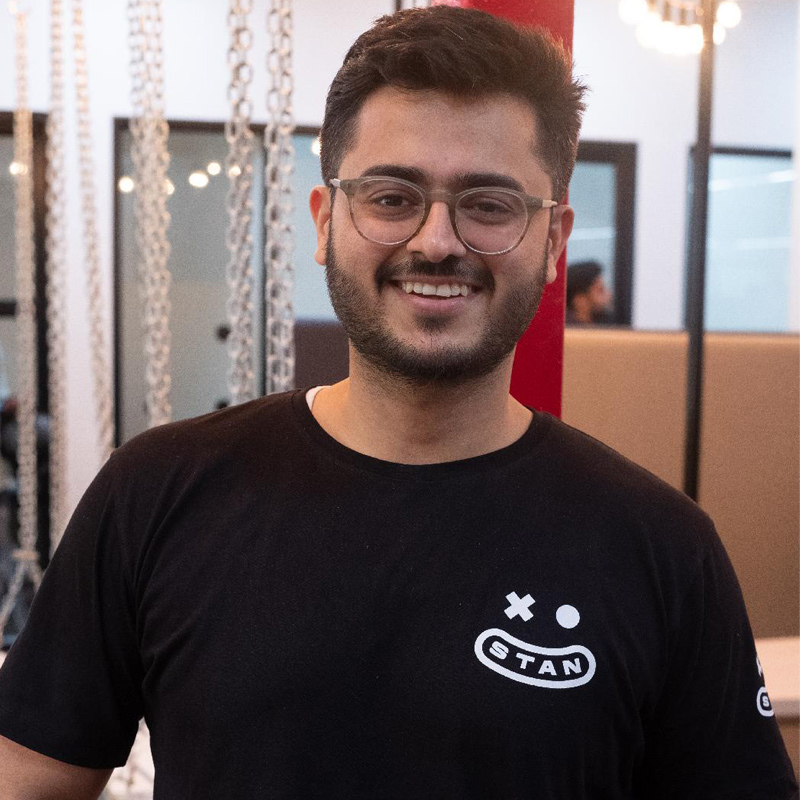
    The author of the article is Stan co-founder and CEO Parth Chadha.

  • HeyHey! is helping brands across the entertainment industry enter web3 and navigate new waters: founder & CEO Caleb Franklin

    HeyHey! is helping brands across the entertainment industry enter web3 and navigate new waters: founder & CEO Caleb Franklin

    Mumbai: HeyHey! is a leading-edge online platform that facilitates new forms of experiential engagement between fans and global celebrities, creators, and influencers by utilising new-age tech like web3, blockchain, and NFTs to create digital products that are ahead of the curve. The platform also acts as a gateway through which fans can discover and directly interact with their favourite stars, while empowering celebrities to develop memorable bespoke experiences for their fanverse through personalised video messages and shoutouts.

    Having launched in key international markets like the US and Japan, HeyHey!’s foray into India brings with it an appreciation of the celeb-fan relationship nuances that may differ from one market to another.

    HeyHey! uses its innovative tech to partner with brands, celebrities, and entertainment entities to deliver unmatched experiences with the help of cutting-edge web2 and web3 solutions to fanverses. HeyHey! helps connect fans with over 2,500 artists on its robust roster, ranging from famous Indian names such as Govinda, Amish Tripathi, Sharman Joshi, Evelyn Sharma, Elnaaz Norouzi, Kaneez Surka, Sarfaraz Khan, and K. Gowtham. Apart from films, they also have leading television stars like Rupali Ganguly, Divyanka Tripathi, Rashmi Desai, etc., alongside regional stars like Angel Thomas, Monal Gajjar, Deeksha Joshi, Ojas Rawal, and more, and leading Hollywood stars such as Johnny Depp, Keira Knightley, Michael Fassbender, Mariah Carey, and Tom Hardy.

    Indiantelevision.com caught up with HeyHey! founder and CEO Caleb Franklin. He currently operates out of HeyHey!’s Mumbai office, building an exclusive platform for fan-celebrity engagement with some of India’s biggest talent being present on the platform. In addition to its India operations, HeyHey! is present in Japan and attracts some of the best regional and international talents in sports, media, literature, and art.

    He is also Matter Entertainment founder and CEO. Matter produces premium television and film series for top OTT platforms such as Netflix, Disney+, Amazon, etc. Matter is a premium literary management company representing some of the leading global artists from India in the realms of writing, direction, books, and production.

    Before founding HeyHey!, Franklin spent a decade working for the Creative Artists Agency (CAA). In his time at CAA, Franklin represented the company’s clients across the global landscape of media, entertainment, technology, and sports. Caleb spearheaded many of the agency’s international initiatives and was part of the founding team of CAA’s presence in India and the Middle East.

    Franklin graduated magna cum laude with a B.A. in Social Studies from Harvard University with a minor in South Asian Studies. In his personal time, Franklin is a board member of the Ron Brown Scholar Program and serves on the founding committee of Soho House Mumbai. He currently lives in Mumbai with his wife Anisha and their dog Morty.

    Edited excerpts:

    On the idea of HeyHey!

    Caleb: HeyHey!’s mission is to help fans connect with their favourite celebrities, brands, and creators and provide premium experiences at scale. We started as a platform which helped customers get personalised video messages for their loved ones from our roster of more than 2,500+ celebrities. HeyHey! was a growing and touching success, with requests for every occasion ranging from birthday wishes to marriage proposals, haircuts, and even breaking up with someone! We wanted to bridge the gap between a fan and their favourite creator and also help creators build a community.

    On NFTs and the metaverse, allowing celebrities and brands to build better fan engagement

    Caleb: Until now, we’ve seen the focus in the NFT and metaversal spaces revolve around the collectible and novelty aspects. NFTs and the metaverse are still in their nascencey, but we’ve seen that a lot of our partners are interested in this space and are curious to explore it more. As we see more adoption from fans who want to have a more personal touch from their favourite celebrities and creators starting to realise the potential of dedicated fanverses, we will witness a great shift in how both personal and corporate brands start to develop better trust and cultivate a more organic approach to showcasing their products and services with interactive opportunities and experiential engagement.

    On leveraging these opportunities

    Caleb: Staying true to our mission of providing premium experiences to fans at scale, we realised the power of web3. Our aim is to build fanverses, communities, and a platform where fans and celebrities get to build a deeper connection. The concept behind HeyHey! NFTs is to allow fans to have pathways into their favourite celebrity’s community with exclusive perks that are only available upon ownership of that artist’s NFT.

    Apart from making the NFT community in general bigger, we’re trying to provide community building provisions to our NFT creators as well as NFT enthusiasts. HeyHey!’s idea, however, includes having global artists and a global fanbase. We want to create a fanverse where the confines of geographical barriers are broken and both artists and fans worldwide can come under one umbrella.

    On the celebrities that HeyHey! is working with currently

    Caleb: We help connect fans with over 2,500+ Indian and global artists from our network, ranging from famous Indian names such as Govinda, Amish Tripathi, Sharman Joshi, Evelyn Sharma, Elnaaz Norouzi, Kaneez Surka, Sarfaraz Khan, K. Gowtham, Rupali Ganguly, Divyanka Tripathi, Rashmi Desai, etc., to regional stars like Angel Thomas, Monal Gajjar, Deeksha Joshi, Ojas Rawal, to Hollywood stars like Johnny Depp, Keira Knightley, Michael Fassbender, Mariah Carey, and Tom Hardy.

    On creating awareness among celebrity fans to use its service

    Caleb: Our previous collaborations have worked as a great case study for us to pitch to other celebrities and potential NFT creators. Being able to show them both what the market is like and what we have done with other artists only gives them a better understanding of what the space is like and they can further decide upon things.

    Creators are now understanding the several use cases web3 offers that are not available in existing web2 solutions. Fans are also understanding the importance of dedicated fanverses and communities built around creators they follow/brands they use and feel like a part of their journey.

    On the experiences that fans can get with celebrities using NFTs that otherwise would not be possible

    Caleb: To give a simple example, we’ve gamified Sunny Leone’s ‘I Dream Of Sunny’ NFTs, which gives its owners many benefits that go above and beyond monetary, ranging from coffee dates, set visits, joining her on Instagram live, attending a private yacht party with her, to even going skydiving with her! All these benefits depend on the category of the NFTs the enthusiasts have purchased.

    One of the NFT owners, who lives in another country, was a winner in one of the weeks, and he got to go on an Instagram live with her. To the ones who didn’t know how he did it, he was flooded with queries about how he got an opportunity like that. Sunny too received many DMs asking her how they would also get an opportunity to go live with her. That’s the power of having ownership of her NFT.

    We don’t think that the same would be possible otherwise, because when you think of it, she has millions of followers and she would not go through her list to select a person who she would want to go live with. Also, there would be no purpose. It is because of the NFT that a particular owner owned that enabled him to go live with her. These NFTs allow Sunny to get to know her fans up close and personally, and vice versa.

    On the impact that NFTs and the metaverse will have on the M&E industry

    Caleb: NFTs and the metaverse are already here, having an immense impact on how the media and entertainment businesses approach new avenues. We see it as various stakeholders in the industry are looking to get in on the action, whether to use it as a tool for showcasing an already-existing product or giving users a preview of what they can expect.

    That’s not all. We can see a lot of entertainment businesses incorporating NFTs and metaverse in a way that it’s an extension of what they already offer, essentially helping to offer a more holistic and complete experience.

    In the very near future, we are going to see a lot more NFT projects from big and small creators alike, bringing great ideas to the forefront using the crowdfunding method. This comes through the power of community and the feeling of being part of something you genuinely believe has great potential to be something remarkable, and we believe this is just the tip of the iceberg in how the industry can be part of this movement.

    On the opportunity that HeyHey! sees in India

    Caleb: India as a market has always been selective in what appeals to the masses and if it’s new or revolutionary enough to warrant learning something entirely new. Web3 is the same and in the last two years, we’ve already seen so many ambitious projects from different industries utilising web3. It’s only a matter of time before the infrastructure is adopted all over, and when that happens, our consumers are going to enjoy some exceptional experiences by being part of like-minded communities.

    We want to approach this section of the market and help provide the tools to make such a reality accessible and usable. We are confident that India is ready to be more immersed in web3 and the metaverse.

    On the collaboration with Viacom18 Studios

    Caleb: Viacom18 Studios has been a behemoth in the industry for many years. As a market leader, HeyHey! helped them understand the importance of community building and how web3 was a way of building this long-lasting community. With a full proof concept and plan in place, Viacom18 Studio’s Shabaash Mithu was the perfect opportunity for them to step into the web3 space. With a solid understanding of how we would have liked this to be, and with HeyHey! as their technological partner, we made it a point to show them the path and process.

    On the other projects that HeyHey! is working on in India

    Caleb: We have some exciting projects in our pipeline. A lot of our partners are curious to understand the potential of web3 and NFTs. HeyHey! is helping brands across the entertainment industry enter web3 and navigate new waters. As showcased with our partnership with The Olive Group, we’re also gearing up to put into production some projects for top-tier brands who want to re-imagine their own existence in the upcoming (virtual) reality.

    We’re working with some hard-working teams who want to ensure that they offer their consumers the best possible version of their products they can, whether the consumer is at their store or at home staring at their phone screen.

    On some of the misconceptions that exist when it comes to NFTs

    Caleb: Due to the high NFT prices we’ve seen in the media, there has been a common misconception that NFTs are only art, a way to “get rich quick” or a scam. This has led to people buying NFTs as an investment with the hope or expectation that they’ll increase in price. We have seen a trend of multiple industries, including art, gaming, ticketing, and entertainment, venturing into the web3 space to understand more about it and explore the multiple use cases it can offer.

    HeyHey! NFTs will provide every buyer with utilities, including offline exclusive experiences and the opportunity to join a community of like-minded individuals. Our agenda is to help brands and creators create a community around themselves and also for fans to feel deeply connected.

    On web3

    Caleb: We see web3 as a means for creators and brands to build communities around themselves or their IPs and for fans to feel more connected and build a deeper relationship with these creators and brands. HeyHey! wants to empower these creators and brands to help build these fanverses and communities.

  • House of Gaming joins hands with blockchain venture Bluewheel Capital & Wharf Street Studios

    House of Gaming joins hands with blockchain venture Bluewheel Capital & Wharf Street Studios

    Mumbai: House of Gaming, a next-generation technology firm aimed at developing esports in India through its three verticals: Indian Gaming League, Hefty Games, and GameGods, has partnered with Bluewheel Capital and Wharf Street Studios. The aim is to bring blockchain gaming to the mainstream. The association’s goal is to build a reputation for the House of Gaming enterprise’s recent ventures into Age of Tanks ( Bluewheel Capital) and Epiko Regal (a fantasy world influenced by and based on Indian mythology created by Wharf Street Studios).

    The House of Gaming’s alliance with Bluewheel Capital and Wharf Street Studios will strengthen its efforts to support and drive Web3 gaming adoption across the globe. The collaboration also aims to kickstart and fuel the gaming and NFT ecosystems of Hefty Games with exclusive P2E (Play to Earn) tournaments. Fostering higher engagement, in addition to the existing portfolio of Lokesh, TSG, Gyan, AS Gaming, and Team Orangutan Elite, House of Gaming also intends to release NFT trading cards, allowing gamers to own collectibles from their favourite gamers.

    Because of its collaboration with Polygon and eDAO, Hefty Games has established itself as a one-stop shop for all forms of digital art in the gaming world on the blockchain. Polygon, which is also the leading Ethereum scaling and infrastructure development platform, will help to engage gamers and bring them closer to industry titans like Hindustan Talkies, the media conglomerate, and Hungama, one of South Asia’s largest digital media entertainment companies. At Hefty Games, we aim to get things going and keep them going. Expanding partnerships in the worlds of collectibles and blockchain, this collaboration will help India realise the positive economic impact of blockchain gaming while transforming House of Gaming into a multi-service entertainment application.

    Contributing to the development of the most diverse portfolio of gaming titles via the blockchain association, House of Gaming will aim to elevate itself to be a powerhouse for providing entertainment across esports, games, and blockchain technology.

    House of Gaming co-founder and CEO Yash Pariani said, “Our strategic alliance with Bluewheel Capital and Wharf Street Studios is a gateway to newer means of engagement in the esports community. With the widespread adoption of Web3 gaming, there is even greater momentum and scope added to the sector. We are looking forward to creating a strategic impact towards enhancing the future of gaming.”

    Bluewheel Capital CEO V Agarwal said, “Our partnership with House of Gaming will help incentivize engagement, allowing players to turn blockchain into a potential source of income. With the increasing difficulties of cryptocurrency and Web3 gaming, its true potential remains unrealized. The collaboration will revitalise the industry to create advantages in the NFT space.”

    Wharf Street Studio founder and CEO Venkatesh Krishna Murthy said, “Our collaboration with House of Gaming only increases our chances of expanding the blockchain world and making NFT Games an important source of revenue distribution for an influx of upcoming games. Epiko Regal is one such competitive title, and our goal is to give this game a significant stake in the blockchain ecosystem.”

    Recently, House of Gaming collaborated with the blockchain giant Polygon to introduce gaming NFTs via Hefty Games. Following the recent announcement of Hefty Art bringing MF Husain’s paintings into the metaverse, its collaboration with Polygon and eDAO will help bring gaming enthusiasts closer to industry titans such as Hindustan Talkies, the media conglomerate, and digital media entertainment company Hungama.

  • Viacom18 Studios partners with HeyHey! to launch NFTs

    Viacom18 Studios partners with HeyHey! to launch NFTs

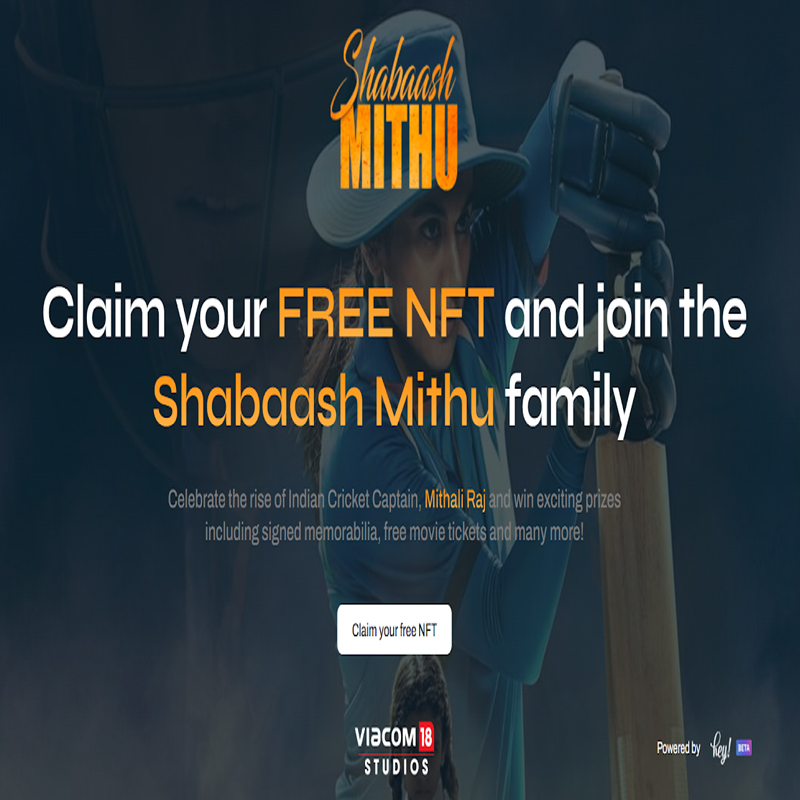
    Mumbai:  Motion picture studio Viacom18 Studios has collaborated with HeyHey!, an online platform powering experiential engagement between celebs, influencers, creators and brands globally via new-age tech – to venture into the Web3 space. In line with this, the film studio has launched its first-ever NFT project called the “Shabaash Mithu.” This is an NFT collection. HeyHey! is its technology partner.

    “Shabaash Mithu” stars Taapsee Pannu in the lead role. It is directed by Srijit Mukherji and produced by Viacom18 Studios. The film is based on the life of the former Indian cricket team captain, Mithali Raj, who is considered one of the greatest female cricketers in the Indian squad. The film chronicles the ups and downs and moments of glory in her life. Intending to provide fans and audiences with a holistic experience of this film that transcends beyond the movie screens, Viacom18 Studios is foraying into the Web3 world. For this, the media company has partnered with HeyHey! to launch its “Shabaash Mithu” collection of NFTs and, in turn, build a thriving Web3 community of movie fans.

    NFT holders including audiences and enthusiasts will be allowed to claim their free NFTs that will allow them to be a part of the “Shabaash Mithu” NFT film club and enjoy several benefits alongside the updates they will be receiving on the same. The other set of NFTs that consumers can purchase will give buyers exclusive access to unlock offline experiences.

    While talking about the partnership with HeyHey! and the NFT collection launch, Viacom18 Studios COO Ajit Andhare said, “Good storytelling makes for an immersive experience, and we are taking it one step further by layering digitally forward engagement avenues. Our partnership with HeyHey! to launch an NFT collection for “Shabaash Mithu” is a unique collaboration that will appeal to cricket enthusiasts and the digitally savvy audiences.”

    HeyHey! Founder and CEO Caleb Franklin mentioned, “NFT is the future of experiencing experiential engagement in the virtual world and has opened an infinite number of opportunities in building brand value. We are delighted to collaborate with Viacom18 Studios, and we believe that we will empower the fan base by providing a personalised and premium experience with our new-age Web 3.0 technology. Our technology experts have dedicated themselves to making the launch a success, and we believe that it will bring triumph for both HeyHey! and Viacom18 Studios in building a unison community.”

    Previously, HeyHey! had partnered with actress Sunny Leone for her “I Dream Of Sunny” NFT collection and The Olive Group of Restaurants’ “Oliverse” to mint NFTs for them. Besides that, the platform said that it is on the verge of signing artists, production houses and brands to empower them to create their fanverses – thereby building a strong track record for itself in the dramatically growing Web3 space.