Tag: NFDC

  • NFDC Bazaar: Content evolution through socio-eco changes, expanding genres & innovative distribution to be discussed

    NFDC Bazaar: Content evolution through socio-eco changes, expanding genres & innovative distribution to be discussed

    MUMBAI: The 10th edition of NFDC Film Bazaar to be held from 20 to 24 November, 2016, at Marriott, Goa, will have a series of interesting and engaging ‘Knowledge Series’ sessions this year.

    This year a lot of focus is on technology & its impact on narratives, digitalisation and the expanding scope of monetising films (Indie included) and of course New Voices as well as the tried and tested ones — how do they hope to tell their stories and experiment with form, what are these stories as well as how do they propose to build their viewer community and engage them.

    Film Bazaar 2016 will have a Virtual Reality Sidebar and Film Bazaar VR Lounge powered by Samsung GearVR in Knowledge Series. The VR Sidebar will have three Knowledge Series sessions including a presentation by Michel Reilhac (ex-Head of Film Acquisitions at Arte France curated the VR NEXT sidebar at Cannes 2016, and has also directed 6 VR shorts) on Virtual Reality technology.

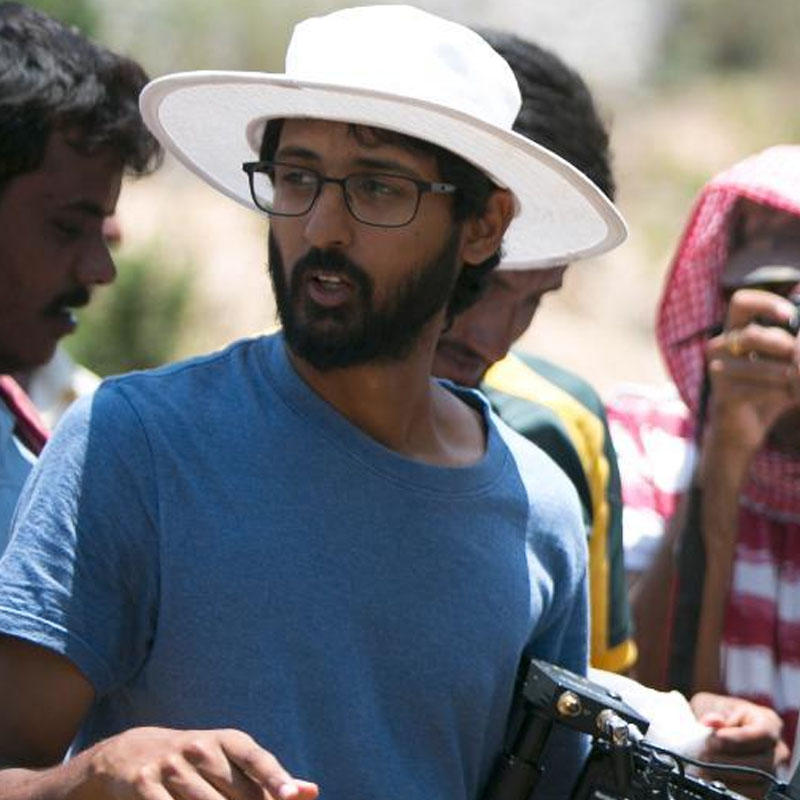
    Thithi director Raam Reddy, Sairaat director Nagraj Manjule and Kothanodi director Bhaskar Hazarika will be a part of a panel discussion on stories that are being told in Regional and Small Town India. Google, YouTube’s session will be on Building Communities and Icons and Facebook to have a session on Marketing the Indie Film and Building Communities.

    Knowledge Series, which consists of specially curated presentations, lectures and panel discussions with key decision makers and market drivers of the film industry, will have a Virtual Reality Sidebar.

    This year Film Bazaar takes the thought forward with two key Knowledge Series sessions with two of the most engaging and popularly used platforms –

    1. Google YouTube – Building Communities and Icons In Conversation with YouTube India Head of Content Operations Satya Raghavan

    2. Facebook – Marketing the Indie Film and Building Communities Presentation by Facebook Head, Media Partnerships, Saurabh Doshi

    Over multiple sessions during the four days of Film Bazaar, the Knowledge Series covers a wide range of topics including (but not limited to) the evolution of content through changing socio–economic structures, expanding genres, conventional and innovative platforms of distribution, various emerging co-production possibilities, international collaborations and treaties, and the art of navigating various film festivals and markets.

    Among the speakers are business unit heads of major media corporations (studios/producers/distributors etc.), top executives of organizations connected with the film industry, independent aggregators and content providers from across the world.

  • NFDC Bazaar: Content evolution through socio-eco changes, expanding genres & innovative distribution to be discussed

    NFDC Bazaar: Content evolution through socio-eco changes, expanding genres & innovative distribution to be discussed

    MUMBAI: The 10th edition of NFDC Film Bazaar to be held from 20 to 24 November, 2016, at Marriott, Goa, will have a series of interesting and engaging ‘Knowledge Series’ sessions this year.

    This year a lot of focus is on technology & its impact on narratives, digitalisation and the expanding scope of monetising films (Indie included) and of course New Voices as well as the tried and tested ones — how do they hope to tell their stories and experiment with form, what are these stories as well as how do they propose to build their viewer community and engage them.

    Film Bazaar 2016 will have a Virtual Reality Sidebar and Film Bazaar VR Lounge powered by Samsung GearVR in Knowledge Series. The VR Sidebar will have three Knowledge Series sessions including a presentation by Michel Reilhac (ex-Head of Film Acquisitions at Arte France curated the VR NEXT sidebar at Cannes 2016, and has also directed 6 VR shorts) on Virtual Reality technology.

    Thithi director Raam Reddy, Sairaat director Nagraj Manjule and Kothanodi director Bhaskar Hazarika will be a part of a panel discussion on stories that are being told in Regional and Small Town India. Google, YouTube’s session will be on Building Communities and Icons and Facebook to have a session on Marketing the Indie Film and Building Communities.

    Knowledge Series, which consists of specially curated presentations, lectures and panel discussions with key decision makers and market drivers of the film industry, will have a Virtual Reality Sidebar.

    This year Film Bazaar takes the thought forward with two key Knowledge Series sessions with two of the most engaging and popularly used platforms –

    1. Google YouTube – Building Communities and Icons In Conversation with YouTube India Head of Content Operations Satya Raghavan

    2. Facebook – Marketing the Indie Film and Building Communities Presentation by Facebook Head, Media Partnerships, Saurabh Doshi

    Over multiple sessions during the four days of Film Bazaar, the Knowledge Series covers a wide range of topics including (but not limited to) the evolution of content through changing socio–economic structures, expanding genres, conventional and innovative platforms of distribution, various emerging co-production possibilities, international collaborations and treaties, and the art of navigating various film festivals and markets.

    Among the speakers are business unit heads of major media corporations (studios/producers/distributors etc.), top executives of organizations connected with the film industry, independent aggregators and content providers from across the world.

  • PM urges TV Channels to aid Swachh Bharat programme, Big B in new promo

    PM urges TV Channels to aid Swachh Bharat programme, Big B in new promo

    NEW DELHI: Prime Minister today urged television channels to participate pro-actively in the Swachh Bharat programme as creativity may lead to new ideas and new slogans which can inspire people.

    Referring to the Short Films Competition on the theme “Swachh Bharat” announced recently by the Government, he said during his monthly ‘Monthly ki Baat’ on All India Radio that filmmakers no longer needed large studios or sets to shoot a film, and this could be done even on a mobile phone.

    He said the winning entries will be announced in a special felicitation programme to be held in New Delhi on 2 October 2016 which also marks Gandhi Jayanti.

    Entries have been invited by the National Film Development Corporation on behalf of Information & Broadcasting Ministry by 10 September 2016.

    The film can be made in Hindi, English or any of the listed official languages of India.
    The Best Film will be awarded a cash prize of Rs 10 lakh and a certificate. Three Second Best Films will be awarded Rs 5 lakh each and six Third Best Films will be awarded Rs 2 lakh each.

    Meanwhile, the NFDC today aired a commercial on Doordarshan where megastar Amitabh Bachchan urged young filmmakers to participate enthusiastically in the Festival. In his characteristic touch of humour, he said he hoped he would be able to go to one of the filmmakers one day to seek a role for himself.

    To participate in the competition, interested applicants can log onto www.nfdcindia.com or write to sbsff@nfdcindia.com

  • PM urges TV Channels to aid Swachh Bharat programme, Big B in new promo

    PM urges TV Channels to aid Swachh Bharat programme, Big B in new promo

    NEW DELHI: Prime Minister today urged television channels to participate pro-actively in the Swachh Bharat programme as creativity may lead to new ideas and new slogans which can inspire people.

    Referring to the Short Films Competition on the theme “Swachh Bharat” announced recently by the Government, he said during his monthly ‘Monthly ki Baat’ on All India Radio that filmmakers no longer needed large studios or sets to shoot a film, and this could be done even on a mobile phone.

    He said the winning entries will be announced in a special felicitation programme to be held in New Delhi on 2 October 2016 which also marks Gandhi Jayanti.

    Entries have been invited by the National Film Development Corporation on behalf of Information & Broadcasting Ministry by 10 September 2016.

    The film can be made in Hindi, English or any of the listed official languages of India.
    The Best Film will be awarded a cash prize of Rs 10 lakh and a certificate. Three Second Best Films will be awarded Rs 5 lakh each and six Third Best Films will be awarded Rs 2 lakh each.

    Meanwhile, the NFDC today aired a commercial on Doordarshan where megastar Amitabh Bachchan urged young filmmakers to participate enthusiastically in the Festival. In his characteristic touch of humour, he said he hoped he would be able to go to one of the filmmakers one day to seek a role for himself.

    To participate in the competition, interested applicants can log onto www.nfdcindia.com or write to sbsff@nfdcindia.com

  • Prasar Bharati’s grants-in-aid gets substantial increase, first-time separate allocation for strengthening broadcast services

    Prasar Bharati’s grants-in-aid gets substantial increase, first-time separate allocation for strengthening broadcast services

    NEW DELHI: The grants-in-aid for Prasar Bharati have gone up again for the third time over the last few years from the revised estimates of Rs 2708.29 crore in 2015-16 to Rs 3056.86 for 2016-17.

    In addition, there is a grant-in-aid of Rs 52 crore to Doordarshan’s Kisan Channel, which is double that of aid last year.

    In addition, there is an investment of Rs 200 crore in the pubcaster, which is the same as last year. Though the previous government had stopped investments in the pubcaster, Finance Minister Arun Jaitley had re-introduced this in 2015-16 after a gap of two years. 

    An explanatory note says the grants-in-aid is being provided to cover the gap in resources of Prasar Bharati in meeting its revenue expenditure.

    The grant in aid for Prasar Bharati in 2015-16 was Rs 2824.55 crore for 2015-16, apart from the grant-in-aid of Rs 26.26 crore in the revised estimates (as against the budgetary allocation of Rs 45 crore) on Kisan Channel.

    Expenditure on salaries of Prasar Bharati has fallen on the shoulders of the Government since all Prasar Bharati employees who were in employment as on 5 October, 2007 have been given deemed deputation status.

    The total budget of the Information and Broadcasting Ministry has been raised to Rs 4083.63 crore, which is a small raise in comparison to Rs 3711.11 crore for 2015-16, though the revised estimates for the year show an expenditure of Rs 3588.58 crore. 

    A major effort this year was to reduce the number of heads under which allocations have been made over the years. For example, there are no separate allocation for film certification or Press Information Services as in previous years.

    Interestingly, there is a separate allocation of Rs 30.83 crore for strengthening of broadcasting services, which includes Rs 28.83 on information and publicity and the balance on building and machinery. This provides for Electronic Media Monitoring Centre, contribution to the Asian Institute of Broadcasting Development, Community Radio movement in India, Digitalisation, Building and Machinery and private FM Radio Stations.

    The allocation under ‘Secretariat – Social services’ has been cut down to Rs 70.32 crore as against the budgetary allocation of Rs 235.23 crore in 2015-16 as the revised estimates show an expenditure of just Rs 91.44 crore. The explanatory note says that from 2016-17, this covers the expenditure under Non-Plan activities only which includes provision for Main Secretariat and Principal Accounts office.

    The allocation for the film sector has been raised to Rs 268.53 crore and covers art and culture, information and publicity, which takes the maximum share of Rs 213.64 crore. Subjects under this head include the National Film Heritage Mission, anti-piracy measures, promotion of Indian cinema overseas, production of films and documentaries, and setting up a centre of excellence for animation, gaming and visual effects. The explanatory note adds that Secretariat – Social services also covers expenses on development of community radio, and development support to the north-east as well as Jammu and Kashmir and ‘other identified areas.’

    Thus, there is an allocation of Rs 33.31 crore for Mass Communications, which covers (a) Indian Institute of Mass Communication, an autonomous body, which imparts training in mass media and conducts courses in journalism, and (b) New Media Wing, which collects basic information on subjects of media interest for providing assistance to the Ministry and to its Media Units, Indian Missions abroad and newspapers and media agencies.

    There is another provision of Rs 491.78 crore, which includes expenditure (a) Directorate of Advertising and Visual Publicity – for planning and executing publicity campaigns through advertising and other printed materials, as well as through Radio and Televisions, exhibitions and other outdoor publicity media; (b) Press Information Bureau – which serves as a link between the Government and the Press and attends to the publicity and public relations requirements of various Ministries/Departments, including grants to Press Council of India, a statutory organisations seeking to preserve press; (c) Field Publicity – covering expenditure of Directorate of Field Publicity and its district level field units engaged in inter-personal developmental communications through films shows, live media programmes, photo displays and seminars; (d) Song and Drama Division – for creating awareness amongst the masses, particularly in rural areas, about various activities of national developments of units spread all over the country; (e) Publications – for publishing priced books, journals and other printed material in English, Hindi and regional languages on a wide variety of subjects and ‘Employment News/Rozgar Samachar;’ (f) Information Wing Plan Schemes – for training, international media programme, Policy related studies etc.; and (g) Photo Division.

    For the seventh year in a row, the government has not announced any investment in the National Film Development Corporation (NFDC).

    There is a marginal increase in the lump sum provision for projects/schemes for development of North-eastern areas including Sikkim to Rs 80 crore against Rs 75 crore last year.
  • Prasar Bharati’s grants-in-aid gets substantial increase, first-time separate allocation for strengthening broadcast services

    Prasar Bharati’s grants-in-aid gets substantial increase, first-time separate allocation for strengthening broadcast services

    NEW DELHI: The grants-in-aid for Prasar Bharati have gone up again for the third time over the last few years from the revised estimates of Rs 2708.29 crore in 2015-16 to Rs 3056.86 for 2016-17.

    In addition, there is a grant-in-aid of Rs 52 crore to Doordarshan’s Kisan Channel, which is double that of aid last year.

    In addition, there is an investment of Rs 200 crore in the pubcaster, which is the same as last year. Though the previous government had stopped investments in the pubcaster, Finance Minister Arun Jaitley had re-introduced this in 2015-16 after a gap of two years. 

    An explanatory note says the grants-in-aid is being provided to cover the gap in resources of Prasar Bharati in meeting its revenue expenditure.

    The grant in aid for Prasar Bharati in 2015-16 was Rs 2824.55 crore for 2015-16, apart from the grant-in-aid of Rs 26.26 crore in the revised estimates (as against the budgetary allocation of Rs 45 crore) on Kisan Channel.

    Expenditure on salaries of Prasar Bharati has fallen on the shoulders of the Government since all Prasar Bharati employees who were in employment as on 5 October, 2007 have been given deemed deputation status.

    The total budget of the Information and Broadcasting Ministry has been raised to Rs 4083.63 crore, which is a small raise in comparison to Rs 3711.11 crore for 2015-16, though the revised estimates for the year show an expenditure of Rs 3588.58 crore. 

    A major effort this year was to reduce the number of heads under which allocations have been made over the years. For example, there are no separate allocation for film certification or Press Information Services as in previous years.

    Interestingly, there is a separate allocation of Rs 30.83 crore for strengthening of broadcasting services, which includes Rs 28.83 on information and publicity and the balance on building and machinery. This provides for Electronic Media Monitoring Centre, contribution to the Asian Institute of Broadcasting Development, Community Radio movement in India, Digitalisation, Building and Machinery and private FM Radio Stations.

    The allocation under ‘Secretariat – Social services’ has been cut down to Rs 70.32 crore as against the budgetary allocation of Rs 235.23 crore in 2015-16 as the revised estimates show an expenditure of just Rs 91.44 crore. The explanatory note says that from 2016-17, this covers the expenditure under Non-Plan activities only which includes provision for Main Secretariat and Principal Accounts office.

    The allocation for the film sector has been raised to Rs 268.53 crore and covers art and culture, information and publicity, which takes the maximum share of Rs 213.64 crore. Subjects under this head include the National Film Heritage Mission, anti-piracy measures, promotion of Indian cinema overseas, production of films and documentaries, and setting up a centre of excellence for animation, gaming and visual effects. The explanatory note adds that Secretariat – Social services also covers expenses on development of community radio, and development support to the north-east as well as Jammu and Kashmir and ‘other identified areas.’

    Thus, there is an allocation of Rs 33.31 crore for Mass Communications, which covers (a) Indian Institute of Mass Communication, an autonomous body, which imparts training in mass media and conducts courses in journalism, and (b) New Media Wing, which collects basic information on subjects of media interest for providing assistance to the Ministry and to its Media Units, Indian Missions abroad and newspapers and media agencies.

    There is another provision of Rs 491.78 crore, which includes expenditure (a) Directorate of Advertising and Visual Publicity – for planning and executing publicity campaigns through advertising and other printed materials, as well as through Radio and Televisions, exhibitions and other outdoor publicity media; (b) Press Information Bureau – which serves as a link between the Government and the Press and attends to the publicity and public relations requirements of various Ministries/Departments, including grants to Press Council of India, a statutory organisations seeking to preserve press; (c) Field Publicity – covering expenditure of Directorate of Field Publicity and its district level field units engaged in inter-personal developmental communications through films shows, live media programmes, photo displays and seminars; (d) Song and Drama Division – for creating awareness amongst the masses, particularly in rural areas, about various activities of national developments of units spread all over the country; (e) Publications – for publishing priced books, journals and other printed material in English, Hindi and regional languages on a wide variety of subjects and ‘Employment News/Rozgar Samachar;’ (f) Information Wing Plan Schemes – for training, international media programme, Policy related studies etc.; and (g) Photo Division.

    For the seventh year in a row, the government has not announced any investment in the National Film Development Corporation (NFDC).

    There is a marginal increase in the lump sum provision for projects/schemes for development of North-eastern areas including Sikkim to Rs 80 crore against Rs 75 crore last year.
  • Benegal Committee on film certification invites public views within guidelines’ ambit

    Benegal Committee on film certification invites public views within guidelines’ ambit

    NEW DELHI: The Shyan Benegal Committee examining the certification process followed by the Central Board of Film Certification (CBFC) set up early this month has sought the views and suggestions of the public in this regard.


    While noting that the views should be restricted to two pages covering all important aspects, the notice on the Information and Broadcasting Ministry website says the comments must be “within the ambit of the existing Act, Rules and guidelines, which have withstood the scrutiny of various Courts.”


    The comments may be forwarded to NFDC to rajani@nfdcindia.com.               


    The notice also gives the terms of reference of the Committee and says the guidelines are expected to provide aholistic interpretation of the provisions of the Cinematograph Act and the Rules.The present guidelines have also been reproduced in the notice.


    The other Members of the Committee include filmmaker Rakeysh Omprakash Mehra, creative director Piyush Pandey, media veteran Bhawana Somayya, NFDC MD Nina Lath Gupta and Joint Secretary (Films) Sanjay Murthy as Member Convenor. The Committee has been requested to submit its recommendations within two months.  


    Interestingly, although media reports had indicated that Gautam Ghose and Kamal Haasan had been included as members at the request of Benegal, the notice on the Ministry website makes no mention of this. 


    When setting up the Committee in later in a meeting with I&B Minister Arun Jaitley, Minister of State Rajyavardhan Rathore and Secretary Sunil Arora, it had been stated that the aim was to suggest a paradigm that ensures that artistic creativity and freedom do not get stifled/curtailed even as films are certified.


    Noting that “in most countries of the world there is a mechanism/process of certifying feature films and documentaries,” an official release had also said that the attempt should also be that “the people tasked with the work of certification understand these nuances.”


    The recommendations of this Committee are expected to provide a holistic framework and enable those tasked with the work of certification of films to discharge their responsibilities keeping in view this framework. 


    During their deliberations, the Committee would be expected to take note of the best practices in various parts of the world, especially where the film industry is given sufficient and adequate space for creative and aesthetic expression. 


    The Committee would recommend broad guidelines / procedures under the provisions of the Cinematograph Act 1952 / Rules for the benefit of the chairperson and other members of the Screening Committee. The staffing pattern of Central Board of Film Certification would also be looked into in an effort to recommend a framework which would provide efficient / transparent user friendly services. 


    This is not the first time that such a committee has been set up. After earlier attempts, the last Committee that examined similar issues was headed by the eminent Mukul Mudgal. However, no action has been taken on that report submitted in 2013.

  • Benegal Committee on film certification invites public views within guidelines’ ambit

    Benegal Committee on film certification invites public views within guidelines’ ambit

    NEW DELHI: The Shyan Benegal Committee examining the certification process followed by the Central Board of Film Certification (CBFC) set up early this month has sought the views and suggestions of the public in this regard.


    While noting that the views should be restricted to two pages covering all important aspects, the notice on the Information and Broadcasting Ministry website says the comments must be “within the ambit of the existing Act, Rules and guidelines, which have withstood the scrutiny of various Courts.”


    The comments may be forwarded to NFDC to rajani@nfdcindia.com.               


    The notice also gives the terms of reference of the Committee and says the guidelines are expected to provide aholistic interpretation of the provisions of the Cinematograph Act and the Rules.The present guidelines have also been reproduced in the notice.


    The other Members of the Committee include filmmaker Rakeysh Omprakash Mehra, creative director Piyush Pandey, media veteran Bhawana Somayya, NFDC MD Nina Lath Gupta and Joint Secretary (Films) Sanjay Murthy as Member Convenor. The Committee has been requested to submit its recommendations within two months.  


    Interestingly, although media reports had indicated that Gautam Ghose and Kamal Haasan had been included as members at the request of Benegal, the notice on the Ministry website makes no mention of this. 


    When setting up the Committee in later in a meeting with I&B Minister Arun Jaitley, Minister of State Rajyavardhan Rathore and Secretary Sunil Arora, it had been stated that the aim was to suggest a paradigm that ensures that artistic creativity and freedom do not get stifled/curtailed even as films are certified.


    Noting that “in most countries of the world there is a mechanism/process of certifying feature films and documentaries,” an official release had also said that the attempt should also be that “the people tasked with the work of certification understand these nuances.”


    The recommendations of this Committee are expected to provide a holistic framework and enable those tasked with the work of certification of films to discharge their responsibilities keeping in view this framework. 


    During their deliberations, the Committee would be expected to take note of the best practices in various parts of the world, especially where the film industry is given sufficient and adequate space for creative and aesthetic expression. 


    The Committee would recommend broad guidelines / procedures under the provisions of the Cinematograph Act 1952 / Rules for the benefit of the chairperson and other members of the Screening Committee. The staffing pattern of Central Board of Film Certification would also be looked into in an effort to recommend a framework which would provide efficient / transparent user friendly services. 


    This is not the first time that such a committee has been set up. After earlier attempts, the last Committee that examined similar issues was headed by the eminent Mukul Mudgal. However, no action has been taken on that report submitted in 2013.

  • First-ever Govt level film festival on disability ends on Int’l Day for Disabled

    First-ever Govt level film festival on disability ends on Int’l Day for Disabled

    New Delhi, 3 December: A total of 40 films including features, shorts and documentaries were screened at the very first government-run International Film Festival for Persons with Disabilities (IFFPD) which ended today with the presentation of awards by Social Justice and Empowerment Mnister Thaawar Chand Gehlot.


    Minister of State in the Ministry Vijay Sampla and Minister of State for Information and Broadcasting Col Rajyawardhan Rathore were also present.


    Speaking on the occasion, popular actor Vivek Oberoi said that it was heartening to see that the disabled were being brought into the mainstream in an inclusive society. 

    Gehlot said 500 entries had been received for the film festival which in itself a big feat. In the years to come, the Festival may be expanded to achieve more success and achieve its objective of creating greater awareness about the problems of the disabled.


     During the opening day, he had said the Government was taking several initiatives for empowering people with disabilities and one such initiative was the Accessible India Campaign launched by Prime Minister Narendra Modi today, which marks the International day of Persons with Disabilities. This Campaign intends to create a disabled friendly public infrastructure in 50 most important cities to bring the people with disabilities into the mainstream. 


    The festival opened on 1 December at the Sirifort Auditorium with the screening of the film Yellow which is a Marathi film directed by Mahesh Limaye exploring a mother daughter relationship and developmental disability and behaviour of a child. . 

    The films include 10 features, 16 shorts and 14 documentaries and have been selected out of 541 entries received from India and abroad.

     
    The Best Director and Best Film in each of the three categories of Films were felicitated with cash awards with the First and Second Runner Up receiving trophies and citations from the Department.

     
    The awards are:

     
    Best Film (Feature) – (Fiction Feature) – Rs 3 lakh + Trophy + Citation; (Documentary- Feature) – Rs 1 lakh + Trophy + Citation. 
     
    Best Film (Documentary) Rs 2.5 lakh + Trophy + Citation; Best Film (Short) – Rs 1 lakh + Trophy + Citation. 
     
    Best Director (Feature) – Rs 2.5 lakh + Trophy + Citation; Best Director (Documentary) – Rs 1.5 lakh + Trophy + Citation; Best Director (Short) – Rs 1 lakh + Trophy + Citation.

     
    The unique film festival in collaboration with the National Films Development Corporation (NFDC) would also have a workshop on film directing and screen writing etc for children.


    Until now, the non-governmental Brotherhood has been organising WeCare Film Festivals on Disability around the year in collaboration with the United Nations Information Centre for India and Bhutan.  

  • First govt run film festival for disabled to conclude with global Day of Persons with Disability

    First govt run film festival for disabled to conclude with global Day of Persons with Disability

    NEW DELHI: A total of 40 films including features, shorts and documentaries will be screened at the very first government-run International Film Festival for Persons with Disabilities (IFFPD) from 1 to 3 December in the capital.


    Lov Verma, Secretary in the Department of Empowerment of Persons with Disabilities of the Social Justice & Empowerment Ministry said the festival was being organised to recognise the spirit of the persons with disabilities and will show case films that open the world to their mind space, and sensitise on issue relating to disabilities. 


    The films include 10 features, 16 shorts and 14 documentaries and have been selected out of 541 entries received from India and abroad.


    The film festival will conclude on 3 December, which is commemorated worldwide every year as International day of Persons with Disabilities. 


    IFFPD 2015 will felicitate the Best Director and Best Film in each of the three categories of Films with cash awards with the First and Second Runner Up receiving trophies and citations from the Department.


    The awards are:


    Best Film (Feature) – (Fiction Feature) – Rs 3 lakh + Trophy + Citation; (Documentary- Feature) – Rs 1 lakh + Trophy + Citation. 


    Best Film (Documentary) Rs 2.5 lakh + Trophy + Citation; Best Film (Short) – Rs 1 lakh + Trophy + Citation. 


    Best Director (Feature) – Rs 2.5 lakh + Trophy + Citation; Best Director (Documentary) – Rs 1.5 lakh + Trophy + Citation; Best Director (Short) – Rs 1 lakh + Trophy + Citation.


    The unique film festival in collaboration with the National Films Development Corporation (NFDC) would also have workshop on film directing and screen writing etc for children.


    Until now, the non-governmental Brotherhood has been organising WeCare Film Festivals on Disability around the year in collaboration with the United Nations Information Centre for India and Bhutan.