Tag: NFDC

  • MIB merges film media units with NFDC

    MIB merges film media units with NFDC

    Mumbai: The ministry of information and broadcasting (MIB), through three different orders, transferred the mandate of the production of documentaries and short films, organisation of film festivals and the preservation of films to the National Film Development Corp (NFDC), a PSU working under the ministry.

    The government of India has made a budgetary allocation of Rs 1304.52 crore up to 2026 for all these activities, which will be implemented through NFDC. 

    In order to further strengthen the NFDC, it has been decided that the revenues generated by these activities will also accrue to NFDC. The merger of Film Media Units under the Corporation will ensure a balanced and synergised development of the Indian cinema in all its genres- feature films, documentaries, children’s content, animation and short films and will lead to better and efficient utilisation of existing infrastructure and manpower.

    The production of documentaries was earlier done by Films Division. The legacy and brand name of Films Division will be taken further and the production vertical for production of documentaries in the NFDC will be named as ‘Films Division.’

    Similarly, the organisation of film festivals that was the mandate of the Directorate of Films Festivals has been transferred to NFDC. This will bring the organisation of different national and international film festivals under one roof, thereby bringing in more synergy and a focused international outreach. Some of the major upcoming Film Festivals to be organised by NFDC are the Mumbai International Film Festival, International Film Festival of India at Goa, and Children’s Film Festival.

    The Preservation related activities that are carried out by National Film Archives of India have also been transferred to NFDC. The National Film Heritage Mission aiming at digitisation and restoration of films and documentaries will now be implemented by NFDC.

    Bringing all these activities under a single management will reduce the overlap of various activities and ensure better utilisation of public resources. The mandate of production of feature films is already being carried out by NFDC. It will give a strong impetus to the production of films of all genres including feature films, documentaries, children films and animation films; promotion of films through participation in different international festivals and organising various domestic festivals; preservation of filmic content, digitisation and restoration of films; and distribution and outreach activities. The ownership of the assets available with these units will, however, remain with the Government of India.

    Audio Visual Service is one of the 12 Champion Service sectors identified by Dept of Commerce, and the MIB is the nodal Ministry for this sector. Financial incentives for audio-visual co-productions with foreign countries and for promotion of shooting of foreign films in India have also been approved by the Government to further stimulate the Audio-Visual service sector of the economy and promote creative and technical services. This will also be spearheaded by the NFDC through its Film Facilitation Office.

    In December 2020, the union cabinet had decided to merge four of its film media units, namely Films Division, Directorate of Film Festivals, Directorate of Film Festivals, and Children’s Film Society, India with the National Film Development Corporation Ltd. by expanding the Memorandum of Articles of Association of NFDC, which will then carry out all the activities hitherto performed by them with the objective of ensuring synergy, convergence of activities & better utilisation of resources. The ministry had shared these major policy decisions in its interaction with the film industry held in Chennai and Mumbai earlier this month.

  • Filmmaker Shyam Benegal unveils poster of ‘Mujib: The Making of a Nation’

    Filmmaker Shyam Benegal unveils poster of ‘Mujib: The Making of a Nation’

    Mumbai: Veteran filmmaker Shyam Benegal has unveiled a poster of his latest directorial “Mujib – The Making of a Nation,” a biopic on Sheikh Mujibur Rahman, known as the father of the nation in Bangladesh. The film is being made under an audio-visual co-production agreement between the Republic of India and the People’s Republic of Bangladesh and it was extensively shot in India and Bangladesh.

    Benegal released the poster at National Film Development Corp (NFDC) Mumbai, on the occasion of the 102nd birth anniversary of Sheikh Mujibur Rahman.

    Speaking about the film, the director said that it has been a tough task for him to bring Sheikh Mujibur Rahman’s towering life on the screen. “’Mujib – The Making of a Nation’ remains a very emotional film for me. To bring Bangabandhu’s towering life on the reel is a tough task. We have uncompromisingly portrayed his character. Mujib remained a great friend of India,” he shared.

    “I am glad to be working on this feature film. It has always been a fruitful association working with NFDC since its inception and now collaborating with BFDC was a joyful experience,” he further said.

    Written by Atul Tiwari and Shama Zaidi, the film features Arifin Shuvoo in the role of Sheikh Mujibur Rahman. The star cast includes Nusrat Imrose Tisha, Fazlur Rahman Babu, Chanchal Chowdhury, and Nusraat Faria. “Fascinated to be playing the role of Mujib. This is a dream come true. I am honoured to be a part of this iconic project, and to be directed by the legend himself, Shyam Benegal,” said Shuvoo. “I felt the warmth and great hospitality during the production of the film in India. I hope that I have justified the role and the audiences will connect with me and love the film, the way they love Bangabandhu.”

    Sheikh Mujibur Rahman provided the political leadership for the independence of Bangladesh in 1971. At the early stage of his political career, he met Mahatma Gandhi who was a great source of inspiration for him to empower the masses, and inspiration that remained throughout his life. The biopic celebrates Mujib’s life and takes viewers into the course of history to depict the great leader whose accomplishments live on.

    “NFDC has pioneered films by legendary directors who are renowned the world over even today,” remarked NFDC managing director Ravinder Bhakar. “To be associated with Shyam Benegal ji once again for this project is a great pleasure for the Corporation. Mujib – The Making of a Nation shall be a landmark film in NFDC’s history. Indeed, it is a pleasure associating with BFDC for an iconic film.”

    “I am overwhelmed to see the film witness the light of the day. ‘Mujib – The Making of a Nation’ is an emotion for us,” commented BFDC MD Nuzhat Yeasmin. “On behalf of BFDC, I would like to extend my congratulations to our counterparts (NFDC) who have stood with us for making this dream a reality. Bangladesh is eagerly anticipating to watch Shyam Benegal Ji’s version of Bangabandhu’s biopic. He is a legendary filmmaker, greatly admired by all of us.”

  • Cabinet approves merger of four film units with NFDC

    Cabinet approves merger of four film units with NFDC

    NEW DELHI: The government has given its nod to the merger of four of its film media units with the national film development corporation (NFDC).

    The decision was taken in the Cabinet meeting chaired by PM Narendra Modi on Wednesday. As part of the plan, the four units namely films division, directorate of film festivals, national film archives of India, and children’s film society, India will now operate under the NFDC, which will then carry out all the activities hitherto performed by them.

    While this will lead to rationalisation of infrastructure and manpower, the government highlighted that interests of employees of all the concerned media units will be fully taken care of and no employees will be retrenched. A transaction advisor and legal advisor will be appointed to advise on the transfer of assets and employees, and to oversee all aspects of operationalisation of the merger.

    “There was a lot of duplication in activities and there was a need to bring synergy. However, all the work which is currently underway at each of the units will remain in progress. Our aim is to ensure good films reach masses,” said Union information and broadcasting minister Prakash Javadekar post the meeting.

    India is one of the largest film producers in the world with an industry led by the private sector. Over 3,000 films are produced every year. After the merger, all promotion, production and preservation of film content will come under one management.

    The films division, a subordinate office of the ministry of information and broadcasting, is among the oldest of the four media units. It was formed in 1948 to produce documentaries and news magazines for publicity of government programmes and cinematic record of Indian history.

    Formed in 1964, the national film archives is mainly responsible for acquiring and preserving Indian cinematic heritage, and the directorate of film festivals, set up in 1973, focuses on promoting Indian films and cultural exchange. The children’s film society, India is however, an autonomous organisation formed under the Societies Act in 1955 to specifically provide children and young people value-based entertainment through the medium of films.

    All the four media units will now operate as one unit under the NFDC – the central public sector undertaking  which was formed in 1975 for planning and promoting an organised, efficient and integrated development of the Indian film industry. “The vision of the new entity will be to ensure balanced and focused development of Indian cinema in all its genres – feature films, including films/content for the OTT platforms, children's content, animation, short films and documentaries,” stated the government.

  • NFDC’s Raja Chhinal passes on

    NFDC’s Raja Chhinal passes on

    MUMBAI: The National Film Development Corp of India lost one of its flag bearers on 17 May. Deputy general manager Raja Chhinal died in BLK Hospital in New Delhi where he was undergoing treatment after suffering from a brain abscess and undergoing surgery for the infection. He had been ailing for a while. He was only 47 and leaves behind his wife and twin daughters.

    The reason why indiantelevision.com is writing about his is because he was the man who worked on a lot of the Indian independent film maker delegations that made their way to the Cannes Film Festival, Berlinale and MIPCOM and MIPTV, Hongkong Filmart and many other markets. And he was key to the pavilions that were set up there.

    A mild and unassuming professional he was a hardcore long-term NFDC executive and played an important role – along with the then managing director Nina Lath Gupta – in transforming the film funding corporation into the outfit that it is today.  For her, he was the go-to man for international markets. And for Film Bazaar, held in Goa, which has become the annual event for the independent film making community the world over.

    Social media was full of expressions of shock and condolences to Raja.

    “So sad to hear.  A good soul,” wrote Lunchbox  director Ritesh Batra.

    “Very, Very Tragic,” expressed film maker Onir.

    Said Indo German Films founder Stephen Ottenbruch: “ “We will miss you Raja. Rest in peace.”

    “God bless his soul with eternal peace.  A luvly human being…gone too soon.
    Heartfelt condolences to his family. Sad,” opined VR Films joint managing director Krishi Dutt.

    “Dear Raja, There's so much to write and say on the little ways in which you made a difference to the Indian indie scene and to NFDC! All I can say here is thank you, god bless & you will be missed. Rest in Power! And in Peace,” penned MovieSaints India head Anupama Bose, who worked with him closely at NFDC some time back.

    We at indiantelevision.com also offer our condolences to his family and to his colleagues – former and current – at NFDC.

    Picture courtesy: Svetlana on twitter

  • Sundance, World Cinema award-winning Indian docu ‘Machines’ to premiere at MAMI

    Sundance, World Cinema award-winning Indian docu ‘Machines’ to premiere at MAMI

    MUMBAI: After making the World Premiere at Sundance Film Festival 2017 and bagging the World Cinema Documentary Special Jury Award for excellence in Cinematography, Rahul Jain’s internationally acclaimed directorial debut documentary feature, Machines to make its India Premiere in the competition category, India Gold in Mumbai Film Festival (MAMI), 2017.

    Jain says, “I am happy to bring Machines in the place where it was made. I am really looking forward to the film’s reception in India. And what better a place for that than MAMI itself.”

    The film will also be screened at Dharamshala International Film Festival, 2017. The documentary is a sensorial and kaleidoscopic meditation on the meaning of labor in an Indian textile sweatshop.

    The film was selected as one of the Work-in-Progress Lab projects at NFDC’s Film Bazaar 2015 from where it got picked by international buyers and started its film festival journey.

    Since then, the internationally acclaimed docu-feature has been screened and won awards in over 50 prestigious film festivals including Sundance Film Festival.

    The film produced by Jain (Jann Pictures) and co-produced by 
Likka Vehkalahti (IV FILMS LTD), Thanassis Karathanos (Pallas Film) has released theatrically in across the world.

    Synopsis: Our technological times enable us to reduce working hours like never before in human civilization. But, the reduction of effort by technology is a first world reality, where relatively comparable technology with lesser material infrastructure could do the same for a much higher mass of the population.

    ‘Machines’ attempts to examine the experiential reality of factory culture and labor processes through temporal observation. Rather than documenting chronology or history, it creates a portrait of the breathing rhythms of the humans who inhabit the labyrinths of the textile factory with its machines.

    Background: India has domestic migration issues. There is historical inequality in the Indian government’s push for the development of industrial infrastructure. This has led to cases of extreme poverty and wealth being generated in particular states, leading to mass migrations for employment.

    Film Festival journey and Awards: Institute of Contemporary Art – New York City. Frames of Representation – Opening Film. CPH DoX Denmark — Best Film. Thessaloniki Film Festival, Greece – Best Film. Greek Hellenic Parliamentary Award — Human Rights Award. International documentary festival of Amsterdam – Netherlands – Producers Award. Documenta Madrid – Spain — Best Film. Docs Barcelona – Spain – Best Film. MakeDox – Macedonia – Best Moral Approach Award.

  • NFDC to manage International Film Festival of India now

    NFDC to manage International Film Festival of India now

    MUMBAI: International Film Festival of India (IFFI) will no longer be managed by the Directorate of Film Festivals. The information and broadcasting ministry has reportedly transferred operational responsibilities for IFFI to the National Film Development Corporation (NFDC).

    IFFI, which is considered as one of the top 10 film festivals of the world, will be held from 20 to 28 November at Panaji in Goa. Renowned filmmakers Jahnu Barua and Nagesh Kukunoor had been chosen to head the steering and technical committees respectively for IFFI.

    Earlier, a 40-member preview committee with Vivek Agnihotri as the convenor has been set up to continue the process of shortlisting of films for IFFI.

    Indiantelevision.com had reported that the preview committee for shortlisting films for IFFI which had already seen around 150 films had also been dissolved. These changes have coincided with Smriti Zubin Irani taking on additional charge of the information and broadcasting ministry. The preview committee not merely shortlists films from all entries received, but recommends films for competition section which will then be seen by the International jury, and for the Country Focus section of the Festival.

    The NFDC had earlier invited entries for the 11th edition of NFDC Film Bazaar Co-Production Market. The co-production market is for feature film projects with South Asian themes. The regular deadline for the entries is 7 August 2017 but it has been extended to 21 August 2017. The Bazaar will be held from 20 November 2017, the day the festival opens, and close on 24 November 2017.

  • Entries open for NFDC Film Bazaar at IFFI 2017

    NEW DELHI: The National Film Development Corporation (NFDC), which hosts the Film Bazaar during the International Film Festival of India in November in Panaji, has invited entries for the 11th edition of NFDC Film Bazaar Co-Production Market

    The co-production market is for feature film projects with South Asian themes. The regular deadline for the entries is 7 August 2017 but it has been extended to 21 August 2017. The Bazaar will be held from 20 November 2017, the day the festival opens, and close on 24 November 2017.  

    Projects selected for the market will have the opportunity to forge international co-productions, find financial and artistic support, and network with Indian and international film professionals.

    Apart from the co-production market, the Bazaar also has regular market screenings, pitching meets and workshops on different aspects of film trade and film-making.

    Also Read: Monsoon Filmfest: NFDC launches weekly radio programme

    Cannes delegates apprised of opportunities in Indian film industry

  • Monsoon Filmfest: NFDC launches weekly radio programme

    NEW DELHI: In a new initiative to reach out to the people to see meaningful cinema, the National Film Development Corporation has launched a weekly Film Aaj Kal in association with 92.7 Big FM to coincide with its summer Festival of of NFDC Classics.

    The Ground-Activation event – Film Aaj Kal Screenings and Conversations from 15 July to 15 August is aimed at building film communities and empower the viewer.

    92.7 Big FM in ‘Film Aaj Kal’ is aimed at Cinema Education and Awareness programme which has the filmmakers discuss movie classics bringing these films back to the fore.

    The exhibition partners are Harkat Studios in Aram Nagar and G5A Centre for Contemporary Culture at Lower Parel (both, in Mumbai) and the online booking partner is 1018mb.

    Film Aaj Kal is not just about exploring alternative audiences. It’s also about exploring alternate spaces, alternate distribution platforms, and booking and communication platforms.

    The radio show which has already aired six episodes as of 3 July 2017 plays on Sundays on 92.7 Big FM from 4pm to 6pm is hosted by a hugely popular star RJ and cinephile, Siddharth Mishra, and is designed as a series of conversations between filmmakers discussing about the NFDC classics evoking a renewed interest in the films.

    One of the episodes showcased ‘Gaman & Taxi No. 9211’ as films that look at Mumbai through the eyes of a cab driver – both from different eras, in varied styles, addressing different class issues as well – but with an underlying subtext of the immigrant. Another episode was around Salaam Bombay and Chameli – Mira Nair and Sudhir Mishra chatted about the way they approached the Brothel and the Underbelly story.

    ​The programmes broadcast so far:

    1. 28th May – Gaman and Taxi No.9211. Speakers – Muzaffar Ali (telephonic) and Milan Luthria
    2. 4th June – Gandhi and Hey Ram. Speakers – Alyque Padamsee (telephonic) and Kamal Haasan (telephonic)
    3. 11th June – Salaam Bombay and Chameli. Speakers – Mira Nair (telephonic) and Sudhir Mishra
    4. 18th June – Raghu Romeo and Phas Gaye re Obama. Speakers – Rajat Kapoor and Subhash Kapoor
    5. 25th June – Dharavi and Slumdog Millionaire. Speakers – Sudhir Mishra and Saurabh Shukla
    6. 2nd July – Pestonjee and Being Cyrus. Speakers – Vijaya Mehta and Homi Adajania

    This idea is to bring together the community to watch films together and then talk cinema over a glass of Nimbu paani, a cup of tea/coffee or those chutney sandwiches. Film Aaj Kal Screenings and Conversations gives not just the viewers but also the discerning filmmaker and cineastes an opportunity to explore alternate film destinations and also actively engage in conversations around cinema – and not just limit those discussions to a Master-Class or a workshop.

    The current schedule for the event is:

    Venue – Harkat Studios
    ·​15 July​, Sat ​- 7.00 pm – Opening Session & Screening of Om Dar-B-Dar
    ·16 July, Sun – 4.00 PM – Mammo
    ·21 July – Fri – 7.00 PM – Dharavi
    ·22 July – Sat – 12.00 PM – Salaam Bombay
    ·22 July – Sat – 4.00 PM – Gaman
    ·22 July – Sat – 7.30 PM – Mirch Masala
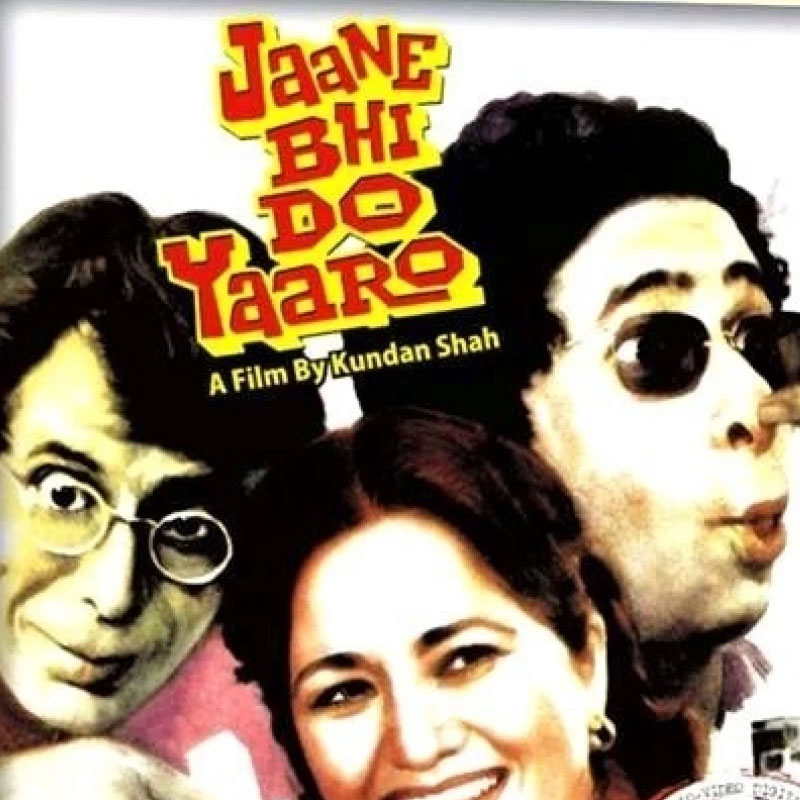
    ·23 July – Sun – 4.00 PM – Jaane bhi do yaaron
    ·30 July – Sun – 12.00 PM – Raghu Romeo

    ​Venue – G5A Foundation for Contemporary Culture
    29· July – 4.00 PM – ​Inauguration of the Saeed Akhtar Mirza Retrospective and ​screening of the Opening Film
    ​30· July – 12.00 PM – Arvind Desai ki ajeeb dastaan
    30· July – 4.00 PM – Naseem
    30· July – 6.00 PM – Salim Langde Pe Mat Ro

    NFDC took care to choose alternate exhibition spaces – not the traditional theatres with the hugely expensive box office: HARKAT studios in Aram Nagar for the Suburbian Junta and G5A Centre for Contemporary Culture in Lower Parel for the Townies.

    Harkat Studios is a boutique arts studio and a co-working space in the bustling area of Aram Nagar, Andheri West. Harkat has collaborated with numerous brands including Unilever, Walt Disney, UTV, Fox Star Studio (to name a few) to create innovative video content. The studio also hosts live performances, screenings, workshops etc. and has been a popular center for arts and artists coming from the indie space.

    When the quirky Bungalow is not hosting events, the place doubles as a co-working space for independent professionals looking for an Office space. The work and vibe of Harkat Studios suits perfectly with the community building nature and Indie spirit that Film Aaj Kal Screenings and Conversations is seeking to promote for cinephiles.

    G5A Foundation for Contemporary Culture is a not-for profit organisation which houses a Blackbox and hosts a range of events and programmes including but not limited to Screenings, Theatre performances, exhibitions and Launch Events. G5A has endeavored to and has slowly emerged as important alternate venue in the Town area of Mumbai as a community space for artists and professionals to work around. G5A. last year, was the venue for the Mumbai chapter of the New York Indian Film Festival which screened curated films followed by discussions with the filmmakers.

    1018mb.com portal evolved from the phenomenon of ‘Four-eyed Monsters’, a 2005 US film which became a financial success and a cult-classic by its innovative distribution strategy of an audience demanding a screening. A film gets screened at a certain city if enough audience pledge viewership for the film. A trick, films like Paranormal Activity have used to great effect. Plus, it’s a revolutionary community building exercise for like-minded cinephiles and geeks.

    Keeping with the concept of community-based screenings and keeping with the times technologically, 1018mb.com is an online ticket booking portal which enables users to create and schedule screenings of films of their choice from the site’s extensive catalogue of films and make available to other like-minded audience to attend.

  • IFFI 2016: India to encourage film co-production with other countries

    IFFI 2016: India to encourage film co-production with other countries

    NEW DELHI: The Government will encourage film co-production agreements with other countries, information and broadcasting minister M Venkaiah Nadu said while speaking at Film Bazaar set up by the National Films Development Corporation that coincides with International Film Festival of India at Panaji in Goa that opened today.

    He said, “Films are important because they are the cheapest form of entertainment. People need some relief; some sort of happiness. Secondly, films can portray our culture, our heritage. Films also can take the message of India to other places. We have entered into a co-production agreement with different countries as we seek collaboration. The government will definitely encourage this.”

    Going around the Bazaar, he said, “I am very impressed by the Film Bazaar. It is like a film supermarket. You have everything — from incredible locations to screening of the films, along with opportunities to interact with producers. One can also experience seeing films in 3D. Everything required for filmmaking is available here. This will help go a long way in producing films in India and films, in turn, will also encourage tourism and culture of the country.”

    Accompanying the minister were NFDC director – finance N J Shaikh and NFDC director Raja Chhinal, and they spent over an hour going through the Viewing Room, the Knowledge Series session, Producers’ Lab and Co-Production Market, Film Offices.

    Apart from inaugurating a Multimedia Exhibition on ‘Azaadi 70 Saal’, Naidu also held a discussion on the co-production agreement and attendant issues with the delegation from South Korea, which is the focus country this year.

    The NFDC Film Bazaar Virtual Reality lounge in particular was of special interest to him and he spent some time trying out the VR gear powered by Samsung Gear VR, after which he went on to launch the National Film Heritage Mission calendar and website.

    Shaikh later said: “The minister’s walk was very inspiring and morale-boosting for the entire NFDC team. He took a keen interest in the various segments of the Bazaar and interacted with the officials in-charge of different segments, which was very encouraging.”

    Celebrating its tenth edition this year, the annual NFDC Film Bazaar held from 20 to 24 November 2016 has become a beacon for budding filmmakers from South Asia. The platform has been tirelessly evolving into a one-stop shop that encourages collaboration between South Asian and international film fraternities; a confluence point for screenwriters, filmmakers, sales agents, distributors, film festival programmers and financiers from around the world.

    The Bazaar is a platform exclusively created to encourage collaboration between the international and South Asian film fraternities. The market aims at facilitating the sales of world cinema in the region.

    Naidu said cinema should reflect larger social concerns besides focusing on entertainment only. It should focus on promoting national consciousness and social integration as cinema is religion without boundaries. Films should illuminate the mind and heart, engaging audience both intellectually and emotionally. It should expose the people to ideas, problems and developments happening in the society and make them think critically and look for alternate solutions and actions. In a country like India, with its several social problems, a case could be made for social realism in our films. Cinema was a work of art and there has to be a certain ‘take away’ for the audience who gave over two hours of their valuable time for watching a film.

    Speaking at the event held at the newly-constructed Shyama Prasad Mukherjee stadium, he said cinema needed to coexist with reality. It was necessary to pass the test of the ‘2Rs’ – Reason and Reality. Many of the commercial films were crashing because of lack of creative content.
    Giving the example of the movie ‘Sholay’ (as its director Ramesh Sippy was the chief guest at the inauguration), he said the film was a huge success because it was not formulaic in the strict sense though it was a commercial production. The minister added that certain relationships and values were so finely woven into the theme that people across the country made it a landmark film.

    About the role of cinema as a powerful mass communication medium, the minister said cinema spoke with the language of universality rising beyond the limitations of social and geographical boundaries. It promoted rapid diffusion of ideas which manifested themselves consciously or otherwise in the relaxing environments of cinema halls or homes, when the audiences were more susceptible.

    The minister also spoke about the Government initiatives to support the film industry in the form of a single window Film Facilitation Office in National Film Development Corporation and a National Film Heritage Mission to restore and digitise film archives.

    Goa Governor Mridula Sinha, union defence minister Manohar Parikkar, Goa chief minister Laxmikant Parsekar, Korean ambassador Cho Hyun, and I and B secretary Ajay Mittal were also present.

    Parsekar said IFFI provided a common platform to cinematography of the world. The movie selection at IFFI reflected the diversity of world cultures.

    Mittal said that films were one of the most powerful mediums to reach out to society today. IFFI was one of the most prominent film festivals in India and Asia endeavoring to encourage and uphold an exceptional film culture in India.

    The opening film of the festival was the grand masterpiece, After-Image by the late writer and directo Andrzej Wajda from Poland. This movie is a passionate biopic about avant-garde painter Wladyslaw Strzeminski. The closing film or 47th IFFI would be the South Korean official entry for the Academy Awards, The Age of Shadows directed by Kim Jee Woon.

    Apart from other awards, IFFI 2016 in collaboration with the International Council for Film, Television and Audiovisual Communication (ICFT), Paris and UNESCO would also present the “ICFT- UNESCO Gandhi Medal” to a film, which reflects the ideals of peace, tolerance and non-violence.

  • IFFI 2016: India to encourage film co-production with other countries

    IFFI 2016: India to encourage film co-production with other countries

    NEW DELHI: The Government will encourage film co-production agreements with other countries, information and broadcasting minister M Venkaiah Nadu said while speaking at Film Bazaar set up by the National Films Development Corporation that coincides with International Film Festival of India at Panaji in Goa that opened today.

    He said, “Films are important because they are the cheapest form of entertainment. People need some relief; some sort of happiness. Secondly, films can portray our culture, our heritage. Films also can take the message of India to other places. We have entered into a co-production agreement with different countries as we seek collaboration. The government will definitely encourage this.”

    Going around the Bazaar, he said, “I am very impressed by the Film Bazaar. It is like a film supermarket. You have everything — from incredible locations to screening of the films, along with opportunities to interact with producers. One can also experience seeing films in 3D. Everything required for filmmaking is available here. This will help go a long way in producing films in India and films, in turn, will also encourage tourism and culture of the country.”

    Accompanying the minister were NFDC director – finance N J Shaikh and NFDC director Raja Chhinal, and they spent over an hour going through the Viewing Room, the Knowledge Series session, Producers’ Lab and Co-Production Market, Film Offices.

    Apart from inaugurating a Multimedia Exhibition on ‘Azaadi 70 Saal’, Naidu also held a discussion on the co-production agreement and attendant issues with the delegation from South Korea, which is the focus country this year.

    The NFDC Film Bazaar Virtual Reality lounge in particular was of special interest to him and he spent some time trying out the VR gear powered by Samsung Gear VR, after which he went on to launch the National Film Heritage Mission calendar and website.

    Shaikh later said: “The minister’s walk was very inspiring and morale-boosting for the entire NFDC team. He took a keen interest in the various segments of the Bazaar and interacted with the officials in-charge of different segments, which was very encouraging.”

    Celebrating its tenth edition this year, the annual NFDC Film Bazaar held from 20 to 24 November 2016 has become a beacon for budding filmmakers from South Asia. The platform has been tirelessly evolving into a one-stop shop that encourages collaboration between South Asian and international film fraternities; a confluence point for screenwriters, filmmakers, sales agents, distributors, film festival programmers and financiers from around the world.

    The Bazaar is a platform exclusively created to encourage collaboration between the international and South Asian film fraternities. The market aims at facilitating the sales of world cinema in the region.

    Naidu said cinema should reflect larger social concerns besides focusing on entertainment only. It should focus on promoting national consciousness and social integration as cinema is religion without boundaries. Films should illuminate the mind and heart, engaging audience both intellectually and emotionally. It should expose the people to ideas, problems and developments happening in the society and make them think critically and look for alternate solutions and actions. In a country like India, with its several social problems, a case could be made for social realism in our films. Cinema was a work of art and there has to be a certain ‘take away’ for the audience who gave over two hours of their valuable time for watching a film.

    Speaking at the event held at the newly-constructed Shyama Prasad Mukherjee stadium, he said cinema needed to coexist with reality. It was necessary to pass the test of the ‘2Rs’ – Reason and Reality. Many of the commercial films were crashing because of lack of creative content.
    Giving the example of the movie ‘Sholay’ (as its director Ramesh Sippy was the chief guest at the inauguration), he said the film was a huge success because it was not formulaic in the strict sense though it was a commercial production. The minister added that certain relationships and values were so finely woven into the theme that people across the country made it a landmark film.

    About the role of cinema as a powerful mass communication medium, the minister said cinema spoke with the language of universality rising beyond the limitations of social and geographical boundaries. It promoted rapid diffusion of ideas which manifested themselves consciously or otherwise in the relaxing environments of cinema halls or homes, when the audiences were more susceptible.

    The minister also spoke about the Government initiatives to support the film industry in the form of a single window Film Facilitation Office in National Film Development Corporation and a National Film Heritage Mission to restore and digitise film archives.

    Goa Governor Mridula Sinha, union defence minister Manohar Parikkar, Goa chief minister Laxmikant Parsekar, Korean ambassador Cho Hyun, and I and B secretary Ajay Mittal were also present.

    Parsekar said IFFI provided a common platform to cinematography of the world. The movie selection at IFFI reflected the diversity of world cultures.

    Mittal said that films were one of the most powerful mediums to reach out to society today. IFFI was one of the most prominent film festivals in India and Asia endeavoring to encourage and uphold an exceptional film culture in India.

    The opening film of the festival was the grand masterpiece, After-Image by the late writer and directo Andrzej Wajda from Poland. This movie is a passionate biopic about avant-garde painter Wladyslaw Strzeminski. The closing film or 47th IFFI would be the South Korean official entry for the Academy Awards, The Age of Shadows directed by Kim Jee Woon.

    Apart from other awards, IFFI 2016 in collaboration with the International Council for Film, Television and Audiovisual Communication (ICFT), Paris and UNESCO would also present the “ICFT- UNESCO Gandhi Medal” to a film, which reflects the ideals of peace, tolerance and non-violence.