Tag: NFAI

  • Rs 125 million incurred on Film Heritage Mission this year

    NEW DELHI: A total of about 1,32,000 film reels have been acquired and the work of assessment, preventive conservation and restoration started under a mission mode project under the National Film Heritage Mission (NFHM).

    The scheme is to be implemented between 2014-15 and 2020-21 with total outlay of Rs 5.9741 billion to restore, digitize and archive films and filmic material through the National Film Archives of India.

    Of the outlay, Rs 126.6 million has been incurred till date during 2016-17. The expenditure incurred in 2015-16 was Rs 108 million and Rs 162 million in 2014-15.

    The minister of state for information and broadcasting Rajyavardhan Rathore said the NFAI has temperature and humidity controlled vaults for storage and preservation of film reels.

    The non-filmic ancillary material, such as photographs, song booklets, posters, films magazines, etc. are stored under temperature controlled environment.

    Some of the objectives of the NFHM include:

    i. To undertake film conservation assessment.
    ii. Preventive conservation of film reels.
    iii. Picture and sound restoration of landmark feature films and short films.
    iv. Digitization of feature films and short films.
    v. Construction of archival and preservation facilities for material restored under NFHM.
    vi. Conducting training workshops and courses in field of conservation, preservation and archiving.

  • Centre mulls giving financial help to states to help preserve cinema culture

    Centre mulls giving financial help to states to help preserve cinema culture

    NEW DELHI: The Information and Broadcasting Ministry is exploring possibilities of extending financial and technical support to State Governments in their efforts to safeguard the country’s film heritage, as Secretary Ajay Mittal said “the objective of preserving the country’s cinematic heritage has to be achieved in collaboration with state governments.”

    Speaking on the sidelines of a High Level Committee meeting on National Film Heritage Mission held in National Film Archives of India in Pune today, Mittal said the Committee had taken some major decisions to expand the horizons of the National Film Heritage Mission.

    “The mission would ensure not only the preservation of filmic heritage but also its dissemination and access to the last mile. This would create awareness amongst youth and children about our rich cultural heritage” he observed.

    Appreciating the efforts of officers at NFAI in implementing the Mission, Mr Mittal said all necessary steps are being undertaken to involve International organizations and institutions to ensure project’s implementation as per global standards. He further added that NFAI’s facilities would be augmented by creating new state-of-the-art vaults in its premises.

    Laying thrust on the need for enhancing research on Indian cinema, Mittal said the government is exploring the possibility of extending NFAI’s research fellowship to the University level through formal institutional mechanisms.

    “NFAI would reach out to major Universities for short and long term courses in the area of film studies incorporating subjects of film archiving and preservation. This would ensure building of skilled manpower in the niche area of film preservation”, Mittal added.

    The High Level Committee meeting was attended by senior officers of the Ministry which included Additional Secretary ad Financial Adviser Subhash Sharma, Joint Secretary (Films) Sanjay Murthy, Films Division Director General Mukesh Sharma, NFAI Director Prakash Magdum, officer on special duty in NFHM Santosh Ajmera, along with filmmakers Jahnu Barua and Rajeev Mehrotra.

    National Film Heritage Mission is a prestigious project of the Government for digitization, restoration, preservation and conservation of country’s rich filmic heritage. The mission has budgetary outlay of Rs. 597.41 crore and is to be implemented till 2021. NFAI is the implementing agency for the mission. The High Level Committee chaired by Secretary I&B has been mandated to oversee project’s implementation as per envisaged objectives of the Mission.

  • Centre mulls giving financial help to states to help preserve cinema culture

    Centre mulls giving financial help to states to help preserve cinema culture

    NEW DELHI: The Information and Broadcasting Ministry is exploring possibilities of extending financial and technical support to State Governments in their efforts to safeguard the country’s film heritage, as Secretary Ajay Mittal said “the objective of preserving the country’s cinematic heritage has to be achieved in collaboration with state governments.”

    Speaking on the sidelines of a High Level Committee meeting on National Film Heritage Mission held in National Film Archives of India in Pune today, Mittal said the Committee had taken some major decisions to expand the horizons of the National Film Heritage Mission.

    “The mission would ensure not only the preservation of filmic heritage but also its dissemination and access to the last mile. This would create awareness amongst youth and children about our rich cultural heritage” he observed.

    Appreciating the efforts of officers at NFAI in implementing the Mission, Mr Mittal said all necessary steps are being undertaken to involve International organizations and institutions to ensure project’s implementation as per global standards. He further added that NFAI’s facilities would be augmented by creating new state-of-the-art vaults in its premises.

    Laying thrust on the need for enhancing research on Indian cinema, Mittal said the government is exploring the possibility of extending NFAI’s research fellowship to the University level through formal institutional mechanisms.

    “NFAI would reach out to major Universities for short and long term courses in the area of film studies incorporating subjects of film archiving and preservation. This would ensure building of skilled manpower in the niche area of film preservation”, Mittal added.

    The High Level Committee meeting was attended by senior officers of the Ministry which included Additional Secretary ad Financial Adviser Subhash Sharma, Joint Secretary (Films) Sanjay Murthy, Films Division Director General Mukesh Sharma, NFAI Director Prakash Magdum, officer on special duty in NFHM Santosh Ajmera, along with filmmakers Jahnu Barua and Rajeev Mehrotra.

    National Film Heritage Mission is a prestigious project of the Government for digitization, restoration, preservation and conservation of country’s rich filmic heritage. The mission has budgetary outlay of Rs. 597.41 crore and is to be implemented till 2021. NFAI is the implementing agency for the mission. The High Level Committee chaired by Secretary I&B has been mandated to oversee project’s implementation as per envisaged objectives of the Mission.

  • India-Bangladesh to collaborate on documentary on 1971 war of independence

    India-Bangladesh to collaborate on documentary on 1971 war of independence

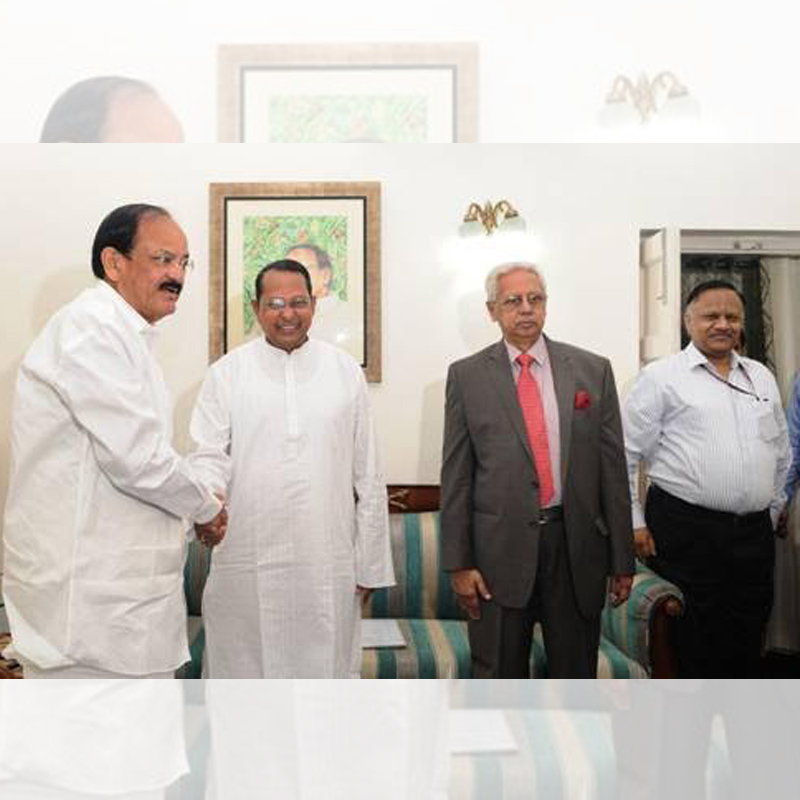
    NEW DELHI: India and Bangladesh are to jointly collaborate to produce a documentary on the 1971 War of Independence of Bangladesh to mark the 100thbirth anniversary of the Father of the Nation Bangabandhu Sheikh Mujibur Rahman in 2020.

    Information and Broadcasting Minister M Vekaiah Naidu told his Bangladesh counterpart Hasanul Haq Inu here today that the archival material available with Films Division, Doordarshan and other media units would be optimally utilized.

    This documentary is proposed to be produced to commemorate the 50th year of Bangladesh Independence in 2021. Naidu also agreed to the proposal of Inu to facilitate the production of a movie by Bangladesh to coincide with the centenary of Bangabandhu.

    Both sides also agreed to jointly workout a proposal for a joint Audio-visual co-production agreement between the two countries. It was agreed to organize Film Festival of India in Bangladesh and a Bangladesh Film Festival in India.

    The Bangladesh Minister agreed to the request of Naidu to provide the celluloid version of the film Devdas directed by Pramatesh Barua, the Bengali version produced in 1935. Bangladesh had earlier provided the DVD version of the film to National Film Archives of Inda.

    Referring to facilitation of Free Film Trade between the two countries, Naidu said Bangladesh could consider relaxing the legal provisions which restricted the number of Indian films in that country. The easing of restrictions would have a positive impact on the local film industry. The Minister also offered to train the young film makers and entrepreneurs from Bangladesh at the Indian Film and Training Institutes. He also mentioned that collaborative measures would be initiated between the National Film Development Corporation and Bangladesh Film Development Corporation to promote joint production of films and also between NFAI and Bangladesh Film Archives for digitization and archiving.

    The Ministers during their deliberations also agreed to promote capacity building and training workshops for media persons, exchange programme for officers associated with Information and Broadcasting and exchange of programs between DD and its counterpart in Bangladesh.

    Naidu said information dissemination is critical to counter terrorism which is a common issue plaguing both India and Bangladesh. Secretary Ajay Mittal and senior officers of the Ministry were also present in the meeting between the two delegations.

  • India-Bangladesh to collaborate on documentary on 1971 war of independence

    India-Bangladesh to collaborate on documentary on 1971 war of independence

    NEW DELHI: India and Bangladesh are to jointly collaborate to produce a documentary on the 1971 War of Independence of Bangladesh to mark the 100thbirth anniversary of the Father of the Nation Bangabandhu Sheikh Mujibur Rahman in 2020.

    Information and Broadcasting Minister M Vekaiah Naidu told his Bangladesh counterpart Hasanul Haq Inu here today that the archival material available with Films Division, Doordarshan and other media units would be optimally utilized.

    This documentary is proposed to be produced to commemorate the 50th year of Bangladesh Independence in 2021. Naidu also agreed to the proposal of Inu to facilitate the production of a movie by Bangladesh to coincide with the centenary of Bangabandhu.

    Both sides also agreed to jointly workout a proposal for a joint Audio-visual co-production agreement between the two countries. It was agreed to organize Film Festival of India in Bangladesh and a Bangladesh Film Festival in India.

    The Bangladesh Minister agreed to the request of Naidu to provide the celluloid version of the film Devdas directed by Pramatesh Barua, the Bengali version produced in 1935. Bangladesh had earlier provided the DVD version of the film to National Film Archives of Inda.

    Referring to facilitation of Free Film Trade between the two countries, Naidu said Bangladesh could consider relaxing the legal provisions which restricted the number of Indian films in that country. The easing of restrictions would have a positive impact on the local film industry. The Minister also offered to train the young film makers and entrepreneurs from Bangladesh at the Indian Film and Training Institutes. He also mentioned that collaborative measures would be initiated between the National Film Development Corporation and Bangladesh Film Development Corporation to promote joint production of films and also between NFAI and Bangladesh Film Archives for digitization and archiving.

    The Ministers during their deliberations also agreed to promote capacity building and training workshops for media persons, exchange programme for officers associated with Information and Broadcasting and exchange of programs between DD and its counterpart in Bangladesh.

    Naidu said information dissemination is critical to counter terrorism which is a common issue plaguing both India and Bangladesh. Secretary Ajay Mittal and senior officers of the Ministry were also present in the meeting between the two delegations.

  • Film Heritage Foundation conducts second edition of Film Preservation and Restoration workshop

    Film Heritage Foundation conducts second edition of Film Preservation and Restoration workshop

    MUMBAI: The Film Heritage Foundation saw major success with the second edition of Film Preservation and Restoration Workshop India 2016; a crucial initiative, given the urgent need to preserve India’s rich film legacy.

    Viacom 18 was the principal sponsor of this 10 day workshop that was conducted by the Film Heritage Foundation in collaboration with the National Film Archive of India and International Federation of Film Archives, which was held at NFAI in Pune.

    Actor Kamal Hassan was the guest of honour at the closing ceremony of the Film Preservation and Restoration Workshop 2016. The 10 day workshop had an international faculty of leading experts in the field who addressed current issues surrounding film preservation and restoration including practical training of current restoration and archival best practices. The initiative covered the preservation of both film and non-film material like posters, documents, lobby cards, photographs, etc. which are an integral part of our cinematic heritage.

    Viacom 18 group CEO and chairman of CII National Committee on media and entertainment Sudhanshu Vats said, “Preservation and Restoration of Indian cinematic heritage is an on-going priority for us. Our goal is to help create awareness as to how important it is to preserve our cultural heritage for the benefit of the future generations. We are thankful to Film Heritage Foundation for having us on board once again and we look forward for a continued association to ensure enhanced dialogue and cooperation between all those who care about and love Indian cinema”

    Film Heritage Foundation founder director Shivendra Singh Dungarpur said,“It  has been a great year and with a second successful workshop behind us, we now have to start work on our mission to build an army of skilled film preservationists and restorers that is needed to save our moving image legacy. As always, we at Film heritage foundation cannot thank enough Sudhanshu Vats and his entire team at Viacom18 for their continued support for our cause and for understanding the importance of encouraging those who value India’s rich cinematic legacy to learn, explore and contribute towards saving it for posterity.”

    On this occasion the actor and chief guest  Kamal Hassan  said,“I am very pleased to be invited to be chief guest at the closing certification ceremony of the film preservation and restoration workshop in Pune and to present the FIAF certificates to the participants. A workshop of this kind is crucial for our country that has lost so much of our cinematic history and we need to grow a resource of passionate film archivists who are committed to saving our cinematic heritage. I would like to congratulate the Film Heritage Foundation for this remarkable initiative and for conducting the workshop at the National Film Archive of India.”

  • Film Heritage Foundation conducts second edition of Film Preservation and Restoration workshop

    Film Heritage Foundation conducts second edition of Film Preservation and Restoration workshop

    MUMBAI: The Film Heritage Foundation saw major success with the second edition of Film Preservation and Restoration Workshop India 2016; a crucial initiative, given the urgent need to preserve India’s rich film legacy.

    Viacom 18 was the principal sponsor of this 10 day workshop that was conducted by the Film Heritage Foundation in collaboration with the National Film Archive of India and International Federation of Film Archives, which was held at NFAI in Pune.

    Actor Kamal Hassan was the guest of honour at the closing ceremony of the Film Preservation and Restoration Workshop 2016. The 10 day workshop had an international faculty of leading experts in the field who addressed current issues surrounding film preservation and restoration including practical training of current restoration and archival best practices. The initiative covered the preservation of both film and non-film material like posters, documents, lobby cards, photographs, etc. which are an integral part of our cinematic heritage.

    Viacom 18 group CEO and chairman of CII National Committee on media and entertainment Sudhanshu Vats said, “Preservation and Restoration of Indian cinematic heritage is an on-going priority for us. Our goal is to help create awareness as to how important it is to preserve our cultural heritage for the benefit of the future generations. We are thankful to Film Heritage Foundation for having us on board once again and we look forward for a continued association to ensure enhanced dialogue and cooperation between all those who care about and love Indian cinema”

    Film Heritage Foundation founder director Shivendra Singh Dungarpur said,“It  has been a great year and with a second successful workshop behind us, we now have to start work on our mission to build an army of skilled film preservationists and restorers that is needed to save our moving image legacy. As always, we at Film heritage foundation cannot thank enough Sudhanshu Vats and his entire team at Viacom18 for their continued support for our cause and for understanding the importance of encouraging those who value India’s rich cinematic legacy to learn, explore and contribute towards saving it for posterity.”

    On this occasion the actor and chief guest  Kamal Hassan  said,“I am very pleased to be invited to be chief guest at the closing certification ceremony of the film preservation and restoration workshop in Pune and to present the FIAF certificates to the participants. A workshop of this kind is crucial for our country that has lost so much of our cinematic history and we need to grow a resource of passionate film archivists who are committed to saving our cinematic heritage. I would like to congratulate the Film Heritage Foundation for this remarkable initiative and for conducting the workshop at the National Film Archive of India.”

  • NFAI founder director P K Nair is no more

    NFAI founder director P K Nair is no more

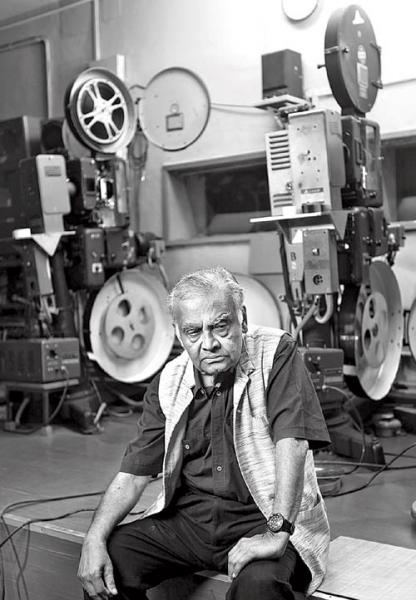
    New Delhi, 4 March: Veteran archivist P K Nair, founder director of the National Film Archive of India (NFAI), Pune, died today. He was 86. After prolonged illness he breathed his last this morning at Sahyadri Nursing Home in Pune. He is survived by a daughter who lives in Thiruvananthapuram and a son who lives in Canada.


    Paramesh Krishnan Nair, who had dedicated his life to preservation of films and building the collection of films at the NFAI, was instrumental in archiving several landmark Indian films like Dadasaheb Phalke’s Raja Harishchandra and Kaliya Mardan, Bombay Talkies films such as Jeevan NaiyaBandhanKanganAchhut Kanya and Kismet, S.S. Vasan’s Chandralekha and Uday Shankar’s Kalpana.


    Nair joined the Film and Television Institute of India (FTII), Pune, as a research assistant in 1961 and went on to play a key role in the setting up of the NFAI in 1964. He was appointed assistant curator in 1965, and continued with the NFAI till 1991 and later became Director. He had helped acquire over 12,000 films for the archive. Of these, 8,000 were Indian and the rest foreign films.


    His life and work was immortalised in the documentary Celluloid Man, made by Shivendra Singh Dungarpur, which went on to win a national award.


    Born on 6 April 1933 in Thuravanthapuram in Kerala, Nair developed an early interest in cinema. His initiation into films began with Tamil mythological films in the early 1940s such as K. Subramaniam’s Ananthasayanam and Bhakta Prahlada. His fascination for cinema began here, though his family did not support his interest in films.


    He graduated in science from the University of Kerala in 1953. Soon after, he went to Bombay (now Mumbai) to pursue a career in filmmaking.


    Though he got some practical training in branches of film making from some of the leading film makers of Bombay, particularly Mehboob Khan, Bimal Roy and Hrishikesh Mukherjee, he realised that he did not have the ideal qualities to become a filmmaker himself. His interest lay more in the field of academics. As advised by Jean Bhownagary of Films Division, he appeared for an interview at the Film and Television Institute of India (FTII), was selected and joined the institute in March 1961 in the position of research assistant.


    While at FTII, he assisted Marie Seton and Professor Satish Bahadur in initiating and conducting the film appreciation classes of FTII. He also did the spade work in establishing the film archive set up as a separate wing of FTII. He corresponded with the curators and directors of established film archives in the UK, USA, France, Italy, Poland, Soviet Union and other countries. All of them advised an independent autonomous entity for NFAI and not as a wing of FTII.


    The National Film Archive of India was born in 1964 and Nair was appointed to the post of assistant curator in November 1965. He has, since then, established the archive from scratch by collecting films from all over India and the world.


    He was promoted as Director of the archive in 1982. He spearheaded the NFAI, Pune for nearly three decades and built up the archive which now enjoys a vibrant international reckoning.


    Landmark acquisitions include the Dadasaheb Phalke films and films of New Theatres, Bombay Talkies, Minerva Movietone, Wadia Movietone, Gemini Studios and AVM Productions.


    He was instrumental in introducing the works of world masters of cinema like Ingmar Bergman, Akira Kurosawa, Andrzej Wajda, Miklós Jancsó, Krzysztof Zanussi,Vittorio De Sica, Federico Fellini, apart from the Indian stalwarts like Satyajit Ray, Ritwik Ghatak, Mrinal Sen, V. Shantaram, Raj Kapoor and Guru Dutt to FTII students, film society members, and other film study groups in the country.


    He was also instrumental in setting up the International Film Festival of Kerala.

    After his retirement, he lived in Pune not very far away from the NFAI and the FTII. 


    Awards and recognition.


    Nair was awarded the Satyajit Ray Memorial Award in 2008. Celluloid Man, the documentary on Nair was made by Shivendra Singh Dungarpur was premiered at the Il Cinema Ritrovato in Bologna, Italy in June 2012. 


    Later it won two National Awards at the 60th National Film Awards, including Best Biographical Film and Best Editing. The film was released in India on 3 May 2013 to coincide with the centenary of Indian cinema.


    The international federation of film critics, FIPRESCI, condoled the passing away of Nair. FIPRESCI India President H N Narahari Rao said in a statement: “It is with deep regret that we are recording here the sad demise of one of our most respected members of FIPRESCI-India P K Nair, former Director of National Film Archive of India and more popularly known as ‘The Celluloid Man’. He passed away today at Pune, the city where he built the Film Archive. He used to attend all the annual general meetings of FIPRESCI India at Goa IFFI without fail and guide us in our activities. We missed him last year but we received his message promptly that he was admitted to the hospital.  As a crusader who was deeply concerned with promoting good cinema in the country he made immense contribution to the growth of the Film Society movement in India during last five decades.”

  • NFAI founder director P K Nair is no more

    NFAI founder director P K Nair is no more

    New Delhi, 4 March: Veteran archivist P K Nair, founder director of the National Film Archive of India (NFAI), Pune, died today. He was 86. After prolonged illness he breathed his last this morning at Sahyadri Nursing Home in Pune. He is survived by a daughter who lives in Thiruvananthapuram and a son who lives in Canada.


    Paramesh Krishnan Nair, who had dedicated his life to preservation of films and building the collection of films at the NFAI, was instrumental in archiving several landmark Indian films like Dadasaheb Phalke’s Raja Harishchandra and Kaliya Mardan, Bombay Talkies films such as Jeevan NaiyaBandhanKanganAchhut Kanya and Kismet, S.S. Vasan’s Chandralekha and Uday Shankar’s Kalpana.


    Nair joined the Film and Television Institute of India (FTII), Pune, as a research assistant in 1961 and went on to play a key role in the setting up of the NFAI in 1964. He was appointed assistant curator in 1965, and continued with the NFAI till 1991 and later became Director. He had helped acquire over 12,000 films for the archive. Of these, 8,000 were Indian and the rest foreign films.


    His life and work was immortalised in the documentary Celluloid Man, made by Shivendra Singh Dungarpur, which went on to win a national award.


    Born on 6 April 1933 in Thuravanthapuram in Kerala, Nair developed an early interest in cinema. His initiation into films began with Tamil mythological films in the early 1940s such as K. Subramaniam’s Ananthasayanam and Bhakta Prahlada. His fascination for cinema began here, though his family did not support his interest in films.


    He graduated in science from the University of Kerala in 1953. Soon after, he went to Bombay (now Mumbai) to pursue a career in filmmaking.


    Though he got some practical training in branches of film making from some of the leading film makers of Bombay, particularly Mehboob Khan, Bimal Roy and Hrishikesh Mukherjee, he realised that he did not have the ideal qualities to become a filmmaker himself. His interest lay more in the field of academics. As advised by Jean Bhownagary of Films Division, he appeared for an interview at the Film and Television Institute of India (FTII), was selected and joined the institute in March 1961 in the position of research assistant.


    While at FTII, he assisted Marie Seton and Professor Satish Bahadur in initiating and conducting the film appreciation classes of FTII. He also did the spade work in establishing the film archive set up as a separate wing of FTII. He corresponded with the curators and directors of established film archives in the UK, USA, France, Italy, Poland, Soviet Union and other countries. All of them advised an independent autonomous entity for NFAI and not as a wing of FTII.


    The National Film Archive of India was born in 1964 and Nair was appointed to the post of assistant curator in November 1965. He has, since then, established the archive from scratch by collecting films from all over India and the world.


    He was promoted as Director of the archive in 1982. He spearheaded the NFAI, Pune for nearly three decades and built up the archive which now enjoys a vibrant international reckoning.


    Landmark acquisitions include the Dadasaheb Phalke films and films of New Theatres, Bombay Talkies, Minerva Movietone, Wadia Movietone, Gemini Studios and AVM Productions.


    He was instrumental in introducing the works of world masters of cinema like Ingmar Bergman, Akira Kurosawa, Andrzej Wajda, Miklós Jancsó, Krzysztof Zanussi,Vittorio De Sica, Federico Fellini, apart from the Indian stalwarts like Satyajit Ray, Ritwik Ghatak, Mrinal Sen, V. Shantaram, Raj Kapoor and Guru Dutt to FTII students, film society members, and other film study groups in the country.


    He was also instrumental in setting up the International Film Festival of Kerala.

    After his retirement, he lived in Pune not very far away from the NFAI and the FTII. 


    Awards and recognition.


    Nair was awarded the Satyajit Ray Memorial Award in 2008. Celluloid Man, the documentary on Nair was made by Shivendra Singh Dungarpur was premiered at the Il Cinema Ritrovato in Bologna, Italy in June 2012. 


    Later it won two National Awards at the 60th National Film Awards, including Best Biographical Film and Best Editing. The film was released in India on 3 May 2013 to coincide with the centenary of Indian cinema.


    The international federation of film critics, FIPRESCI, condoled the passing away of Nair. FIPRESCI India President H N Narahari Rao said in a statement: “It is with deep regret that we are recording here the sad demise of one of our most respected members of FIPRESCI-India P K Nair, former Director of National Film Archive of India and more popularly known as ‘The Celluloid Man’. He passed away today at Pune, the city where he built the Film Archive. He used to attend all the annual general meetings of FIPRESCI India at Goa IFFI without fail and guide us in our activities. We missed him last year but we received his message promptly that he was admitted to the hospital.  As a crusader who was deeply concerned with promoting good cinema in the country he made immense contribution to the growth of the Film Society movement in India during last five decades.”

  • NFAI launches contest for National Film Heritage Mission

    NFAI launches contest for National Film Heritage Mission

    NEW DELHI: The Pune-based National Film Archive of India (NFAI) has launched a logo and tagline competition for the National Film Heritage Mission (NFHM).


    The National Film Heritage Mission aims at restoration, preservation, digitization and conservation of the rich film heritage of the country.


    NFAI seeks to crowd-source entries for the logo and tagline through the MyGov portal – www.mygov.in and the New Media Wing of the Information and Broadcasting Ministry.


    The last date for submission of entries is 20 October, 2015.


    The best logo would attract a cash prize of Rs 30,000, whereas the tagline would get a cash prize of Rs 15,000. A panel of experts at NFAI will finalise the winners of the competition. 


    “The crowd-sourcing of logo and tagline would enable participation in the implementation of the National Film Heritage Mission and preservation of our rich filmic heritage,” said NFAI director Prakash Magdum.


    NFHM is a Mission Mode project launched by the Central Government with a total outlay of Rs 597.41 crore. This Mission is to be implemented during 12th and 13th Five Year Plan.